
While waiting for the door bell to be answered at the Stevović household, I noticed not less than five may beetles on their backs on the landing, having a pretty miserable time while trying to enjoy the last few days of their strange life. ‘Can’t find a much better indicator for good biodiversity than this….’ I thought to myself, while Blagica, my next host was opening the door……
From Podgorica I had travelled via Kolasin to the Durmitor mountain massif, another UNESCO World Heritage site, which is in the North of Montenegro, just next to the border to Bosnia Herzegovina. Once again I was travelling in a small Skoda – for a change in a black one – and in true Balkan style, I had ignored the traffic signs indicating that the road to get there was actually closed ,

because one half of it over a stretch of 100 meters had disappeared in a recent landslide. Not looking into the abyss next to the road, which was cordoned off by a few lonely traffic cones, I had considered it sufficiently reasurring , that even trucks were still taking this road and without a good alternative available, I gave it a try and lived to tell the tale……
I finally arrived on the “Plateau of Lakes” at 1500 m altitude in the East of the towering Durmitor massif
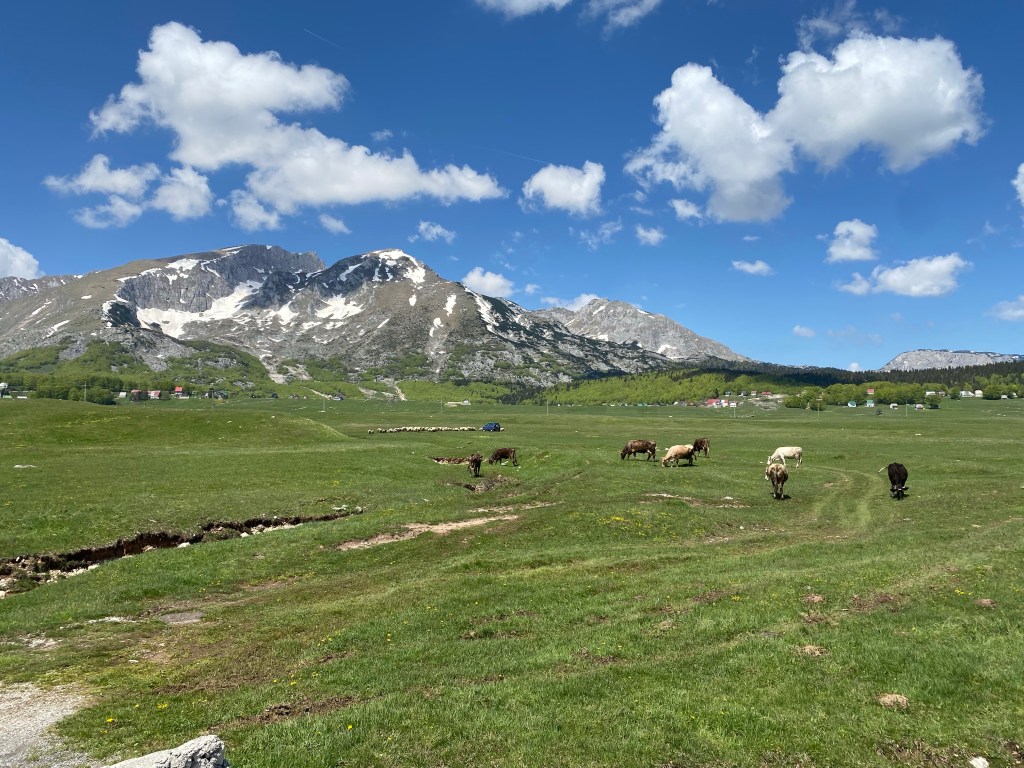
where I decided to rather than staying at the progressively build up regional center of Zabljak, to spend a few days in a small village nearby called Tmajevci.

By no means a glamarous place, the very humble dwellings of this hamlet emitted a far more authentic atmosphere, of very basic mountain farming, of small cabins where generations of city kids must have spent their long summer holidays with fresh air and good food provided by their retired grandparents, of the bygone days in the old Yugoslavia, where the hard earned cash from the factory floors of Dortmund, Stuttgart or Munich provided for a small second home, that despite being nailed together with whatever building material was available at the time, still felt like a small palace , and certainly of the calm and peacefulness that only the simple life in the countryside can provide.
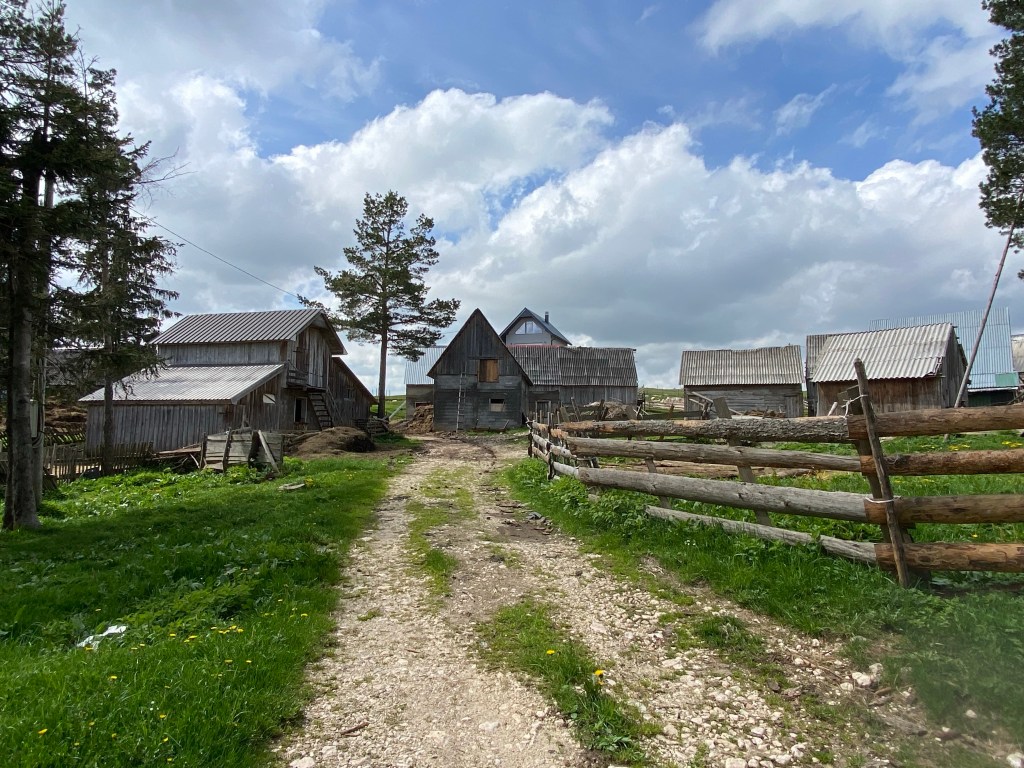

And this not more so than at the house of Blagica and her husband Zoran, a former chef, who had turned to farming and cheesemaking. and who were – whenever possible – living of the land.

My room here was basic, more an assembly of discarded family furniture, but the internet connection was excellent and the shower had hot water, which in combination made it a perfect place for someone who wants to write, read and hike.
In the mornings Blagica treated me to home made bread and plum jam. The butter, the milk and – of course – the cheese came all from their small handful of cows. The ham had lived its former life just on the other side of the fence and my breakfast egg came from a chicken that had enjoyed eating worms, insects and alpine herbs.
When dinner was served, it included potatoes of the family harvest, that were some of the largest I had ever seen,

a gravy made with a lot of butter, homegrown vegetable and it this was finished off with a few glasses of homemade raki. Only the wine I had to bring along myself.

Unfortunately the winter had been long this year and the mountains were still covered with a white blanket of snow in many places, which made the going tough and a lot of tracks inaccessible.

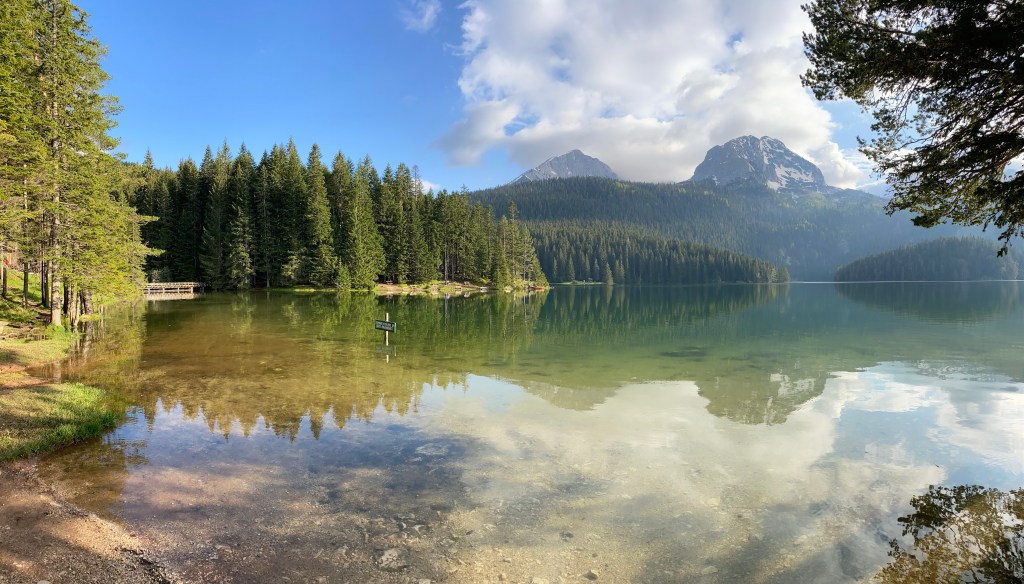
This meant that I spent more time on the shores of the Black Lake, the centre piece of the National park, enjoying excellent coffee and one of the finest mountain views, while entertaining myself with the account of another traveller – Lauri Lee – on his journey to Spain, just before the outbreak of the Spanish Civil War.
 The Blue Vet Diary