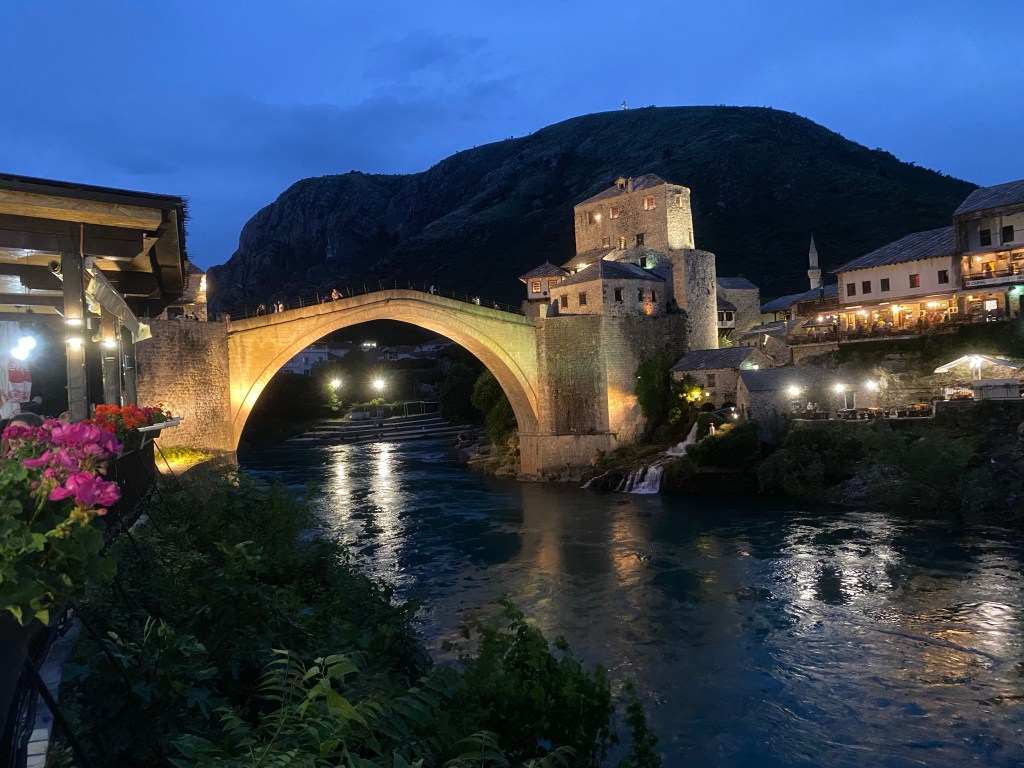
There was no event that epitomized more the destruction during the Yugoslav wars, than the fall of the historic bridge of Mostar.
This most striking example of Ottoman architecture had connected the two parts of the city since the 16th century and although its gravity defying construction of limestones, molded together with eggwhite and horsehair, had been a legitimate military target as it was used as a supply line of the Bosnian defenders of the city, there can be no doubt that the damaging and the eventual collapse of a building that had been a local landmark for centuries, must have had a devastating effect on the moral of the local muslim community.
I still remember watching a youthful and somewhat reckless Jeremy Bowen running accross the bridge as part of the BBC’s coverage of the conflict, while I was spending my first year as a veterinary surgeon in the UK.
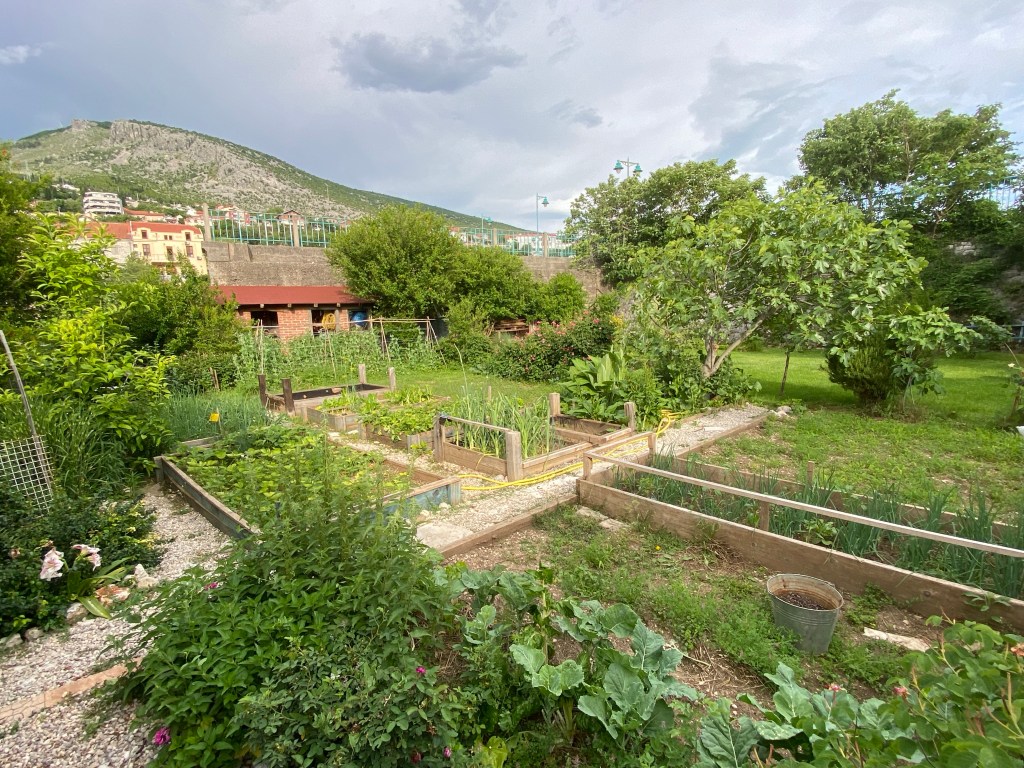
On the final leg of my journey of the Balkan nearly 30 years later, I am standing in the garden of Emir, just a few meters away from the bridge, which I can see from the window of my bedroom.
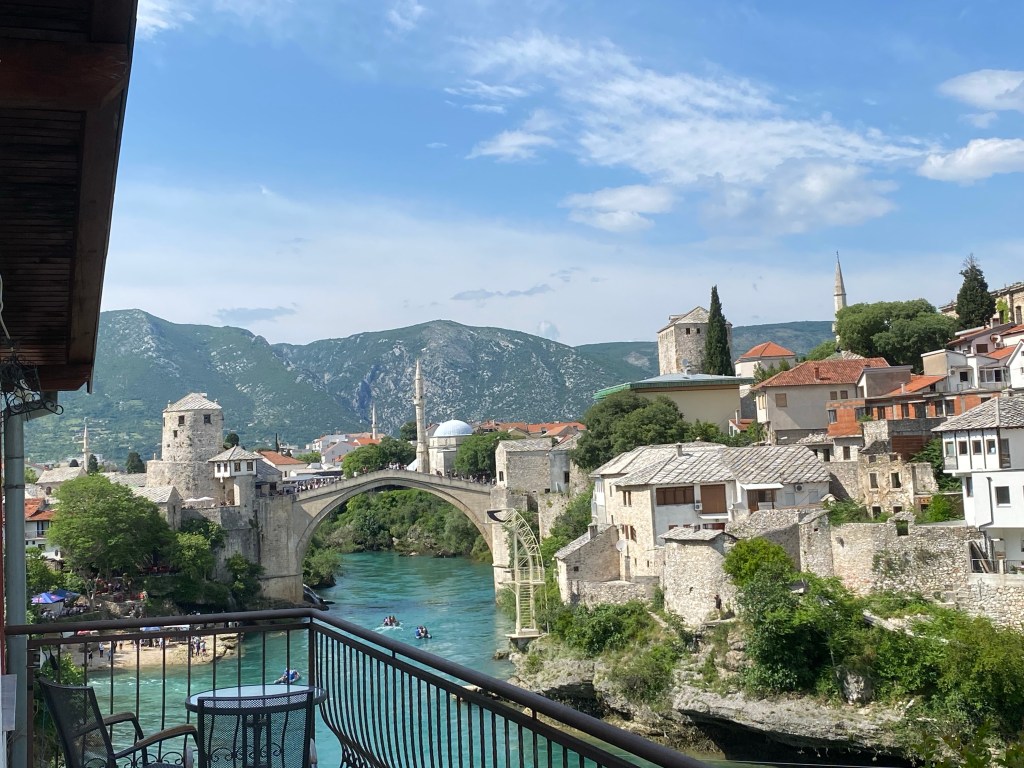
The soil is good here and Emir is encouraging me to taste some of the first strawberries of the season.
Emir is a peaceful man, who enjoys classical music and good cooking – preferably with homegrown ingredients of which there are plenty here. When entering the house I have to take off my shoes, which I appreciate, as it compliments the tasteful and virtually spotless interior, which except from myself is also enjoyed by a young Japanese traveller.
Both the peacefulness in Emir’s house, the small bakery just around the corner that produces excellent croissants,

the small cafes along the Neretva river
and ultimately the perfectly reconstructed bridge itself

are in stark contrast to the images of this place in my memory.
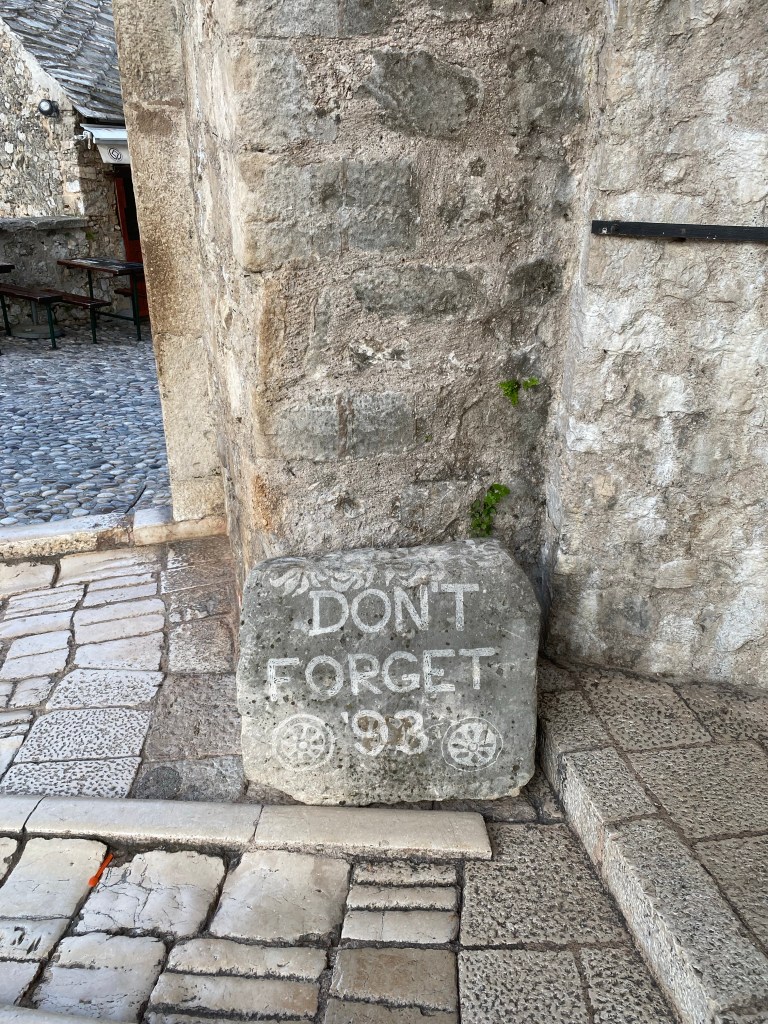
Sure enough Mostar – similar to many parts of Sarajevo – still bears the scars of the conflict

and while many attrocities in this part of Europe will forever remain unresolved, I can see here also so many examples for the human ability to reconcile and to build a successful future from the rubble.

In the bus to Sarajevo I am meeting Belma, a young Bosnian women , who like me is just a passenger, but who realises that the young bus driver is struggling to maneuver our carriage through the busy traffic out of town. Without any hesitation she commands the seat right behind the driver and remains there throughout the journey as his second pair of eyes and ears, re-assuring and calming him down and guiding both him and us to our destination.
As it turns out is Belma not only a cat lover, but also the daughter of a bus driver….. While I am still wondering how many young people of my part of the world would have shown so much initiative in a similar situation, I am at the same time regretting that I can not spend more time in this country learning more about people like Belma or Emir.
However, all good things have to come to an end and once again the veterinary world is calling with work in a completely different part of the continent….
 The Blue Vet Diary