
There were two things that had to be done while travelling in Vietnam – taking a motorscooter taxi and visiting a veterinary clinic.
Throwing all caution to the wind, I found myself on the backseat of a Honda Airblade within 30 seconds of ordering a ride on “Grab”, the Vietnamese version of Uber. How dangerous could it be?…
Squeezing ourselves through the dense traffic in District 1 wasn’t a big issue,
but speeding with over 80 km/h over the bridge to the other bank of the Mekong, was certainly not for the faint hearted…..
The local motorscooter helmets, which resemble just a harder version of a baseball cap, offered very little re-assurance.
During our ride I spotted the first scooter riders with pets. Without doubt, most of these predominantly small dogs clearly enjoyed their ride and appeared to have adapted re-markably well to this unusual form of transport. Some even sported a safety harness and most of them were quite protective of their personal carriage.
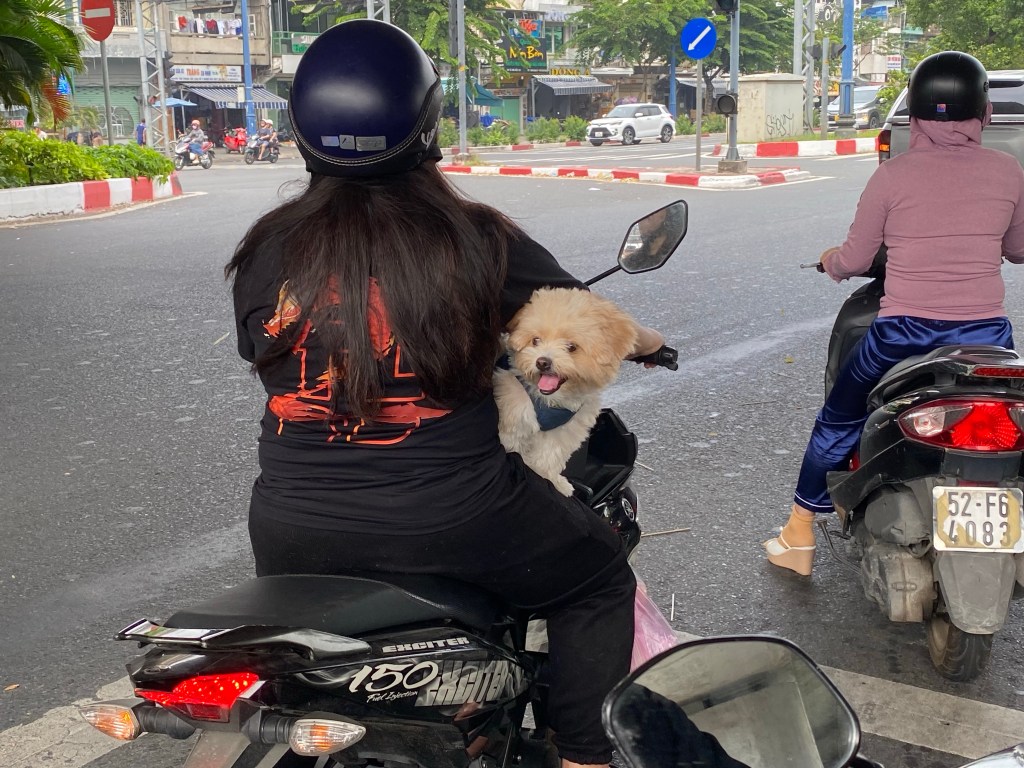
Both small children (usually without a helmet) as well as pets were transported this way and I never saw a single scooter accident. So it probably wasn’t that dangerous after all ?
Finally we arrived in front of the British International School in Ho Chi Minh City. On the other side of the road, a 3 m tall red cat was just about to scale the side of the building,

while a young boy was sitting on the wall below , reading from a book to his Greyhound.
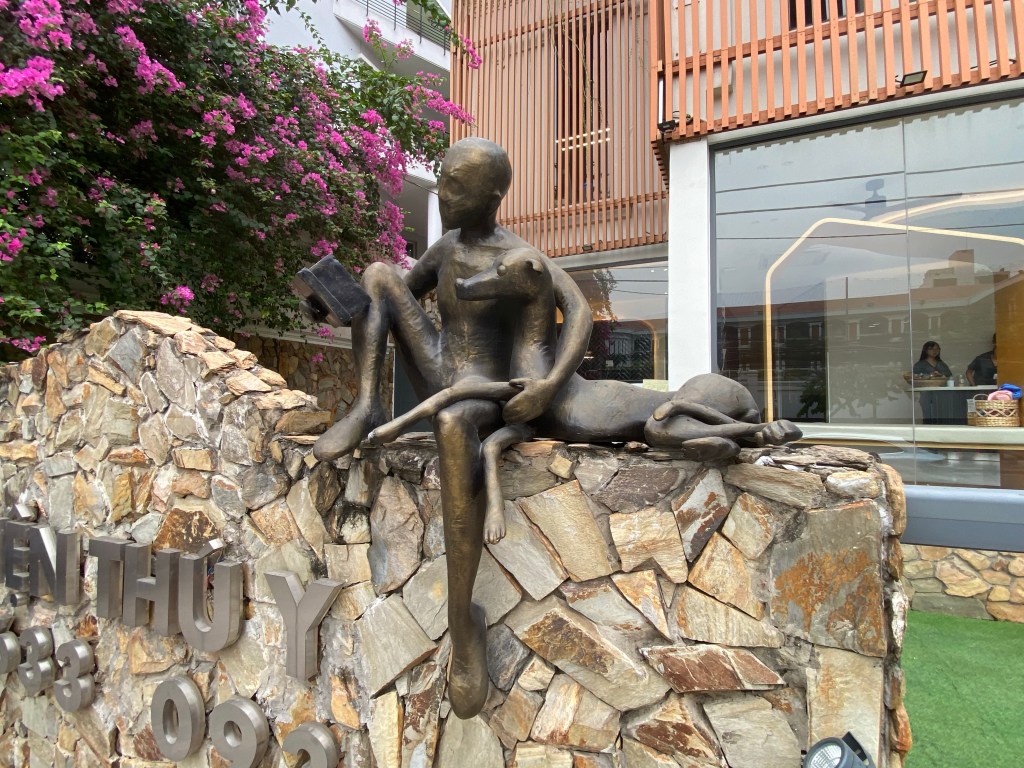
These two sculptures were my first inpression of the world of Animal Doctors International, a British run veterinary group operating in Laos, Cambodia, Vietnam and now also in Thailand.
Will Thomas, its founder and CEO, had very kindly agreed to meet me at their clinic in Thao Dien.
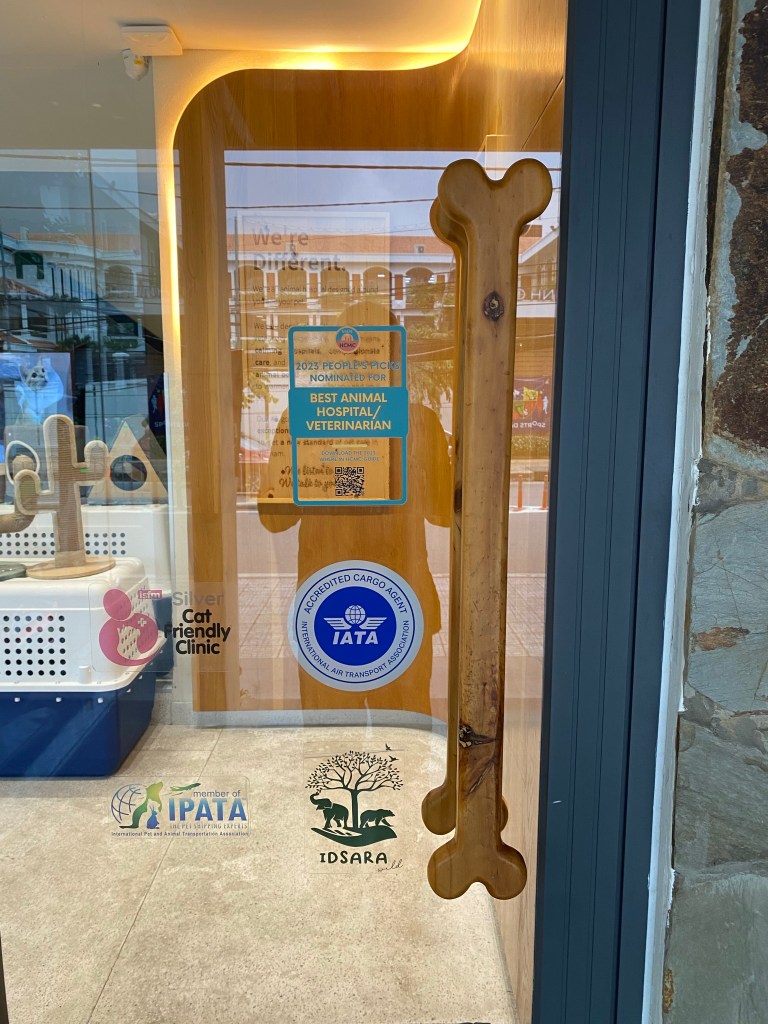
The visual journey continued when I entered the waiting room area, passing on the front door plaques of IATA, IPATA, an isfm Cat Friendly Clinic Silver award plus a 2023 nomination for the Best Animal Hospital in Vietnam.
Using an appealling combination of bamboo, marble flooring, indirect lighting elements and a small tree growing through the reception desk,
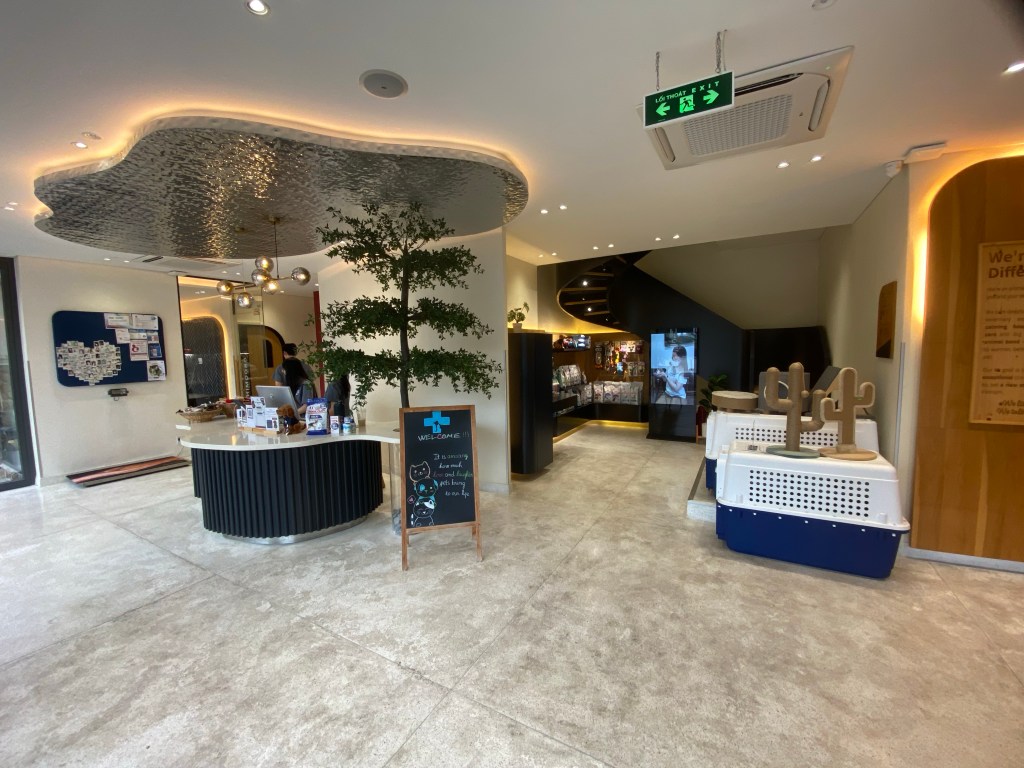
I was not only impressed, but I also felt that if so much thought had gone into every detail of the outside appearance of a practice, it would be highly unlikely that this standard wasn’t matched by a similar degree of clinical excellence behind the scenes.
I wasn’t to be disappointed.
First I met Will, a Bristol graduate and certainly not your usual company CEO. Very down to earth, in T-shirt and with a large colourful tatoo decorating the length of his left arm, he welcomed me in the clinic’s board room.
As remarkable as the man, was the story of his veterinary business.
“ It all started when I travelled to Laos. I fell immediately in love with the place and I never returned home!”
This – as I found out later – was less than 10 years (including a global pandemic !) ago and since then Will had established ten clinics all over Indochina, in countries with different political systems and different native languages. All of theses clinics provide a standard of veterinary care for companion animals, that was completely unheard of in most of these countries.
In addition to this, ADI is doing a lot of conservation work, runs an elephant clinic, organises spay and rabies vaccination clinics and provides continuing education for local veterinary colleagues.
Following my visit to Will and his team, I found visiting their website at http://www.theanimaldoctors.org both entertaining and quite impressive. The website even offers a 360 degree walk through the clinic in Saigon.
Back to my visit though…..
Will explained, that small animal veterinary medicine is still very underdeveloped in Vietnam, but undoubtedly the demand for state of the art veterinary care was absolutely there.
Will’s teams consist of a combination of both local and foreign veterinarians with a huge range of different academic backgrounds.

Native vets are providing nursing tasks and are at the same time upskilled by their foreign colleagues. Postgraduate education of staff members is happening online or by attending international congresses in Asia or further afield.
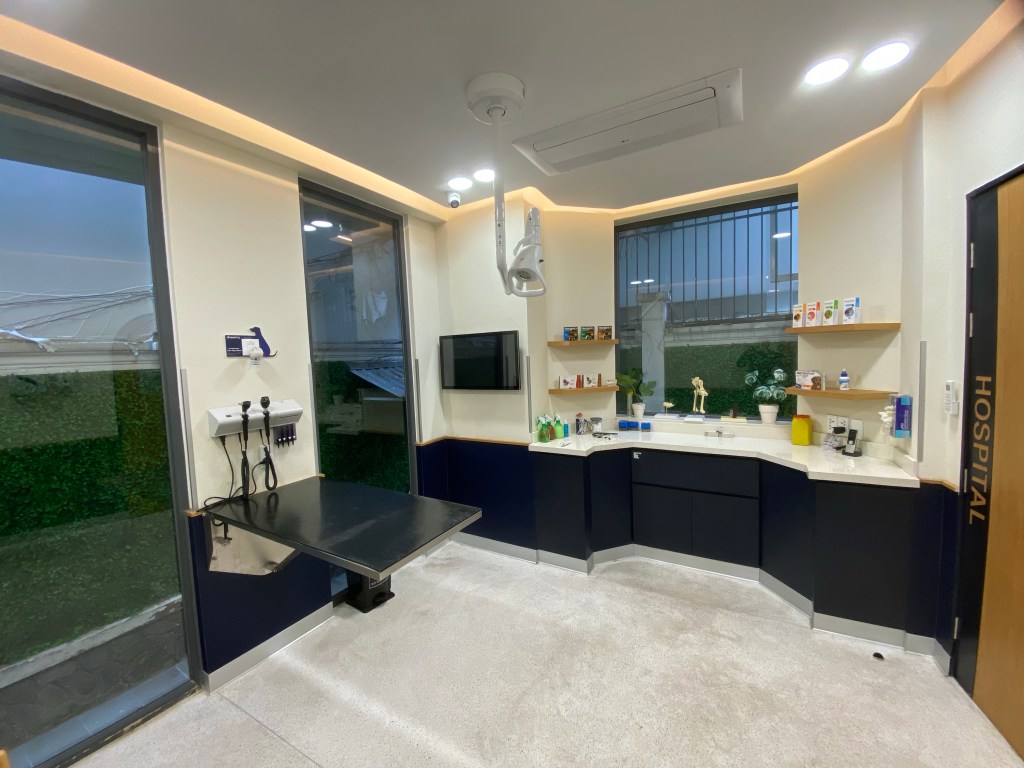
The consulting rooms of the clinic were functional, absolutely spotless and fitted with well thought through features like wall mounted examination tables and climbing opportunities for cats (some of them may be a bit too high ?…..) and all rooms were fitted with anxiolytic pheromone diffusers.

There was a large, well equipped prep-area and separate in-patient areas for dogs and for cats. Modern diagnostic imaging equipment in a dedicated room, as well as an operating theatre with an oxygen generator and a lot of monitoring equipment were further features.
The clinic offered boarding facilities and had a separate physio therapy area.

Veterinary fees at ADI, with a price of about 20 $ for a consultion, are understandably higher than at other small animal practices in Saigon (where some vets are only charging for any treatment provided), but they are still considerably lower than at similar clinics in Europe or in North America.
ADI’s clients are according to Will a combination of mainly Vietnamese pet owners and understandably a fair number of expats living in HCMC.
There is a large case load of infectious diseases, including parvovirosis and distemper, but thankfully only very few cases of rabies in all of Vietnam and no recent cases in Saigon and the Mekong delta.
Another frequent problem are tick borne diseases and parasitic diseases in general.
“And trauma cases ?” I asked, wondering about all the dogs I had seen riding motorscooters.
“Ah those……Lots! We see them all the time!”……was Will’s reply, before I got ready for my next scooter ride back to the other side of the Mekong river……

 The Blue Vet Diary