“He’s a good chap in his way. Serious. Not one of those noisy bastards at the Continental. A quiet American.”
This is, how Fowler, the main protagonist in Graham Greene’s novel “The Quiet American” describes Pyle, the charcter in the centre of his narrative. It is set during the French Vietnam war, when Greene was stationed as a war correspondent for “The Times” and for “Le Figaro” in Saigon. Written between 1952 and 1954, he correctly predicted in this novel that America would eventually been drawn into the conflict.
Considered by Greene as one of his “entertainment” works, the story also contains numerous autobiographical parallels to the life of the author at the time.
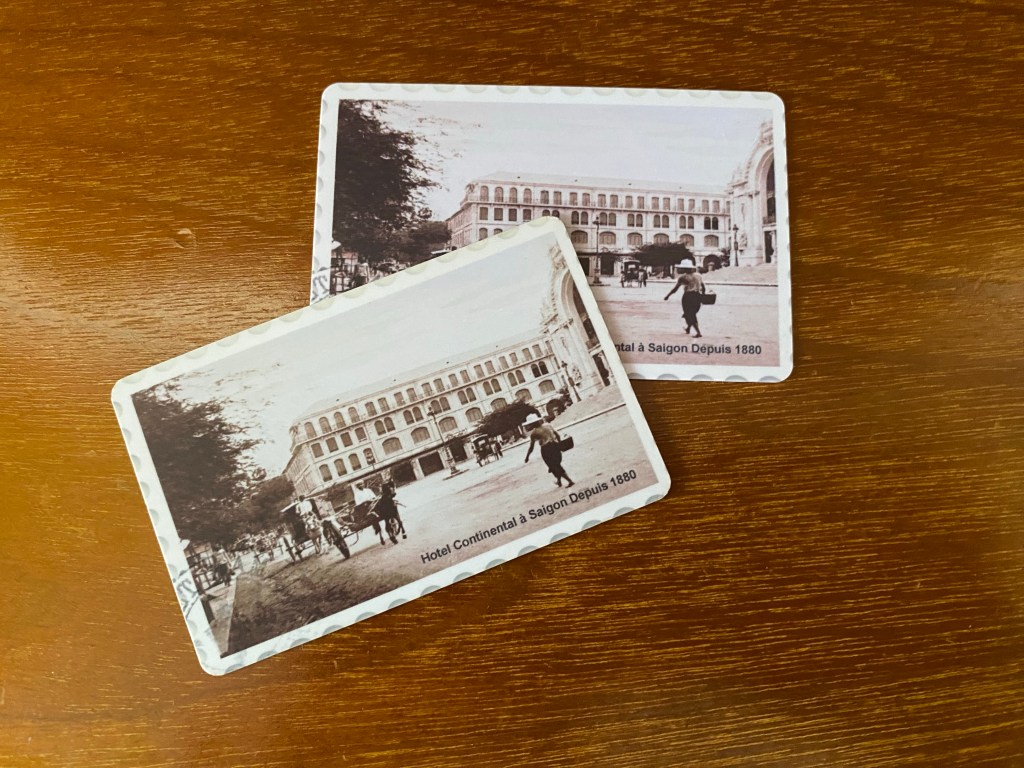
Like Greene, Fowler is a middle aged man, caught in an unhappy marriage with a catholic wife who is dening him a divorce. Fowler is portrait as worn, bored and cynical. Like the author he his struggling with periods of depression. He works as a reporter for a British newspaper and he is a frequent visitor of the Hotel Continental, at that time one of the most famous buildings in Indochina.
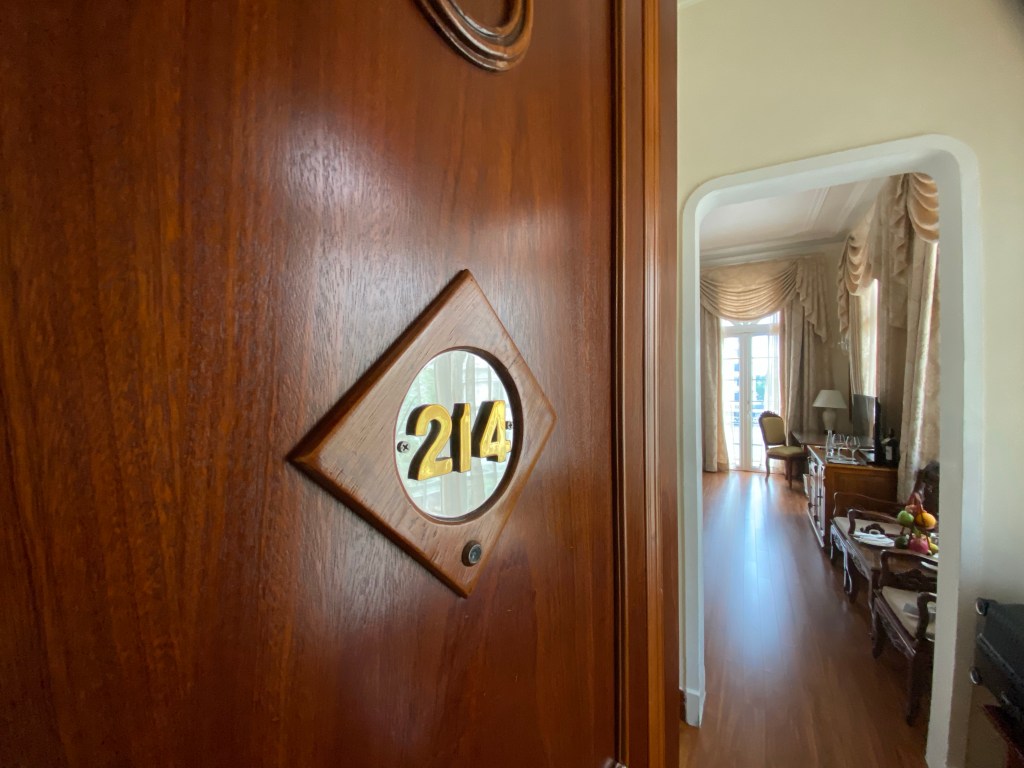
But unlike Fowler, who has his own, very humble flat just off Rue Catinat, now Durong Dong Khoi, Graham Greene used to stay directly at the Continental and if so, then always at room 214.
Located at the corner of the building, on the second in an elevated position above the street, the room allowed an excellent view of the square infront of the Opera and of Rue Catinat – more or less the centre of Saigon.

It is said that Greene preferred this room, because he could see from there, while writing, who was coming and going in Saigon.
This is reflected in the novel, as Fowler would have had to position himself at this part of the hotel to state that : “I had seen him last September coming across the square towards the bar of the Continental: an unmistakably young and unused face flung at us like a dart.”
Most – if not all – of the book was conceived in this room and after thoroughly enjoying it as my travel companion while touring Vietnam, some parts came so much more to life, once I had grasped the opportunity of staying at this room at the end of my trip to this country.
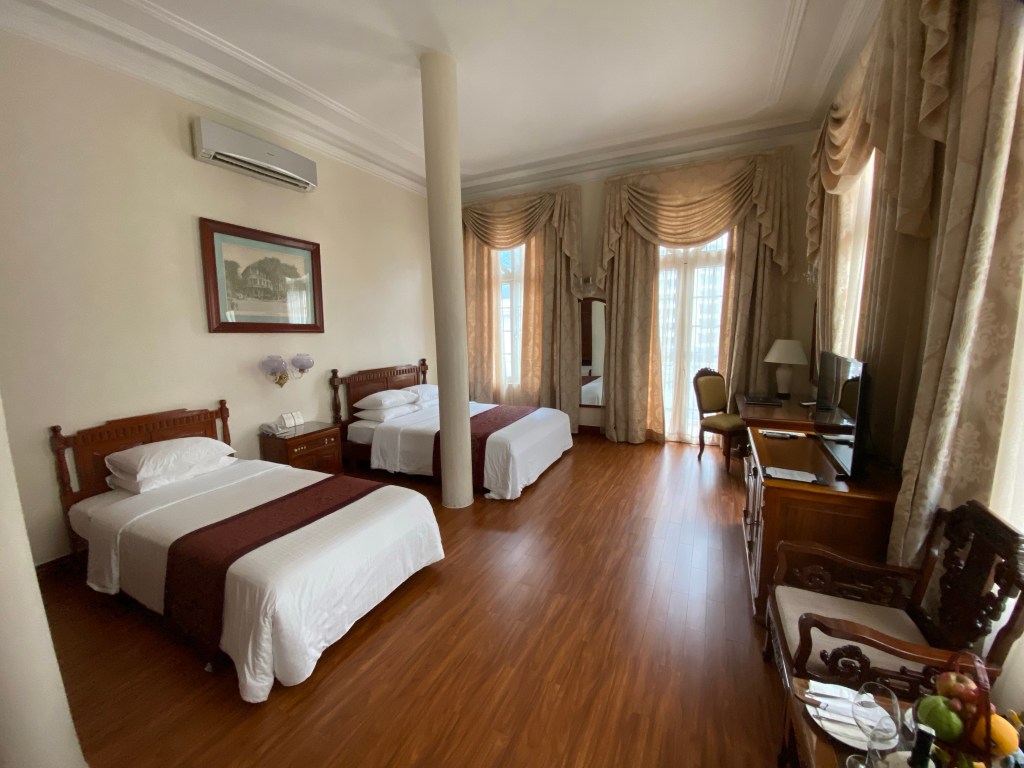
Although most of the interior is unlikely to be the original from the time of Greene’s stay, the hotel has tried its utmost to preserve the overall atmosphere of the room.
Imagining Greene sitting by the window (probably without airconditioning), the room – facing South – must have been very hot at times. I wondered if he managed to stick to his customary 500 words a day writing routine during that time, while filing at the same time his regular reports to London.
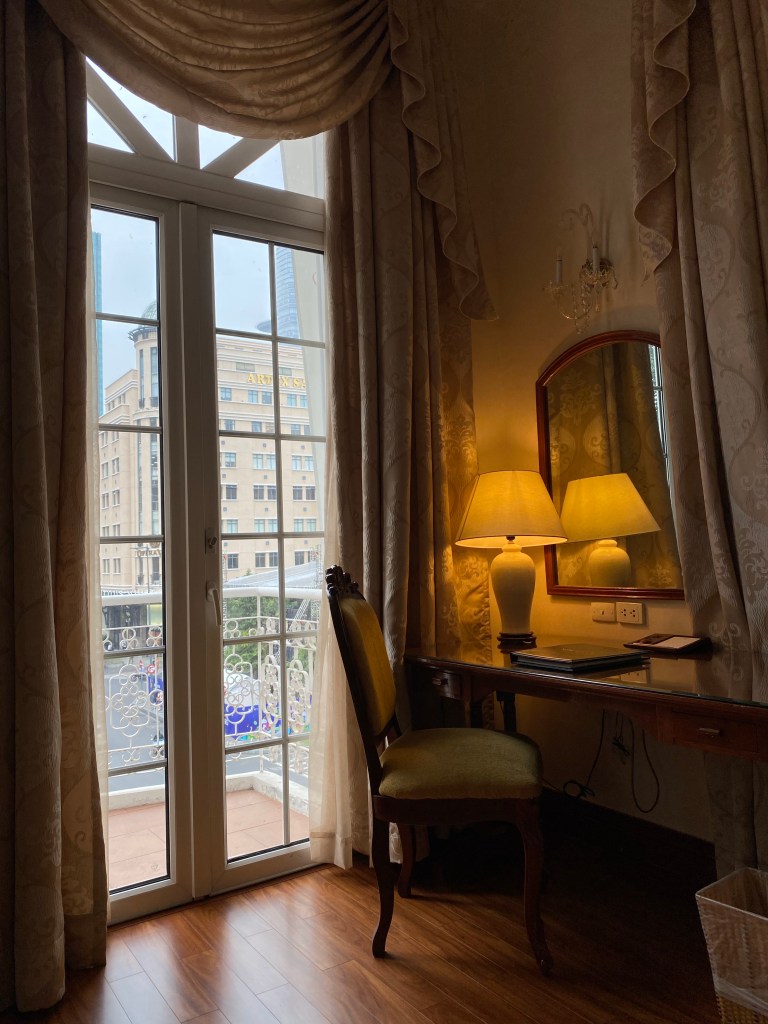
An unusual feature – I found – were the two columns that are right in the middle of the room. How many times did he run into one of them I wondered….
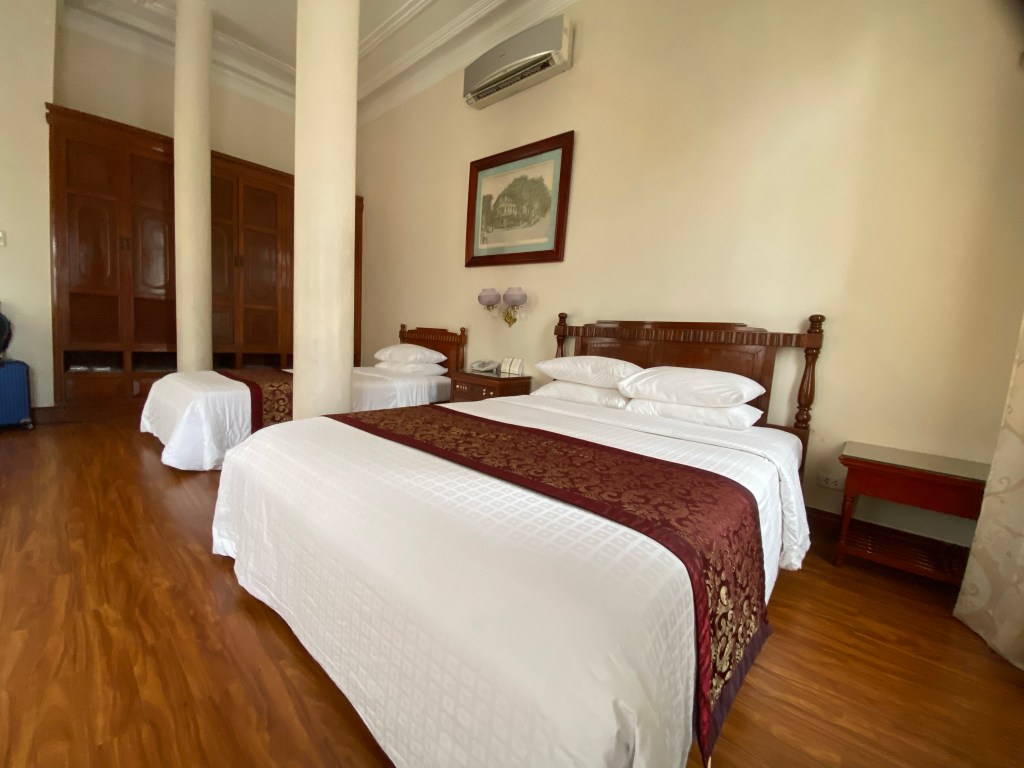
Another detail I noticed, which is likely to have remained from the time of Greene’s stay, were the very low set door handles. It was the same with all the doors in the hotel. Placed in the lower third of the door, they probably reflected the average height of the builders over 100 years ago. Today’s visitor they strike as unusually low placed and this stand in a stark contrast to the height of the ceilings.
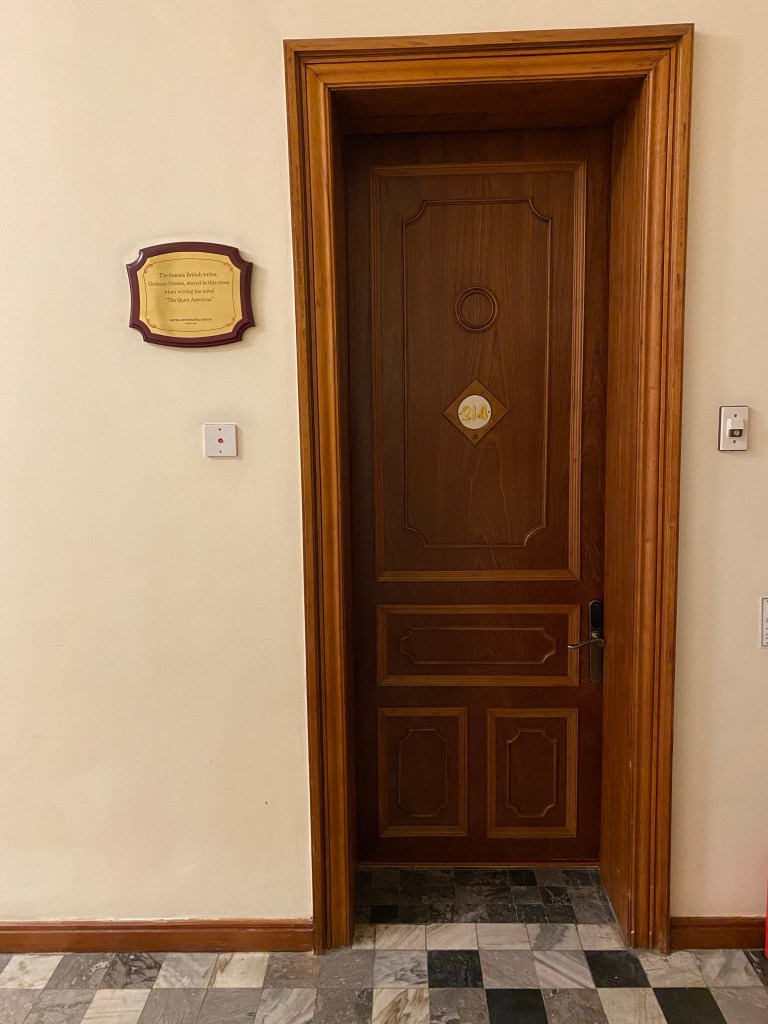
The hotel used to be one of the main meeting places of politicians, military leaders and journalists from the end of the Second World War until the end of the Vietnam War in 1975. One can imagine all the important and at times historical conversations and events that took place behind these unusual doors.
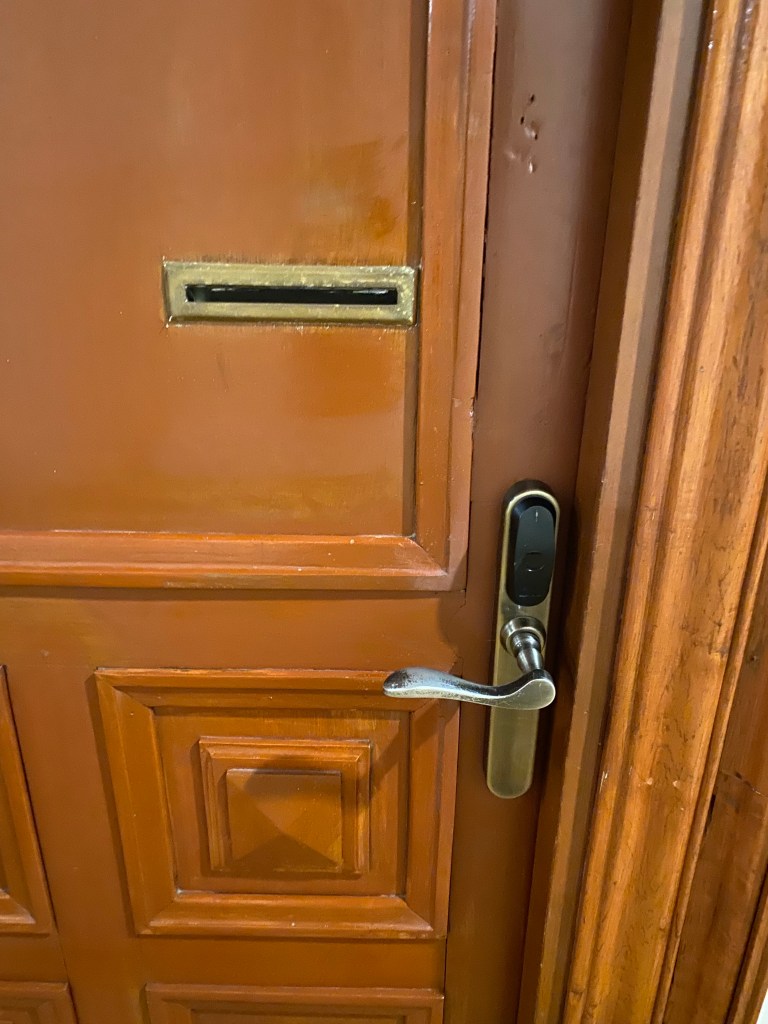
The Continental is no longer the most luxurious hotel in town. The view from the room’s window towards the Mekong is obscured by modern high rise buildings that are dwarfing the old colonial dwellings and if you are looking for a well frequented hotel bar, it is probably better to head for the roof tops of the near by Rex or for the Majestic Hotel next to the river.
However, the hotel still has its charm and staying at room 214 made reading “The Quiet American” a far more intimate affair.
 The Blue Vet Diary