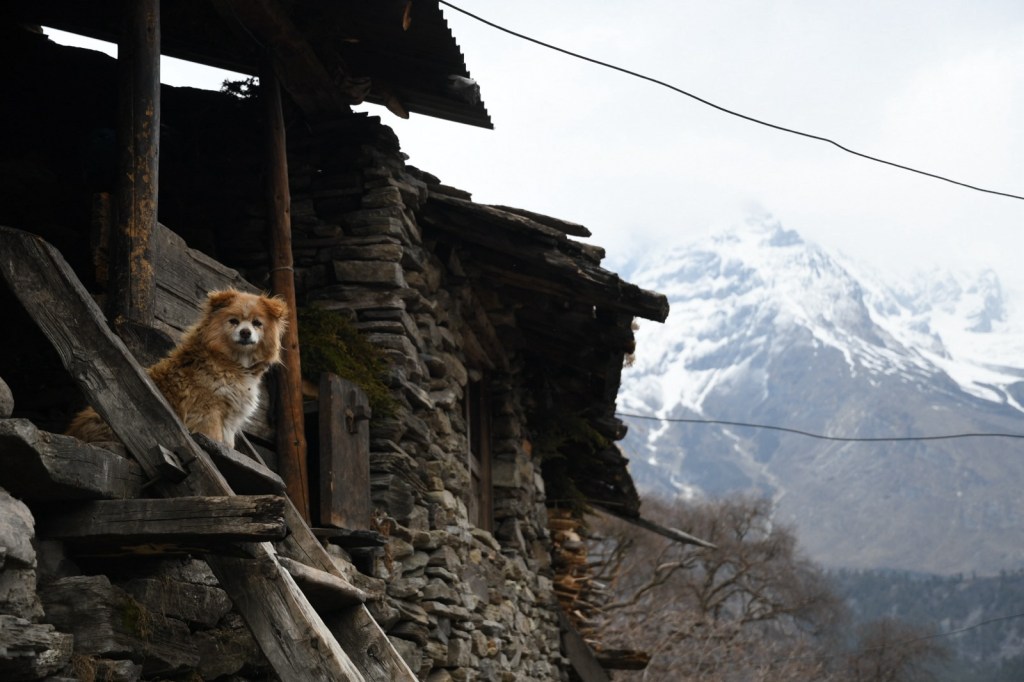
It just wouldn’t be right to talk about hiking through the Himalaya as a veterinarian and not to dedicated a few lines to the canine inhabitants of this region.
The dogs of this harsh environment differ somewhat from the ones I came across in Kathmandu.

In the city, clearly size matters. Not too small, to be able to compete with other canines for sparse food resources, but also not too big, for not appearing to be a threat to humans in their environment.

Most of these usually very gentle creatures, all cross breeds of some sort, don’t seem to have a specific owner, they rather claim a defined patch on a street and are there tolerated as part of the street life. They live off whatever is given to them by caring residents and shop keepers, and they are at times surprisingly choosy about what they eat and what not.
Pretty unfazed by what is happening around them, they are no real car or motorbike chasers, but unusual vehicles (eg street vendors with recorded anouncements or irritating tunes) can quickly rise them from their state of slumber.
Near butcher shops (usually operating without any means of refrigeration….) and religious sites, the number of dogs tends to increase and here also packs of dogs are a not uncommon.


In the mountains, the size of dogs tends to vary more and with most dogs being connected to a specific household, their physique needs to meet the requirements of their purpose.

Small spitz and terrier like dogs are not uncommon and nothing coming near a dwelling is missing their attention.

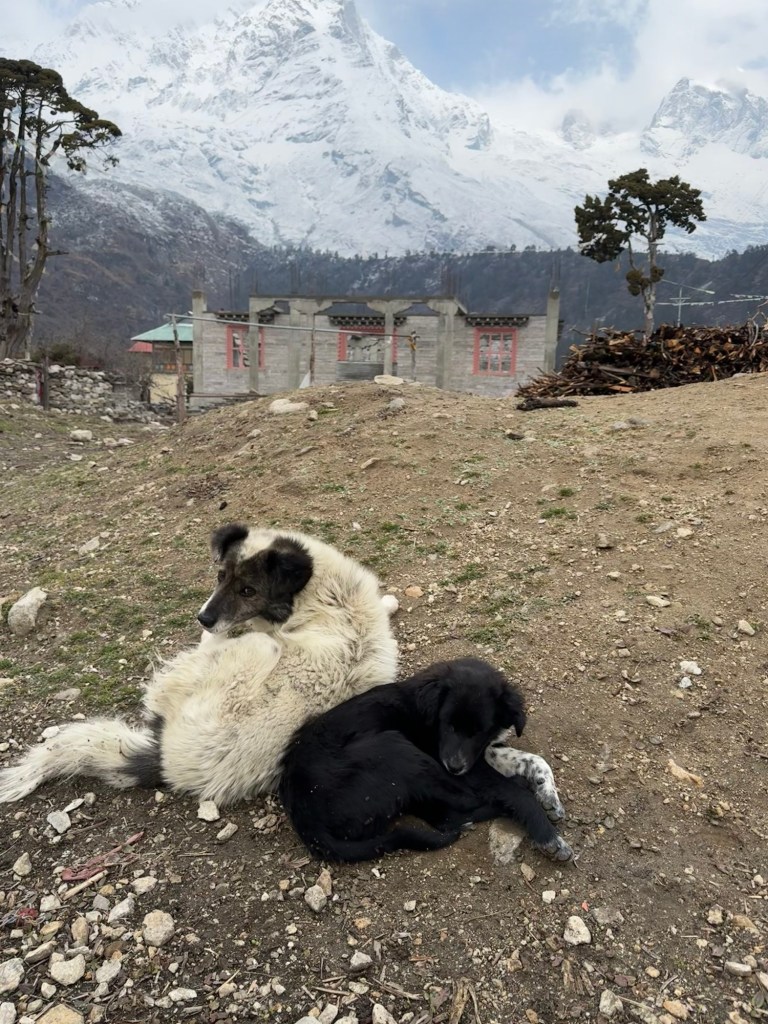
At higher altitudes, thick fur is a basic requirement, especially if dogs are kept outside the whole year. These dogs are usually not allowed into the upstairs living quarters in traditional houses, but they live together with or near the livestock in the basement or in the yard.
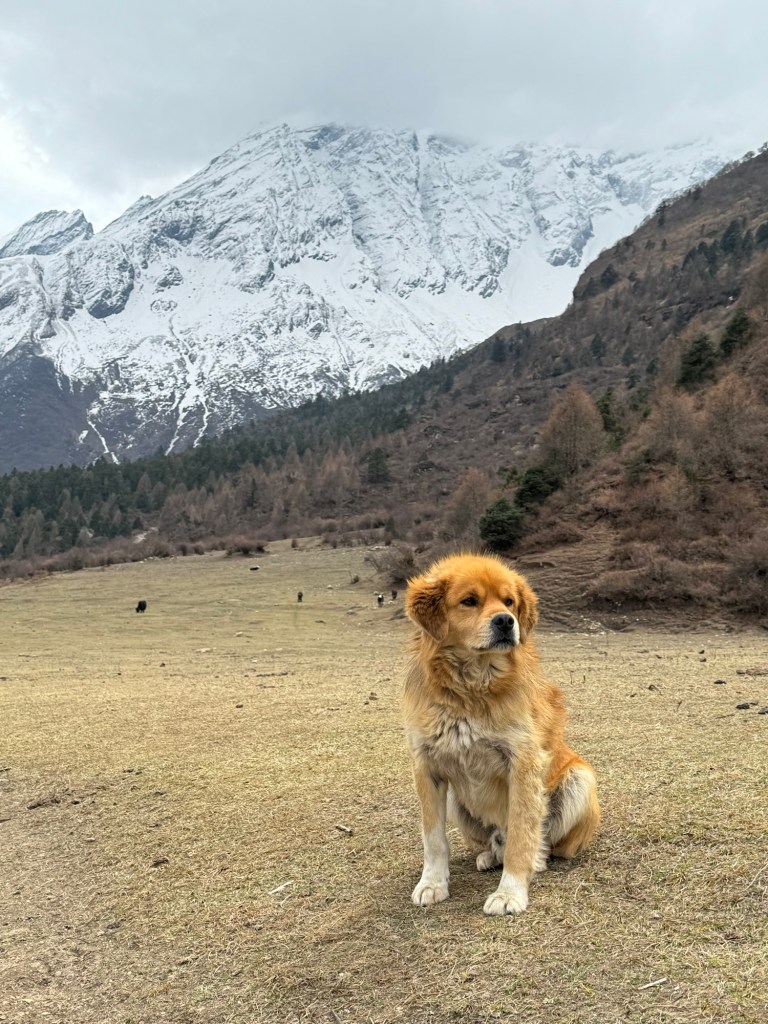
Seeing chained dogs was thankfully a rare sight and in most cases dogs had the freedom to roam, which might include accompanying a hiker from one village to the next, as in the case of this adventurous canine.
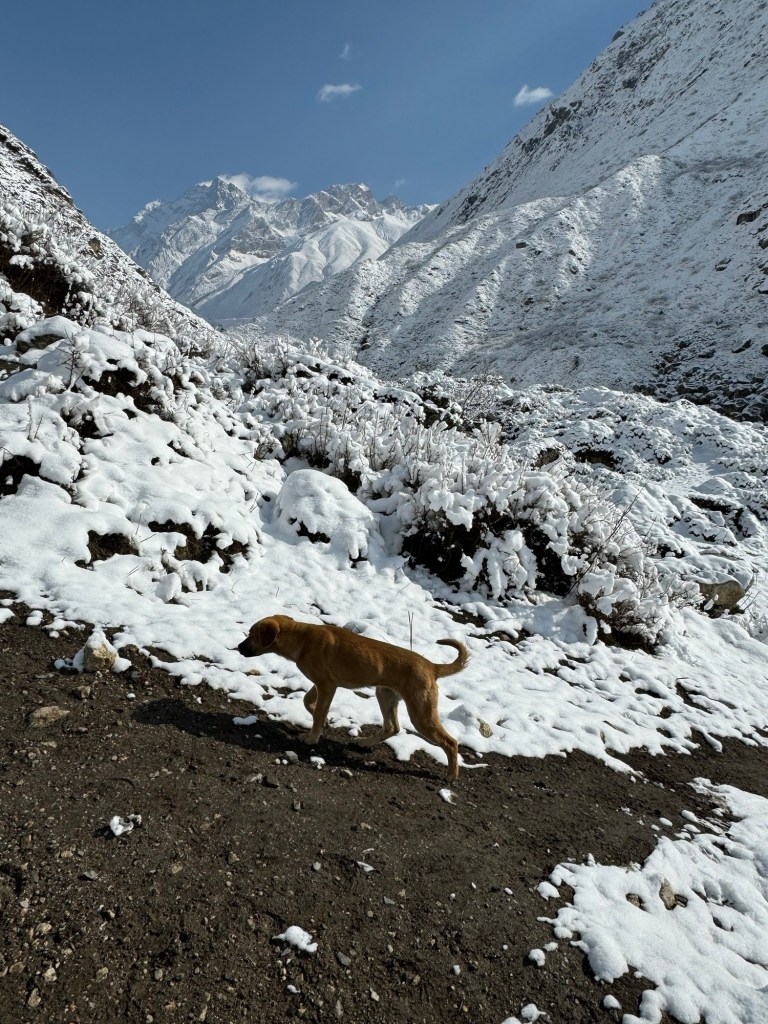
Despite a lot of young lambs, kids and chickens being a constant feature along the path while walking through mountain villages in the Himalaya, I never witnessed one of these dogs chasing them or trying to chase any of the local wildlife.
Clever dogs learn early in life, to stick closely to the youngest members of a family
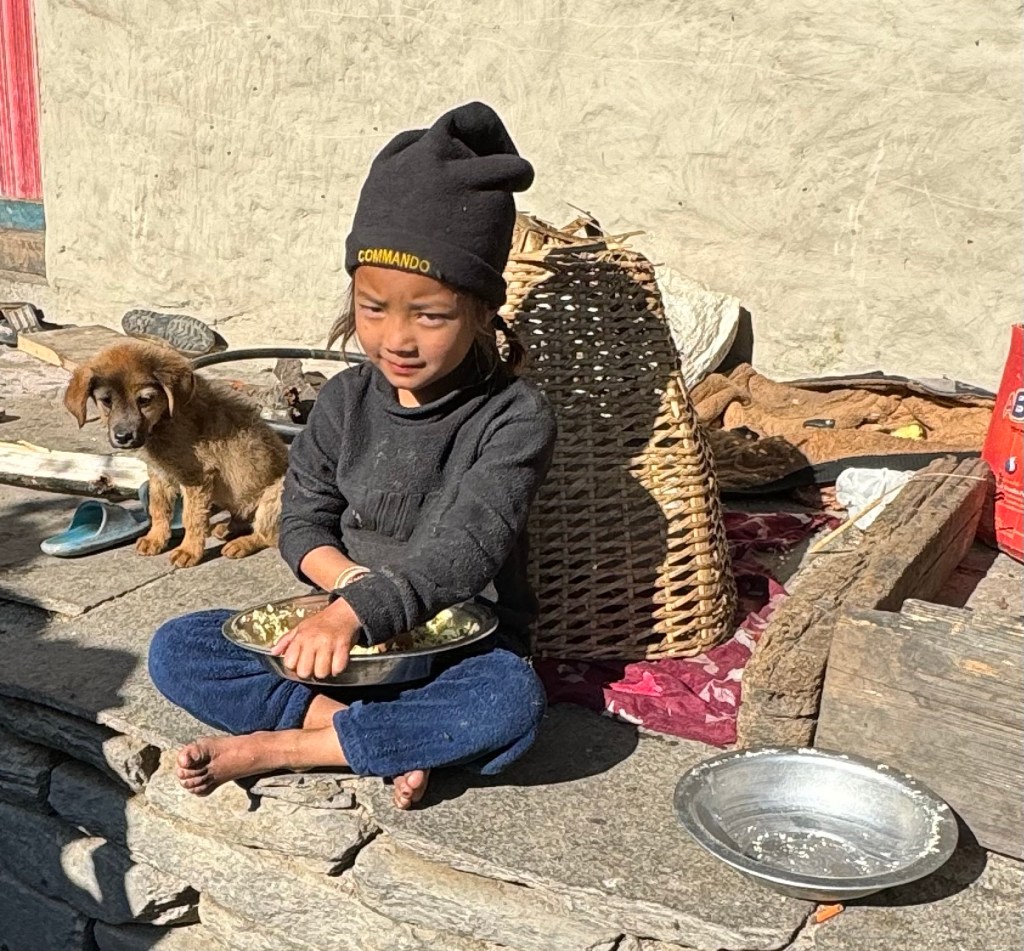
and the ultimate state of existence is definitely to find yourself as the resident canine in a Tibetan monastery…..
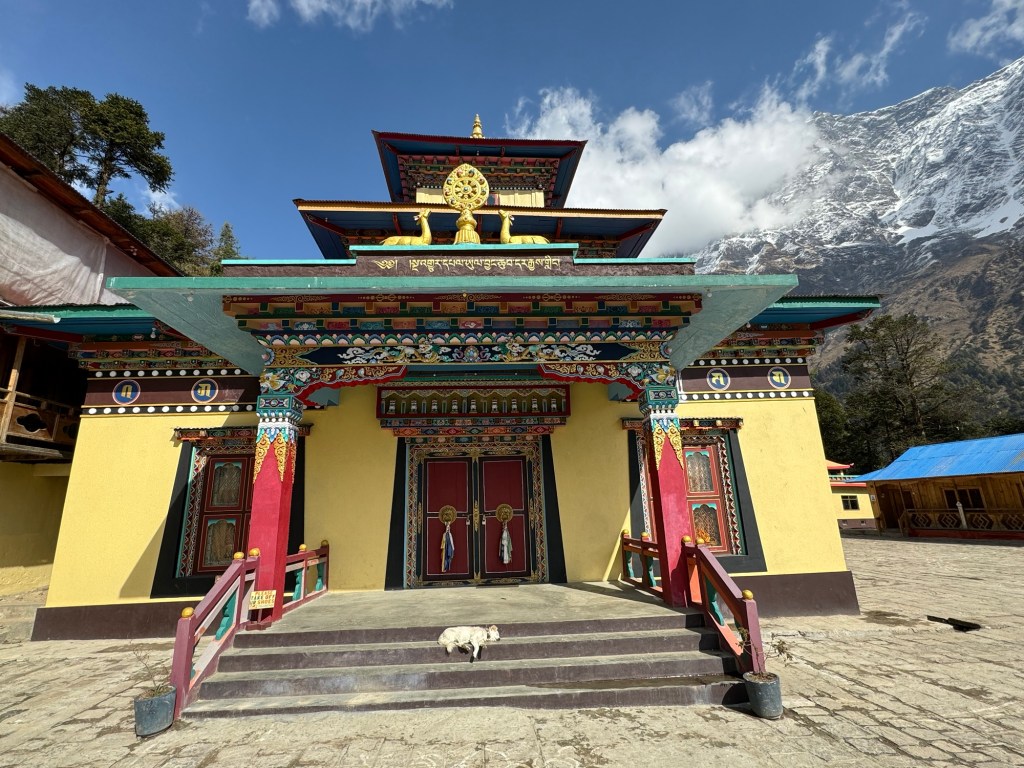
Regardless of a mostly inadequate diet of human food scraps, livestock fodder, mule dung and whatever can be scavenged on the trail, and living a life in the abscence of any kind of meaningful veterinary care, most of these dogs of the mountains were in a pretty good overall condition, usually somewhat undernourished, but without any overt signs of skin or fur defects, growth deformities or signs of infectious diseases.

And what about cats one might ask?…….
They too exist in the remoteness of the mountains, but due to the competition from dogs, monkeys and indigenous wild predators, who might even consider them as a potential food source, cats in general appear to have a far less visible existence in Nepal and they do not enjoy the same life as eg their Mediterranean cousins.


 The Blue Vet Diary