
Despite the best preparations for your travels, it is unavoidable that you sometimes come across something completely unexpected….
This is what happened to me, when I was standing in front of the impressive gates of the eye catching wildlife hospital at the head quarters of Chitwan National Park in Sauraha.
I had never heard of it and in my reading up for this trip, I had found no references for it.
The only reason I had stumbled across it was, that I had visited the local wildlife museum and wanting to investigate some working elephants further down on the premises,
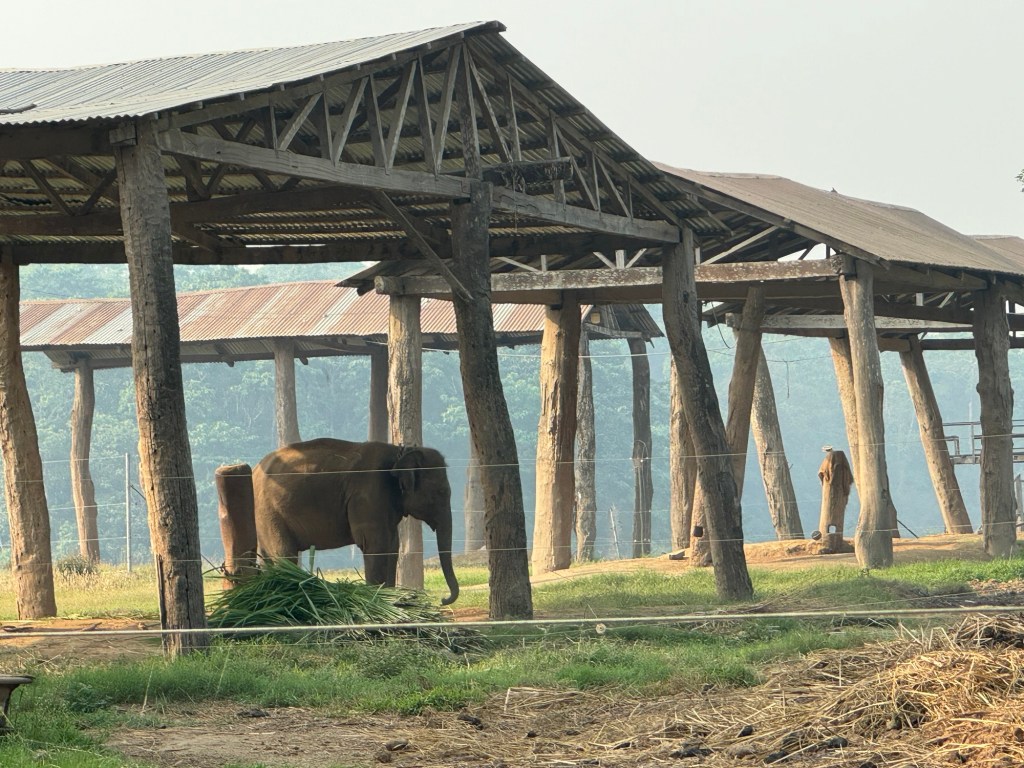
I found myself standing in front of it.
First however a few words about the museum:
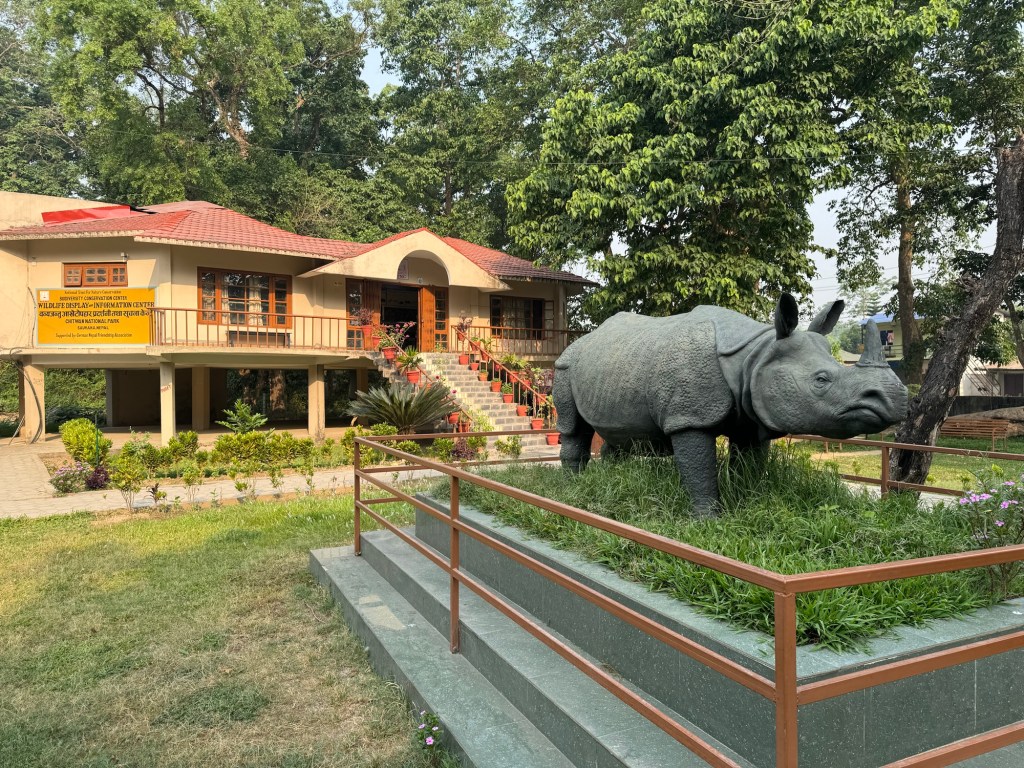
Considering the equally impressive front of the building, including lifesized models of an Asian rhino and of a huge ghadial, I had been more than happy to part with the modest entrace fee of 100 rupees ( 70 cent).

Once entering though, I found myself inside a horror cabinet of pickled animals of all sizes, which would have rivalled a Damian Hurst exhibition on its curiosity level. Everything that can and should and everything that should not be displayed in a glass jar could be found here…..
On the acceptable side it arguably included rhino foetuses and a number of smaller fish species, but finding wild cats, pocupines, a pangolin or small songbirds submerged in large quantities of ethanol, just looked wrong and it didn’t get much better, when I came across the exhibits of two rare ganges dolphines, which despite all efforts to preserve them, appeared in a miserable state.
It all reminded me of a short story by the famous German author Siegfried Lenz, where the protagonist during the black market years following the second world war, ran a brazzing trade by providing American GIs with endless quantities of alcohol for their parties. Only when the booze ran out on a specifically wild occasion, so that the narrator had to turn up unannounced at his supplier at the natural history department of the local university, the source of the moonshine became apparent…..
The twist in the tail was, that when he returned to the party with fresh supplies, his customers were so happy, that they insisted, that he had to join them for a few drinks…….
The exhibits at the wildlife museum, which had avoided the pickling treatment, had been equally unfortunate, as they appeared to have fallen into the hands of a class of novice taxidermists or they must otherwise have been the handiwork of someone who should never have taken up this trade.
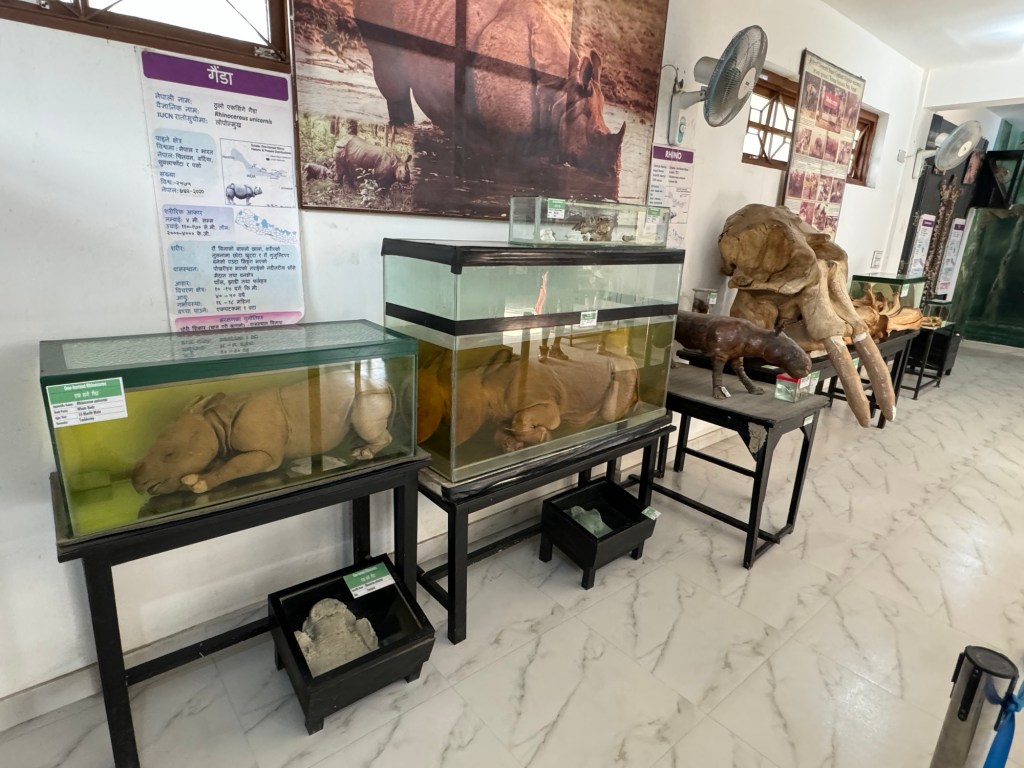
The beautiful body of a once lean leopard balanced bloated on top of a tree branch, with its limbs twisted in unnatural angles. A new born rhino looked more like a charred Pompeian house hold pet or like a piglet in the final stage of spit roasting.
Now to the wildlife hospital:
Despite its shut gates (it was the weekend after all…), I had much higher hopes.
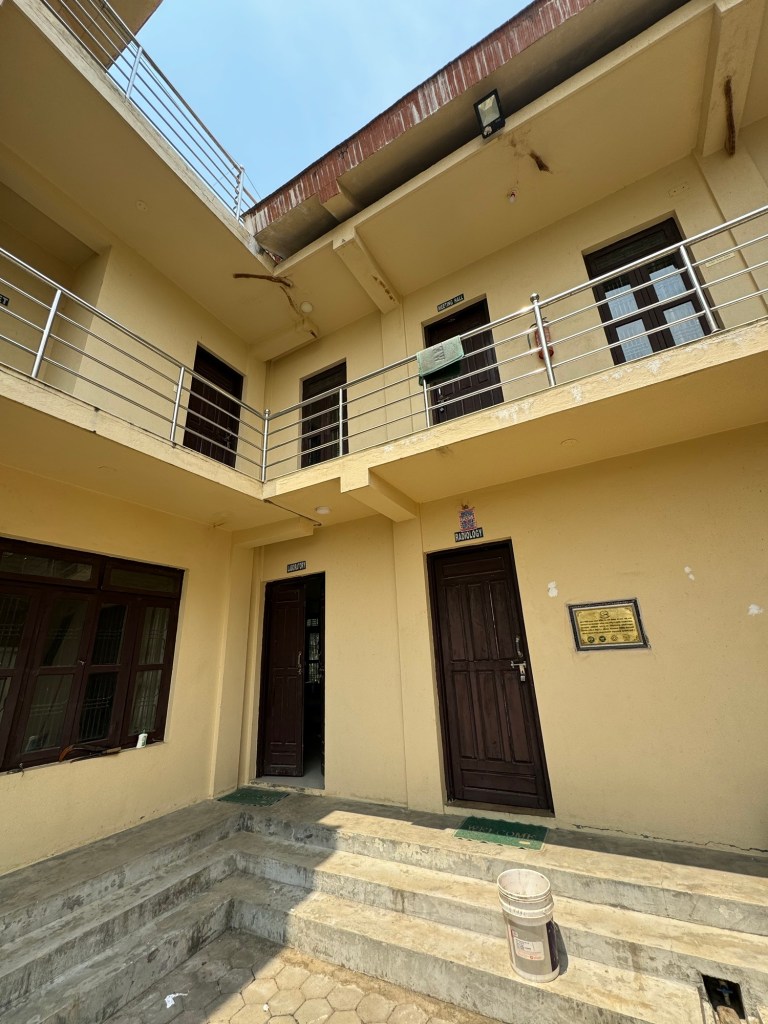
Over the following two days, I made a number of enquiries, but only a couple of hours before my (thankfully) delayed return flight from Baratpur to Kathmandu, I was fortunate enough to meet up with my local colleague Dr Bikalpa Karki, who was kind enough giving me a brief guided tour.
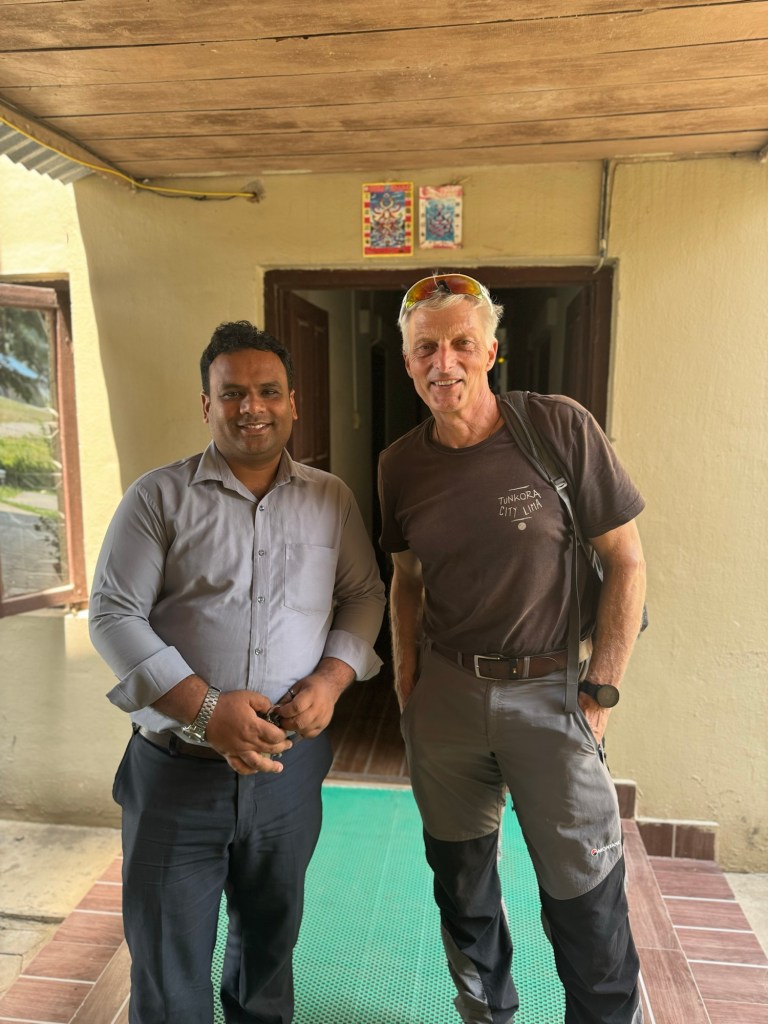
What I saw though, was sobering….
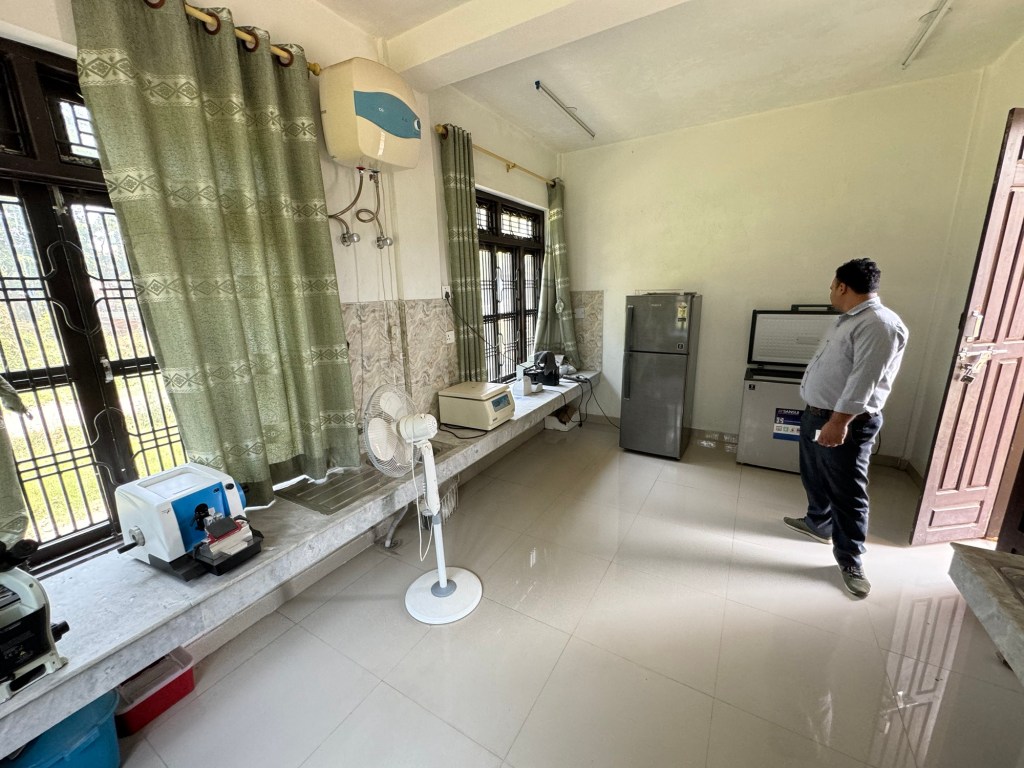

As impressive as the building had been on the outside, the rooms inside were mostly empty, with laboratory and anaesthetic equipment that was not functional, where essential supplies were missing or where my colleague and his team had no received any training on how to use it.
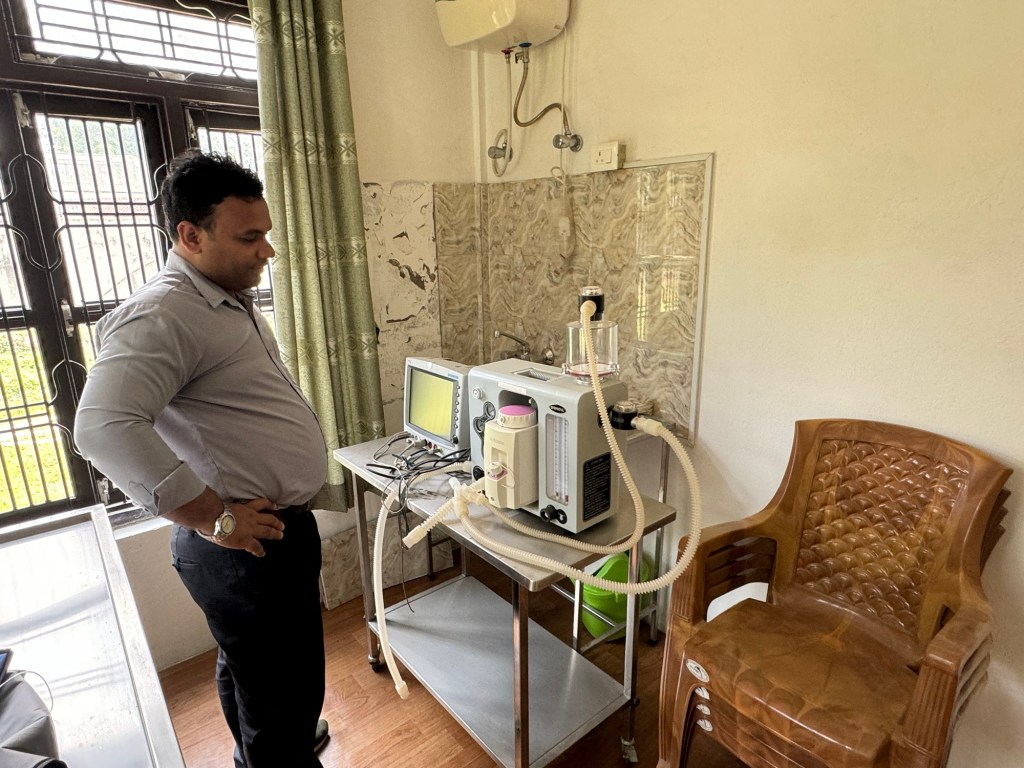
As it turned out, the majority of the team’s workload, partially due to the size of their patients, was still ongoing as ambulatory activities in the field.
Working with injured wild animals isn’t without a risk, with accidents unfortunately not unusual to happen in Chitwan, so that it was not too difficult for me to accept, when my colleague was somewhat reluctant to show me the only inpatients of the clinic, two tigers, which were held in a compound adjacent to the hospital.
A success story however appeared to be the rhino orphanage. A small group of three juvenile rhinos of different ages were living on the compound which the hospital shared with the Nepalese army. The three youngsters appeared to have a well protected life among the military barracks.
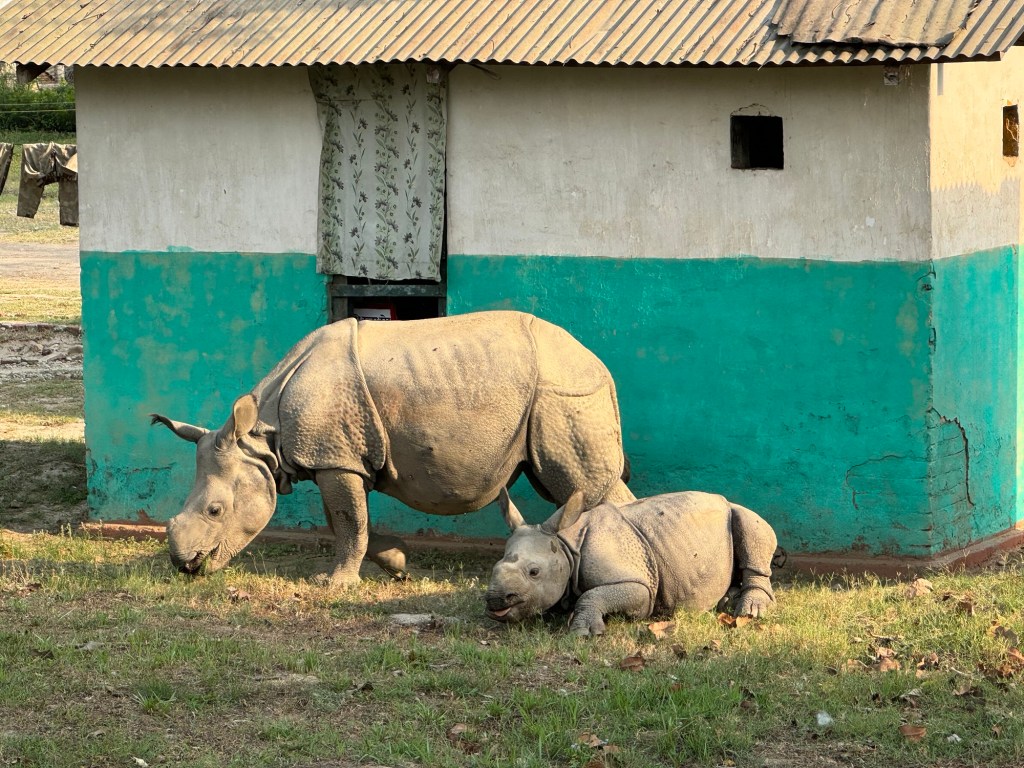
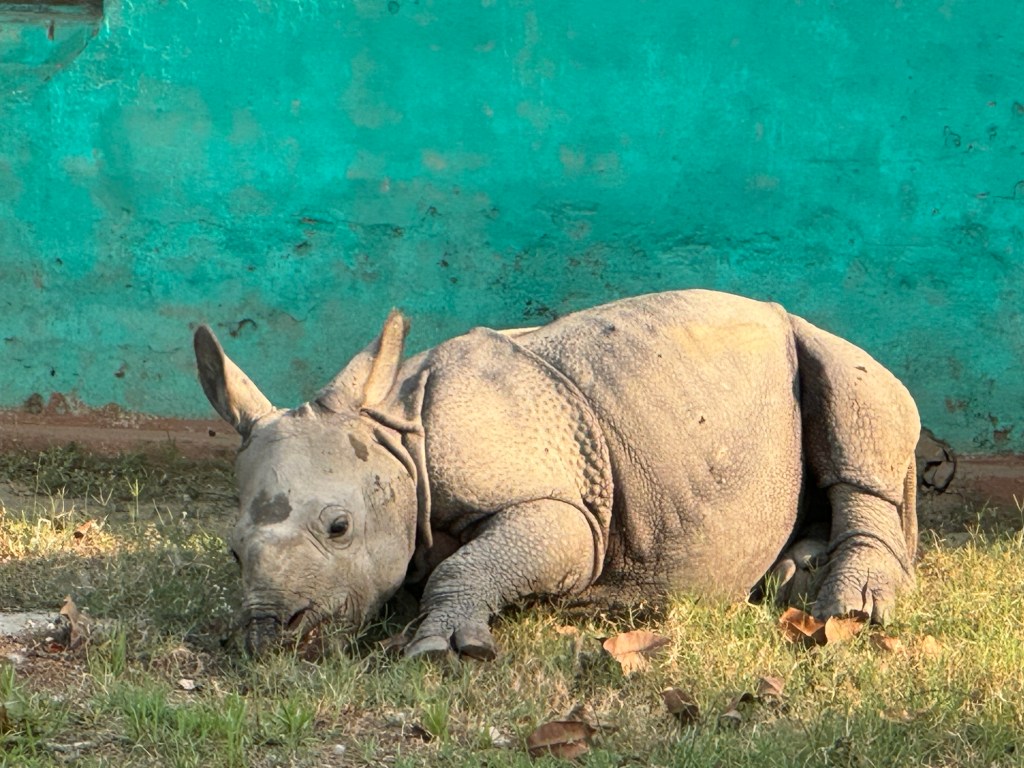
The example of the museum and the hospital showed, that buildings can only be a start and that both skills and gear are needed to make a great idea a lasting success. Time will tell, in how far this will be the case in Chitwan.

(If any my colleagues reading this entry is planning to visit Chitwan National Park in the nearer future, please do get in touch with me directly on vet@bluecat-ltd.com , if you are interested to support the veterinary team at Chitwan NP with your knowledge or with much needed equipment.)
 The Blue Vet Diary