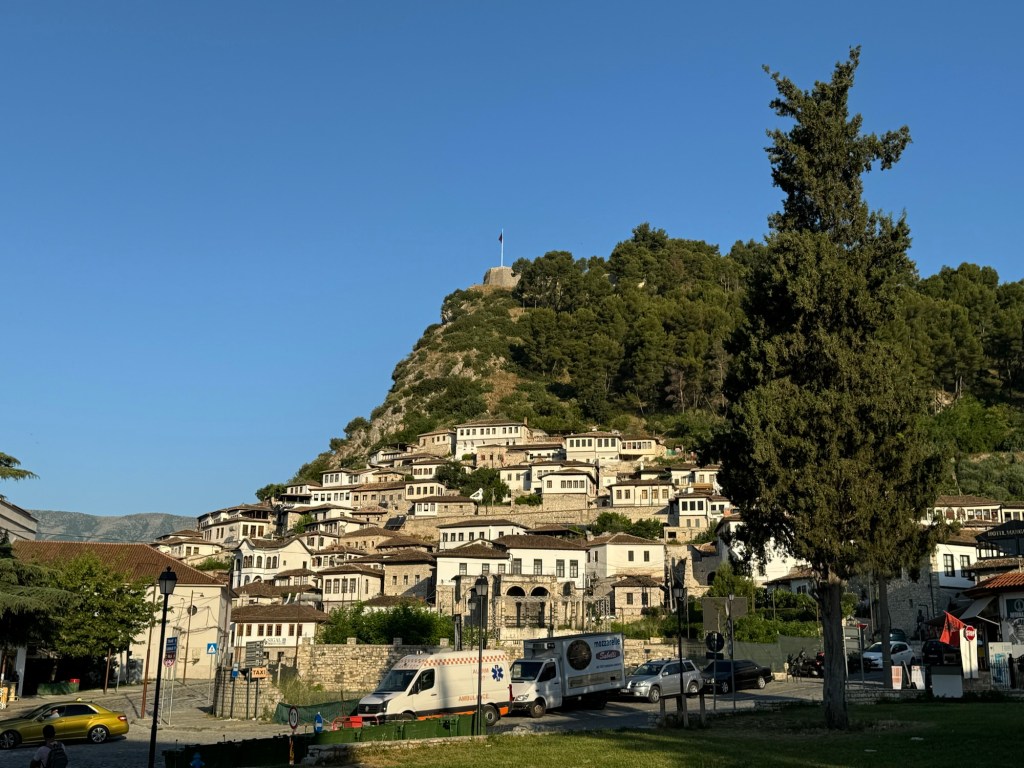
The sun had not even risen behind the towering Tomorri mountains far in the East, when I crossed the town square of Berat, Albania’s “White City”.
A small gang of large, but benign stray dogs was happy to see me and a couple of them came running towards me in the hope for some early morning food hand outs.

I had to leave them disappointed though, but at least with some gentle patting behind the ears for their efforts.
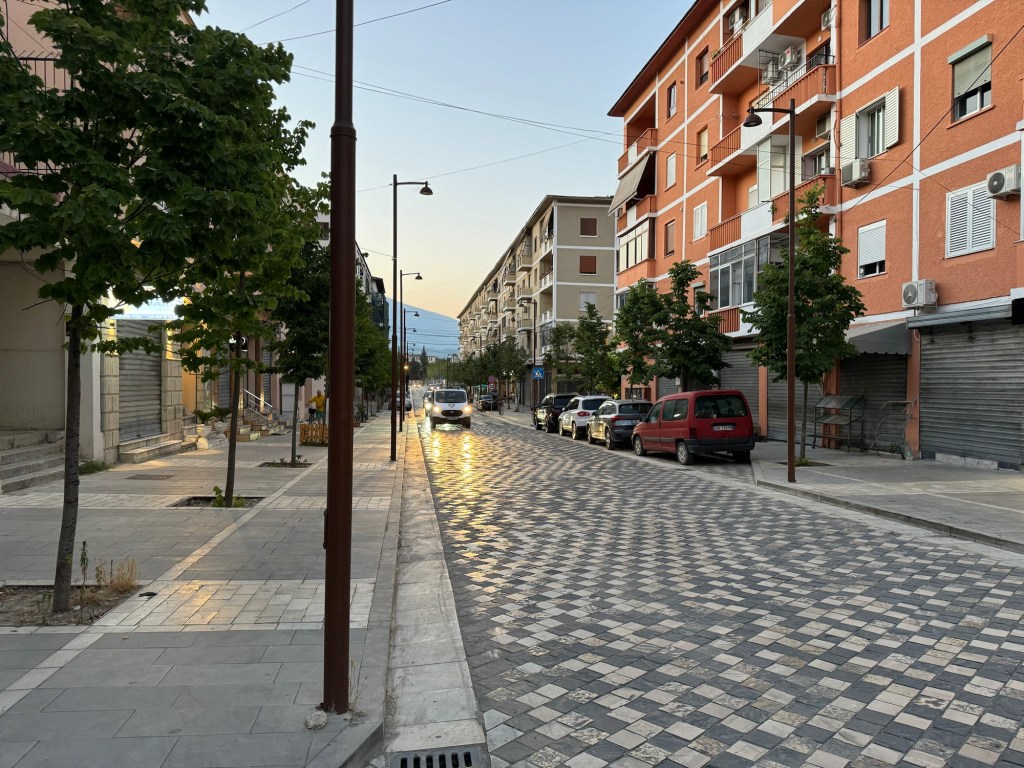
Walking along Rruga Antipatrea, I passed the local baker, who enjoyed a cigarette in front of his small shop after finishing to prepare the fresh rolls and croissants for the day.
Along a narrow cobblestoned alley, just behind the Xhamia Mbret mosque, I headed for Rruga Mihal Komnena, a straight road passing right through rows of old Ottoman houses, which gave the town its name.

This well maintained street, lined by elegant cypress trees, provided the only access to the ancient castle on the hill.

As the thermometer had gone past 35C for the last few days, only the early hours of the morning provided a sensible opportunity to explore this World Heritage site in the middle of the summer.

Just when the sun was rising above the mountains, I reached the castle wall and standing by the flag pole at the Southern end of the complex, the strategic benefit of having a stronghold here became apparent. Standing at this place, it was possible to overlook not only the town below and the Osumi River, but it was also possible to look far into the fertile valleys of both the heart of the country in the East and in the West towards the Adriatic Sea.
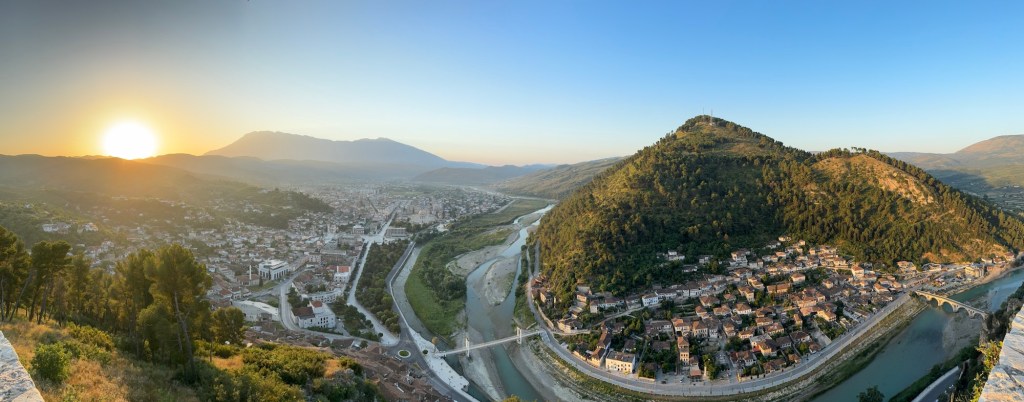
This clearly was a place of connection, of trade, of interaction between the people coming from the mountains with those coming from the Sea. One of the meeting points between the Ottoman and the Habsburg Empires with many features in the landscape to tell about this century old blending of cultures. The vineyards on the hills mirrored those in the Wachau in Lower Austria, the old Byzantine church on the Northern side of the castle wall
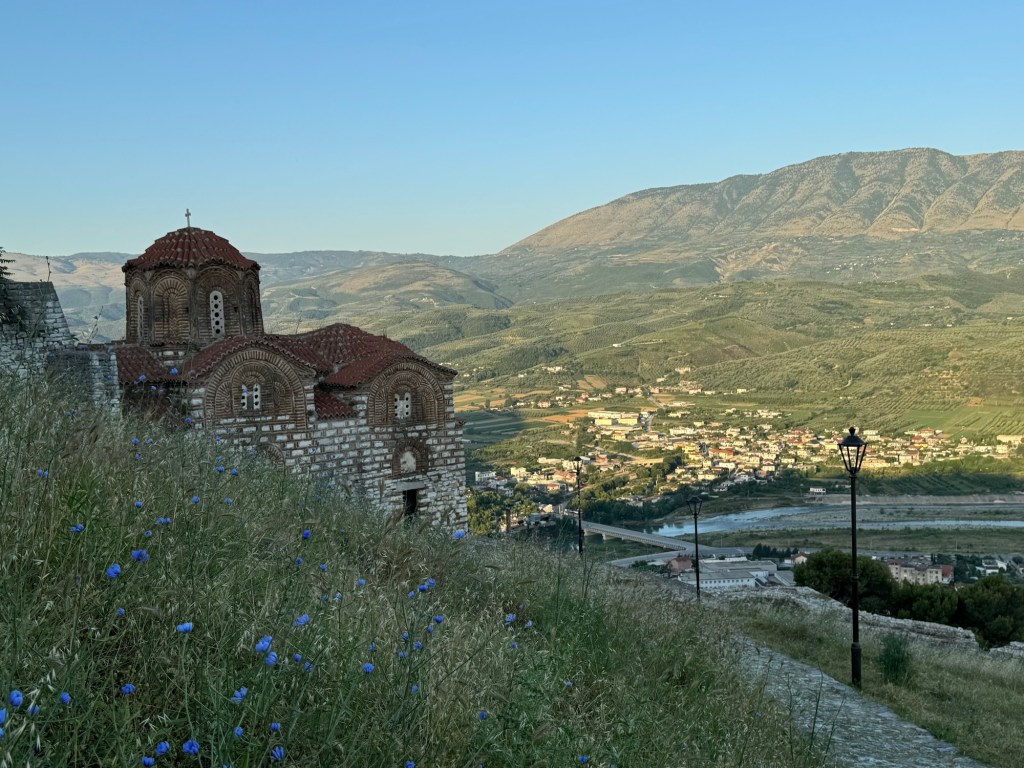
reminded me of the ancient structures I had seen at Mount Athos in the Northern Aegean, and Gorica Bridge, right below me in the valley, connecting the two parts of the town for over 200 years, as well as the mosque right next to it, could also have featured in many places in Turkey.

And yet, this was a view which would have been very difficult, if not impossible for me to obtain much earlier in my life, when Albania had very much isolated itself from the rest of Europe, representing a white spot on the map – a place you knew very little about, a place you by-passed on your journey South, a place that was characterised more by hearsay and by prejudice, than by the interaction and communication with the people who lived there and by the features and the beauty of the landscape on the ground.
While Berat and Albania in general and its people appear to have escaped their recent history of political oppression and isolation, and are now thriving in an environment of cultural exchange, economical opportunities and renewed professional interaction, other countries might be heading into just the opposite direction…..

 The Blue Vet Diary