There was no point to scream, as there was no escaping from it anyway…
With some surprise I realised, how many nerve endings could be found on the surface of a human body, while several layers of my skin were removed by a bearded stranger I had never seen before. I just tried to dig my nails deeper into the marble slap underneath me, while wondering what pain relief I might employ, once this unexpected assault had finished ……
“Go to No 5!” was what Irakli, the Georgian film director I was staying with, had replied to my question, where to go to experience one of the most intense sensations travellers have enjoyed for centuries when visiting Tbilisi.

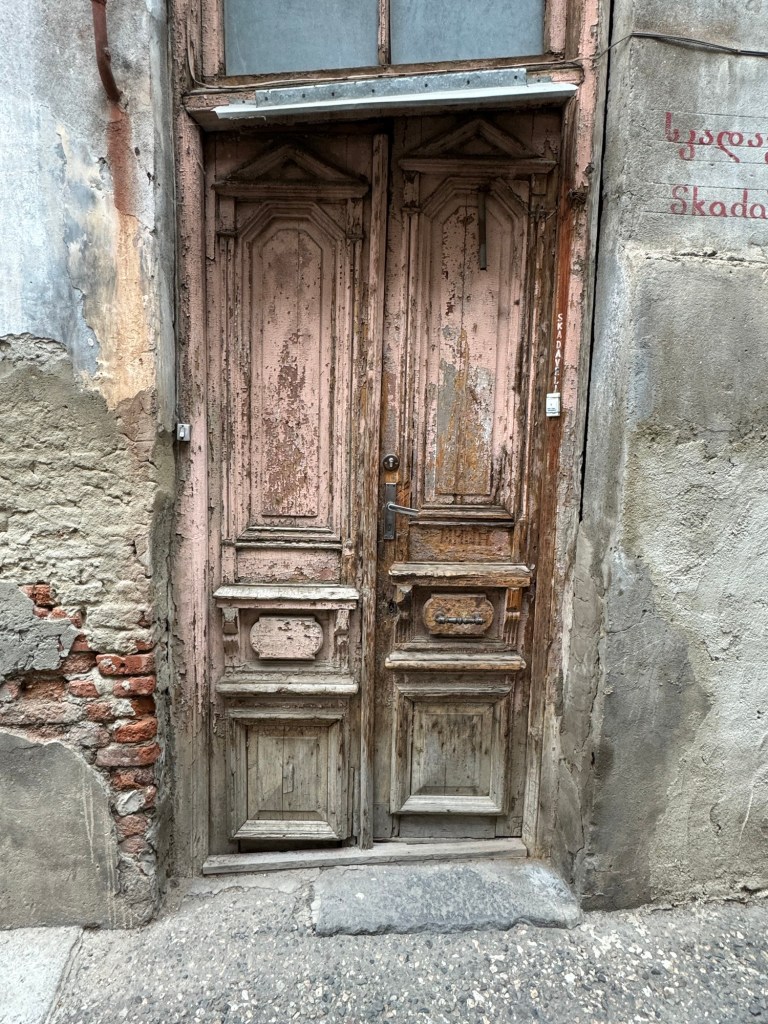
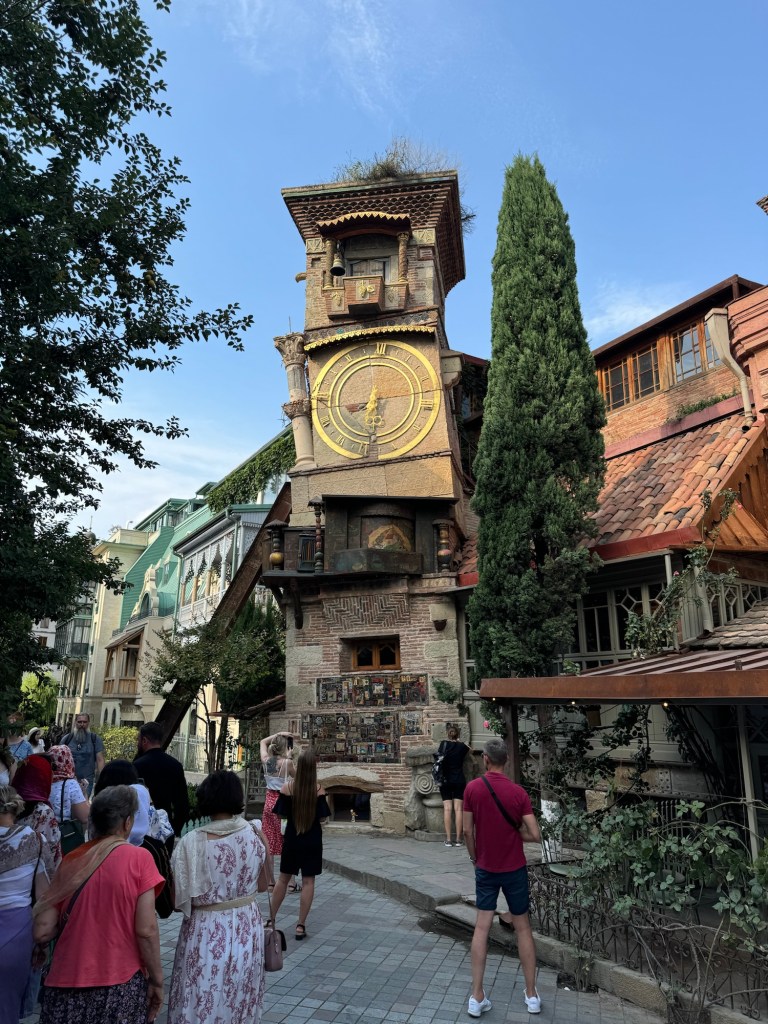
We had been sitting on the landing of “SkadaVeli”, his unassuming, somewhat dilapidated house, right in the centre of the Old Town of Georgia’s capital. Despite its not very appealing outside, his place was a hidden gem with surprisingly modern rooms and a spotless bathroom and kitchen, which usually featured a good bottle of Saperavi. Here, one was in easy walking distance of the city’s beautiful churches and the cathedral, of the best cafes and restaurants, of the futuristic Bridge of Peace, which like a shiny reptile spans the dark water of the Kura river and just a stone throw away from the quirky clock tower in Ioane Shavteli Street.
Irakli was a well of knowledge when it came to Tbilisi, his city, and I was happy to follow his recommendation for a final excursion into the subterranean life of the Abanotubani district, before leaving Georgia.
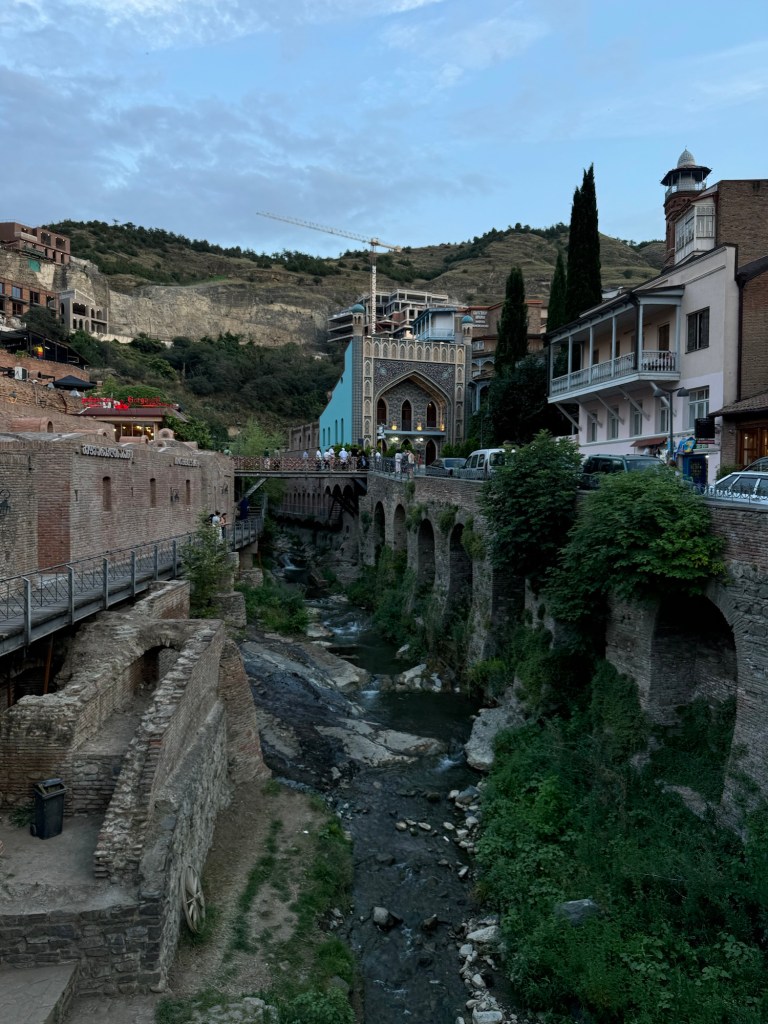
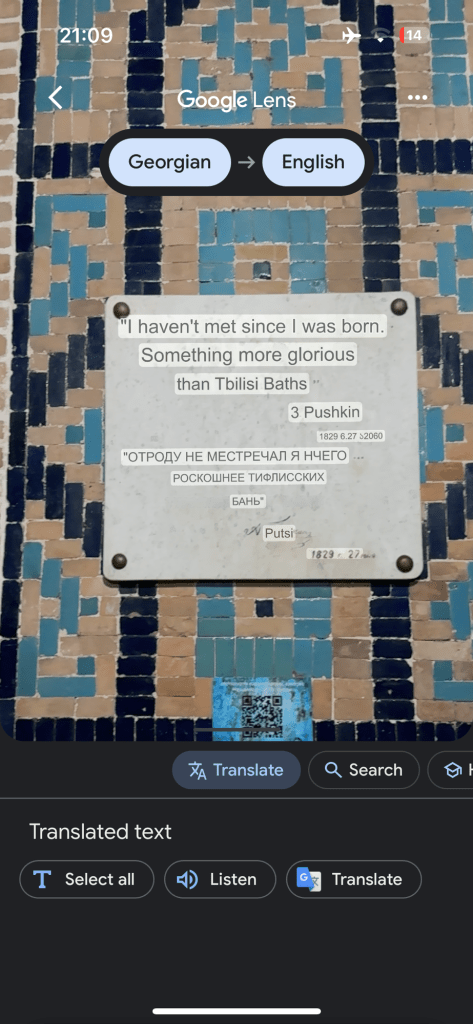
Abanotubani is home to a dozen bath houses, all connected to the hot sulphur springs, which are emerging here from the ground. Their 40 degree warm water is running through a small stretch of land before disappearing into the nearby river. The hot springs had given the city its name and many visitors like the great Russian poet Pushkin have written about the memorable experience and about the health benefits of visiting the local bath houses:
Today’s bath houses vary greatly in design and in comfort and it is possible to book both private rooms or to visit the public areas which are gender separated.
I was travelling alone and to get a more genuine impression how the locals were using their bath houses, Irakli had suggested to visit one of the two public bath houses.

Less than an hour later, I was standing in-front of “Public Bath No.5” – an institution in Tbilisi, with a history that is dating back nearly 100 years. Both the hammer and sickle emblem on the front, as well as typical soviet style mosaics in the rooms downstairs confirmed that this was a place more for the local community, rather than the more upmarket and elaborate decorated Orbeliani Bath nearby, which was the preferred choice for foreign visitors.

10 Georgian Lari, equivalent to less than £3, got me inside without the need for a reservation, and a further 2 GEL secured me a cup of tea for the end of my visit.

Once I had placed my clothes into one of the spare lockers, I was issued with a pad lock (without a key) by the supervisor, who looked like an archetypal Caucasian prison guard, wearing above his trousers just an undershirt instead of a uniform. A large ring on the table in front of him, featuring the keys for all the pad locks that had been issued, left no doubt that no one was leaving this place without the consent of this man….
Dressed with just a towel, I progressed into the main room, where I managed to take a shower once I had found out, how to create an ambient temperature, by operating the different taps protruding from a complicated system of leaking plastic and copper pipes above the shower cubicle.
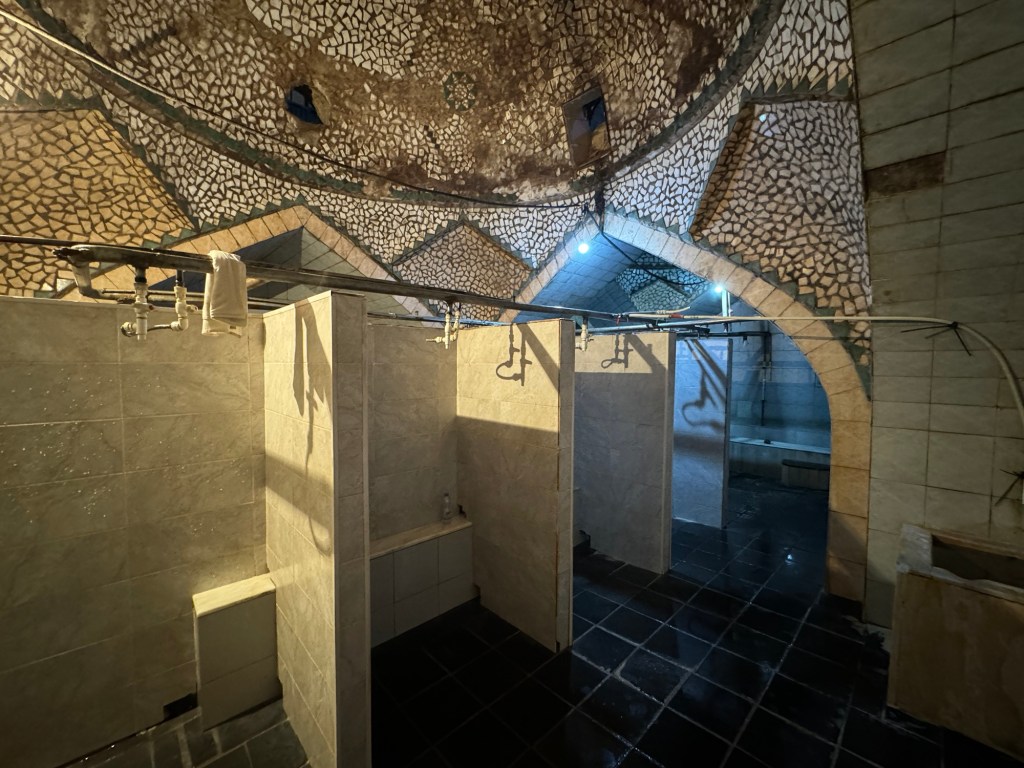
Next I immersed myself into a pool of boiling hot water which – as I felt – far exceeded the 38-40 C that had been advertised.
Only with a fair amount of will power, I lasted close to 5 minutes in the pool and – before passing out – I felt ready to progress to the main part of the procedure – the “Kisi”.
Red like a lobster and still slightly dizzy, I stumbled over to one of the nearby marble benches, where the Mekise or “Head-Scrubber”, who looked like the angry brother of the supervisor, motioned me to lay down, before setting to work…..
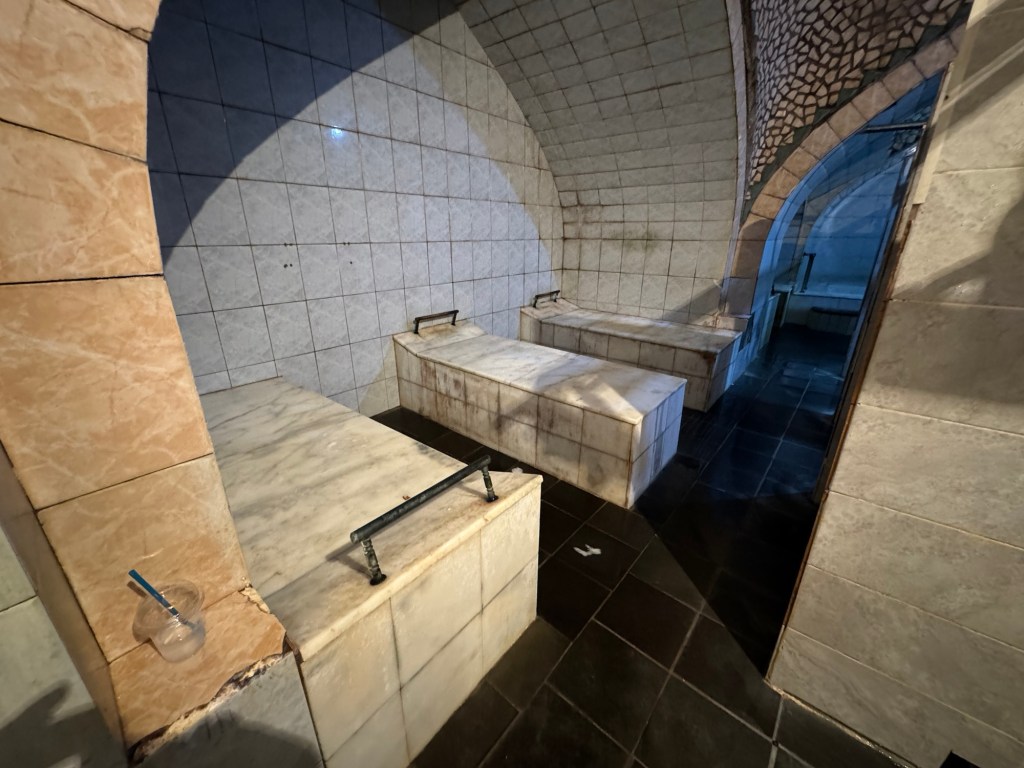
And here, any resemblance to what could have been considered something like a massage, immediately vanished…..
The “Kisi” – as I now found out – is more of a thorough cleaning procedure, where, with the help of a glove, which has a surface similar to the outside of a coconut shell or to an industrial utensil that is commonly used to remove congealed food particles from frying pans, the unexpected and – through the heat of the hot bath – sensitised surface of the skin is mechanically stripped away…..
While the glove was doing the damage, I was wondering, how desperate Pushkin must have been to write poems about this place and that he must have considered the bullet that eventually killed him, as the lesser evil.
When my skin was just a single raw nerve, a bucket of water was poured over what was left of me and my body was lathered with a thick layer of soap, which was then washed off with another bucket of water.
Eventually I was allowed to stagger away from the marble slap and while my place was taken by the next victim, I tried to regain consciousness with the help of a cold shower.
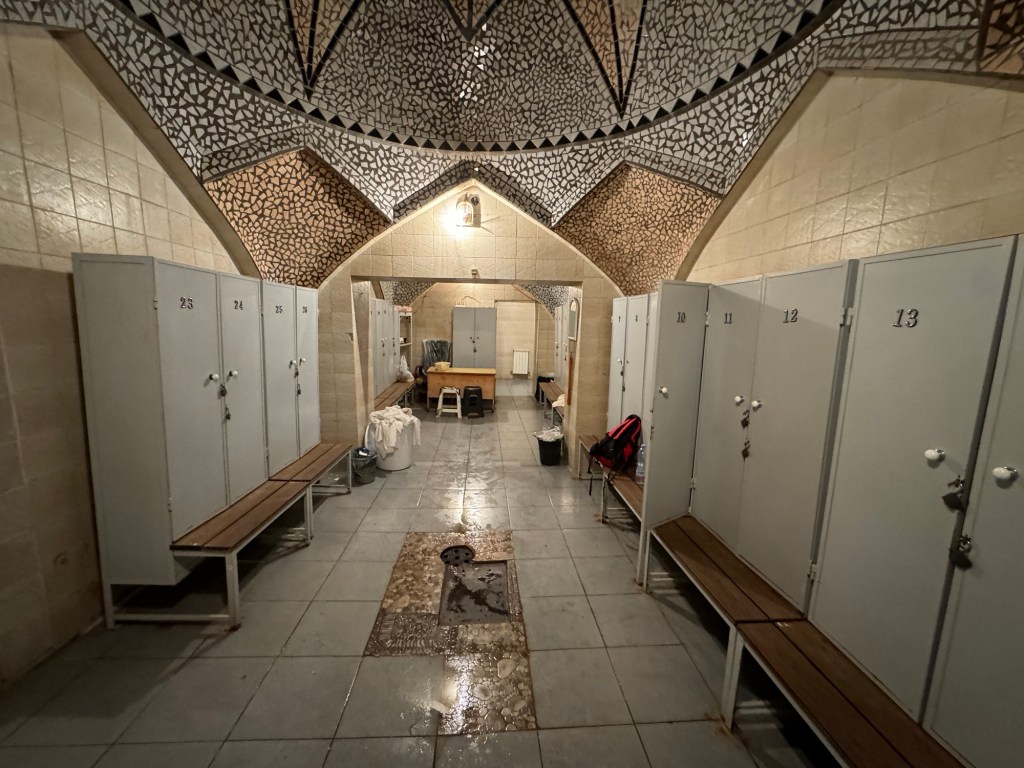
A short while later, I was sitting back in the spartan locker room, with the domed ceiling as the only decorative feature, and while my still shaking hands were holding a small glass of black tea, the prison guard inquired, how I had enjoyed my first stay at a Georgian bath house….
The sun had already set when I re-emerged from the bowels of Bath No 5 and while walking back to the safety of “SkadaVeli”, I was surprised that my body wasn’t in more pain. It was followed by an excellent night’s sleep and when I woke up the next morning, I felt so great, that I am already looking forward to my next visit to Tbilisi and to the bath houses of Abanotubani.
 The Blue Vet Diary