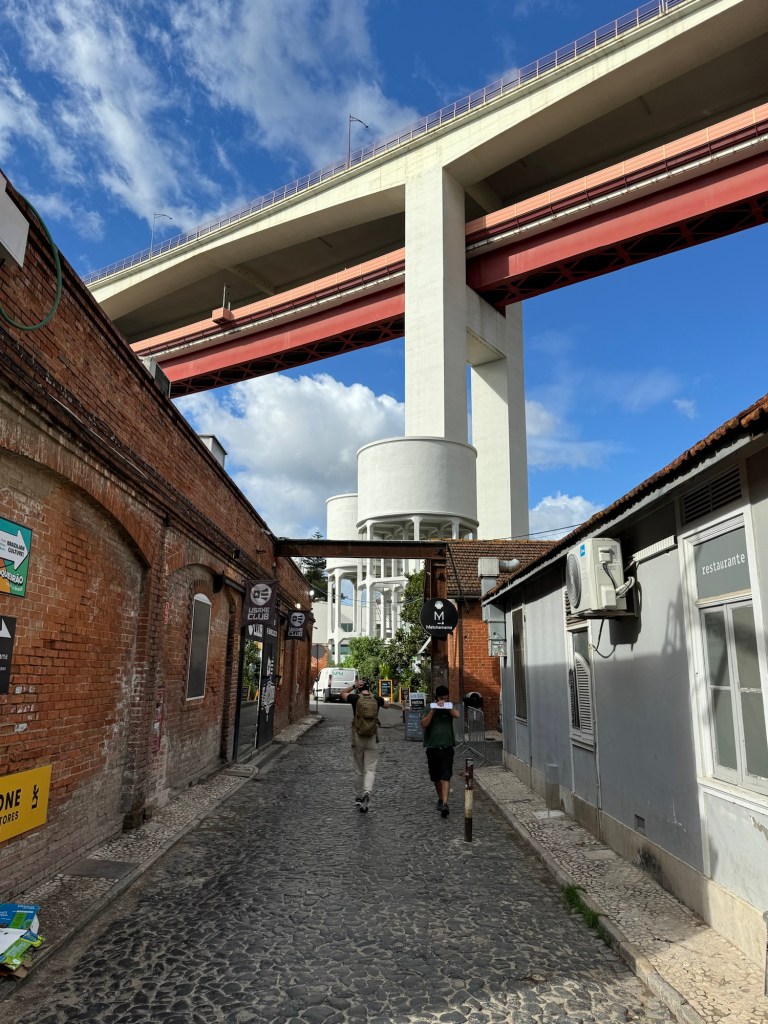
It had been a short night.
Despite my late arrival the previous day, I was awake well before sun rise the next morning, due to the constant noise of 7000 cars passing every hour 50 meters above the window of my room. In addition to this, there was a regular interlude caused by one of the nearly 200 trains that over the course of the day took the same route.
I was back in Lisbon and this time, I was living below a bridge, albeit a rather impressive one.
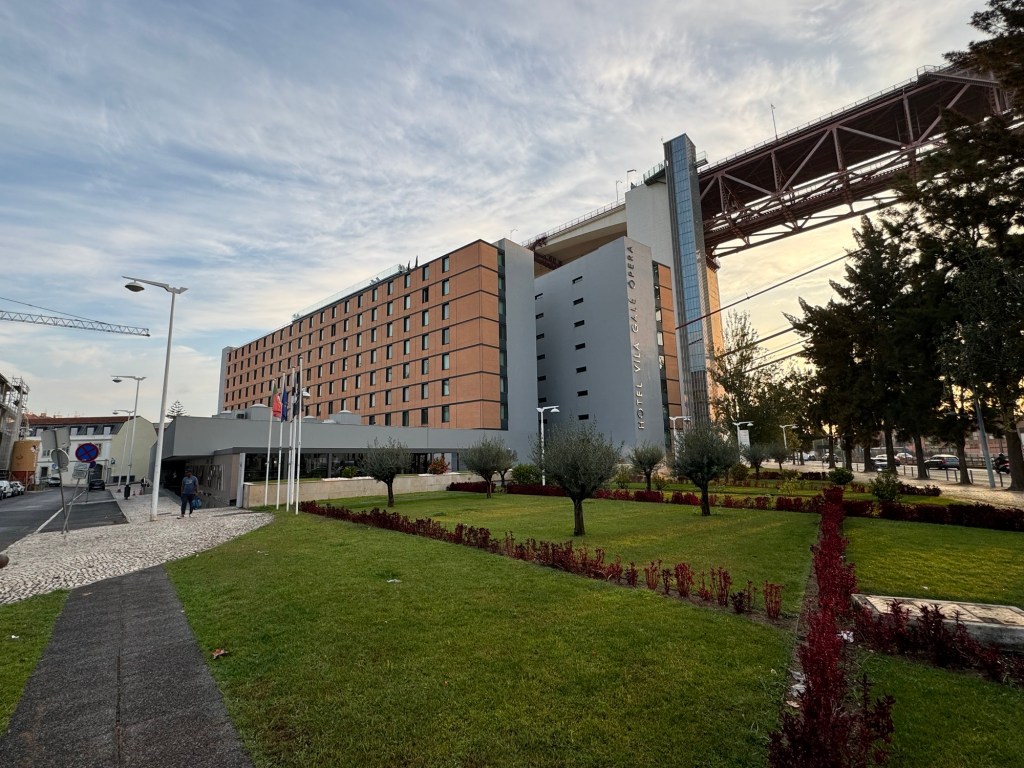
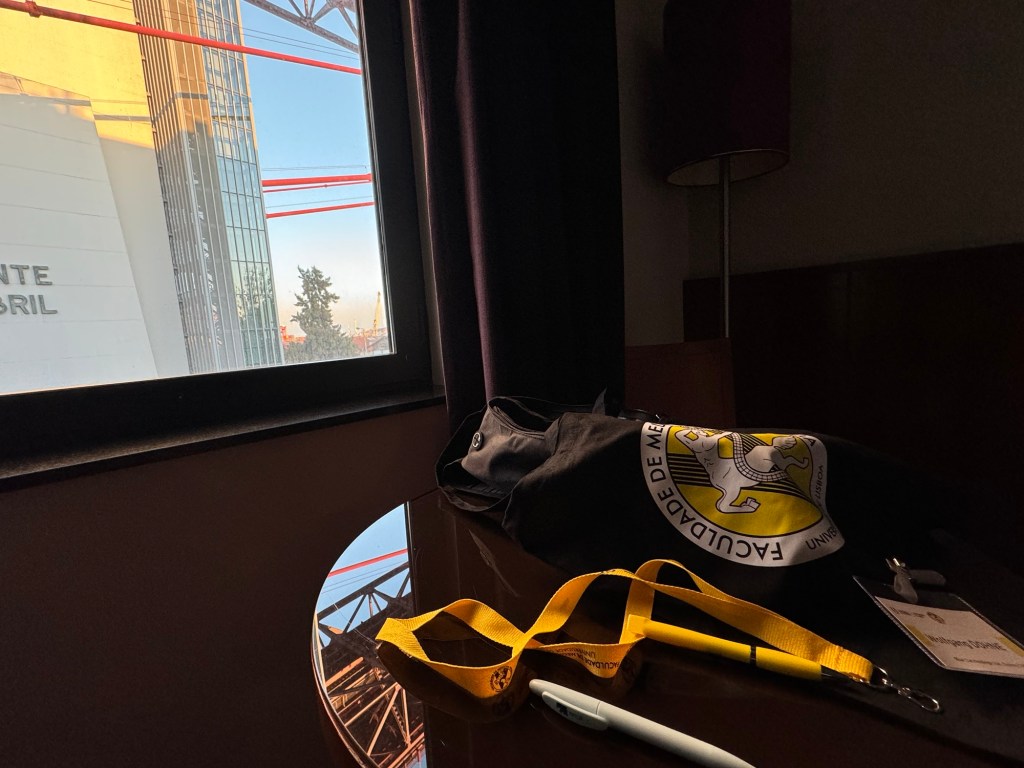
Opening the double layered curtains of my tripled glassed window, which had tried, but failed to keep the traffic noise out of my hotel room, I was staring directly on to the name of the mega structure, which was displayed in bold letters on one of the steel and concrete pillars of the bridge.
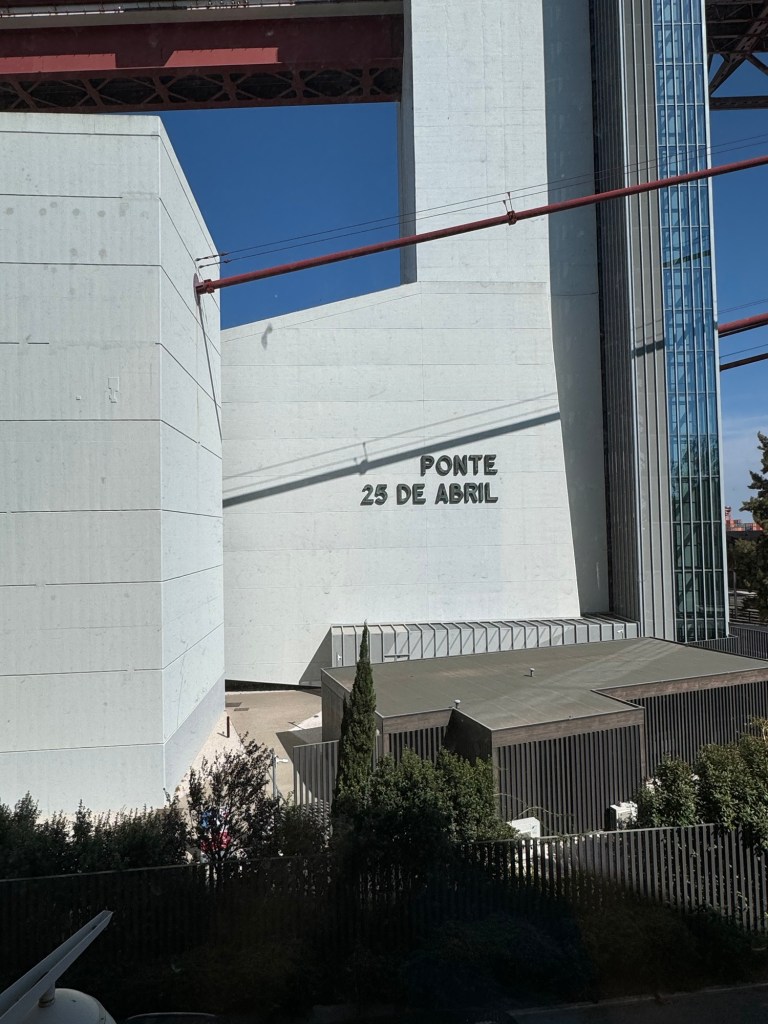
The “25th of April Bridge”, which used to be the world’s fifth largest suspension bridge when it was built in 1966, spans the Tagus River and by this, connects Lisbon with the South of the country, without the need to circumnavigate the estuary of the river. The equally impressive and even longer Vasco da Gama Bridge, which is crossing the whole estuary, was added over 30 years later.
Stabilised by enormous amounts of American steel, the bridge was constructed by the same company that also built San Francisco’s Golden Gate Bridge.
Initially called the “Salazar Bridge”, its name was changed immediately following the Carnation Revolution in April 1974. When visiting Lisbon, it is hardly possible not to notice this giant structure.
Somewhat unimpressed by so much technology and history, I found myself an hour later at the hotel reception, asking for a room at the other side of the building. I was in Lisbon as part of an international delegation to visit the local veterinary faculty and as the whole week was packed with work, I knew that a few hours of decent sleep in between would be vital to keep me going.
Needless to say that the hotel was fully booked and the promise of the management to find another room for me on one of the following days never materialised ….
This meant, that I had to accommodate my noisy neighbour and, like the people in this part of Lisbon, I had to adjust to life below the bridge.
When running along the river in the morning towards the Monument of the Discoveries,

the bridge became the starting as well as the end point of my exercise – a point of reference that was visible all the time.
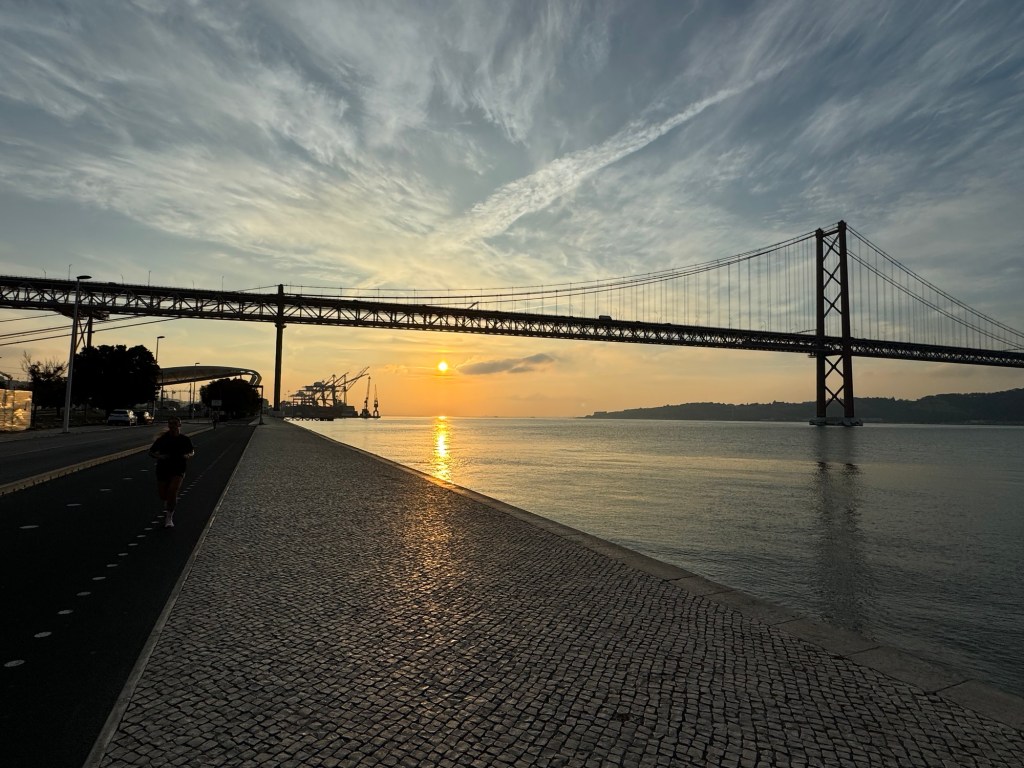
The lights of the bridge and of the cars on the upper platform were reflecting in the water of the river at night and by this they enhanced the image of the monument of Christ the King, located on a hill at the Southern shore and illuminated in a maritime blue light.
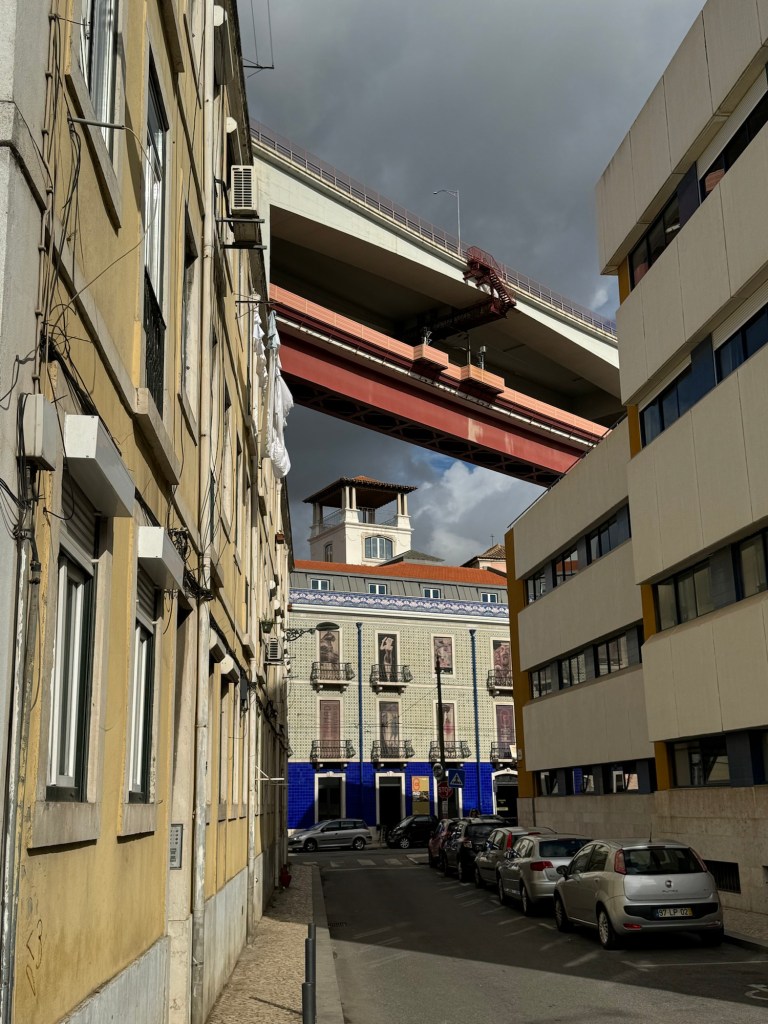
The Brutalistic architecture of this giant structure with its huge concrete pillars had – like a spaceship from another world – forced itself into a 19th century Portuguese working class neighbourhood and yet life below the bridge continued to carry on and was possibly even enhanced by the stark contrast of these two building styles.
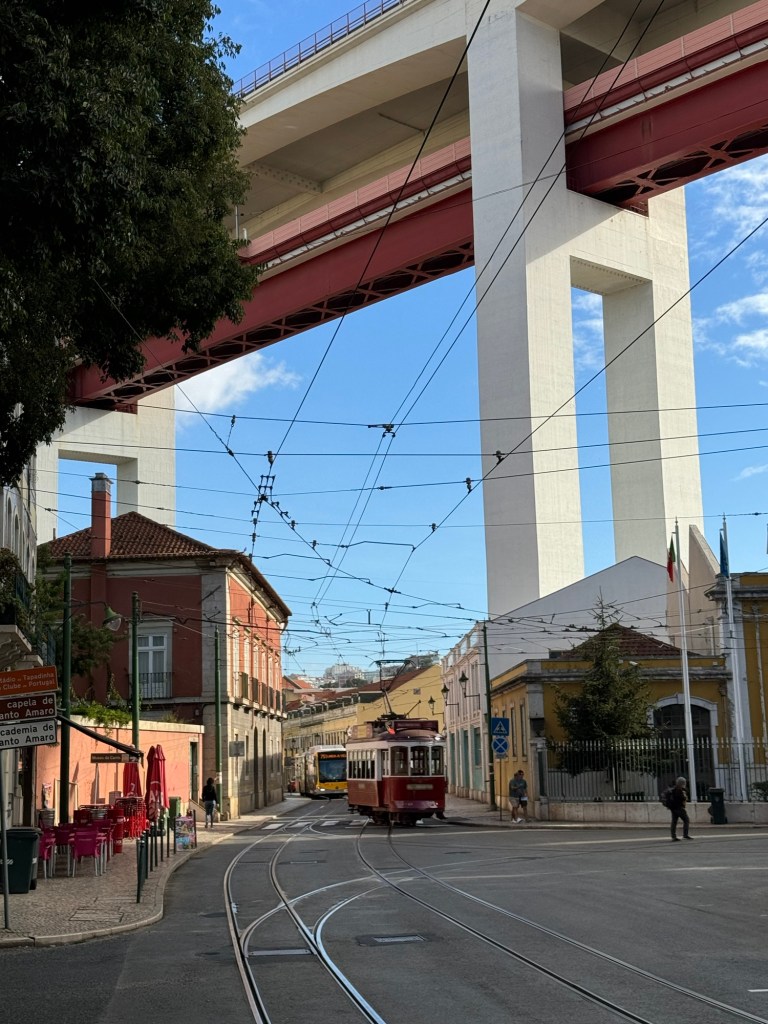
Lisbon’s signature trams had maintained their depot below the bridge and its colourful carriages continued their sedate journeys while hundreds of cars crossed at the same time its pass at much higher speed 50 m higher up.
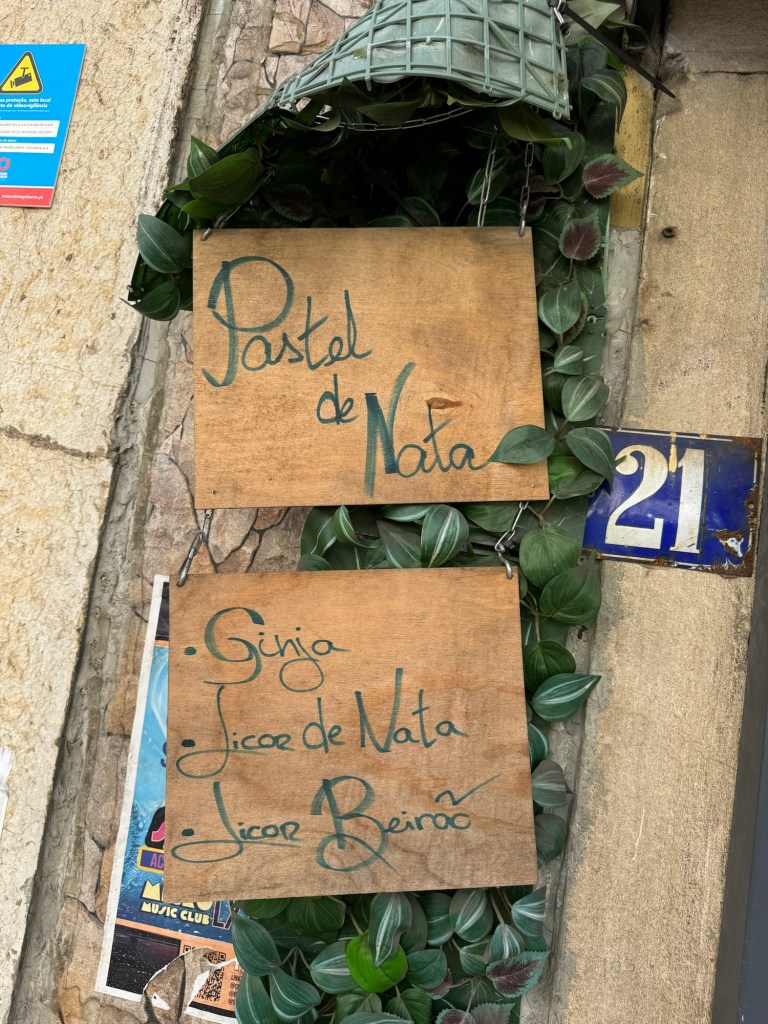
Alongside small cafes, selling the quintessential Portuguese pastry “Pastel de Nata”, a whole community of artists and dressmakers had found a new home in the abandoned buildings of the LX Factory.

Here a huge wasp was clinging to the wall of a hostel,

Jaqueline de Montaigne murals were decorating the once grey outside of factory buildings and in regular intervals, portraits on painted tiles by Bastien Tomasini were engaging with the visitor.

One of the concrete pillars of the bridge had been used as canvass for a modern still life, contradicting the static nature of the structure with various items that were precariously balanced or even caught in mid air.

Based in the centre of the factory was the huge book store “Le Devagar”. Featuring a large printing press in the middle of the shop and book titles were staged up to 10 meters high against the wall. This place clearly required book sellers with a head for heights.
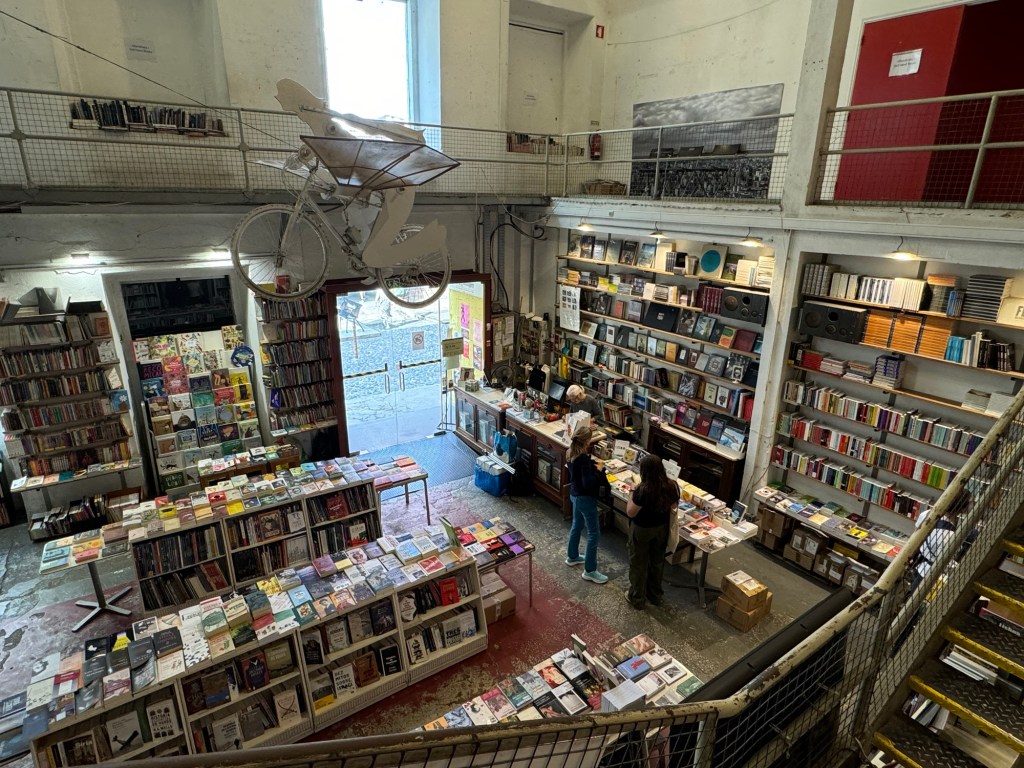
Named by the New York Times as one of the best and quirkiest book shops in the world, you could get lost here in rare as well as timeless classic titles from Portugal, from the Portuguese diaspora and from the rest of the world.

The next morning I woke up to the ringing of the alarm clock following a good night sleep and I realised that I as well had started to adjust to the life below the bridge.
 The Blue Vet Diary