
The last bar had just closed and with the streets now deserted, I took a stroll through a world that had disappeared over a hundred years ago, in a place that was so charming and peaceful, that it provided the canvas for one of history’s most chilling narratives…..
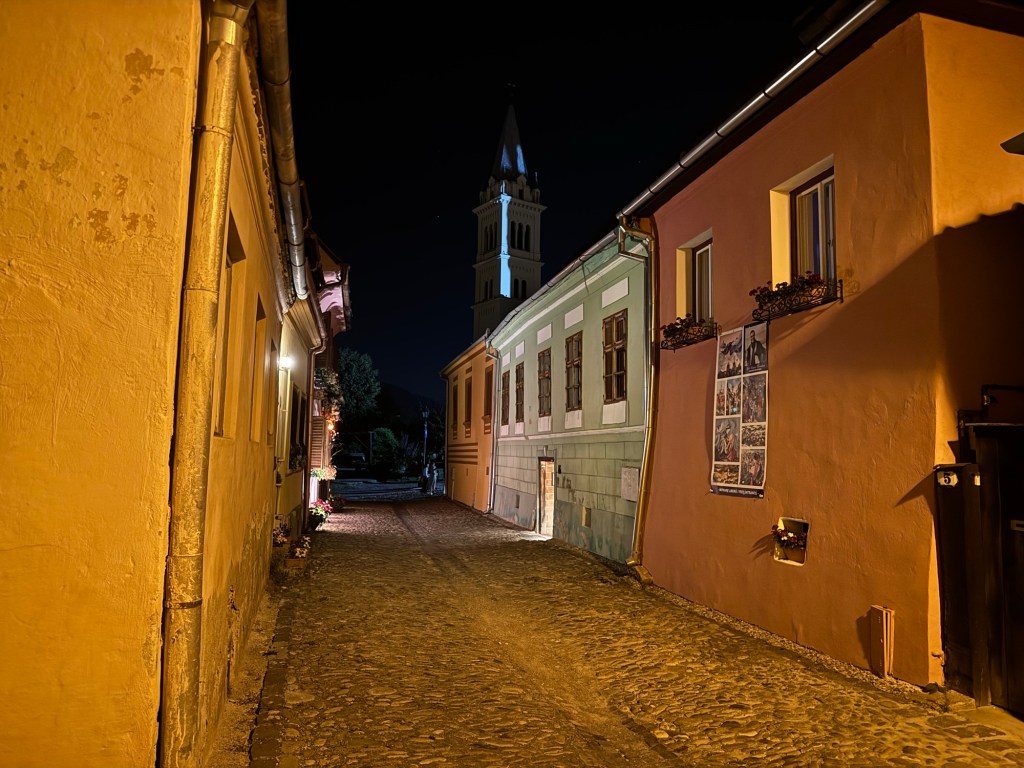
I was in Sighisoara, one of a ring of seven fortified medieval towns in the lush hills of Transylvania, in the heart of Romania. Sighisoara and neighbouring towns like Sibiu and Braşov are unusual, because they were part of a network of German speaking settlements of Transylvanian Saxons, deep in the East of Europe, that were frequently attacked and often raided and from time to time ruled by Tartars or Ottoman invaders. As a consequence of centuries of geographic isolation, these communities developed their very own customs and traditions, which might have appeared to a visitor from the other side of the Continent as more quintessential German than Germany itself.

In addition to this, due to a combination of local autonomy and a lack of funding during the communist time, the local buildings and infrastructure enjoyed a period of fairytale sleep, where most of the historic Saxon dwellings were neglected, but remained untouched and were thankfully not replaced by the functional but characterless architecture of that time.
As a result of this, I found myself standing on a dimly lit cobblestone street in a German town, somewhere in the middle of the 19th century….
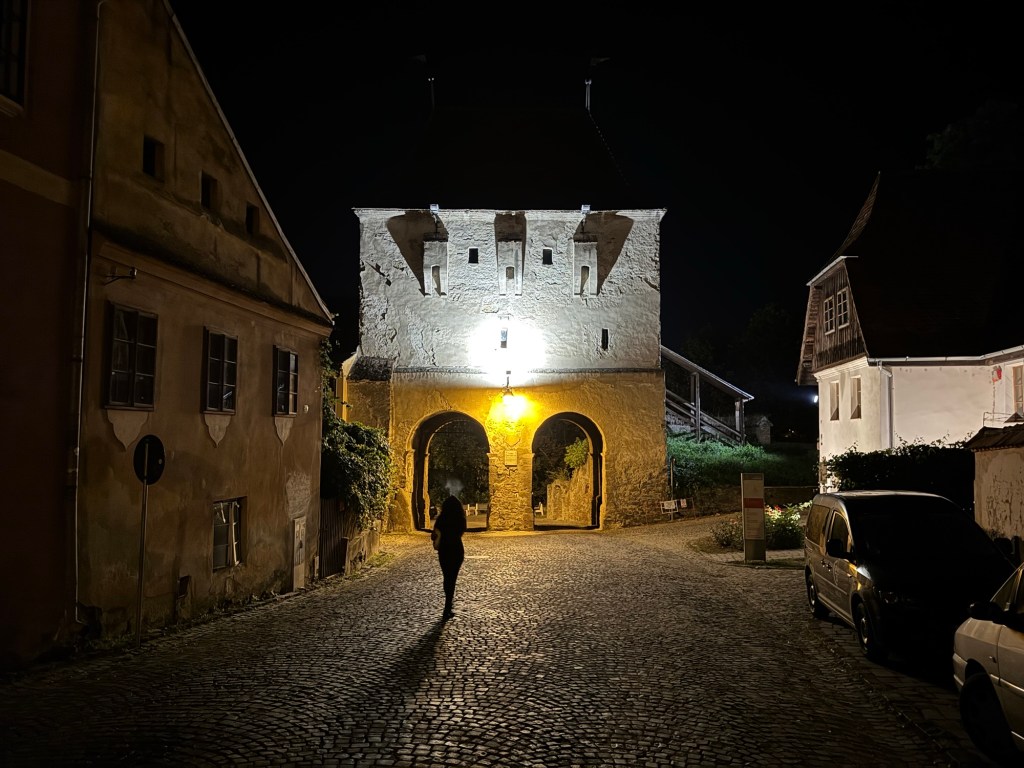
On the street corners were German street names in Gothic script, the town was surrounded by medieval gate towers that were assigned to individual guilds and an impressive clock tower with an elaborate pattern of roof tiles and fitted with multiple spires was next to a town square where every house was carrying a reference to a Saxon name.
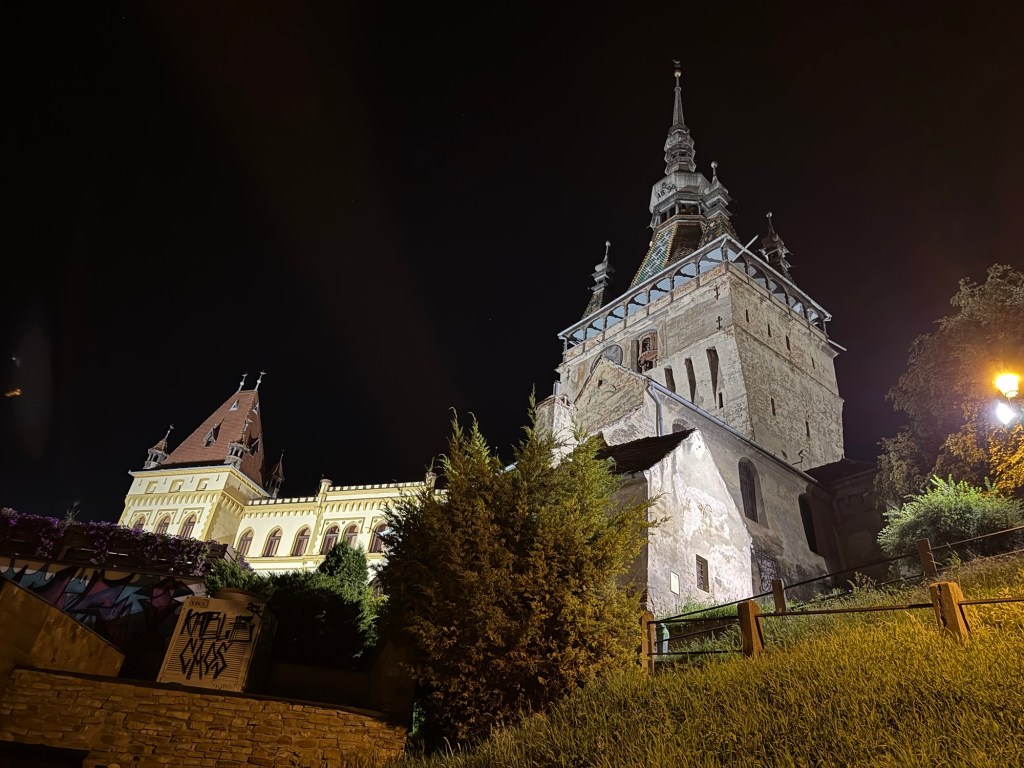
This cocktail of German and Balkan trades and traditions, combined with the questionable heritage of being the birthplace of one of medieval’s most vile war lords – Vlad “The Impaler”, better known as Count Dracula – must have felt so utterly alien to an Irish novelist and to his readers living thousands of miles away on the other end of the continent at the outgoing 19th century, that it became the opening scene of a narrative that, together with Mary Shelley’s “Frankenstein” and Victor Hugo’s “Hunchback of Notre-Dame” enjoys a seemingly never ceasing popularity – even today.

Bram Stoker never visited Sighisoara, but the medieval streets, devoid of people in the middle of the night, the deserted covered staircase leading up to a gloomy church on a hill and to a graveyard filled with ancient Saxon tombstones, overgrown with moss and neglected for decades, with an evasive cat as the only living being in sight, would indeed have been an unsettling destination for a lonely visitor from London, not familiar with the language or with the local customs.
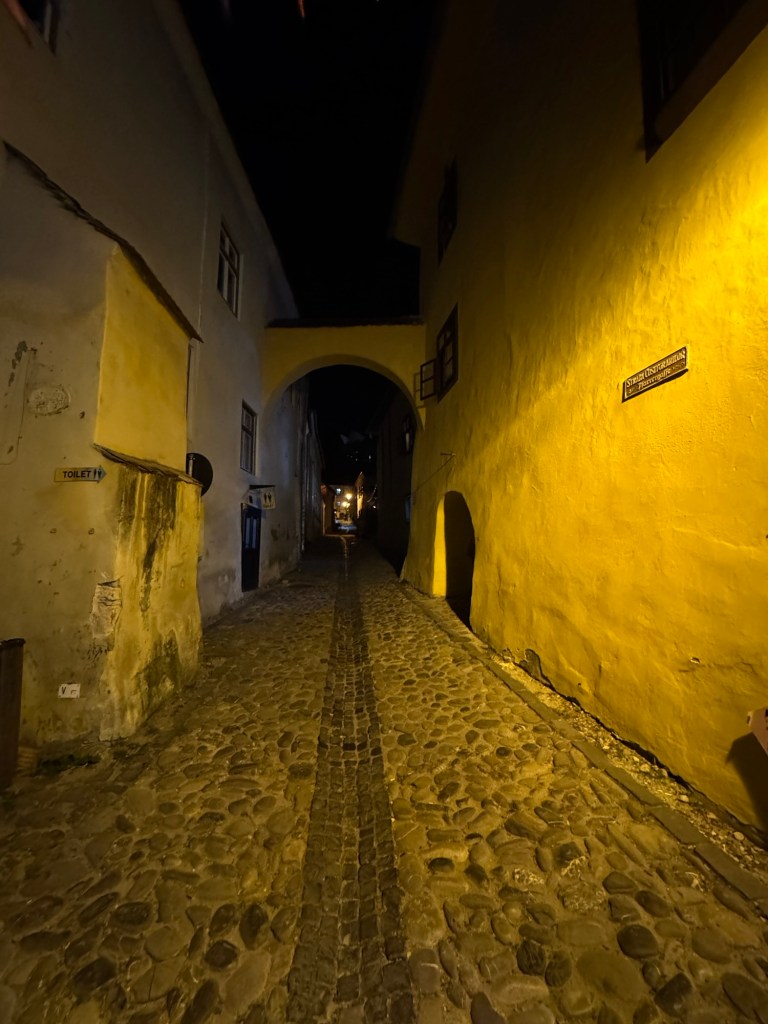
Stoker’s novel struck so many points of unease and preconception about this part of the world: languages no one understood or really couldn’t be bothered to learn, the mentalities of the Balkan that were so different from that of a privately educated Anglo-Irish university graduate of that time, communities of people who lived isolated in a mountainous location, surrounded by forests that were the home of bears and wolfs, animals extinct on the British Isles for centuries and in addition to this the hidden threat of something unknown und unspeakable, that had the ability to strike a chord with the paranoia of the British soul like an epidemic of rabies.

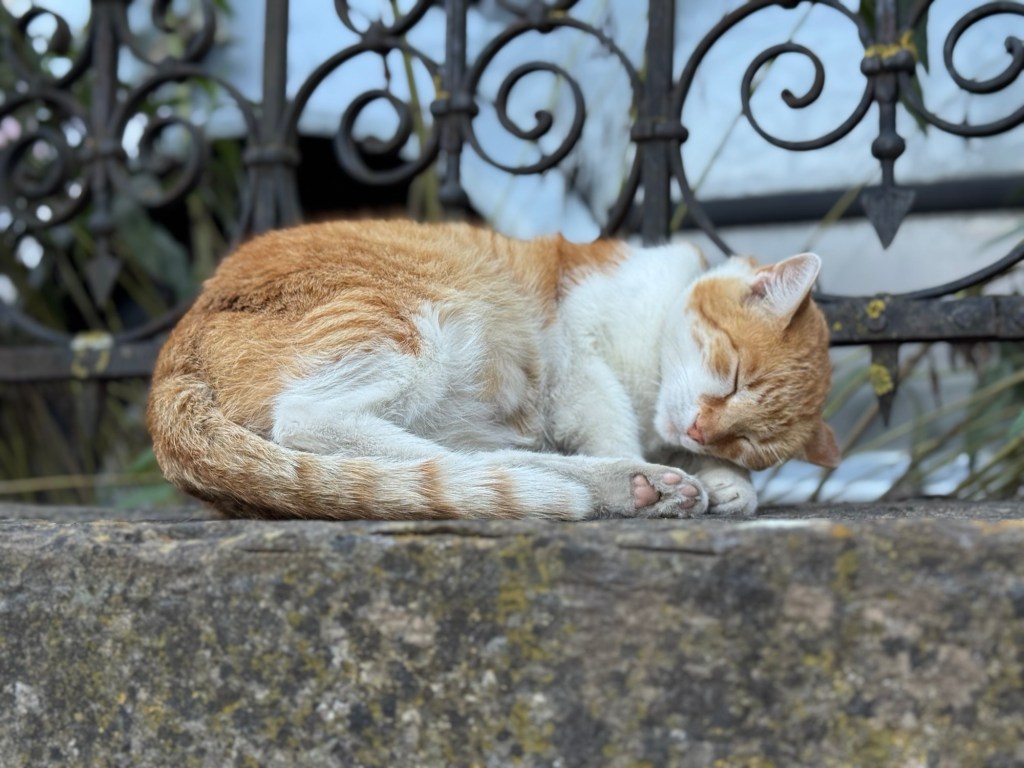
For me, the flighty cat on the church yard remained my only encounter with a creature with prolonged canines that night, and returning to my car the next day, it became clear that these descendants of the infamous Count were even able to enjoy their well deserved rest in broad day light without vanishing into a cloud of smoke….


 The Blue Vet Diary