
The early September sun is about to climb above the roof of a conference centre in the middle of Antwerp, that can claim to feature a “Room with a Zoo” as well as a meeting room guarded by the life-sized model of a Central African Okapi.
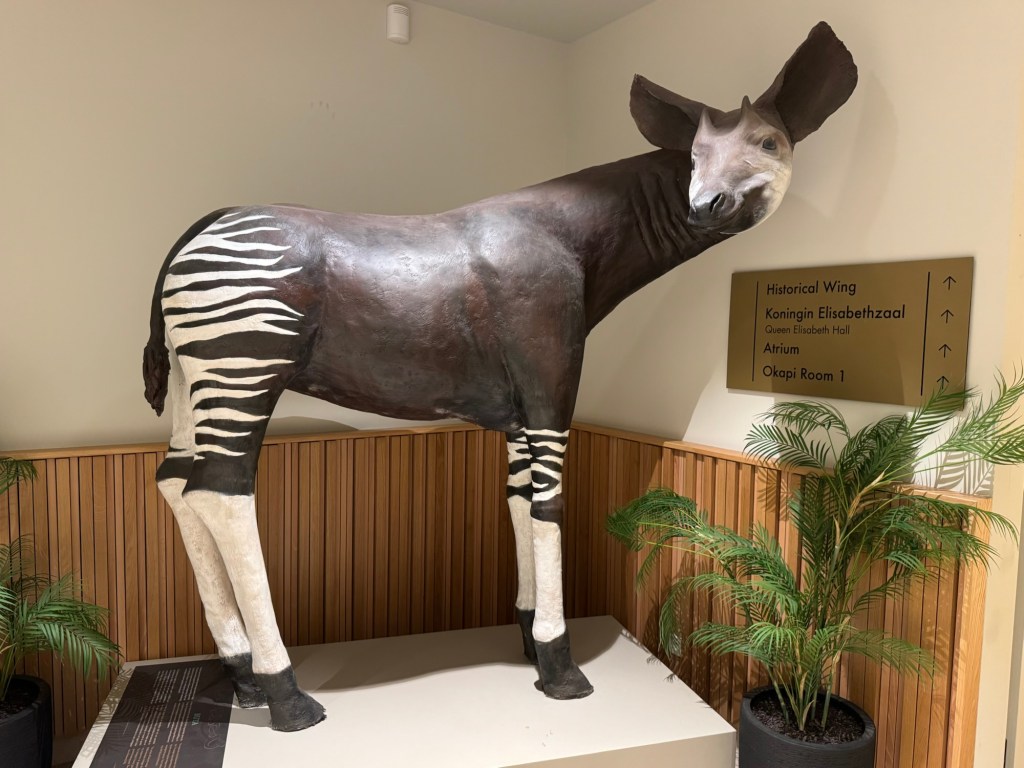
The first rays of direct sun light are starting to warm the pavement at Koningin Astridplein, the busy square in front of the venue, for another day of comings and goings, meetings and partings, arrivals and departures.
At the congress I am due to meet friends and colleagues, all likeminded veterinarians from all over Europe, who have descended on the city of diamonds to renew and to extend their knowledge and their skills to improve the treatment and care of their patients, where ever on the continent they require veterinary attention.
But yet there is time….
Time before the first lecture for a coffee and for some Belgian pastry for which there seems to be no better place than at the Mocambo Cafe, a small joint on the western fringe of the square, just a stone throw away from my apartment.
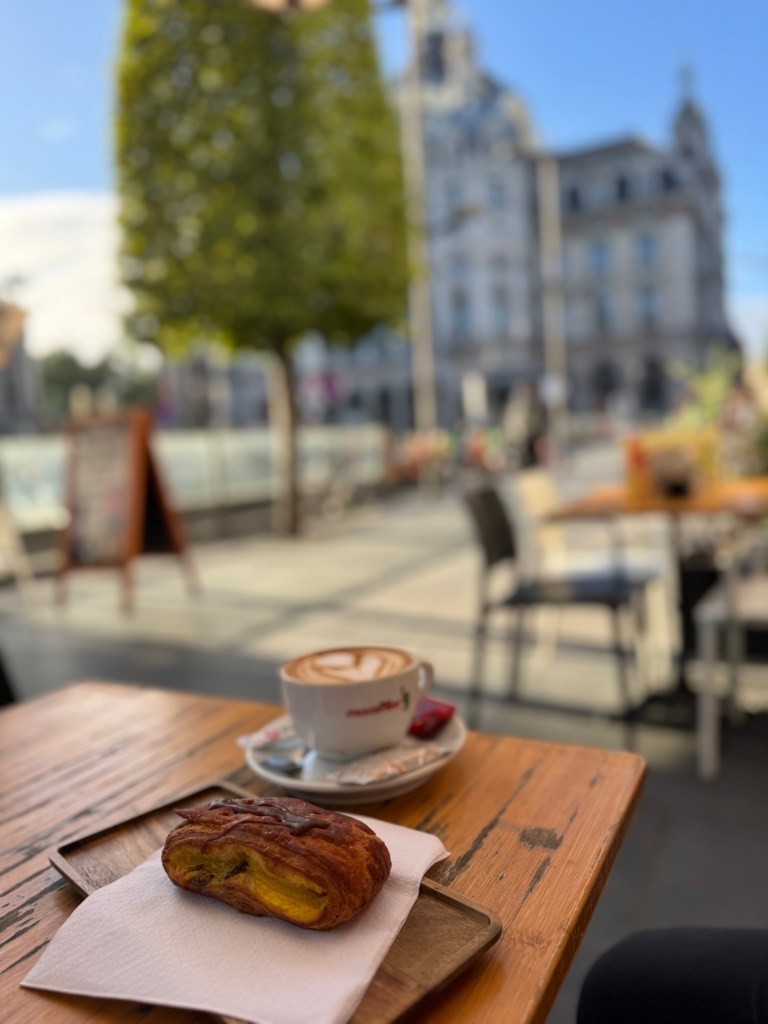
Antwerp, like Brussels, strikes me as a place of many contrasts, but I am a patient, at times surprised and at other times a somewhat puzzled observer.
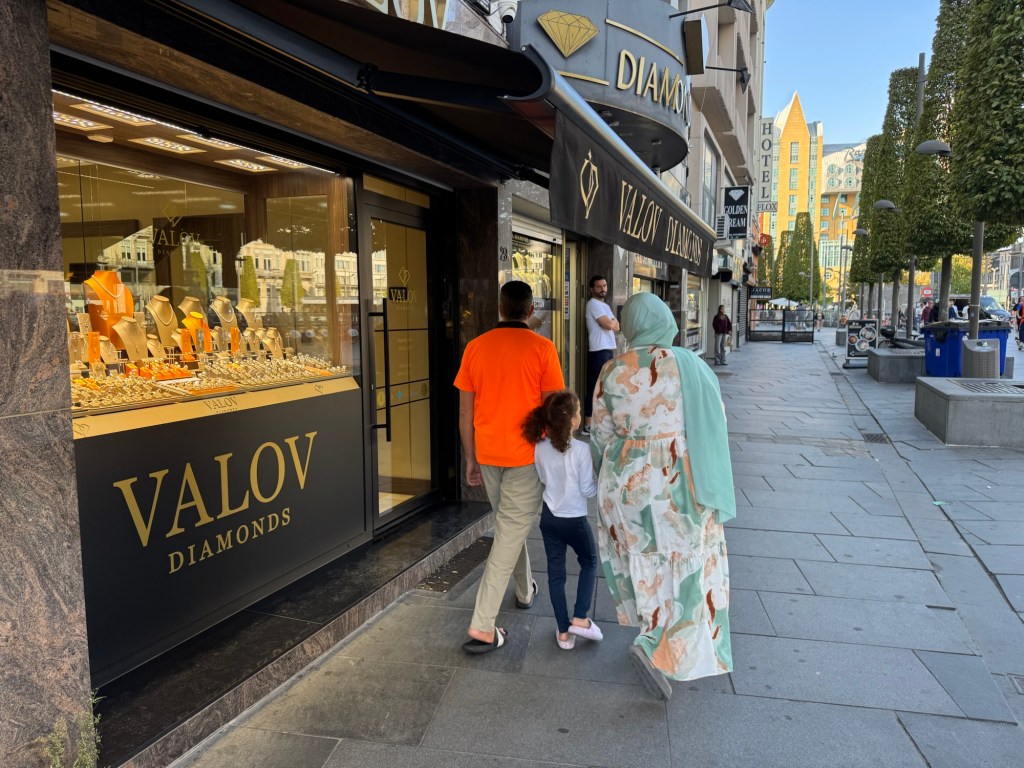
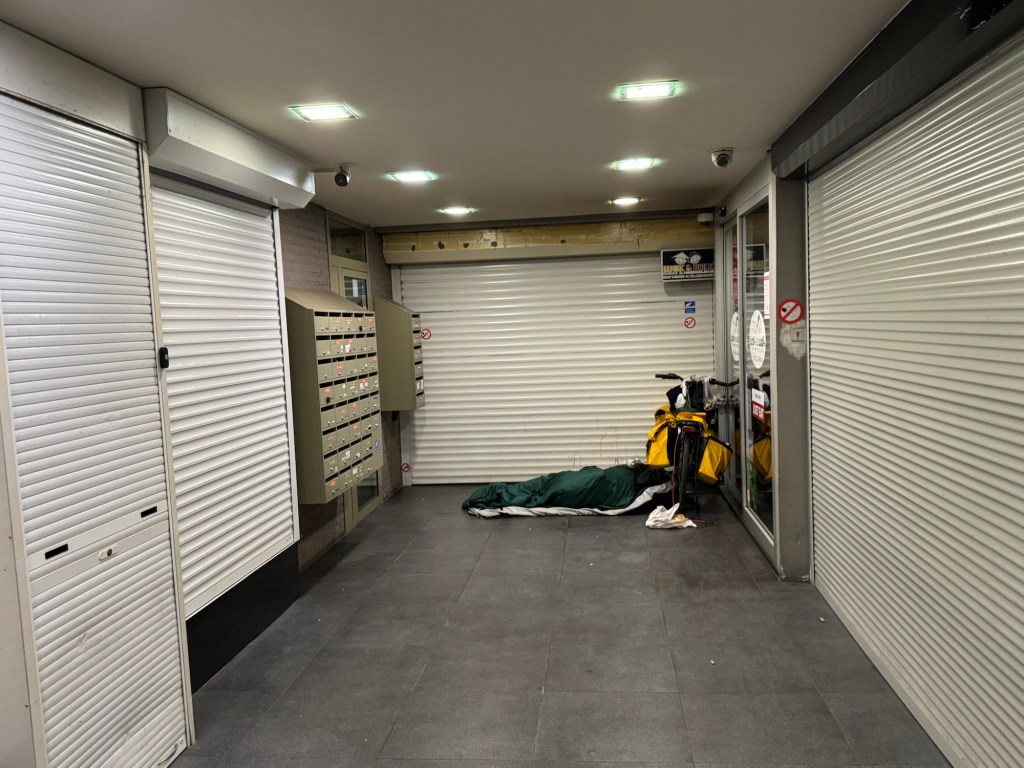
While staying at probably the most central place in town, right above a row of jewellery shops packed with precious splinters of translucent carbon, that can cost the multiple of a man’s monthly or even annual salary, I have to step at night when the shutters are down and the outlets are closed, over the bodies of homeless rough sleepers, to get to my dwelling that is secured with a couple of solid steel doors.
Settling at a small table outside of the coffee shop, I am turning into a member of the audience, seated in the front row of another daily performance at the theatre of life on Koningin Astridplein.

The hissing sound of the espresso machine, the clinging of cups and saucers and the clattering of the cutlery is blended with the cacophony of conversations and the shouting in multiple languages, underlined with the sirens of an ambulance, the ringing of bicycle bells and the hooting of cars. A child is crying because it was woken up too early, a couple is arguing because they are about to miss their train, and a police whistle fails to stop a car that is driving in the wrong direction.
The smell of coffee and warm pastry is interlaced with that of an expensive perfume of a passing business women, with the faint stench of urine from the nearby doorway that had to substitute as a lavatory for a drunken dweller the previous night, with the oriental spices of the Arabic restaurant next door, with the odour of some bags of rubbish that should have been cleared away already a couple of days ago, as well as with the smoke of a just lit cigarette on the table next to me.
The square in front of me is a rich palette of delivery drivers on colourful electrical bikes, of vailed women, next to bare bellied young girls and heavily tattooed men with professionally trimmed beards. Ray Bans on heads with dyed hair, air pads and high end headsets, bicycle helmets, gold jewellery and stainless-steel piercings are accessorised by brightly coloured scarfs, expensive handbags and urban bagpacks.
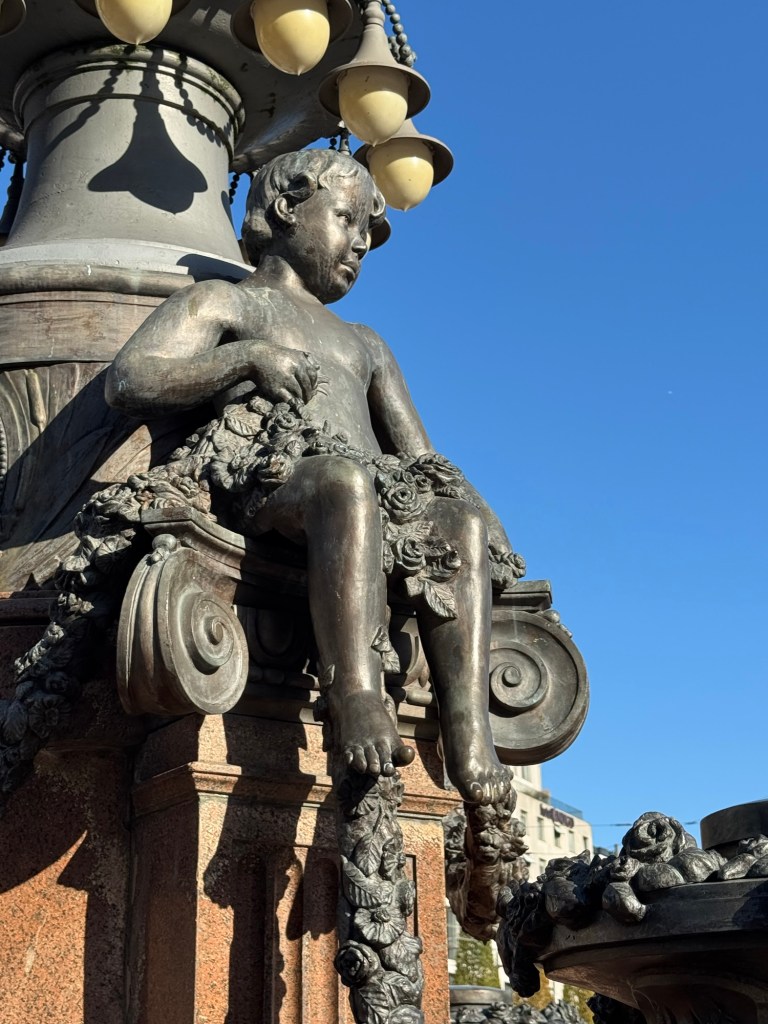
A tourist appears to be lost next to the bronze statue of a naked child sitting on the base of one of the two elaborately decorated lamp posts in the middle of the square, a couple is hugging and kissing not far from a long row of rental scooters, an old lady is walking her equally aged and clearly overfed toy dog and a delivery driver and a shop keeper are engaged into a heated argument, all under the watchful eyes of a young boy riding on a camel that is precariously balancing on a pedestal high above the roof tops.

And yet, Koningin Astridplein is just the fore court, just the prelude to the main act, to the central character in this play:
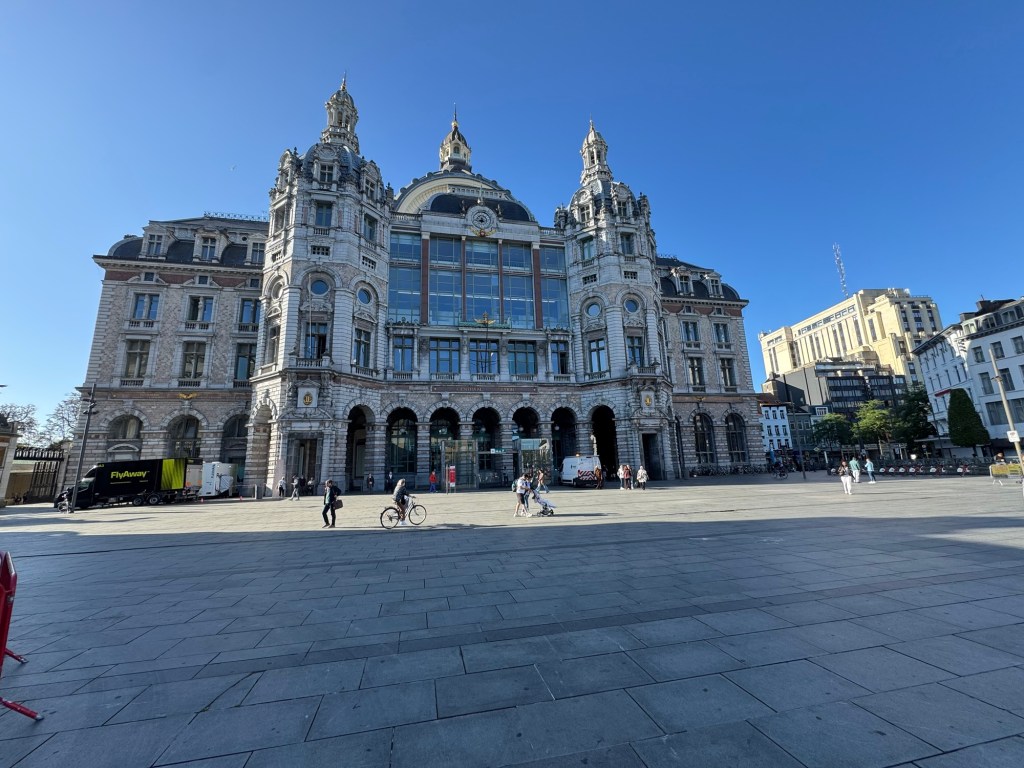
A cathedral, fit for a king (and commissioned by one), but dedicated to Mercury, to Hermes, to Saint Christopher or even to Ganesh, the gods and patron saints of travel, of timetables, of restlessness and of transience. In its nave populated by creatures fed with coal, diesel or high voltage, that were once just arriving and departing here, but that are now running right through it.

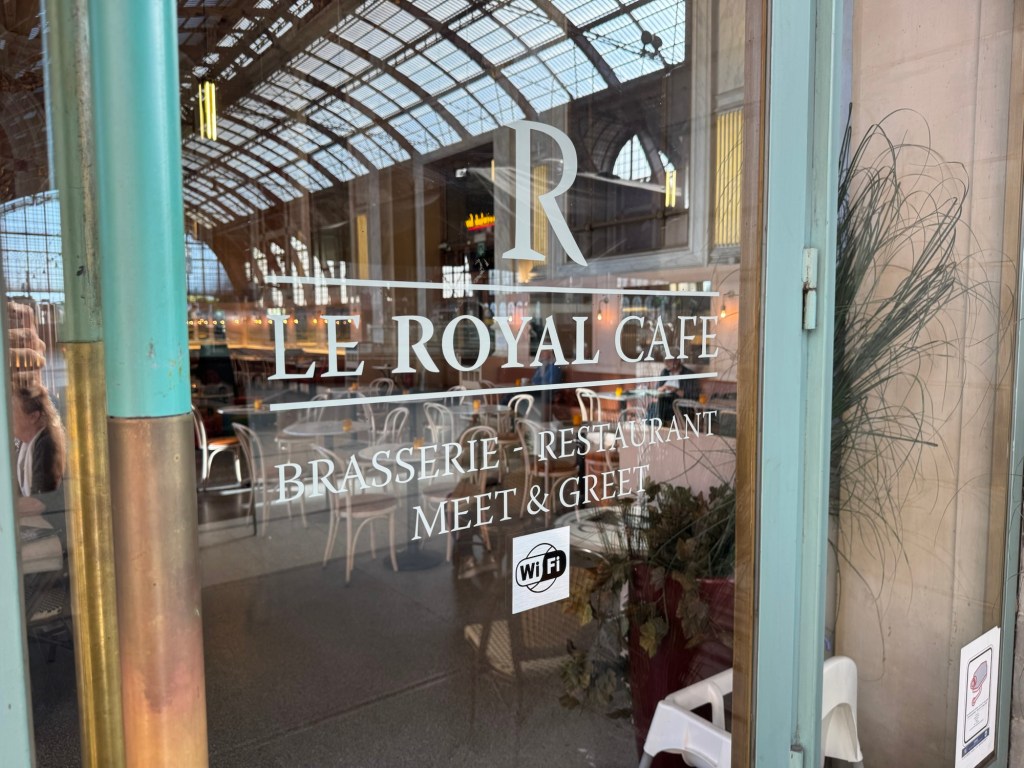
There is an entrance hall that appears to have integrated the fronts of palatial houses as its walls. Crowned by a sky-scraping, domed roof that would be the envy of any clerical building, it is currently been used as a concert hall. The not ordinary, but ‘royal’ railway café, might still serve coffee but has the appearance of a 19th century ballroom.
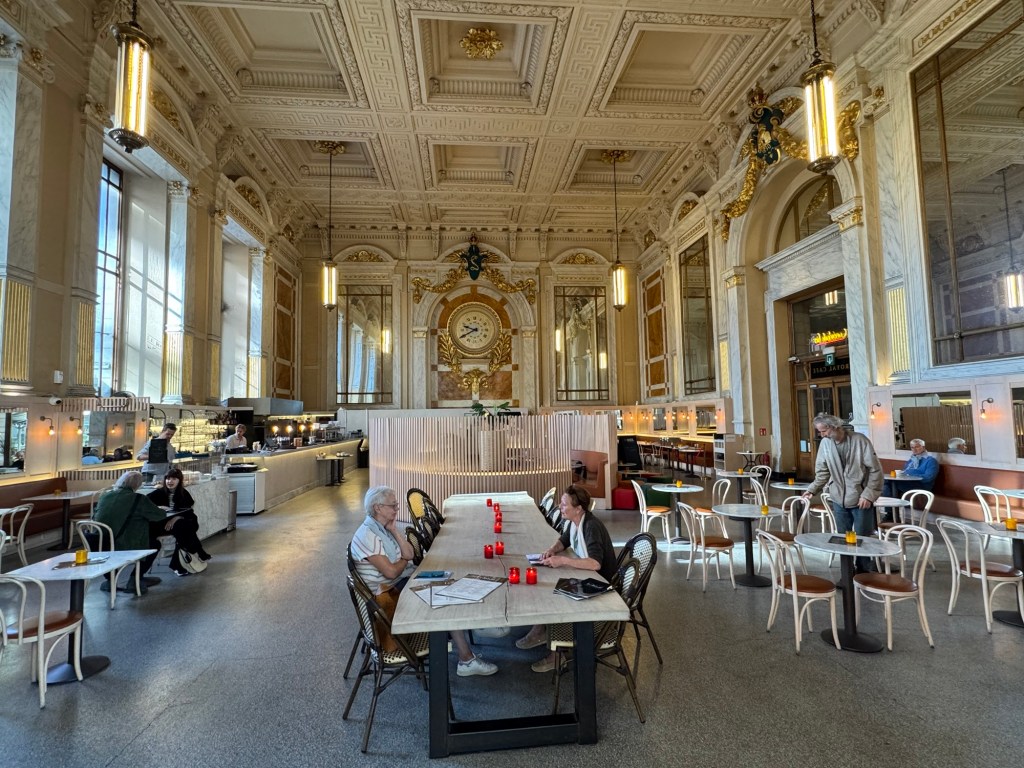
Dorian marble columns and in the main hall of the railway station, a huge freely suspended roof of glass and steel and delicate ornaments along the walls, elevate the transient traveller here to fleeting royalty and transform the food vendors, the waiters in the cafes and the ticket sellers to their willing courtiers.
Ruling this never ceasing cortege with an iron fist, are golden rimmed clocks, high up on the ceilings of all of these rooms. Without mercy the seconds on the clocks are ticking away and when the hour is struck, even the longest cup of coffee has to find its end…

 The Blue Vet Diary