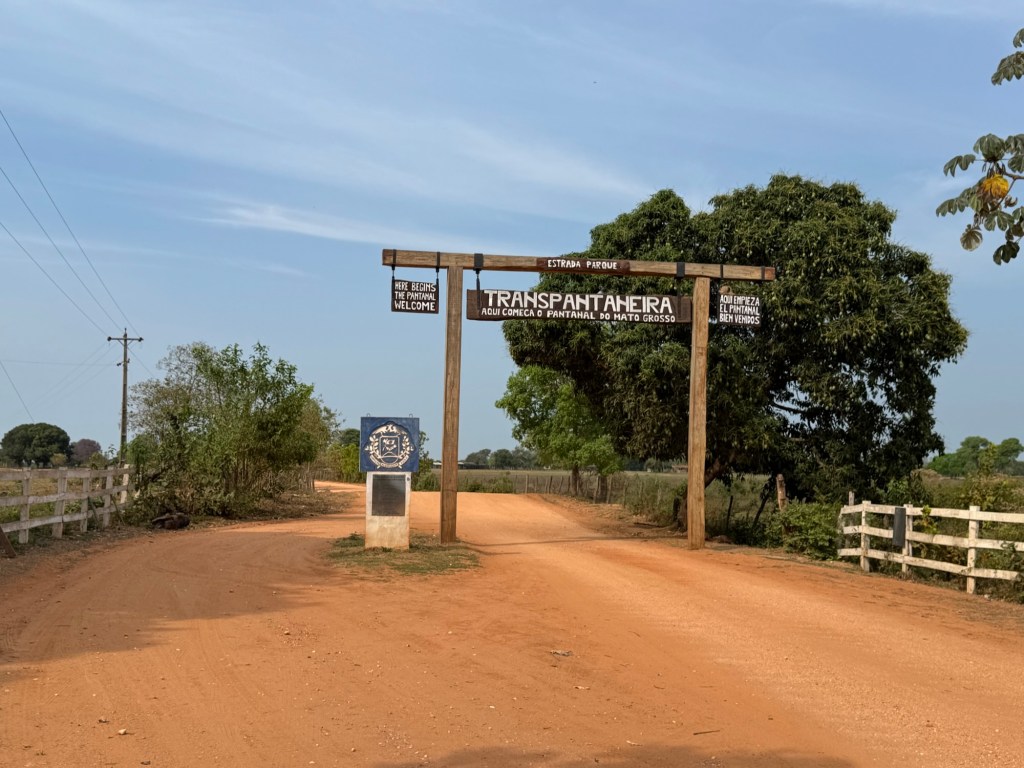
It had been impossible to find some sleep…
It was 4 o’clock in the morning, the power cut had started 6 hours earlier and it was 32 degrees in a room with next to no ventilation.
It was then, when a group of howler monkeys were starting with their morning concert in the wildlife camp I was staying at in the end of September. What sounded as if someone had started to deploy an industrial cleaning device in the adjacent bathroom, originated from the top of the trees above my cabin. All hope for at mere hour of sleep before sunrise was finally dashed….
Following my visit to the World Small Animal Veterinary Association Congress in Rio, I had travelled to Cuiaba, a Brazilian city not far from the border to Bolivia and Paraguay, that is a gateway to both the Amazonas region to the north and the Pantanal to the south.
The Pantanal is a godforsaken giant swamp area, that is for most of the year waterlogged with impassable roads. It is mosquito and caiman infested and altogether an undesirable place for both human settlements or for any sort of farming.
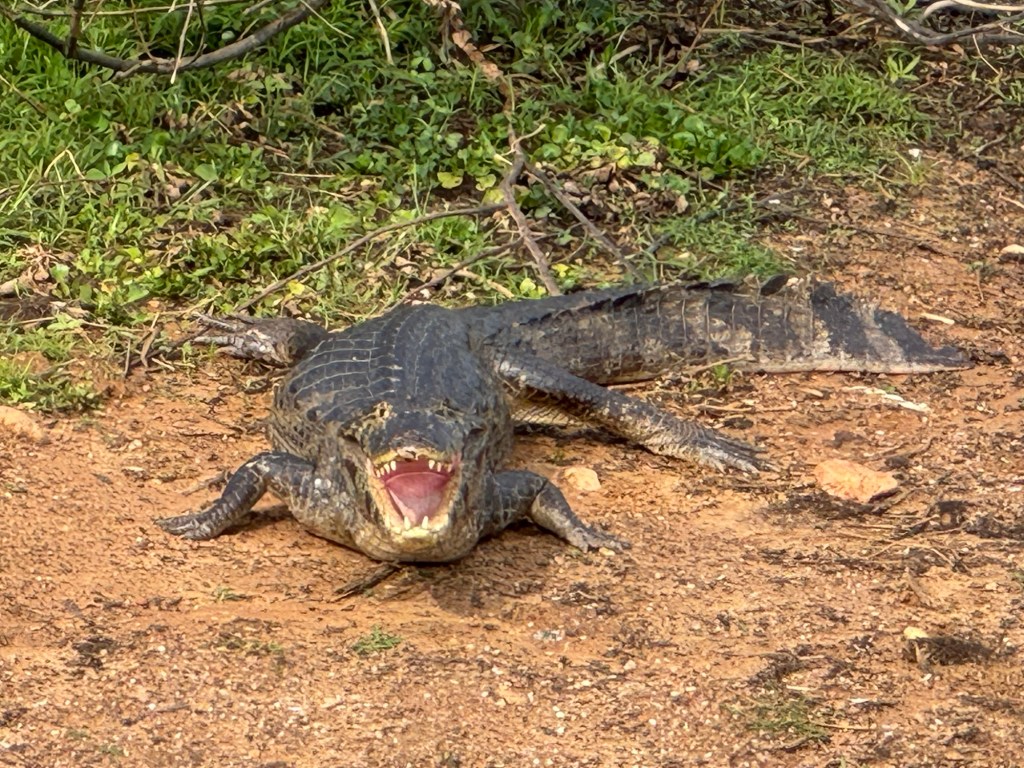
With the exception of some gold prospecting over the last few years, which had left the affected areas with giant craters, mountains of discarded soil and with a few untarmacked roads, the environment and the wildlife here had been left mostly untouched, with the result that the Pantanal had established itself as a Mecca for wildlife watching like no other place in Latin America.
This is particularly true for the Jaguar and it was not difficult to see that a whole industry had evolve around it.
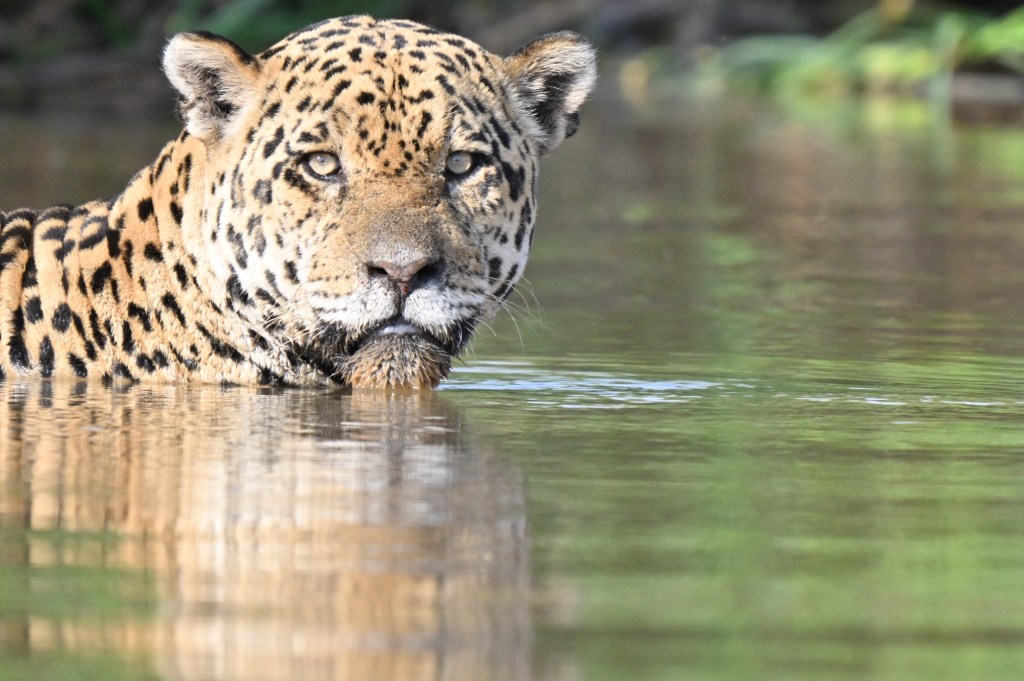
This elusive, third largest wild feline predator, which in the rest of South America is considered to be extremely rare, is thriving here and occurs in large numbers. This is of no great surprise, as for a big cat that loves to swim, that can of course climb any tree and that feeds not only of deer and capybaras, but also of caimans, fish and any waterfowl it can get hold of, in the Northern Pantanal the table is always abundantly stocked.
At first daylight, I crossed the yard when I was greeted by a young Capuchin monkey that was rummaging around in one of the palm trees for its breakfast.

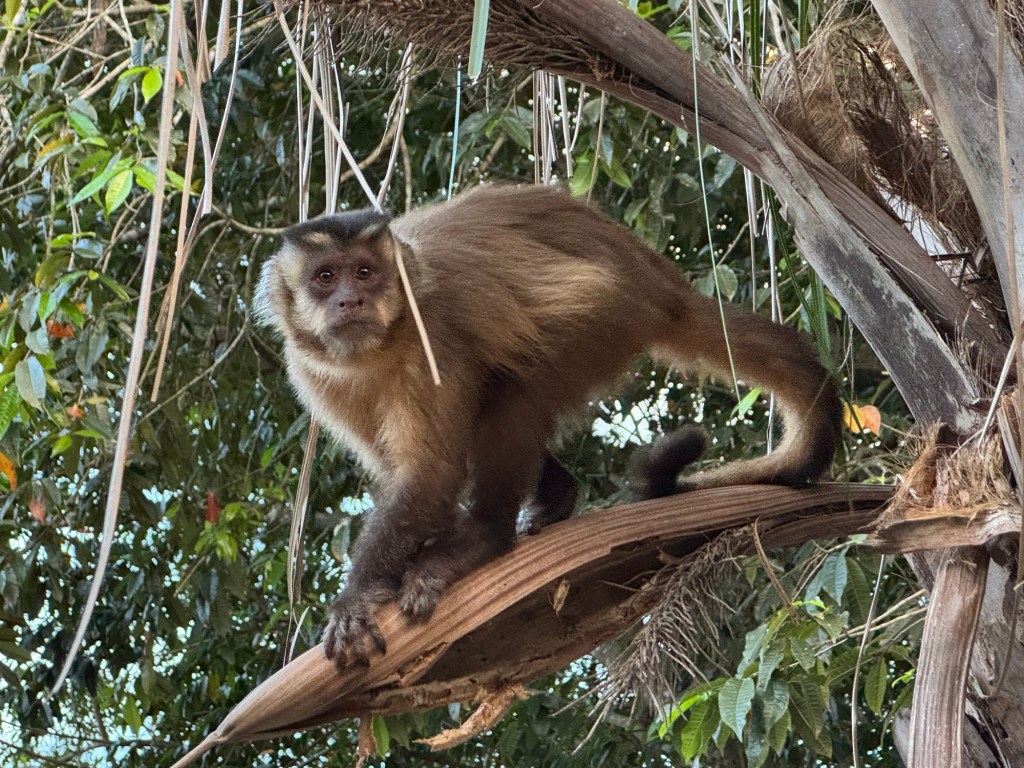
The monkeys, together with the resident caracaras, colourful birds of prey that were patrolling the premisses like a flog of chickens,
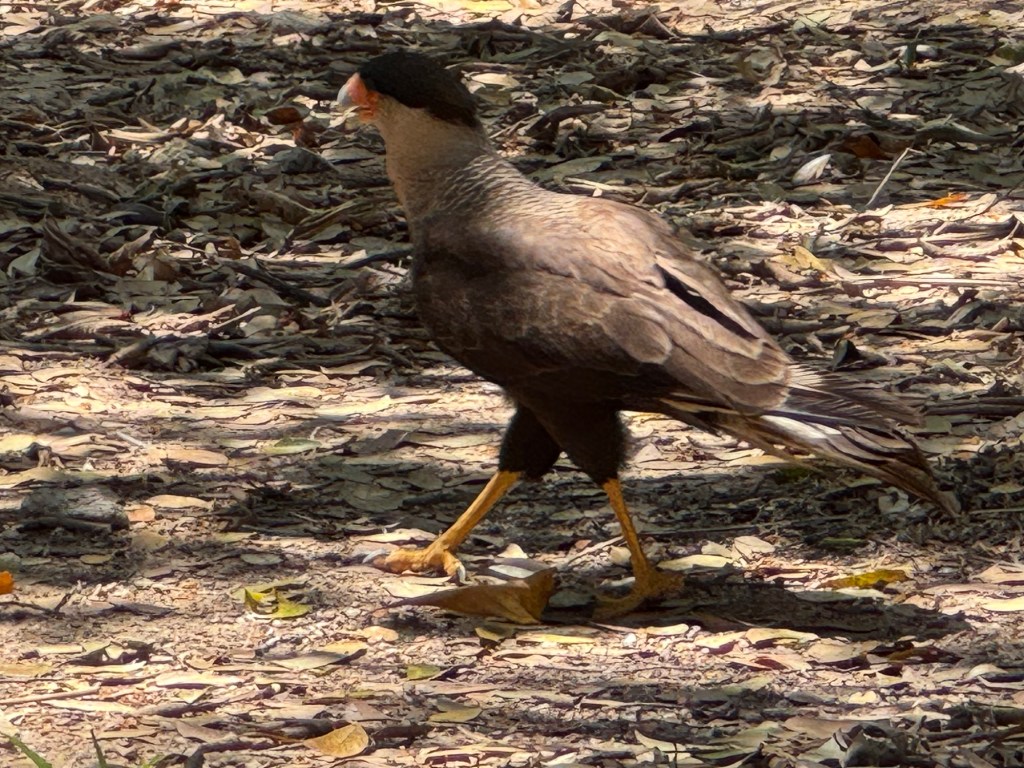
had already tidied away any scraps of food or faintly edible waste that might have been dropped or forgotten outside the previous night.
High up on a tree branch, a pair of rare Hyacinth Macaws were busy grooming each other and screeching from time to time in response to the activities on the ground below.

Joāo, our guide, was mortified – it would have been his job to start the emergency generator when the power had cut out, but by being more adapted to the heat, he had not noticed it and had slept right through it.
Well, a lack of sleep was nothing that a strong cup of coffee couldn’t fix….

When a short while later we turned up at the small beach of Port Jofrey, a place of not more than three brick buildings, a small cluster of house boats and a short, bumpy landing strip for brave pilots and small planes, Markus, the captain of our aluminium bottomed speed boat, was already waiting for us.
The local river and its contributories were the real transport links in this part of the world and most of the wildlife, similar to deer peacefully grazing next to a busy motorway, had adapted to the activities on the water. Little to no hunting was happening here, only with the exception of the occasional deer or capybara taken by one of the local residents, so that most animals continued with whatever they were doing, completely unaffected by any observer or passing vessel.
By pure coincidence, it turned out that the timing of my congress had coincided with the end of the dry season in the Pantanal. This meant that most of the wildlife was more concentrated on the remaining pools of water and on the river sides, which made wildlife watching so much easier.
This window of opportunity would only last for a few weeks, until the rain and huge amounts of flood water from the Brazilian Central Plateau were due to arrive.
Natale, our friendly and always helpful driver had explained that during that time the roads, that were bone dry sand tracks at the moment, would be impassable and the wildlife camp would have to shut down for several months. Using the road on a daily basis, he had been caught out a few times by unseasonably early downpours a few times and had experienced the effects the hard way.

With the help of a a powerful outboard engine, our boat had made fast progress and we soon found ourselves in a more remote part of the reserve. With me on the boat were Eva Lau and Qi Shuai, a couple from South China, that were using all of their five days annual leave on this excursion. They had arrived far more prepared with professional looking Nikons, fitted with powerful tele-lenses. Their gear enabled them to capture even the finest details of the smallest birds and reptiles over a long distance.
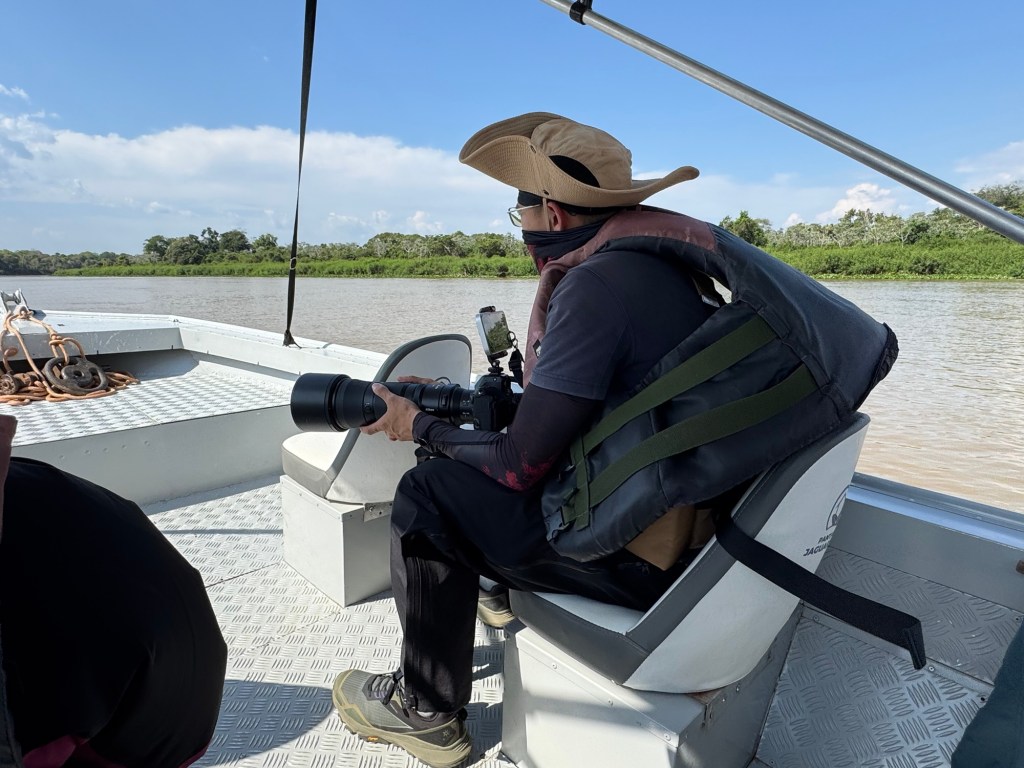
Luckily, they were more than happy to share a few of their images, so that I could relax with my far more inferior smart phone camera set up, sticking to larger objects and to the scenery around us.

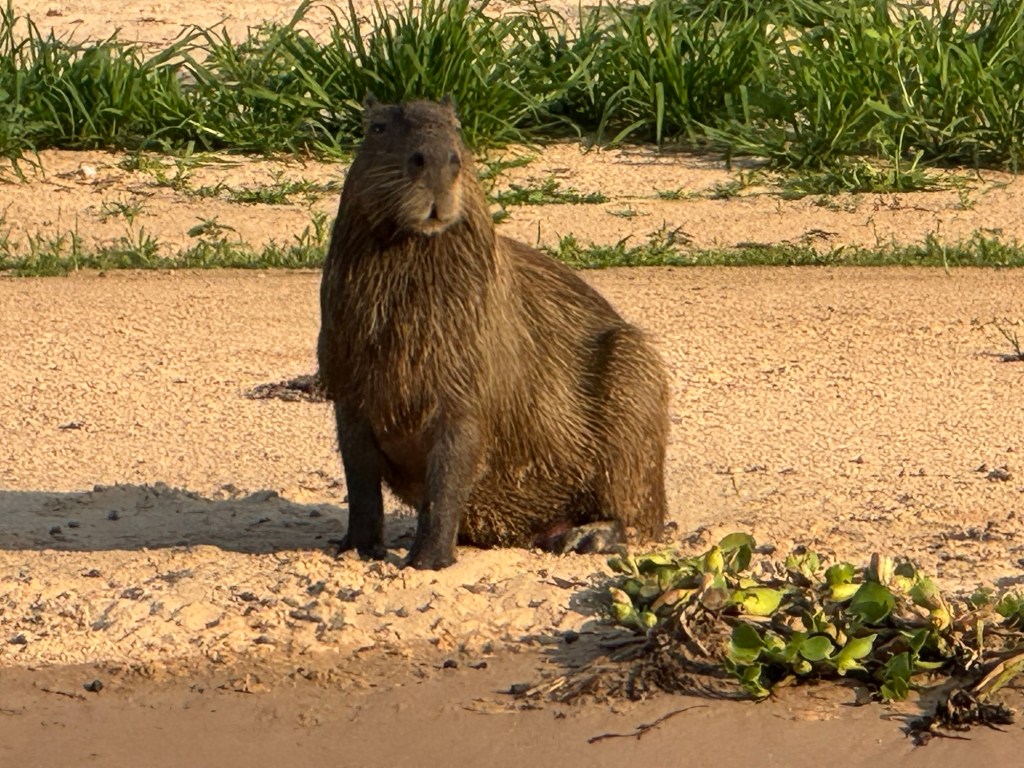
After passing a few groups of capybaras on the river bank, we didn’t have to wait long until we spotted the undisputed rulers of this half submerged world – a couple of jaguars, in fact a female with her nearly grown up cup, which were just emerging out of the water and then disappearing into the lush vegetation near our boat. Despite a cataract in one eye, the mother was still an excellent hunter and she was seen later that day catching one of the at this time of the year numerous caimans.
The next jaguar we saw was less camera shy, sunbathing on one of the small sand beaches that could be found alongside the river, which were normally populated by groups of capybaras. The automated shutter mechanisms of the cameras next to me went wild…..
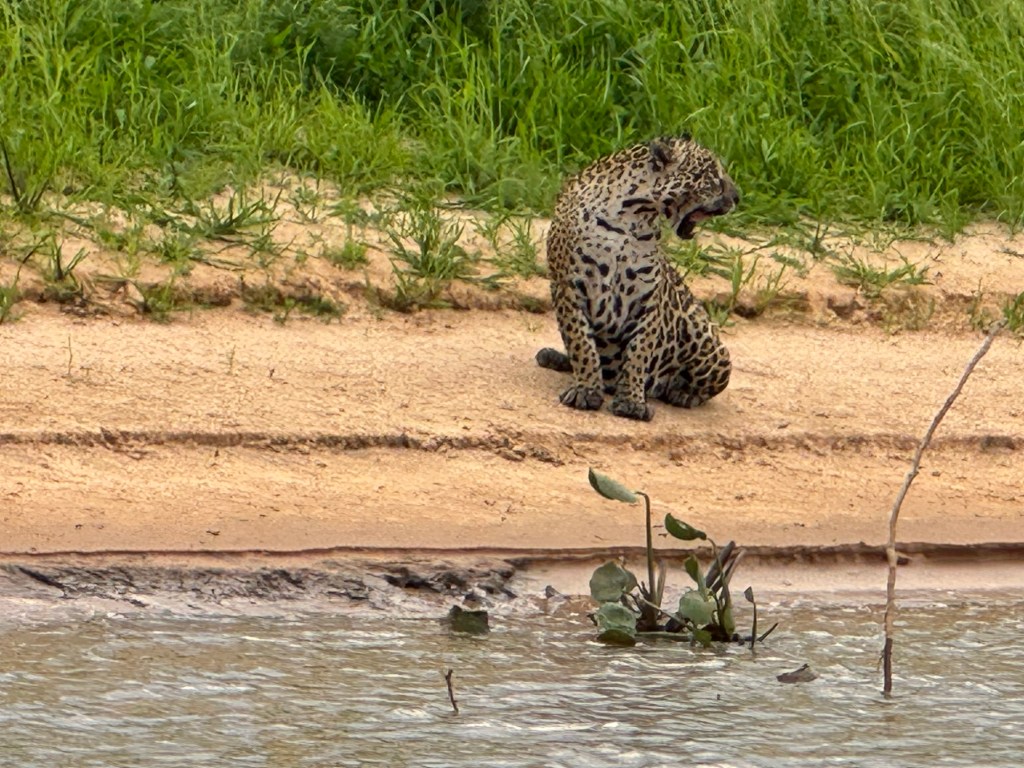
Less than an hour later, when it was starting to get progressively hot, we spotted another jaguar resting underneath a tree and shortly after that another two swimming across the river ….

That was when the Tiramisu effect hit – there can be too much of a good thing….
Like having the famous Italian dessert for breakfast, lunch, afternoon coffee and for dinner, you eventually will get tired of it. It was, what happened to us.
The cameras clicked less frequently, less dramatic or partially obscured shots were no longer taken and the initial excitement of a sighting was replaced by just respectful admiration.
When we ventured out for a second excursion in the afternoon, the jaguar, from having been the main attraction, had now been relegated to the ranks of an average member of the cast and we were elated by the first sightings of a group of giant otters, a toucan on a tree branch, a nesting giant owl or of the first tapirs.
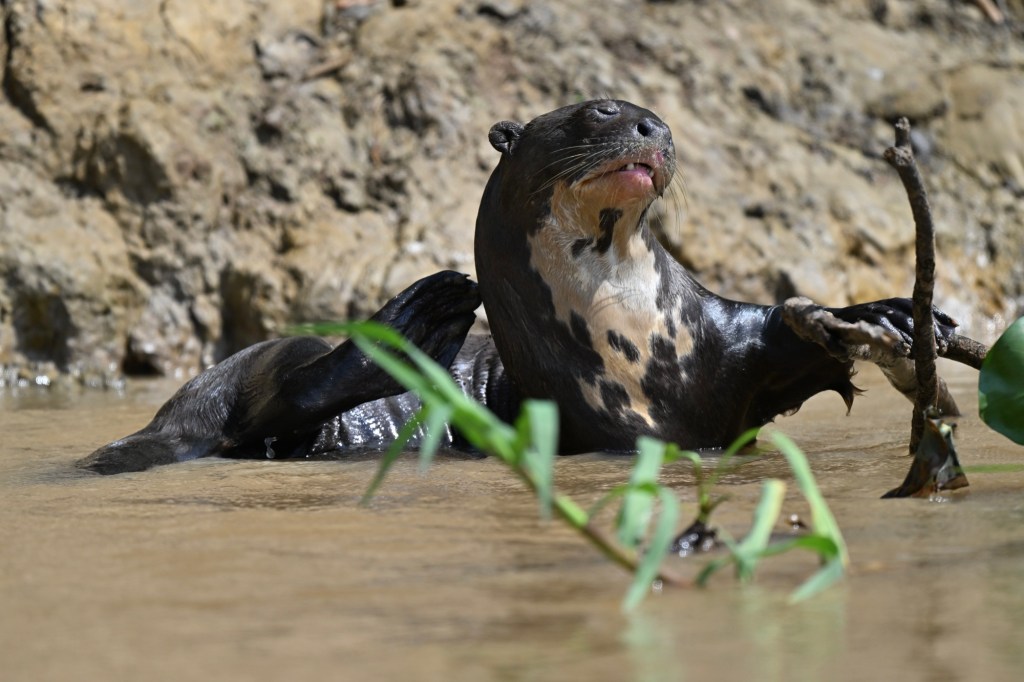

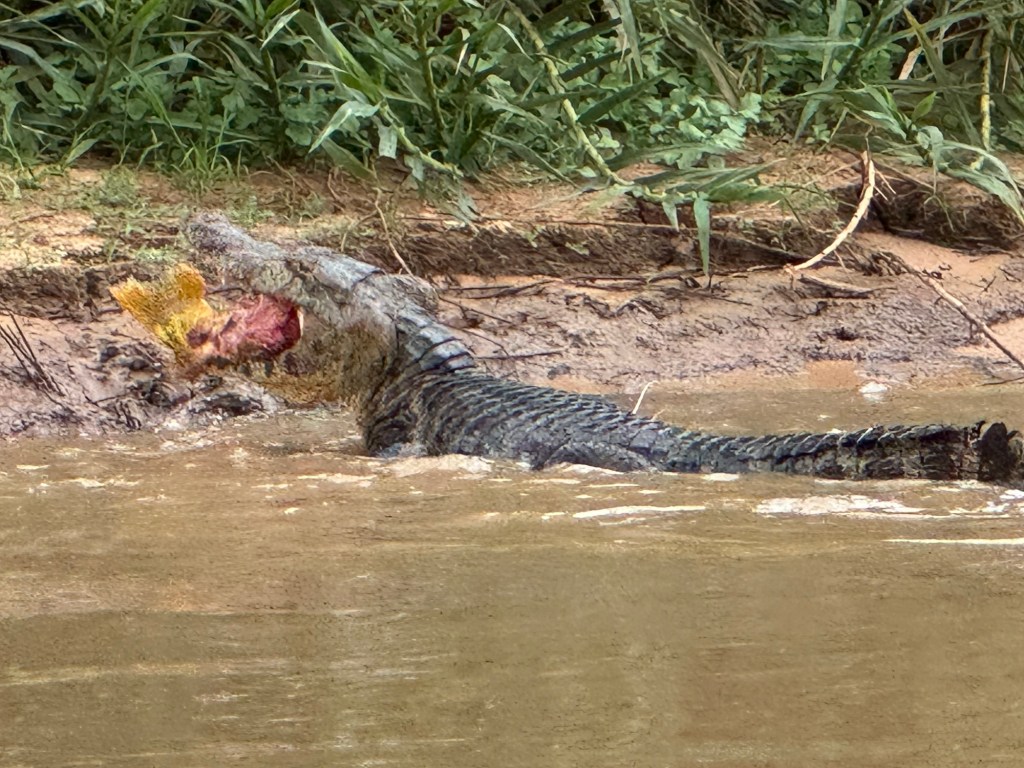
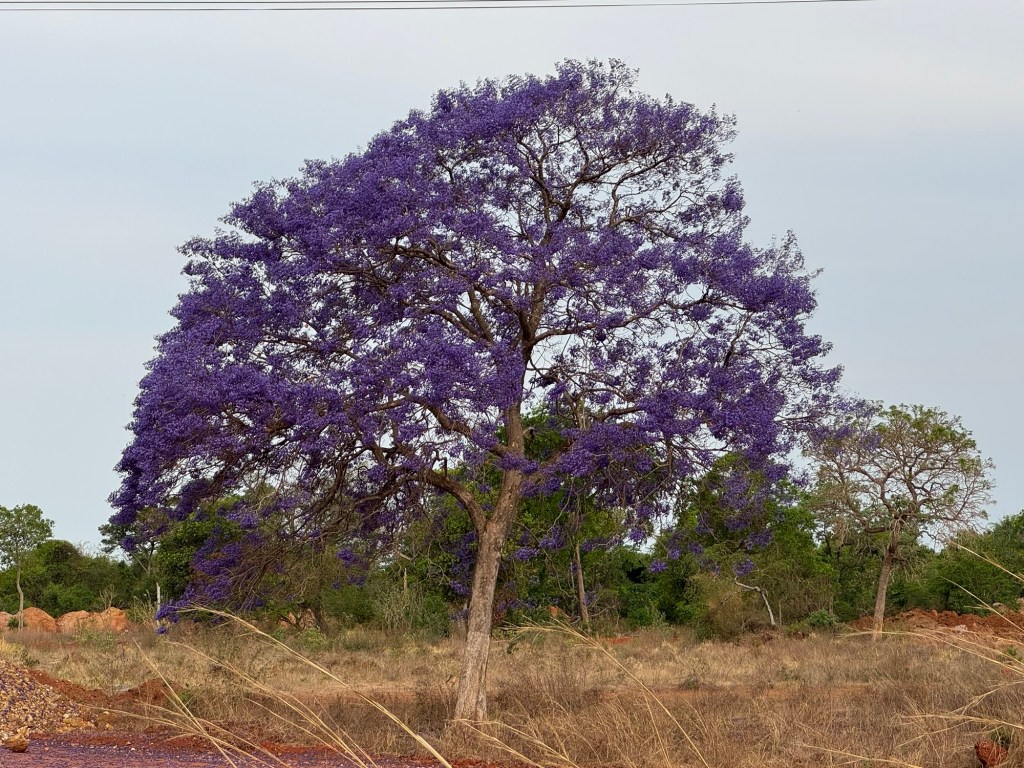
Smaller birds, rare herons and feeding caimans, even Taruma trees in full bloom and individual smaller plants were now recognised and only then, real appreciation for this unique part of the Globe was allowed to emerge…
 The Blue Vet Diary