The non-binary actor was walking fast in small circles carrying a oszillator , that was producing some alien, distorted words or just sounds that filled the room. Then the light went off and there was a scream ….
A few moments later the actor was suddenly walking through the audience, cast into the rays of an ice-cool, blue spotlight, which contrasted the slim body only slightly against the unlit surroundings. The spectator’s eyes had difficulties to adjust to the darkness and …. was that a stick, or even a knife they was carrying ?…..

The actor worked their way through the aisles, talking in heavy accented Portuguese, in an indigene language or in tongues – it didn’t matter, as I (and probably most of the mostly young audience, that had filled the stalls to the last seat) didn’t understood a word anyway…..
Again, the light went off, a heavy rhythm of drums started to fill the room and the half naked actor, now again back on the stage, cast into bright red light, was dancing provocatively around a small totem pole (?) positioned in the middle of the stage.
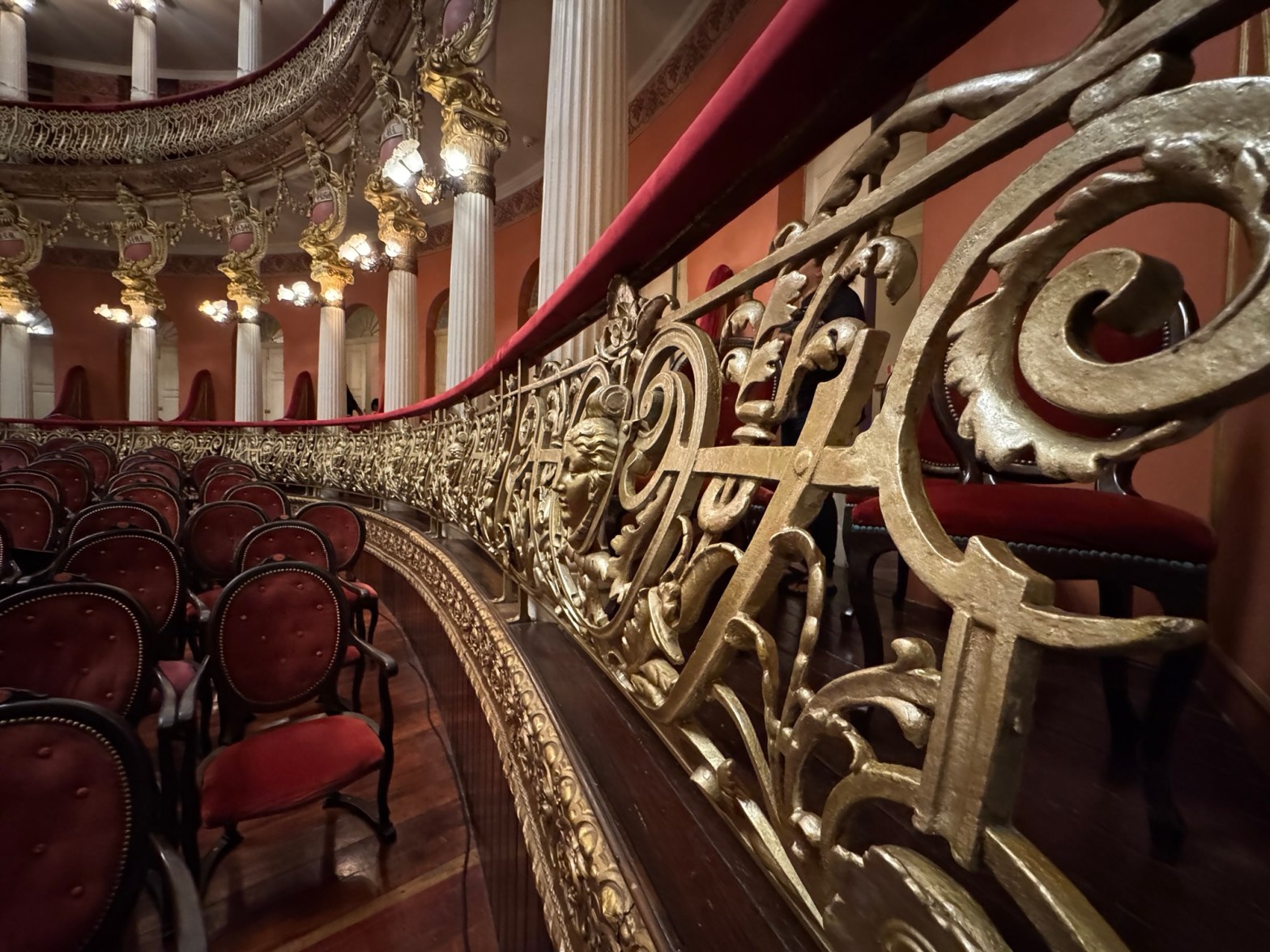
At this point, this solo performance had lasted the best part of an hour. There had been no real start or a defined first act of the play, as the actor had already been performing when the audience entered the theatre to populate the burgundy velveted seats.
Eventually, the actor took an interval while on stage, indicating that this was all just too hard work, while the audience remained seated, unsure if this was a genuine part of the performance.
After rehydrating themself first with water, then with Cachaça, the very popular, local sugar cane based moonshine, the performance was allowed to continue, but seemed to descend now into a state of utter chaos.
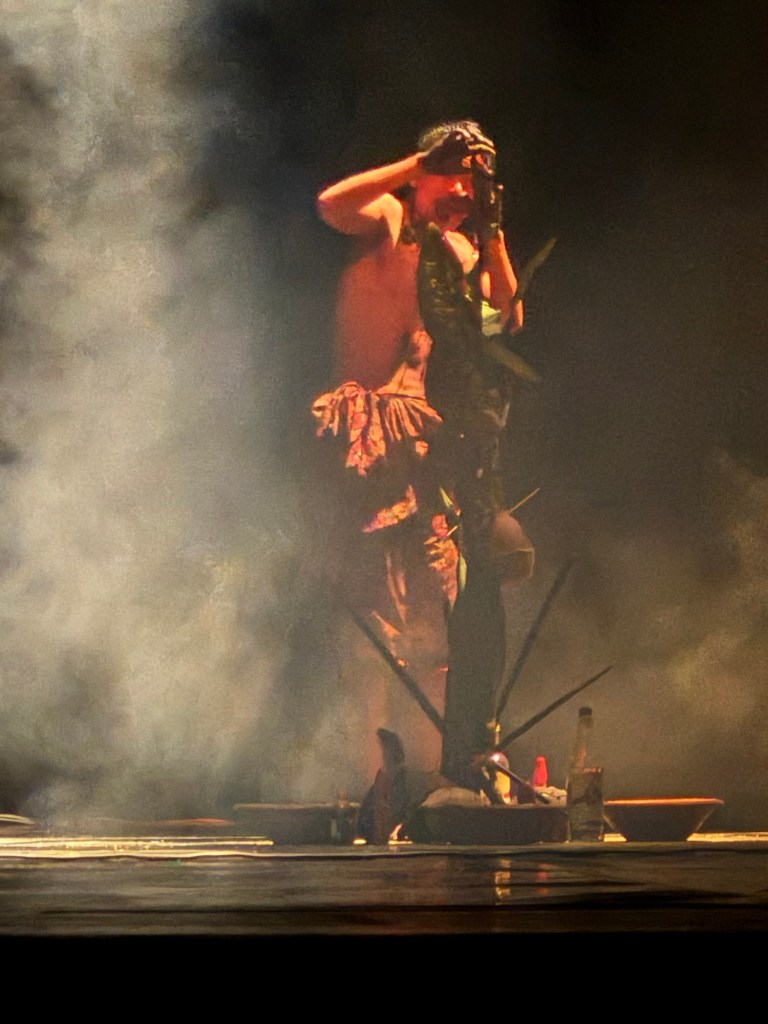
The Cachaça bottle appeared again and members of the audience sitting in the front rows, were filled up with the clear liquor. This was followed, judging by the response of the audience, by progressively rude and suggestive comments chanted repeatedly by the actor and eventually the stage was invaded by members of the audience, who joined in with the dancing.
The theatre goers in the stalls went wild. People of all ages were now off their seats, clapping, dancing and joining in with the repetitive chanting.
Eventually the actor left the stage and walked through the central aisle, still chanting, under the rapturous applause of the whole audience.
Speaking to the people next to me after the performance, no one exactly knew or understood what the play was about, but everyone had an absolutely great time….
Just another night at the Theatre of the Amazon.
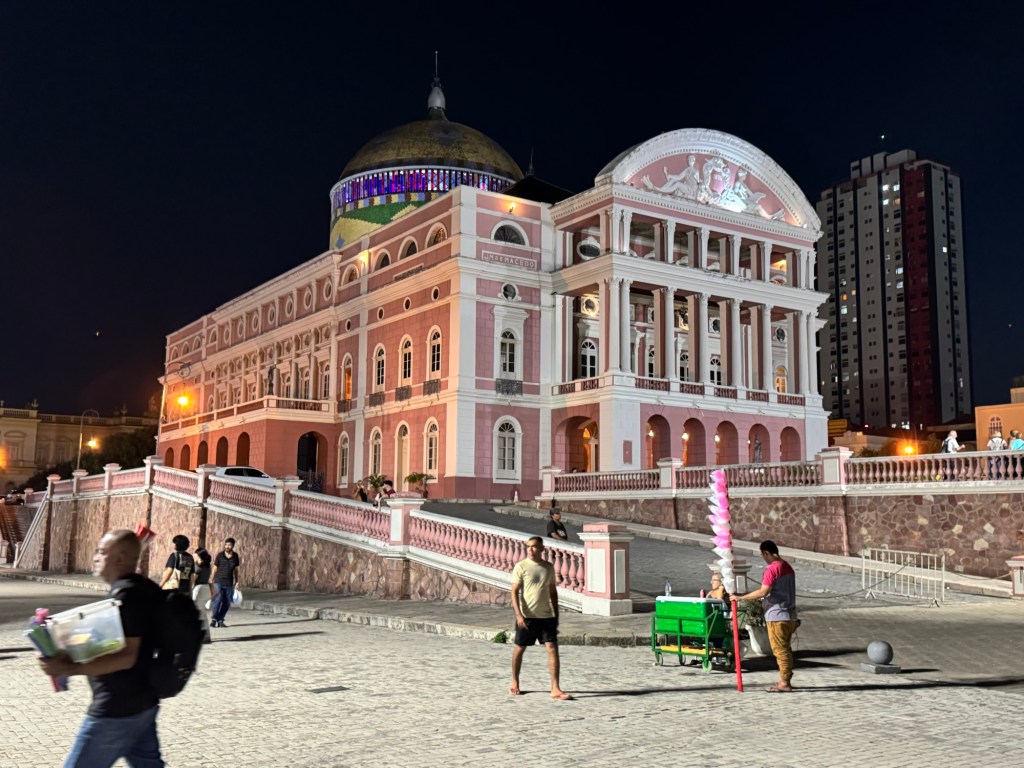
When I had arrived earlier that day in Manaus, in the tropical North of Brazil, I had not planned to see a performance at this building, that Vogue at some point had identified as one of the most beautiful opera houses in the World.

Yet, when I mentioned my plan to visit the building to Agatha, the girl who was running the reception at my stay, she pointed out that I had arrived at just the right time, as for a period of 2 weeks all theatre performances were free. One only had to start queuing well in advance to grab one of the tickets, as the demand was high.
An hour later, I had joined local residents and some far travelled theatre enthusiasts in a queue that was stretching halfway around the building….
Like Brian Sweeney, the main character in Werner Herzog’s epic movie “Fitzcarraldo”, I realised that one had to make an effort to see a performance here, even if Enrico Caruso was not starring that night.
I had seen the movie shortly after its release, but must admit, that at the time I neither appreciated nor entirely understood Herzog’s work – and little has changed since then…
But not only for the performance, but also for seeing the inside of the theatre building itself, it was well worth the effort.
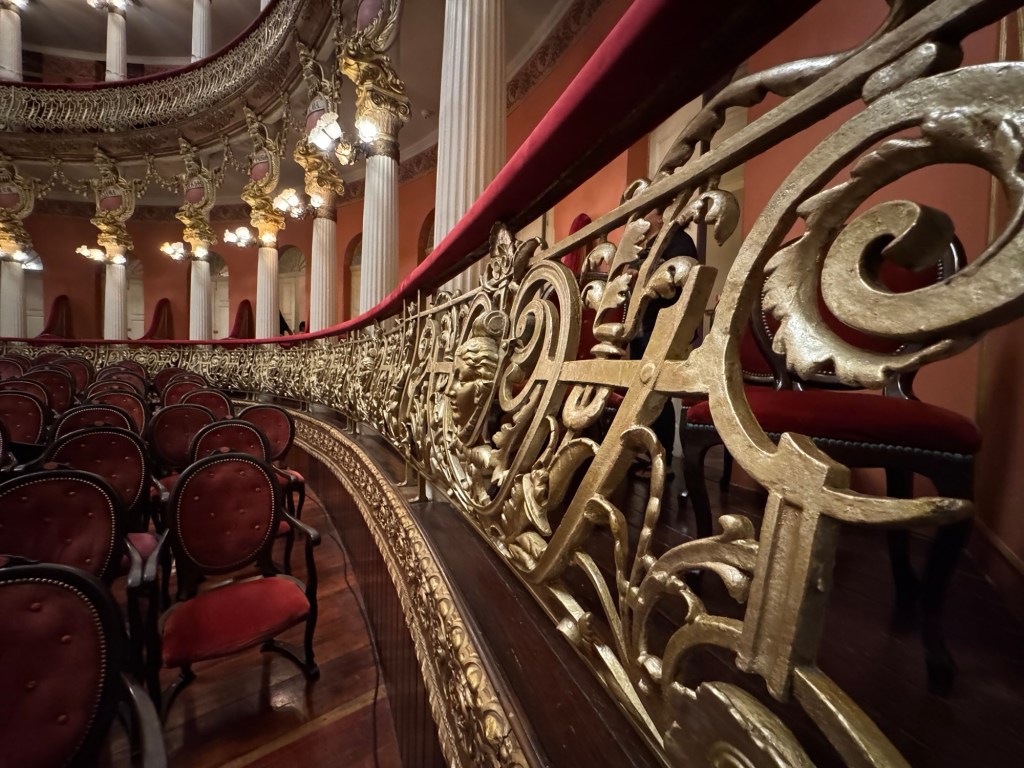
When the theatre was built during the height of the rubber boom at the end of the 19th century, when the city was flush with cash, only the best architects, artisans and materials were good enough for this project. Built in a “Renaissance Revival” style, not so different from the Holloway buildings near my former veterinary practice in Surrey, based on plans drawn up by an architecture office in Lisbon, Celestial Sacardim, an Italian architect had been tasked to oversee the building works.
The roofing tiles were source from Alsace, the steel supporting the walls from Glasgow, and the marble – of course – had to come from Carrara in Italy. What had been used on the Pantheon two millennia ago, was just about good enough for this project. The nearly 200 lights and chandeliers had been produced in Italy and some were even made of Venetian Murano glass.

While the main structure of the building was held in pink and white, the domed roof was bearing the National colours of Brasil: yellow, blue and green. In my opinion a brave combination of colours, but it worked for Manaus and even the fashion critics seemed to have agreed.
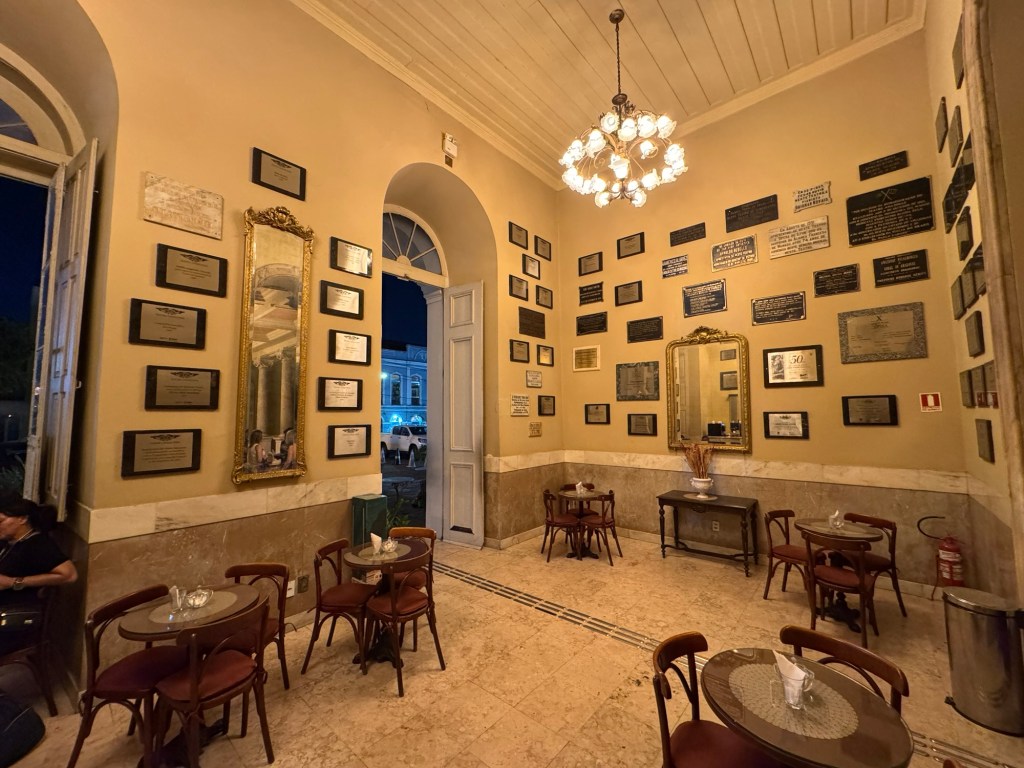
Both the historic café on the side entrance of the building, as well as the restaurants around the theatre square, with its Copacabana patterned pavement and its equally impressive Monument Abertura dos Portos,
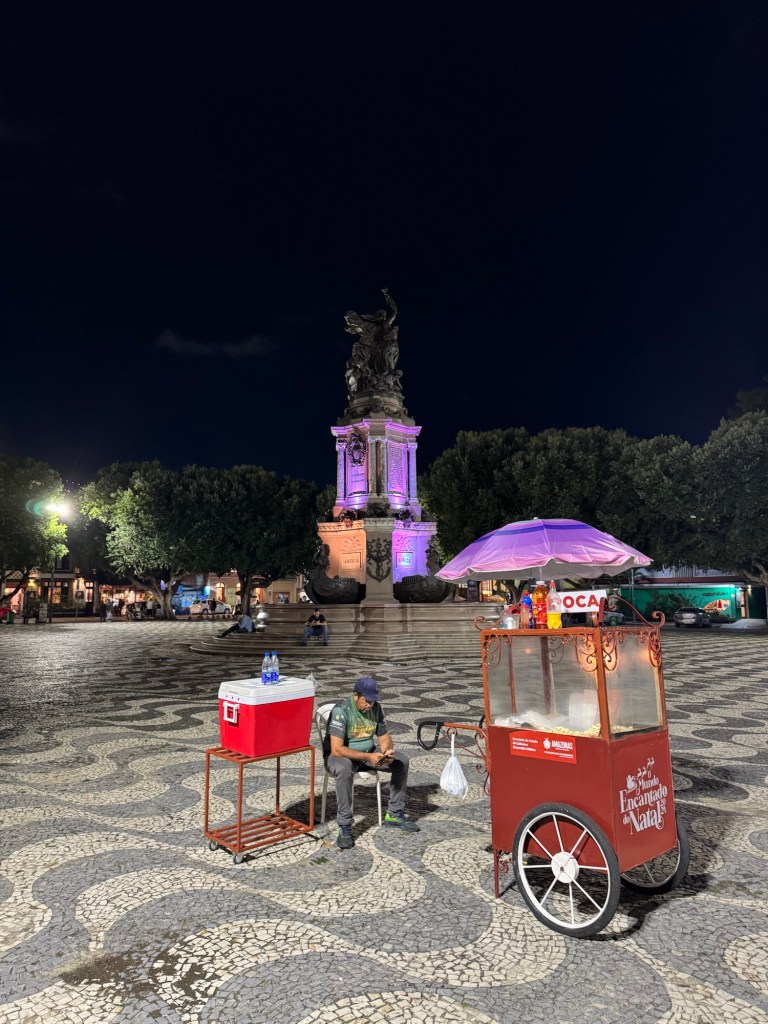
were great places to recover from this unexpected evening entertainment, and so my journey into the Amazon went off to a great start.
 The Blue Vet Diary