We were at the end of our visit of the veterinary faculty of Perugia, a town with a long Roman and Etruscan heritage.
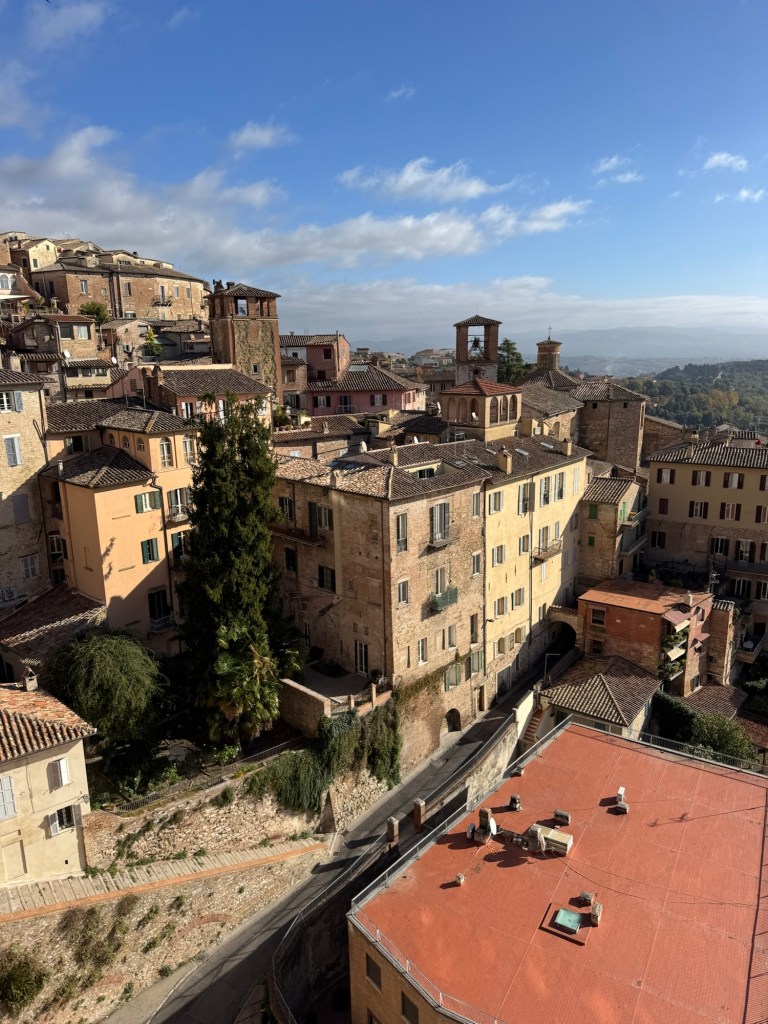
Three months of preparations, five days of inspections, interviews, and team meetings plus a final presentation in the main building of this prestiges veterinary school lay behind us, to find out if the course in Perugia was good enough to keep the university’s accreditation as a certified education establishment that met European standards.
Eventually, there was some time to spare for me and my fellow visitors, before we had to head back to Rome, to catch our flights back to our own faculties or places of work.
“Just follow me” said Professora Silvana Diverio, who had looked after us during our stay. “Our agricultural faculty is just a short walk up the hill and I think that you will like it”.
So, with nothing better to do, we followed our host and within a few minutes we found ourselves on the other side of Porta San Costanza and in the middle of Giardini del Frontone, a large public park, which to these days has been a meeting place for poets and novelists.
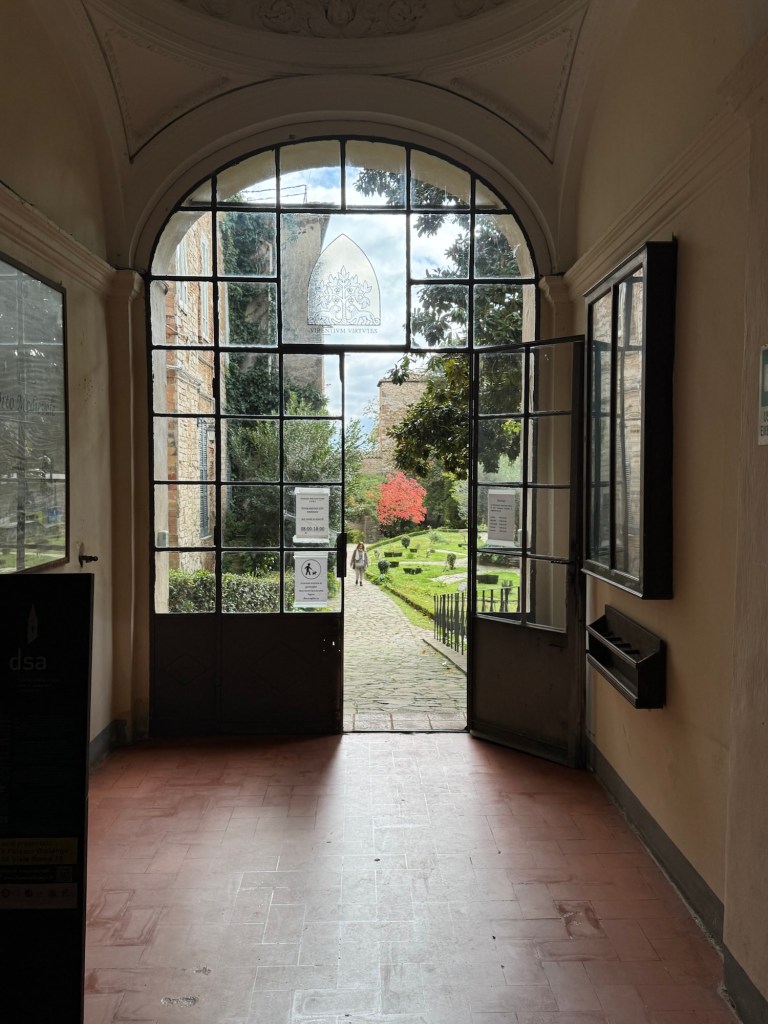
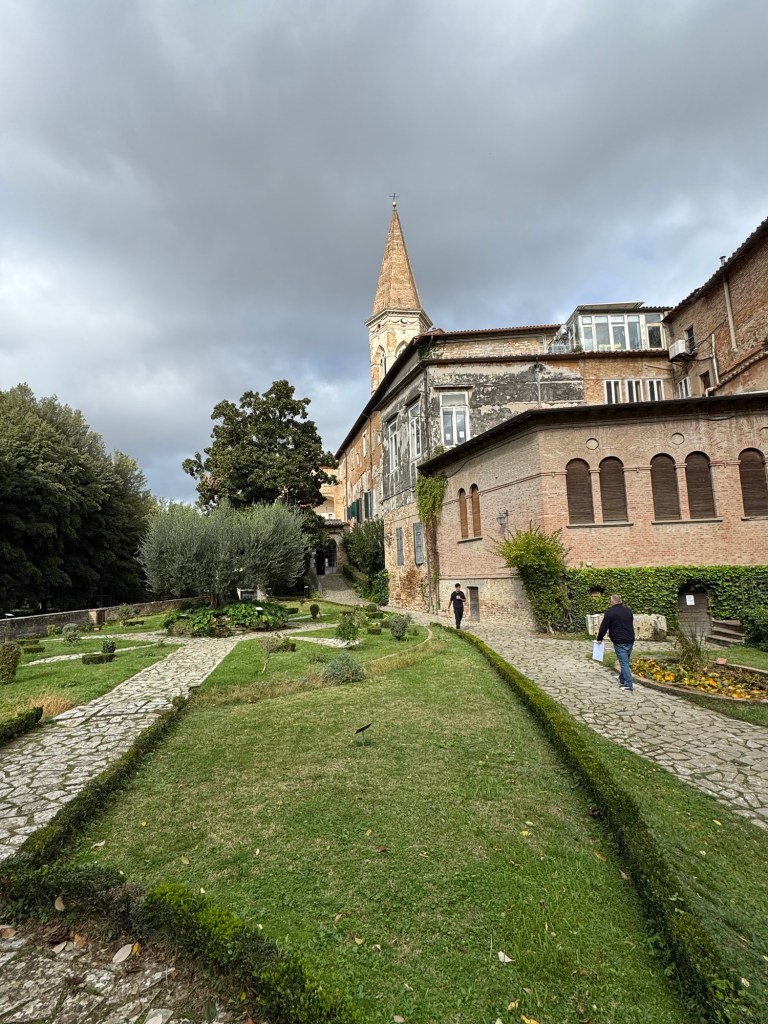
On the other side of Borgo XX Giugno, the agricultural faculty was housed inside the walls of a former Benedictine monastery. Approaching these buildings that looked back on a history of well over a thousand years, each of our steps were keenly followed by the watchful eyes of a resident alchemist who, in a small unheated room on the top of the tower next to the Arco di Braccio, was said to have pursued here his futile ambition to creat gold out of less valuable materials.


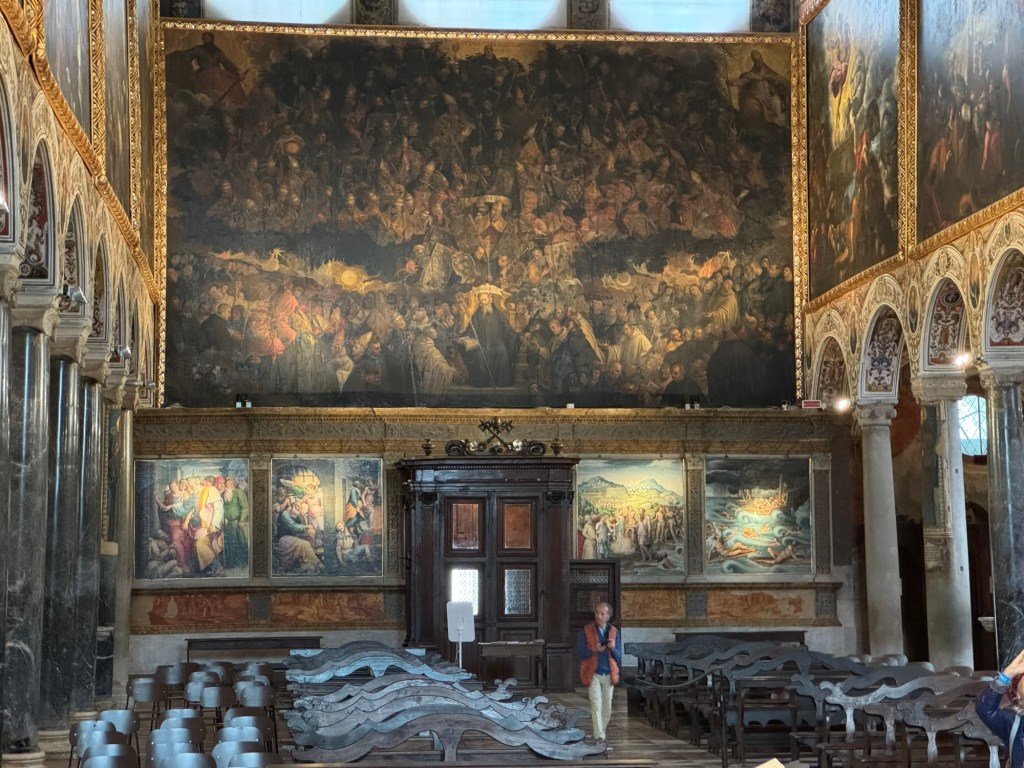
We then entered the Abbey of San Pietro, the striking center piece of the whole monastery and for me – while so unexpected – an absolute revelation.
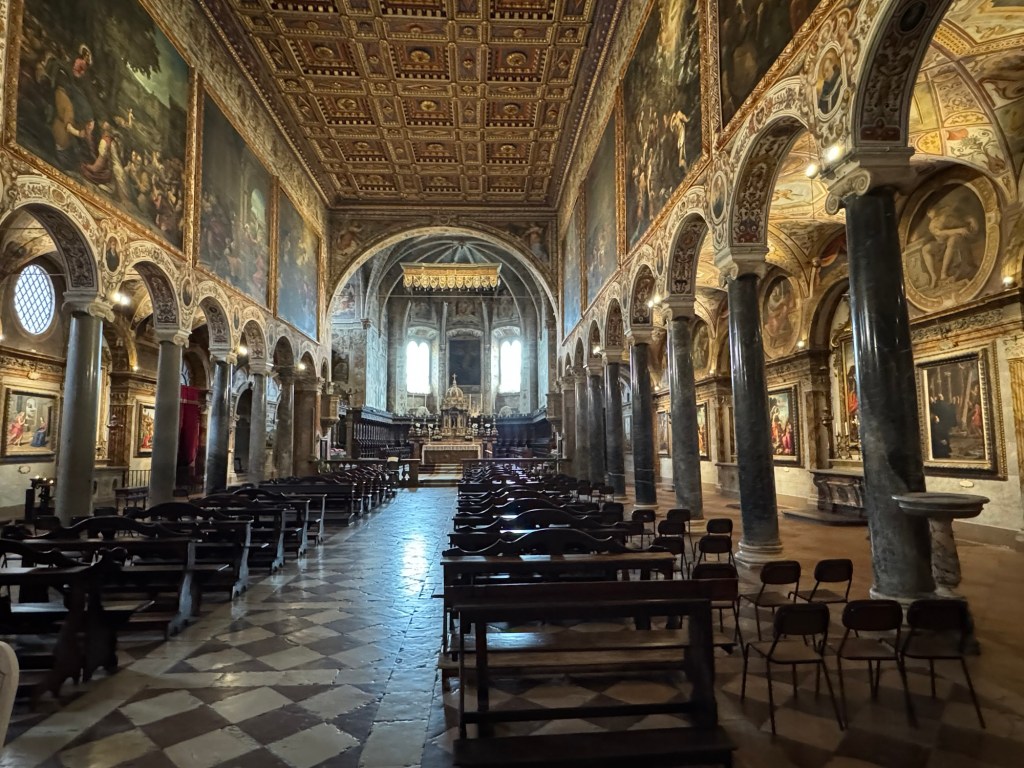
Richly decorated with depictions of biblical scenes on every part of its walls and ceiling, its sides covered with large paintings, the first impression was overwhelming. And yet, this house of God started to grow on me, not because of its opulence, but because of all the subtile, at times playful, but mostly frightening details.
One of these, on the right side of the nave near the altar, was a smaller painting, showing the destruction of the temple of Dagon by the blinded Samson.

Its vivid colours, the bodies of Philistines hurling through the air (how did they get there ?…) and the panic in the face of a young man fleeing the scene, looked so surreal that it would have gone unnoticed in a Dali retrospective. Considering that the temple of this fishtailed god had been located in Gaza, the theme of this painting could not have been more contemporary.

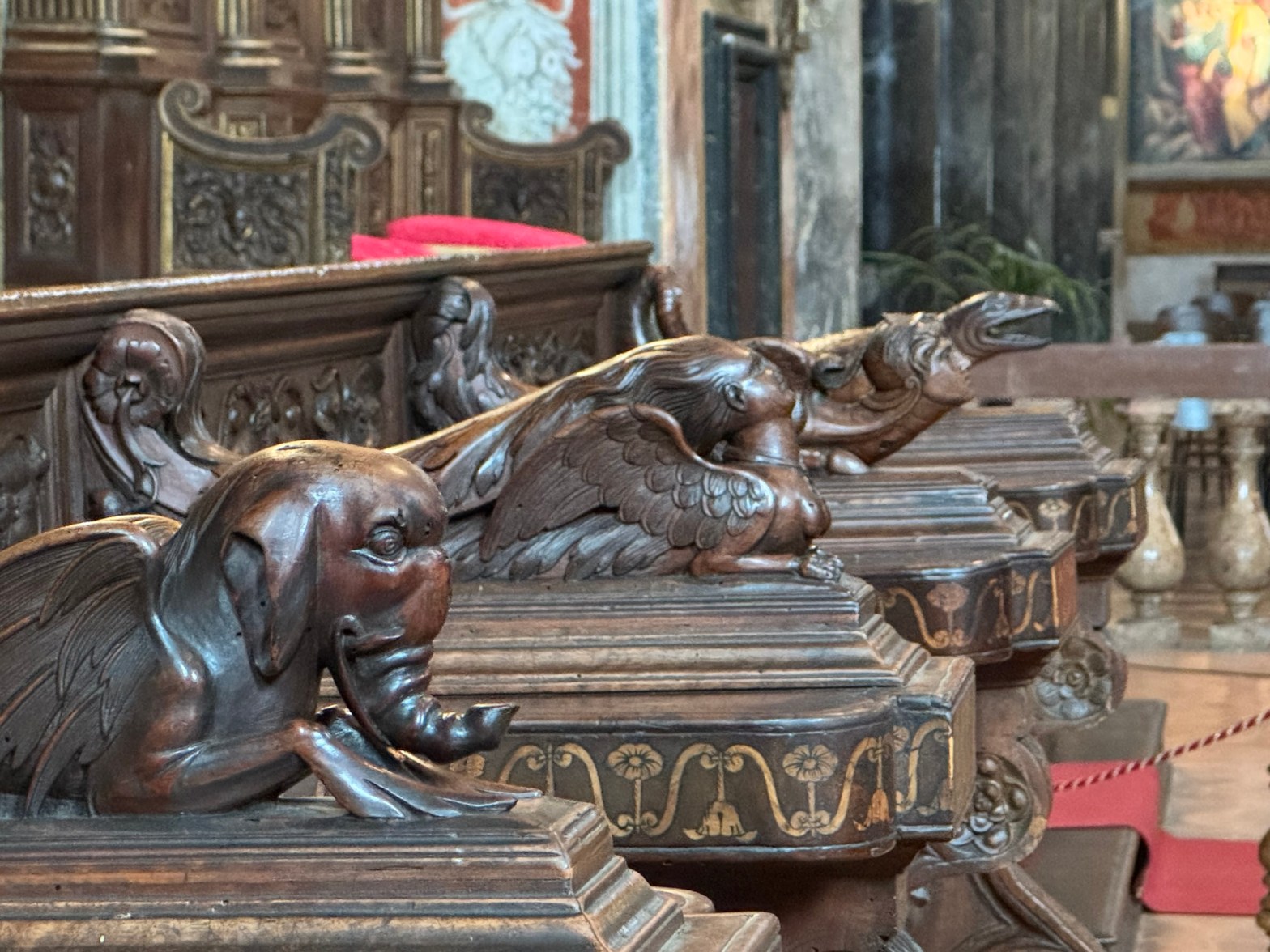
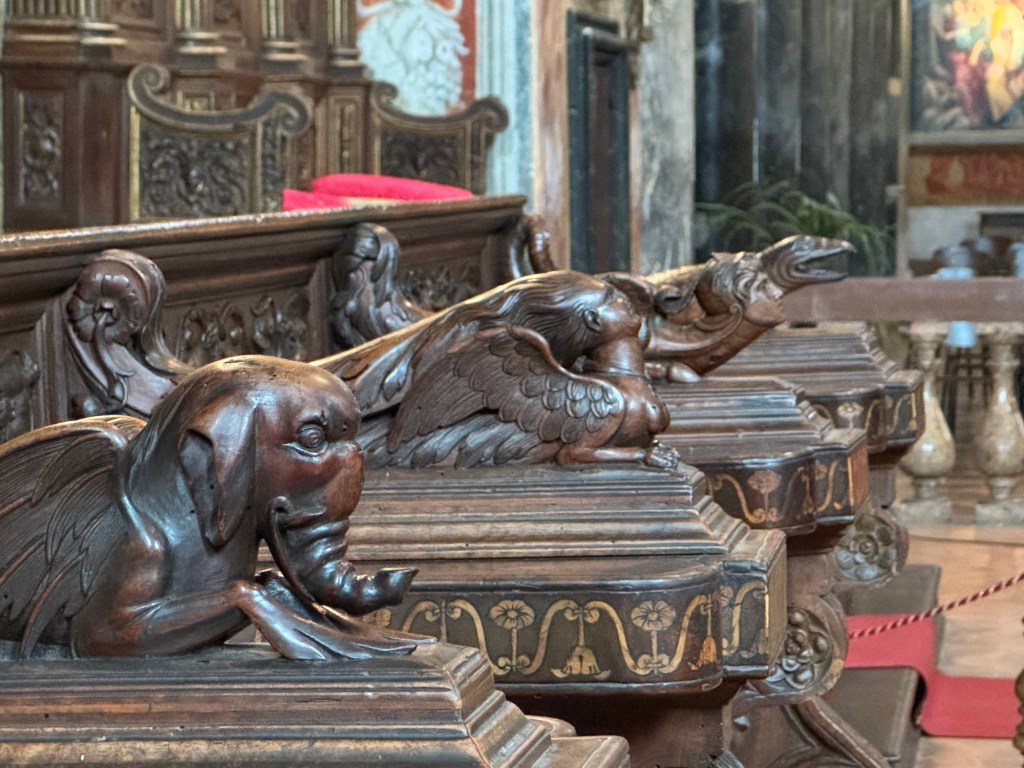
Crossing the nave and standing in front of the wooden choir seats, I then found myself among an assembly of the weirdest creatures one could imagine, as if conjured straight out of a psilocybin-fuelled Hieronymus Bosch painting.
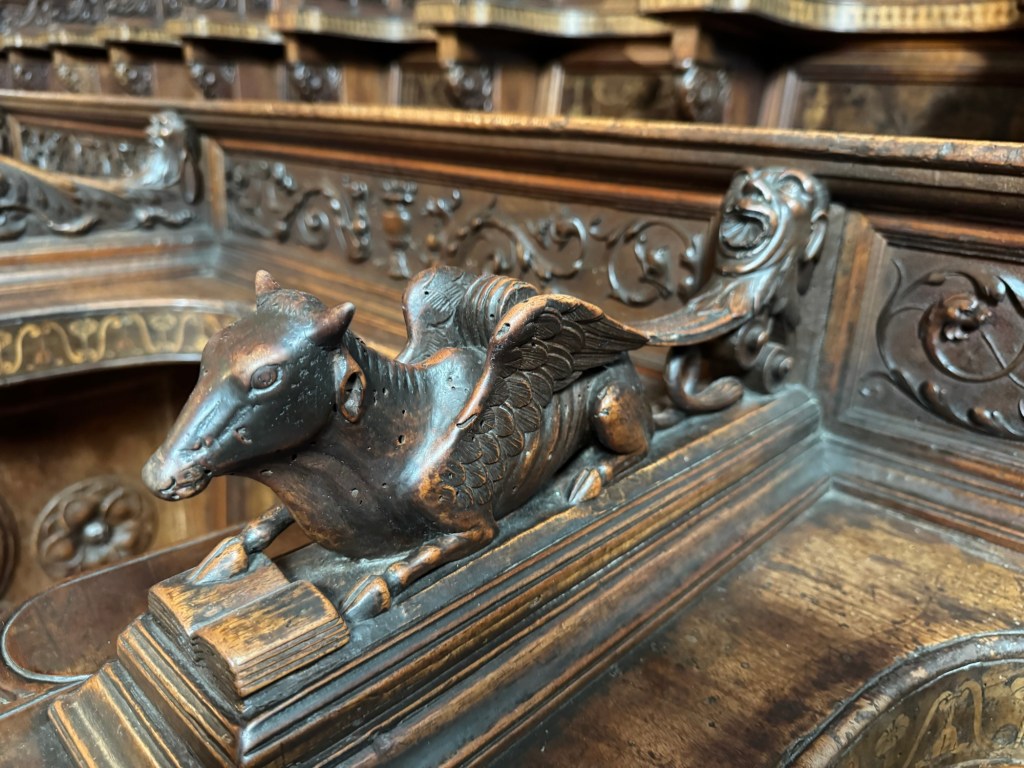
A winged cow reading a book, an elephant with both wings and fins, a sphinx, harpies, sirens and echidnas, as well as a number of evil looking snakes and lizards.

Each of these creatures were more than 500 years old and one could just imagine, how generations of bored parishioners must have admired, touched, and distracted themselves with these delicately carved sculptures during endless church services.
Apparently, these figures as well as the intarsia of the choir were some of the finest of their kind in Italy and they were on par with the equally exquisite carvings of the wooden choir in the cathedral of Ulm, which I had visited a couple of years earlier. There the heads of saints and of famous classical thinkers had been the inspiration for Jörg Syrlin the Elder, a medieval sculptor, and they had served there the same decorative and entertaining purpose.

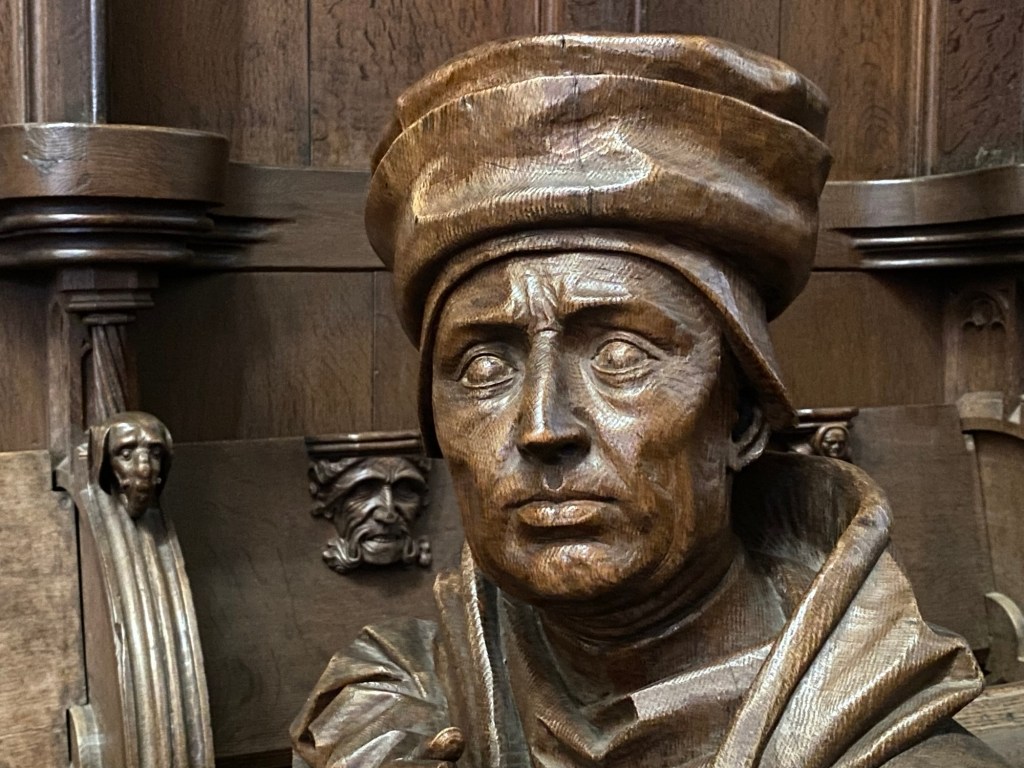
I sat down among the biblical beasts and closed my eyes. I took in the silence and the peace of this enormous room, I smelled the ancient wood, while my fingers were running over the figure of a bearded man holding a plate with a flame.

Getting up again, I felt lightheaded and walking slowly back towards the entrance of the abbey, was it just me, or was I walking straight into the face of a giant skull?….
As a Roman proverb would say: “Memento mori!….”
 The Blue Vet Diary