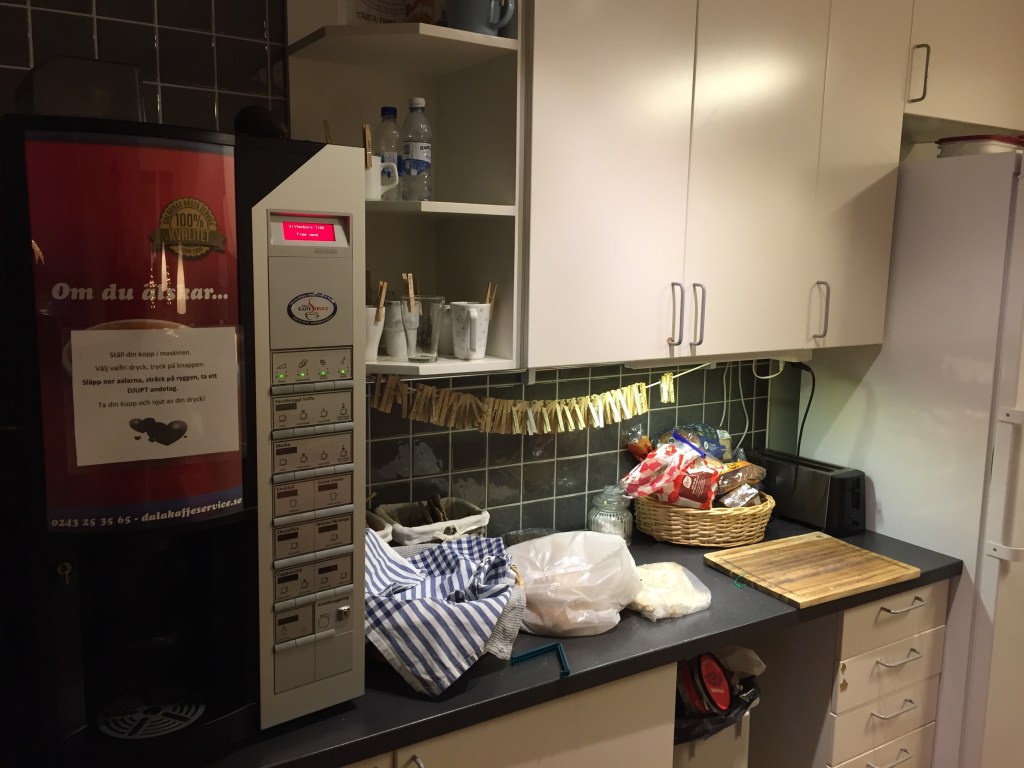
As alarming as this might sound especially to the Germanic ear, this is a very Swedish institution, the foreign traveler is introduced to shortly upon his/he arrival and this Nordic custom is one which even in our clinic in Falun is frequently enjoyed and which had its fixed place in the daily routine.
No, it is not what you might think………..
The “Fika” break, a time to calm down and to take your time for a relaxed cup of coffee (or tea) with friends or colleagues (or both), is an ever more important stress reducing exercise in the middle of the day (or at any time during the day) which is now also utilized by forward thinking large companies.
The name “Fika” resulted from a word play, where the two syllables of “Ka-fee” are exchanged and slightly tweeked. The first mentioning of the word dates back just over a hundred years but that means a lot of coffee cups (!)………
My hosts were in this matter preaching to the converted – although I loved spending time in my clinic in Virginia Water with my team, I always tried to break away at least for a short time to one of the local coffee chains in the UK to meet of a coffee and a sandwich with friends, to have a quiet read though the daily newspaper or just for a quick caffeine fix. Knowing now how serious this habit is taken in other countries, makes me with hindsight feeling far less guilty.
Ok, ok……it is not quite as bad as it sounds, but it is absolutely true.
At least when we are talking about cash: I don’t have a single Swedish Kronar in my pocket and this is the case since my arrival in Sweden a month ago. I don’t even know how the local currency looks and feels like….
The reason for this is, that it is virtually impossible in some places to pay with cash and even where it is, people are not particularly happy with you if you try to do so. Even some larger shops like IKEA have gone completely cashless in some of their branches (tough luck if you have collected all your items for the last 2 hours and end up with only cash in your pocket at the till….)
Sweden , similar to some other Nordic countries, is – seemingly very successfully – trying to go cashless. Virtually everywhere and even for the smallest amounts you can pay with your credit card or with “Swish” , a local sort of debit card for which you need a Swedish bank account though (I think….).
Some Swedes have gone so far that they have been implanted with a microchip that enables them to make digital payments where ever they go. This – I would say – takes it a bit too far for me….
So, don’t rush to bail me out or to send me any food parcels – although I don’t have any coins or notes in my pocket, I am still doing fine.
However, I am not looking forward going through my credit card statement at the end of the month, especially as I am using a German credit card with the bank adding a foreign exchange fee to each transaction.
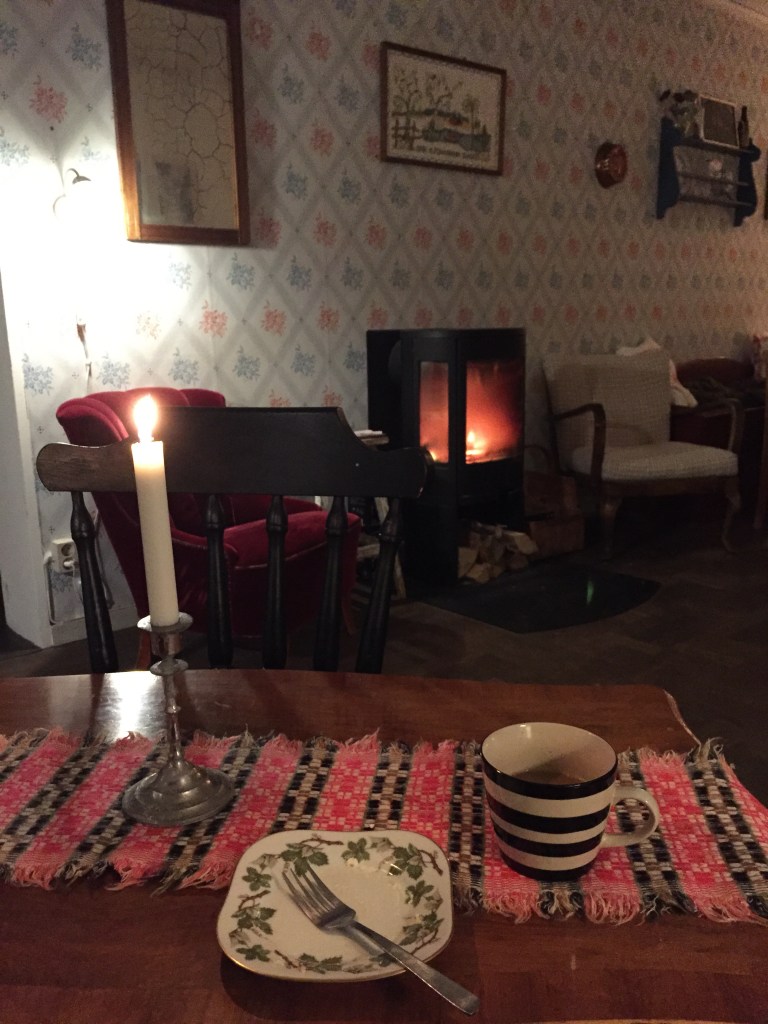
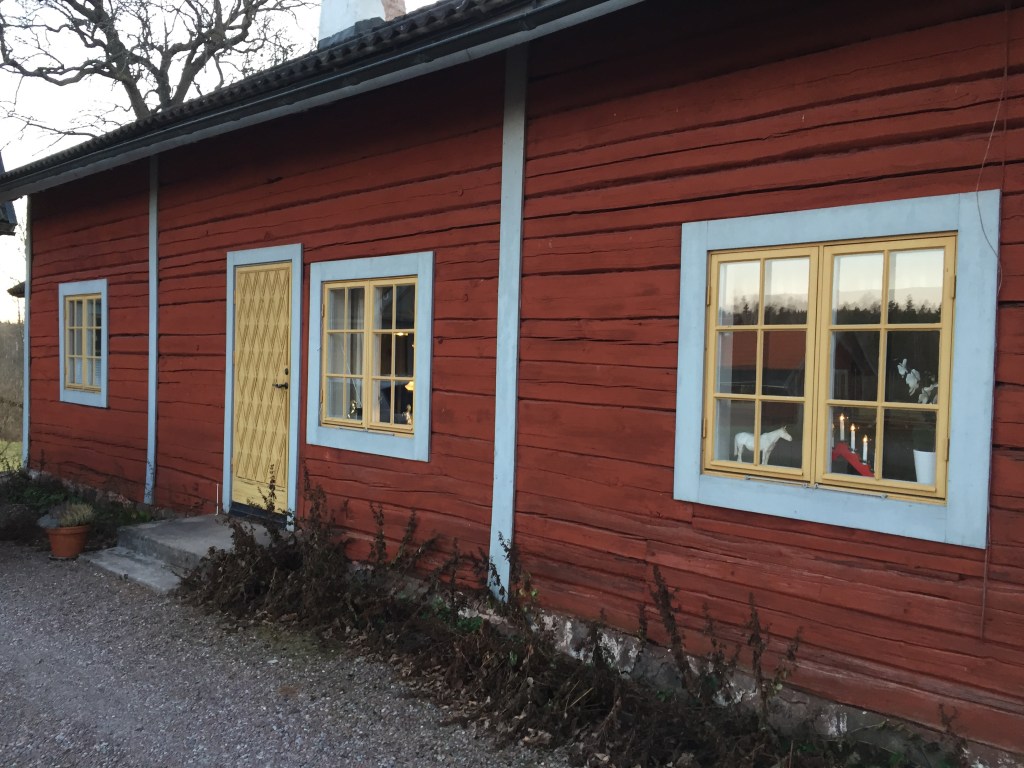
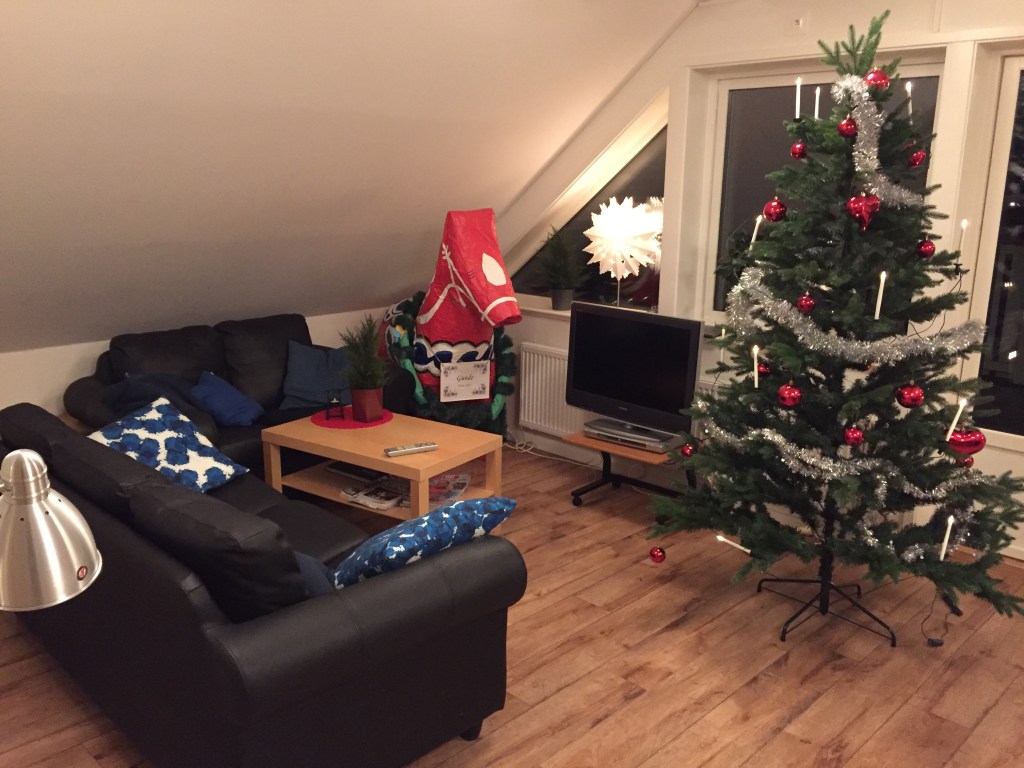
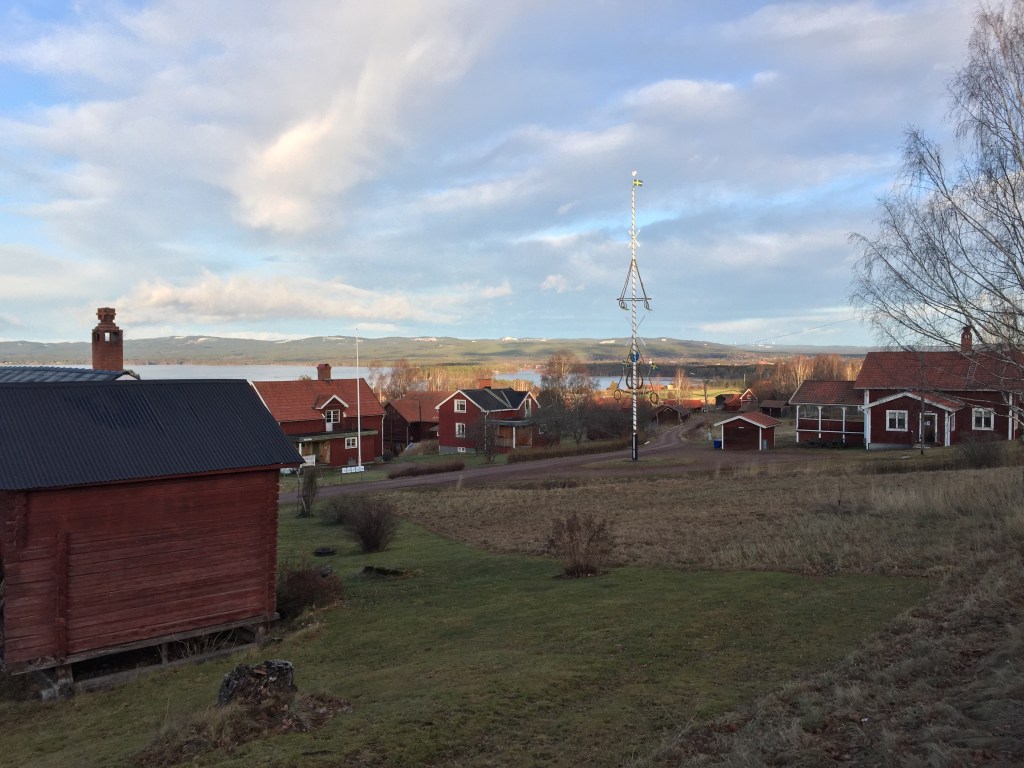
Something that came along with the job in Falun was the opportunity to stay in a 17th century log cottage on the farm of Anna – one of my colleagues – and her husband.
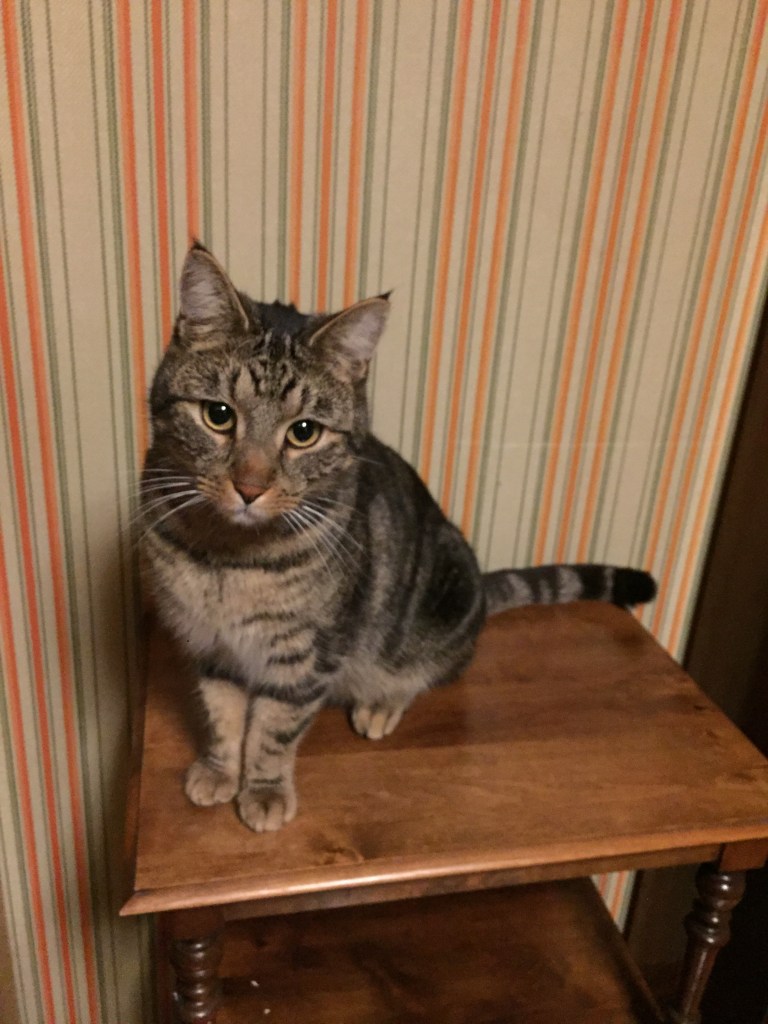
What I had not been told, was that there were three other tenants : Yoda, Swerre and Bamse – the farm cats – who turned out to be very social and who frequently tried to occupy the most comfortable seats in the house, the bench in the kitchen or my bed….
Thankfully the headbutting issue was quickly resolved by letting the culprit go outside. It wasn’t helped though that it was 6 am and -5C and it didn’t feel much warmer inside the cottage…..
Nevertheless, the place was absolutely perfect for me and I loved it from the first moment: two rooms – a kitchen with a large fridge and a couple of bunk beds and a living room with another two beds offered enough space for myself, for all the stuff I had taken with me in my long suffering car and for the three felines. There was also a bathroom with well working underfloor heating and a utility room with a washing machine and a tumble dryer.
The place is circa 10 km away from the clinic, in the middle of the nowhere, surrounded by forest and fields, with grazing horses and the occasional elg (ok, I haven’t seen one yet, but I have been told that they are out there…..)
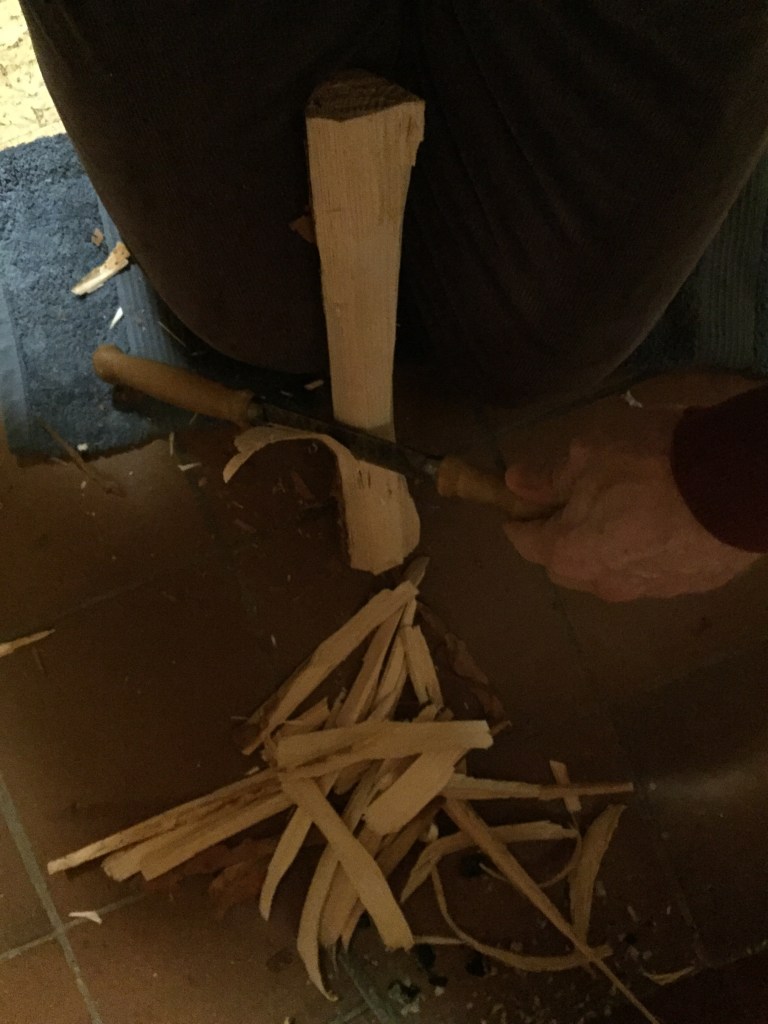
Vital tasks to learn were to chip wood in the correct way with a special blade to light a fire in the tiled fire place without using any paper and to turn on the timer first, when trying to warm up food on the heating plates – failing to do this, resulted a few times in a freezing bedroom or in a cold supper or in both.
Close to the cottage in a disused railway line (with the tracks and sleepers removed), which makes a nice and flat running track when I am coming home from work, which is always at night (which starts here at 3.30 pm).
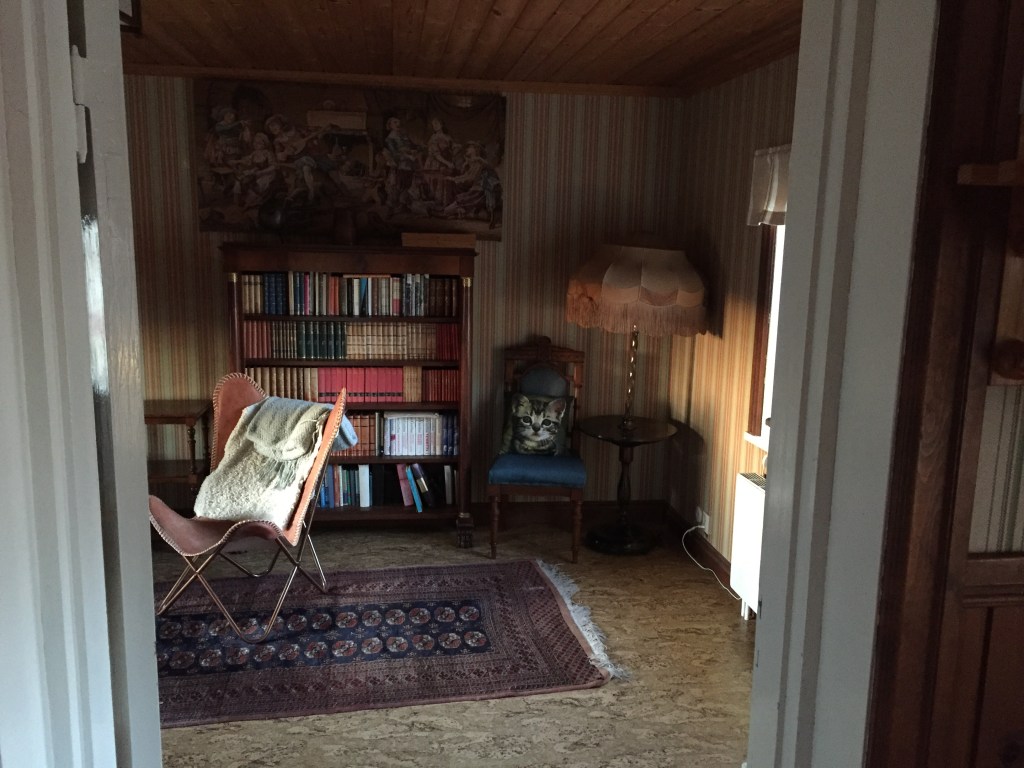
Completing my humble abbot is a well stocked library, containing a nice selection of the works of Agnes von Krusenstjerna, Selma Lagerloef and August Strindberg and many more of the Swedish classics, but unfortunately all in Swedish……
However – how simple can a piece of paradise be?…….
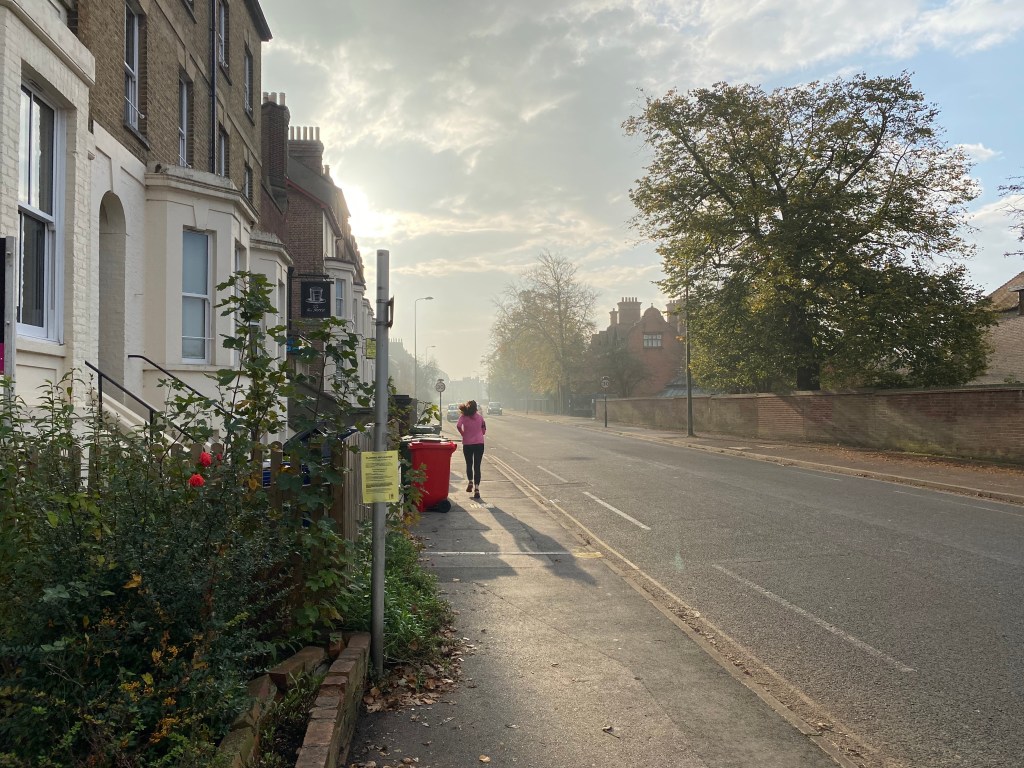
Today I like to take you on an early morning run through “Lock Down” Oxford on a Sunday morning after – thankfully – a quiet night on call.
It won’t be a fast run, because we will stop frequently to take a look at some well known historic sights, but also at some less obvious features I have spotted this morning, which are easy to overlook, but which I find so typical for the British sense of humor or way of life…..
Starting right at the clinic in Iffley Road, it doesn’t take you long (in fact just to the other side of the road….) to realize that running has had a rather famous tradition here …….
Roger Bannister’s ground breaking sub 4 minute mile at the University’s Sports Fields was another inspiring events of that time, following the successful ascent of Mount Everest the previous summer. Clocking double the time per mile when I am out for a run is giving me a rough idea of this achievement (and I have no idea what today’s record is….).
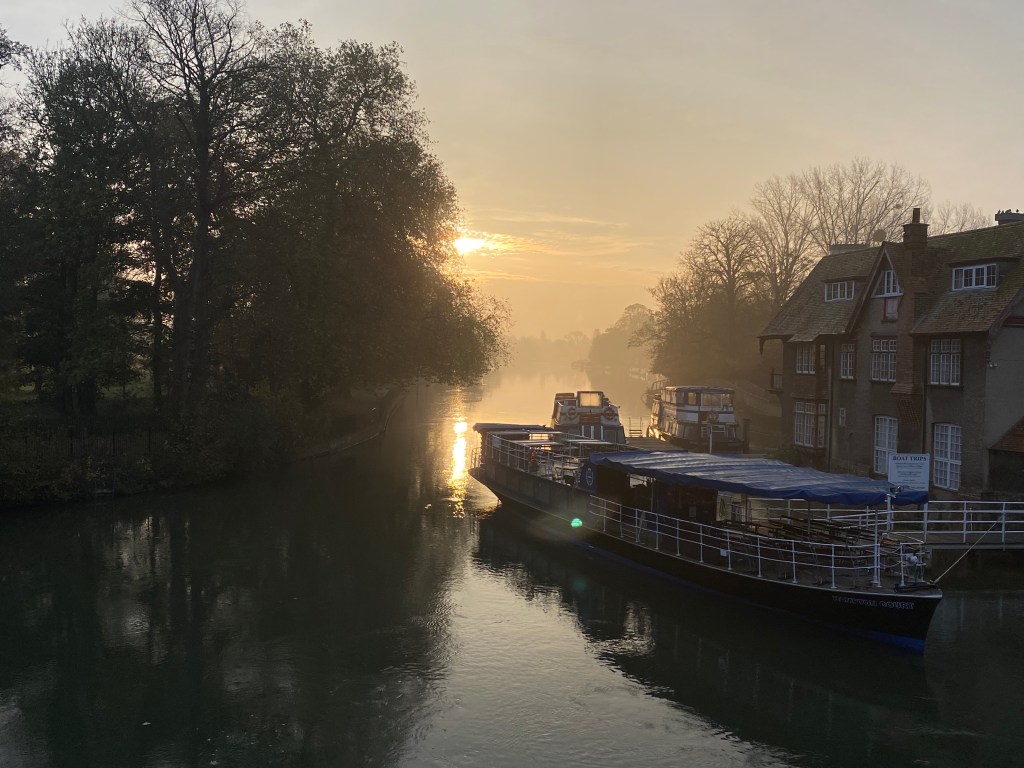
Continuing at snail pace (….) away from Magdalen Bridge, I am heading for the Thames and I am crossing the river at Weir’s Lane, joining the towpath just as the sun is rising.
Kanal boats and famous rowing clubs are the main feature here
and the meadows give a sense of tranquility despite their proximity to the city center.
Soon the famous “Head of the River” public house comes into sight
and I am crossing the river again to head for the historic part of Oxford.
Christ Church and Merton College and Merton Field are normally tourist magnets, but this morning I have these quintessential Oxfordian institutions just for myself…
While running through the smaller lanes and alleys, the writing on an ATM machine is catching my eye:
“TLC not PLC”…..not sure if that is true, but at least it is a nice touch and it is an example to look for the little things in life that can make a difference to a whole day.
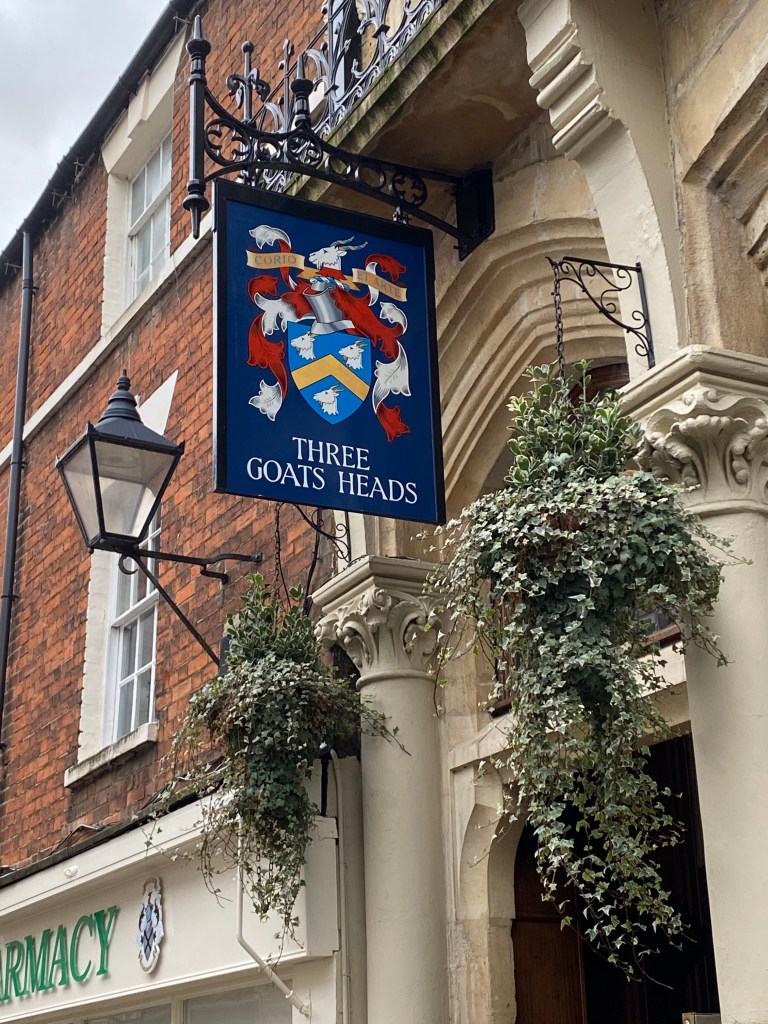
Other places I am passing that make me smile are the Three Goats Heads Pub (heaven knows where this name comes from……)
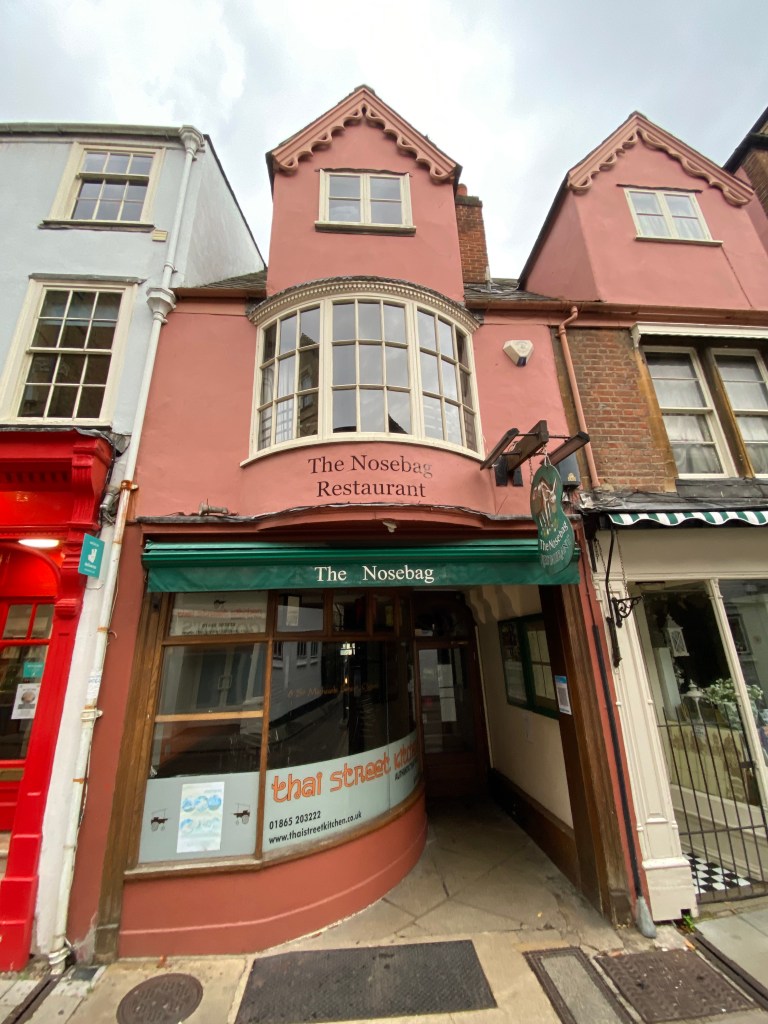
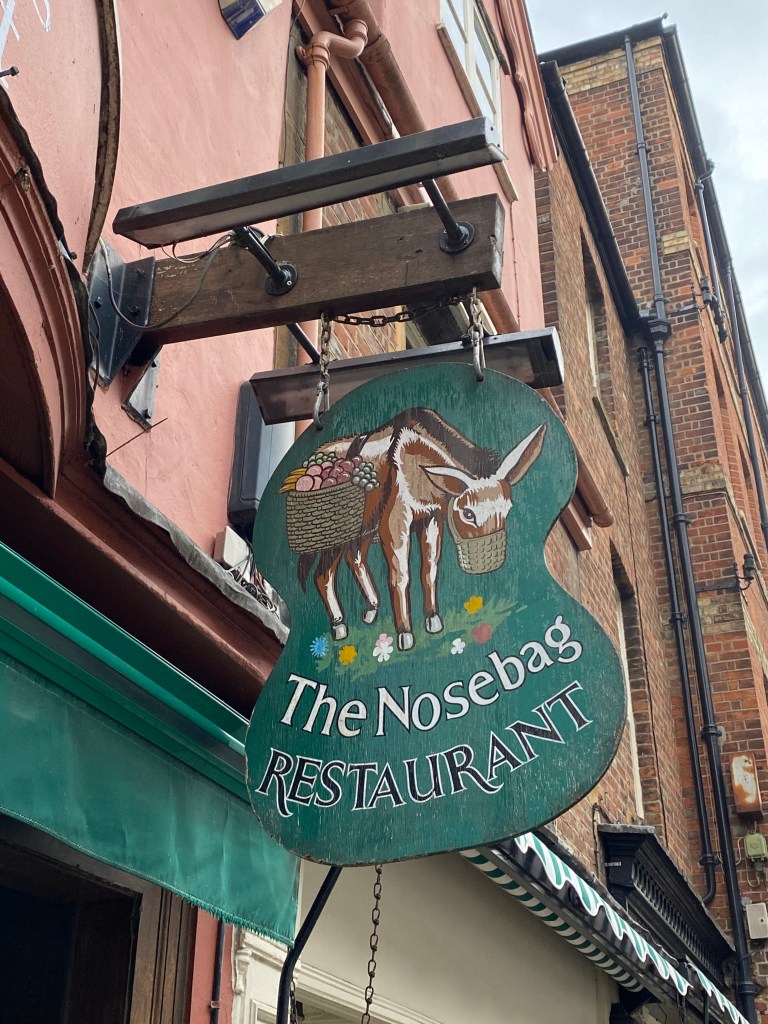
and the very contemporarily named “Nosebag Restaurant”
which then turns out to have a somewhat boring explanation for its name……
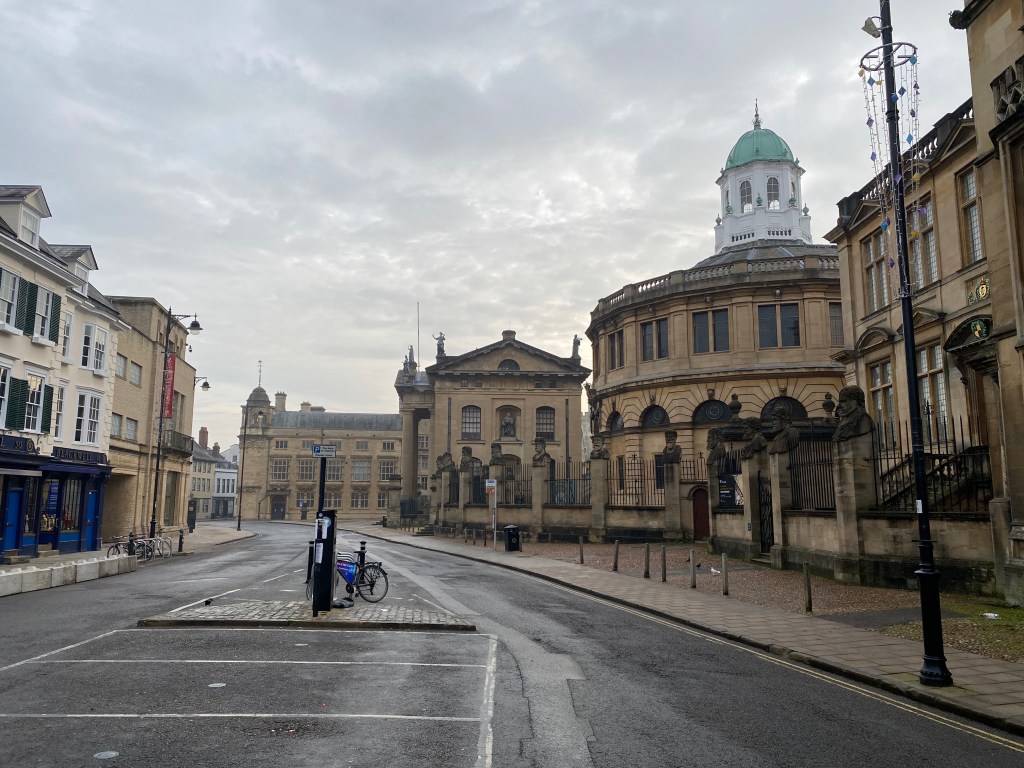
Heading down Broad street leaving the Sheldonian Theatre on my right
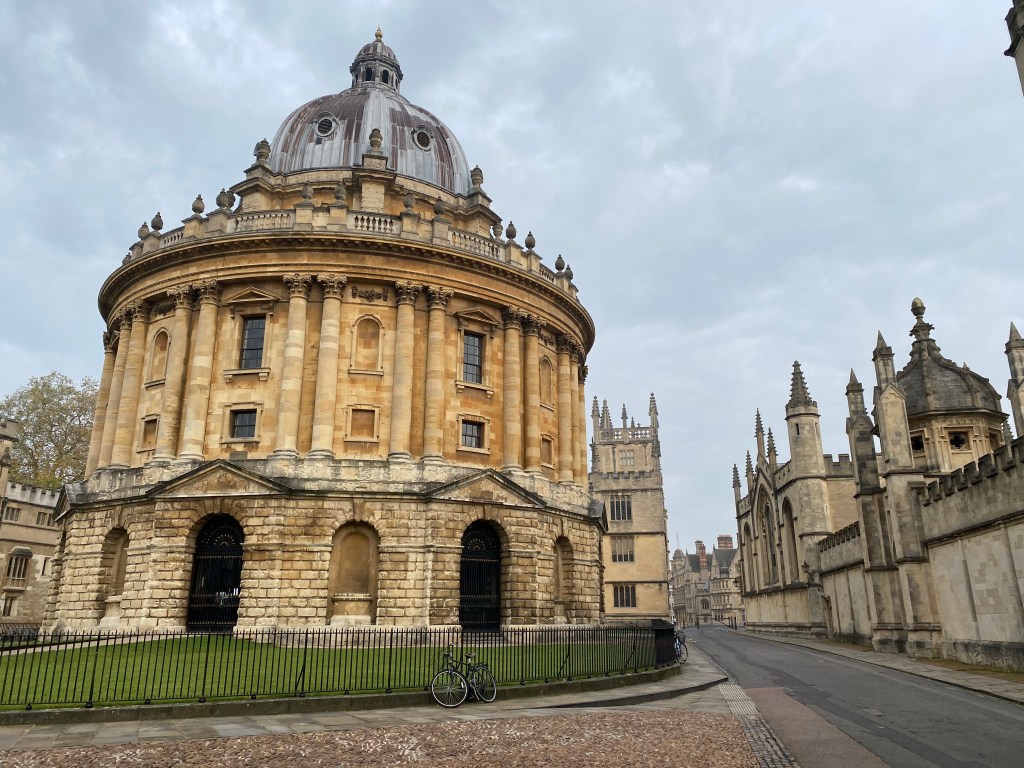
I am running along Catte Street right between the Bodleian and the Codrington Libraries and have another stop at the Radcliffe Camera.
Other than a few cyclists and some early morning runners like me, there is absolutely no one in sight….
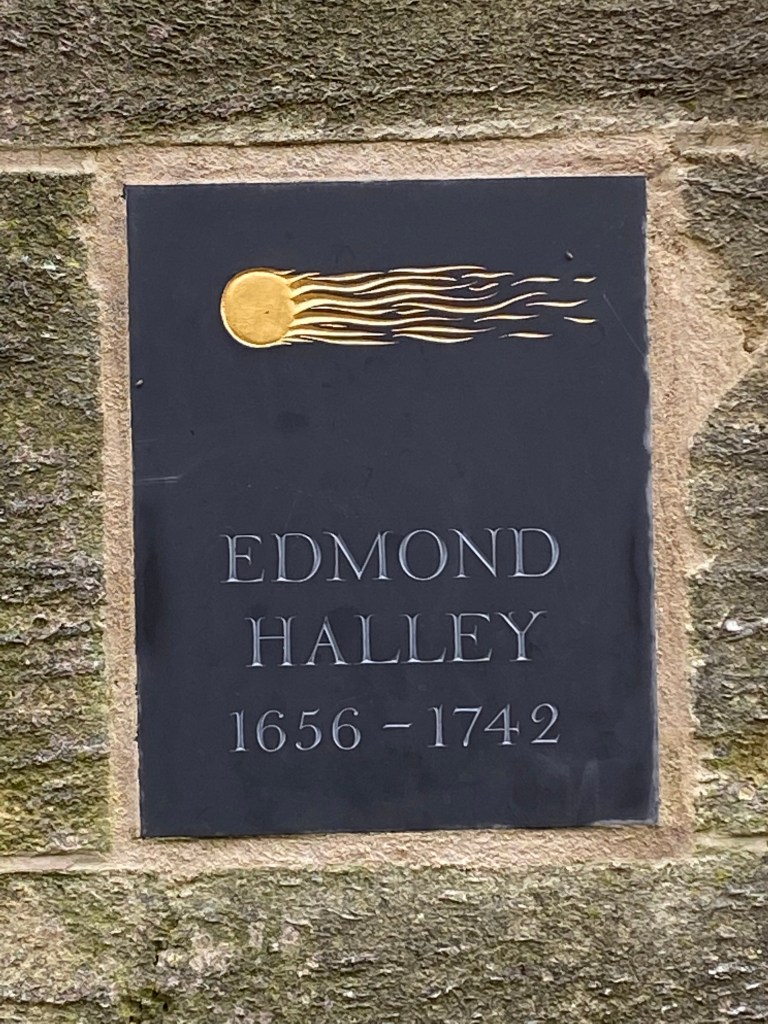
I also realize that Sir Edmond Halley appears to have had a very short way to work …….
My memories go back to 1986 when I had the great fortune to see the comet with my own eyes in Alice Springs. I am wondering though if I will get a second chance…….
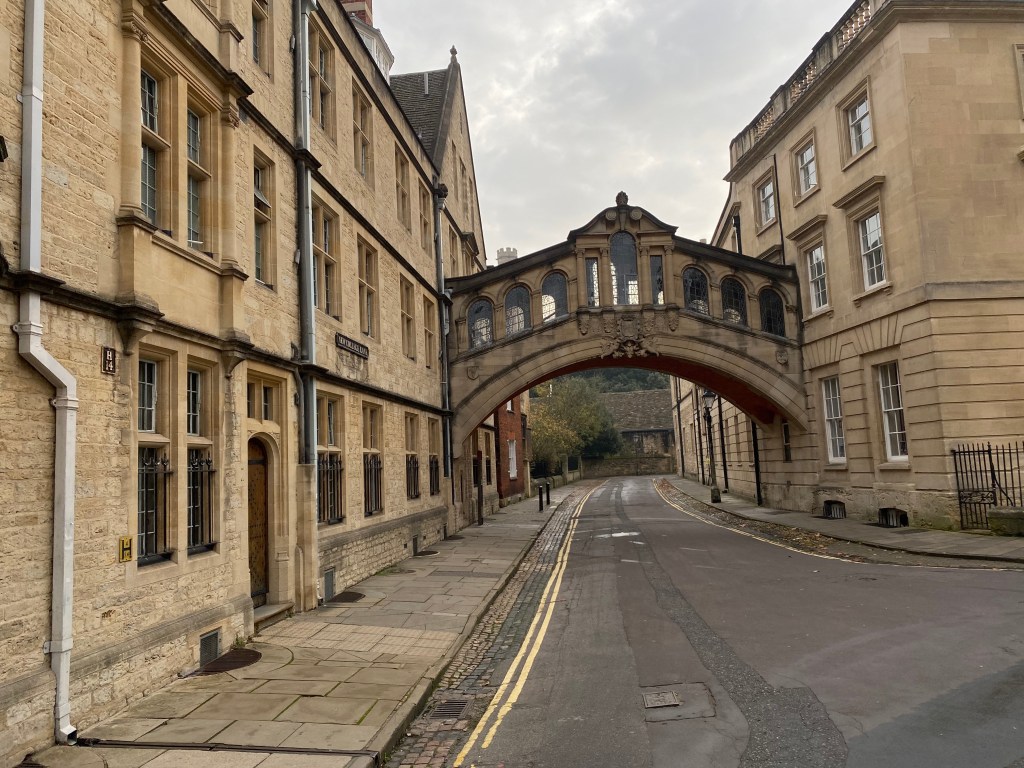
Rather than continuing on the High Street to return to the clinic, I decide to take another detour back into the historic heart of the city and not far away from the Bridge of Sighs
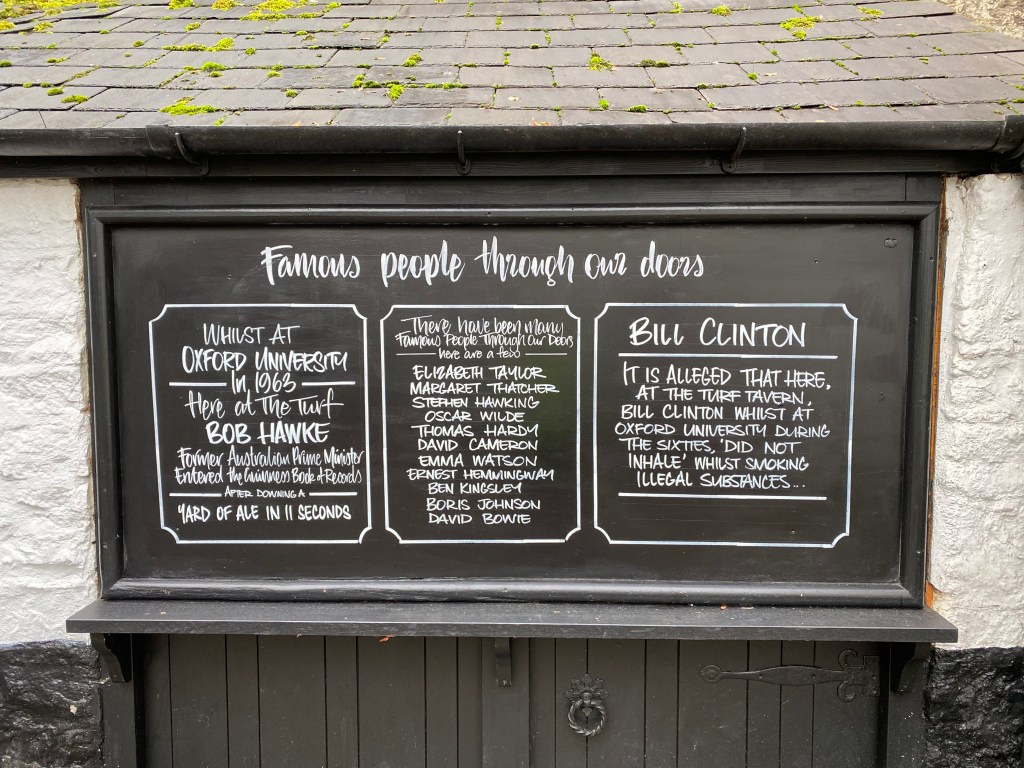
I am paying Oxford’s oldest pub , the somewhat hidden “Turf Tavern” a brief visit.
Obviously closed – not only because of the pandemic – at this time of day, it appears that here a lot of famous drinkers must have had a good time…..
This beautiful sculpture at the chapel of Queen’s College
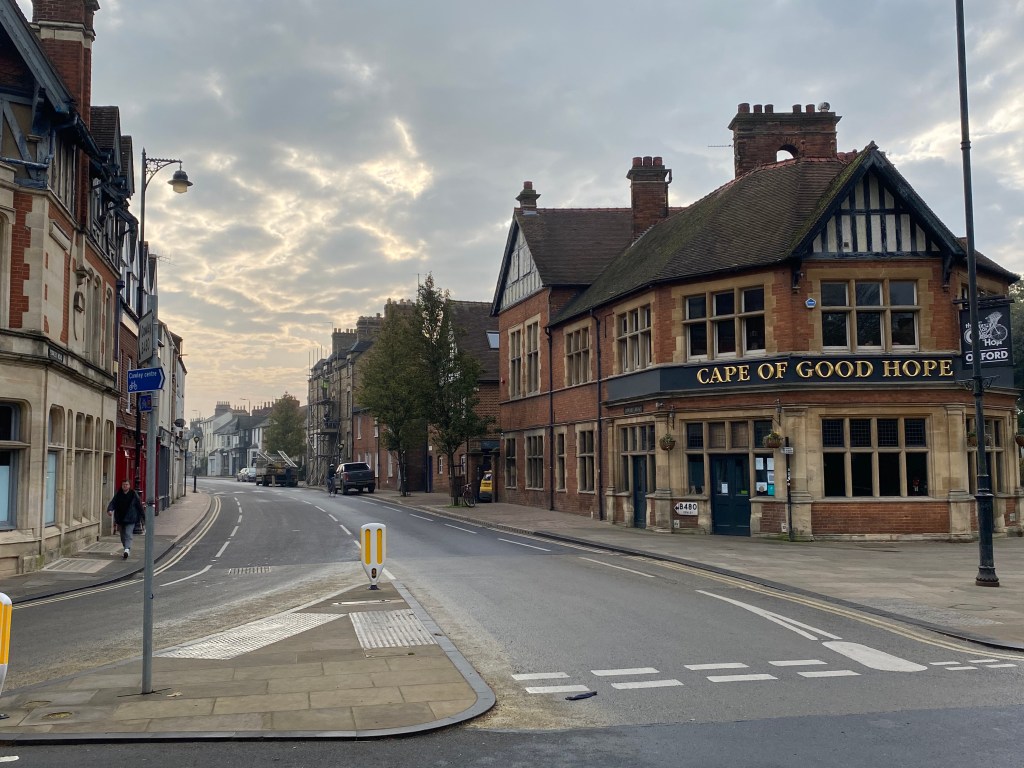
demands a final stop, before I am aiming for the familiar sight of “The Cape of Good Hope”
and the “other” Oxford (see my last post) at Iffley Road.
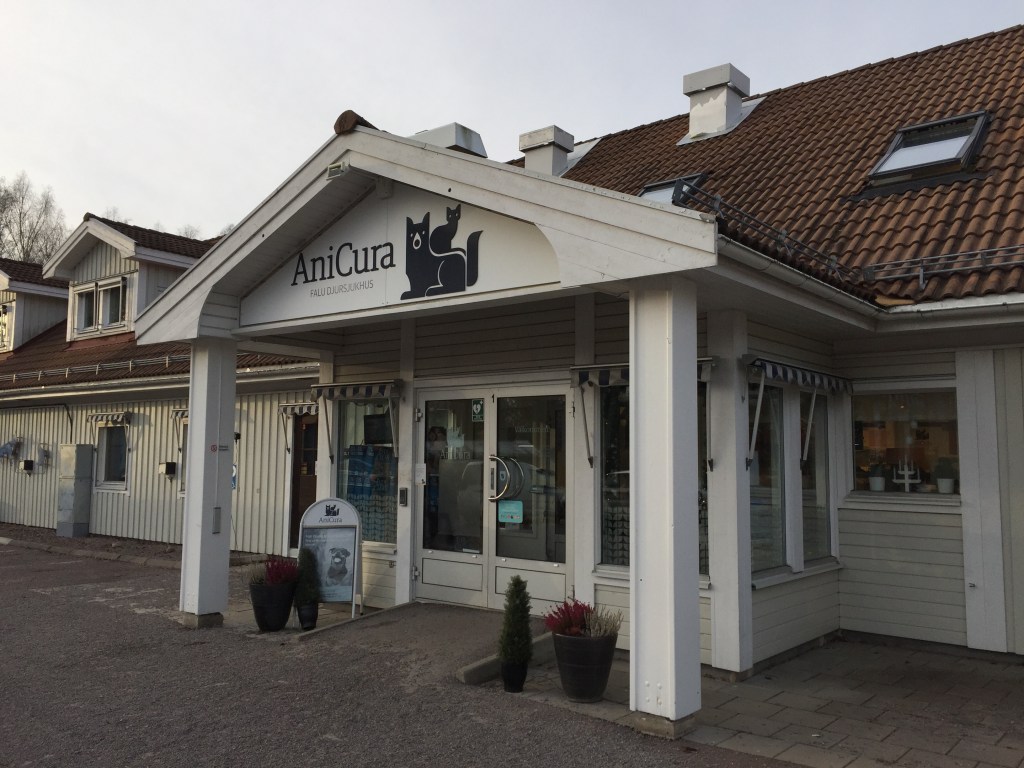
The first “thing” greeting me, when walking into my new (temporary) place of work, was a horse……..to be precise, a pretty large red one, made of paper mache.
It was the centre piece of the communal area of the hospital, where I had my introductory meeting with Jessica, one of the senior vets, who is also the contact person for the temporary staff.
The red horse is probably one of the most iconic Swedish decorations and the wooden versions, which can be bought as souvenirs, are produced in this region.
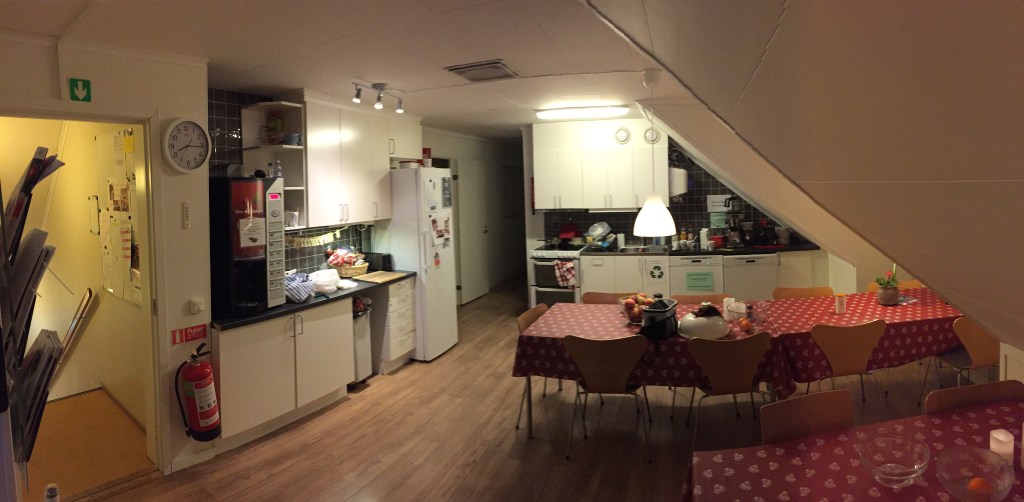
Jessica and – according to her – the whole team at the clinic, was not only proud of the horse and the local heritage, but also of the warm and welcoming atmosphere in this area. There were long tables, illuminated by a warm light and there was a large, clean and modern kitchen, stocked with a range of bread and spreads and a well working coffee machine – all for communal use.
“We have a stressful job and it is important that we have a place to relax from time to time…..”
I couldn’t have agreed more and I felt that it was a good start to see that the wellbeing of the team was a central concern.
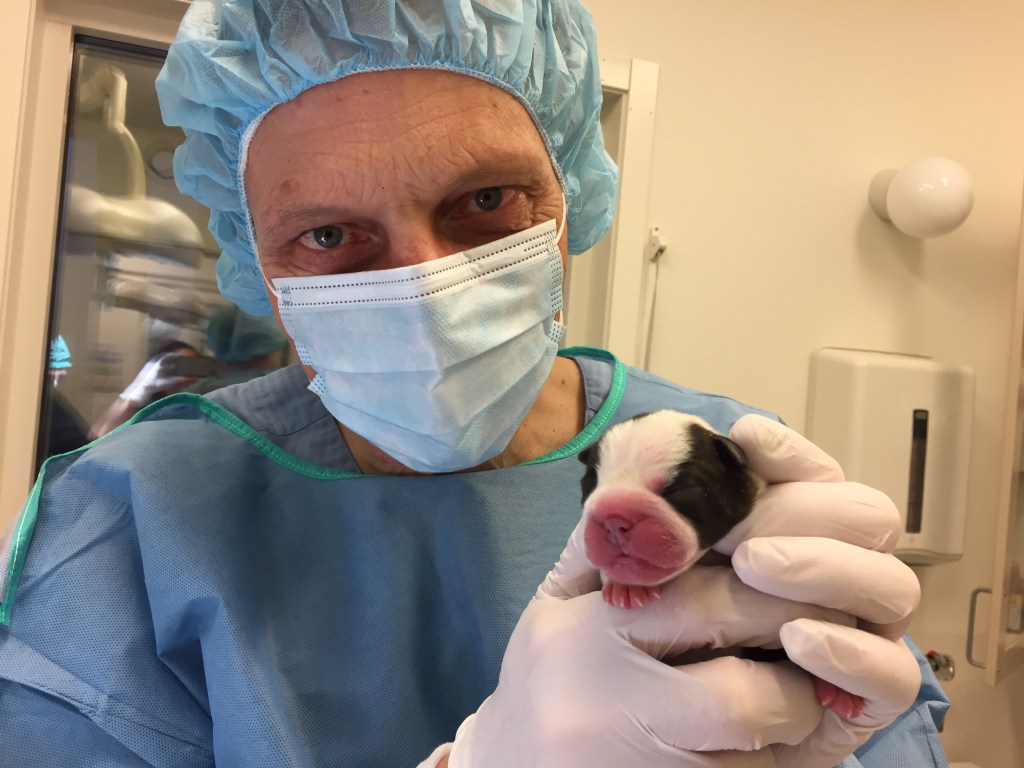
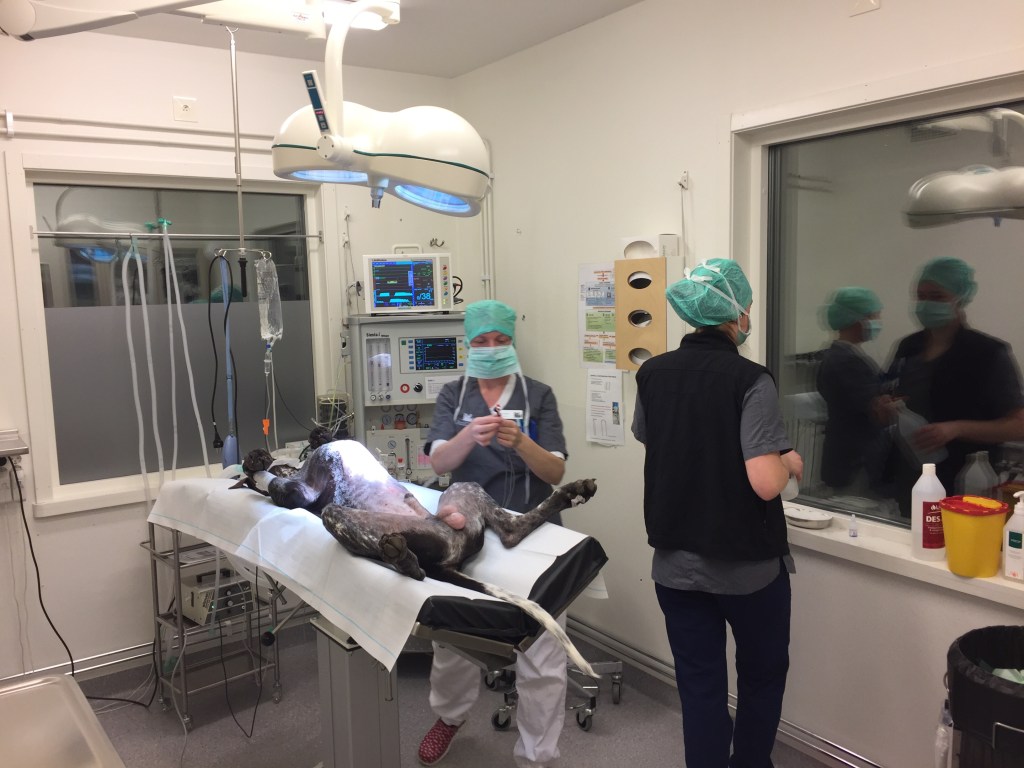
Becoming a member of this team turned out to be much easier than I had expected: most of the treatment of the animals (with the exception of the operations and invasive diagnostic procedures) was done by the very skilled nursing team and the only thing I had to do, was to make the decisions!….
Like magic blood samples were taken and blood test results arrived, X-Rays were taken and patients were placed on i/v fluids…..
My main initial fight was – as in other clinics before – getting once again used to a new computer system. Here an added obstacle was to make sense out of the clinical notes which – of course – where all in Swedish. My Norwegian was of some help and the rest was – if necessary – subjected to a Google translation which together with an initial report by one of the nurses (who always see a patient first) put you in the picture.
The consultation were then conducted – after checking with the clients first – in English, or with older clients in a mixture of Swedish and Norwegian. Any remaining question were – once again – resolved by the magical nurses.
It also helped that in the beginning I was spending a lot of time in the operating theatre where a fair amount of my case load involved the treatment of womb infections and the removal of mammary tumors. Both were uncommon procedures at my clinic in Virginia Water, as most of the female dogs in the UK are spayed at an early age, so that the development of these conditions is not possible or at least is highly unlikely.
Another difference to the work in the UK was the continuity of care: with most clients living within a 10 mile radius, it was both sensible and easy to book a follow up appointment in a couple of days. In Falun a lot of the clients had also traveled 5 – 10 “miles”, but these were Scandinavian miles, which are 10 km/mile. In addition to this, the journey might have involved a considerable distance traveled on untarmacked roads and at sub-zero temperatures and often on ice or snow. The treatment plan had to take this into account…..
Something I also found challenging was the great reluctance to use antibiotics and the inability to dispense medication – something that is the same in all the Nordic countries.
Regarding the antimicrobials – I found it an absolute eye-opener to see how well a lot of cases were doing without using them, but it is still early days and as mentioned above, there are far less follow up checks and my patients are living in a far less crowded environment.
The issue that I could not send my patients home with the medication for the follow on treatment (these have to be collected with a prescription from the local pharmacy) drives me at times up the wall, especially on a weekend (when the pharmacies were closed) or if more unusual medication were prescribed.
All in all – what an interesting time and what a wonderful opportunity to see first hand how the work I have done for so many years, can be done in a different and at times in a better or more effective way…..
“Why not work in Sweden ? You don’t even need to speak the language, as most of our clients and all of our staff are speaking English !”
I noticed this advert in the Vet Record last summer just after my return from Canada and it appealed to me right away: not only had I worked in Scandinavia previously (before coming to England), I also speak Norwegian (which is not so far away from Swedish) and I have always had a longing for the Nordic Countries. Going to Sweden would not only give me an insight in veterinary medicine in another country, it would also pay the bills and it would give me a chance for endless cross country skiing (on snow !) while I was not working ……
Consider this, it didn’t take me long to put a CV together (something I hadn’t done for over two decades !!) and to get in touch with Hugo, the author of the advert. I explained my personal and professional background and closed my e-mail with : ” …. send me as far North as you like, as long as there is snow!”
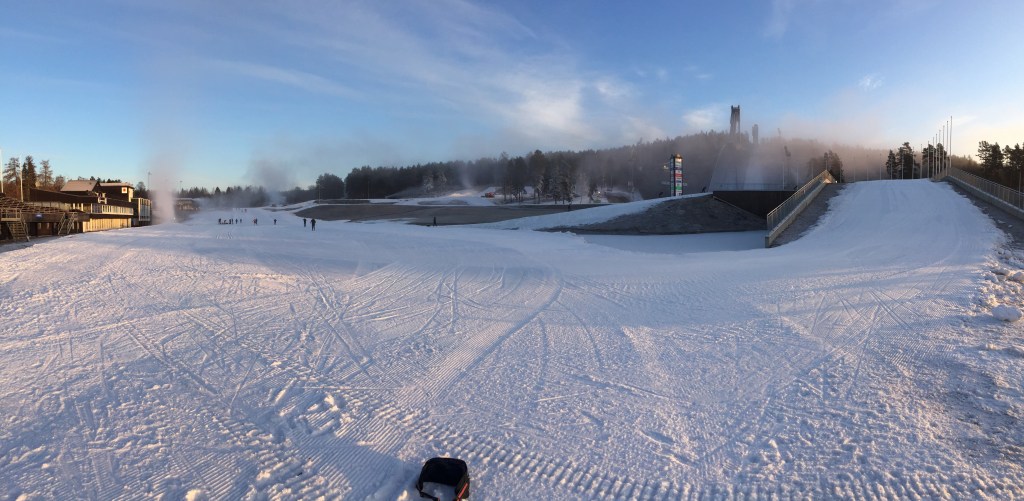
A lively e-mail transfer followed and once we had identified January as the earliest time I could go, Hugo had found me a place in Falun, 150 km North-West of Stockholm. Falun is not only a very famous mining town, it is also the “Heart of Nordic Skiing” in Sweden, being the location of both the national Nordic Skiing stadium and the Nordic Skiing museum.
For many years Falun has been the host of World Cup skiing events and the world’s largest cross country skiing race is held annually, just around the corner, between Saelen and Mora. I couldn’t have asked for a better choice !
The clinic I was supposed to work at, was a completely different set up from my own place in Virginia Water – rather than just a couple of vets and a handful of (brilliant) support staff, this clinic is the working place of over 100 professionals, serving the whole region between Stockholm and the Norwegian border in the West. So rather than seeing a case through from the first consultation until discharge, I would have to work in a team, doing only a part of the treatment and as a locum I would be a very junior member of this team, without a track record, solely depending on my skills.
Exciting !……
Once my vehicle was road worthy again, I took the motorway North and after a brief stop at some old friends near Gothemburg, I arrived at the virtually deserted Vandrehem in Falun, just in time for the New Year fireworks, which I enjoyed with a nice bottle of red and the unexpected company of a somewhat aged punk rock musician who was the only other resident.
I assume it was just a matter of time that this had to happen…..
Chasing my trusted Bavarian carriage through the length and breadth of Central Europe, there was finally an error message I just couldn’t ignore:
the left rear tire was losing pressure and a visit at a garage in Wilhelmshaven on the German North Sea coast, where I had caught up with the family, was unavoidable. This was a day before Christmas and what I had expected to be a simple puncture, turned out to be a crack in the alloy wheel, which not only necessitated a complete set of new alloys, it also meant that I would be unable to continue my journey until well into the New Year, as all the suppliers were closed over the Christmas holidays.
Modern cars are getting so complicated and it is virtually impossible to fix anything yourself these days….
Resigning myself to my fate and to dampen my frustration I took by roller skies (in the now normal absence of any snow in this part of the world) and paid Dangast, an artist colony on the other side of the bay a visit, making full use of the well tarmaced maintenance track behind the sea wall that is protecting the coast line.
It turned out to be a beautiful trip (just slightly slower than on snow) and I was rewarded upon my arrival with a slice of the signature rhubarb cake at the beach side cafe.
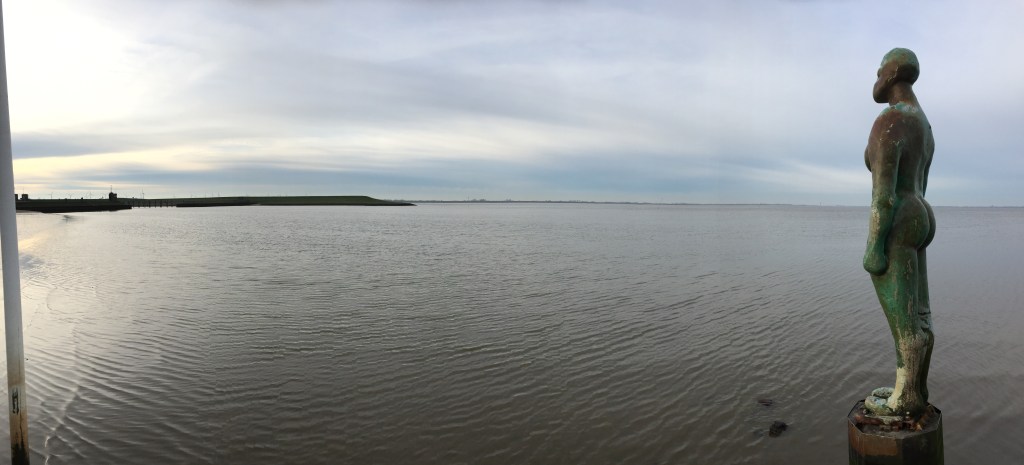
Another thing Dangast is renowned for is their very own interpretation on how the land is connected with the sea…..
When I returned from my trip, it turned out that my problem was resolved as well – my ever resourceful brother-in-law happened to know a car dealer who had 1 (!) set of wheels with winter tires in storage and it turned out that this set was a perfect match! The chances for this to happen were in the region of a big lottery win !
With the trusted mechanic working a whole morning matching tires, wheels, valves, sensors and wheel nuts to the rest of my car, I was ready to continue before the end of the year to the next destination of my travels:
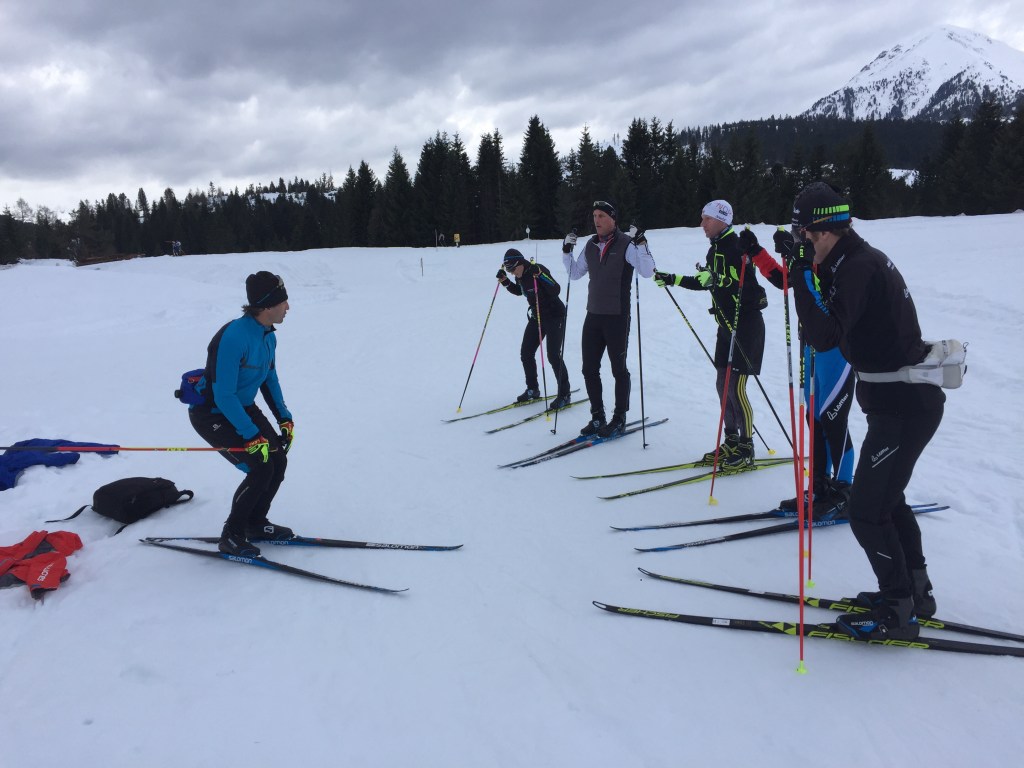
Christmas had come early for me this year when I decided to treat myself to a cross country skiing altitude training camp with Peter Schlickenrieder, an Olympic champion and the current coach of the German national team.
Most of my friends know that this is probably my favourite form of exercise and that the lack of snow and of opportunities to practice it, has been a huge draw back in England. When, at the beginning of the year, I stumbled across an article about this training camp I had to take the opportunity to sign up.
For those of you who are not so familiar with this sport, I would compare it (as a Liverpool fan) with booking a camp with Juergen Klopp or as a tennis fan with being instructed by Boris Becker or by Roger Federer (ok, he is still playing…..).
People like Peter and the above mentioned athletes will not make you a champion, but they can pass on some of their knowledge and their skills to make you better, and this in two ways: not only will your technique improve (hopefully…..), but sharing a training session and meals and one or the other drink together, gives you an amazing insight in the personalities and the unreported side of world class achievers.
This does not only apply to sports though, it also applies to leading figures of other professions, to top chefs, to musical and decorative artists or even to members of my own profession. The striking thing with most of these people is (in my experience) that the better they are, to more accommodating and approachable they are. Real “Divas” are rare (may be with the exception of Maria Callas….) and much can be gained by sharing some time with “the Best”.
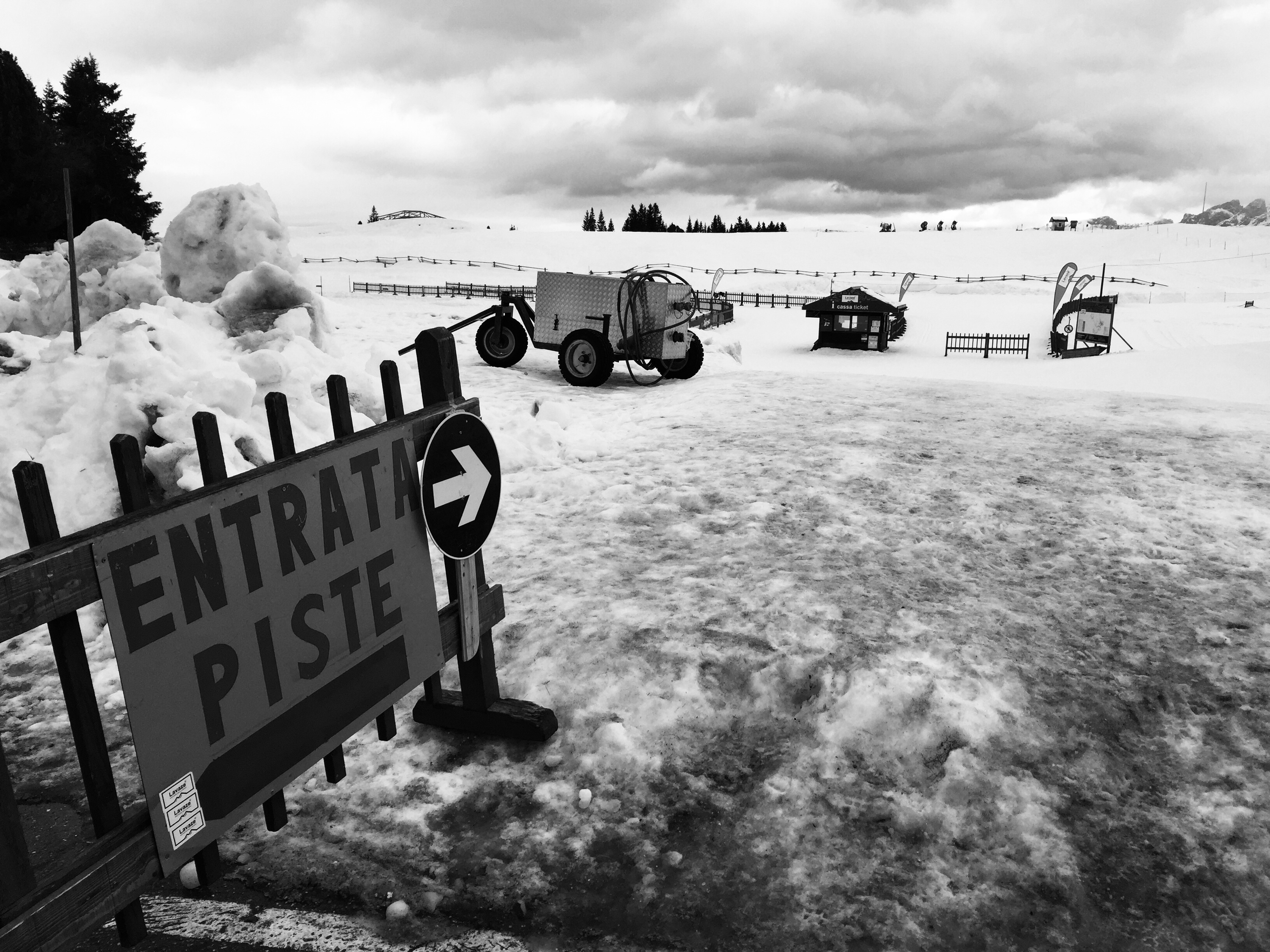
Peter and his team of top athlets and trainers arrived a few days after me on the Lavaze Pass and the first person I bumped into was his amazing wife Andrea who turned out to be the heart and the ever present organiser of the training camp.
Also part of the team was Stephanie Boehler, a double olympic medal winner and with 38 according to Peter now “in retirement”…… Last year Stephanie had participated in her twelfth “Tour de Ski” and I found the description as ill fitting as it felt to myself after closing the Virginia Water chapter. Very reassuring though to see that even people nearly twenty years my junior have to go through the process of redefining themselves…..
After introducing myself to Andrea, her first point of action was to relocate me to another hotel (one with both a hot shower, central heating (which was switched on…) and additionally with a lovely Labrador called “Bella” greeting everyone in the reception).
The other participants of the camp were predominantly seasoned long distance cross country skiing event runners of whom a fair amount had already participated in the 90 km Vaasaloppet or the Marcialonga.
The following four days with a 7 am start where packed with three daily training sessions, plus a final stretching and yoga session. Considering that all exercise was conducted at 1800m above sea level, it was no great surprise that no one had any difficulties to sleep……
Following the long hours in my car and the many days spent in different veterinary clinics with very little opportunities for exercise, this made for a great change and it set me up nicely for my forthcoming adventure to the North….
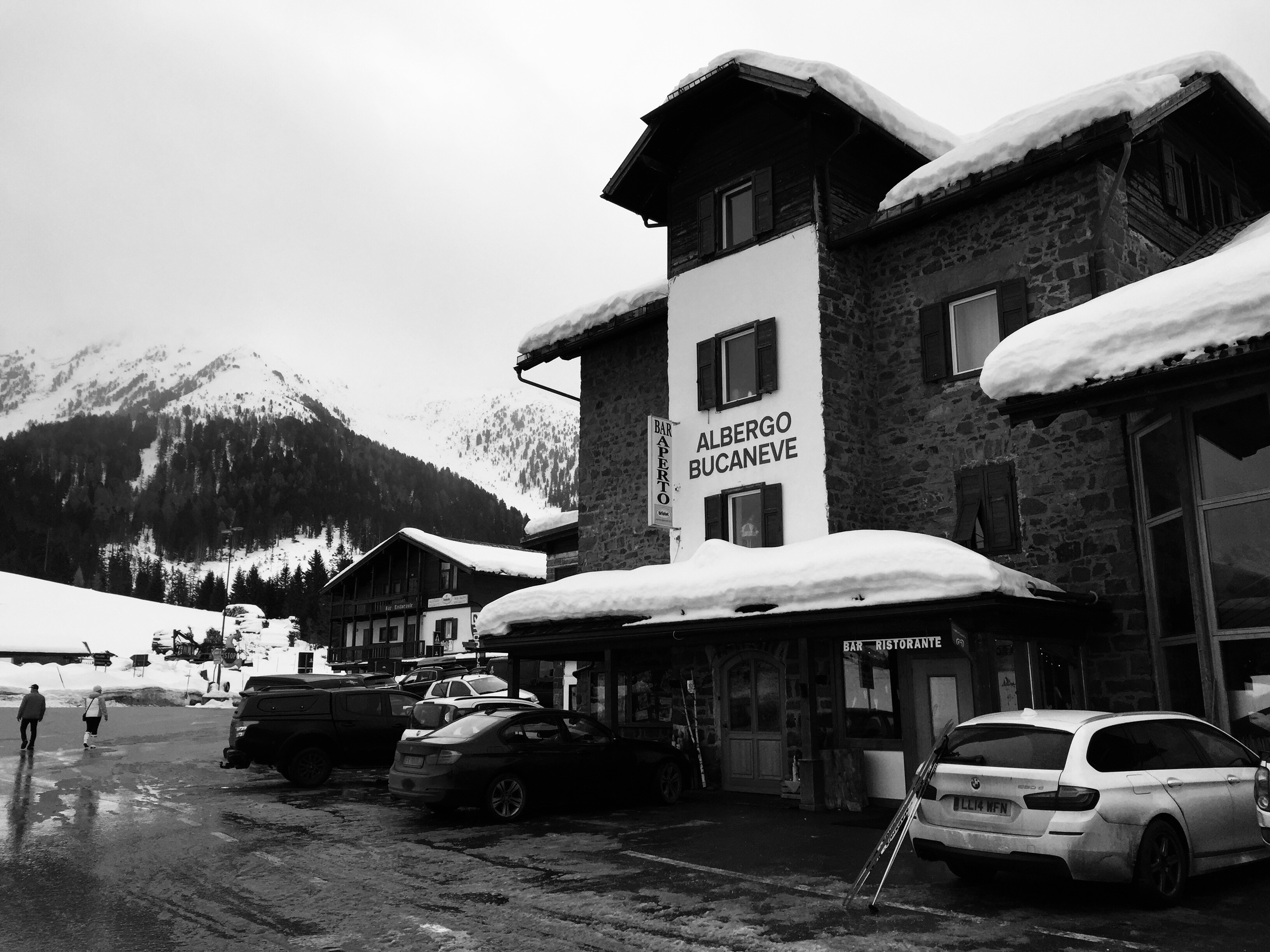
While writing these lines, I am the only guest in a very spartan hotel, which had seen better days, on a windswept mountain pass at nearly 2000 m above sea level in the Italian Alps. The radiator in my small room was struggling to produce an ambient temperature last night, so that I had to add a couple of woolen blankets to my duvet cover to stay warm enough. The water in the narrow shower is taking more than 5 minutes before producing some luke-warm liquid .
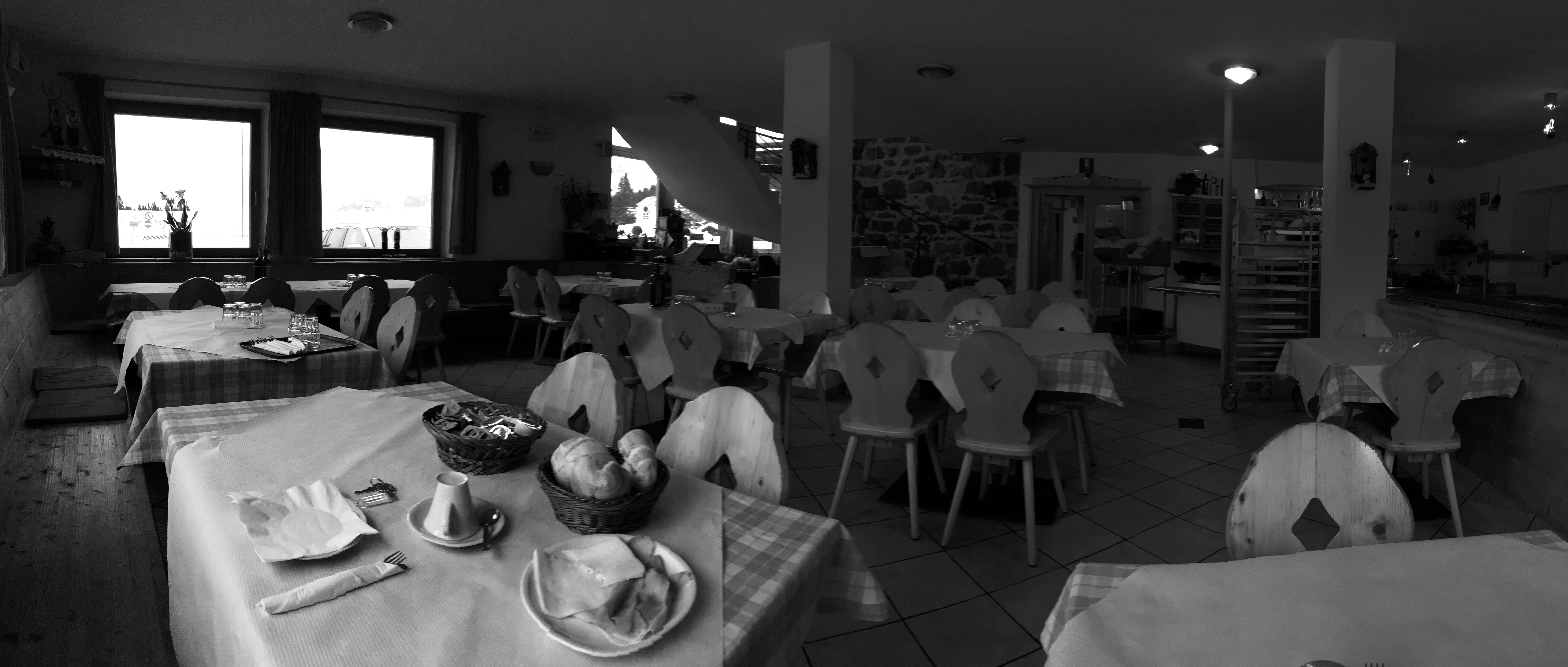
The breakfast is basic, with a small but strong cappuccino as the only highlight this morning.
But as unlikely as it sounds, I am loving it (ok, with the exception of the shower….)!
The important point is not to confuse solitude with loneliness.
Following the past few weeks of working and travelling, of meeting amazing people and their animals, having long and thoughtful conversations, the time has come to take stock and to reflect on what I have seen and what is lying ahead of me.
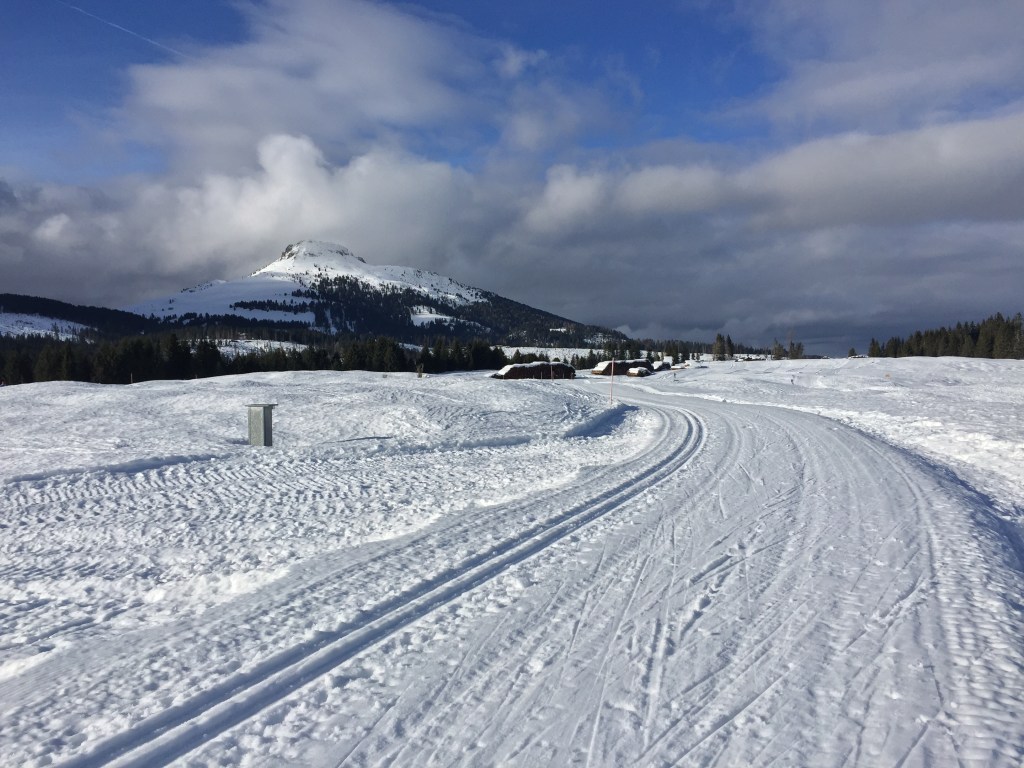
The basic accommodation is helping to focus my mind and the mountains around me are an impressive background for a couple of training sessions per day.
The local but simple food is a welcomed change to the at times lavish feasts I have enjoyed together with my friends. And a great add on is, that this sort of travelling is hardly breaking the bank…..
From time to time I am enjoying these periods of reflection and to some degree it is the expectation of this, that is drawing me again and again to the mountains.
While recovering from the cross country skiing sessions, I am finding time to read, to write and to make plans for the future. The time in me as well as around me is slowing down and over the whole day there is neither a need nor a point in rushing anything.
While being on my own, there is no need to talk, to explain or to justify.
Like Ying and Yang, solitude and rest can produce the necessary contrast to enjoying company and adventures even more…..
Once recovered from the unwanted advances of the creatures of the underworld, I stocked up with some highlights of the local cuisine (smoked sausages, alpine meadow honey and bread from the region) and it was time again to hit the road with the help of my trusted Bavarian carriage. A fair amount of German “Autobahn” mileage lay ahead of me, as I was now criss-crossing the country, both to meet more colleagues and to get a better feel for the state of veterinary medicine in my home country.
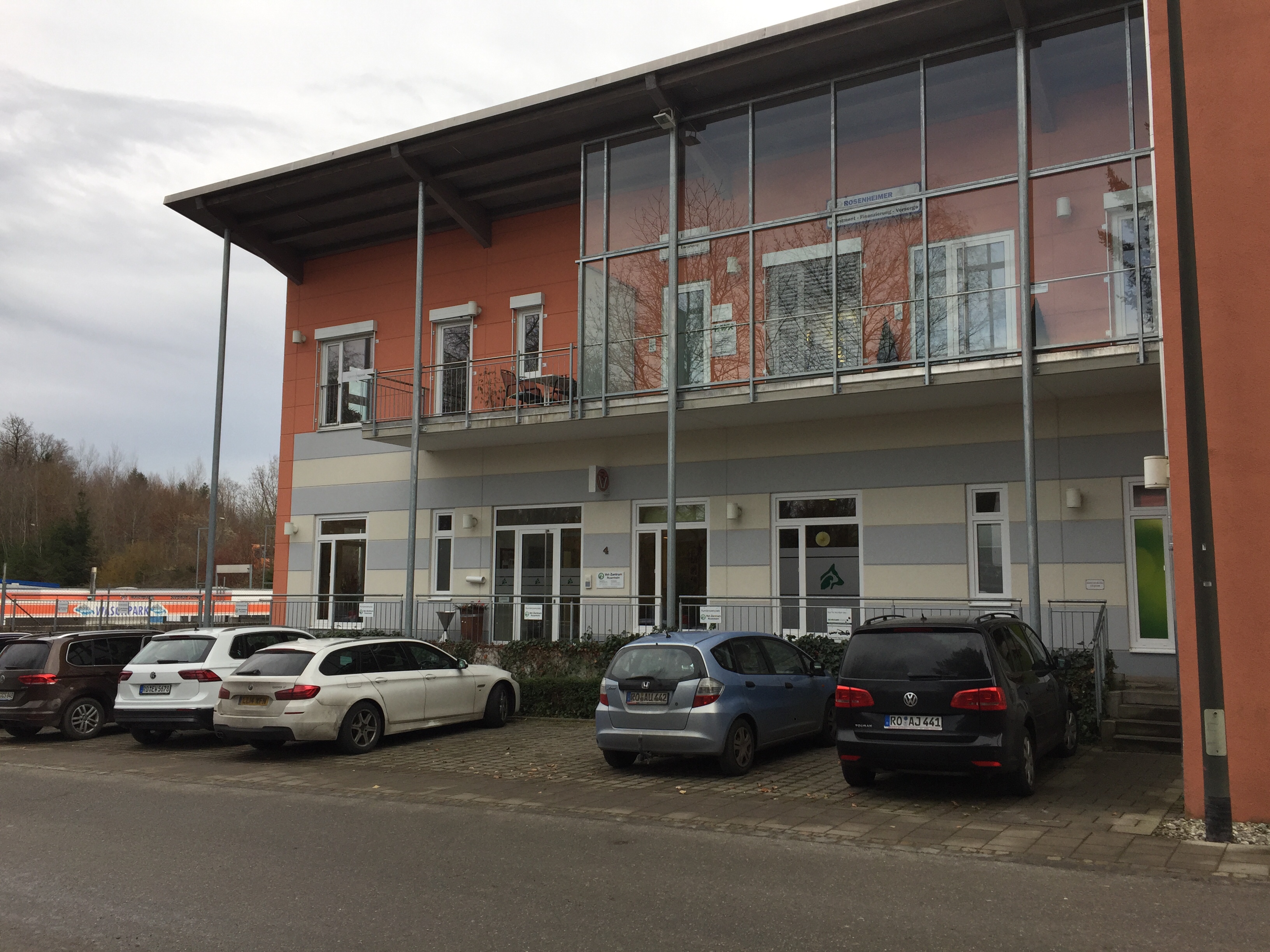
The first stop was still at the foothills of the Northern Alps in Rosenheim, where IVC/Evidensia, the company that had bought Virginia Water Veterinary Clinic, had purchased the clinic of Josef Schiele, an outstanding veterinary surgeon and ultrasonographer, who some years ago had taught me how to scan dogs’ hearts, very much to the benefit of a lot my older canine (and feline) patients in Surrey.
Florian Frey (from North Germany like myself) and Josef were extremely welcoming and it was great to see how friendly and relaxed their team was. Their clinic – one of the best in the area – featured very modern equipment, including their own CT and the footfall of the clinic certainly benefited from having a large pet supermarket just next door. What was striking was that despite the fact that this was one of the wealthiest parts of Germany, veterinary fees were much lower than in the UK.
We put this down to the lack of a well established pet insurance system and possibly due to stronger competition between vets.
After this brief encounter, I put the foot down and headed North passing Nuremberg and the Czech boarder and arrived late at night in Biesenthal in Brandenburg near Berlin. This was part of the former GDR and it took me a moment to get used both to the local dialect, to the choice of words (like Australians, people definitely are swearing here more commonly…) and to the directness of the people here. However, as my father was born here, there was a certain familiarity for me and I knew that behind the perceived rudeness, there was usually a big heart. I also had to get used to a – even for me as a fellow German – unusual cuisine, when I was invited to lentils with vinegar and sugar (!) for supper (which was actually very nice!…).
Sandra Lekschas, who probably has traveled more than me and who has not only a British and a German, but also a Chilean veterinary license, has here her clinic. Sandra had worked for several years in the UK and obtained during that time a Certificate for Avian and Exotic Animal Medicine. For many years she had been my “back up” if I was not sure about the treatment of one of my less “usual” patients. Because of Sandra I know now how to take a blood sample of a tortoise and how to do a penis amputation in an iguana…..
While “shadowing” her during her consultation, I was amazed how similar our case load was and how similar the expectations of the pet owners. A noticeable difference though was the very frequent use of homeopathic or herbal treatment. A range of medication was unknown to me and required some further investigation.
At Sandra’s house I also met “Schneewittchen”, the first of my friend’s cats, who had left the UK together with her owner and who was now supplementing her diet with Prussian mice.
After spending a couple of days with Sandra and her little team in the countryside, I made a detour into Berlin
to call on my colleague Conny Rossi, who I knew from a range of veterinary meetings in Brussels, where she was representing the German state veterinary service and I the European small animal veterinary profession. Conny is head of the Veterinary Office in Berlin Tempelhof and when I arrived she was busy preventing African Swine Fever from getting into Germany.
Thankfully this didn’t stop her to be my native guide at her local Italian for an excellent dinner including an outstanding Tiramisu.
Conny’s cat is an old boy called “Mau” who is clearly drinking too much and I left Conny the next day under strict orders to see her local small animal vet as a matter of urgency….
The next cat was called Dobby, like Harry Potter’s house elf, but rather than doing any house keeping for Barbara and Stephan Neumann his owners, he owed his life to the magical skills of Stephan, who adopted him following several operations after a car accident.
Whereas a lot of vets, by treating so many different species, are “jacks of all trades but masters of none”, Stephan is a real “renaissance man”: Stephan is the head of the small animal clinic of the University of Göttingen, South of Hanover. He is giving lectures on husbandry and diseases of farm animal at the Agricultural department. He is educating the Forestry students on wild animals and he is also a pathologist and a leading member of a range of national and international veterinary and pathology organisations. In addition to this he is active in various local committees and he also knows how to work a power drill and how to wire up his own house. With some reluctance he has just recently stopped to perform all mechanical work on his own cars. He is a passionate motorbiker and a skilled ballroom dancer……(I think I better stop here – I think you get the point)
It was impressive visiting Stephan’s spacious university clinic and to meet his team. At the university – similar to most privately owned clinics that I visited – I noticed both a sit down desk and a fairly high examination table in the consulting rooms.
Compared to the UK, more dogs are lifted on the table to be examined and the conversation with the owner is concluded after the examination, while both parties are sitting. Compared to then UK I also noticed the far more frequent use of long needles. I am not sure if this is always good and I am happy to stick to my shorter “British” ones. Size doesn’t always matter…..
Leaving the welcoming Neumann household, I travelled further West to Bad Honnef in the Rhine valley, not far from Cologne. Here I met another German colleague with a British history : Ariane Neuber is one of the few Diplomates in Veterinary Dermatology and a number of my referral patients were successfully treated by her. Sadly Ariane and her British husband Tom were frustrated by Brexit and decided that continental Europe was offering a better future for the whole family.
While quizzing Ariane about her experiences of working in Germany compared to England and about the current trends in veterinary dermatology, Tom was not only refilling our glasses at a steady rate with French champagne – a by product of his job in Strassbourg – he then engaged me in a well informed conversation on insects as a form of food and animal feed. This is a very new area of veterinary interest, which we had only discussed recently at our European meetings. However, it is an industry of huge growth potential, which had not eluded the observant eyes of Tom, who has a background in finance.
After an entertaining evening and after the demise of probably the best part of a crate of champagne (!), I tried to retreat to my bed, but found this already occupied by the fourth feline, similar to the Brandenburg mouser another British refugee, who was – when not sleeping on my bed – pursuing water rats in the Rhine Valley.
So, what were the conclusions (among others) of my travels so far?…..
German vets are cheaper than British vets
Needles in Germany are too long
Nice dogs and cats (and their owners) are on both sides of the Channel
Pets can be radiographed without sedation in Germany
Cats are still exclusively spayed midline in Germany
Cats are commonly blood sampled from the front limb rather than from the neck and this is often done with a plain needle without a syringe attached
Dogs appear to worry less, when an i/v line is placed into the hindlimb while standing (on an examination table)
Homeopathic treatment is more common in Germany (and apparently in South America ?!…)
This was enough of veterinary medicine though and the next morning the journey continued again South, for another completely different aspect of life………





























 The Blue Vet Diary