Once I had crossed the Channel, the road took me through Northern France, past Verdun and Metz down to the Northern Vosges mountain range and then across the Rhine valley to Freiburg and the Black Forest.
Over the next few weeks I will rely on the hospitality of my friends (old and new) to both explore the state of veterinary care in Germany and while doing this, I hope to have some fun along the way with non-veterinary things……you will see…..
My first stop was the picturesque Glottertal Valley where my friends from Hanover Vet School, Dörte and Jörg Bretzinger are running a truly “mixed” practice as a husband and wife team. Dörte is heading a small, but very neat small animal practice providing excellent first opinion care. Jörg and a colleague are predominantly doing farm animal work and over the last few years more and more equine work. As if they wouldn’t be busy enough, Jörg is also getting up twice weekly at 4 am to do meat control work at the regional slaughter house and they both do all the meat inspections, which includes a lot of game, for the butchers in the whole valley. With other words – they are really working hard….
And yet in the Bretzinger household there is still time for good literature, fine art (Jörg is a painter with regular exhibitions) and exceptionally good food and wine, which admittedly is unavoidable in these boarder lands between Germany, France and Switzerland. I couldn’t have asked for a better “home” away from home than here….
Despite the excellent skills and equipment of Dörte’s and of other clinics I visit, I notice that not the standard but the cost of veterinary care is noticeably lower than in the UK, which appears to be partially due to more competition and due to the virtual absence of pet insurance.
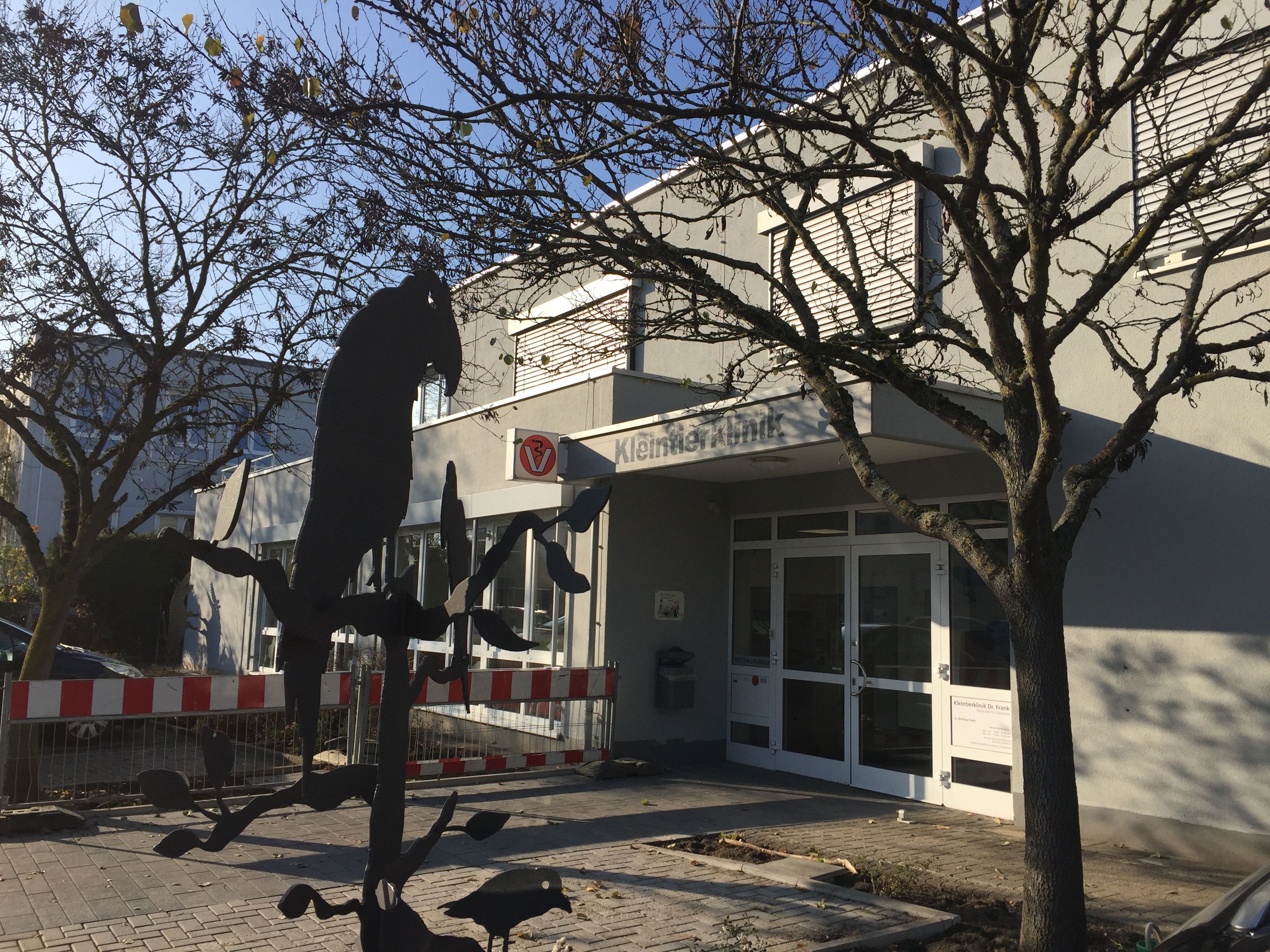
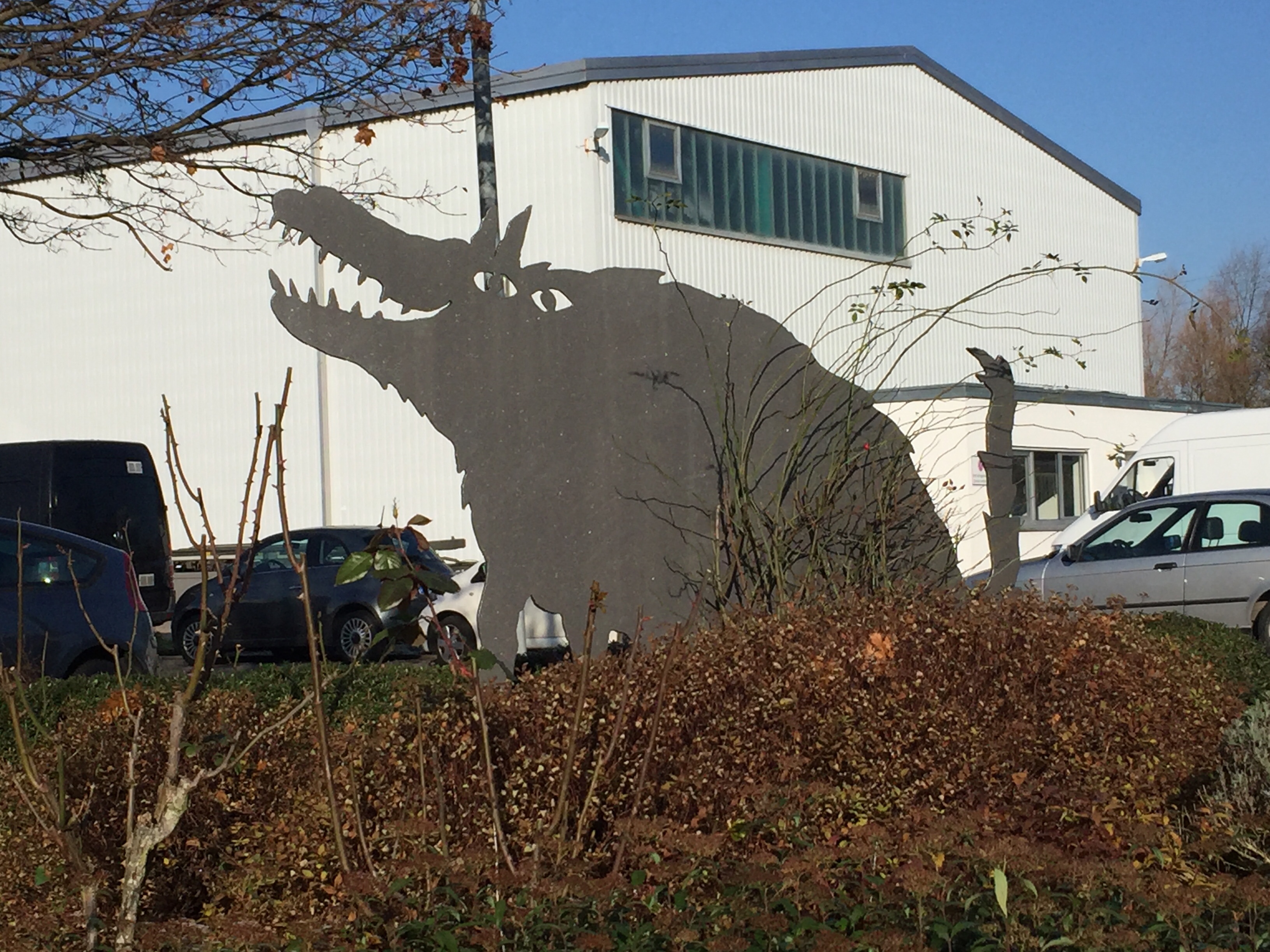
During my stay in Freiburg I am also visiting the futuristic clinic of Matthias Frank, who has just returned from a lecturing tour in Mumbai as part of a WSAVA continuing education programme. After being greeted by a set of very entertaining steel sculptures in front of the building,
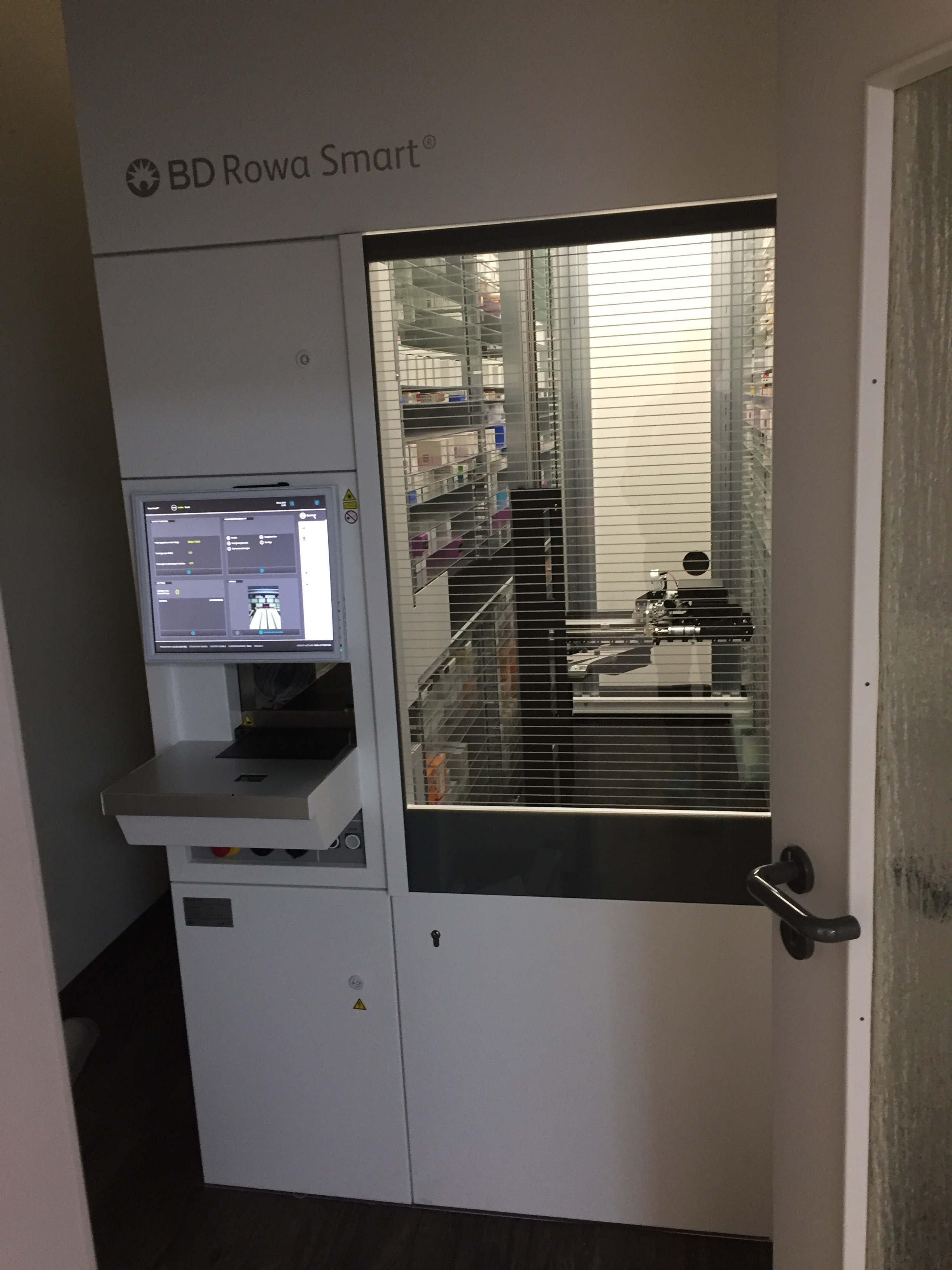
I am running straight into a newly installed dispensary robot in the reception area.
All medication in the unit is climate and stock controlled and a centrally located robotic arm is collecting and dispensing the right amount of medication to the reception team.
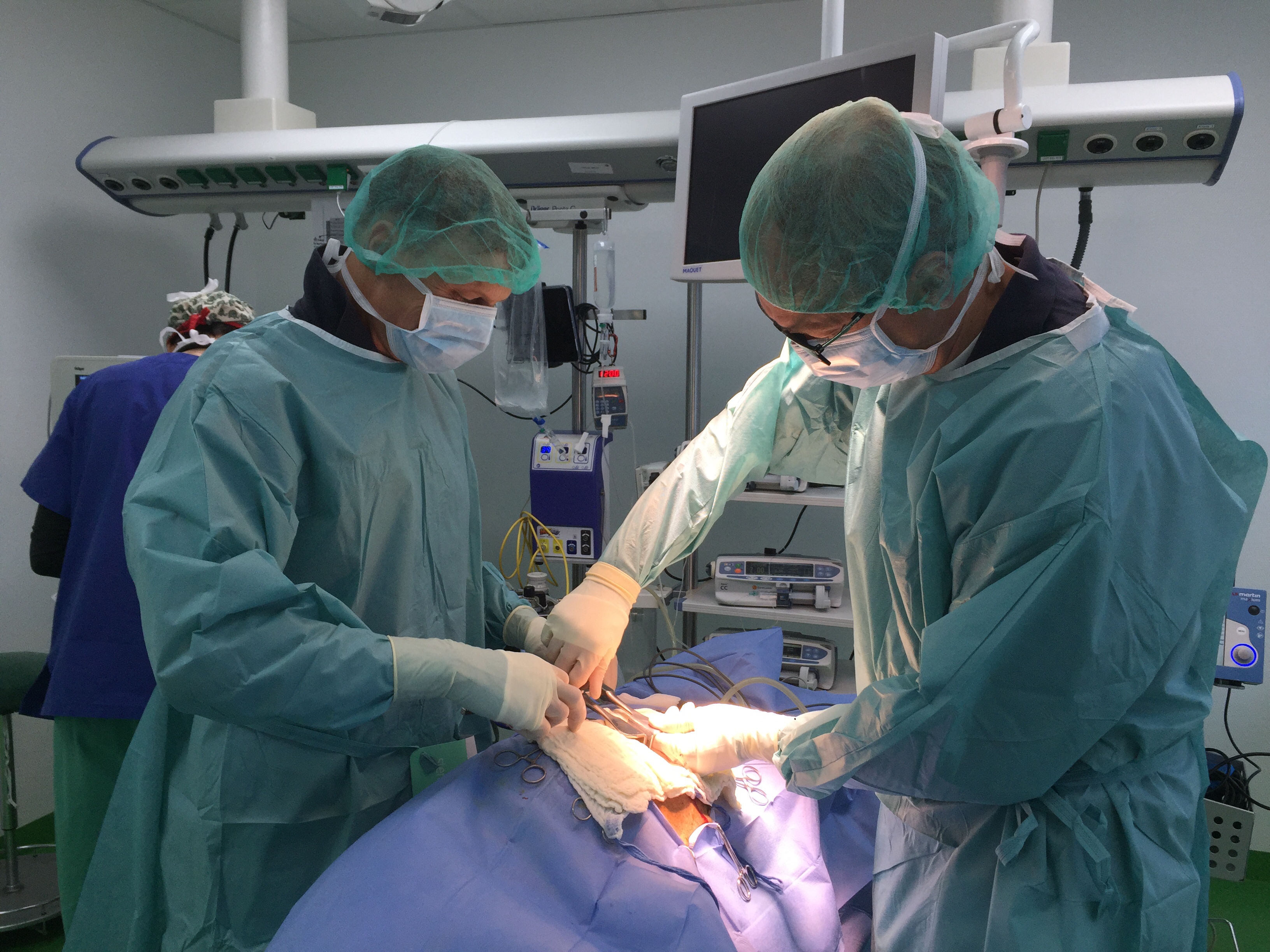
Following a very inspiring tour of the clinic, Matthias tells me to gown and to scrub up and minutes later I am joining the team with the surgical case load for the rest of the afternoon.
All diagnostic images (ultrasound, radiography, MRT and CT images) are fed directly into the practice management system and in the spotless consulting and treatment rooms there is hardly a piece of paper in sight.
Despite the fact that this is a clinic with more than 20 vets and all together over 70 members of staff, clients are updated on their pets’ progress on a very regular and personal basis and one can’t help to be impressed by this standard of care.
The journey continues, but this truly was a demonstration of “Vorsprung durch Technik”……..
The living room is littered with stuff in a seemingly random pattern and the Christmas decoration is complete and utterly spoiled……
Returning from Abdingdon following an extra – thankfully quiet – nightshift, I have 24 hours to pack all the gear, clothes, books, IT equipment, skis and instruments I am likely to use during the next up to four months, as I will be on the road again!……
There is a bit of a feeling of deja vu as this was very similar nearly 27 years ago, when I was traveling from Germany with all my belongings in a VW Passat to start my first job in the UK – the rest is history…..
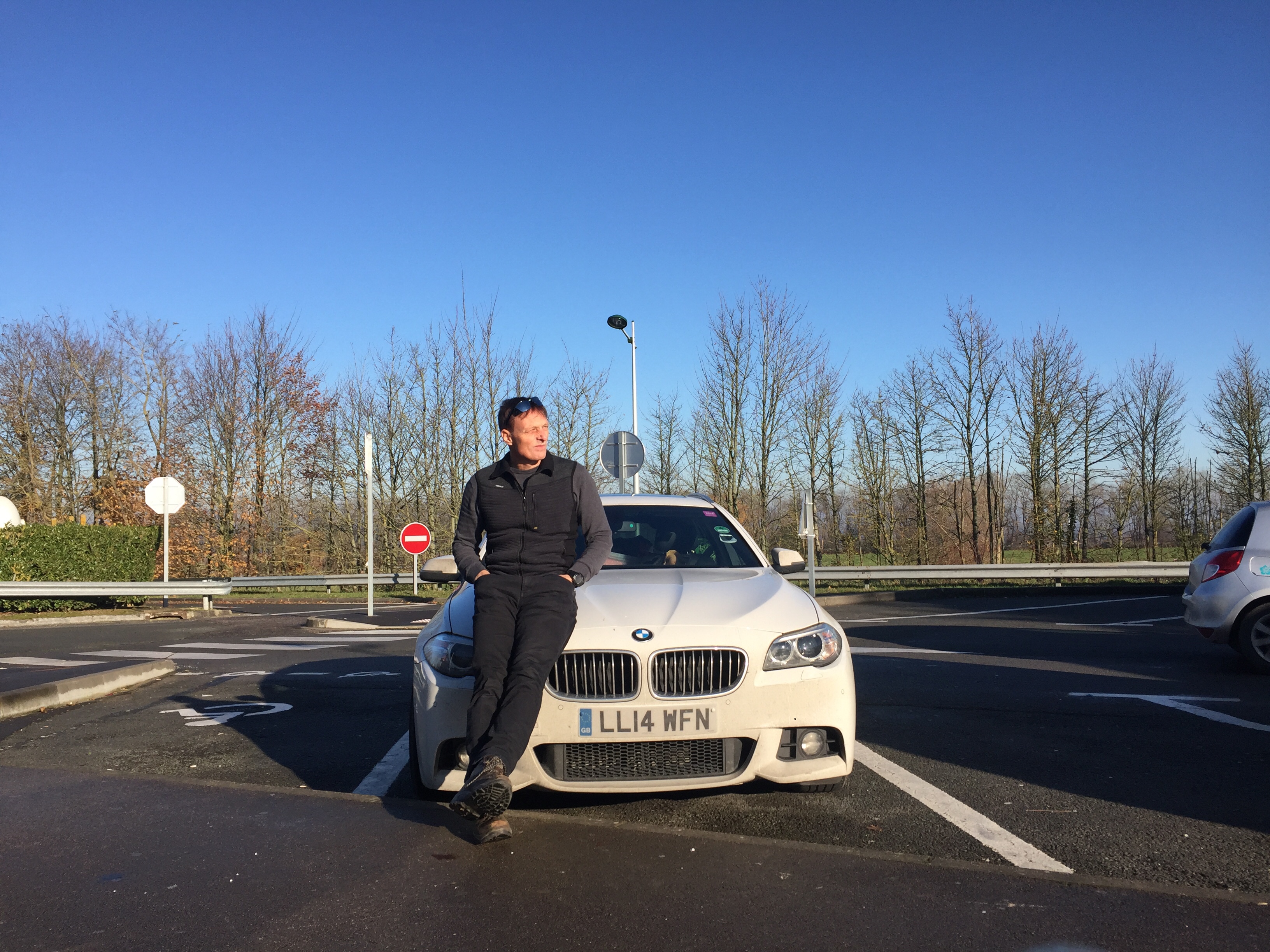
The car has changed in the mean time, but the felling of anticipation and anxiety is much the same – if all goes as planned, the road will first take my East , then North and then to the real North with a lot of new impressions (not all veterinary related…..) and old and new friend to meet and to make on the way.
How does it feel when you have been the boss in your own clinic for over 20 years, having made your own decisions, having taken on most of the risks and responsibilities of running a business and being used to do this “your way” and then you find yourself once again as the “ordinary” member of a team of new colleagues ,who have never heard of you and who have no idea how good or bad you are?…..
To be frank: both exciting and frightening (the latter even more so, as I had done very little clinical work as a vet over the last four months)….
But this was one of the things I had set out to do all along – just put yourself out there again, open your mind to the wonderful profession we have and both try to become a better vet by continuing to learn and at the same time to pass on the skills and the knowledge you have to colleagues, to improve their skills as well.
Good idea, but easier said than done……
Once back in the UK I sent my CV to the local clinics and placed it on one of the the main veterinary locum sites. It didn’t take long until I was approached by the manager of a veterinary group in Abingdon in Oxfordshire.
That suited me extremely well, as there was still some work to be done at “Patient 58” in Oxford – which I hoped to finish in my spare time – and I thought that I knew the town already, having frequented their industrial estate numerous times during the building work in the summer.
Little did I know of the medieval history of the place and of the villages around it and of the also very interesting recent history (eg that MGs were produced here at some point).
So one early Monday morning at the beginning of November, I fund myself in the middle of a very international group of vets, veterinary nurses and receptionists at the main clinic in 2,The Vineyard (with not many vines in sight….) in Abingdon. My colleagues came from Spain, from Portugal, from Hongkong, from NewZealand and yes, there were also a fair number of British vets and nurses. This was a reminder of my first job in the UK over 25 years in Camberley, when the team included vets from South Africa, Australia and Belgium. Seeing all these colleagues with different cultural and educational back grounds communicating and working together as a team was both exciting and refreshing to see and I loved it from the first minute. Everyone was extremely welcoming and friendly, partially because they had been in the same situation not so long before me. With regards to my apprehensions about the current level of my clinical skills – I didn’t have much time to dwell over it, as I had to get into action right away with a greyhound that had just been run over by a car with severely traumatised limbs. This friendly and very brave patient kept me and the team busy for the following four weeks.
Other memorable cases like a 70+ kg weighing Dogue de Bordeaux with a pyometra, dogs with grass blades up their nose, a range of different poisoning cases and the unavoidable seasonal gastro-intestinal foreign body case followed and I realised why I had missed the clinical site of my job so much. It was an inspiration to see how much attention to detail and dedication each member of staff gave to the patients in our care and looking back at it now, we neither lost a patient nor was there a single euthanasia I can recall during my stay.
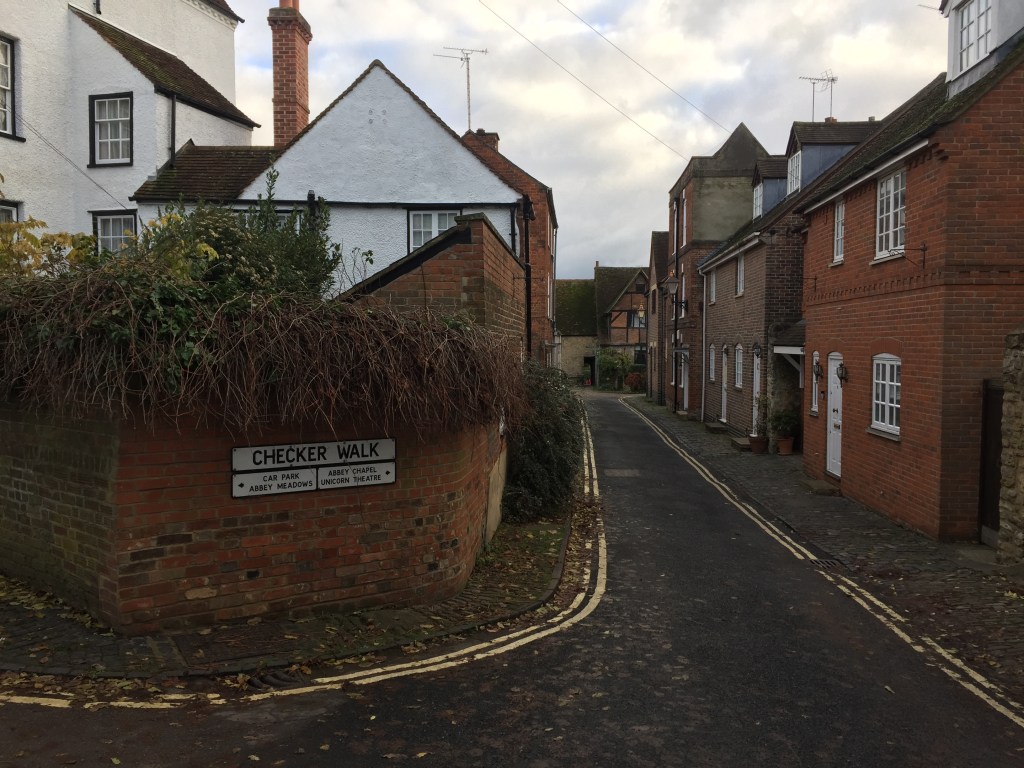
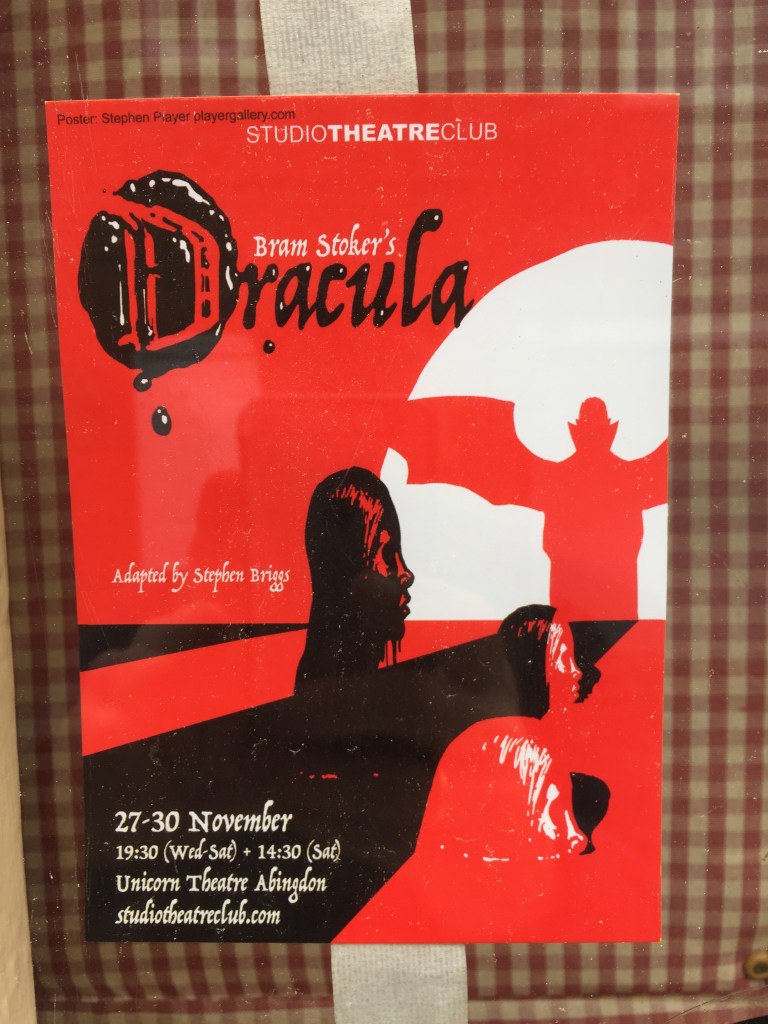
During my breaks I found time enough to explore the numerous coffee places and delis in Abingdon, the town museum and the medieval Abbey , which was temporarily occupied by vampires …..
Time after work was spend with long night runs along the – sometimes flooded – towpaths of the Thames and the occasional visit to one of the local restaurants with my new colleagues.
It was with a heavy heard when I had to leave this wonderful group of people and the just lovely management team in Abingdon, but new challenges were waiting……
Yes, Yolanda, there is always to one…….
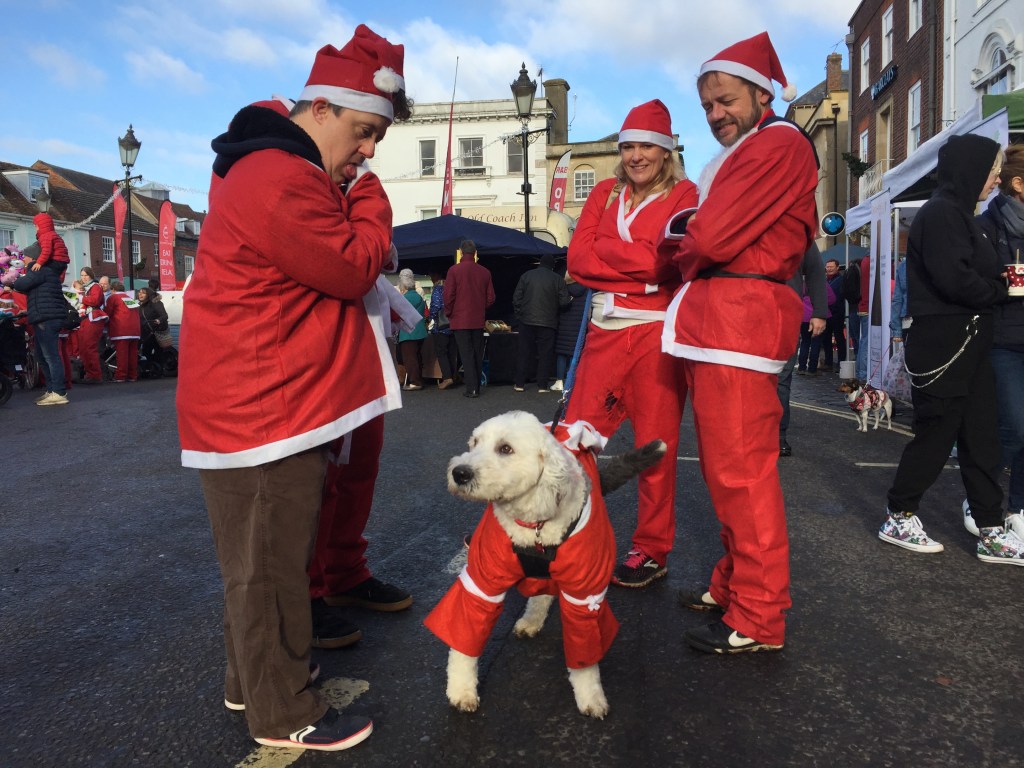
On my last day of work, I even bumped into Santa Claus !……
To be precise into 300 or so of them together with ….not their reindeers, but their dogs !…..
In Wallingford, where I had a small flat while working in Abingdon, they had their annual Santa Claus Run and – of course – the family dogs could not be left behind for the occasion.
And – to maintain the right balance (for my feline-friendly followers….) – there also was one big cat!…..
The Eastern European Regional Veterinary Conference (EERVC) is to a large degree the realisation of the vision of my friend Denis Novak, a Croatian vet with a clinic in Belgrade in Serbia and the new President of FECAVA. Denis had a part of his veterinary training in the UK and he has a good understanding of veterinary medicine in both Western and in Eastern European countries. As long as I have known Denis, he has tried to create a new breed of veterinary surgeons in Eastern Europe, by not only bringing world renowned speakers to continuing education events near them, but also by breaking down historic barriers between teachers and students with a far more relaxed atmosphere at these events and with the prudent use of great rock music……
At the first conference three years ago in Belgrade, Denis and his colleagues started from nothing and yet, due to an excellent scientific programme and due to endless hours of preparation, the event attracted more than 1000 veterinarians from all over Europe and the party at the end of the conference – with one of the best live bands on the Balkan – turned out to be truly legendary. The success of this concept was repeated a year later in Bukarest in Romania and in the following year in Zagreb, Croatia.
This year it was the turn of Thessaloniki in Northern Greece and – with most of my more presentable cloths still in the suitcase which was delayed in Moscow – I looked somewhat out of place in the entrance hall of the Grand Hotel…..
But as luck had it, I bumped right away into both Denis and Kyriakos , the “fixer” of my monastic detour….
This now was more familiar territory for me and once re-united with my suitcase and following a shave, a shower and a change of cloths, three days of lectures and learning followed.
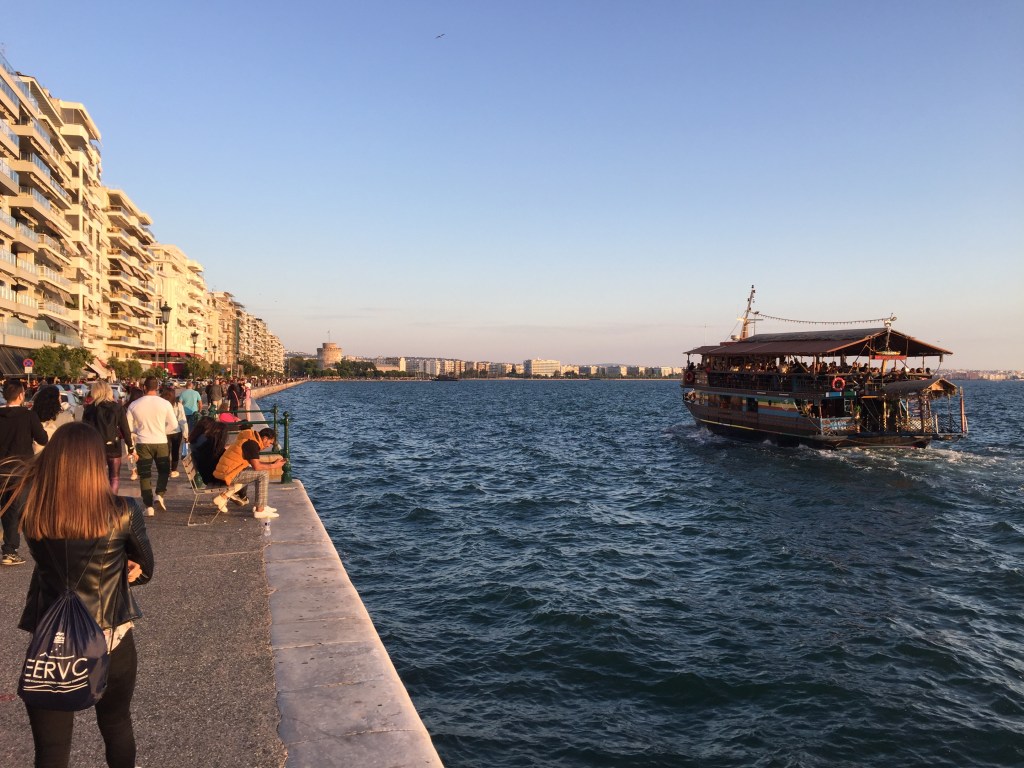
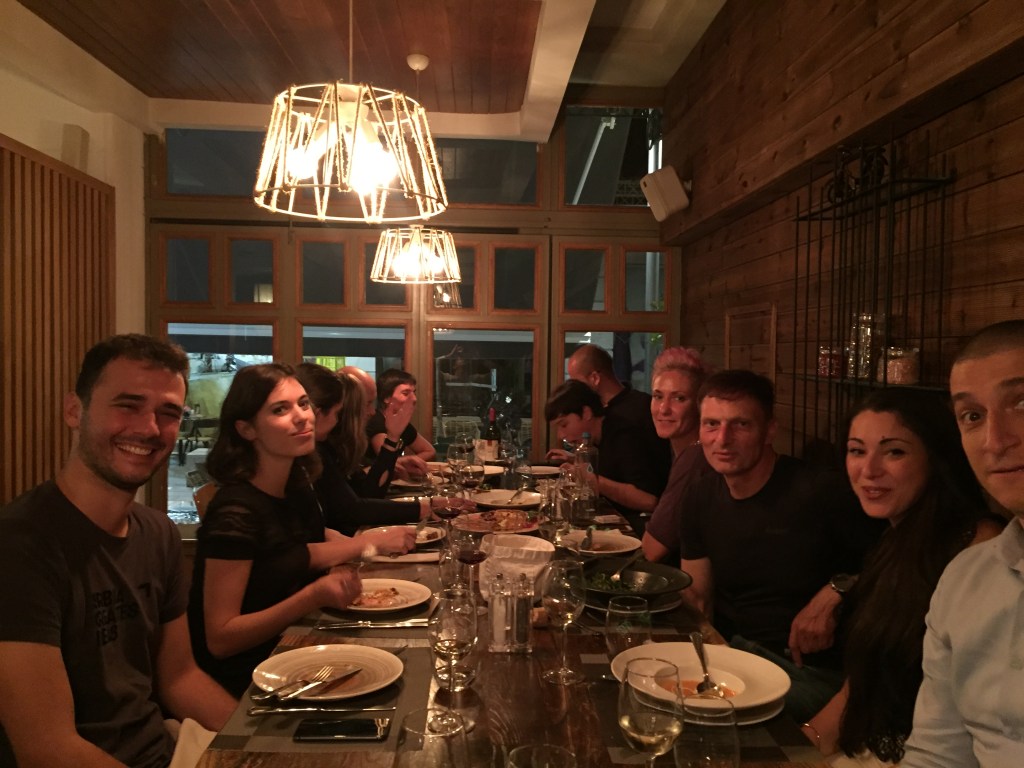
I also found time – but sadly no company – for a sunset run along the promenade of Greece’s second largest city and to catch up with my colleagues over dinner with the outstanding local food (and – of course – wine)!
The event closed – as in the years before – with the hallmark party and dancing into the early hours (we were in Greece after all….).
This also was the end of another journey and not even 24 hours later I found myself – and the remains of my belongings –
back in the UK, where I had to prepare now for a “new” task :
Patrick Leigh Fermor was 23 when he arrive in Daphni at the end of his walk from Hook of Holland to Constantinople . It had taken him 5 years and his trip had resulted in one of the most famous travel journals of the 20th century. The year was 1935……
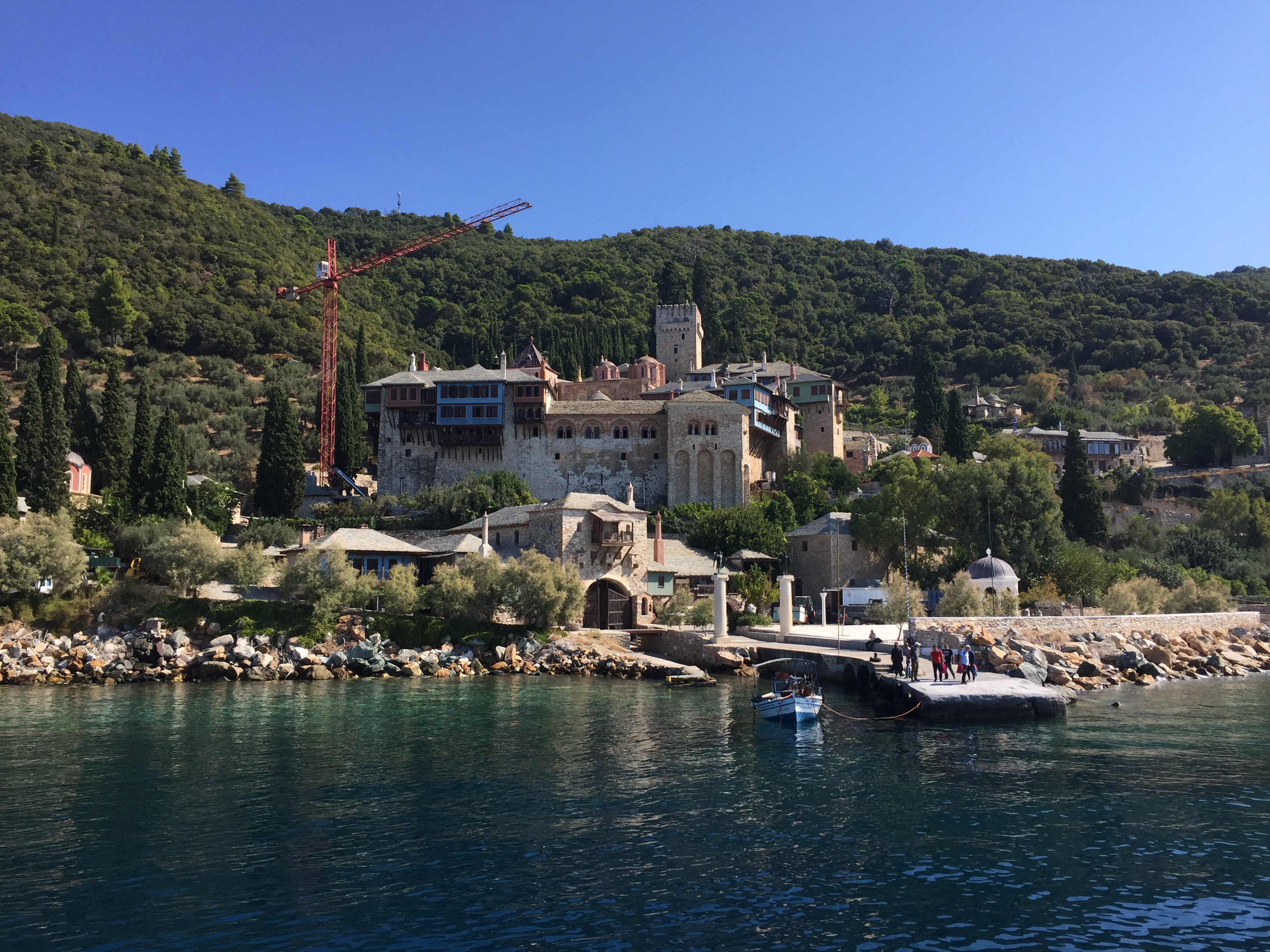
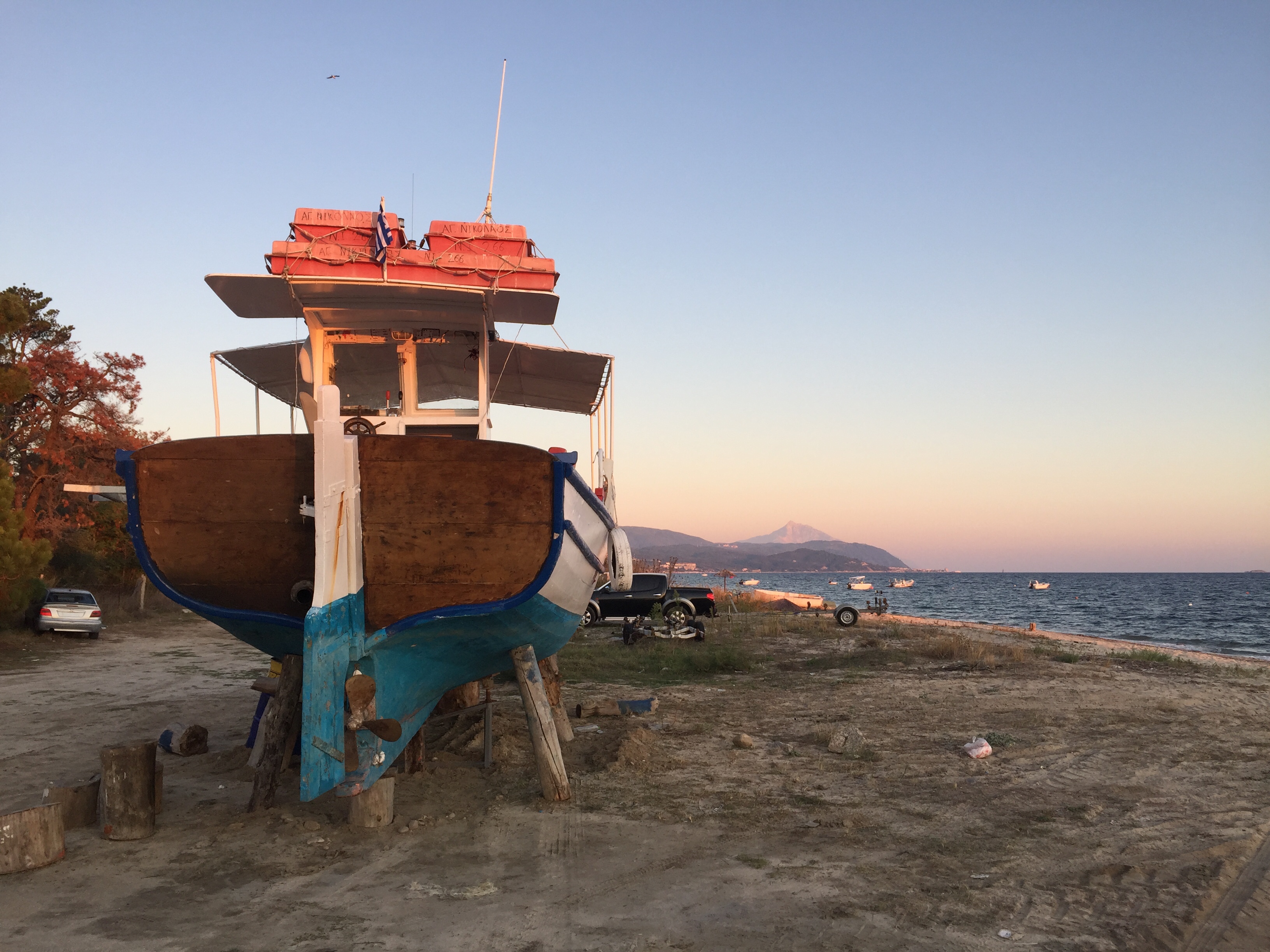
In the same way as 84 years earlier, our small boat was gliding through the pristine waters between Sitonia and Athos and we were accompanied by a school of dolphins. For a while all buildings had disappeared from the Western coastline of Athos and all we could see were trees, low growing shrubs and rocks, when finally with Dochiarion, the first monastery came into view. Most of the monasteries on Athios are situated not far from the shore, so that they could receive their supplies without the need for a long transport of goods by land. However, due to this they also used to be more exposed to pirate attacks. Because of this most monasteries are in an elevated position and some are surrounded by a high wall. Only over the last 200 years external living quarters had been added.
At each stop a small number of men left the boat and were greeted by some of the resident monks on the pier. These small stops were repeated a few times, before we – like Leigh Fermor – arrived in Daphni, Athos’ main port. When leaving the boat myself, I was confronted with probably 50 similar looking monks and I felt a bit like a seabird returning home to its colony wondering how to find my “partner”. So rather than guessing, I decided to rely on my more Northern European appearance making me standing out and sure enough, a couple of minutes later I was welcomed by a friendly looking monk, a bit small than me, who introduced himself as Father Polykarpos. As he was struggling a bit with my first Christian name, we agreed to settle on my – for him – more familiar second one and for the following three days I had to learn to respond to “Andrea(s)”.
Father Polykarpos is one of the very few monks with a car on the peninsula and shortly after our introduction, we were cruising along the dirt tracks that are connecting Daphni with Karyos, the main settlement on Athos and with the individual monasteries.
The Father’s domestic arrangements were also somewhat different from other monks, as he lived in his own small building (“skete”), which was connected to a small chapel and he was allowed to host his own visitors. Due to this, I was surprised about the luxury of having my own – actually very nice – room and even a very modern bathroom (with a cold shower though).
Time to clear up with a few myth then (and to confirm some….): before leaving for Athos, I informed everyone that I might be “off the radar” for a few days in expectation that I would have left the 21st century’s digital society behind me, just to find that not only at Polykarpos skete, but all over the peninsula, I had excellent 4G coverage . Also preparing myself for a very sparse diet, I found that Karyos, featured not only a bakery and a shop for bespoke monastic clothing, but had also three supermarkets, selling all sorts of food, house hold equipment and even a solid collection of Under Armour base layers (admittedly only in black and in dark blue) plus a good selection of wine and Raki. Furthermore there was also a traditional Kafenion and the town square even enjoyed the sinful pleasures of a decent coffeeshop with a well maintained Italian coffee machine (I didn’t spot the existence of any loyalty cards though….).
Something that was very different then from the outside world, was the daily routine: By adhering to the Julian calendar, the day on Athos finished at sunset and most monasteries were starting their daily activities with a – usually four hour lasting – service between 3.30 and 4 am.
Thankfully during my stay on Athos my host went easy on me, with our services usually starting at a more moderate 6 am….
While not understanding more than a few ancient Greek terms over the still remaining 2 hours, staying awake admittedly was a challenge and although the whole atmosphere during a – for me alien – orthodox service is truly magical, I found that there is a good reason why one’s place offered both a stand, a half sitting and a fully sitting (=slumbering) option…..
Believe me – you do need all three of them.
However, one morning we went for the service to the beautifully restored Agios Oros church near Karyos and with the service being conducted facing the windows on the Eastern side of the building, the slowly increasing light of the rising sun, together with the icons, the beautifully carved old timber, the smoke and the smell of the incense and the deep rolling sound of the prayer made the whole experience truly memorable….
So much for the prayer (which in fact is repeated – usually for shorter services – at several more occasions during the remaining day and especially on Christian holidays), but what else was there for me to do as a visitor ?…..
To sum it up – eating, talking and watching (while hiking or been driven….) and enjoying.
Things that were not possible or allowed (and this one was difficult for me….) were running, swimming (oh, what a shame with some of the beaches, especially on the Northern coastline …..) and both television and computer screens didn’t feature greatly either.
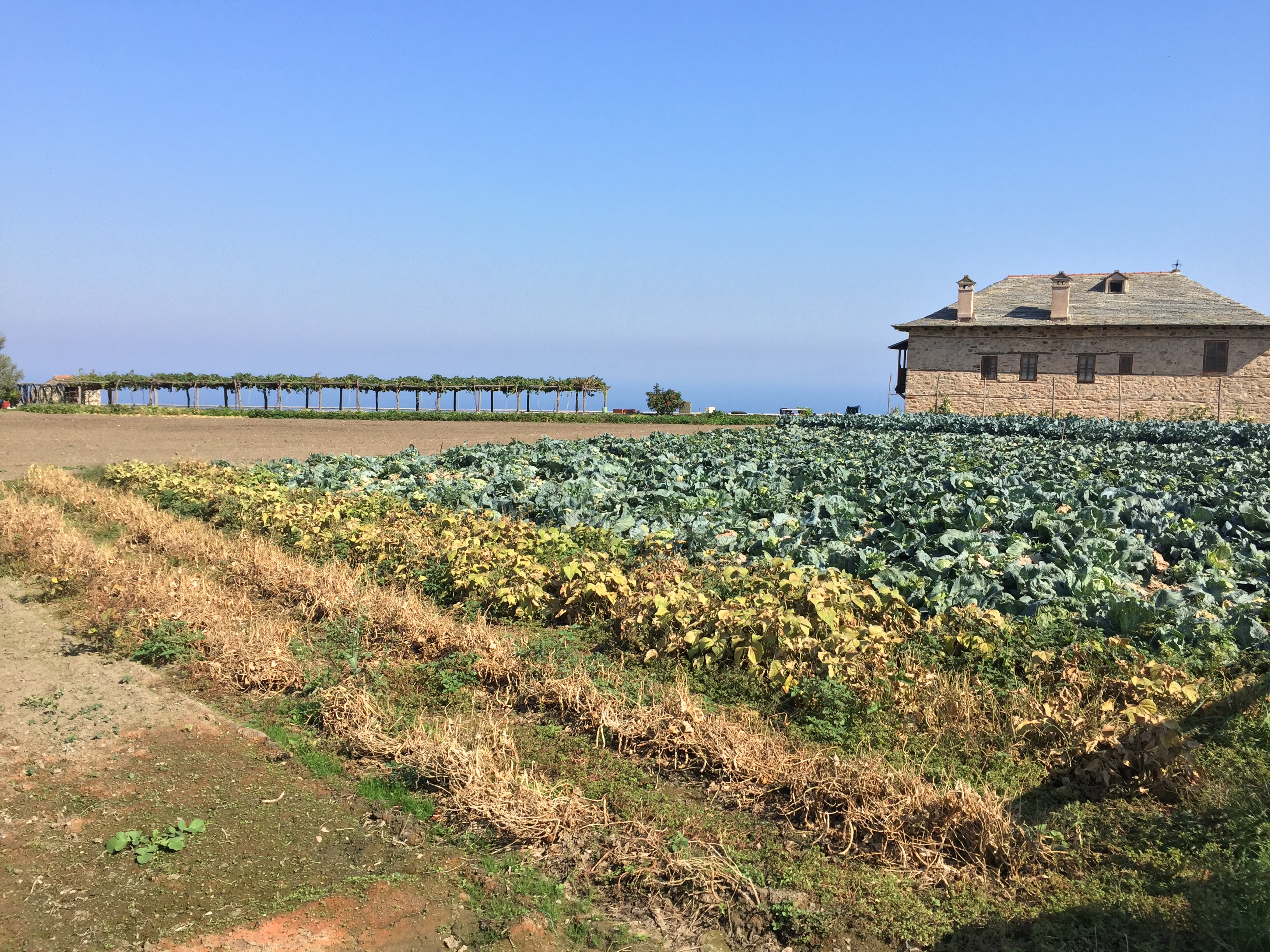
As to the eating – despite the above-mentioned supermarkets, most monasteries are very self-sufficient with large gardens and their communities restrict themselves to a predominantly vegetarian diet.
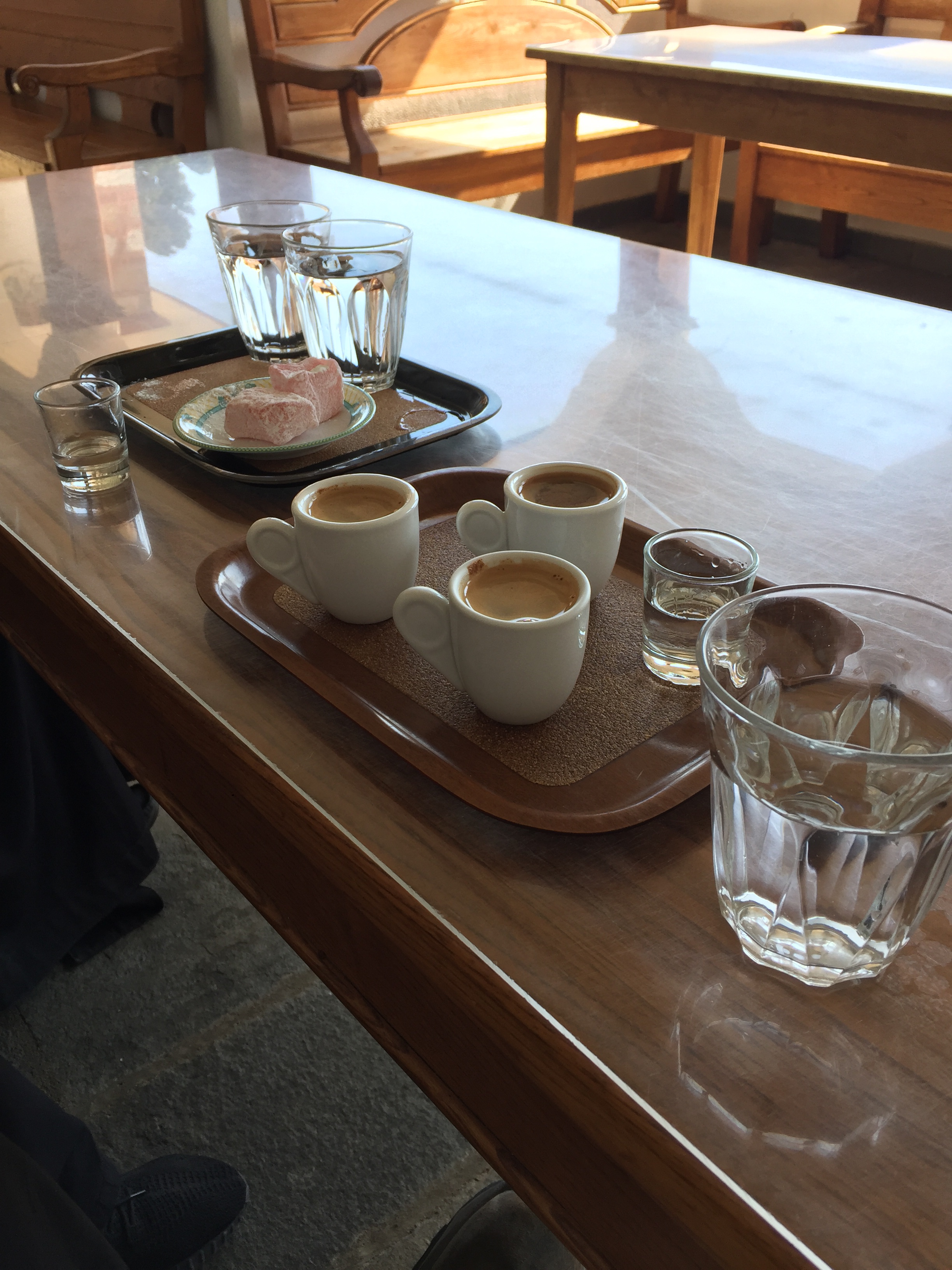
But this at least leaves you with Greek coffee (ok, imported….) and some – at times – very decent red wine.
Meat – due to the restrictions on female domestic animals – was only occasionally added. Considering in addition to this the very limited use on vehicles on the peninsular, it struck me that despite the antiquated life style, the monastic communities were in fact very much cutting etch with their “ultra low carbon” foot prints…..
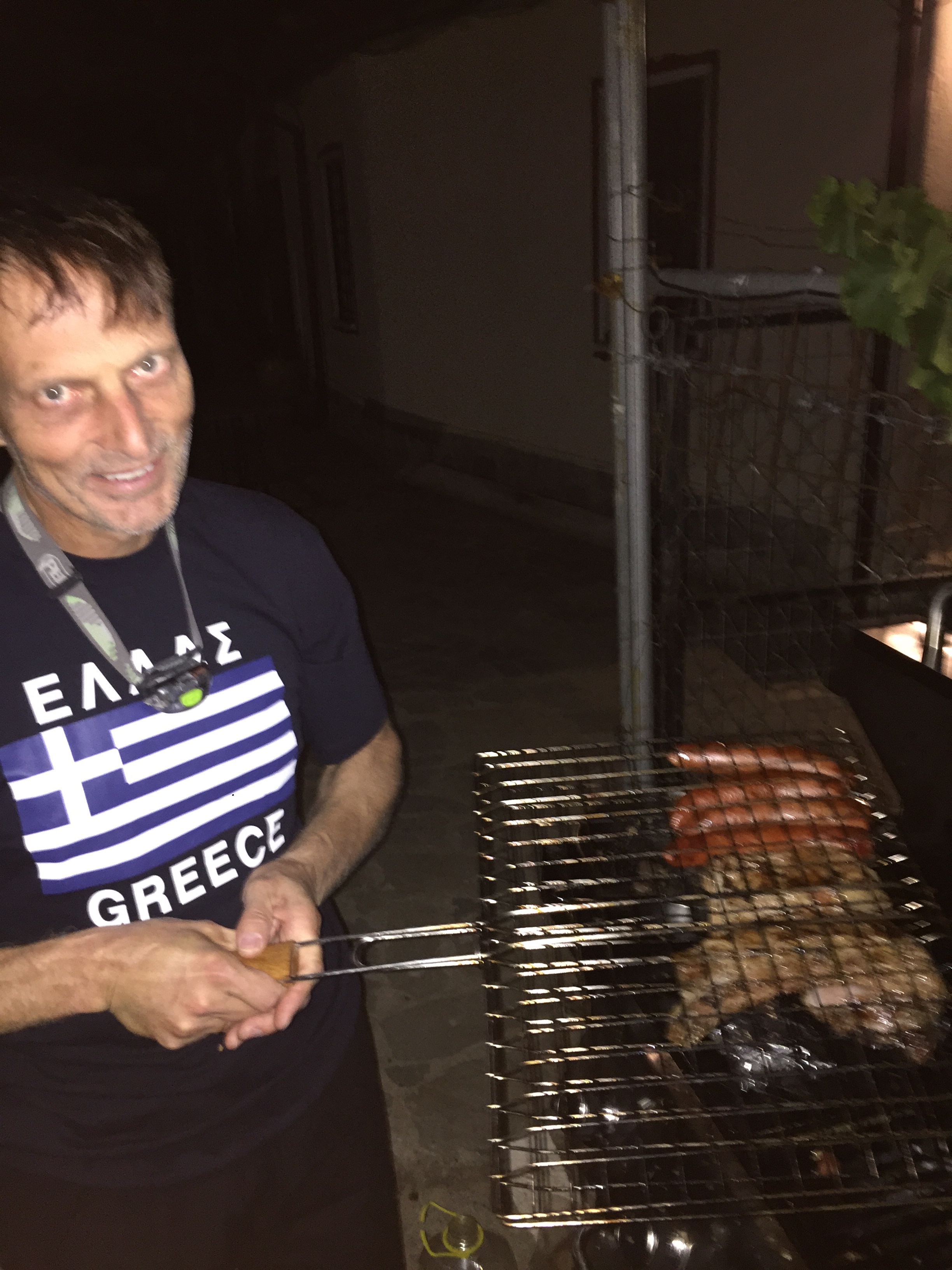
Staying with food – one evening I had a lucky escape:
As a “special
treat” for me and for the other visitors at the skete, the ever resourceful Father
had organised some pork, which we were supposed to barbecue. One of the other
guests was a priest from Thrace, who considered himself as a bit of a BBQ
specialist. So we let him get on with his magic, with the result that after the
best part of an hour, the meat was well and truly charcoaled on the outside and
still raw on the inside.
Meat still looking ok….
When the others and I made an attempt to ignore it and to salvage the somewhat eatable bits, Father Polykarpos became a bit uneasy and expressed his concerns, as this was in fact not pork in front of us, but locally sourced (and probably not inspected….) wild boar!…….
Whao……that certainly could have been a very unpleasant and as a vet also a very stupid way to go – dying of Trichinellosis…….
Back to the
three things to do:
Talking – this was possibly the most inspiring aspect of my stay on Athos:
Due to the
nearly complete absence of television, radio (I can’t recall having heard any
music during my stay, with the exception
of the musical delivery of prayers at the morning services) and computers (I only
occasionally checked on my e-mails and on social media….honest!….), the
spoken word face to face once again became the main form of entertainment and
it is hard to describe how refreshing this was, especially when talking at length
to complete strangers.
During my stay we were frequently joint by Iannis, the father’s 19 year old novize and by Angelo, a former Lithuanian long jumping champion and later a property developer, who was on the – at times not easy – journey of becoming a monk. Both were kind enough to translate between the Father and myself and I was privileged enough to learn about their life stories, which were so different from my own.
Hiking – while not engaged with one of the three activities mentioned previously, I took the opportunity to once again follow in the foot steps of the visitor 84 years ago and walked along the path of the very picturesque Northern Coast, visiting the monasteries of Stavronikita and Pantokratonos. Unlike the young Leigh Fermor though , I didn’t got drunk with the jolly monks at Stavronikita and I was spared from nearly dying in a snow storm, probably due to the wrong (or better right ?!…..) season…..
On my last day Father Polykarpos treated Angelo and myself to a road trip to the most Southern tip of the peninsula and to a visit of all the monasteries and even to a couple of hermitage sites on the way.
When visiting the monasteries we were treated to the customary Greek delight, water, coffee and at times to small glasses of Raki.
The highlight of this trip was a visit to a solitary monk who lived in a small house perched precariously on a steep cliff above the sea and who turned out to be famous all over Greece for welcoming low flying planes and helicopters by waving a huge Greek or a Byzantine flag. His fame even reached the crew of the Space Station – as a token of their appreciation they sent him a satellite image of his dwelling next to Mount Athos, together with a personal note and signatures of the whole crew!…..
Talking of friends in “higher places”…….
Oh yes,…..and
there was one further thing I had to do, before returning after three days to
the more secular world:
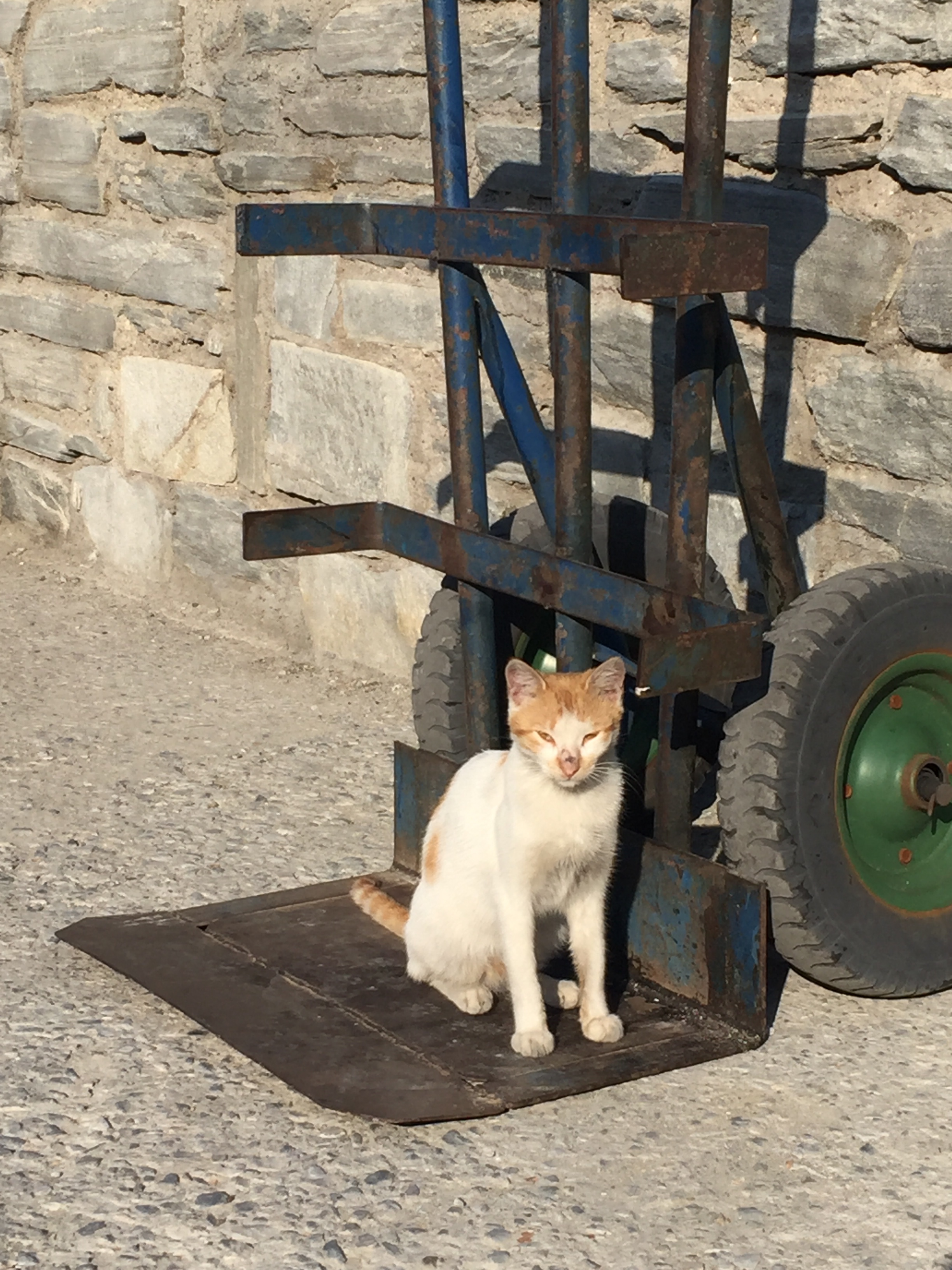
One of the
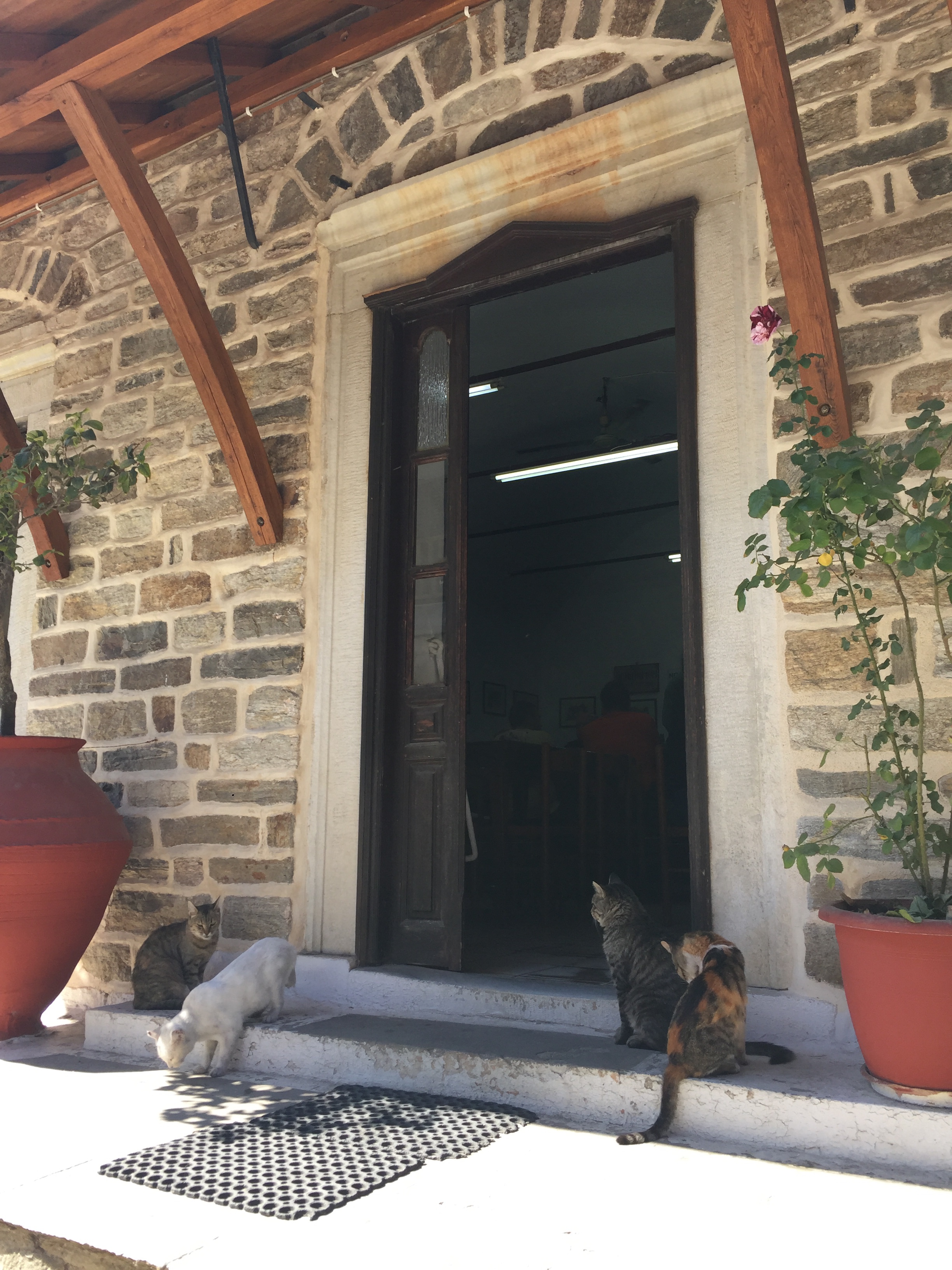
Father’s kittens (the only female domestic animals allowed on the peninsula….)
had been in a fight with one of the other residential cats and featured a
massive facial abscess. This was too great an opportunity to miss, to be able
to claim not only to have visited Athos, but also to have been one of the few
(the only ?!) practicing small animal veterinarians there!
With the father acting as my veterinary nurse
and with the help of a bit of vodka (to disinfect the area) and a reasonably
sharp Stanley knife, the abscess was duly lanced and although the kitten was
not entirely impressed by the procedure, I could leave Athos in the knowledge that
my skills even in this somewhat “unusual” place had been of some use……
I have to admit that at times I had been furious with Kyriakos, but while joining douzens of other men ladden with back packs and heavy suitcases entering the speed boat at Ouranoupoli in Northern Greece, with the precious visiting permit for Mount Athos in my pocket, I was once again very grateful for the help and for the support I had received from one of my colleagues at the other end of Europe.
So what was going on?……
Mount Athos is monasterial republic based on a peninsula in Macedonia, with a population of about 2000 monks, housed in 20 monasteries and a number of adjacent “skities” (smaller adjacent communities). Only men are allowed to enter the region and – with the exception of cats – not even female domestic animals are allowed to visit or to stay there. To orthodox christians this place is sacred, as it is believed that Maria, the mother of Christ, landed here after leaving Palestine following the crucifixion. In some respect this place has a similar status as the Vatican has for catholic christians.
But what was I doing here?…… I am neither a catholic nor orthodox and I am not even a regular church goer and as someone who has learned to rely first and foremost on good science and facts (otherwise I shouldn’t do the work I am doing….), this at first sight would have been the last place for me to go. However, I had first heard about this place in a history lesson when I was a school boy, from my teacher who had travelled there as a hippie in the 1970th and I always wanted to see this place with my own eyes.
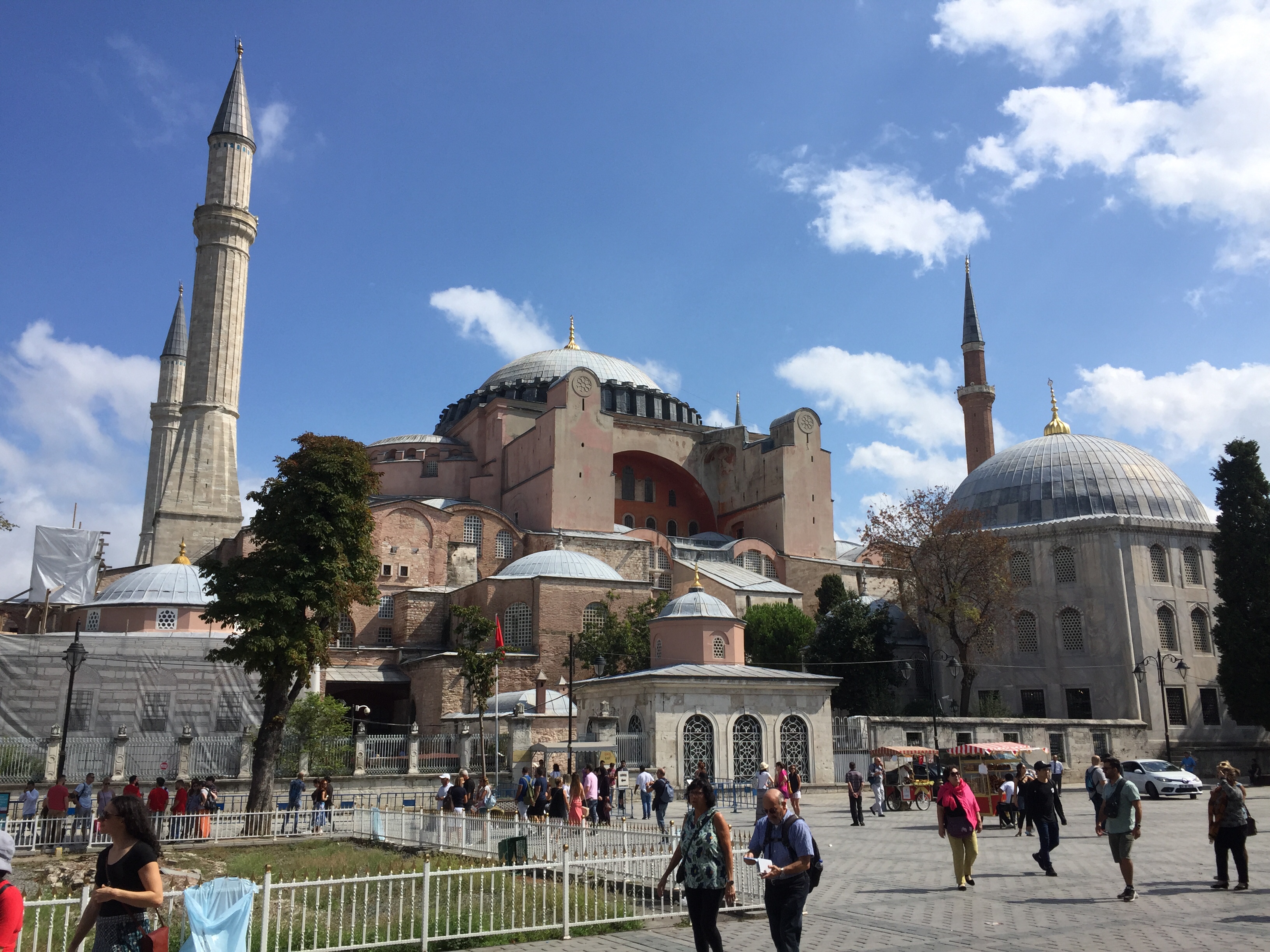
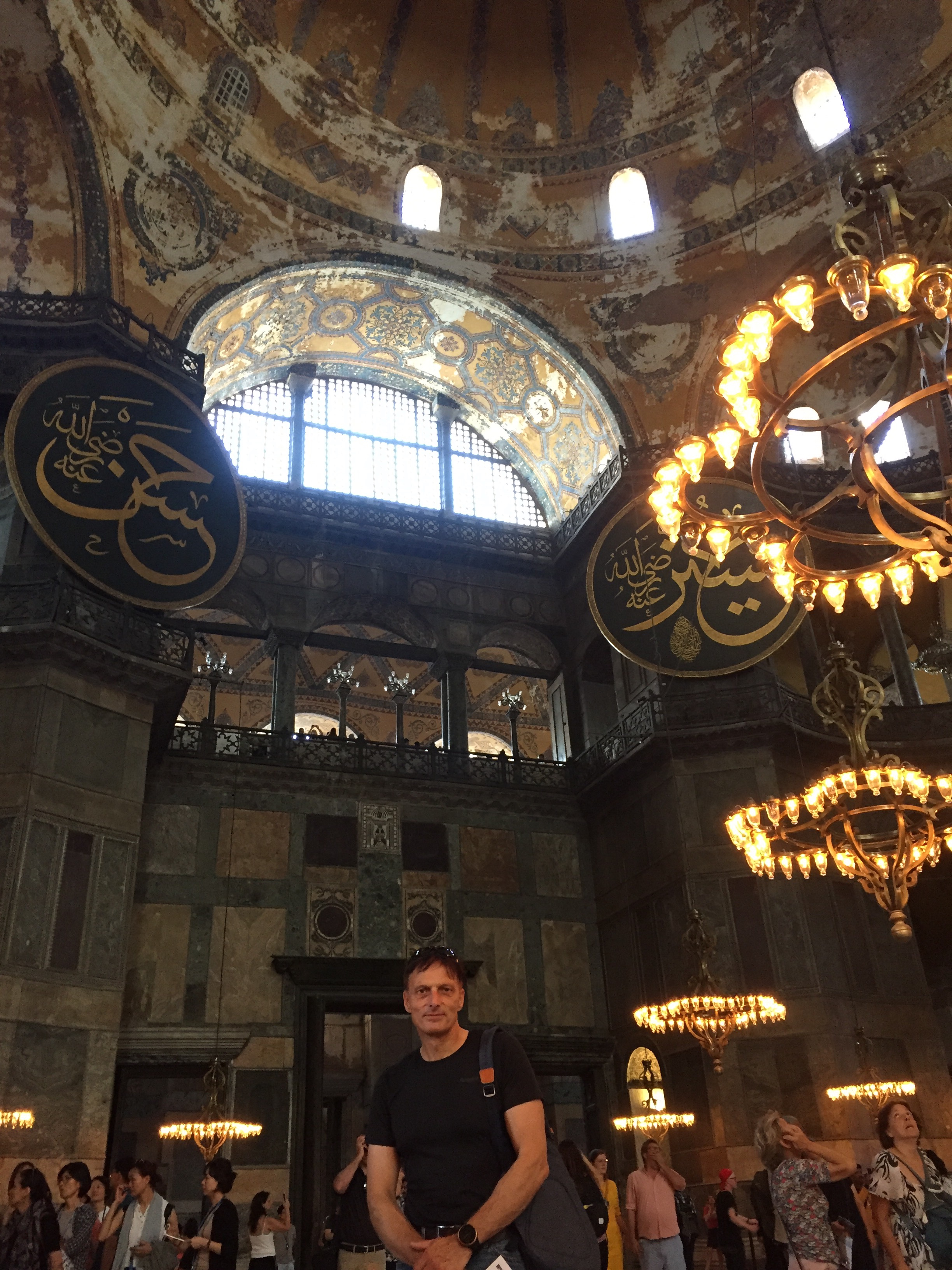
Despite my personal misgivings, I have to admit my deep admiration for some simply magical monastic places like Mount St.Michael in France, Montserrat in Spain or the Hagia Sophia and the Blue Mosque in Istanbul. Our forefathers chose their locations and applied their architecture for a good reason and in these fast moving times one – or better I – is sometimes drawn to places where time appears to stand still. This is probably also one of the reasons why I love the mountains and the mountain huts – many have been in their locations for decades, if not for over hundred years with often very little change to the simple hospitality and shelter they provide.
I had discussed this with my friend Kyriakos, who runs a busy veterinary clinic in Thessaloniki, a while ago over some drinks in Zagreb and to my great surprise (and delight) he offered to speak to some of his clients to arrange for me to stay on Athos for a few days. This was no small task as unlike the Vatican, the peninsula is closed to the outside world and access does require a special permit. 500 of these are granted every week (as far as I know) to orthodox and to catholic christians, but only 10 to anyone else. Since then I had been in touch with Kyriakos from time to time, reminding him of his promise. Occasionally there was a brief reply on the subject and a re-assurance that I should not worry. Two weeks before the planned trip there was still no confirmation and while traveling through Armenia in the week before going to Greece, I was still not sure if the visit would be possible.
Then finally – three days before landing in Thessaloniki – an e-mail arrived from Kyriakos with detailed instructions:
At the airport I had to get a rental car (this I had organized already) and I had to drive to Ouranoupoli, a small ferry port just outside of the republic, already on Sunday night, and I had to leave the car there. Early the next morning I had to attend the Pilgrim’s Office to get my permit, then collect a pre-booked ticket for the ferry at a different office at the habour, gather my things and I had to make sure not to miss the boat as it was the last one on the day. In Daphni, the main habour of Athos, I would be met by Father Polykarpos, with whom I was to stay for a couple of days and I would have to leave again with the morning boat on Wednesday….Perfect !
Saying good bye to my friends in Yerevan I was heading with the old Lada at 4 am to the airport to catch my flight back to Moscow. This was somewhat crazy, but it was the only way to get to Thessaloniki – rather than a 2000 km trip across Turkey, I had to make a 3000 km detour North to Moscow, change planes there and was then heading South again for the same distance to get to Northern Greece…..
Unfortunately the transition time in Moscow was very short, so that when I arrived in Thessaloniki, it turned out that most of my luggage had remained there and was not likely to arrive later that day. Thankfully I always wear my hiking boots when I am flying (just in case the luggage is lost or delayed) and what else do you really need when staying at a monastery ?….In any case nothing that couldn’t be borrowed or bought somewhere on the way.
With my beautiful small French rental car – what a change to the Lada….. – I hit the road in a Easterly direction passing both the peninsulas of Kassandra and Sitonia with their beautiful beaches and arrived – slightly delayed by a small traffic jam –
in Ouranoupoli, just as the sun was setting.
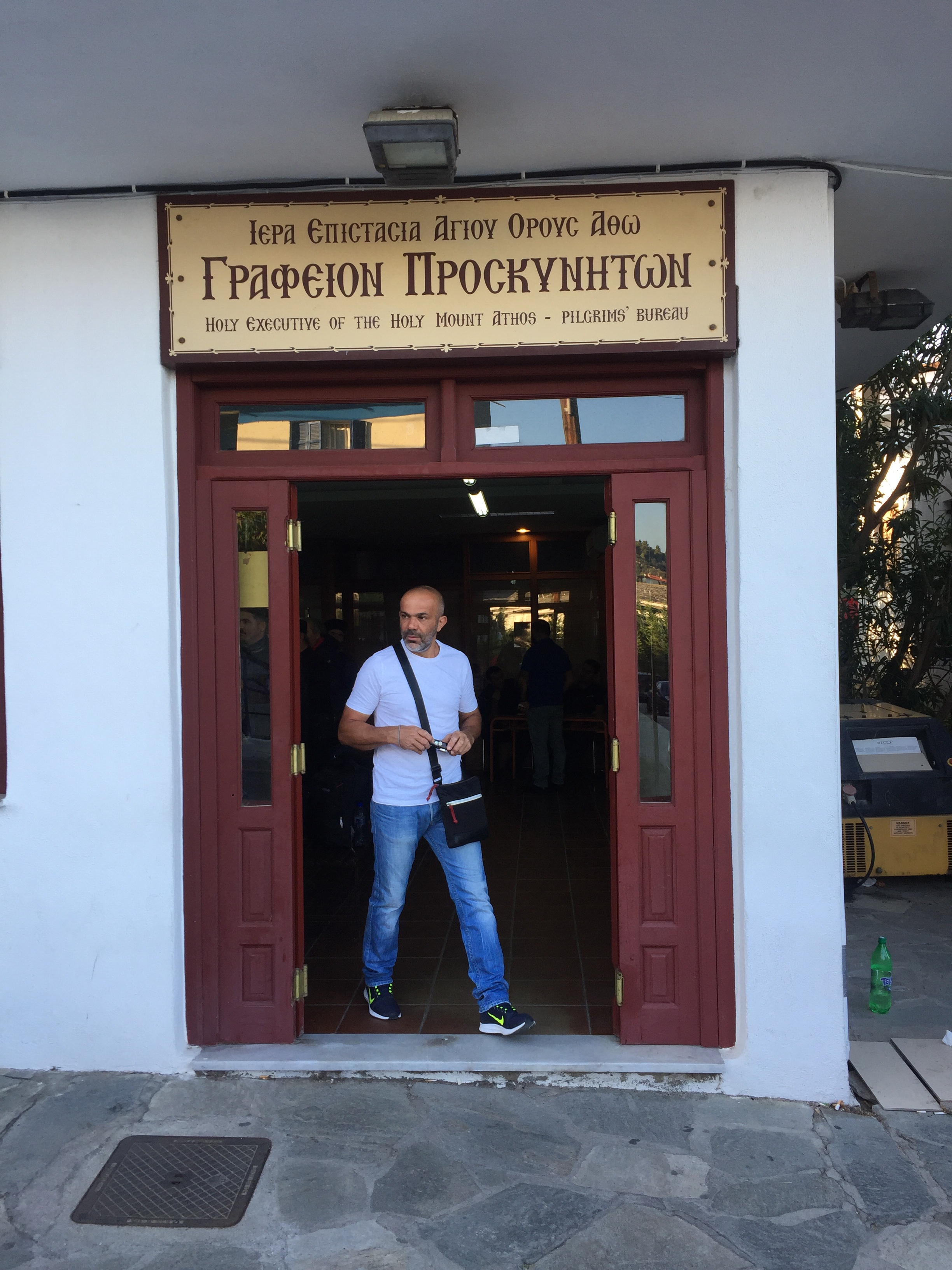
The next morning I presented myself with my passport at the pilgrim’s office
and was a few moments later the proud owner of a visitor permit, stating my faith as “Protestantis”.
In the office – I was not allowed to take photos there – was a firm reminder of the dress code that had to be observed while staying on Athos . I was allowed to take a photo of that though…..
So there was no harm that my running shoes and my shorts had remained in Russia, as I couldn’t have used them anyway. In expectation of these rules, I had already supplied myself the previous night with a couple of light and long sleeved outfits, which might also come handy for any forthcoming tropical journeys…. I also had bought some additional food – to improve the expected bland diet at the monastery – and some coffee and biscuits as a present for my host.
Once I had elbowed my way past the crowd to obtain my ferry ticket as well, it was time for a breakfast next to the pier where the first priests and pilgrims started to gather.
The assembly of all these men with all their gear, waiting to board the boat, reminded me a bit of images of the expeditionary forces before the Normandy landing – just with the difference that most of these men were probably 20-30 years old, less fit and that the occasion was a far happier one…..
A few moments later I had joined them and with Patrick Leigh Fermor’s “The Broken Road” as my only companion, we were cruising through the calm Aegian Sea towards Daphni and a monk who was hopefully waiting for me…..
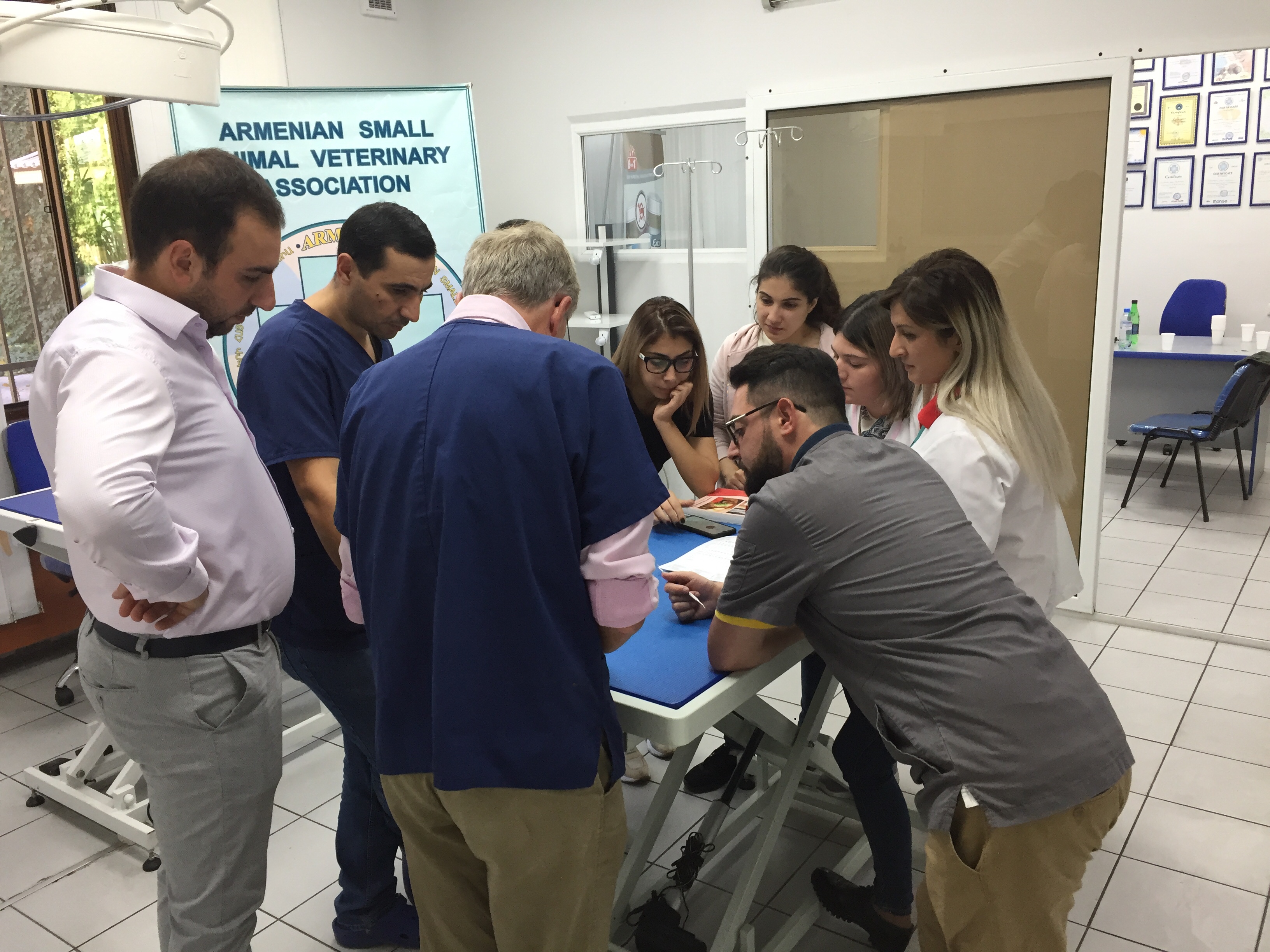
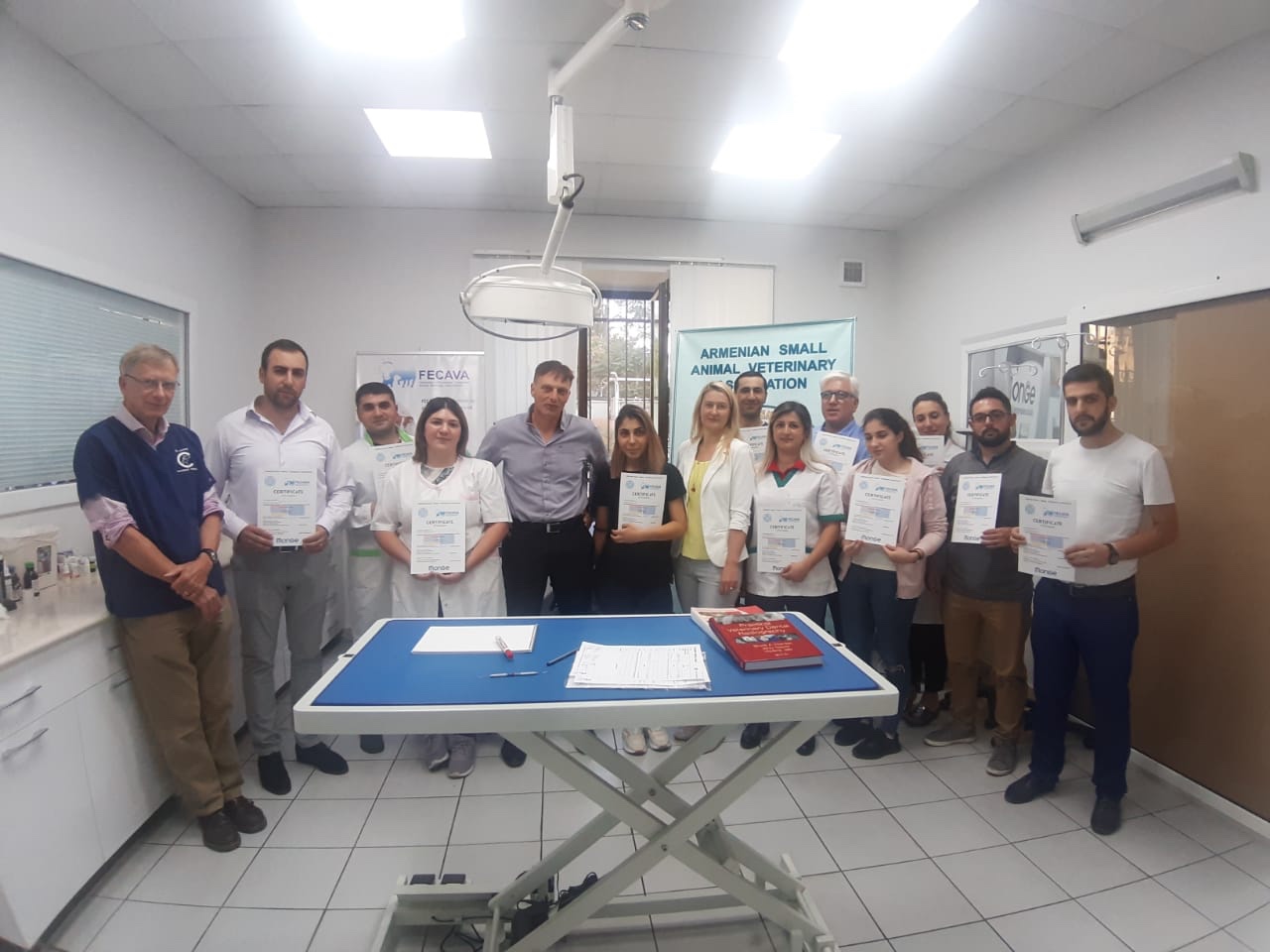
The Armenian Small Animal Veterinary Association (ArmSAVA) is the youngest member of FECAVA, the Federation of European Companion Animal Veterinary Associations, and had at the time of our visit just 44 members (hopefully a few more now ?…..). Yerevan has a small veterinary faculty attached to their agricultural department of the local university, but continuing professional development (CPD) was very sparse and this was usually only limited to a single Russian or Ukrainian speaker visiting the area. Our plan was to host a two day event with a set of work shops for up to 10 delegates and with lectures for as many vets and students as possible the following day.
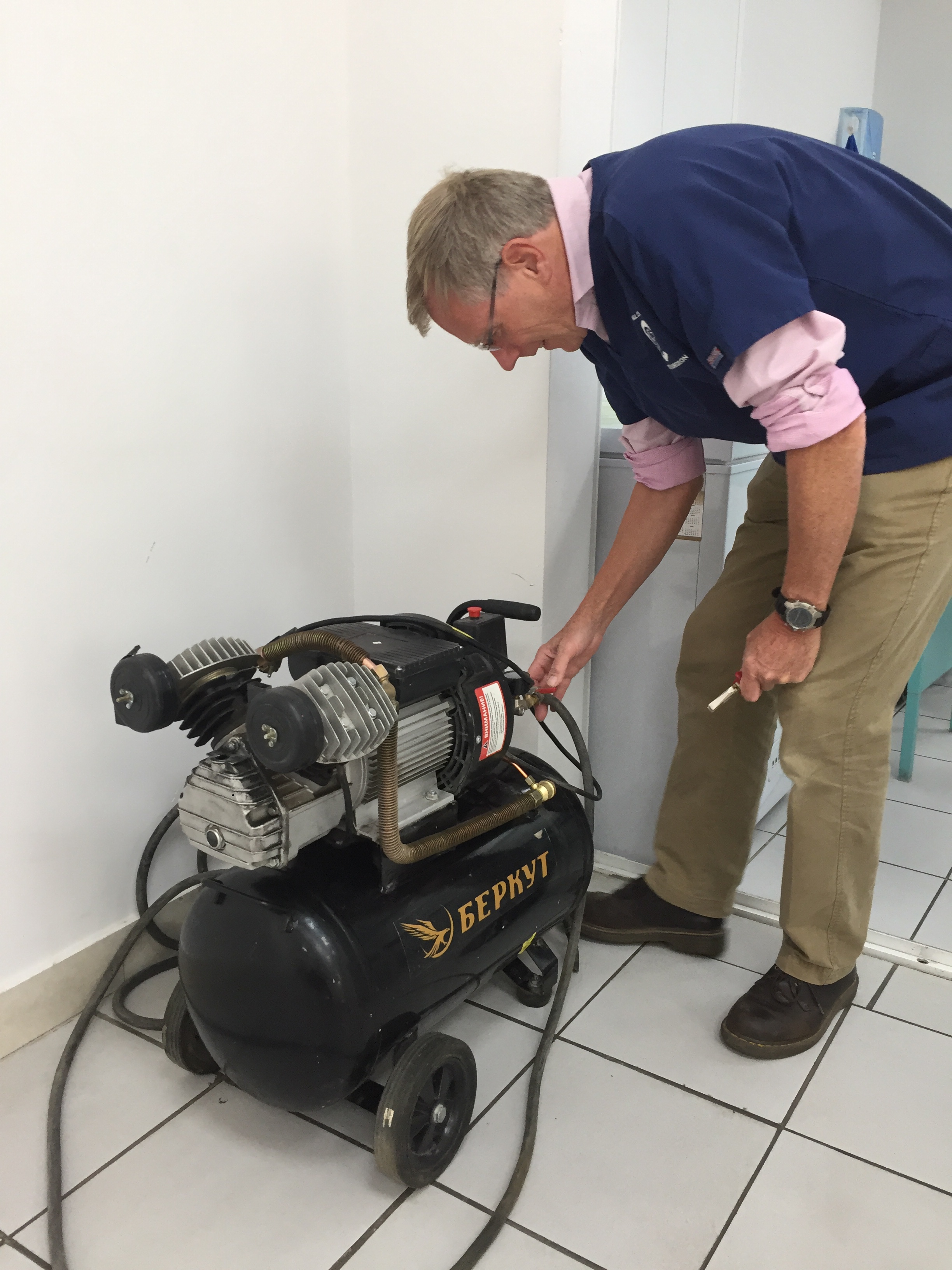
When arriving back in Yerevan, our reinforcements had flown in: Paul Cooper, the President of the British Veterinary Dental Association (BVDA) and the man who got me introduced to BSAVA (the British Small Animal Veterinary Association) in the first place, had arrived. The only problem was, that all the equipment he was hoping to bring with him had been delayed in Kiew. Thankfully though there was a chance that it might arrive with the next flight at 1:00 am the following day (Paul had arrived the previous night at the hotel at 2:30 am….). Unfortunately Paul was due to start our workshops the next morning and before then he was supposed to rig up his descaler and his power drill to a Russian compressor he had not yet seen……
Changes had to be made quickly…..
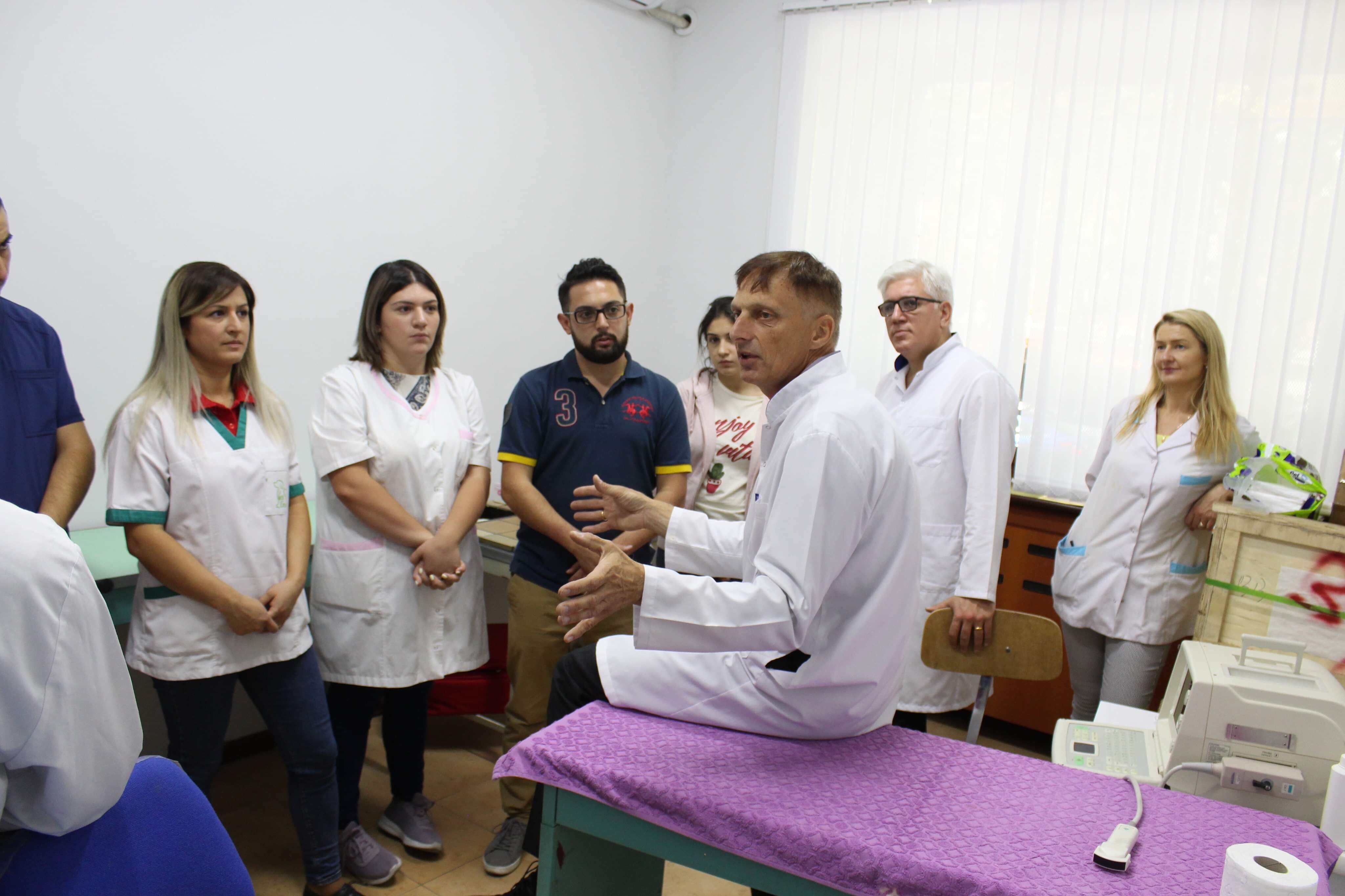
Ingrid agreed to start the day with her gastro-enterology workshop, followed by me with a basic abdominal ultrasound workshop (I had brought a couple of second hand portable machines with me, which very kindly had been donated by the German company EICKEMEYER. Both machines had miraculously survived in my hold luggage but the extra luggage had dented the FECAVA accounts….). Paul’s dentistry workshop was moved to the afternoon.
Armenian’s don’t like an early start……
Yahan, our host, had requested that all events would start at 10 am rather than at the customary 8.30 or 9 am, which was certainly no problem for us and especially not for sleep deprived Paul.
When arriving at the university the next day though, the initial sight was sobering….Ingrid was standing in front of an empty class room with a data projector that could not be linked up to her laptop.
While hasty arrangements were made to direct our lost delegates to the right venue, I decided to inspect the facilities for my ultrasound workshop:
I had been given the “best room in the house” – the double consulting room of the university clinic which was brightly lid by a large south facing window. This was an excellent working place for any workshop, but -as there were also no blinds – it was completely useless for diagnostic imaging (because you need a dark and quiet room to fully appreciate the subtle changes of your images).
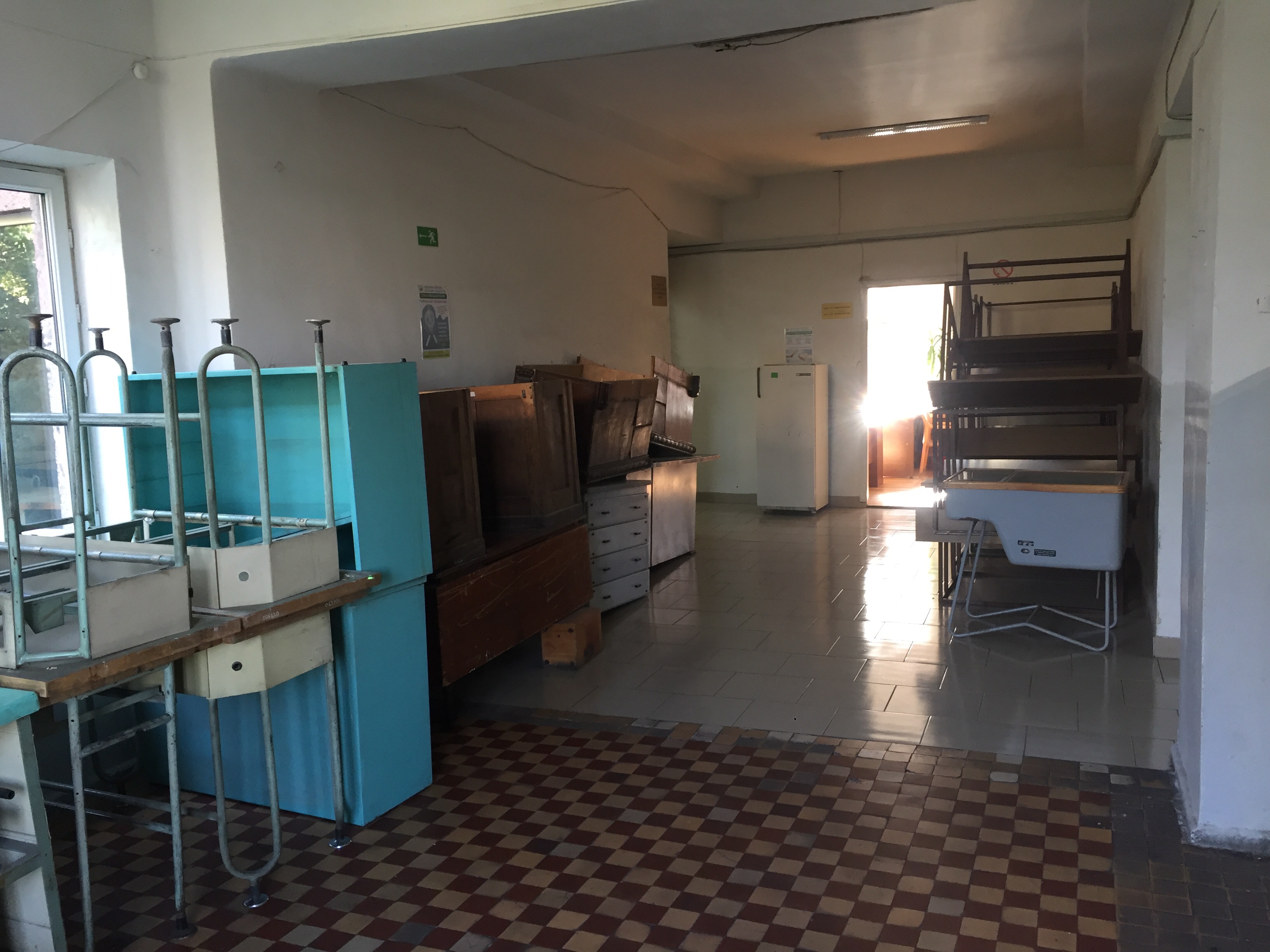
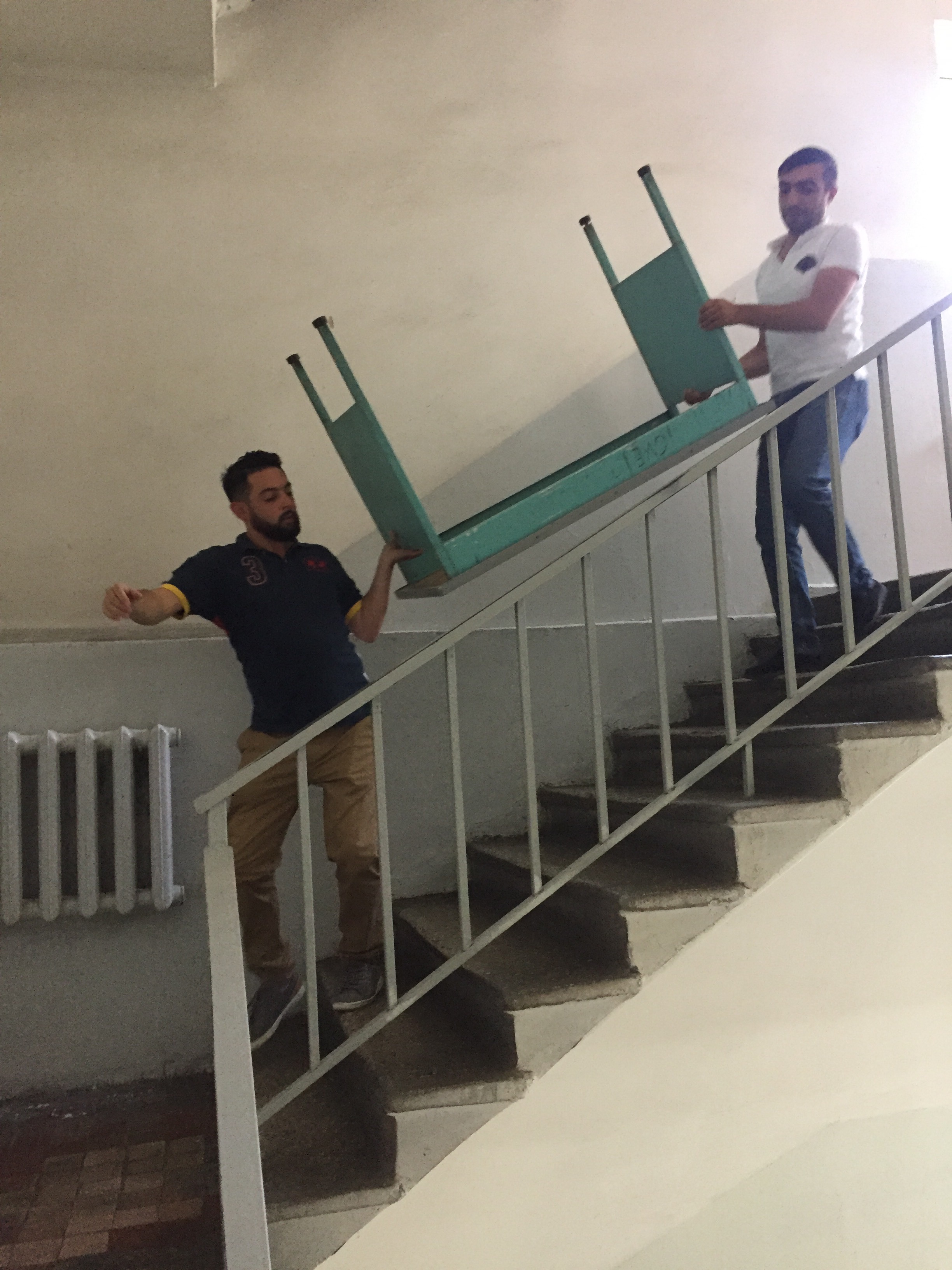
But as luck had it, there was a dark storage room just opposite of the consulting room which was not pretty, but absolutely perfect for my course. The only thing was, that it was lagging tables and the ones next door were bolted to the floor. Thankfully that could be changed as well: near Ingrid’s class room I had noticed a number of abandoned lab tables which were collecting dust in the staircase.
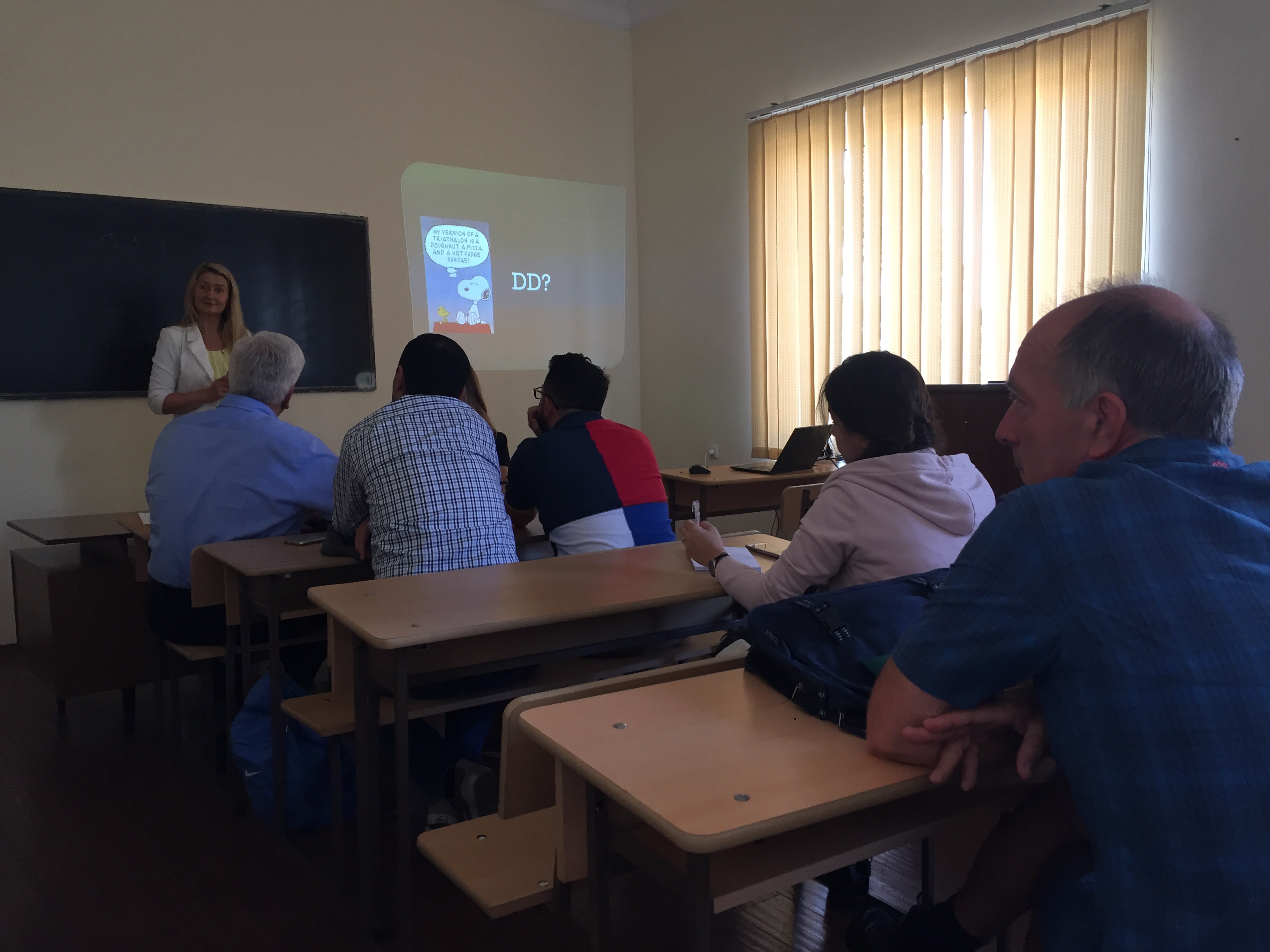
When returning to that part of the building, Ingrid’s workshop was in full flow, delegates were filling the room and the projector had successfully been connected to the laptop.
I grabbed one of the lab tables and carried it down the street to the clinic and our friendly helpers fetched another one.
Once the machines were set up and running, I started “building” artificial gas filled stomachs and urinary bladders with uroliths out of latex gloves and a couple of pebbles I had found on the street. In the meantime Paul had, together with the veterinary nurse (who was not very pleased about my dusty lab tables and who immediately had subjected them to a thorough deep clean….) successfully connected the Russian compressor with his high end (probably Chinese or Korean made) dental machines and had prepared everything for his workshop as well.
When the delegates arrived, still elated by Ingrid’s excursions into the complex world of the digestive systems of dogs and cats, we immediately set to work on the makeshift models and on the perfect patients which had appeared together with their owners at the same time. Although the performance of the machines was fairly limited, all delegates were at least able to identify the bladder and most of them were lucky enough to find the spleen and one or two kidneys. Not bad considering that we saw only one well working ultrasound machine in all the clinics we visited during our stay.
During our lunch break Vahan’s mobile phone suddenly started ringing (ok, it was actually ringing most of the time…..) – it was the Dean of the University…. Apparently a foreigner had been observed stealing furniture from the main building!……..
Yahan looked at me with a frown – had I asked anyone for permission before taking the tables?…….Nop!…..oh dear……….
Thankfully I did not end up in police custody and the event could progress with Paul’s dental workshop which then concluded the first day.
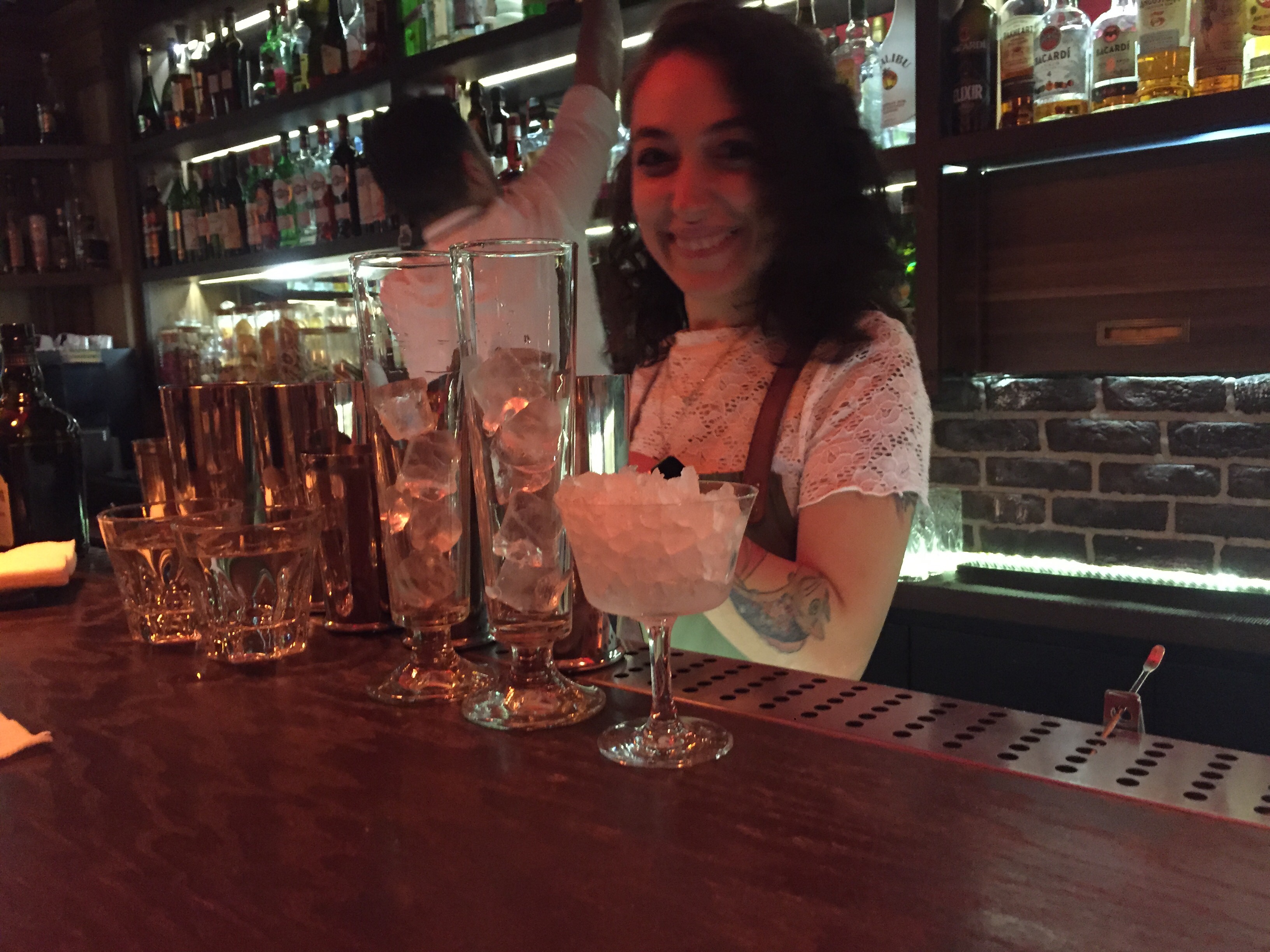
Actually, this did not conclude the first day, but a visit to probably Yerevan’s best cocktail bar did, where the bar (wo)man – a friend of Hovhannes, Yahan’s colleague and right hand man – demonstrated to us how to mix three Mojito’s, a couple of excellent Singapore Slings and a Pisco Sour in 5 minutes flat…..
6.30 am the next morning I took the trusted Lada for a final spin, trying to find a stretch of countryside for a run with Paul. Although a few years older than me, Paul is a seasoned ultra-runner having recently completed a few 100 milers and 24h races. I had always hoped to get an opportunity to join the great man for a few miles. Unfortunately Yerevan turned out a bit larger and more build up than I thought, so that we had to make do with a run in a not very scenic industrial area on the outskirts of the city, dodging the occasional attacks by the local street and guard dogs. I am sure that this was not the best run we ever had, but at least it was a memorable one…….
Returning to the university a couple of hours later, the room was filled with probably every small animal vet in the country and in addition to that with a fair number of students. Vahan had organised simultaneous translations and Ingrid, Paul and I could delve deep into our respective areas of expertise. It also gave me an opportunity to give a presentation on the “Feline Consult”, a subject close to my heart for which I had specifically visited the Oxford Cat Clinic earlier this year.
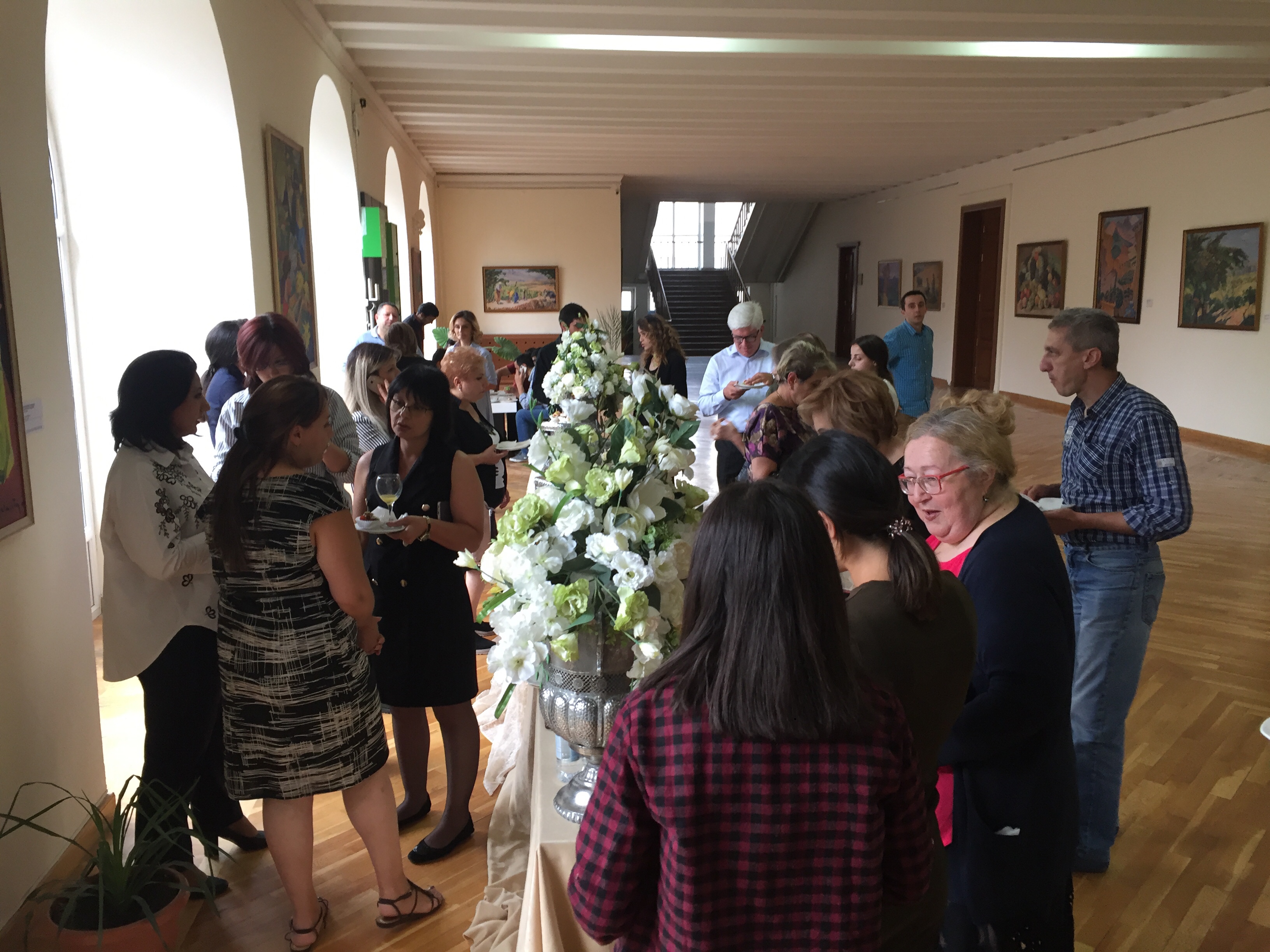
The day and our visit finished with a traditional banquet which included not only excellent food and local wine, but also an abundance of toasts, some singing (instigated by me I am afraid) and with dancing until late into the night.
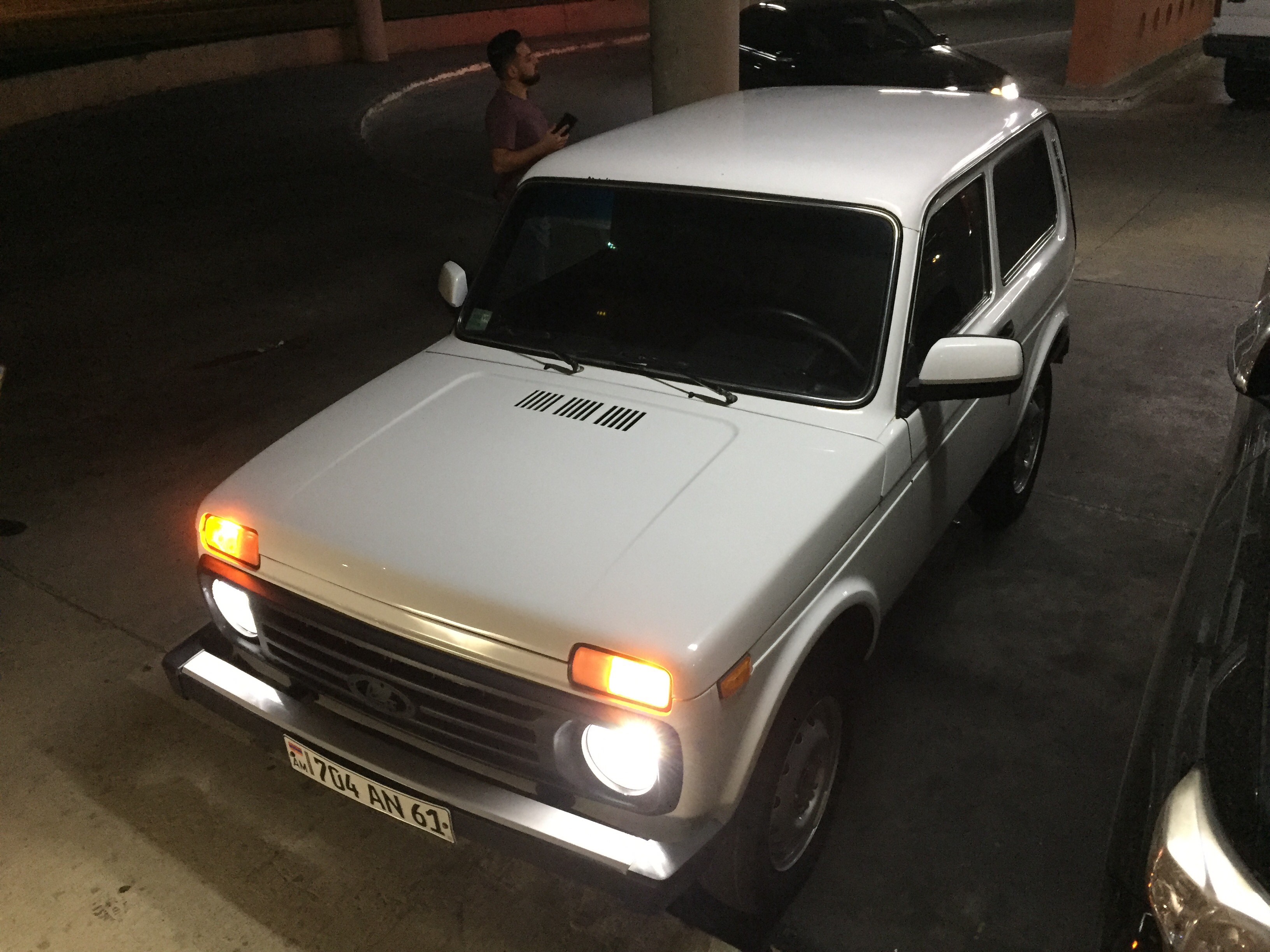
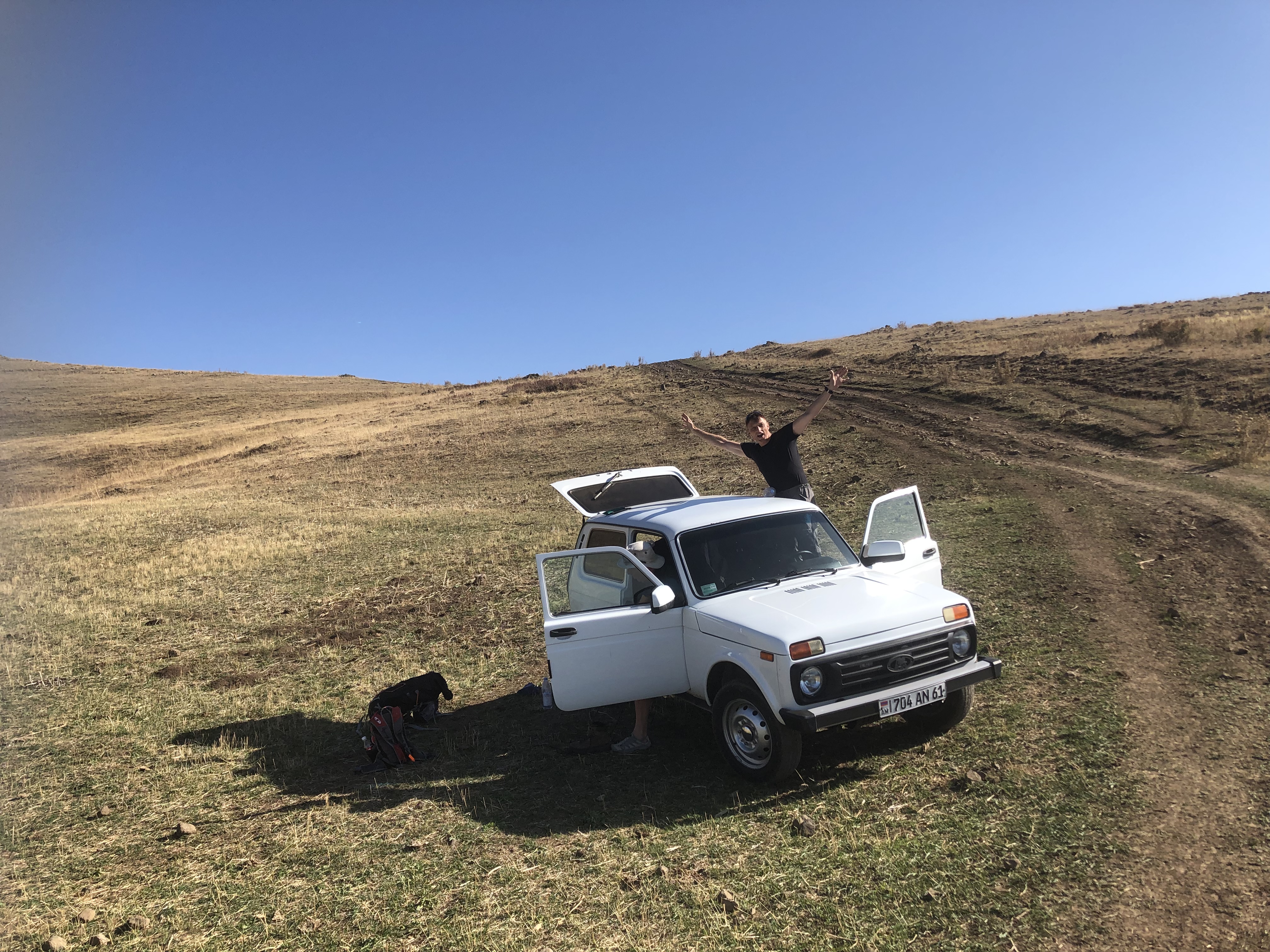
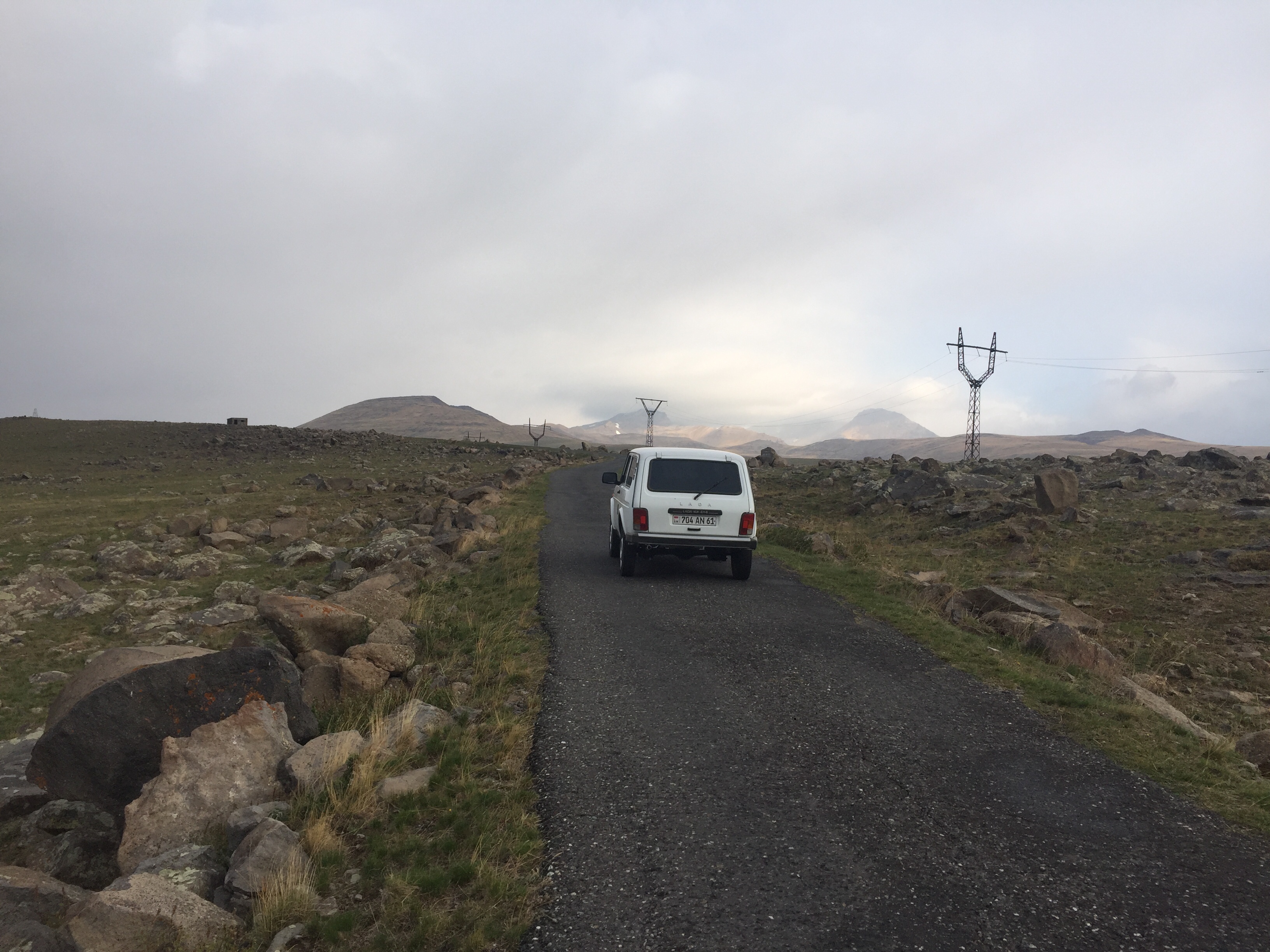
It slowly dawned on me that I was standing in front of the worst car I had every rented, when I realised that there were no seatbelts on the rear seats.
…..and this came on top of electric windows which only worked if the door was been held wide open ( not easy while driving at the same time……) and which unfortunately was necessary, as the heating was going full blast the whole time. In addition to this the brakes were VERY soft – or better: not to be relied on. The fuel gauge was always on half full regardless of the content in the tank, one of the head lights wasn’t working and the driver’s seat was missing a bolt, which meant that it took the best part of half an hour to get it back into place once it had been pushed forward.
So why stick with it ?!….
Because it was a Lada and it (to some degree) was normal for these sort of cars …..
Admittedly this Russian Off-Road dinosaur is now progressively disappearing from the streets of Yerevan, but when you are traveling in the countryside, you will find that you still blend in nicely. You can also assume that every blacksmith will be used to the somewhat limited technology underneath the bonnet and if something breaks, you can be sure that a spare can be sourced from somewhere around the corner.
And in addition to this, it just felt right while travelling through Armenia!
We – that were Ingrid Hang, a veterinary gastro-enterologist from Estonia, Nick Stuart, the former owner of the Vale Veterinary Group in Kidderminster, but these days mainly at home in his sailing boat in the Baltics and I, as the instigator of this trip – were trialing a new concept: bringing veterinary workshops and lectures (and a couple of donated ultrasound machines) to a remote part of Europe and climbing its highest mountain at the same time, or – to be precise – in the days before the CPD event.
And for something like this Armenia was perfect.
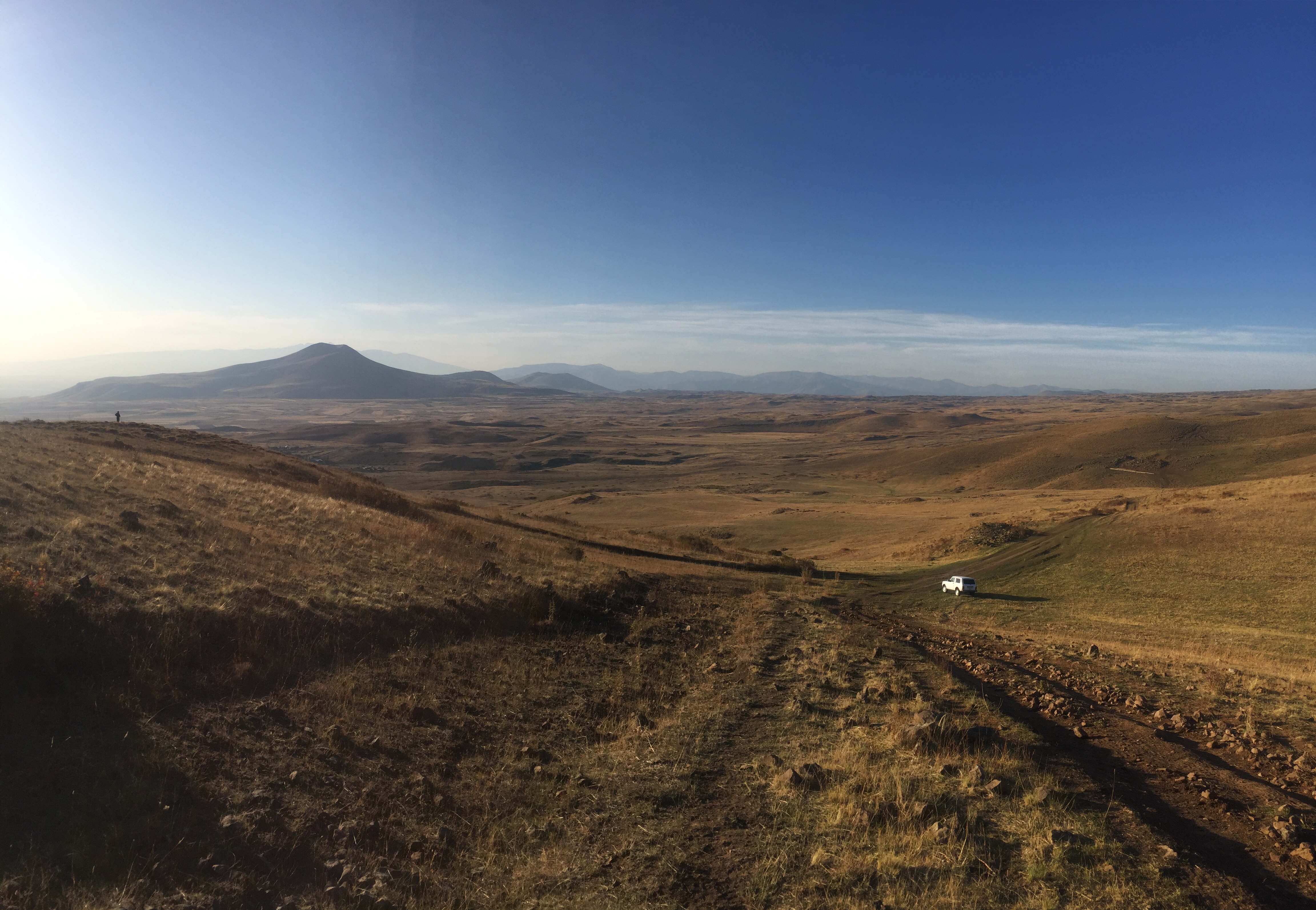
After settling in Yerevan and visiting a number of clinics to get a feel for the working conditions of our Armenian colleagues, we took our hiking equipment, a few gallons of water and some emergency phone numbers and fired up the old Lada, to leave Yerevan as early as possible to avoid the rush hour and the need to make use of our remaining millimeters of brake pads.
Getting used to the frequent potholes and to the livestock crossing the road we were first heading North towards Lake Sevan. Halfway between Yerevan and the lake was Mount Tegenis which – with an altitude of nearly 2900m – I had identified as an ideal preparation for the challenge ahead of us.
Both Estonia and the South of England can hardly be considered as alpine locations, so that my main concern was about the fast gain of height and the risk of altitude sickness. Armenia is a land locked country and its capital is already 1000m above sea level. The mountain we were aiming for was already of the same height as Germany’s or Slovenia’s highest peaks and a couple of days later we wanted to be another 1000m higher on the summit of Aragats…..
To make things a bit more challenging it didn’t help that there are no hiking maps for Armenia, nor were there a great number of way signs. Ingrid had experienced these heights so far only in combination with a good working skilift and Nick had broken his ankle just 3 months earlier (but had re-assured us that he was on the mend…). I am not even going into further details about the warnings we had received about the condition of the road lead to the trail head of Aragats or a recent bear attack on the mountain…
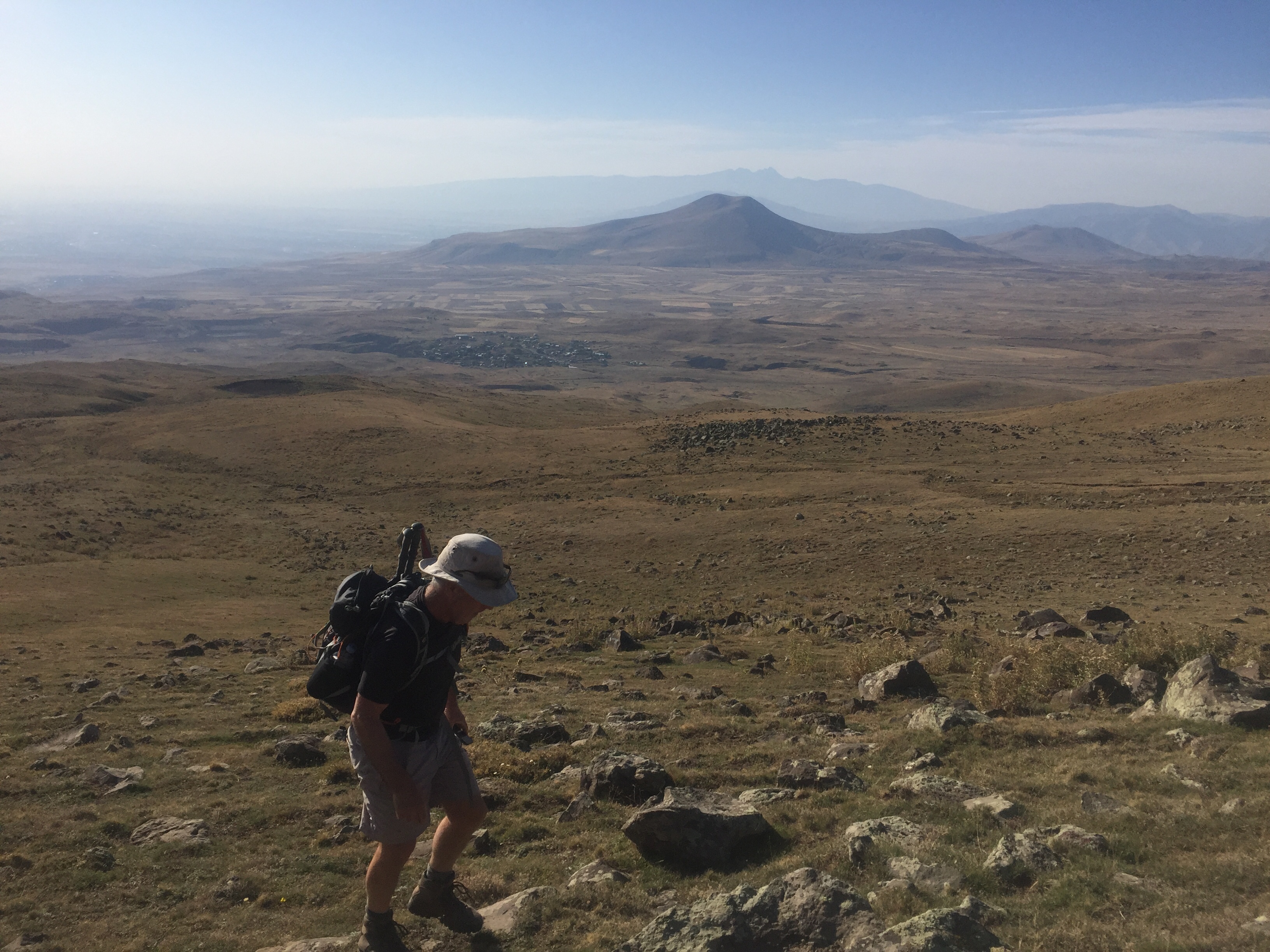
Thankfully Tegenis is a very “forgiving” 3000m mountain – covered with grass right to the top, with a lot of low vegetation and no steep elements you can fall down from. In other words : just like most of the “mountains” in Wales, just a bit higher.
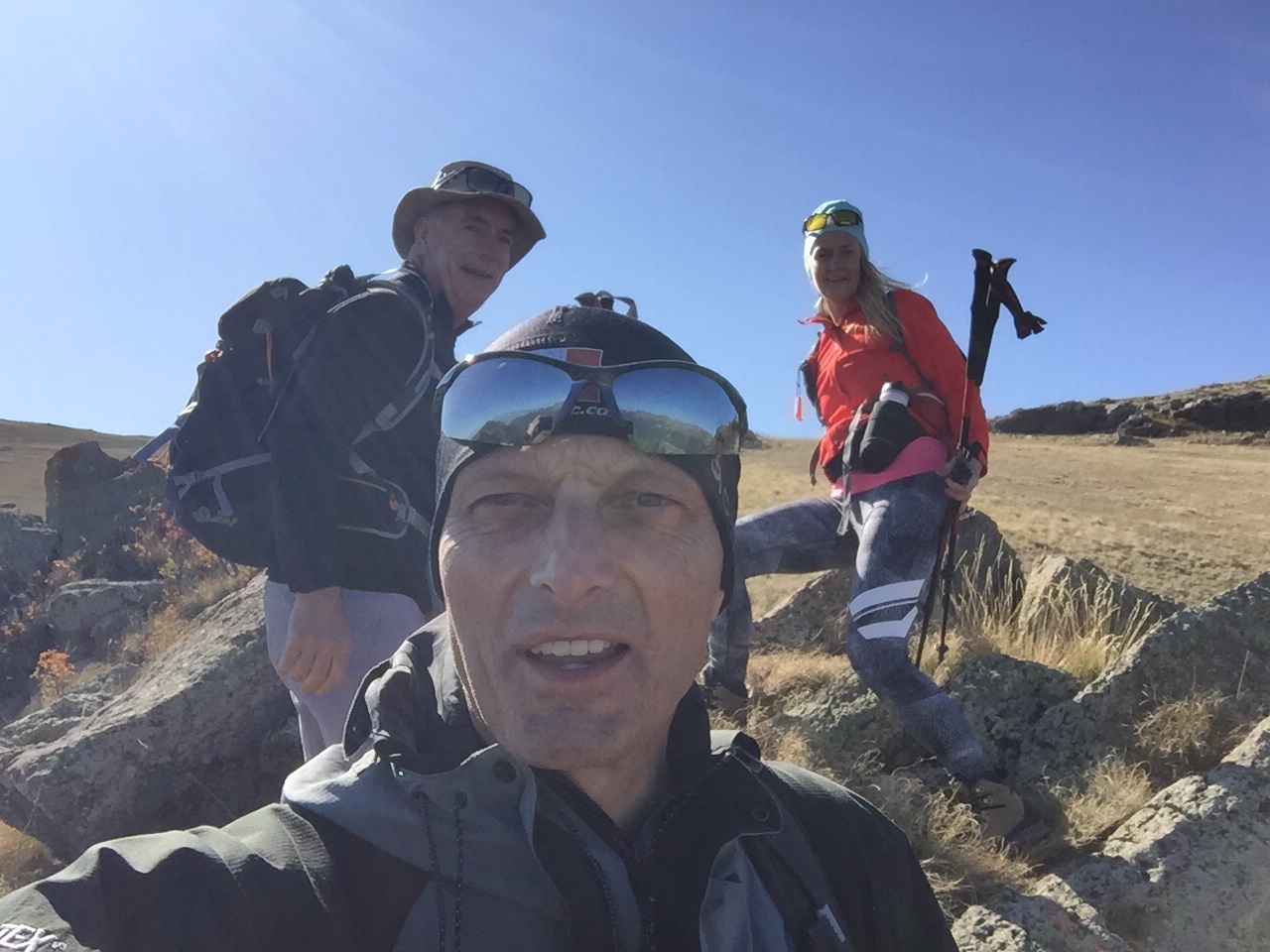
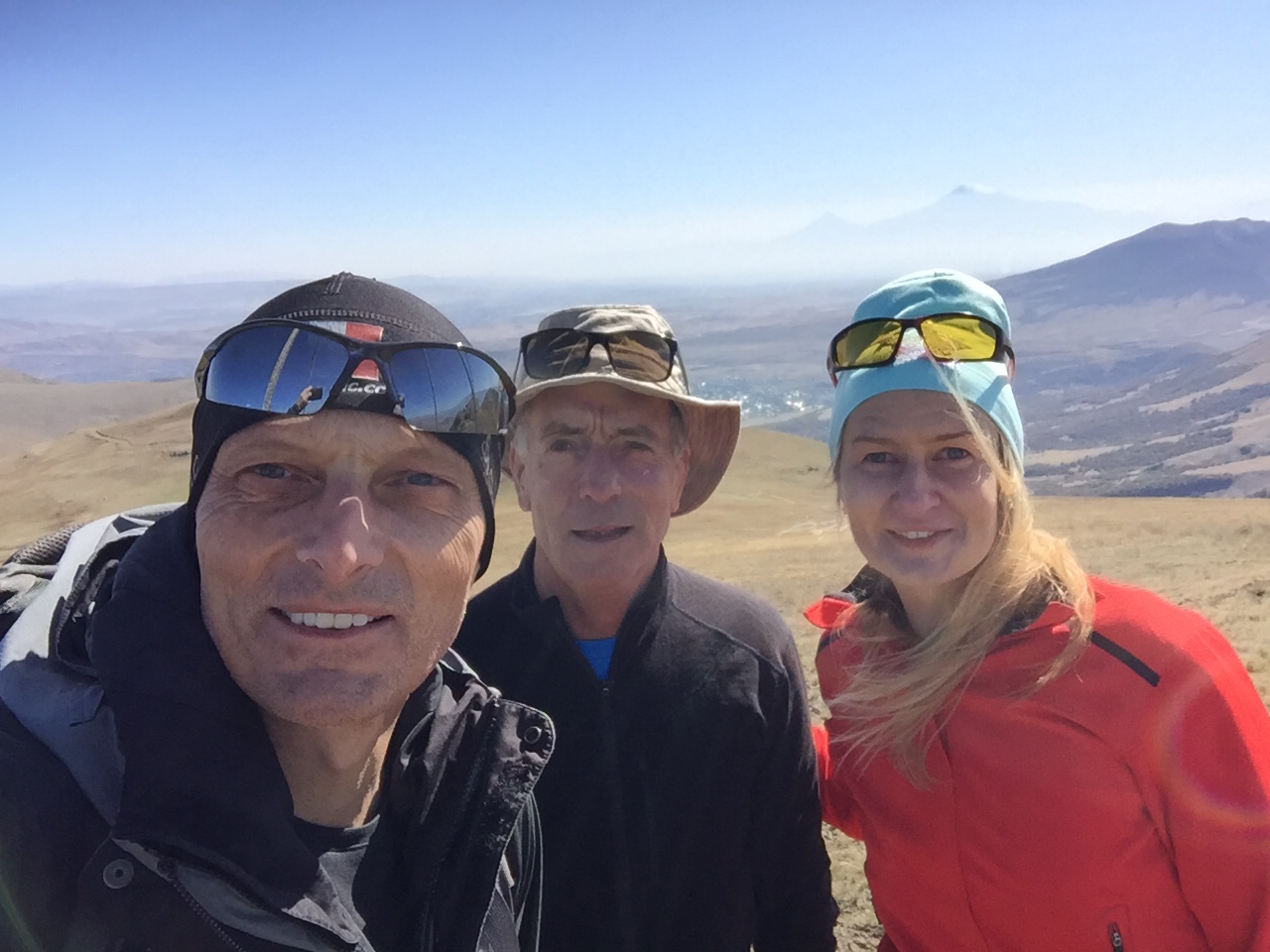
Admittedly it wasn’t just “a walk in the park”, but with a few strategic breaks and helped by GPS navigation and pretty good weather we eventually made it to our first Armenian peak.
Elated by our first successful encounter with the Armenian outdoors, we headed for our over night stay in Garni, to the East of Yerevan and arrived just in time for the sun setting at the nearby world famous temple.
After a brief visit we had a well deserved sun-downer at one of the panorama terraces enjoying the fading light illuminating the canyon below us and the temple on the hill towering above it.
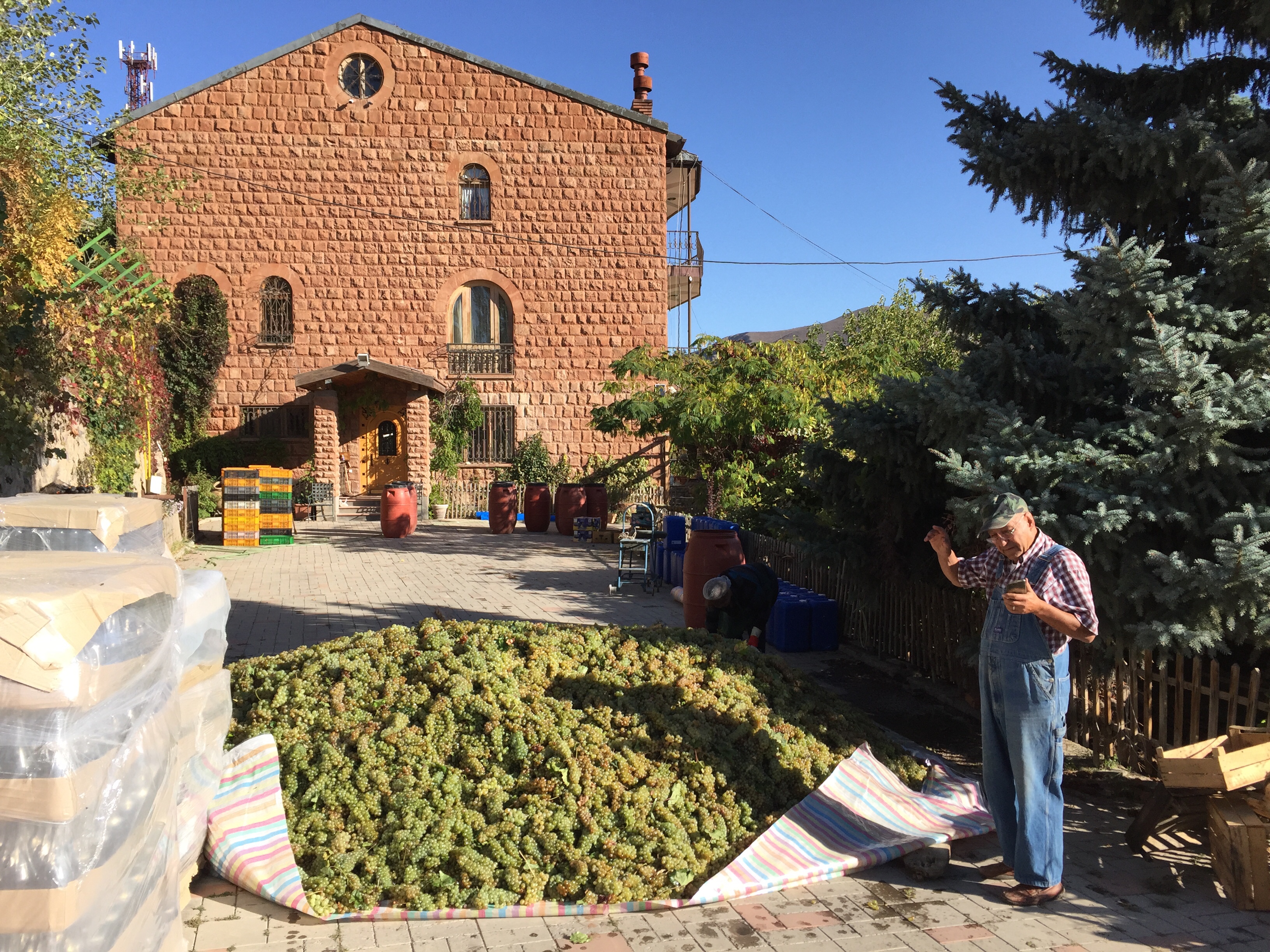
The next day started with 5 tonnes of grapes and nummerous trays of drying plums in front of our bedrooms…….
Not an unusual sight considering that our B&B for the night was a working farm run by an amazing diaspora Armenian couple with an American background. The place was famous for its cherry and plum vodka and it also featured a traditional restaurant, a sculpture garden and a large number of domestic animals enjoying themselves in a garden Eden underneath a forest of fruit trees. Understandably we found it difficult to leave this place in a hurry and after checking out a couple of the owner’s dogs and diagnosing my first torn cruciate ligament case in Armenia, we decided to drop our initial plan to scale the top of Mount Azhdahak at 3797m and to limit our efforts to a gentle hike at about 2500m in the foothills of the volcano, which still made for some great photo opportunities.
Having put our trusted Lada through its first off-road challenges, we were then heading for our base camp near the South face of Aragats, while the sun was setting over the Lesser Caucasus. After a few miles we came across a herd of cattle that were heading for their homes, with an old man and a young boy on a horse nearby.
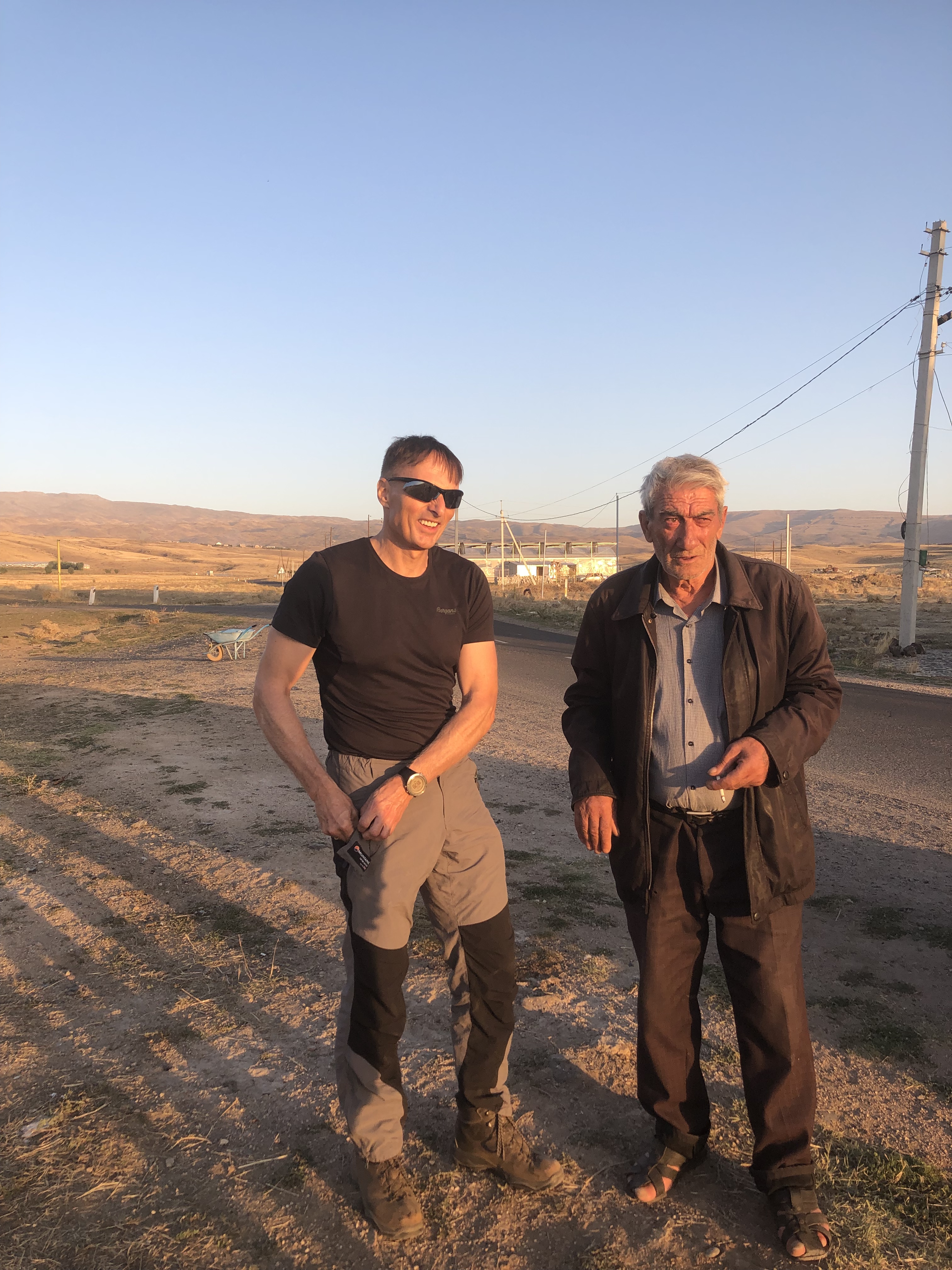
It made for a great photo opportunity and after taking a few shots of the cattle in front of the sunset , the old man allowed me to take a shot of them as well. When returning to the others in the waiting car, the old man even invited me to ride the horse, which I politely declined.
What happened next is possibly difficult to understand for some (or most ?) of my readers, but in some way it is the essence of my thinking at this time in my life……
While walking back I thought to myself : “Actually – why not ?!……”
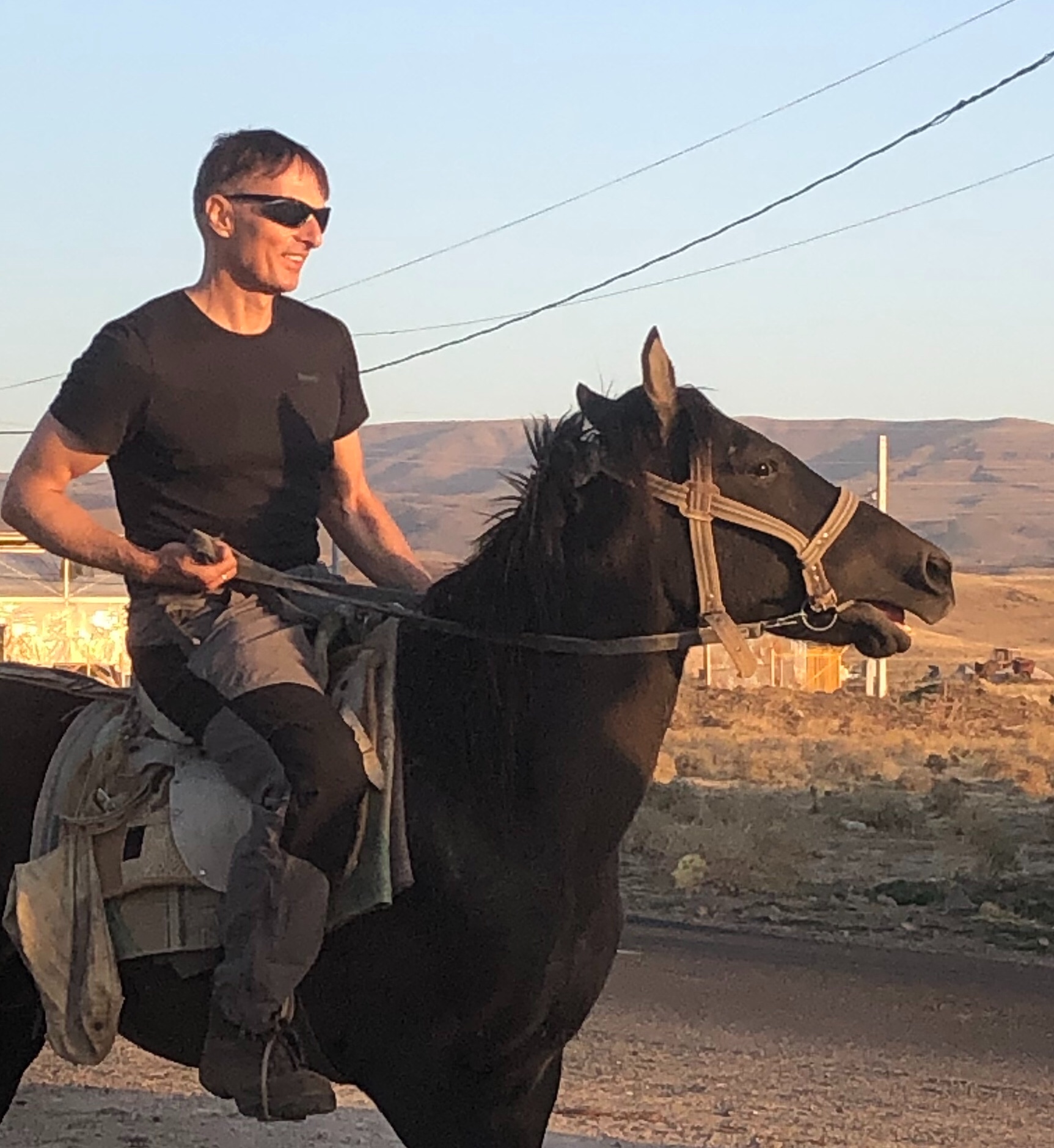
I have never been a rider and I usually prefer to rely on my own two legs, but I can usually hold myself on the back of a horse and in front of me was a ploughed field and the opportunity to ride a horse on the silk road in a beautiful sunset – would I ever get a chance like that again?….
I turned around and a few moments later the imagination had become reality and I was riding into the sunset……
Ok, not very far and not very dramatic and surely somewhat to the surprise and amusement of my fellow travellers, but without falling off or (hopefully) without hurting the horse. When returning my trusted mount, the old man not only refused to accept any payment, he even invited us into his house for a coffee or something stronger. The unbelievable kindness of strangers……..
I will always regret that we – with a heavy heart – had to decline his offer, as the light was fading fast and because of the considerable shortcomings of our vehicle, we wanted to limited the driving at night as much as possible.
Much later than planned we arrived at our base camp in Aragatsotn and finished the day with an excellent bottle of red on the terrace in front of our rooms with an unforgettable view of Yerevan and its valley below us.
Shortly after the sun had risen the next day – which was also Ingrid’s birthday – we were for the first time greeted by clouds and some rain. We made a hasty start for the trail head and despite all warnings we progressed well on an all the way tarmacked road without a bear in sight and arrived an hour later at Lake Kari.
Here however the conditions had deteriorated further, with the temperature just above freezing and with a steady Northerly wind. Right from the start we had to wrap up warm and without any official way markings, we were scouting constantly for signs of an official track. After hiking for a couple of hours this became progressively challenging, when it started to snow and the vision went below 20 meters. Consulting with my GPS it also turned out that we had strayed considerably from the suggested route and we were heading straight for the steepest part of the mountain….. When changing our course was not enough and moral in the team was starting to wear thin, I decided that it was time to get the fun factor back into our trip and I gathered everyone underneath the emergency bivouac which I thankfully carried with me.
It is amazing to see how much fun there is to be had underneath a large plastic bag with a little bit of food, a few jokes, a slight rise of the temperature and without the constant wind…..
Shortly after this break we not only hit the path again, the weather also cleared somewhat and the Southern peak of Aragats was just a few hundred altitude meters ahead of us. Invigorated by the fact that our goal was now in reach, we pressed on and summited just 1/2 hour later with a glorious view of all the four summits of Aragats and the crater in front of us.
After a small sip of champagne ( a bottle had mysteriously found its way into my backpack) to celebrate our achievement and a few photos, we started to descend again and with steadily improving weather conditions we not only made it back without any incidents to the car, but shortly later we were able to celebrate Ingrid’s birthday with a cake, organised by our landlady, and some more champagne and even a brief visit to the – admittedly freezing – swimming pool !
With the expedition concluded successfully, the CPD part of our trip could start…..
It was 3 am in the morning and although I felt completely spend following a whole week of late nights out with both Russian and other international friends at the FECAVA EuroCongress, usually followed by early morning runs through the city, I had to catch a flight….
Together with my Estonian friend and colleague, Tiina Toomet, who as a travel companion is in my opinion on par with Michael Palin, I had planned to attend a wedding in Istanbul.
Tiina, multilingual – like most Estonians – and well travelled, is my trusted counsel and advisor in all Eastern European matters and I am always calling on her before setting out to a new destination in this part of the globe, because Tiina has probably been there already….
At this occasion we had been invited by Gizem Taktak, our Turkish colleague, who owns a clinic on the Asian side of the mega-city, to join her on her big day and the only way to get there in time was the first flight out of St.Petersburg.
For various reasons I had been reluctant to visit my probably favourite city in Europe for a while (actually for the last 8 years…), but this was just too great an opportunity to miss.
And sure enough – after changing planes in Moscow and a two hours taxi ride including a crossing of the Bosporus, we found ourselves at an outdoor banquet, just when the sun was setting over the Sea of Marmaris.
The weeding was truly unforgetable and the celebrations were complimented by a nocturnal cruise underneath the colourfully illuminated bridges of the Bosporus following the official celebrations.
While staying in Istanbul – and this time finally finding the time to visit the Hagia Sophia
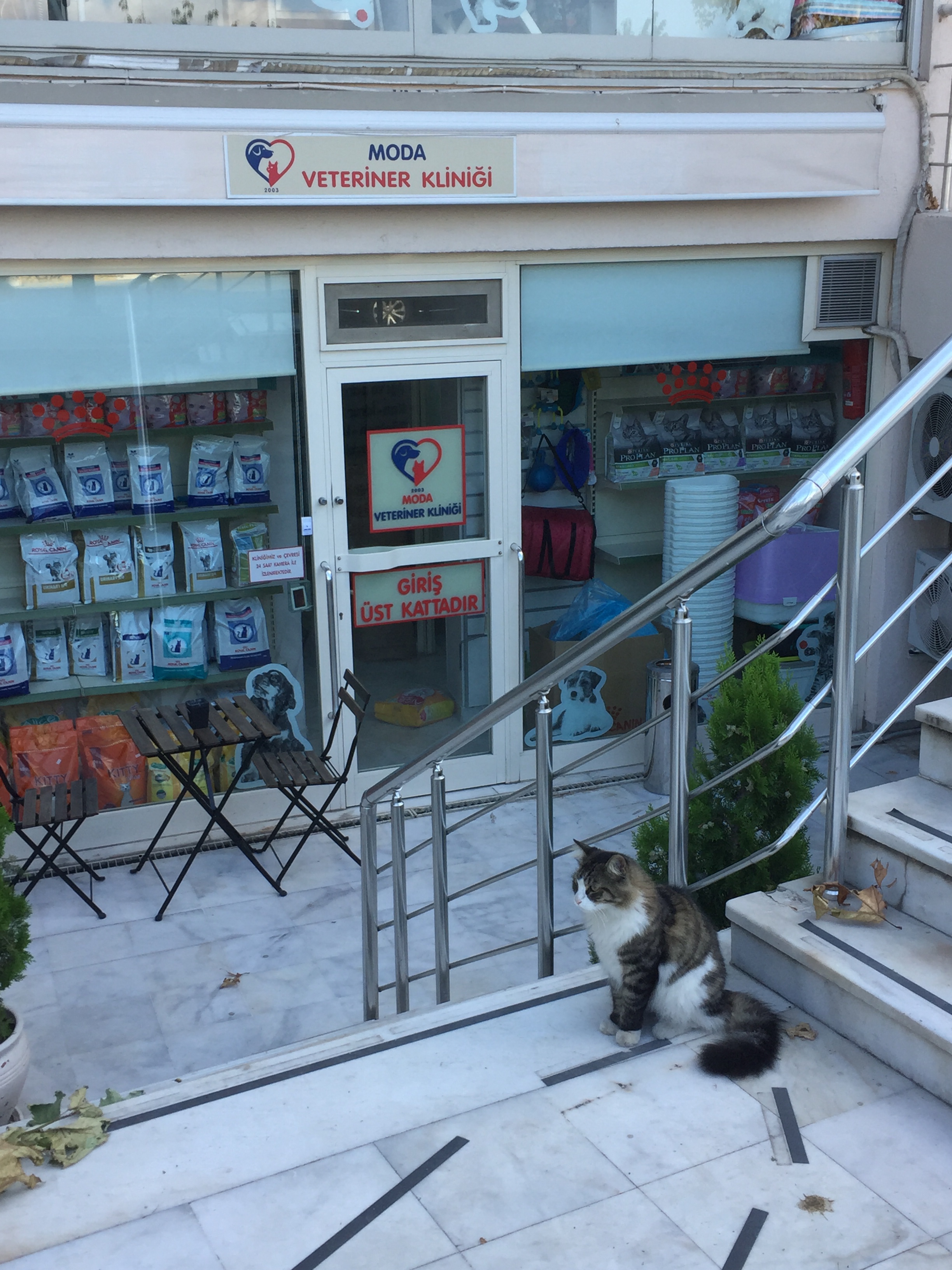
– I noticed the considerable number of stray dogs and especially cats on the streets on both the European and the Asian sides of Istanbul.
Thankfully they all appeared to be reasonably healthy and quite a few of them were tagged which indicated that someone was keeping an eye on them.
Stray pets are never an ideal scenario and although making for great photo opportunities especially in a Mediterranean setting, they remain both a public health and an animal welfare issue. That said, it was interesting to learn from Gizem that the municipality of Istanbul appears to run a catch – neuter – release programme and that efforts are made to have these animals vaccinated against rabies.
A lot of local residents are not only feeding stray pets on a regular basis (which might not necessarily be helpful to improve the problem….), they quite frequently take them to the local private clinics where they also fund their treatment if necessary.
Admittedly as desirable as the life of a sleeping cat in the sun in this part of the world might appear at times, let’s hope that it in the nearer future will feature only pets with a home and – ideally – with a caring owner.
Gizem and her colleagues on the Bosporus are working on it……
It was in April 2011 when I attended my first Russian Small Animal Veterinary Congress in Moscow. We were staying in Hotel Gamma or Delta on the outskirts of the city, a cluster of not very inviting Soviet style high rise buildings next to a Disney style Russian utopia village and in walking distance to Stalin’s bunker.
The restaurants had closed and the only place offering some entertainment was the brightly lid hotel lobby which had the charme of the waiting room of a railway station…..and yet, there was one person who was filling the room with his presence: surrounded by a group of friends and colleagues, keeping a busker with a Balalaika well fed and watered and making sure that no-one else was without a drink ( mainly vodka of course….) Sergey Sereda was holding court…..
Sergey Sereda is the President of the Russian Small Animal Veterinary Association.
Getting to know this man, you soon realize that there is no place for “normal” – surrounded by high rise buildings inside the Garden Ring in the center of Moscow, Sergey‘s clinic had a garden with sculptures of animals both around and on the building.
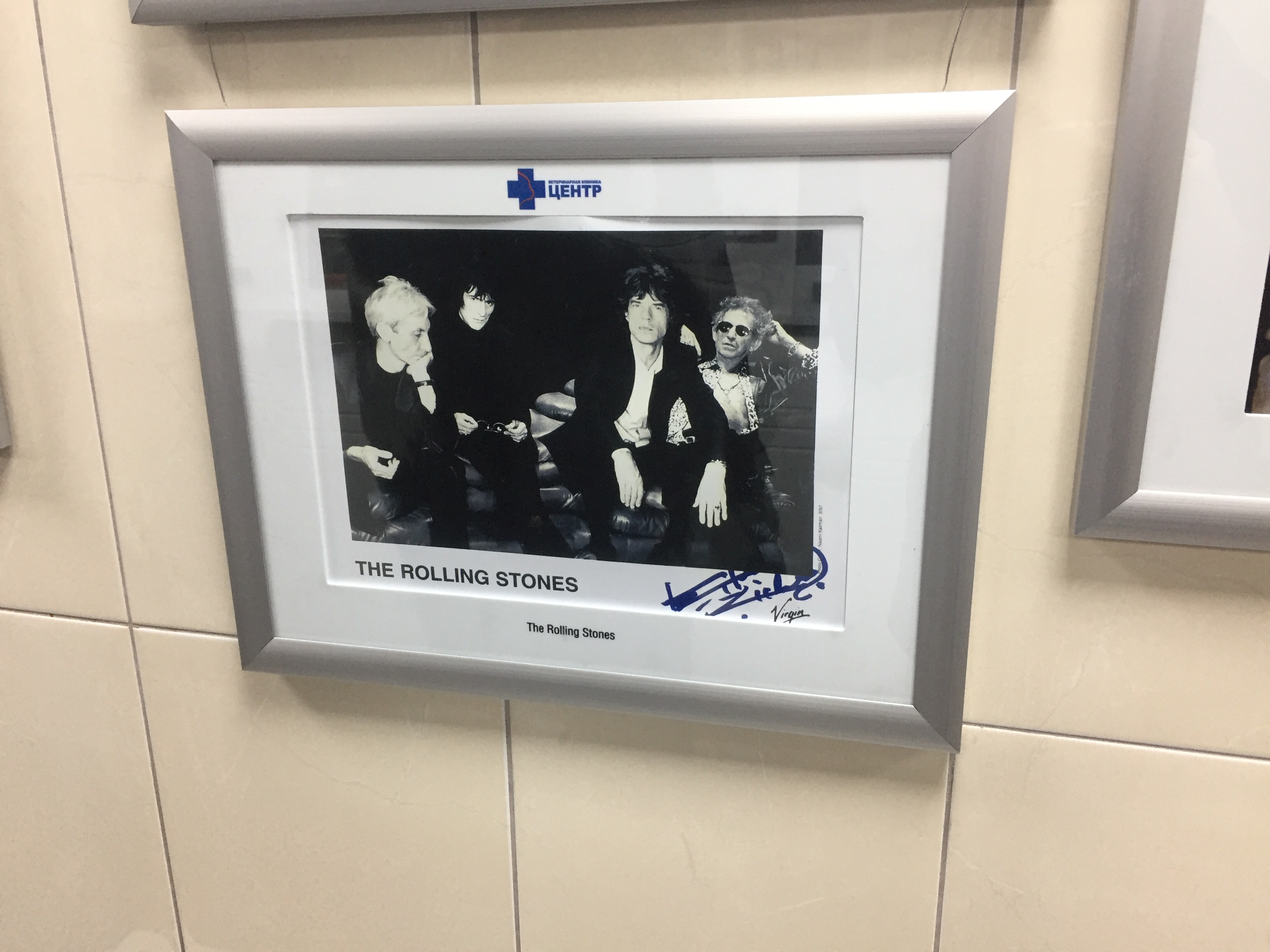
When entering his clinic the view immediately fell on the waiting room walls which were covered with photos of the rich and famous (or infamous…) visitors who had passed through the door before me.
When the Rolling Stones toured Russia and Keith Richard decided to adopt a street dog, surev enough the person to see was Sergey.
Progressing through the well equipped small animal clinic, one finally reached a small circular staircase leading to the study of the great man, right underneath the roof of the building.
Entering this place felt a bit like visiting London or Istanbul – you will never grow tired of it and there would always be an item you had not spoted before: on the walls and on his desk were decorations, sculptures and all sorts of membrobilia, posters and medals, stuffed animals (hopefully no patients….) and more pictures of Sergey and his famous visitors. One could imagine that the whole room was to some degree a reflection of the coloujrful personality of the man himself.
When writing my “unusual request” e-mail to Sergey, I knew, without knowing him personally too much, that it probably would meet the mind of a kindred spirit, also bearing in mind that the last time I had seen him was two years ago when he entered the stage at the Moscow State Circus (he was looking after the animals there as well…) as master of Ceremonies in a convertible vintage car!…..
Meeting Sergey again in St.Petersburg and sharing the stage with him was not only a great privilege, it was also great fun.
This was – of course – extended into the night, when Sergey entertained – as his English had at this point miraculously improved – his friends with stories about his colourful life at the hotel bar.
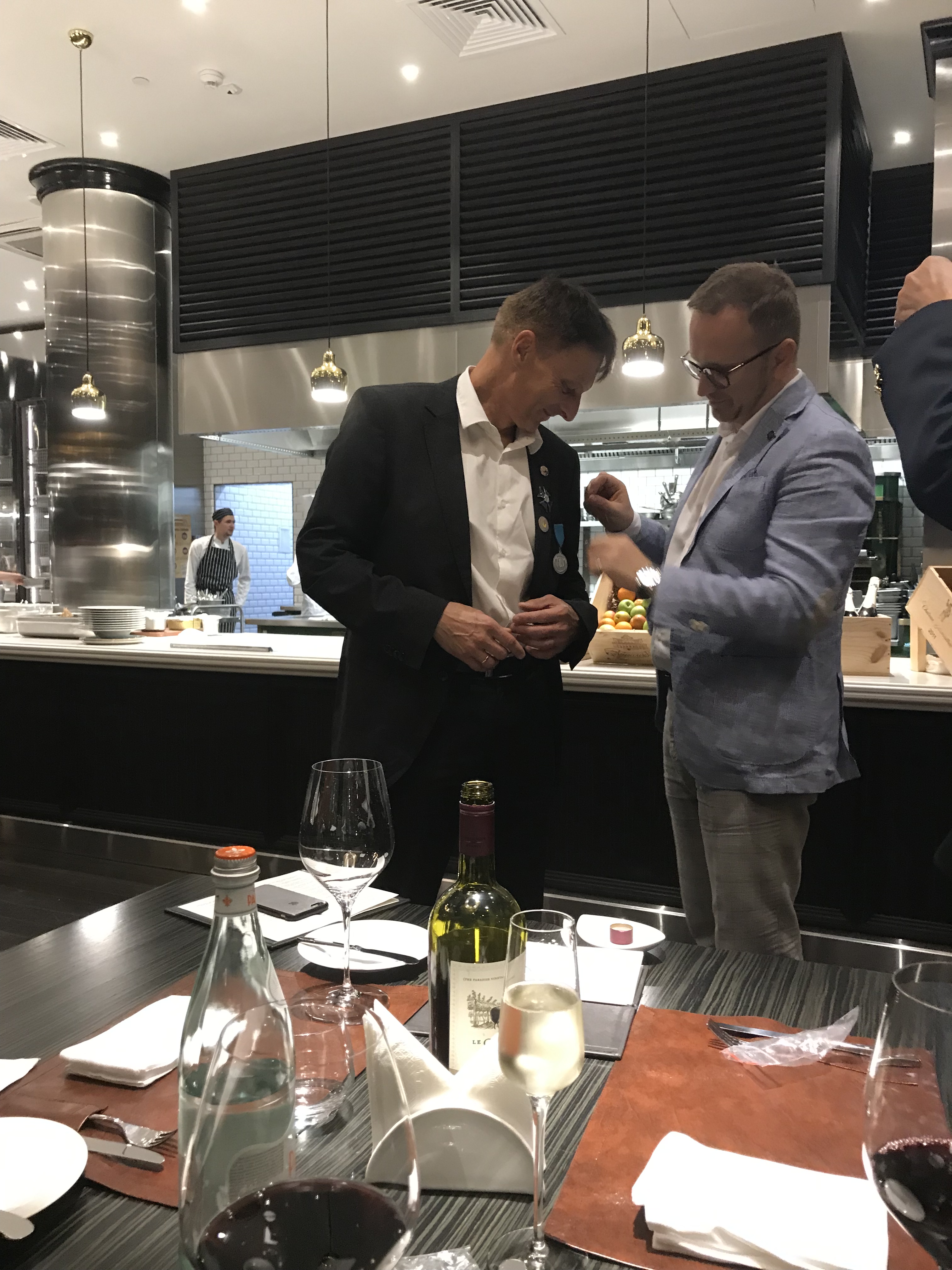
On the last night though, he and some of his friends took me aside and before I knew what was happening, something light blue was dangling from my jacket : a Sergey the 1st medal which – as far as I understood it – assures me from now on always a full glass when wearing it in his presence while on Russian soil.
Excellent I thought – a great thing to have indeed, especially as it came along together with an invitation to join Sergey at some point in the future on a trip to Sibiria.
I might just take him up on the offer……..
PS: At the conference in St.Petersburg Sergey released his memoires, which must be a brilliant read, but until now they are only available in Russian.
You bet though that I can not wait to have my hands on the first English version…..







































 The Blue Vet Diary