A rendezvous with Rigi

It was my Swiss colleague Sibille, who introduced me to Rigi, while we were walking along the promenade of Lake Zug.

“Oh, that is our Rigi!” was her reply, when I enquired about her name.

She was beautiful – tall, with a rubenesque figure, she was clearly standing out. Although it was not possible to make conversation with her at our first encounter, I knew that I had to see her again and that I had to spend at least an evening if not more time with her…..

In the middle of June, following a busy day at the clinic, I didn’t tell anyone where I was going, I just jumped into the car and took my chance after finding out how best to get to her.

In a state of concupiscent confusion, I headed down the motorway South of Zug in the direction of Lucerne. Halfway between the two places, I exited the highway and I then followed a narrow country lane towards the discreet and romantically situated Hotel Alpina.

In my mind already with Rigi, I had to concentrate, not to drive into another car or into any lifestock that was standing close to the winding road.

Parking right next to the hotel, I couldn’t wait any longer and, already only lightly dressed, I started to run…….

And then…..I ran and ran, on a small alpine trail, constantly uphill.

I left the fields behind me, the cow bells and the rest of civilisation and in my mind, I had just a single thought: “Rigi!”

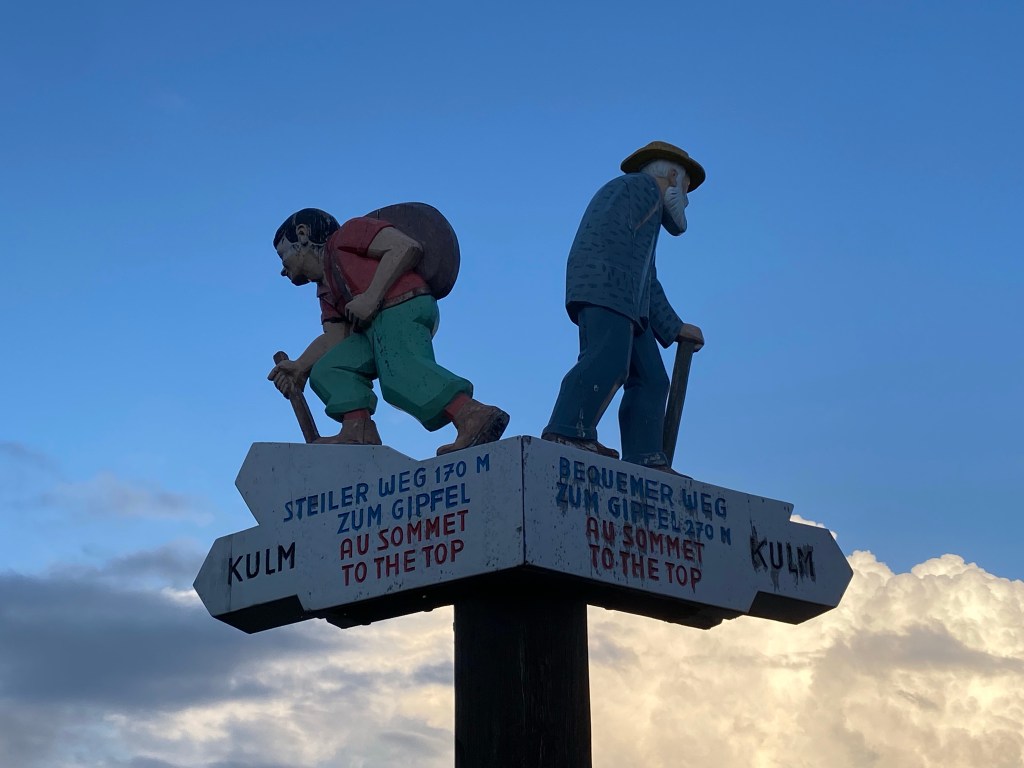
Nearly an hour had passed, when I emerged from the trail on to a few meters of tarmaced road and a sign on a junction gave me the final choice of how to reach her: the easy or the hard way.

Seeing that the seconds were ticking away, I turned left on to the hard way and after a finally sprint, I virtually collapsed on top of the object of my desire…….I had managed to conquer Rigi in just under an hour !

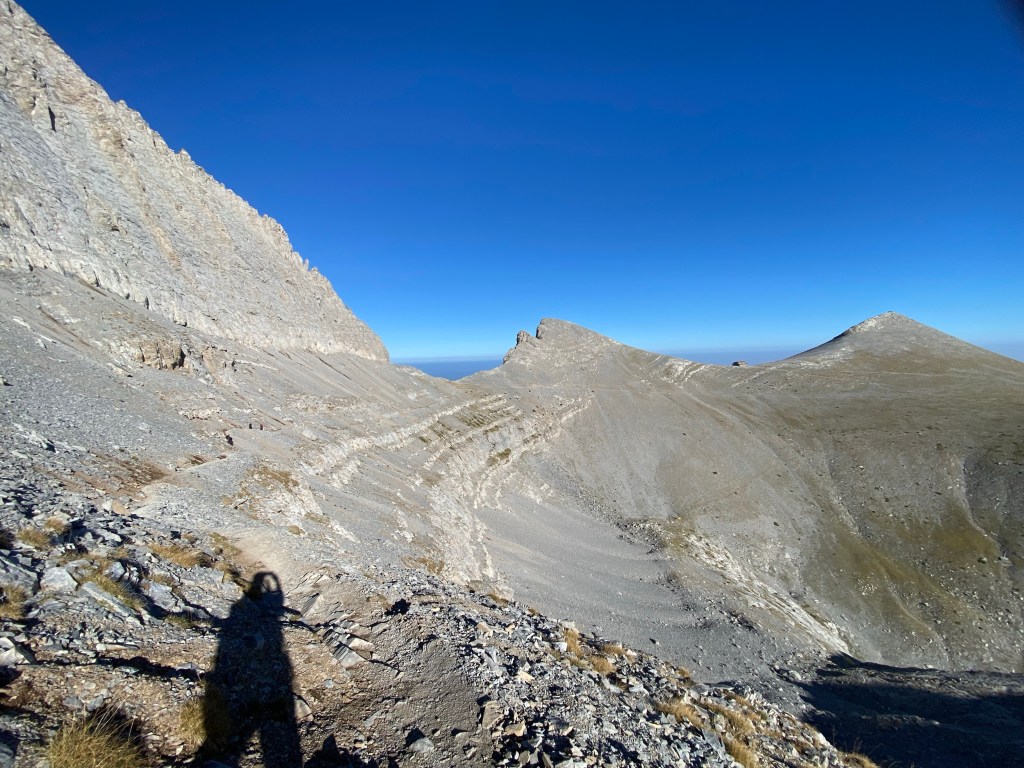
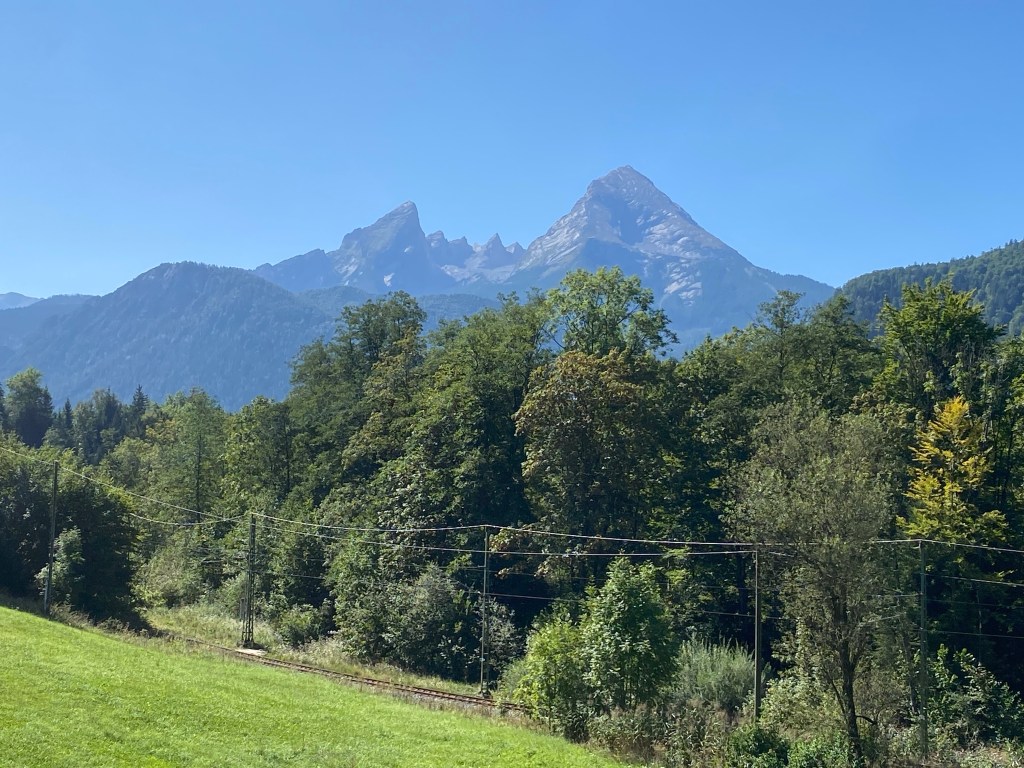
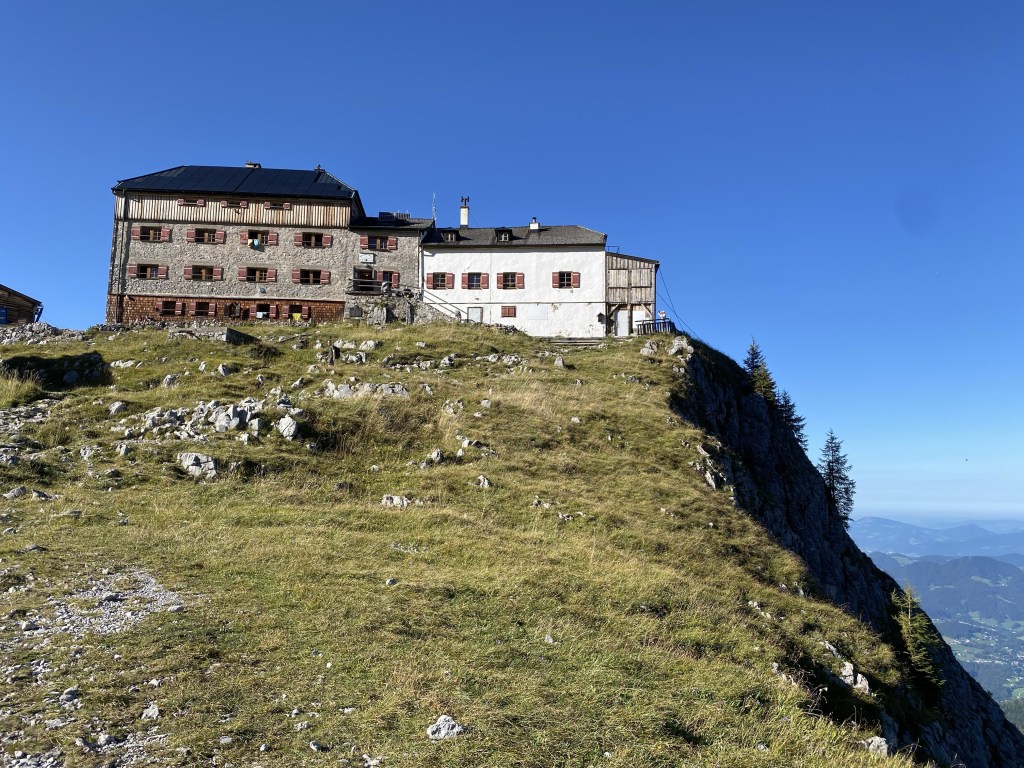
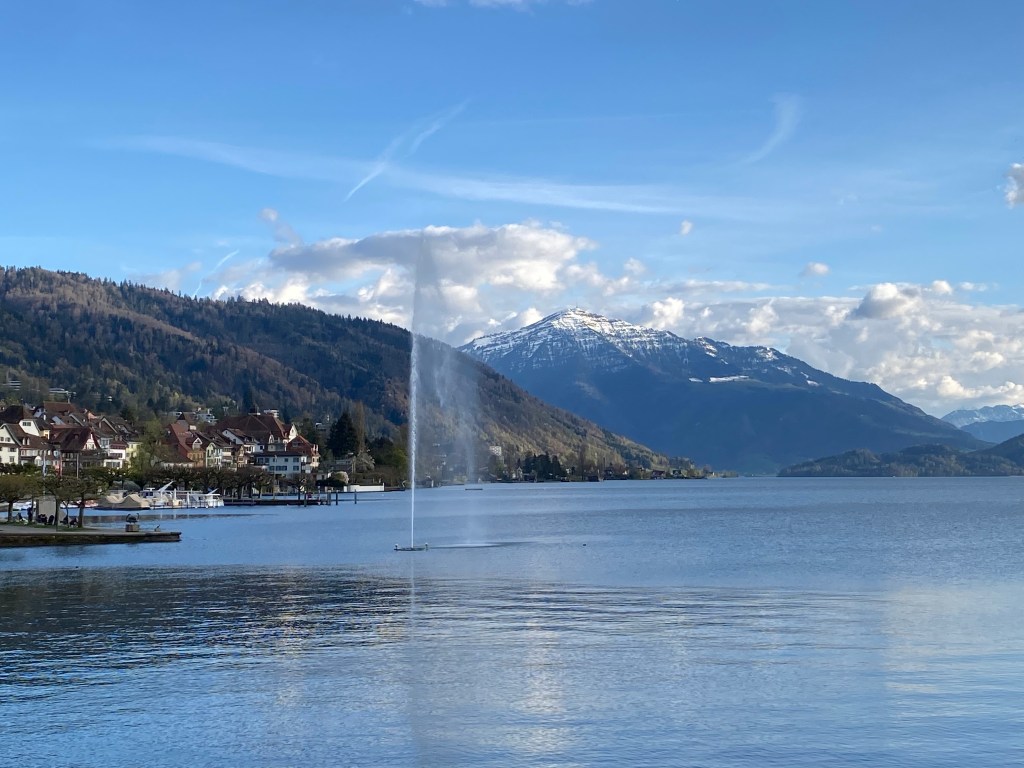
Rigi, the impressive mountain at the South end of Lake Zug, with its summit of slightly less than 1800m above sea level, offers breathtaking views of the Central part of Switzerland, while its base is nearly completely surrounded by the waters of Lake Lucerne, Lake Zug and Lake Lauerz.

The top of this mountain can be reached both on foot or – less tiring – by train, with the final station being located just 50m below its summit – Rigi Kulm.

Veterinary days in Switzerland

People’s habits do change and I don’t seem to be an exception…..

Since working no longer at my own clinic, I have started to arrive at work much earlier. This is even more the case, here in Switzerland where being late is just not an option ……..

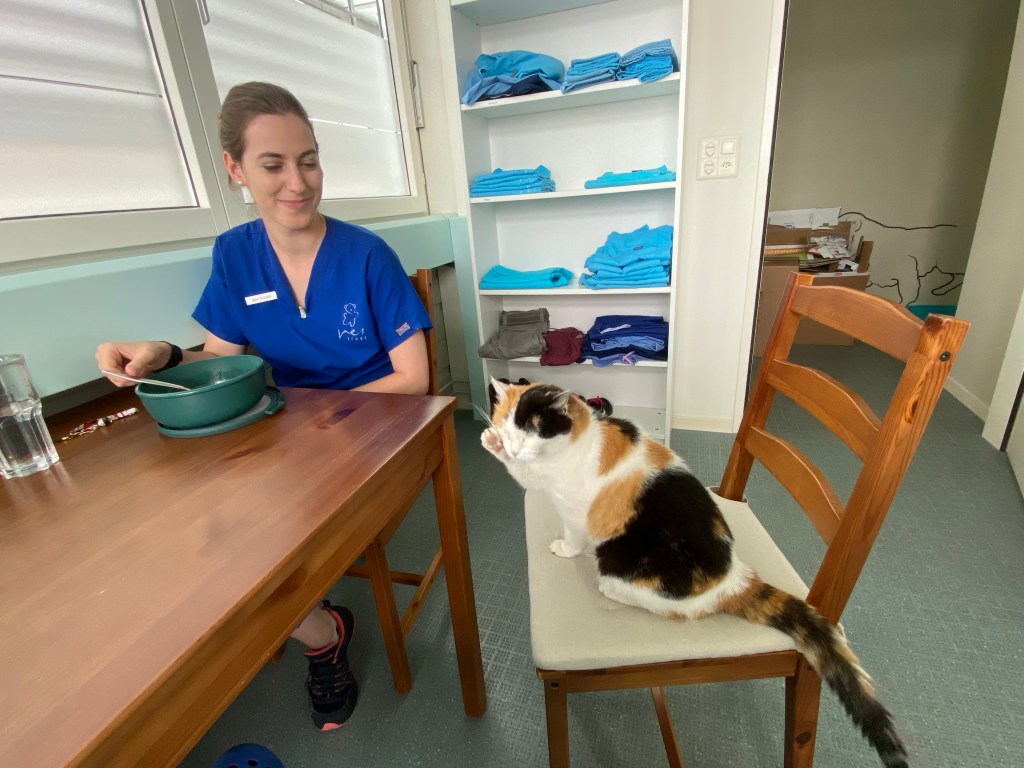
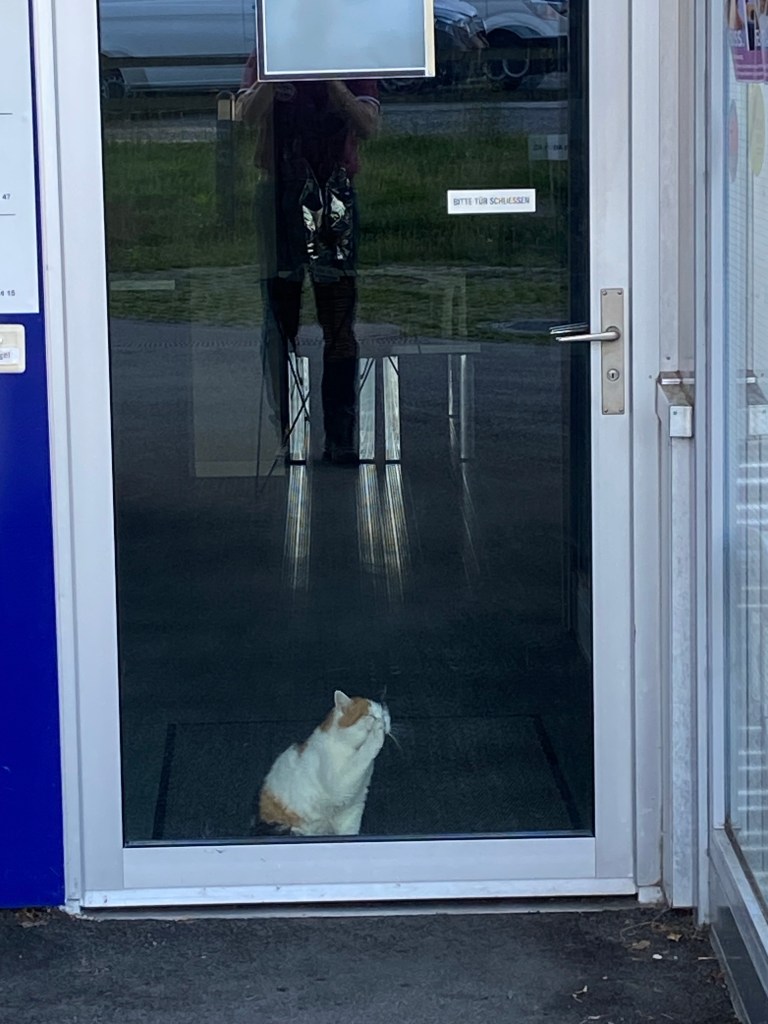
When I arrive at the clinic in the morning , which is often half an hour before the first clients, I am greeted by Yuki, the ancient practice feline, who is already patiently waiting to be let out to inspect the car park before being fed.

I then tend to make a beeline for the high end coffee machine in the waiting room, to get the water heated up for my obligatory caffeine fix before starting my consultations.

Switching on the lights in the consulting rooms, I am always in two minds, if I should love or loath them….

I appreciate that they are all very well lit, very clean and spacious, but at the same time they offer a lot of escape routes for frightened cats and it is at times difficult to get the rooms dark enough for a meaningful eye examination. Thankfully I have a windowless X-Ray room just next door.

Due to my very international clientel, there is constant switching between German and English and it is not uncommon that I am addressing German speakers in English, or my German introduction is met with an expression of utter puzzlement, if it turns out that a pet owner with a Germanic sounding surname does not speak the language.

A very frequent task here is the handling of travel documents and it amuses me slightly that by holding a Swiss veterinary license, I am entitled to sign pet passports – something I am since Brexit no longer allowed to do as an official veterinarian in the UK.

The average dog here in Zug is well travelled, weighs somewhere under 10 kg and prefers to hide underneath a chair or in the arms of the owner. A lot of time is spend to reduce the stress with a nice selection of treats and by limiting the hands on part of an examination. However, it is not uncommon that a second visit is scheduled and some sedatives are handed out to make the experience less challenging for all parties involved.

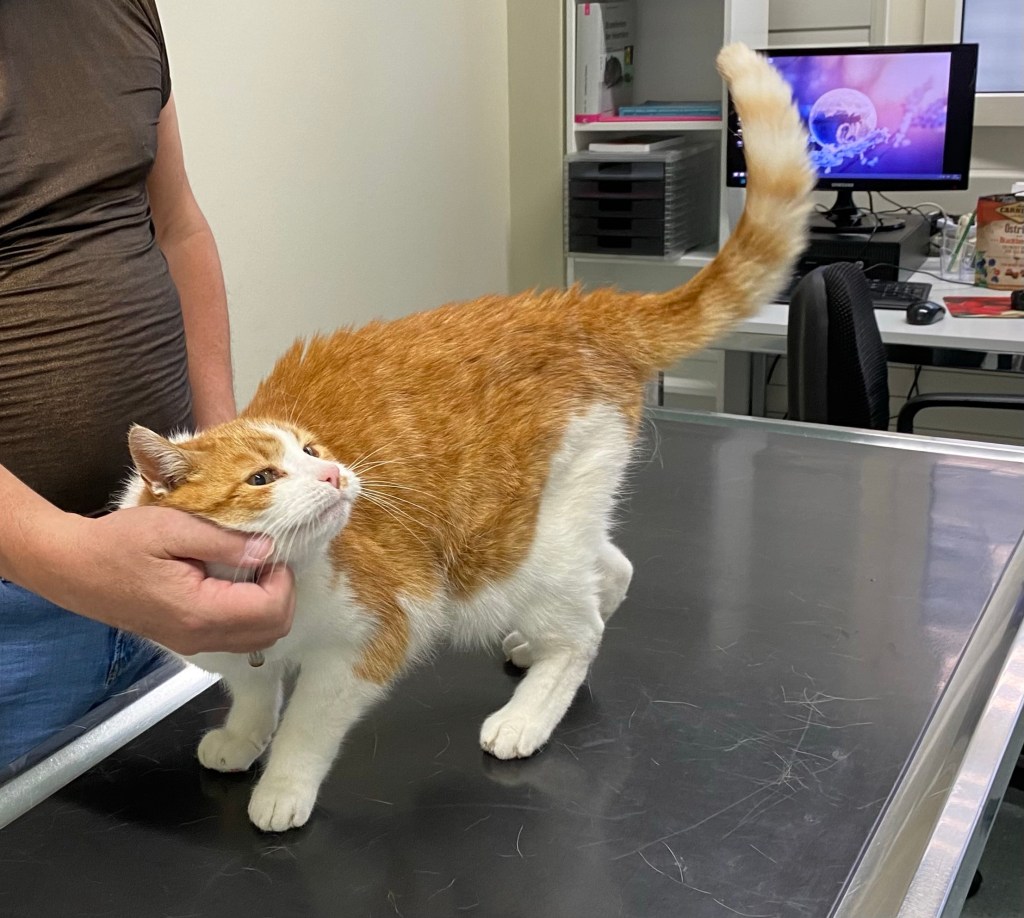
With my feline patients it seems to be an even more mixed bag, where a very relaxed ginger tom with a long history of visits to the clinic might be followed by a completely new arrival that is indicating its displeasure of being here, with a low growl from its carrier basket.

Once this and all other warning signs were missing and after I had performed a full clinical examination on a cat without a problem, I sustained my first cat bite in over 20 years while returning my ungrateful patient to her basket.

With a considerable number of cats and small dogs at this clinic, it is no surprise that there is a fair amount of dental work and once again I am being spoiled with a dedicated dental suite with a direct digital X-Ray unit (something even the dentist at my own recent check up in Bavaria could just have dreamt of…..).

Another positive feature in Switzerland is the high number of insured pets, which is certainly driven by the considerable cost of veterinary care in this part of the world.

Due to the limited opions to provide over night care at the clinic, the number of inpatients is very low, but I am once again in the lucky position, that I have a number of first class referral options in close reach.

This all – may be with the exception of the cat bite…..- makes all for a very pleasant working environment, so that even Mia, my trusty Vizsla, has no problems in joining me at times on my Swiss working adventure.

Zug

It is the beginning of June 2023, and after having worked over the past 4 years, among a number of places, in the “City of Stone” (and timber)(Sundsvall in Sweden), the “Gateway to the Arctic Sea”(and to the most Northern brewery) (Tromsø in Norway), the “City of Granite” (and – of course – oil) (Aberdeen in Scotland), I am finding myself now in the “City of …….Washing Machines” ( and of alpine commerce) in Zug in Switzerland.

Wedged with its own tiny canton between the financial powerhouse of Zurich in the North and the beautiful setting of Lucerne and its Lake (Vierwaldstätter See) in the South, this alpine back water transformed itself over the last 100 years from a small fishing village, first to the production site of high end domestic appliances (V-Zug) and then to a magnet for all sorts of both domestic and international companies and institutions. If you can’t afford to have a production site here, then at least you want to place the name of your company somewhere on a letterbox in this place .

With a corporation tax rate of only 11.9 % (compared to 21% in Bern and 25% in London), it is no great surprise that investors from all over the world are calling this place their home, resulting in unaffordable property prices and ….in a shortage of veterinary services.

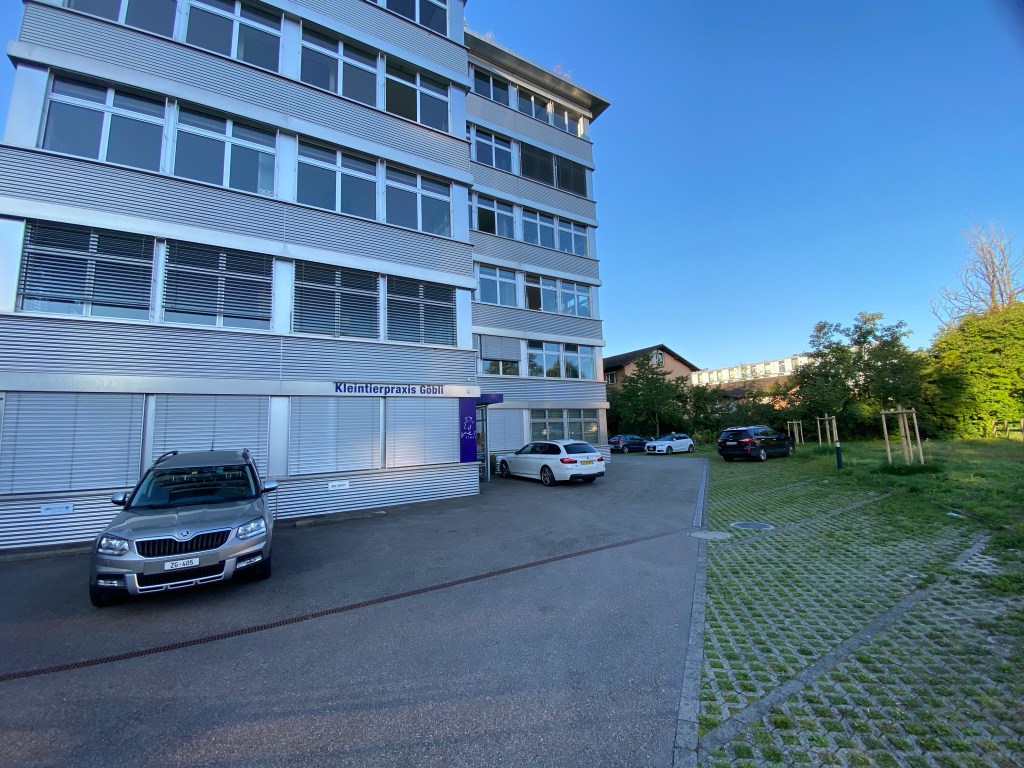
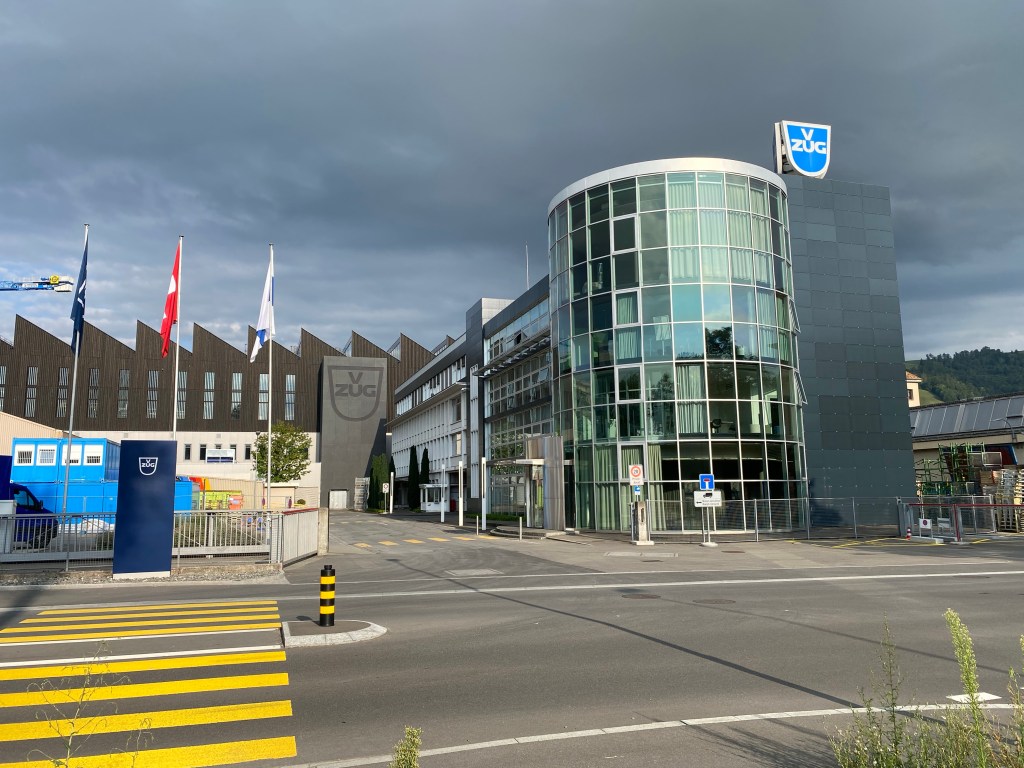
The only place offering veterinary care right in the town is – very much in tune with the economic heritage of the place – located on “Industry Lane” (Industriestrasse), right next to the huge and very modern household appliances plant . A – now derelict – factory railway track is running 10 meters away from my consulting room window.

The refridgerators, washing machines and dishwashers in every respectable household here and even in the veterinary clinic feature the “V-Zug” logo.

But – as we are in Switzerland – you will struggle to find here a smoking chimney, a dirty truck or even workers in oil stained overalls. Everything appears ultramodern , designed and built with high quality materials, spacious and possibly a little bit too tidy and organised for my liking…..

Along with Zug’s cosmopolitan residents are coming their pets, with clinical histories and colourful travel accounts from all over the Globe.

There is the anaemic rescue dog from a shelter in Romania, the cat with a mutilated tail from Indonesia, the well travelled Weimeraner with a severe food intolerance from Southern California, the Chihuahua with its damaged toes caused by an escalator in Rio de Janeiro, the Chow Chow with its poorly fixed bilateral entropion from Singapore and the anxious sheep dog from the West Coast of Ireland that actually hates to travel…..

Every second pet here has a non-native owner and despite being in Switzerland, I am conducting more consulations in English than in the for me still challenging Swiss German.

But, in many ways, it is Virginia Water all over again!…….

Thrown in with the package is a beautifully designed and spacious veterinary clinic, a team of well trained and motivated veterinary nurses,

plus a professional dog groomer with her own studio on the same premises and a short distance away from the practice, a lake with a beach, plus – very important for me – a couple of 6000+ ft mountains with a lot of hiking trails…..

Now, who can blame me for wanting to spend this summer here ?!……

The old bridge of Mostar

There was no event that epitomized more the destruction during the Yugoslav wars, than the fall of the historic bridge of Mostar.

This most striking example of Ottoman architecture had connected the two parts of the city since the 16th century and although its gravity defying construction of limestones, molded together with eggwhite and horsehair, had been a legitimate military target as it was used as a supply line of the Bosnian defenders of the city, there can be no doubt that the damaging and the eventual collapse of a building that had been a local landmark for centuries, must have had a devastating effect on the moral of the local muslim community.

I still remember watching a youthful and somewhat reckless Jeremy Bowen running accross the bridge as part of the BBC’s coverage of the conflict, while I was spending my first year as a veterinary surgeon in the UK.

On the final leg of my journey of the Balkan nearly 30 years later, I am standing in the garden of Emir, just a few meters away from the bridge, which I can see from the window of my bedroom.

The soil is good here and Emir is encouraging me to taste some of the first strawberries of the season.

Emir is a peaceful man, who enjoys classical music and good cooking – preferably with homegrown ingredients of which there are plenty here. When entering the house I have to take off my shoes, which I appreciate, as it compliments the tasteful and virtually spotless interior, which except from myself is also enjoyed by a young Japanese traveller.

Both the peacefulness in Emir’s house, the small bakery just around the corner that produces excellent croissants,

the small cafes along the Neretva river

and ultimately the perfectly reconstructed bridge itself

are in stark contrast to the images of this place in my memory.

Sure enough Mostar – similar to many parts of Sarajevo – still bears the scars of the conflict

and while many attrocities in this part of Europe will forever remain unresolved, I can see here also so many examples for the human ability to reconcile and to build a successful future from the rubble.

In the bus to Sarajevo I am meeting Belma, a young Bosnian women , who like me is just a passenger, but who realises that the young bus driver is struggling to maneuver our carriage through the busy traffic out of town. Without any hesitation she commands the seat right behind the driver and remains there throughout the journey as his second pair of eyes and ears, re-assuring and calming him down and guiding both him and us to our destination.

As it turns out is Belma not only a cat lover, but also the daughter of a bus driver….. While I am still wondering how many young people of my part of the world would have shown so much initiative in a similar situation, I am at the same time regretting that I can not spend more time in this country learning more about people like Belma or Emir.

However, all good things have to come to an end and once again the veterinary world is calling with work in a completely different part of the continent….

The cats of Kotor and Dubrovnik

No visit to the Dalmatian and Montenegrin coast, without a stop at the beautiful mediaval towns of Kotor and Dubrovnik , I thought. Even more so, as I had for this part of my journey the company of Lea Kreszinger, the president of the Croatian Small Animal Association and of Gonçalo Da Graça Pereira, one of Europe’s finest veterinary behaviourist. The two were without doubt the most considerate and entertaining travel companions I could have asked for – sorry Michael Palin……..

Predrag had invited our colleagues to Montenegro and now he also volunteered to be our taxiservice, taking us along a stunning coastline of parched rock with sparce, but hardy vegetation which was emitting the scent of wild thyme, oregano and coriander. The blue water of the Mediterranian Sea was always in sight and it was guiding us to these magnets for – unsurprisingly – also every cruiseliner in this part of the world.

The limestone pavement in these seaside fortifications, polished by the soles of generations of visitors, paid testament to the never ceasing attraction of these historical sites.

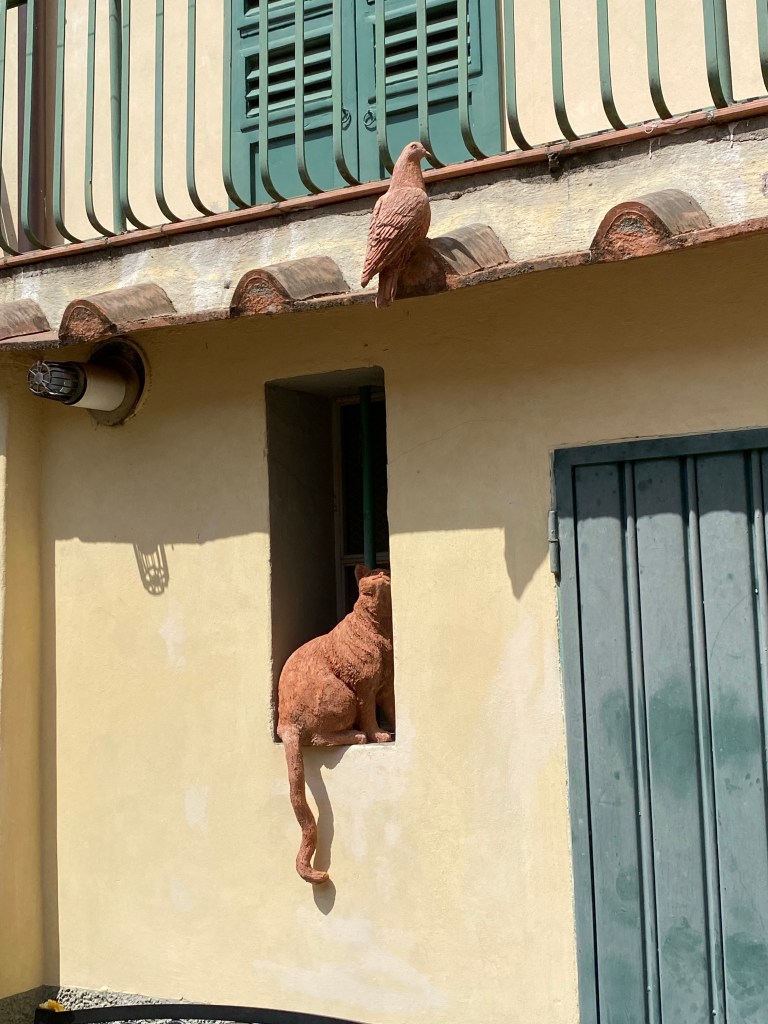
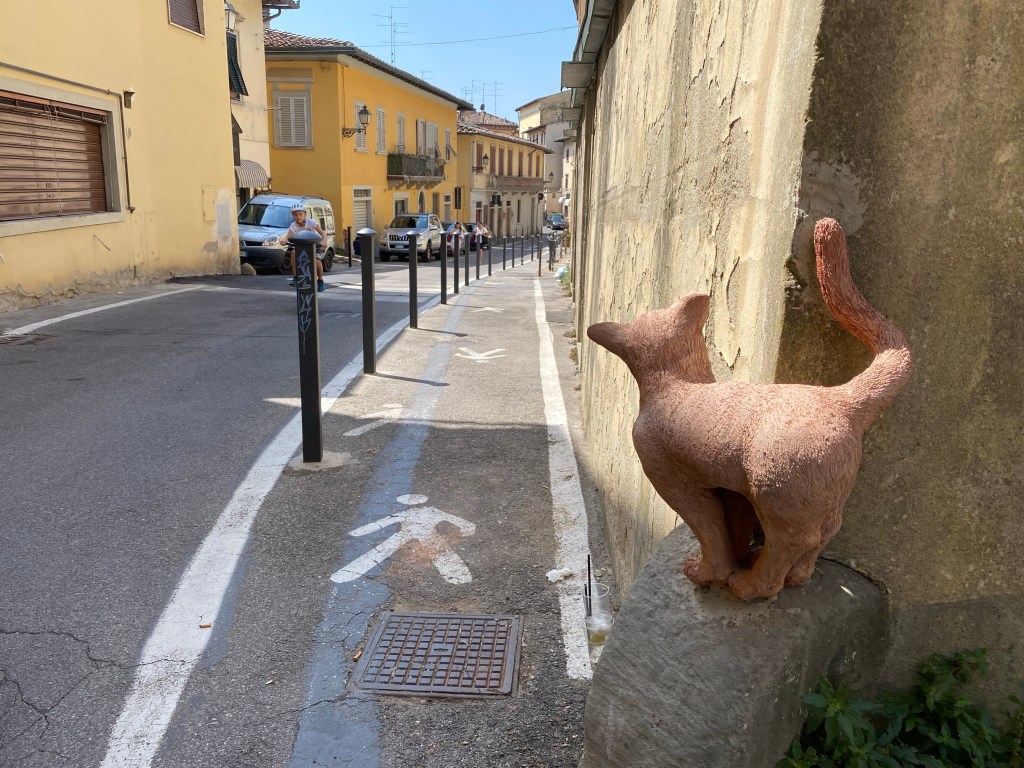
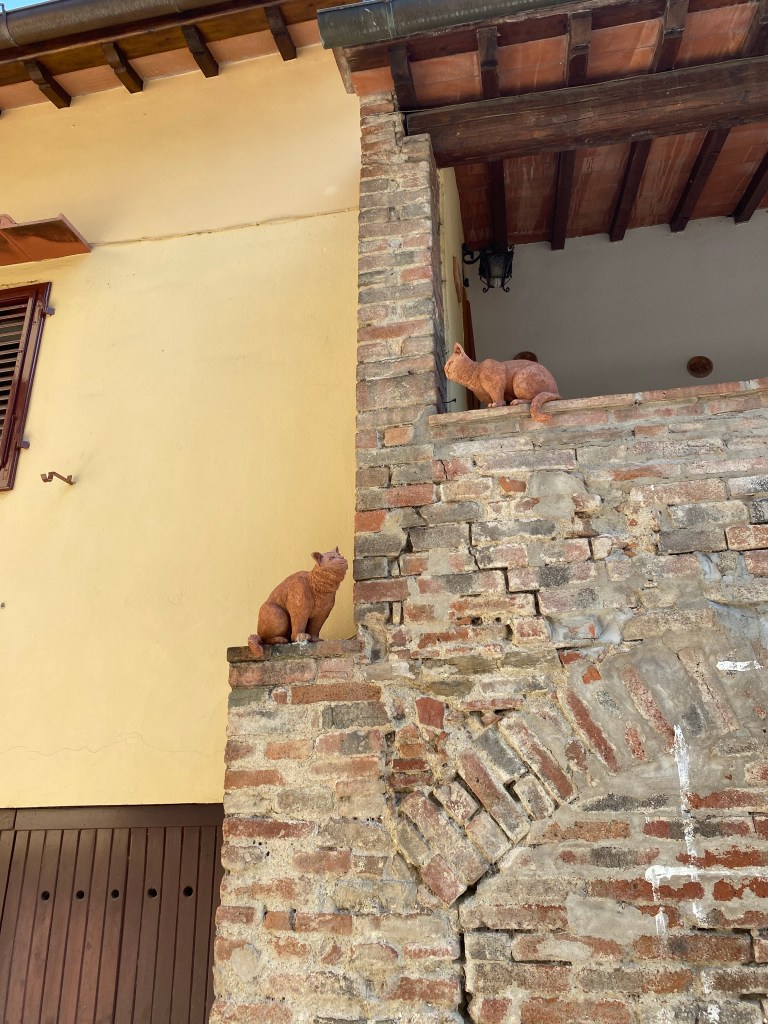
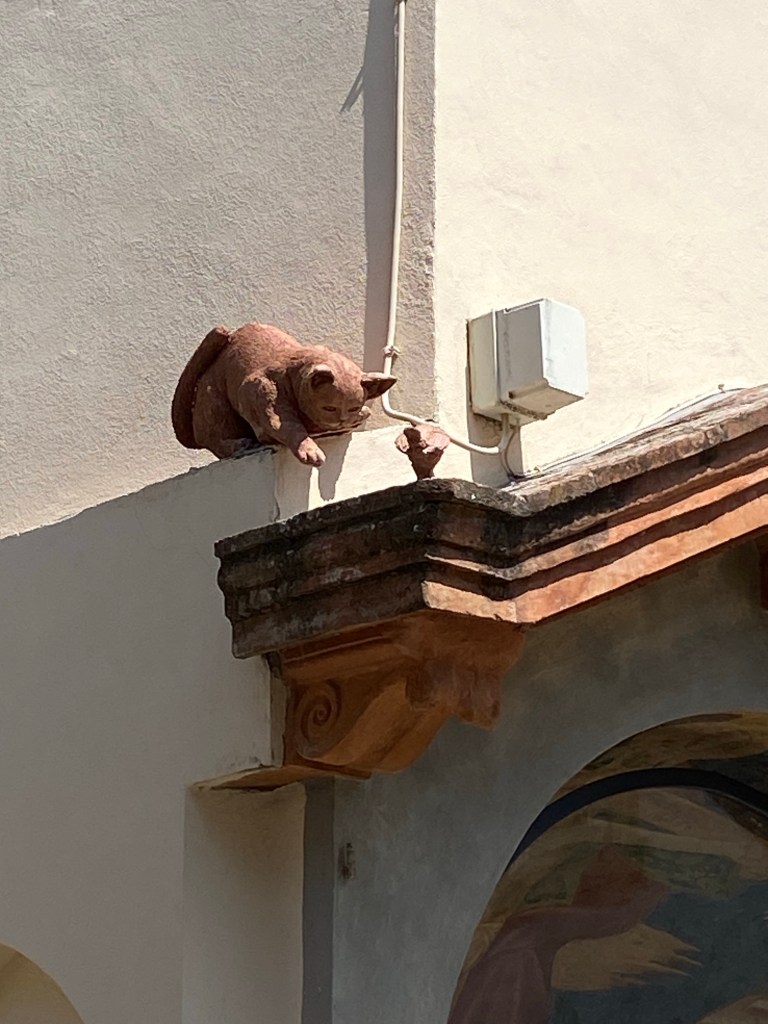
However, it didn’t require the assistance of my veterinary companions for me to notice, that – similar as at the Hermitage in St.Petersburg or at Aoshima in Japan – the predominant motives on the cameras of a lot of these travellers were not the history buildings, but rather their feline residents…….

It struck me, that these cats – which were completely unfazed by the legions of foreign intruders – had been genetically selected for centuries to both ignore the crowd and to claim their favorite spots on the pavement. Without any doubt their parents and their grandparents must have done exactly the same and by now they were born professionals in being admired and repeatedly imortalized on social media sites all over the world for just doing so.

Forget hundreds of years of history and World Heritage Site status – the real stars here had paws and whiskers, and they liked to eat fish, preferrably freshly caught from the sea!…..

None of these ”show offs” though became such a celebrity as Anastazija, the resident cat of the Rector’s Palace in Dubrovnik :

So strong was the local sentiment for this cat which used to live on the door steps of one of Dubrovnik’s most famous buildings, that when a few years ago the building’s curator tried to removed her shelter (handmade by a local craftsman !), a petition of the local residents demanding to leave her in the location she was accustomed to, raised more signatures than for the mayor of the city. The shelter went, but the cat remained……

Sadly, we were told, Anastazija had passed away just a few weeks before our arrival – so, our intervention would have been too late…..

But many other cats had started taking on her celebrity status on other sites in Dubrovnik and also travelling vets can’t resist taking photos of cats with scenic backgrounds. And undoubtedly, were the local felines part of our conversation that night, while we enjoyed the wine and the food of the Balkan in Dubrovnik …..
Priganice

If you – like me – enjoy hiking, then you will sooner or later arrive at the question of the perfect sort of food to eat in the morning, or to carry with you in your pack.

Ideally it should have a good calorie to weight ratio, it should be easy to prepare, it should be filling and it should be both tasty and universally adaptable to complement both sweet or savory food.

I am not a great fan of freeze dried astronaut meals, which are served in their own foilbag, which are usually sold for restaurant prices and which never fails to disappoint……

My preferred option is to shop locally and if it is not adding too much weight, fresh bread and local cheese and ideally a truffle salami can’t be beaten (even better if accompanied by some red wine…..), but to do it in style this choice is somewhat limited to the Pyrenees and to the French or the Italian Alps.
The traditional mountain superfood is pemmican, a mixture of dried meat, berries and lard, seasoned with some salt and pepper. Great if you are an arctic explorer, but with its limitations when it comes to variety.
Another great choice with a large fan base is porridge, but I personally find it too filling, I don’t like the texture and in its prepared form it is difficult to transport and always an accident waiting to happen in your backpack …….

Somewhat better in all its different varieties is müsli, but again you need something to mix it with and so far I have not come accross a savory variety.

Having agonised (to a limited degree) over this conundrum for decades, my search for the ultimate solution was finally rewarded over breakfast one morning together with Predrag in Podgorica.

A staple of the local cuisine here are little pancakes or doughballs, called “Priganice” .

Like many great things in life, it is very simple and inexpensive to make them.

Predrag’s wife Jjiljana very kindly gave me her recipe:

For 1-2 persons you need:

150g of flour

1 egg

150 ml of milk

a pinch of salt

a frying pan and some sunflower or olive oil

You just mix the first four ingredients to give it a viscous texture and then deep fry tablespoonfuls of dough in the oil – that’s it !

Best served warm, Priganice work with jam, with cheese, with sour cream or even with cold meats. They are easy to store, easily re-heated and can be eaten even cold together with pretty much anything.

Traditionally Montenegrins add a small quantity of rakiya or fruit brandy to the dough so that the final product soaks up less oil, but apparently yoghurt is supposed to do the same trick.

The Priganice will get more fluffy, if yeast has been added to the dough and it is left to stand for a little while.

There is a good chance that my future hiking companions will be treated to some Priganice and that not only on my next trip to Montenegro.

Durmitor

While waiting for the door bell to be answered at the Stevović household, I noticed not less than five may beetles on their backs on the landing, having a pretty miserable time while trying to enjoy the last few days of their strange life. ‘Can’t find a much better indicator for good biodiversity than this….’ I thought to myself, while Blagica, my next host was opening the door……

From Podgorica I had travelled via Kolasin to the Durmitor mountain massif, another UNESCO World Heritage site, which is in the North of Montenegro, just next to the border to Bosnia Herzegovina. Once again I was travelling in a small Skoda – for a change in a black one – and in true Balkan style, I had ignored the traffic signs indicating that the road to get there was actually closed ,

because one half of it over a stretch of 100 meters had disappeared in a recent landslide. Not looking into the abyss next to the road, which was cordoned off by a few lonely traffic cones, I had considered it sufficiently reasurring , that even trucks were still taking this road and without a good alternative available, I gave it a try and lived to tell the tale……

I finally arrived on the “Plateau of Lakes” at 1500 m altitude in the East of the towering Durmitor massif

where I decided to rather than staying at the progressively build up regional center of Zabljak, to spend a few days in a small village nearby called Tmajevci.

By no means a glamarous place, the very humble dwellings of this hamlet emitted a far more authentic atmosphere, of very basic mountain farming, of small cabins where generations of city kids must have spent their long summer holidays with fresh air and good food provided by their retired grandparents, of the bygone days in the old Yugoslavia, where the hard earned cash from the factory floors of Dortmund, Stuttgart or Munich provided for a small second home, that despite being nailed together with whatever building material was available at the time, still felt like a small palace , and certainly of the calm and peacefulness that only the simple life in the countryside can provide.

And this not more so than at the house of Blagica and her husband Zoran, a former chef, who had turned to farming and cheesemaking. and who were – whenever possible – living of the land.

My room here was basic, more an assembly of discarded family furniture, but the internet connection was excellent and the shower had hot water, which in combination made it a perfect place for someone who wants to write, read and hike.

In the mornings Blagica treated me to home made bread and plum jam. The butter, the milk and – of course – the cheese came all from their small handful of cows. The ham had lived its former life just on the other side of the fence and my breakfast egg came from a chicken that had enjoyed eating worms, insects and alpine herbs.

When dinner was served, it included potatoes of the family harvest, that were some of the largest I had ever seen,

a gravy made with a lot of butter, homegrown vegetable and it this was finished off with a few glasses of homemade raki. Only the wine I had to bring along myself.

Unfortunately the winter had been long this year and the mountains were still covered with a white blanket of snow in many places, which made the going tough and a lot of tracks inaccessible.

This meant that I spent more time on the shores of the Black Lake, the centre piece of the National park, enjoying excellent coffee and one of the finest mountain views, while entertaining myself with the account of another traveller – Lauri Lee – on his journey to Spain, just before the outbreak of the Spanish Civil War.

MontVet

“Where exactly are you going ?!…..” I asked my driver, about ten minutes after we had left the main highway and while I was following on Google Maps how we were zick-zacking through the Southern suburbs of Podgorica, the capital of Montenegro.

“To airport ! ……..Not airport ?”…….

”Nope!……..Not airport……..but to the city centre !……”

My taxi driver sighed, cursed in his native Albanian, then turned the car around and we were driving back the way we came…….

This minor mishap didn’t spoil my first encounter with my next destination and twenty minutes later – while my driver, pacified with a decent tip, was heading back to Shkodër – I was meeting Predrag Stojović, my next host, in the Zeppelin Bar next to Podgorica’s old town centre.

It had taken Predrag not less than 15 years – since our first encounter at a vet meeting in Lille – to get me to his country and that, despite the undisputed fact that Montenegro features some of Europe’s most acclaimed mountain areas.

Predrag – together with his colleague Nebosja Sćekić – is owning MontVet, an institution, when it comes to animal care in this part of the world.

And this doesn’t just involve the care of companion animals:

When we entered the smaller Old Town branch of MontVet, the first thing I noticed, was a glass funnel and a microscope ……vital equipment for the testing of porcine meat for Trichinellosis – a debilitating zoonotic disease – which veterinarians, at least in Europe, have kept under control for many decades. An often underreported “One Health” success story.

Another large part of Predrag’s daily workload is taken up by shelter medicine. MontVet is responsible for the care of all rescued dogs and cats of the capital.

A short drive away I was then given the opportunity to visit the main clinic, fitted into a number of adjacent retail units, with a Husquarna chainsaw outlet inbetween – not related to the veterinary business….

The upper floor was extremely well stocked with pet food and accessories, for some of which MontVet is the only national importer.

The rooms on the lower level were dedicated to clinical veterinary work.

In a number of consulting, imaging and operating rooms, an international team of vets was looking after the pets of their equally international clientel.

Consultations were conducted not only in Montenegrin, but also in Italian, in Albanian, in Russian and in English and probably in a few more languages.

Once again I noticed so many similaritlies with my own clinic in the UK and I felt that it was about time for me to return to some clinical work. But before that, there was a bit more travelling ahead of me…..

Rose water and a colourful car crash at Mrizi i Zanave

It was late in the evening and the sun was about to set, when I arrive at Mrizi i Zanave – Alma’s third and final recommendation.

Driving towards a old stone house surrounded by olive trees on a small hill, one might have been forgiven for assuming to be somewhere in the middle of Tuscany. I was passing a vineyard, rows of flowers and vegetables, trees with hazel and walnuts, orange and lemon trees and this all in a peaceful valley near a small river and with some sunbleached mountains nearby.

On the front court a pick up truck appeared to have crashed, spilling its cargo of beautiful pots of flowers on to the road…..

Further up the hill, pots of red, yellow and blue paint had been tipped over, with the paint on the lawn miraculously metamorphing into similarly coloured blossoms.

With so many playful and lighthearted ideas around me,

it was hard to believe that just a few years ago, this place used to be a regional military command centre.

Even the pill boxes had been transformed into giant lady birds and tortoises…

I was lucky, and despite a slightly messed up reservation, I was given the last room in the house, very fittingly for a vet featuring a cow not only on the key ring, but also on the door to my room and even with one standing next to my bed ……….on the shower curtain.

After dropping off my gear and taking a shower, it was time for dinner, which was very much in tune with the inspirational surroundings:

Virtually all the food and the drinks originated from the land and from the life stock of this agritourism business, which – I was told – was employing over 200 people – basically the whole village…..

To start my meal, I was treated to homemade rose water

(and the next morning I was lucking enough to witness the harvesting of the petals…).

The wine served with the meal came from the own vinery, the oil originated from their own olives and the ice cold water came directly from the local spring.

Very carelessly, I had ordered a meze of starters, with the result that after the table had run out of space, I wasn’t even able to progress to a main course……

Homemade goat cheese, cured meats, olives, grilled vegetables and delicious filled puff pastries filled me up so much, that finally only a glass of local Raki fitted in,

before I was dragging myself to my very own cow shed on the hill….

Driving back to Shkodra the next morning, spotting some of the local poultry next to the road sign, I became slightly concerned about the lasting effect of the local spirits.

I decided then that it was finally time to leave Albania…..

French engineering, Albanian fjords and the beautiful valley of Valbonë

The diesel engine coughed a few times and then went out in a cloud of smoke….

We had been on our journey for not more than 3 minutes and that after having to wait for four days for the water level to rise, so that we could travel at all…..

Alma’s (and, to put the records straight – also Ana’s) second recommendation had been, to visit the remote valley of Valbonë and its famous national park.

To get there, you have two options – to face a long drive East crossing nearly the whole country, often close to the border to Kosovo, or to tackle the somewhat neglected service road to the impressive dam at Koman

and to shortcut the journey from there with a ferry ride along the reservoir to the small town of Fierza.

This ferry ride – if the ferry was going – was not to be missed, but because of the poor road condition, it would have meant a very early start from Shkodrë, which was not something I would have enjoyed, especially if I could be avoided.

And sure enough – there was another way: staying at “Vila Franceze”.

This concrete fortress, looking like a set for an early James Bond movie and build in the middle of absolutely no-where, used to be the home for the French engineers, who built both the dam and the adjacent hydro-electric power station, nearly 40 years ago.

Now run by Amazona and her small team of Albanian and Italian helpers, it offers a brush with history by allowing guests to stay in the living quarters of the engineers and enjoying their amenities like swimming or kayaking at a small French Riviera set up at the Drin river

or a simple dinner at the spacious old dining and function room.

When arriving at the villa, I was told that I was in luck, as the ferry – after three days with low water levels in the reservoir – was ready to go the next morning.

Following a good night’s sleep in what must have been an engineer’s home for a number of years, I started to scale with my little Czech car the 130 m rock face just next to the dam, drove through a poorly lit service tunnel

and finally ended up on the Rozafa, a bizarre arrangement of poorly welded sheets of steel with a number of reused bus seats in a small cabin on top and with an old diesel engine in its bowels.

Despite the multiple examples of poor craftsmanship on this vessel, the Rozafa looked reasonably trustworthy compared the Frankenstein assembly next to us, which featured the whole top section of an old bus glued to something like a steel canoe. This contraption was used as a people ferry and it was listing dangerously to its starboard side…..

Considering this, the failing of our engine didn’t come as a great surprise, but with most of the crew giving the mechanic a helping hand, and with a lot of shouting and swearing at the poor man, we were prevented from sinking and soon up and running again.

The following three hour cruise along the reservoir, with some sections being not wider than 50 meters and with waterfalls on both sides, can only be described as spectacular and just comparable with a trip through the fjords of the West Coast of Norway or Chilean Patagonia.

The state of the ferry was forgotten, the poor seating and the missing hospitality on board didn’t play a role any more and the only subject of conversation was now the landscape around us, the sheer rock faces, the green mountain sides and the few small houses clinging from time to time to rocky pieces of land, between the deep water and the towering mountain tops.

Arriving finally at Fierza and without getting stuck in the loose soil that was used as a make shift ramp,

the road – in a much better condition now – continued into the mountains, once again towards the border to Montenegro. Passing a number of mosques and minarets dating back to the Ottaman empire,

I picked up Linsi, an Albanian hitchhiker, who joined me all the way to the end of the road, which was the trail head for the classic mountain crossing to the small village of Theth in the next valley.

It turned out that Linsi was working in a hotel nearby and after taking him up on his offer of a Turkish coffee in exchange for his free ride, I decided to make the place my base for the exploration of this part of Albania.

With luck on my side, the weather improved the next day considerably, allowing for more hiking on virtually deserted mountain trails in the Albanian Alps.