Priganice

If you – like me – enjoy hiking, then you will sooner or later arrive at the question of the perfect sort of food to eat in the morning, or to carry with you in your pack.

Ideally it should have a good calorie to weight ratio, it should be easy to prepare, it should be filling and it should be both tasty and universally adaptable to complement both sweet or savory food.

I am not a great fan of freeze dried astronaut meals, which are served in their own foilbag, which are usually sold for restaurant prices and which never fails to disappoint……

My preferred option is to shop locally and if it is not adding too much weight, fresh bread and local cheese and ideally a truffle salami can’t be beaten (even better if accompanied by some red wine…..), but to do it in style this choice is somewhat limited to the Pyrenees and to the French or the Italian Alps.

The traditional mountain superfood is pemmican, a mixture of dried meat, berries and lard, seasoned with some salt and pepper. Great if you are an arctic explorer, but with its limitations when it comes to variety.

Another great choice with a large fan base is porridge, but I personally find it too filling, I don’t like the texture and in its prepared form it is difficult to transport and always an accident waiting to happen in your backpack …….

Somewhat better in all its different varieties is müsli, but again you need something to mix it with and so far I have not come accross a savory variety.

Having agonised (to a limited degree) over this conundrum for decades, my search for the ultimate solution was finally rewarded over breakfast one morning together with Predrag in Podgorica.

A staple of the local cuisine here are little pancakes or doughballs, called “Priganice” .

Like many great things in life, it is very simple and inexpensive to make them.

Predrag’s wife Jjiljana very kindly gave me her recipe:

For 1-2 persons you need:

150g of flour

1 egg

150 ml of milk

a pinch of salt

a frying pan and some sunflower or olive oil

You just mix the first four ingredients to give it a viscous texture and then deep fry tablespoonfuls of dough in the oil – that’s it !

Best served warm, Priganice work with jam, with cheese, with sour cream or even with cold meats. They are easy to store, easily re-heated and can be eaten even cold together with pretty much anything.

Traditionally Montenegrins add a small quantity of rakiya or fruit brandy to the dough so that the final product soaks up less oil, but apparently yoghurt is supposed to do the same trick.

The Priganice will get more fluffy, if yeast has been added to the dough and it is left to stand for a little while.

There is a good chance that my future hiking companions will be treated to some Priganice and that not only on my next trip to Montenegro.

Durmitor

While waiting for the door bell to be answered at the Stevović household, I noticed not less than five may beetles on their backs on the landing, having a pretty miserable time while trying to enjoy the last few days of their strange life. ‘Can’t find a much better indicator for good biodiversity than this….’ I thought to myself, while Blagica, my next host was opening the door……

From Podgorica I had travelled via Kolasin to the Durmitor mountain massif, another UNESCO World Heritage site, which is in the North of Montenegro, just next to the border to Bosnia Herzegovina. Once again I was travelling in a small Skoda – for a change in a black one – and in true Balkan style, I had ignored the traffic signs indicating that the road to get there was actually closed ,

because one half of it over a stretch of 100 meters had disappeared in a recent landslide. Not looking into the abyss next to the road, which was cordoned off by a few lonely traffic cones, I had considered it sufficiently reasurring , that even trucks were still taking this road and without a good alternative available, I gave it a try and lived to tell the tale……

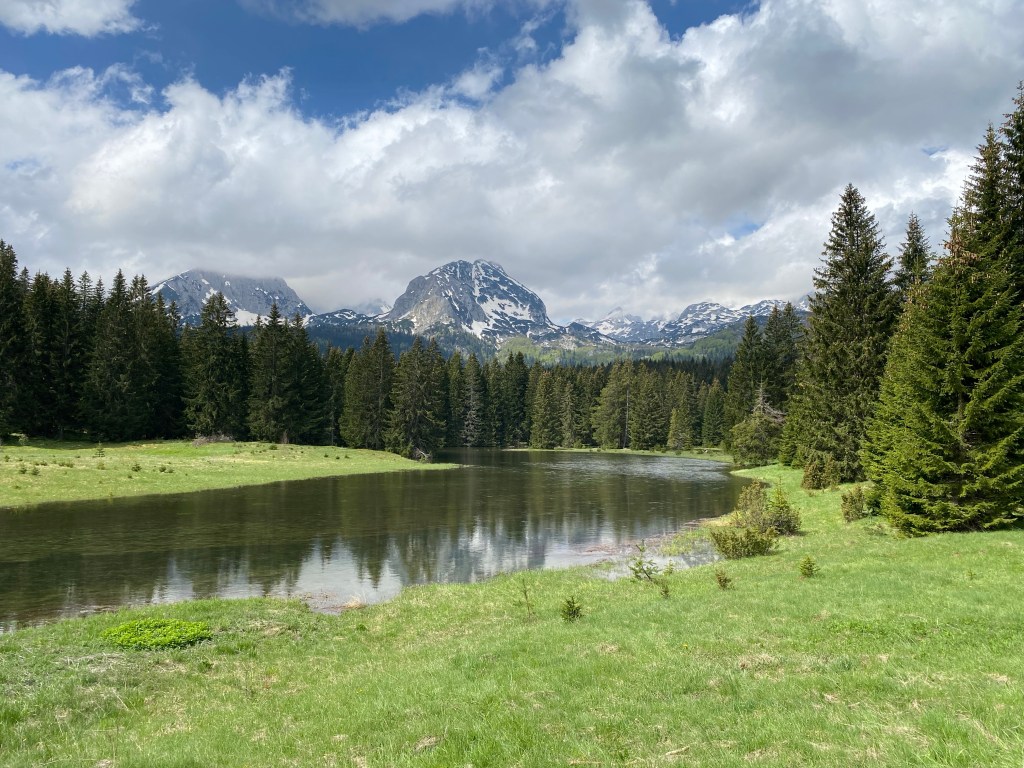
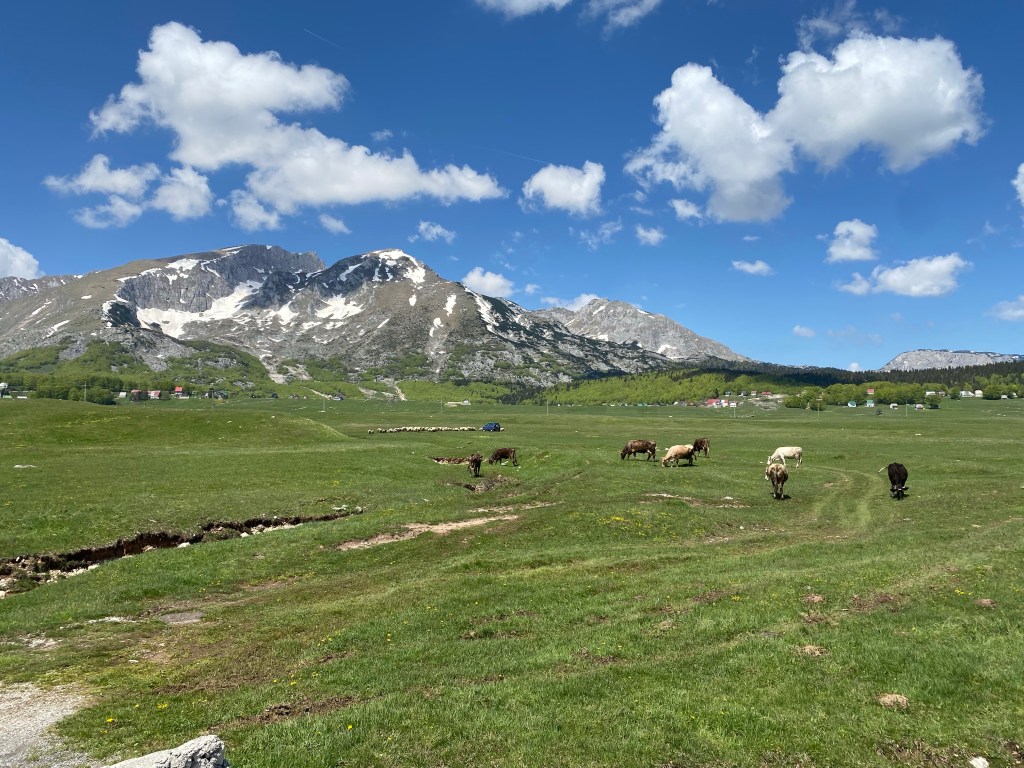
I finally arrived on the “Plateau of Lakes” at 1500 m altitude in the East of the towering Durmitor massif

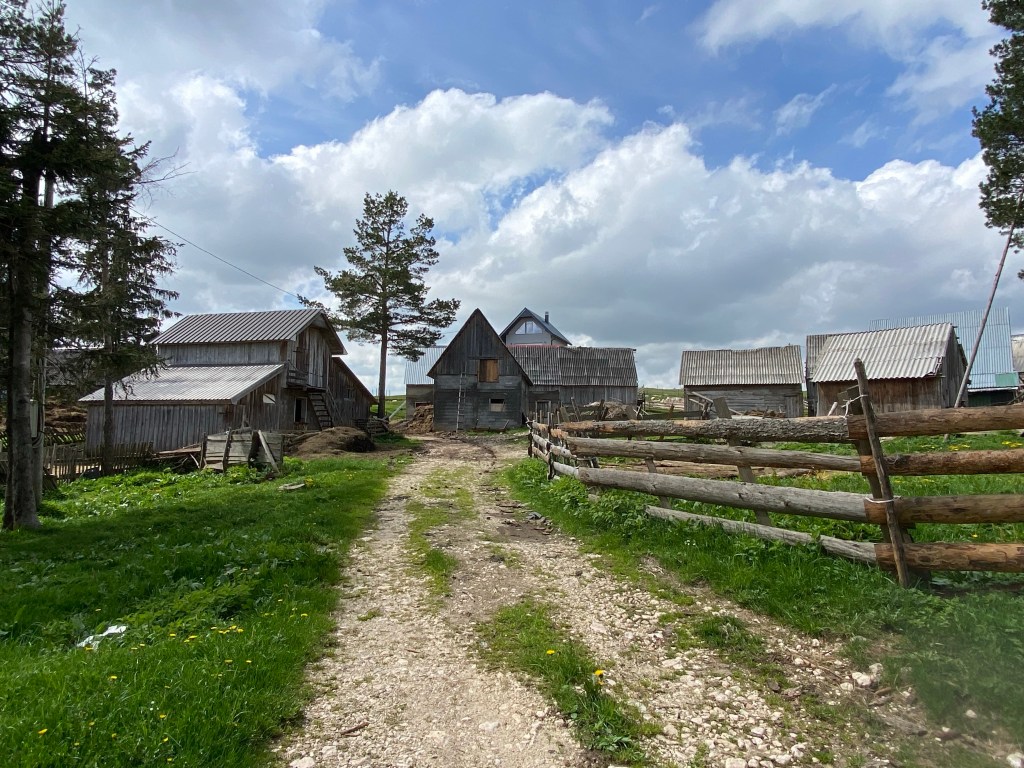
where I decided to rather than staying at the progressively build up regional center of Zabljak, to spend a few days in a small village nearby called Tmajevci.

By no means a glamarous place, the very humble dwellings of this hamlet emitted a far more authentic atmosphere, of very basic mountain farming, of small cabins where generations of city kids must have spent their long summer holidays with fresh air and good food provided by their retired grandparents, of the bygone days in the old Yugoslavia, where the hard earned cash from the factory floors of Dortmund, Stuttgart or Munich provided for a small second home, that despite being nailed together with whatever building material was available at the time, still felt like a small palace , and certainly of the calm and peacefulness that only the simple life in the countryside can provide.

And this not more so than at the house of Blagica and her husband Zoran, a former chef, who had turned to farming and cheesemaking. and who were – whenever possible – living of the land.

My room here was basic, more an assembly of discarded family furniture, but the internet connection was excellent and the shower had hot water, which in combination made it a perfect place for someone who wants to write, read and hike.

In the mornings Blagica treated me to home made bread and plum jam. The butter, the milk and – of course – the cheese came all from their small handful of cows. The ham had lived its former life just on the other side of the fence and my breakfast egg came from a chicken that had enjoyed eating worms, insects and alpine herbs.

When dinner was served, it included potatoes of the family harvest, that were some of the largest I had ever seen,

a gravy made with a lot of butter, homegrown vegetable and it this was finished off with a few glasses of homemade raki. Only the wine I had to bring along myself.

Unfortunately the winter had been long this year and the mountains were still covered with a white blanket of snow in many places, which made the going tough and a lot of tracks inaccessible.

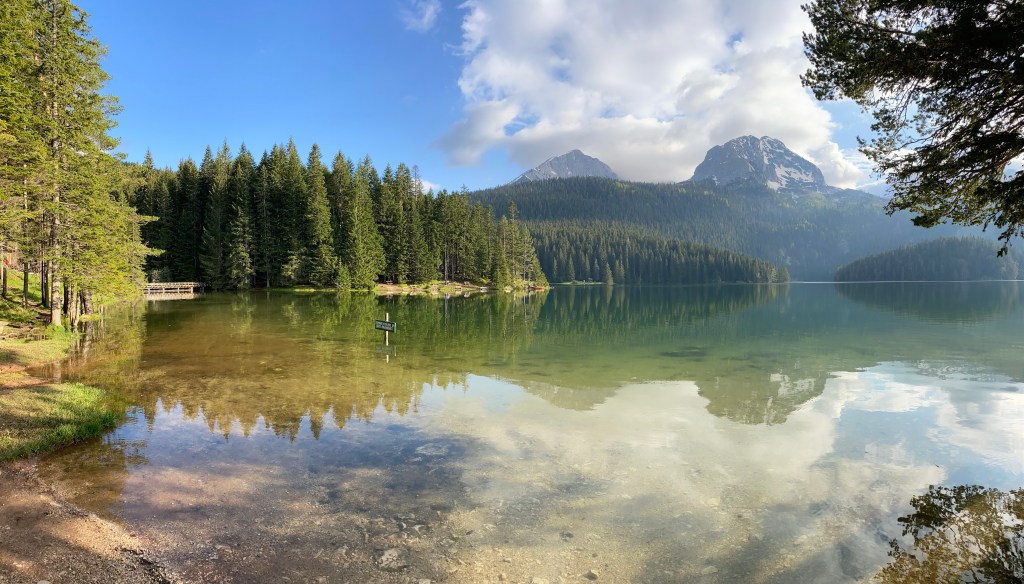
This meant that I spent more time on the shores of the Black Lake, the centre piece of the National park, enjoying excellent coffee and one of the finest mountain views, while entertaining myself with the account of another traveller – Lauri Lee – on his journey to Spain, just before the outbreak of the Spanish Civil War.

MontVet

“Where exactly are you going ?!…..” I asked my driver, about ten minutes after we had left the main highway and while I was following on Google Maps how we were zick-zacking through the Southern suburbs of Podgorica, the capital of Montenegro.

“To airport ! ……..Not airport ?”…….

”Nope!……..Not airport……..but to the city centre !……”

My taxi driver sighed, cursed in his native Albanian, then turned the car around and we were driving back the way we came…….

This minor mishap didn’t spoil my first encounter with my next destination and twenty minutes later – while my driver, pacified with a decent tip, was heading back to Shkodër – I was meeting Predrag Stojović, my next host, in the Zeppelin Bar next to Podgorica’s old town centre.

It had taken Predrag not less than 15 years – since our first encounter at a vet meeting in Lille – to get me to his country and that, despite the undisputed fact that Montenegro features some of Europe’s most acclaimed mountain areas.

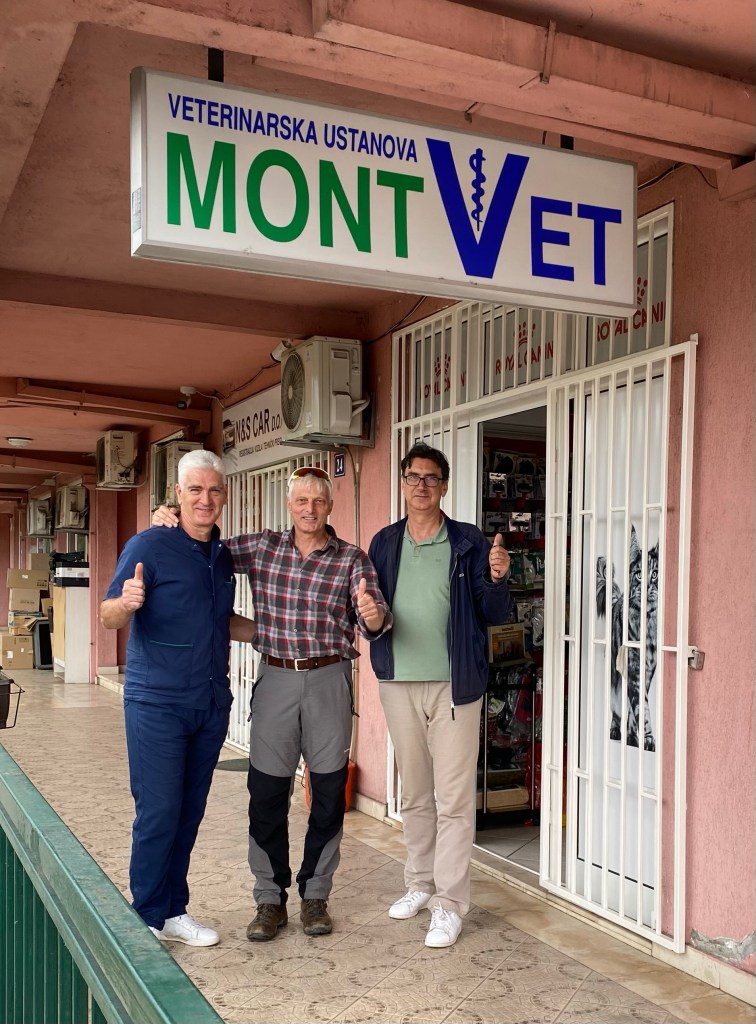
Predrag – together with his colleague Nebosja Sćekić – is owning MontVet, an institution, when it comes to animal care in this part of the world.

And this doesn’t just involve the care of companion animals:

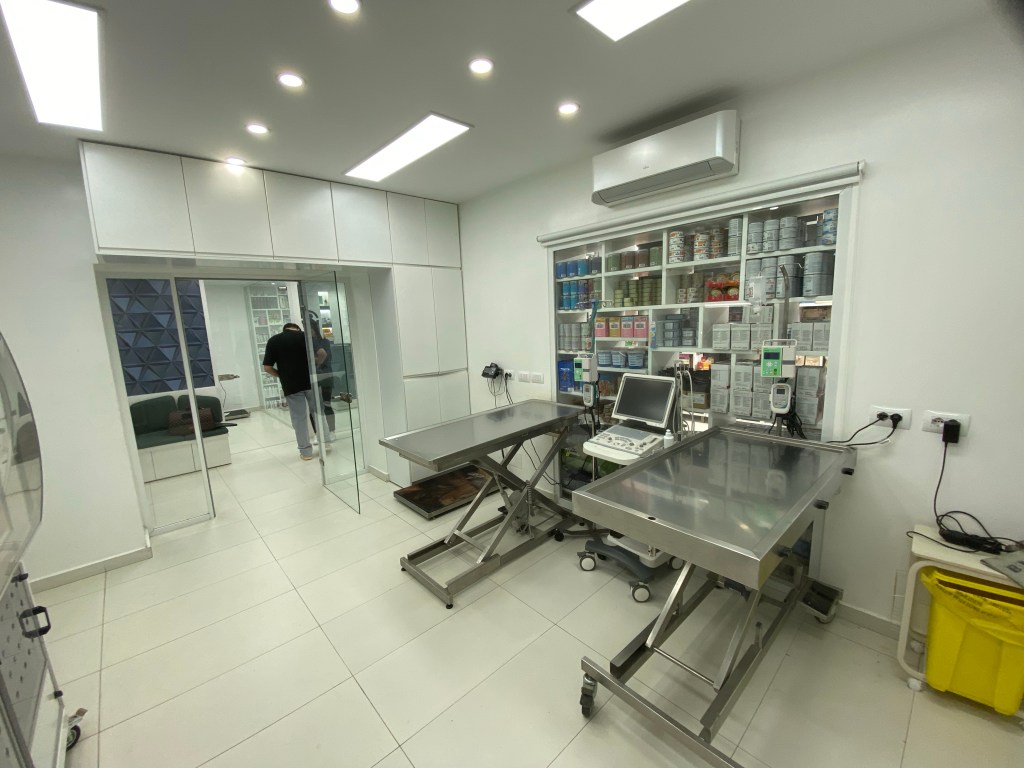
When we entered the smaller Old Town branch of MontVet, the first thing I noticed, was a glass funnel and a microscope ……vital equipment for the testing of porcine meat for Trichinellosis – a debilitating zoonotic disease – which veterinarians, at least in Europe, have kept under control for many decades. An often underreported “One Health” success story.

Another large part of Predrag’s daily workload is taken up by shelter medicine. MontVet is responsible for the care of all rescued dogs and cats of the capital.

A short drive away I was then given the opportunity to visit the main clinic, fitted into a number of adjacent retail units, with a Husquarna chainsaw outlet inbetween – not related to the veterinary business….

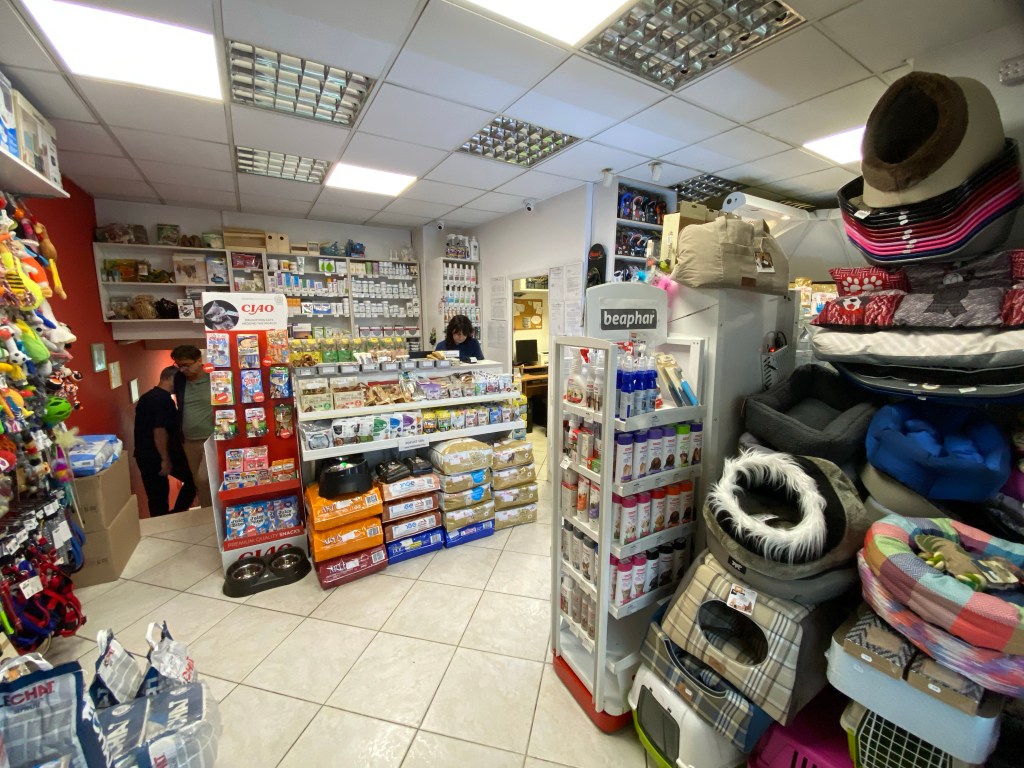
The upper floor was extremely well stocked with pet food and accessories, for some of which MontVet is the only national importer.

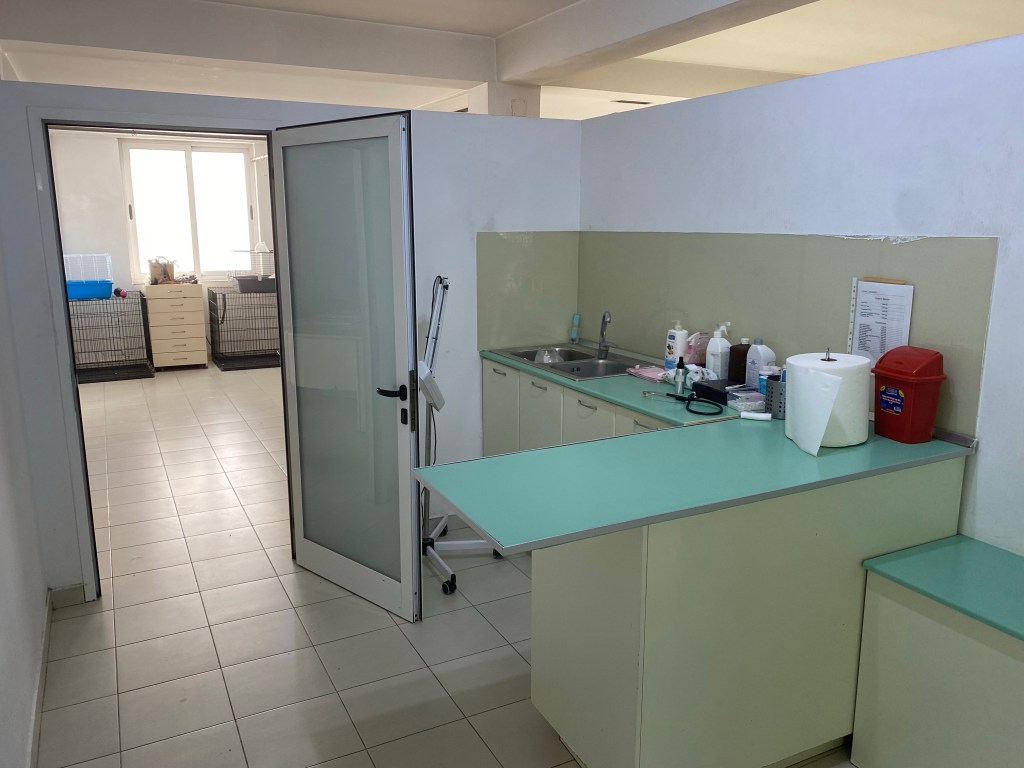
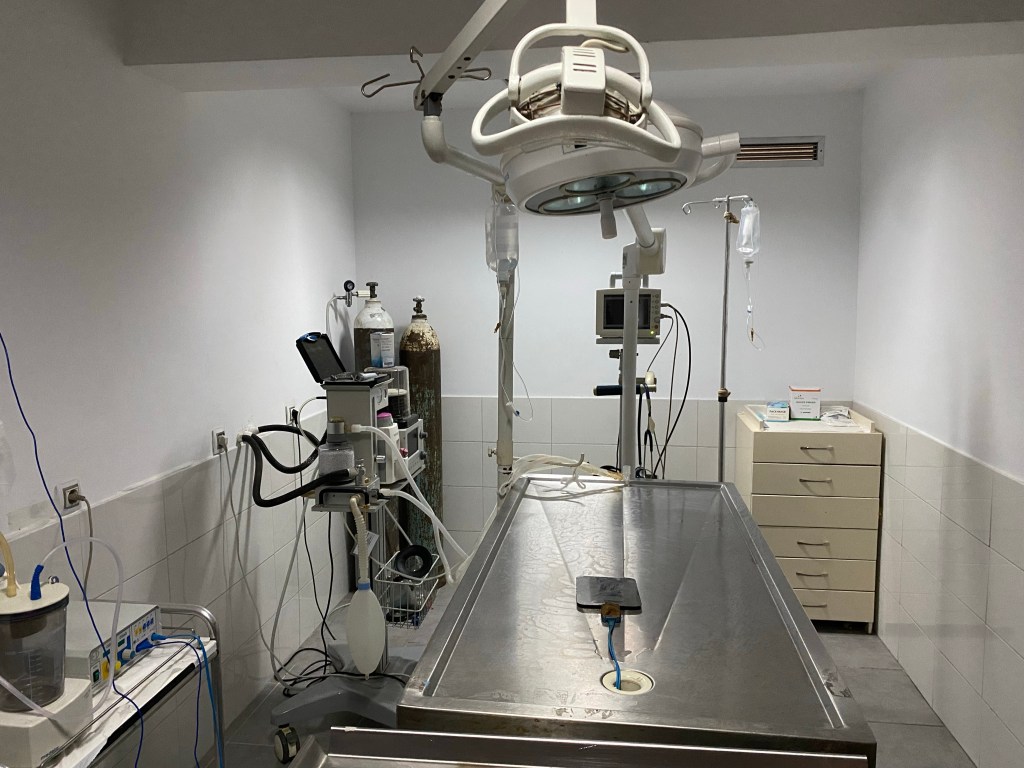
The rooms on the lower level were dedicated to clinical veterinary work.

In a number of consulting, imaging and operating rooms, an international team of vets was looking after the pets of their equally international clientel.

Consultations were conducted not only in Montenegrin, but also in Italian, in Albanian, in Russian and in English and probably in a few more languages.

Once again I noticed so many similaritlies with my own clinic in the UK and I felt that it was about time for me to return to some clinical work. But before that, there was a bit more travelling ahead of me…..

Rose water and a colourful car crash at Mrizi i Zanave

It was late in the evening and the sun was about to set, when I arrive at Mrizi i Zanave – Alma’s third and final recommendation.

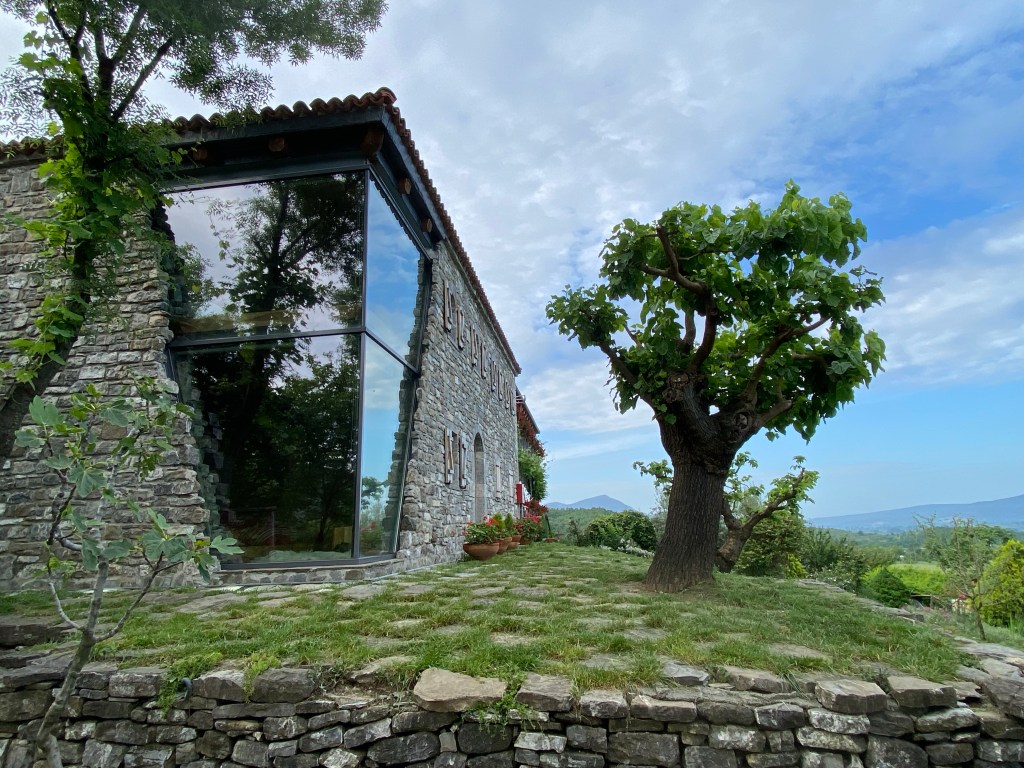
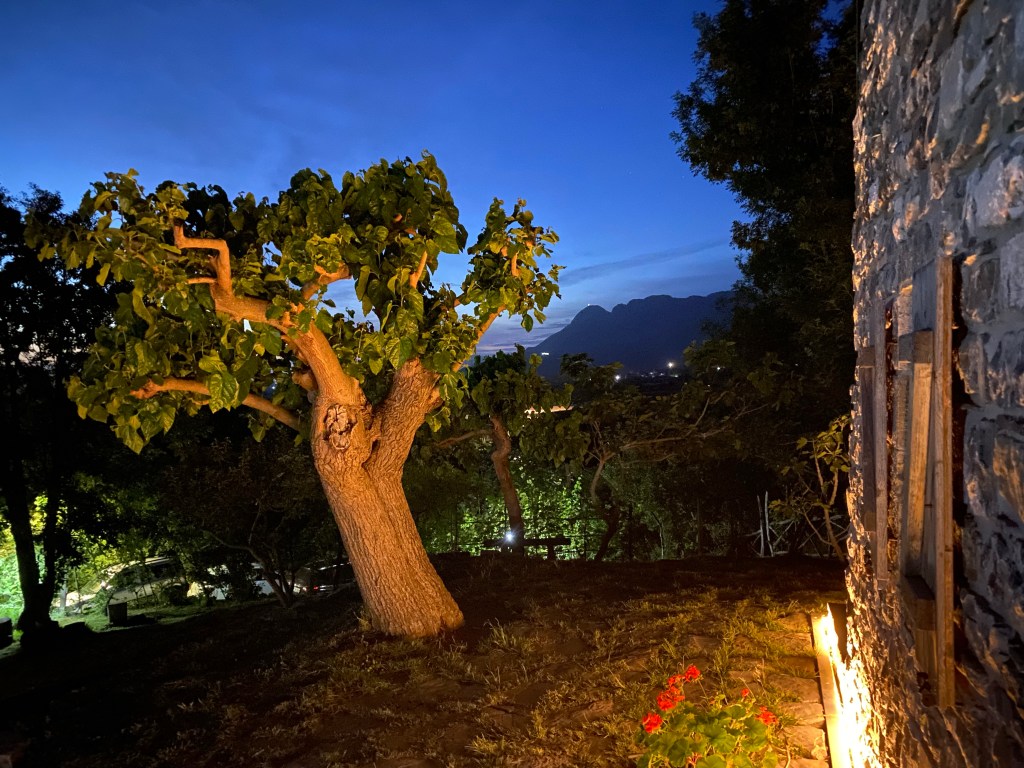
Driving towards a old stone house surrounded by olive trees on a small hill, one might have been forgiven for assuming to be somewhere in the middle of Tuscany. I was passing a vineyard, rows of flowers and vegetables, trees with hazel and walnuts, orange and lemon trees and this all in a peaceful valley near a small river and with some sunbleached mountains nearby.

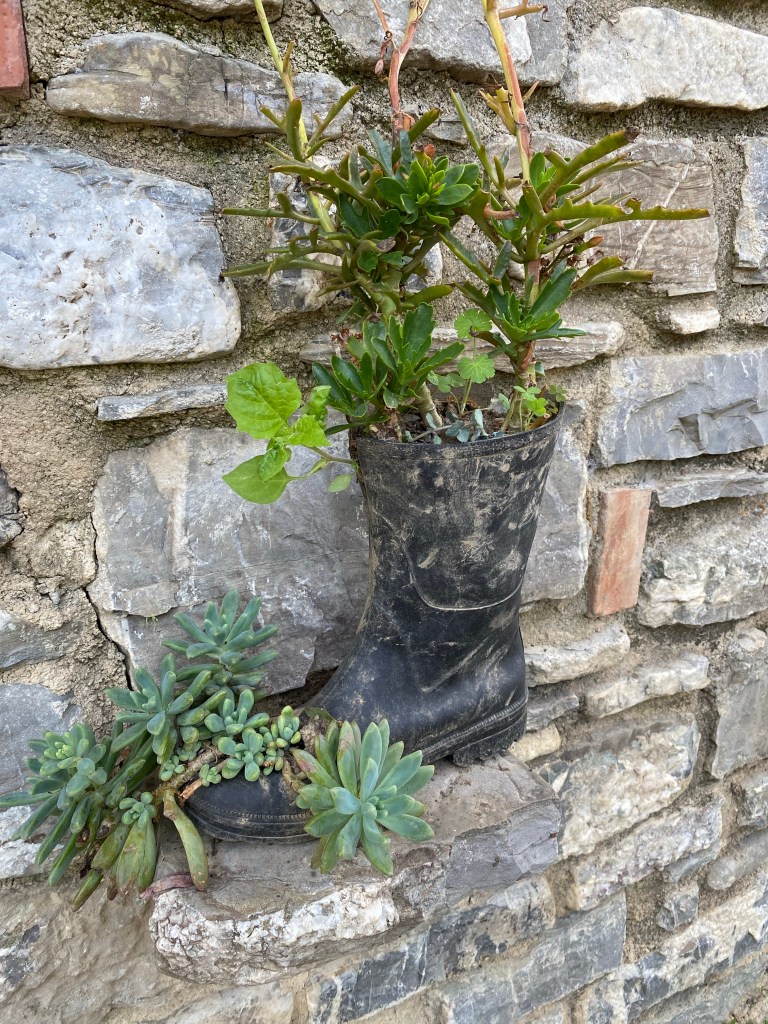
On the front court a pick up truck appeared to have crashed, spilling its cargo of beautiful pots of flowers on to the road…..

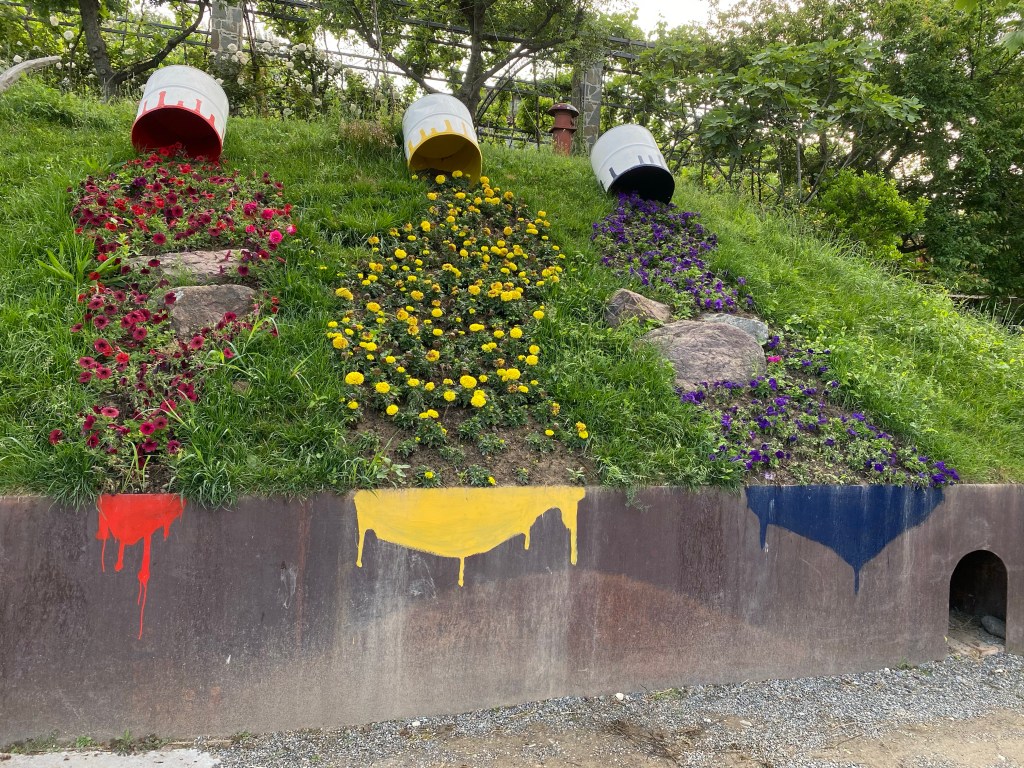
Further up the hill, pots of red, yellow and blue paint had been tipped over, with the paint on the lawn miraculously metamorphing into similarly coloured blossoms.

With so many playful and lighthearted ideas around me,

it was hard to believe that just a few years ago, this place used to be a regional military command centre.

Even the pill boxes had been transformed into giant lady birds and tortoises…

I was lucky, and despite a slightly messed up reservation, I was given the last room in the house, very fittingly for a vet featuring a cow not only on the key ring, but also on the door to my room and even with one standing next to my bed ……….on the shower curtain.

After dropping off my gear and taking a shower, it was time for dinner, which was very much in tune with the inspirational surroundings:

Virtually all the food and the drinks originated from the land and from the life stock of this agritourism business, which – I was told – was employing over 200 people – basically the whole village…..

To start my meal, I was treated to homemade rose water

(and the next morning I was lucking enough to witness the harvesting of the petals…).

The wine served with the meal came from the own vinery, the oil originated from their own olives and the ice cold water came directly from the local spring.

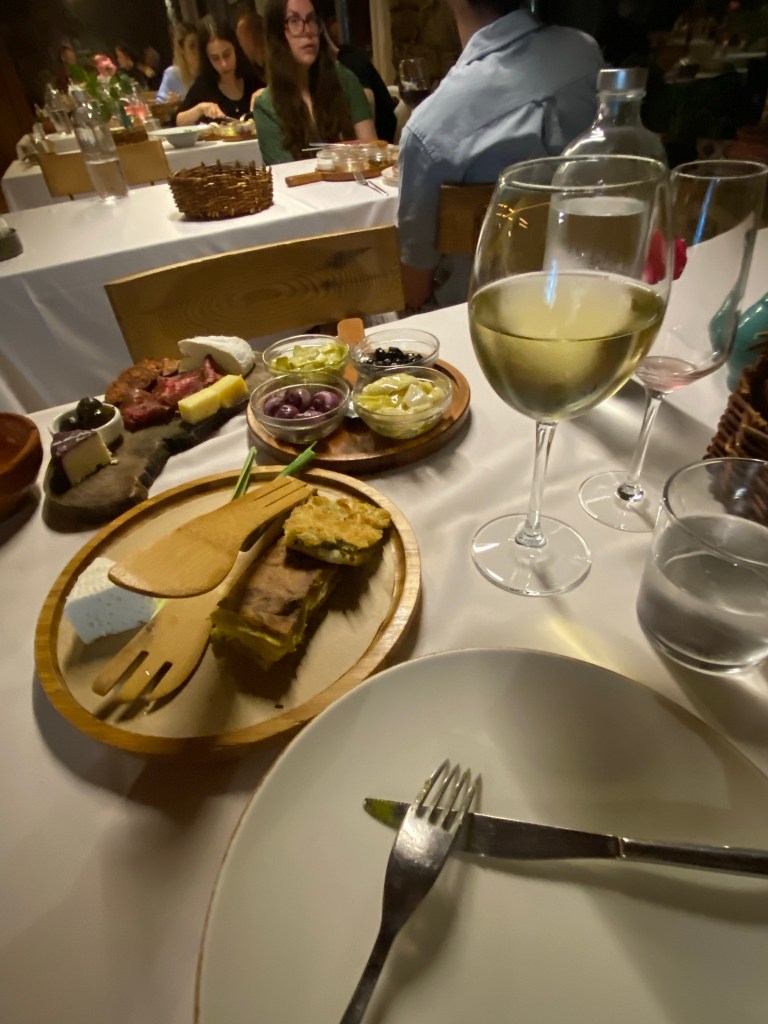
Very carelessly, I had ordered a meze of starters, with the result that after the table had run out of space, I wasn’t even able to progress to a main course……

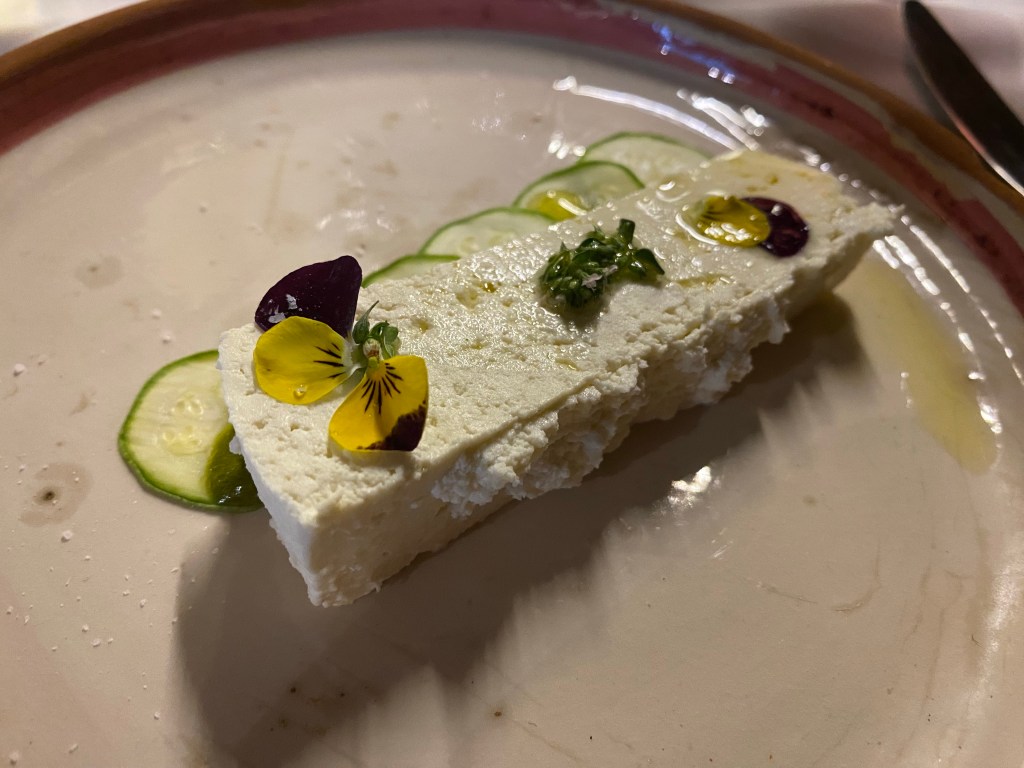
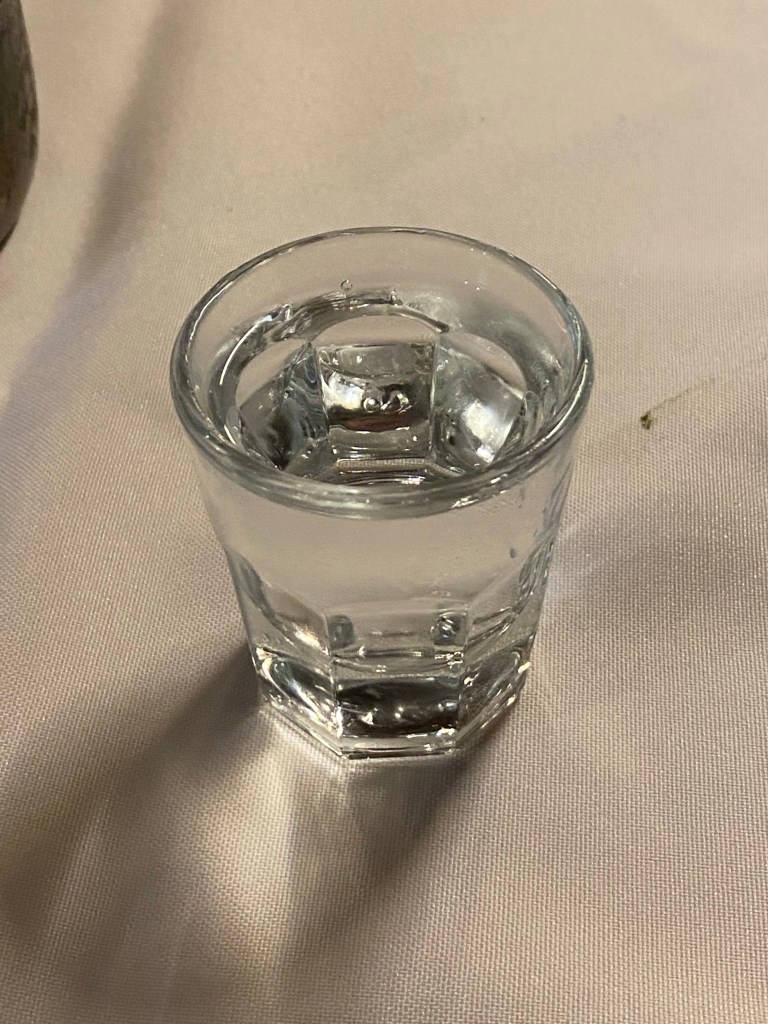
Homemade goat cheese, cured meats, olives, grilled vegetables and delicious filled puff pastries filled me up so much, that finally only a glass of local Raki fitted in,

before I was dragging myself to my very own cow shed on the hill….

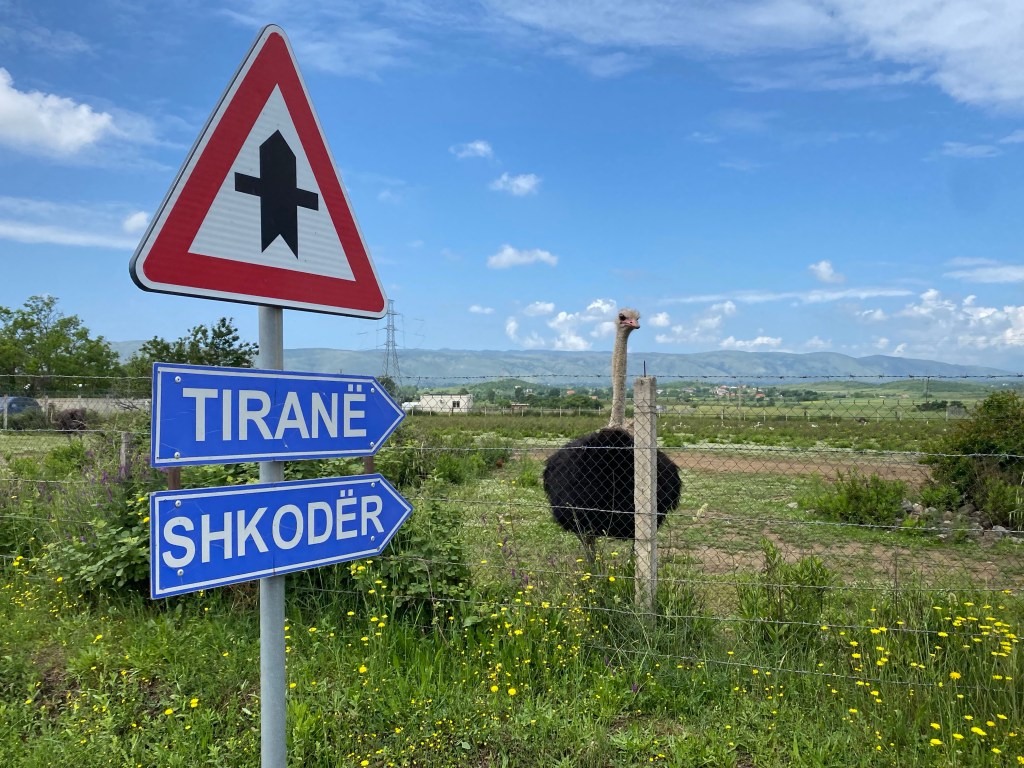
Driving back to Shkodra the next morning, spotting some of the local poultry next to the road sign, I became slightly concerned about the lasting effect of the local spirits.

I decided then that it was finally time to leave Albania…..

French engineering, Albanian fjords and the beautiful valley of Valbonë

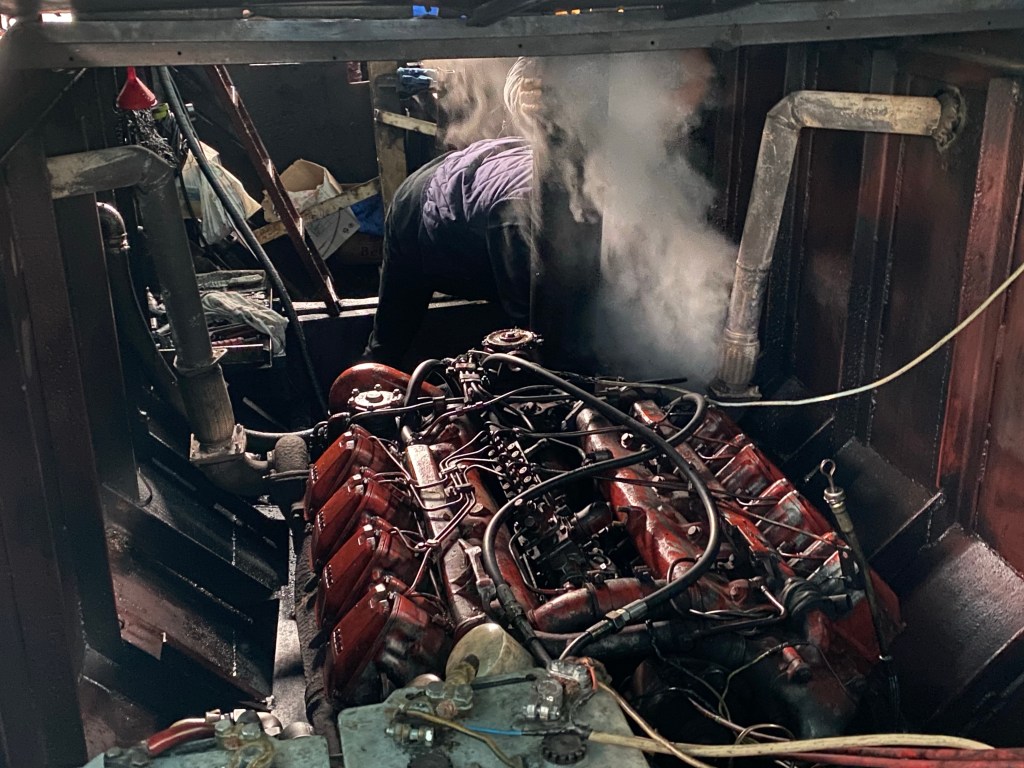
The diesel engine coughed a few times and then went out in a cloud of smoke….

We had been on our journey for not more than 3 minutes and that after having to wait for four days for the water level to rise, so that we could travel at all…..

Alma’s (and, to put the records straight – also Ana’s) second recommendation had been, to visit the remote valley of Valbonë and its famous national park.

To get there, you have two options – to face a long drive East crossing nearly the whole country, often close to the border to Kosovo, or to tackle the somewhat neglected service road to the impressive dam at Koman

and to shortcut the journey from there with a ferry ride along the reservoir to the small town of Fierza.

This ferry ride – if the ferry was going – was not to be missed, but because of the poor road condition, it would have meant a very early start from Shkodrë, which was not something I would have enjoyed, especially if I could be avoided.

And sure enough – there was another way: staying at “Vila Franceze”.

This concrete fortress, looking like a set for an early James Bond movie and build in the middle of absolutely no-where, used to be the home for the French engineers, who built both the dam and the adjacent hydro-electric power station, nearly 40 years ago.

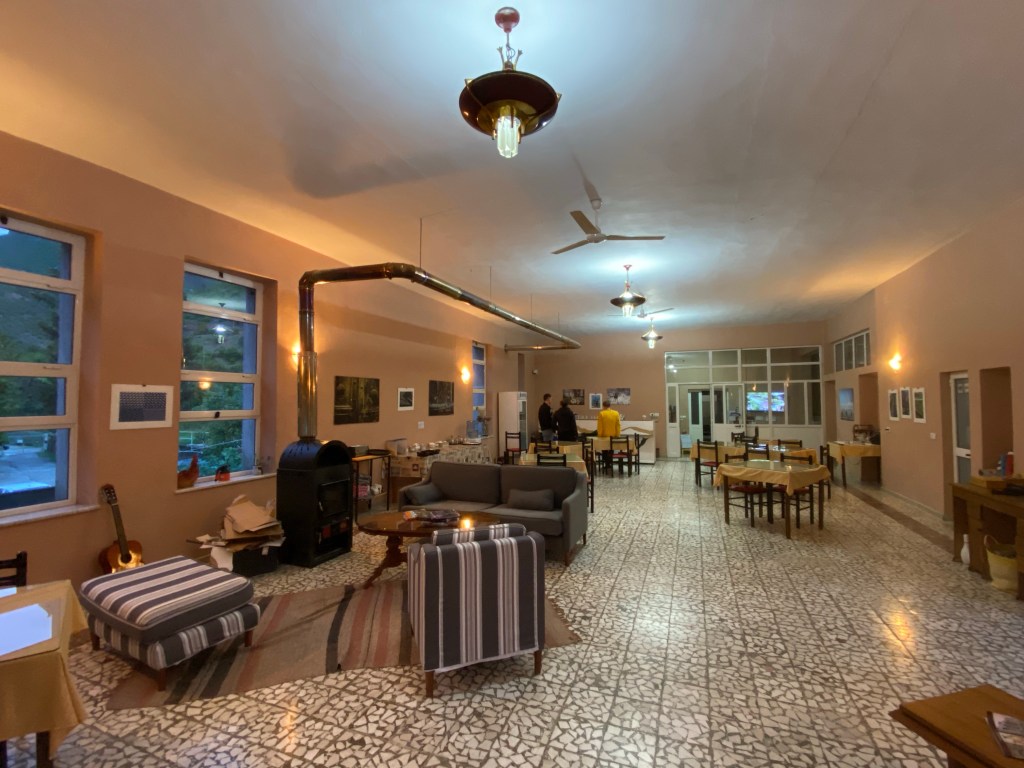
Now run by Amazona and her small team of Albanian and Italian helpers, it offers a brush with history by allowing guests to stay in the living quarters of the engineers and enjoying their amenities like swimming or kayaking at a small French Riviera set up at the Drin river

or a simple dinner at the spacious old dining and function room.

When arriving at the villa, I was told that I was in luck, as the ferry – after three days with low water levels in the reservoir – was ready to go the next morning.

Following a good night’s sleep in what must have been an engineer’s home for a number of years, I started to scale with my little Czech car the 130 m rock face just next to the dam, drove through a poorly lit service tunnel

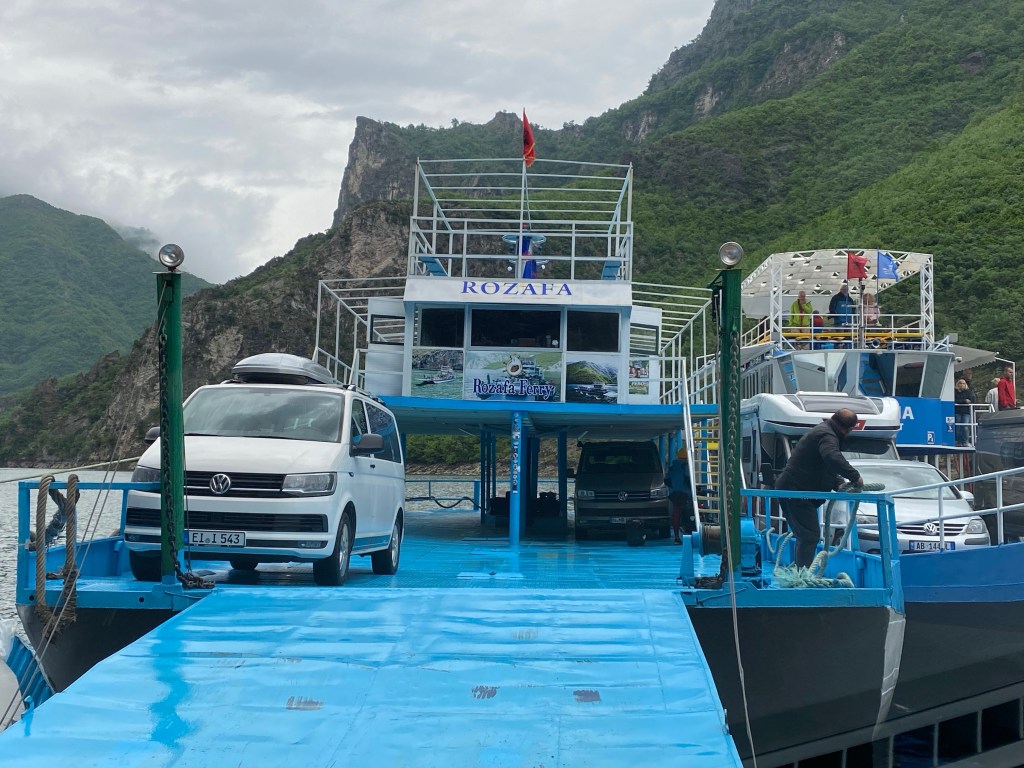
and finally ended up on the Rozafa, a bizarre arrangement of poorly welded sheets of steel with a number of reused bus seats in a small cabin on top and with an old diesel engine in its bowels.

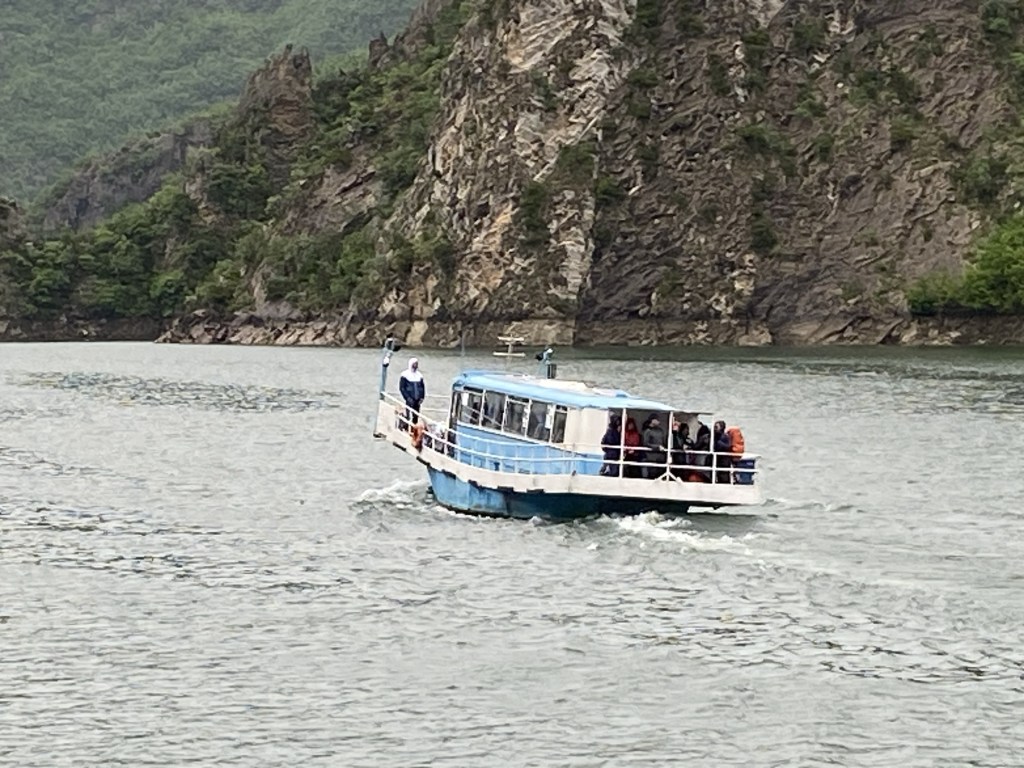
Despite the multiple examples of poor craftsmanship on this vessel, the Rozafa looked reasonably trustworthy compared the Frankenstein assembly next to us, which featured the whole top section of an old bus glued to something like a steel canoe. This contraption was used as a people ferry and it was listing dangerously to its starboard side…..

Considering this, the failing of our engine didn’t come as a great surprise, but with most of the crew giving the mechanic a helping hand, and with a lot of shouting and swearing at the poor man, we were prevented from sinking and soon up and running again.

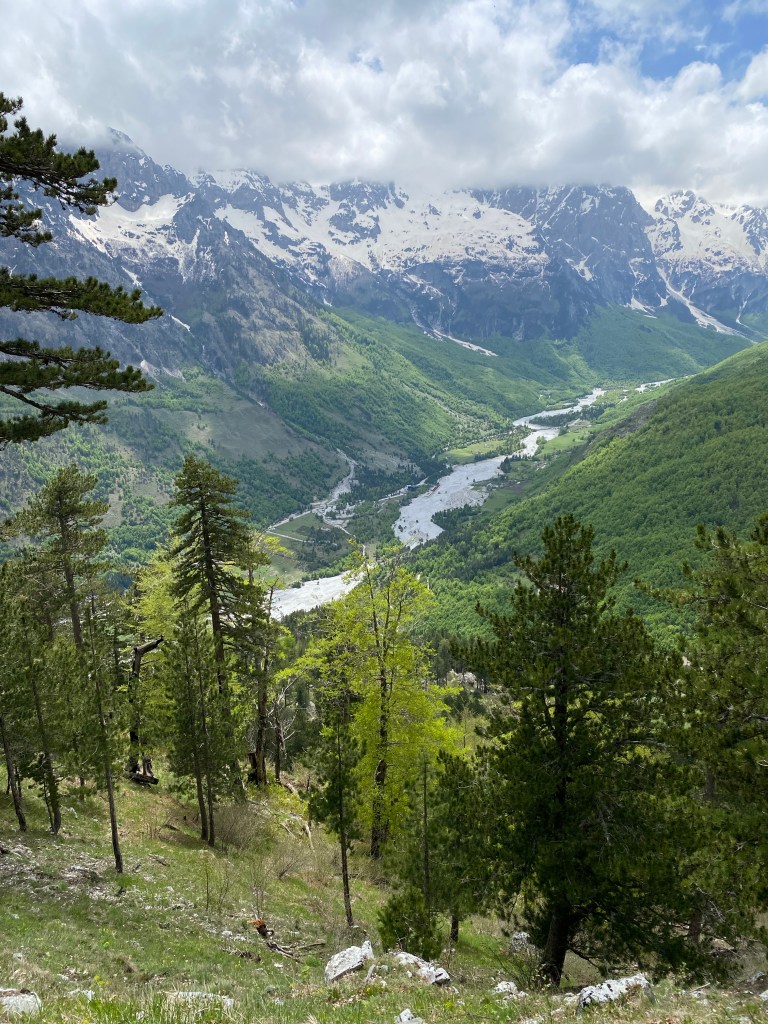
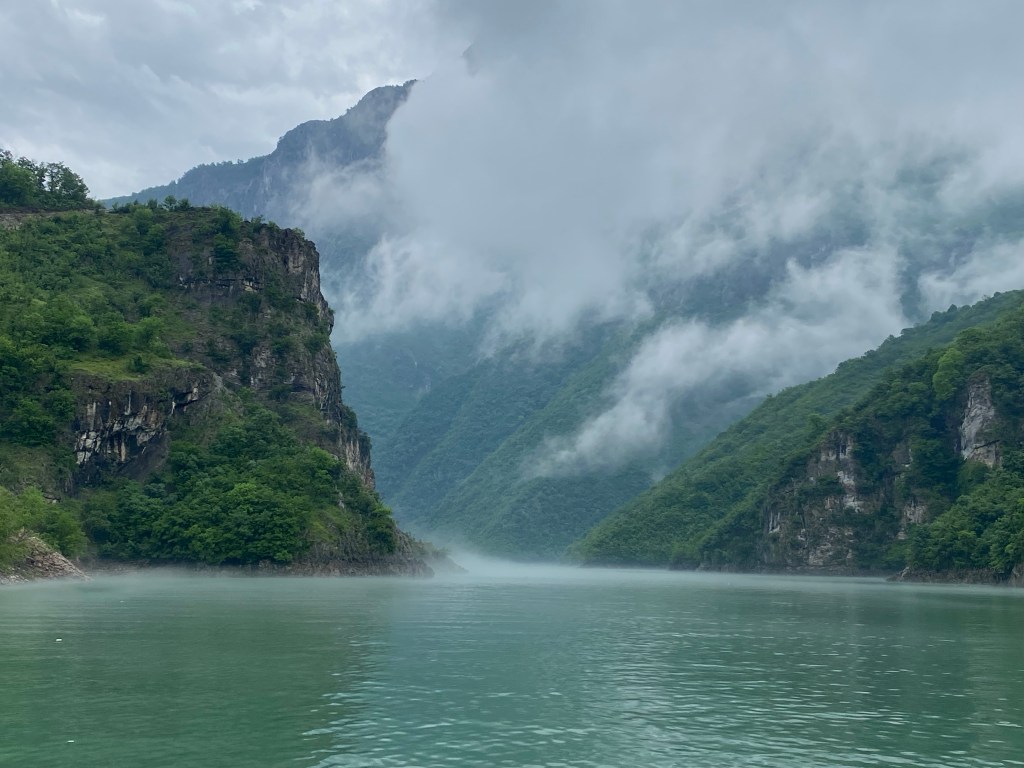
The following three hour cruise along the reservoir, with some sections being not wider than 50 meters and with waterfalls on both sides, can only be described as spectacular and just comparable with a trip through the fjords of the West Coast of Norway or Chilean Patagonia.

The state of the ferry was forgotten, the poor seating and the missing hospitality on board didn’t play a role any more and the only subject of conversation was now the landscape around us, the sheer rock faces, the green mountain sides and the few small houses clinging from time to time to rocky pieces of land, between the deep water and the towering mountain tops.

Arriving finally at Fierza and without getting stuck in the loose soil that was used as a make shift ramp,

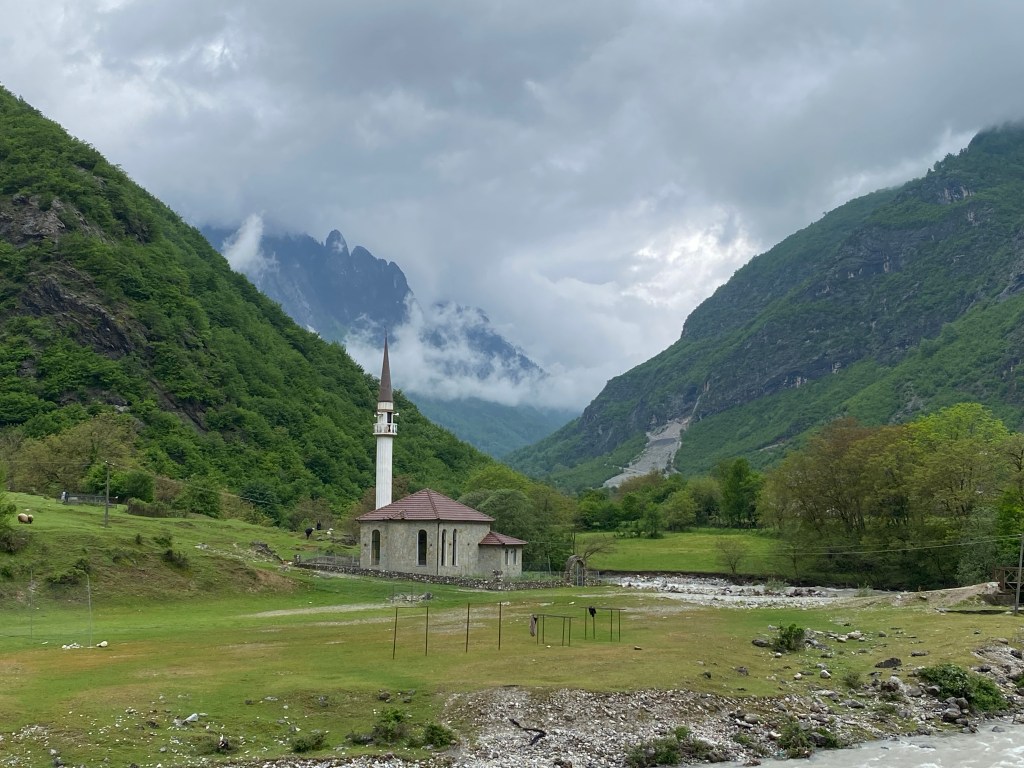
the road – in a much better condition now – continued into the mountains, once again towards the border to Montenegro. Passing a number of mosques and minarets dating back to the Ottaman empire,

I picked up Linsi, an Albanian hitchhiker, who joined me all the way to the end of the road, which was the trail head for the classic mountain crossing to the small village of Theth in the next valley.

It turned out that Linsi was working in a hotel nearby and after taking him up on his offer of a Turkish coffee in exchange for his free ride, I decided to make the place my base for the exploration of this part of Albania.

With luck on my side, the weather improved the next day considerably, allowing for more hiking on virtually deserted mountain trails in the Albanian Alps.

Lëpushë

Alma’s first recommendation was to head North to a part of Albania that is geographically more Montenegrin than Albanian, as it is completely surrounded by the neighbouring country.

There are only few or probably no regular buses which are going there, so that I had to organise myself a car for this trip.

My “brand new” Skoda arrived, being 7 years old with 93 000 km on the clock and a manual gearbox with a dodgy fifth gear…..Well, the engine sounded fine, the tires had some threat left and the brakes were working – with my fingers crossed (not while driving though) I decided that it should be fine…..

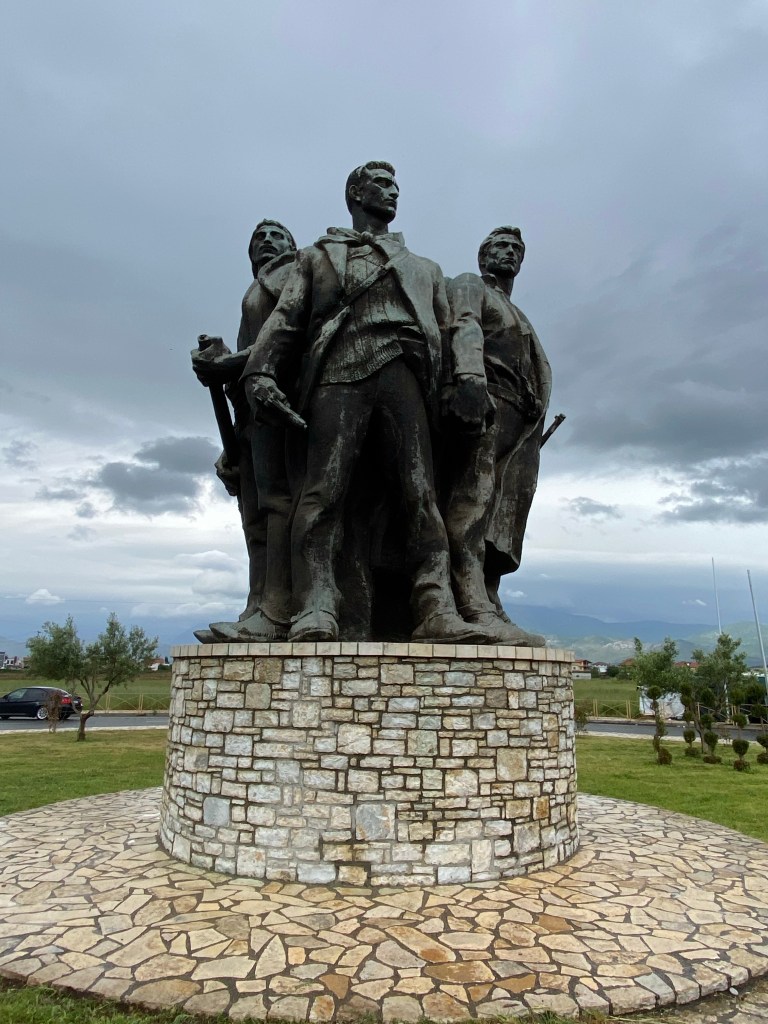
The road out of Shkodra, pass some impressive communist era monuments, idealising the Albanian partisan,

was for the first hour or so pretty unexciting, except from being from time to time overtaken by local cars in a rather spectacular fashion.

Passing through a roundabout, that gave also the option to head for Montenegro, I was driving further North, towards a giant white cross made of stones on the side of a mountain. Here the road started to ascend and the number of plaques remembering less fortunate drivers increased.

Crossing a small plateau, there came a slight drop and then….the abyss !

Meandering down in multiple hairpin turns, the road dropped suddenly for what looked like well over a thousand altitude meters…The only time I had seen something similar, was the famous Norwegian Trollstigen, which I tried – and failed – to scale with an old bicycle many years ago…..

At the beginning of this spectactular drop stood a lonely catering van and as this was a good place to park the car, I stopped and ordered an espresso.

The owner gave me a hard look, sighed and said: “OK, just wait a moment….”

He stepped outside and just then I noticed the trailer fitted with a diesel generator next to the van.

Five minutes after firing up the beast, I was presented with an excellent espresso, more or less in the same league as at Bar Italia in Soho, despite the fact that it was presented in a paper cup!

This environmentally somewhat questionable caffeine fix set me back the equivalent of 90 cents, which left room for a couple of Turkish chocolade bars to sustain me on the onwards journey.

What followed can only be discribed as absolutely spectacular ……

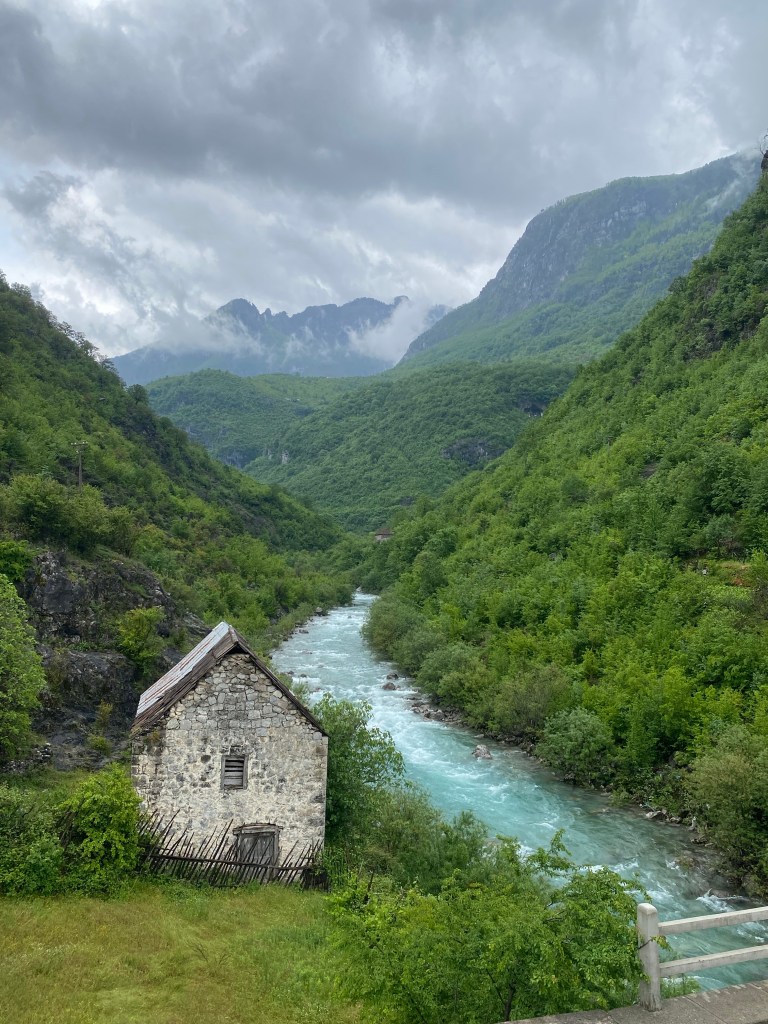
First the road descended in sheer never ending bends until crossing the bridge over the Cemi river, which had made good use of the past few million years by creating this canyon.

It then went alongside the river, creating again and again beautiful new views of the narrow valley with impossibly steep mountain sides just next to it.

The occasional rock on the road made me appreciate that I had not rented a convertible car and some sections of this trail North, I passed at some speed, as the sometimes overhanging rock faces made me just too uneasy.

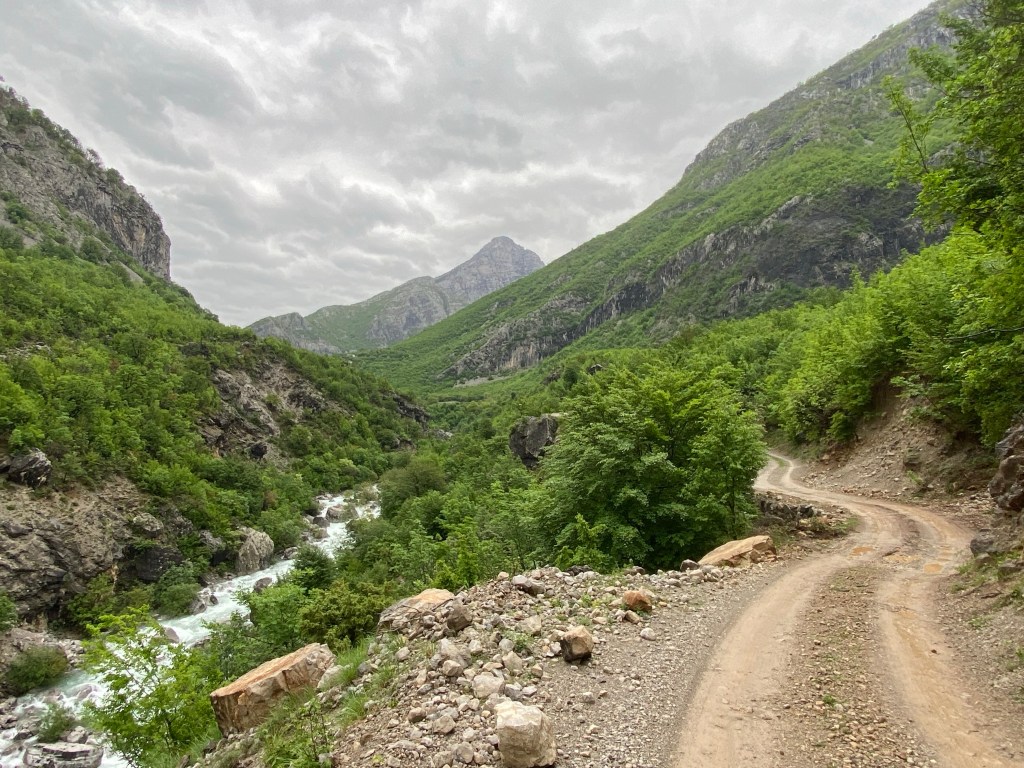
In the beautiful small village of Tamarë I had to leave the car behind as the road, which was following the river, had changed now into a dirt track, which I considered too risky to take without a 4×4.

This however gave me a great opportunity for some hiking in this unique landscape which, as I realised then, must indeed have been a partisan’s paradise and a nightmare for any invader of this part of the world.

After just over 10 kms, I arrived in the small hamlet of Vukël, which featured only a few guesthouses and a bar, where the appearance of a Northerner raised – just for a moment – one or the other eye brow.

By then it had also started to rain, so that I decided to hitch a ride for my return journey in an old Mercedes, which somehow managed to cross small rivers, manoeuvre around or through potholes, which could have swallowed a small house, while avoiding being smashed by any falling rocks.

I tried to concentrate on the images of a building site in Frankfurt on the smartphone of the other passenger and avoided to think about the at times sheer drops just next to the road and the multiple memorial plaques I had passed, commemorating villagers who didn’t manage to make the journey back to Tamarë….

However, somehow we made it back to my Czech carriage and after unsucessfully offering my new rallye team any money for their efforts (and for the heavy wear on the car….), I continued with my journey further North.

The road continued in the same breathtaking fashion and I asked myself how many brave men and women must have lost their lives to cut this small but vital line of tarmac through narrow gorges, accross rivers and along steep hillsides to provide even the most remote houses and villages with an access to the rest of the country.

Finally there was only the occasional car on the road and only the two remote but oh so beautiful valleys of Lëpushë and then Vermosh remained.

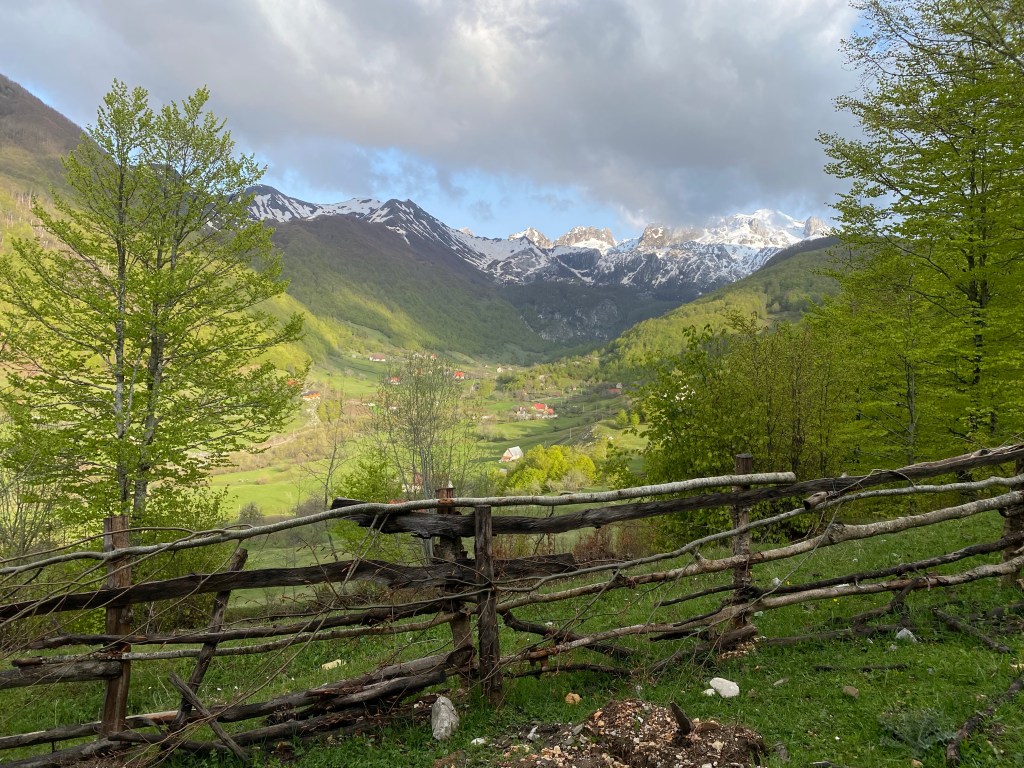
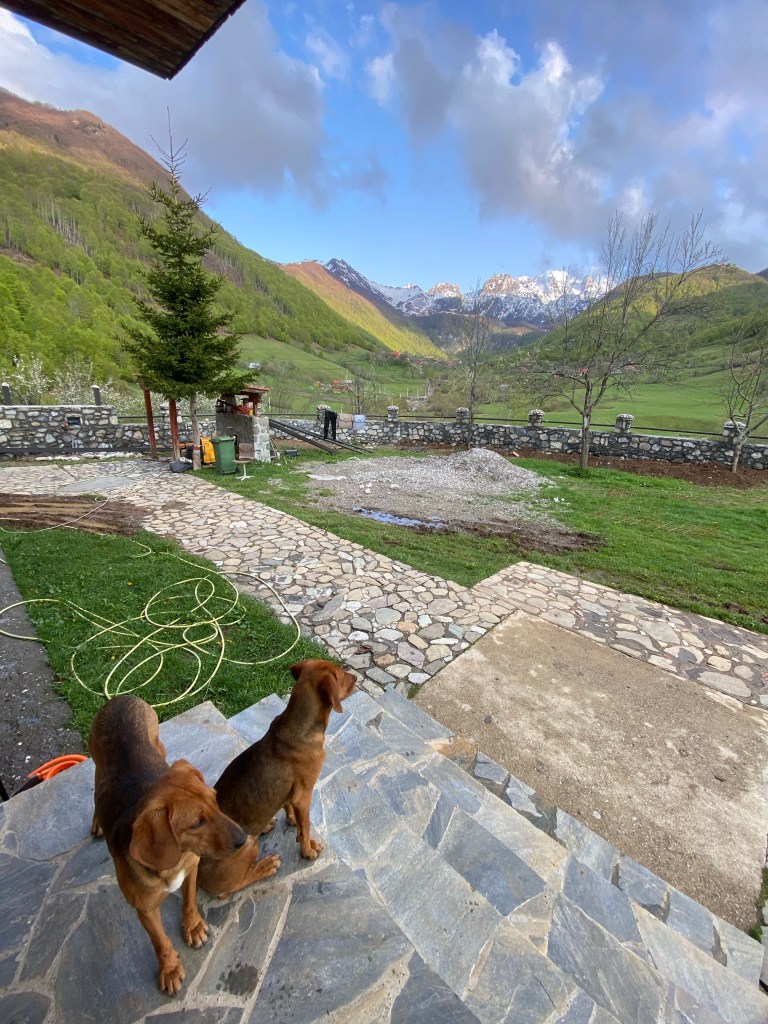
I checked in as the only guest at the slightly misleadingly named “Alpini Hotel”, where I was given a simple room with four beds in a family house with a communal bathroom. That was absolutely fine though, as I enjoyed from here an outstanding view over the peaceful valley with its green fields, its fruit trees in blossom and its small holdings, backed by the still snowcapped mountains in the East.

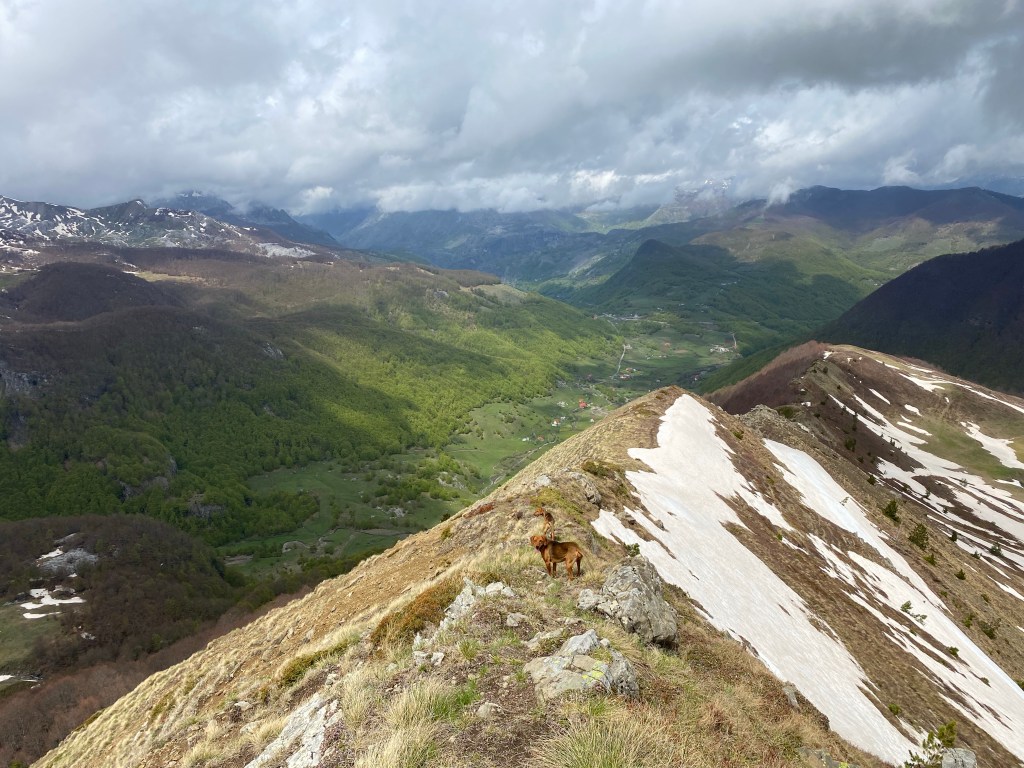
Soon I had befriended – with the help of a few lumps of cheese – a couple of young gun dogs and together with my two new friends, I started to explore this remote part of the Balkan.

Mi Casa es tu Casa

It is easy to walk pass my home in Shkodra, the main city in the North of Albania, and that despite the fact that I am staying at the former Russian Consulate and before that the former home of Pietro Marubi, the first photographer in this part of the world.

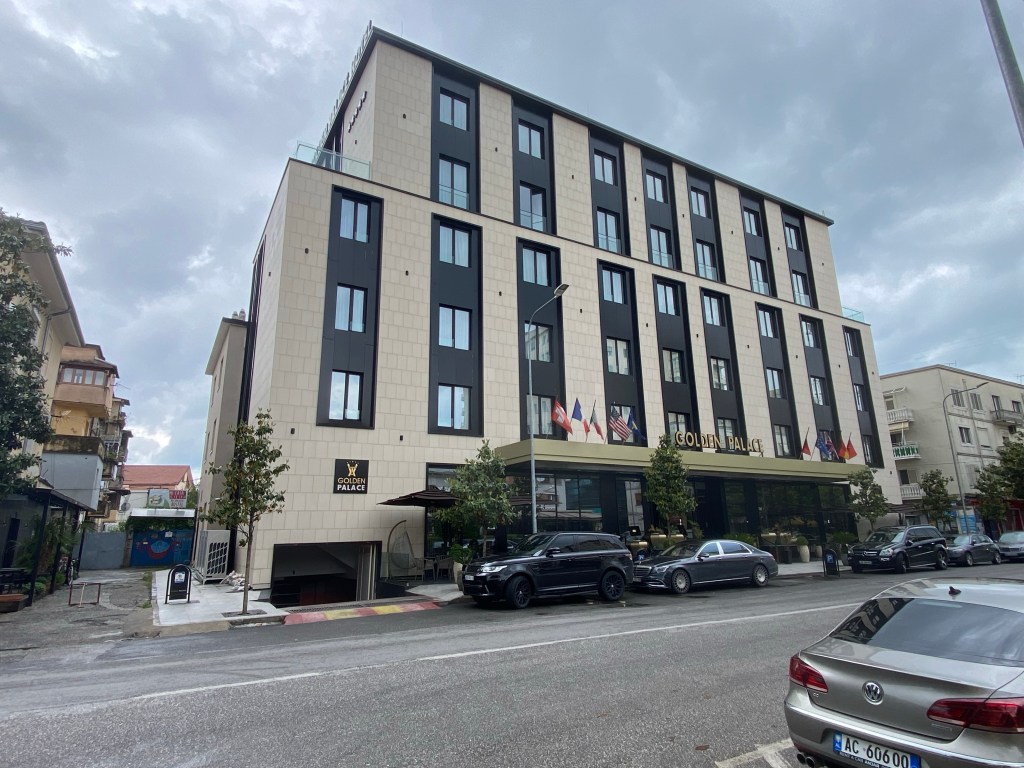
“Mi Casa es tu Casa” , an old Italian villa, which is owned by the charismatic Alma, is today – despite its historic importance and its central location – dwarfed by the towering fasade of the new Golden Palace Hotel, which is dominating Skënderbeg Boulevard which leads to Democracy Square, the center of the city. Only a hidden iron gate on the far side of the hotel is now the remaining entrance to this once famous address.

Unusual, considering the male dominated society in Albania, the building has been in the ownership of women for nearly a hundred years and going by the expressed will of my host, it will continue to be so in the future as well.

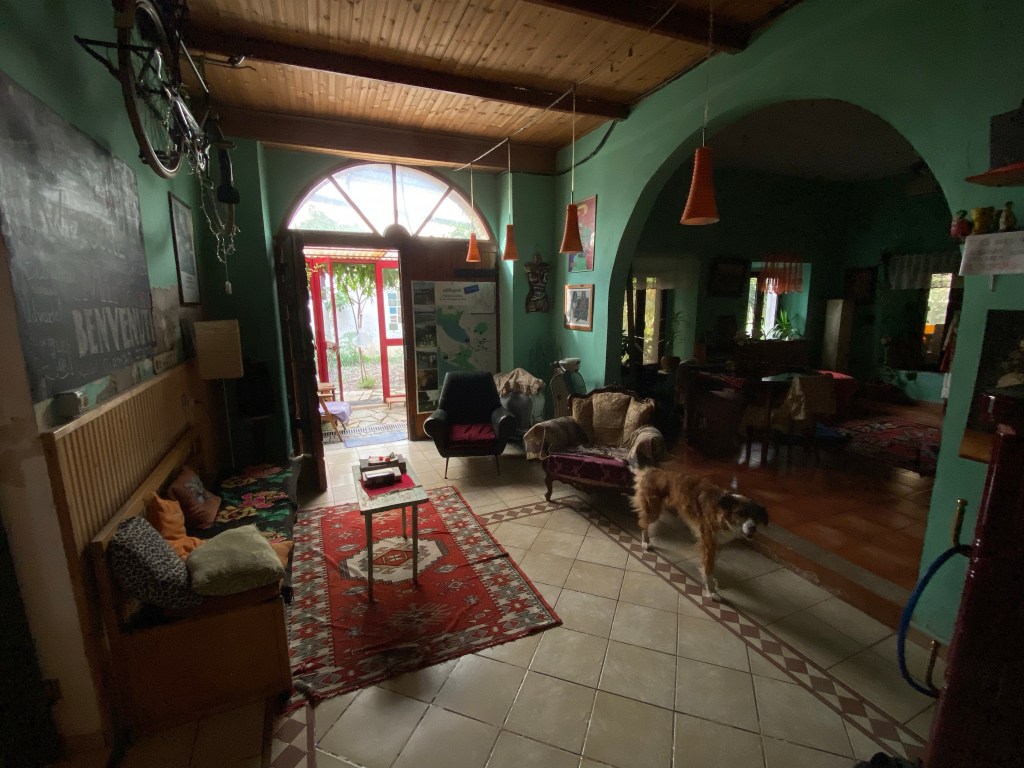
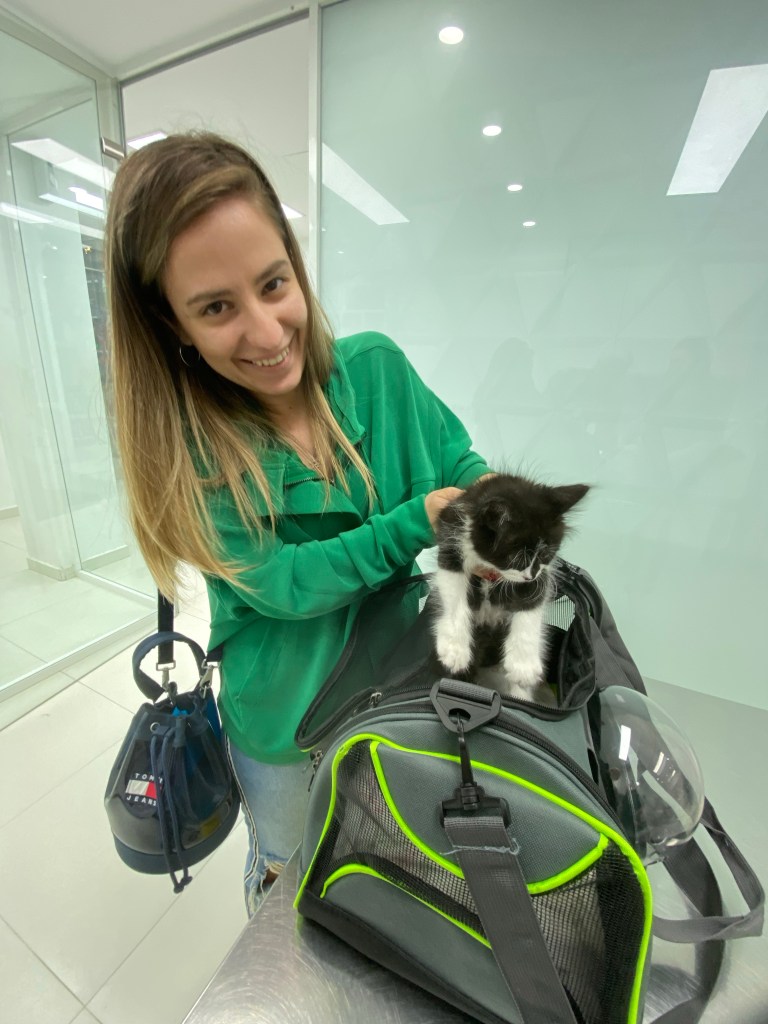
The place – in tune with its name – is giving a temporary home not only to adventurous travellers from all over the world, but also to a handful of adopted dogs and to some cats which Alma tends to aquire, following all necessary health checks and vaccinations, from the two local shelters. Some of them stay while some others tend to get adopted over time.

More character is added to the place by an interesting collection of – at times very personal – Albanian and Italian memorabilia and of local household items from bygone days.

Alma is a walking enceclopaedia on all matters concerning Shkodra and Albania, the local history and – of course – both local as well as Italian food.

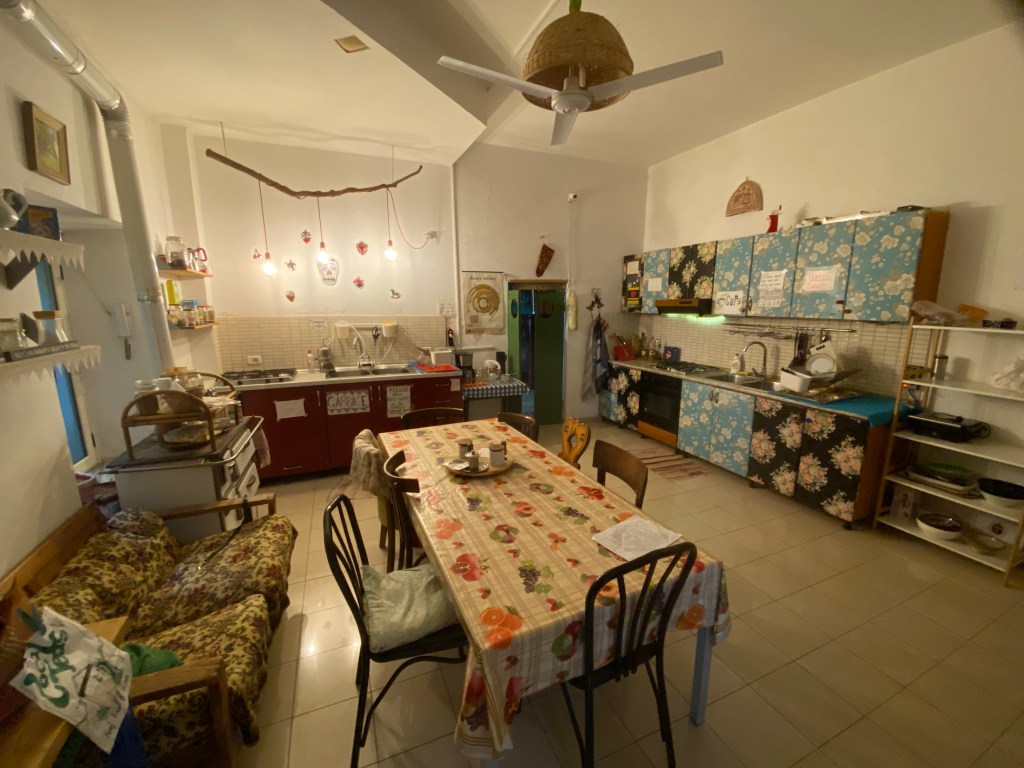
If it is while sitting in her kitchen enjoying some vegetable from her allotment as part of my breakfast or over dinner at one of the local Italian restaurants, I am enjoying Alma’s company and I am taking careful notes for the next step of my journey.

(If you want to read more about Alma and about the other extraordinary women that used to live in “Mi Casa es tu Casa”, just visit http://www.micasaestucasa.it)

Going to the vet in Albania

Ilir and Dritan have arrived on time, I am – as usual – a couple of minutes late….Some things never change……

I am meeting my Albanian colleagues in front of a cafe in the center of Tirana, following some communication by e-mail over the last few weeks.

My new aquaintances have very kindly agreed to show me a couple of upmarket clinics in the capital, to give me an idea of the best of care that is and that can be provided to pets here at the moment.

One has to remember that Albania is not a rich country and the ownership of dogs and cats was considered a bourgeois fancy, that was frowned upon by the communist Hoxha regime. Only in the last two decades this has slowly changed.

Albania has a single vet school, no organised companion animal veterinary association and there is still very little interaction with colleagues and education providers from outside of the country.

The two clinics we visit are not far from the city center and they have well organised and uncluttered consulting rooms and waiting rooms

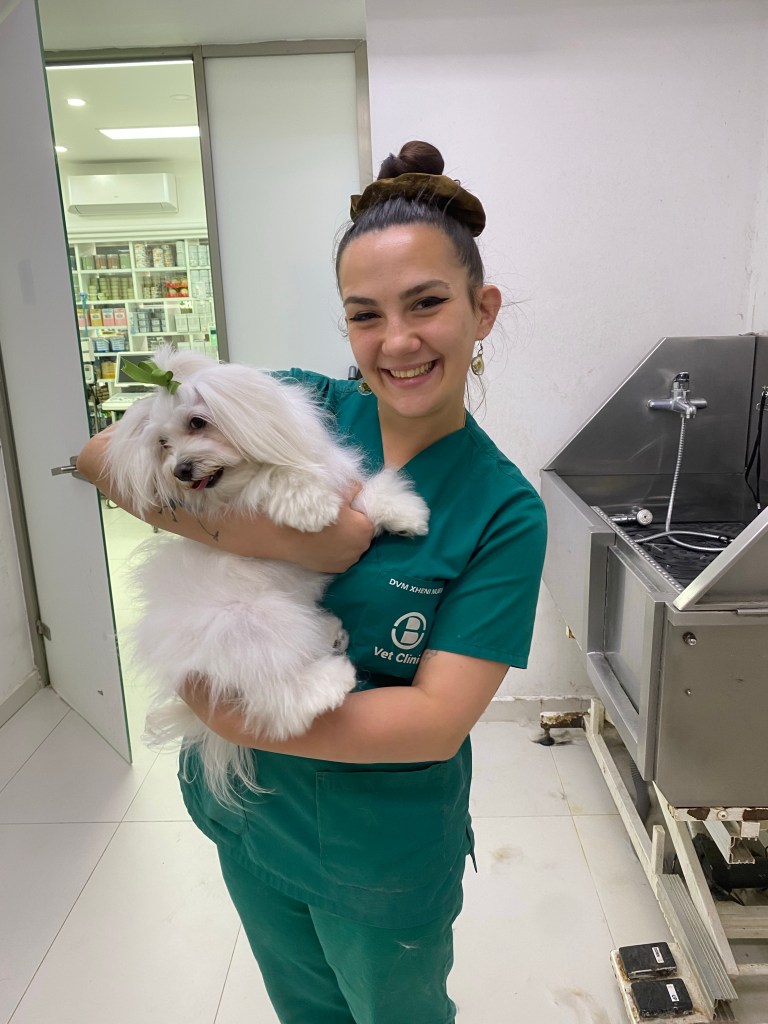
with a good supply of pet food and accessoires for their urban clientele. In both places there is a dedicated grooming room – something I would have loved to have provided to my clients in Virginia Water….

The teams in these clinics, consisting mainly of vets without any qualified veterinary nurses, love to have a foreign visitor and they are more than happy showing me around.

I am told that the usual consulting fee here is about 8 Euros, but that even that is frequently considered as too expensive by some pet owners. Both places feature operating theatres with Isoflurane as the main gaseous anaesthetic agent.

Despite vaccines readily available, a lot of pet owners consider this an unnecessary expense, resulting still in very frequent cases of parvovirus and distemper infections.

Corporate structures, pet insurance provision or health plans which are now so common in the North of Europe, are still unthinkable here. But with an eager, outward looking young profession, which – as in many other sectors of society – is catching up fast with the rest of the continent, a steadily improving provision of care is just a matter of time.

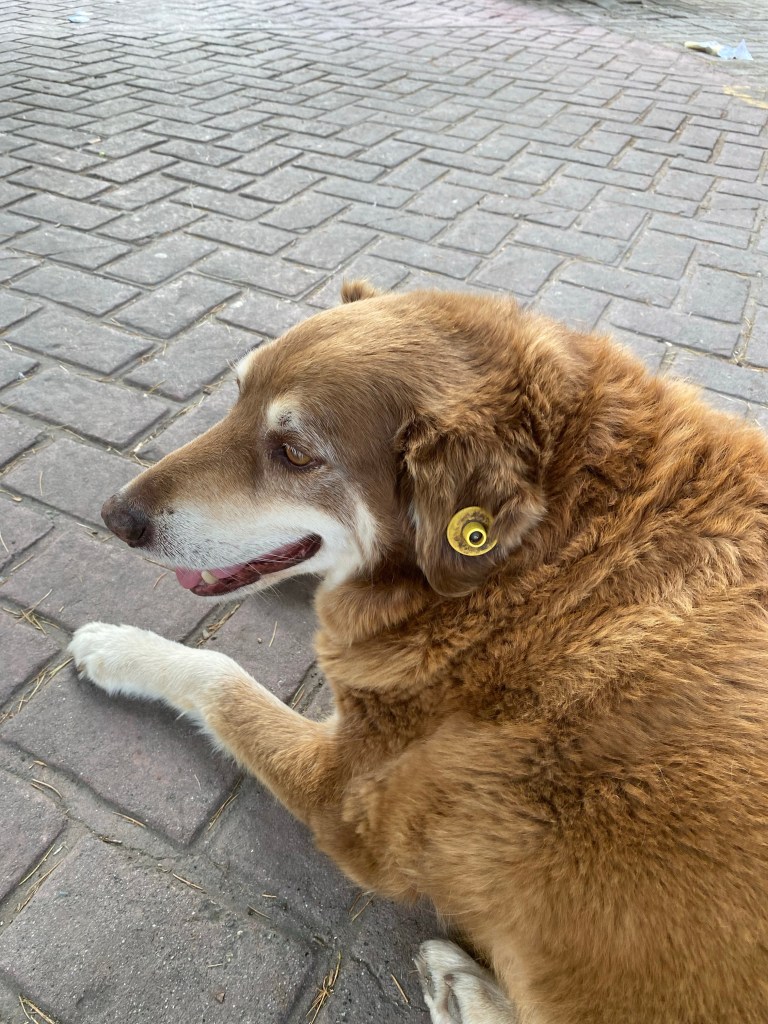
Outside of one of the clinics we are coming across one of Albania’s street dogs. A very prominent tag in its left ear – something I consider more with live stock than with dogs – gives an indication that the local authorities are providing some basic care for these dogs. However, it doesn’t distract from the fact that Albania – like may other countries on the Balkan – still faces a huge stray dog issue.

Addressing in an ethically acceptable and efficient way this problem might some consider the more pressing issue at the moment . I think (and I hope) that with increasing wealth – as many other countries have demonstrated – both first class veterinary and animal welfare issues of homeless pets can be addressed at the same time.

Further North to Tirana

It proofed to be not so simple, getting from Northern Greece into Albania. Sensible people – unlike me – seem to fly via Athens to Tirana, which, as previously explained, is not an option for me on this trip.

There is no direct bus from Ioannina to Tirana, although rumour has it, that a long distance coach between Athens and the Albanian capital is passing by Ioannina and that it can be flagged down at a cafe just outside of town.

With a bit further digging I find out though, that there is a direct bus between Ioannina and Gjirocastër – a UNESCO World Heritage site – in the South of Albania. Once over the border, I trust (correctly) that there will be ample transport options to the capital.

Entering this time a considerably more comfortable coach at the central bus station, I am within two hours transported for 90 kilometers across the border, through a long valley with beautiful green mountains on both sides and along a river with pristine water.

Just before sunset I am arriving in Gjirocastër, the “Stone City”, which is the site of an impressive mediaval fortress on a nearby hill. I am picked up by a lovely man who doesn’t speak any English or any other language we a both are able to converse in and brought to “Grand Pa’s House” which is beautifully kept and conveniently located at the foothills of the castle.

Gjirocastër, its history and its site would provide ample material for another chapter in this diary, but following a short stroll through its deserted streets very early the next morning (ahead of the daily bus loads of tourists)

I am on the road again, catching another bus – this time again of the battered minibus variety – which is promising to take me for 14 Euros the required 230 kms further North to Tirana.

Following an hour’s wait – as I had just missed the 11 o’clock schedule – I am somewhat surprised that the bus driver, who could also have earned a living as a night club bouncer, is ushering me further down the aisle exactly to my alocated seat, based on my pretty rudimentary and certainly not machine readable ticket……

Here I am unmistakably told to remain for the duration of the whole trip.

The reason for this becomes clear over the next 4 hours, which develop into a colourful caleidoscope of Albanian village life, which no guide book or travel programme would be able to provide.

While our little bus is rolling through the stunning mediterranian countryside of Southern Albania, the driver is stopping at everyone who is indicating that he or she in need of transport up North, lining his pockets with unrecorded banknotes and coins.

For a couple of Euros a fellow foreigner with a hugh back pack is entering the bus. It turns out that he is on a mission to maneuver the Vlora river with his inflatable kanu. After 10 kilometers he is leaving again.

Villagers dressed in black, clearly on their way to a funeral, are entering and then leaving in the following village. A young boy is handed over to the driver with clear instructions by the mother where to drop him off again. The little boy is hugging his mother and his brother who has come along to see him off and then the bus continues on its journey.

At a spring next to the road, the driver stops to fill up a 5l plastic container with the water.

A parcel is handed to the driver, which after a journey of 100 kms is leaving the bus again.

A guy with a damaged car radiator is been refused access to the bus because he doesn’t seem to be able to pay the fare ?

Throughout the whole trip, the bus is filling up with a colourful mix of Albanian society and then emptying again.

At a roadsite cafeteria, the bus drives on to the gravel car park, the driver shouts out of the window and a young girl comes running with a ready made Turkish coffee.

At a larger service station, we are taking a break and I make the pointless attempt to invite the main protagonist of this trip to a coffee…. of course he doesn’t need to pay here for his food or drinks, as he has just dropped off a whole bus load of new hungry and thirsty customers…..

However, I seem to have scored some points with the man, as he then tells me – after guessing my nationality correctly – that he has a couple of children living in Berlin.

In just over 4 hours this incredibly entertain trip comes to an end at the North-South Bus Terminal at the outskirts of Tirana, from where for a further bus fare of 0.35 cent, a local commuter bus is bringing me to the doorsteps of my home for the next few days.

Three coins and four names

There are three coins on a small piece of paper and a few more just next to it on a table in a room where normally there shouldn’t be coins or a table and certainly not a building….

The reason for this is, that the table in question is just standing next to the abyss on an overhanging mountain side in the remote Tzoumerka region of Northern Greece and it could have been standing there for the last 800 years.

I have been stopping at the Kipinas Monastery, which is a small cluster of rooms that – gravity defying – appears to have been glued onto the sheer rockface, to protect its inhibitants – Byzantine monks and their flock – from foreign invaders.

Further defensive features are a small draw bridge and a complex tunnel system that is leading over 200 meters into the mountain and to an own water supply.

Well hidden and towering over the road and the Kallarytikos river below, its precarious and yet ingenious construction has stood the test of time.

Kindly encouraging the monks in a magical place like this to pray for your loved ones can certainly not do any harm…..