
It was surprisingly easy, finding a cab at 5 AM in Thamel and with the exception of the discomfort of riding in a car with a completely worn suspension, my short jouney to the magnificent stupa at Boudhanath went very smoothly.
Nepal is predominantly a Hindu country, but especially in the mountainous North, there is a strong Buddhist presence, due to the influence from neighboring Tibet. Stupas, gompas, mani stones and poles with colourful prayer flags had been common sights for me, while I was hiking in these regions.
The large stupa at Boudhanath, in the North-East of the Kathmandu valley, is one of the most important Tibetan Buddhist monuments outside of Tibet and many devotees of this peaceful religion, living in the South of the country, are gathering here.
Arriving early in the morning, was making for a more intense experience, as most shops and restaurants were still closed and the site was mainly left to worshippers. Many of them were humming the sacred words “Om mani padme hum” (“Praise to the jewel in the lotus”), while performing “kora”, a steady, strictly clockwise walk around the monument.
Some were making use of the prayer wheels, which were placed along the outside wall of the stupa, others were carrying their own permanently rotating prayer wheels, while a few were even prostrating themselves in regular intervals all the way around the structure.
Behind a low wall, inside the outer rim of the structure, were a few mats, where more prayers and prostrations were performed.
As in the mountains, dried juniper twiggs and herbs were smoldering in low fires in metal drums and red clad monks were walking at the outside of the kora with small smoking metal containers in an act to enhance their prayer and to fend off evil spirits.

The same devices could later be found at the entrance of all shops and restaurants around the site.

Similar to many religious sites in Nepal, a number of local dogs found a peaceful existance here

and considerable sums of money were spend by the visitors on bowls of corn and grains, to feed a huge flock of resident pigeons,
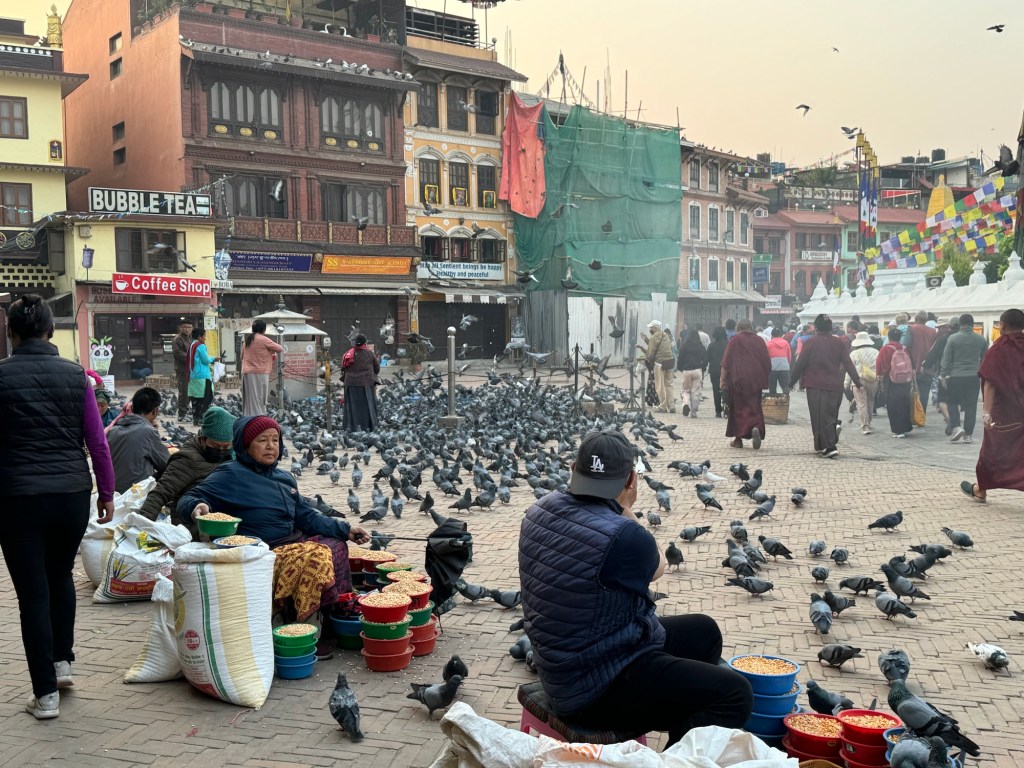
of which many had made a temporary home on the huge dome of the stupa. To meet all needs of these residents, plastic basins were regularly filled with fresh drinking water, so that the birds could quench their thirst and take a morning bath.
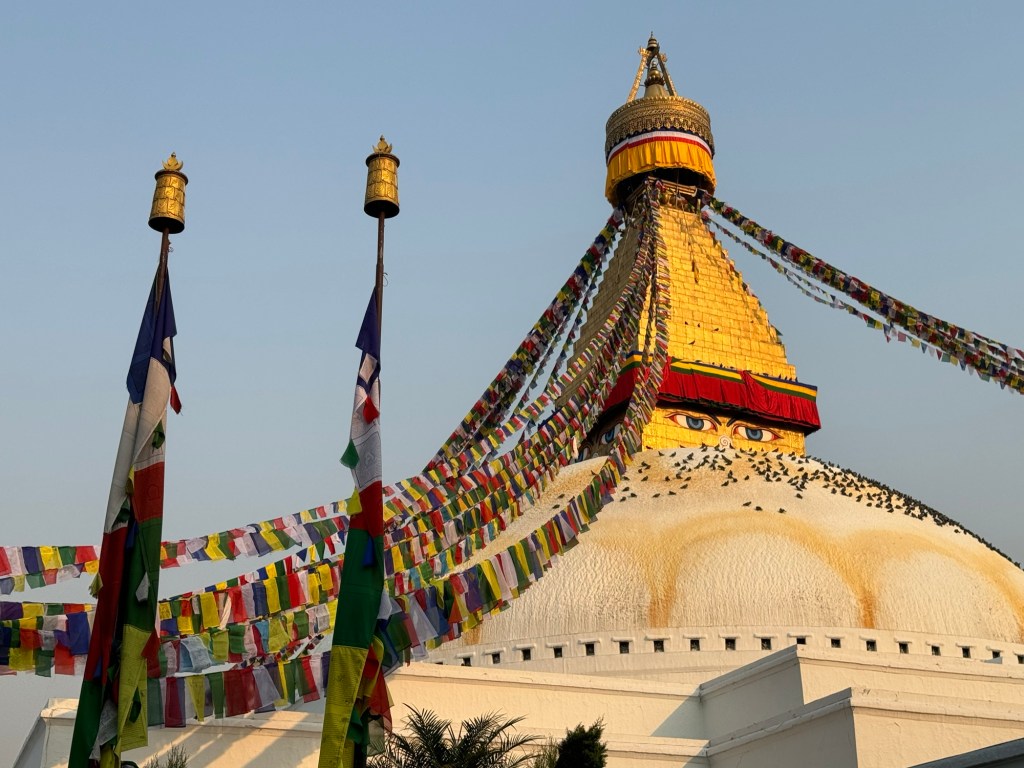
From the gompas outside the square, the monotonous and yet so characteristic chanting of the monks, the sounds of their horns and of their drums was adding to this sea of colours, smells and noises, as the sun was starting to illuminate the top of the building, which was displaying the watchful blue eyes of the Bhudda, below the thirteen golden steps leading to Nirvana.
Although whole football teams could be seen partaking in this active form of worship, the majority of people performing the kora appeared to be of an older generation and for many of them, the colourfully dressed local women, offering warm tea from large thermos flasks on a low ledge, covered with isolation mats, were providing a much appreciated opportunity to rest and to observe the atmosphere in peace and thoughtful reflection.
A truly memorable way to start another day in Kathmandu….
 The Blue Vet Diary