I was coming to the end of my journey to Nepal and my boots were bearing the marks of over 300 kms of rugged mountain paths, of the exposure to snow and ice and of getting drenched during downpours and river crossings in the Manaslu and Annapurna regions. They had been caked in mudd and dust in the jungle and the grasslands of Chitwan and from walking through the traffic and the leftovers of human habitation in Kathmandu and Baktarpur. The leather was bone dry and at places it was still covered with the silt of the banks of the Rapti River. Most of the profile of the soles was gone and the strings were struggling to hold the boots on my feet.
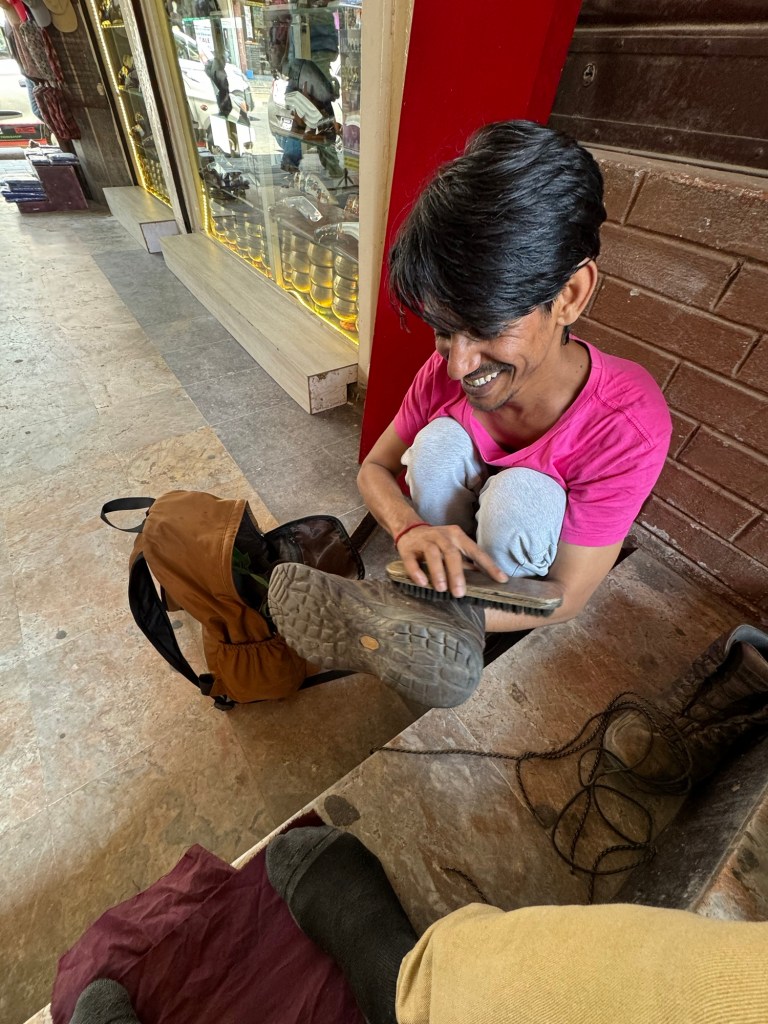
It was then, when I was approached by mobile shoeshiner Rakish, who offered to take care of them. After retreating from the blazing sun on Tridevi Sadak to a shadded set of stairs nearby, Rakish set to work and we started talking….
After having to close his shoe repair shop a while ago, Rakish had moved into the mobile shoe care business and while my boots underwent a complete transformation, he talked about the life in Kathmandu away from the tourist areas, of his family, of the daily struggle to make ends meet, but also of the beauty and joy of the multiple festivals and celebration in his city.
Eventually, my boots looked better then when I had bought them
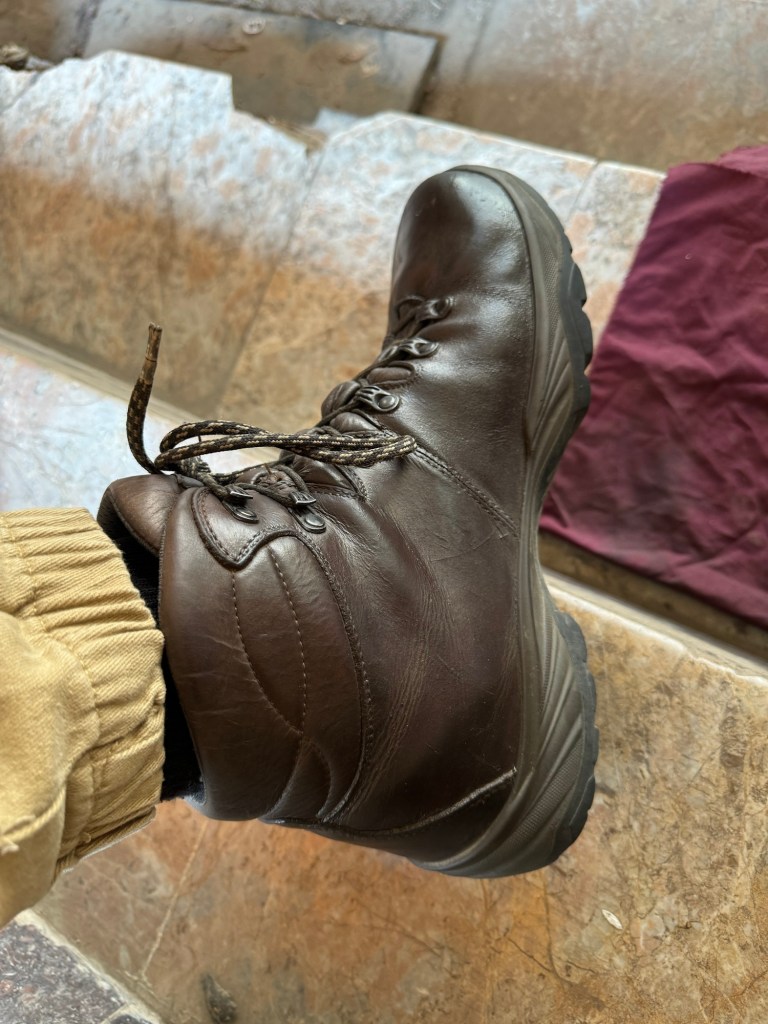
and I had found the perfect companion for a final adventure in Kathmandu.
After all, there was one more place I had planned to see and this had to be done at night…..
Just before sunset the next day, Rakish and I squeezed ourself into one of the numerous, hopelessly overcrowded minibuses, where my average European physique put me at a clear disadvantage, unless my legs miraculously would have grown another set of joints.

But the contorsion didn’t last very long and after a jouney of about twenty painful minutes, we exited this rolling tin can and found ourselves just off Kathmandu’s Eastern Ring Road, not far from the banks of the Bagmati River.
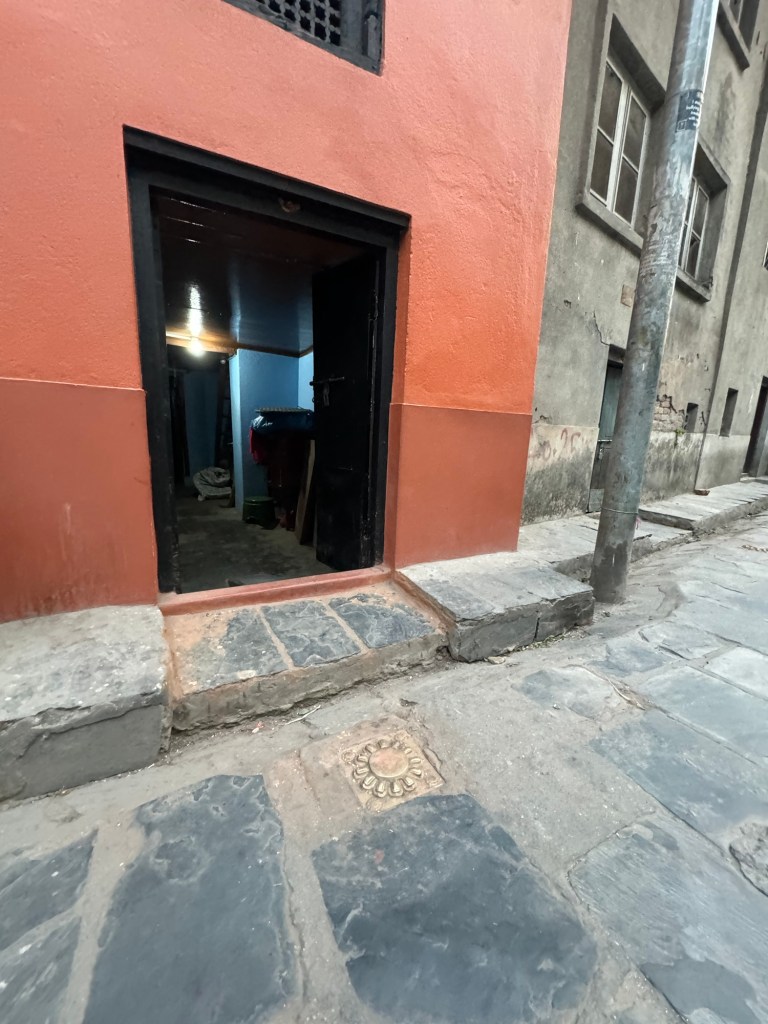
Descending towards the river bank, the streets became narrower and more crowded. Infront of every house, I noticed golden flagstones, most of which were covered with orange paint and small offerings of marigold flowers , various fruits and grains of rice, to honor the Hindu deity protecting the individual dwellings.
At a small ashram, we came acrossed the first sadhus, who exchanged some kind words with Rakish. But rather than carrying on towards the river, we then turned North and moved away from the crowds along the river bank, until we stood in nearly complete darkness infront of a large Hanuman statue that was covered entirely in orange dye.
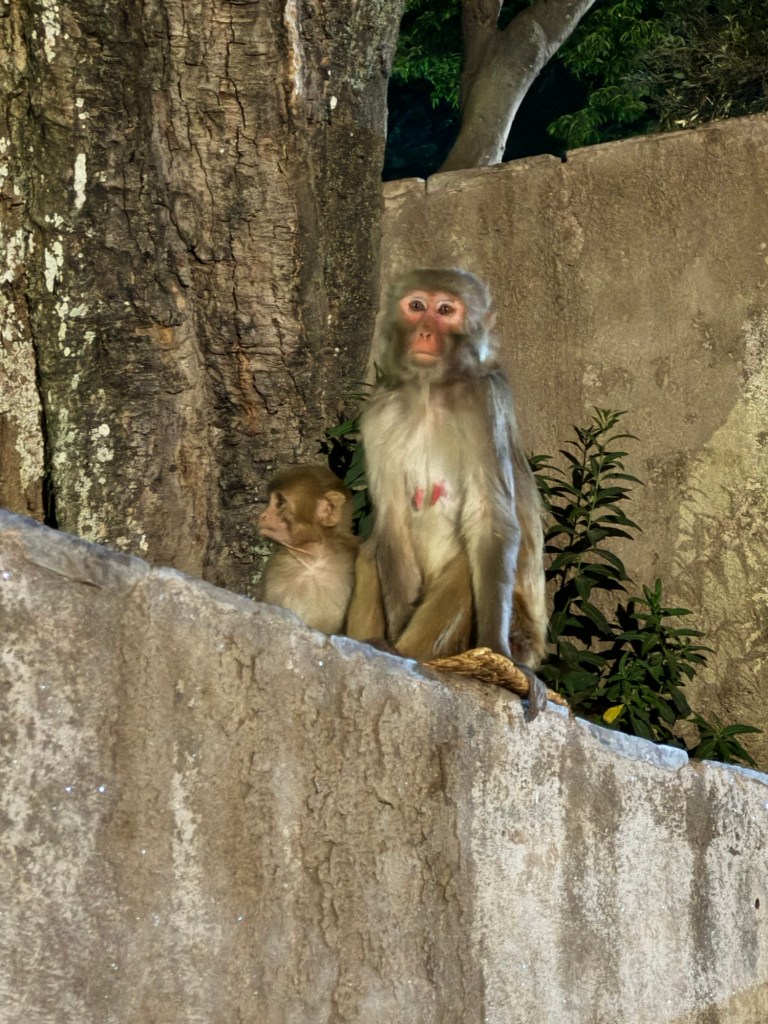
We had arrived at the now deserted Gauri temple, placed right next to the dark, putrid water of the river. Only when climbed up towards the nearby bridge, I noticed that there was a lot of movement on the steep river banks and underneath the bridge and just then it became apparent to me, why this place was dedicated to the Monkey God….
Now on the other side of the river, we climbed a small hill and passed some more temples, before we then followed a narrow track into a small forest. Stumbling over a number of tree roots, I appreciated that I had chosen my warm, but sturdy hiking boots for this nocturnal outing.
Eventually we had reached the highest point of the path and now, heading South again, we were walking towards a magical bright light, rhythmic music and the clapping and cheering of a large crowd.
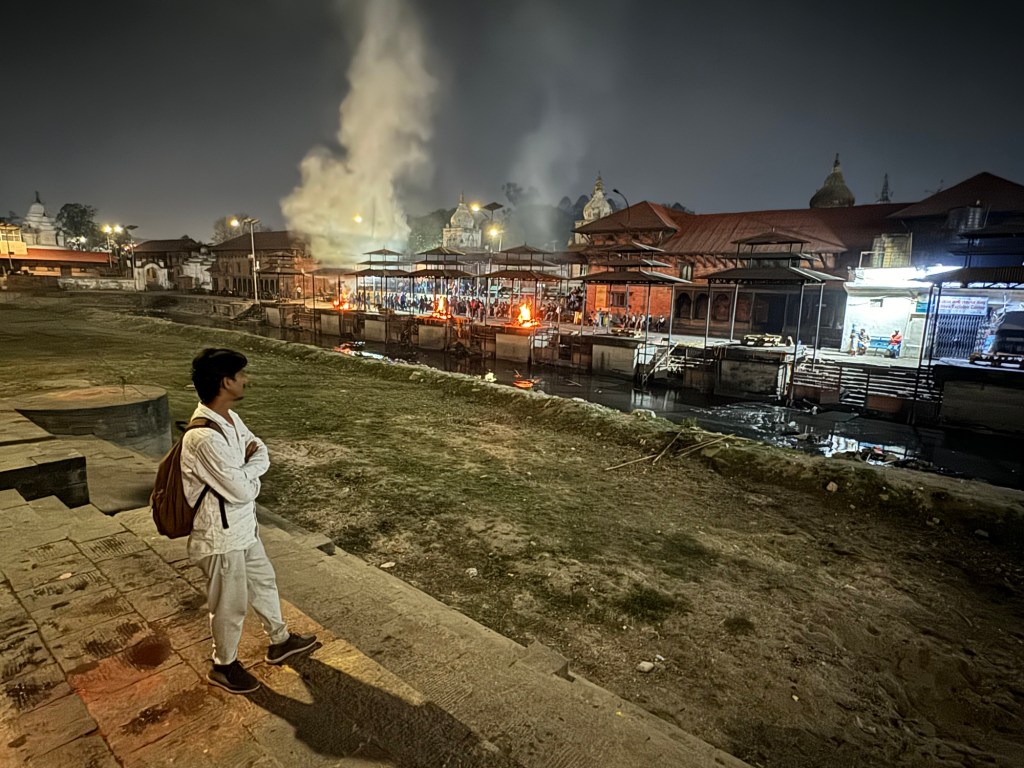
In front of us, stretched out on both banks of the river, lay Pashupatinath, one of Nepal’s largest and most revered historic Hindu temples, dedicated to Shiva, the goddess of fertility, but also of death and destruction.
Here, witnessed and celebrated by well over a thousand spectators, the bodies of recently deceased citizens of Kathmandu, wrapped in orange shrouds, were been burned on piles of wood, doused in oil.
Several of these fires were lining the Western bank of the river, while on the other side of the river there was singing, clapping and a colourful display of religious flames. On the roof of the temple a woman was wildly dancing in a trance, while down in the river a poor soul was busy moving on with the help of a metal pole, the remains of the funeral piles, which had been dumped into the water.
Groups of colourful sadhus, visitors from all over the World, numerous stray dogs and an equal number of monkeys, who both kept a respectful distance from one another, as well as local citizens, some in brightly coloured sarees, others just in their street clothes, were lining the steep river bank to give the deceased a dramatic sending off.
Before us was a spectacle that has been as old as the place itself and a tradition that, despite the already terrible air quality in the Kathmandu valley, is very unlikely to change or to disappear anytime soon.
Witnessing the burning piles for a while and absorbing the singing, the chanting and the shouting around me, it once again reminded me, why Kathmandu continues to be such a strange, chaotic and yet enchanting place.
Eventually the fires burned down and the crowd, at least for that night, dispersed.
But rather than calling it a night, Rakish, because of my profession, was insistent that we paid the Chunchun Baba, a sadhu for dogs, a brief visit.
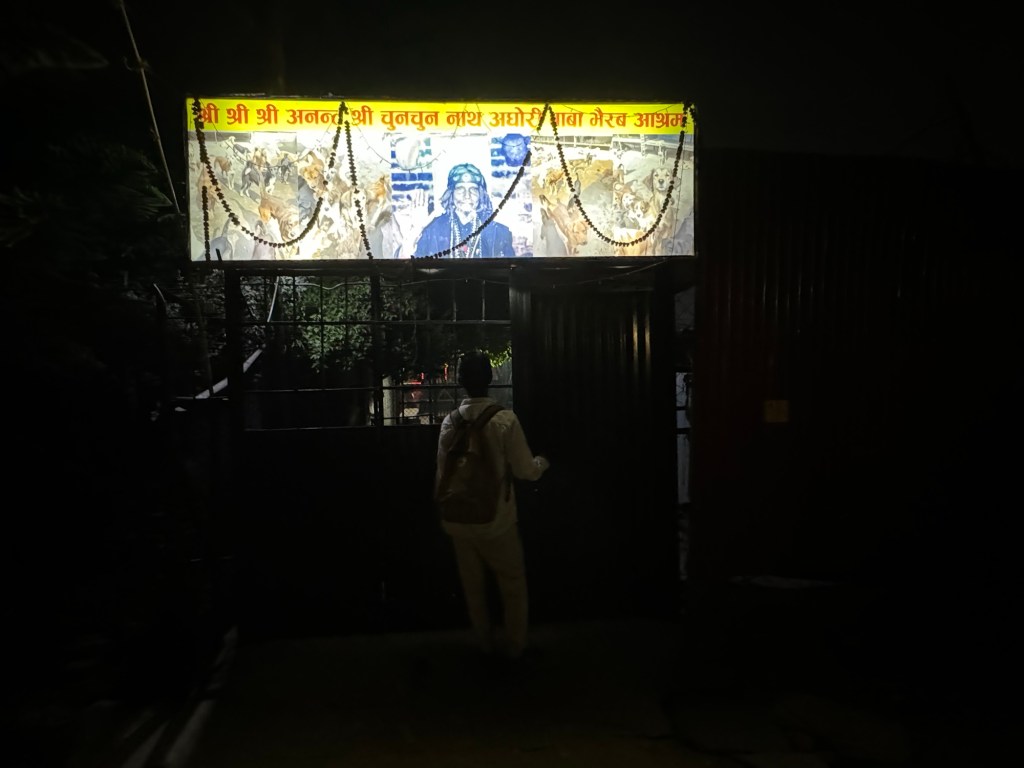
Tucked away in a number of shacks made of corrugated iron, just a stone throw away from the world famous temple, a holy man and his dedicated followers were looking after more than 200 dogs.
Been invited on to the complex despite the time of the day, the “Baba” explained that he was the Fourth in a line of devoted men dedicating their lives to the caring for Kathmandu’s dogs.
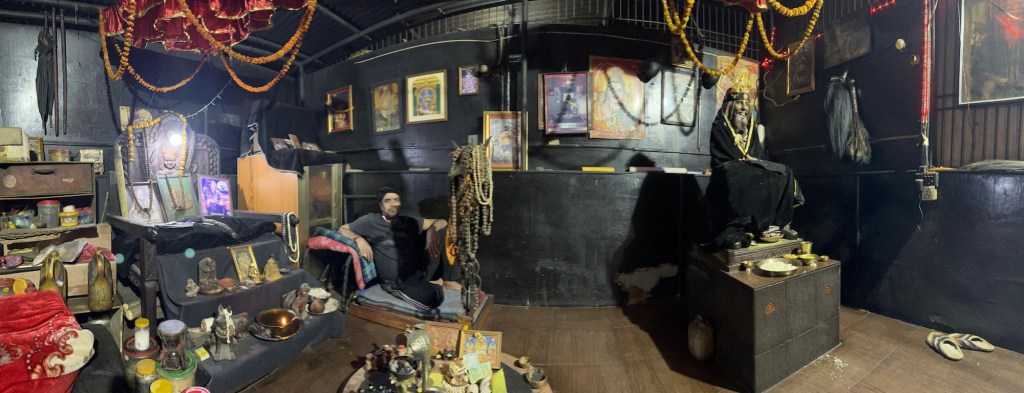
Passing a huge pot on a wood fire – containing the following day’s meal for all canines on the site – the Baba was leading us to his small ashram, where the center piece was a lifesize, decorated copy of his predecessor, Having spotted just a few dogs kept in small cages or on a chain over night, I did not feel too inclined to investigate this place much further and I sensed not for the first time, that deeply rooted religious beliefs were not neccessarily a guarantor or even a useful basis for good animal welfare, especially when it involved the day to day care for large numbers of animals.
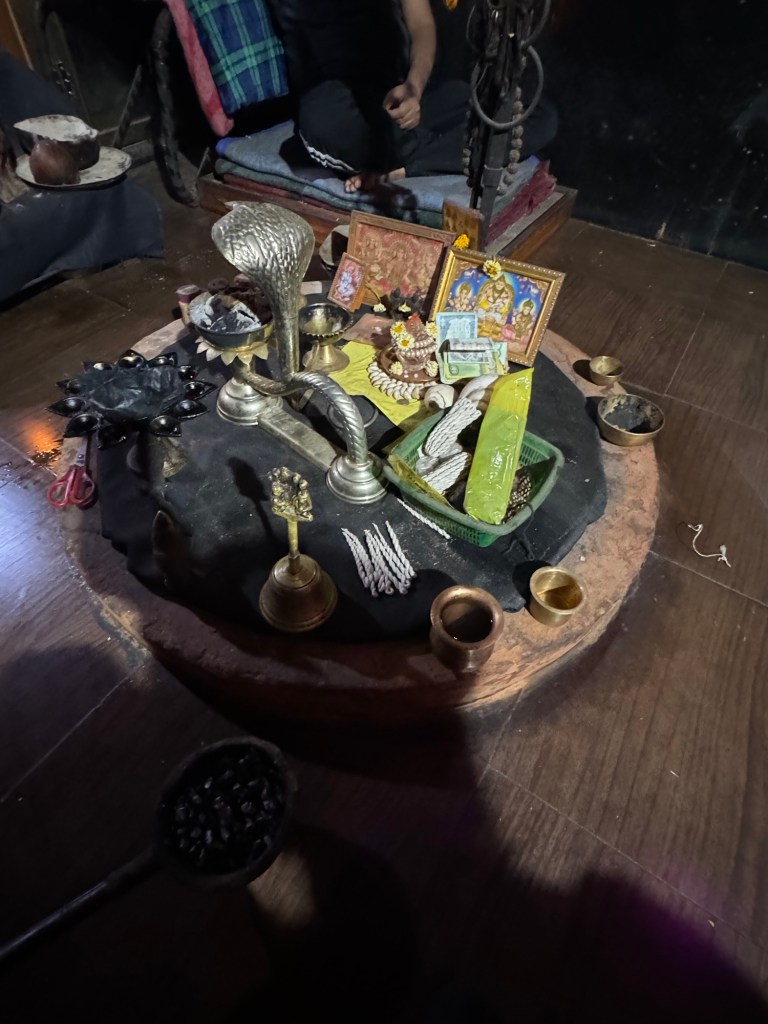
Leaving the Baba some banknotes to fund a few more pots of canine dinners, we left the compound and after passing a similar facility next door, which was dedicated to bovine species, we decided to end this memorable nocturnal excursion and by this, my journey to the East.
Early the next morning, there was a plane to catch and another part of the (veterinary ?) world to see……

