
At the end of a year, filled with travelling, with meeting so many inspiring new people, with working once again in new places and with new teams, something I couldn’t have imagined when setting out on this journey five years ago, it was time for me to return to the UK and to open a new professional chapter.
I had become concerned that when locuming in first opinion practice, a fair share of the workload involves “routine” procedures, which – after a while – might feel repetitive and as there is no structured continuing education, which you can follow up with some degree of certainty in your own clinic, that the gradual loss of manual skills might become an issue.
Diversification of my current line of work was the answer and once again I had to get out of my comfort zone :
An area of clinical practice where there is no such a thing as a “normal shift”, is the work in an emergency and critical care (ECC) environment.
Here “not routine” is the norm…..
You will not be asked to vaccinate any patient, nor will you advise on prophylactic parasite treatment or on the benefits of neutering procedures. Chronic skin or joint problems are no longer your concern, unless there is an acute flare up which requires a short term solution that doesn’t interfere too much with any long term treatment plans. Dental procedures are reduced to the pain and infection management of damaged teeth and to the wiring of fractured jaws.
You work more in the “now” than in the future. In the majority of cases, your concern are only the next 24-48 hours and the immediate alleviation of pain or suffering.
Your are more likely to suture wounds, unblock obstructed bladders, deal with obstructed or twisted intestines, deliver kittens and puppies and – unfortunately – you have to be prepared to euthanise more severely ill patients.
Work in ECC has more peaks and troughs – from a period or relative calm with little or no patients to look after, you might suddenly be confronted with a number of several emergencies at the same time, where you will need all your clinical skills and a good hand for a practical triage, to still provide the best treatment for all parties involved.
Because you are walking more often the fine line between life and death and because you are more frequently the bearer of bad news, tempers might naturally run high at times and on balance the emotional impact of this line of work might be much higher than in general practice.
This might reflect in the personality of some fellow professionals who frequently work in this field. A certain “battle field” mentality might ensue.
1st opinion small animal practitioners have by far not the same level of personal contact and regular interaction with their clients as farm animal vets.
Emergency vets will see pet owners (hopefully) even less frequently and usually under more extreme circumstances, when the pet, the client or often both will be in a state of physical or mental distress.
In this situation it is not always easy to make friends…..
While you might be faced with a larger amount of upsetting cases, there are also more situations where you – sometimes very fast – can make a difference. This can be extremely satisfying.
Another difference of emergency medicine are the working hours: when most clinics are closing their doors, the emergency workers are starting their shifts. This naturally means working at night, on weekends and on holidays.
This is (within limits) fine by me. I can function well with only a few hours of sleep and I have always loved irregular working patterns. No longer depending on school holidays is another advantage. For me it doesn’t make much of a difference, if I am now working on a Wednesday or on a Saturday.
The provision of out of hour care used to be (and still is for a lot of my continental colleagues) one of my biggest problems:
When opening my own clinic, I had to provide my own emergency service around the clock for several years and it was extremely difficult to find colleagues, who were willing to take my phone if I wanted to go out or if the family wanted to go away for a weekend.
This all changed, when I heard about Richard Dixon, a colleague from Scotland who later became not only the President of the British Small Animal Veterinary Association, but more importantly, he changed the whole system of the provision of emergency and critical care for companion animals in the whole country.
His concept was as simple as it was ingenious:
By renting the clinical facilities of the PDSA and other charities only over night or on the weekend, when they were not in use for routine work, he was able to provide a service that was exclusively performing out of hour work, without becoming a competitor for the day to day care the already established clinics were providing.
While the loss of the work at unsocial hours meant a slight reduction of veterinary income for these clinics, the loss was more than compensated for by the more regular work pattern for the day team and by the reduction of the salaries that had to be paid for out of hour work. In addition to this, it made it easier to recruit new team members by offering veterinary work without the unpopular requirement for night and weekend work.
While several veterinary groups tried to copy Richard’s scheme, no one managed to role it out to develop into a national network of emergency clinics.
In my very own case it meant, that because of Richard, I had reclaimed my evenings and more importantly the weekends, which from then on were frequently spent with outdoor activities with the family.
For this, Richard will always be entitled to a free drink if we ever happen to be in the same room again….
Returning to Surrey, it didn’t take long for me to sign up with the local emergency clinics. For this not only my years of clinical experience helped, but a further advantage was, that this was an area and a clientele that was so familiar to me.
The next step was to sit down and to study again….
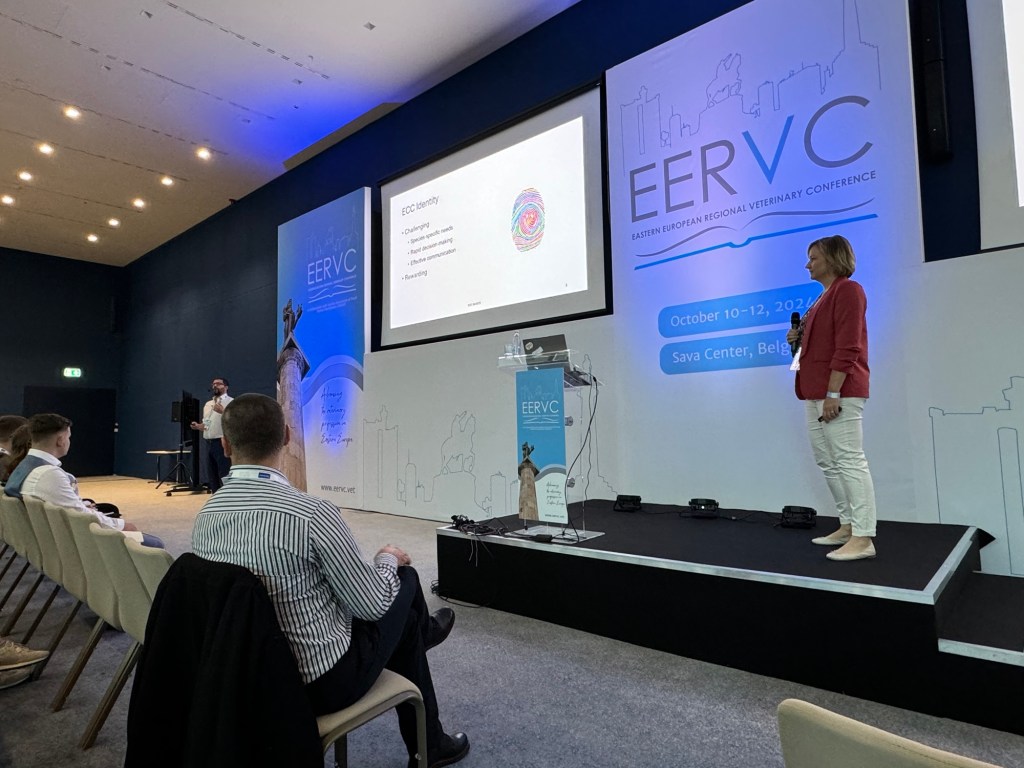
While some of the lectures I had attended in Athens and in Belgrade had given me a lot of up to date information about emergency and critical care procedures, I had to read up on aspects of clinical care, that are not so common in day to day practice.
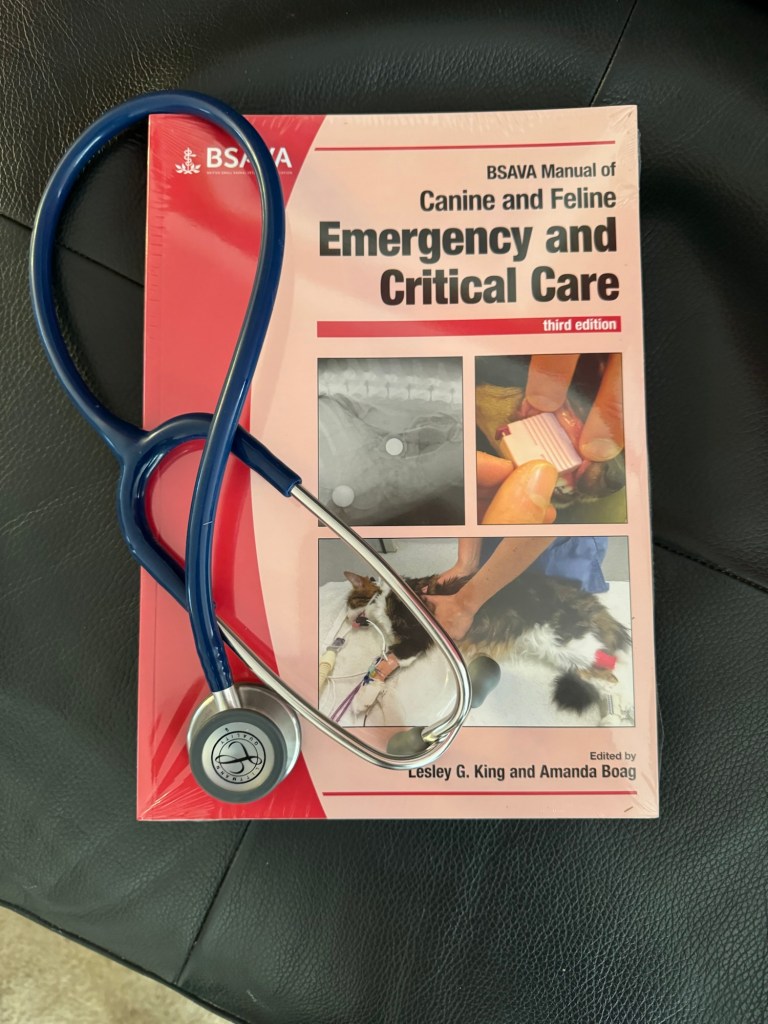
A typical scenario was the treatment of intensive care patients, which at my clinic – if they were just too ill and needed long term hospitalisation – we usually had to refer.
As winter was making the days shorter and a near constant cover with heavy rain clouds claimed most of the remaining light, my first locum shift arrived and once again I was enchanted by a truly British quality which – especially as a native German – will never cease to impress me: team work rather than hierarchy.
While being just a casual worker, confronted with a team of strangers and having not a clue where to locate necessary medication and equipment, I found myself among fellow professionals who where comfortable to accommodate my initial disorientation and my lack of local knowledge of the clinic and within a very short time I had adjusted to the unfamiliar computer system and the first emergency patients could be seen….


Ah I miss late night call outs to support you with gastric torsions though!! 😁
LikeLike