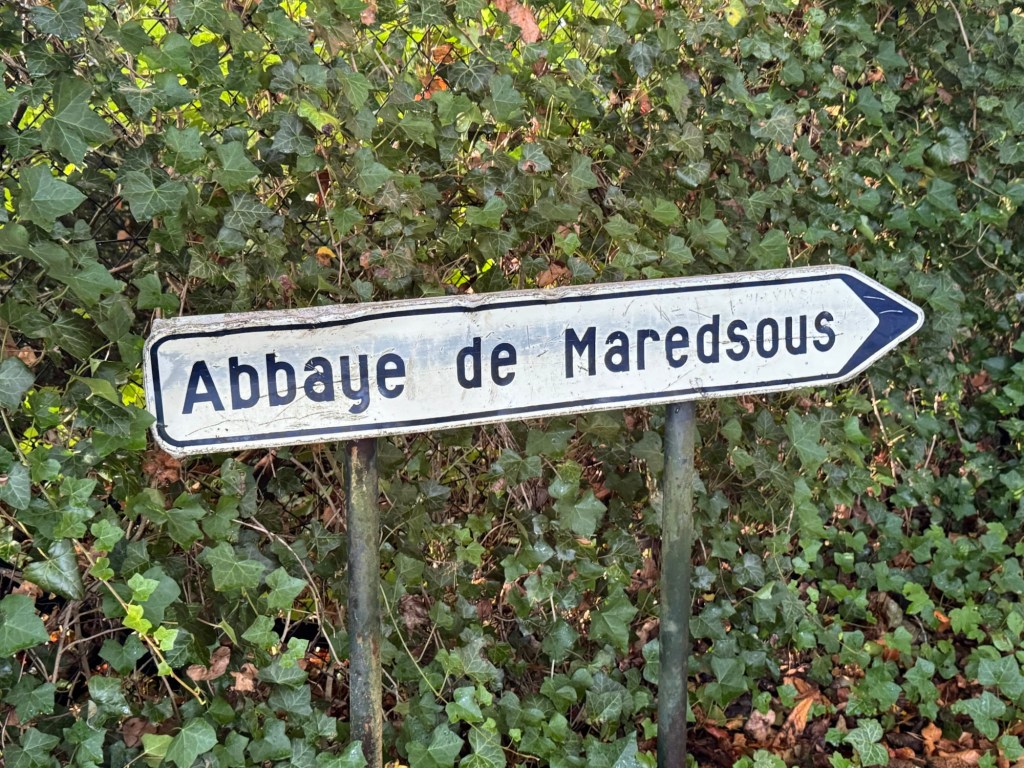
It had been a long, scorching summer, but now the first signs of autumn had arrived in the valley of the Maas in Wallonia, just a few kilometres north of the French border. Some much-needed rain had arrived, and a thick layer of clouds hung like a lead curtain over the river and its banks for most of the day.
Making the short journey from Namur to the Abbey of Maredsous, I followed the meandering road that criss-crossed underneath the arches of an old, now abandoned railway line. Signs warned about meeting traffic and motorcycles appearing from nowhere.
A slight mist rose from the wet ground, and water was dripping from leaves that displayed a darkish green colour, the sign of maximum photosynthesis just before fading and dying of the effects of long periods of dehydration or during the first nights of frost.
A sounder of wild boars was crossing the road with the piglets scrambling for cover, followed by their mother. While travelling in a densely populated part of Europe, this was still remote countryside.
Leaving the car parked on a slope in the middle of a soggy field, I was praying for another gate at the bottom of the perimeter, to have any hope of leaving at the end of the night without the help of a tractor.
Passing a herd of massive Charolais, that were enjoying the still lush grass in the remaining light of the day, it was now just a few steps before the dark stone facade of a huge building appeared in the middle of the forest.
The Benedictine monastery of Maredsous, while renowned for its brewery and its cheese making, did not strike me as a particularly welcoming place. Its remoteness combined with the deep hanging clouds added to the sensation.
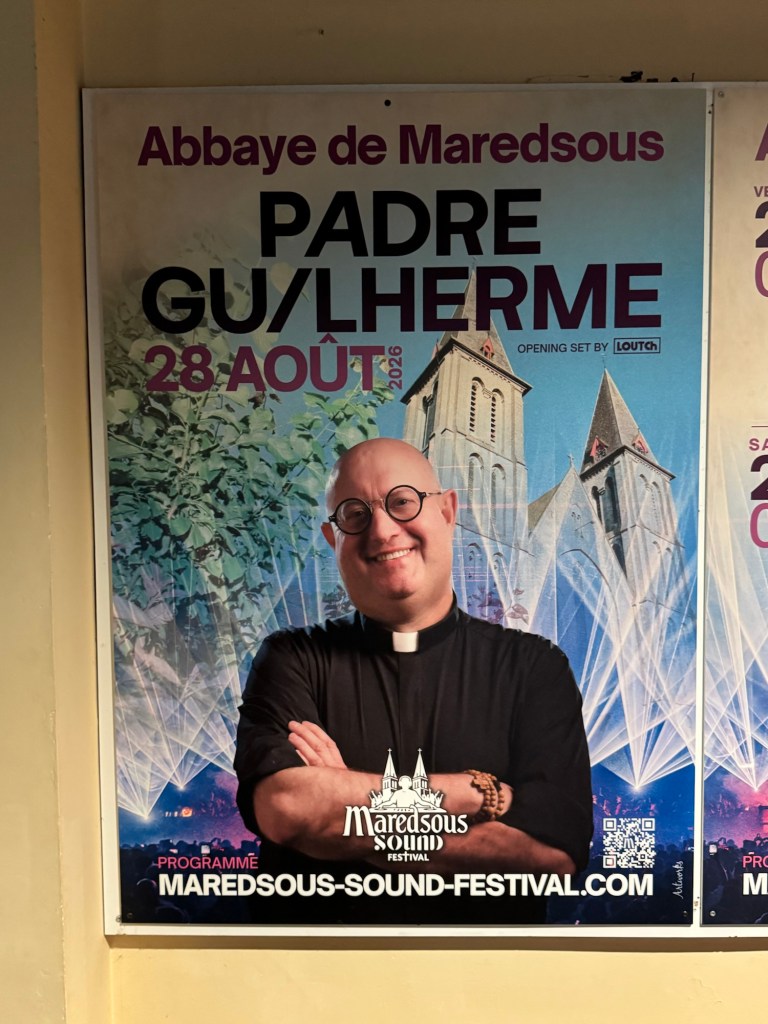
And yet, not less than 20 000 other people had also made the journey into the Belgian countryside; to witness one of the strangest spectacles the catholic church has to offer these days – a performance by Padre Guilherme, the official DJ of the Pope !
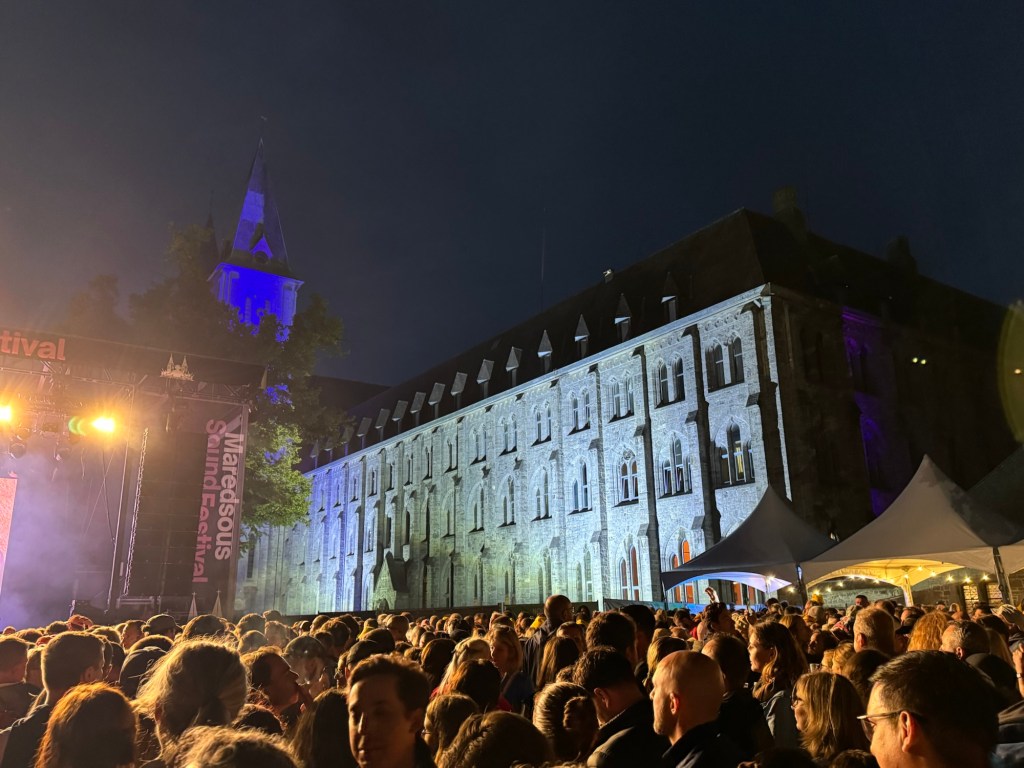
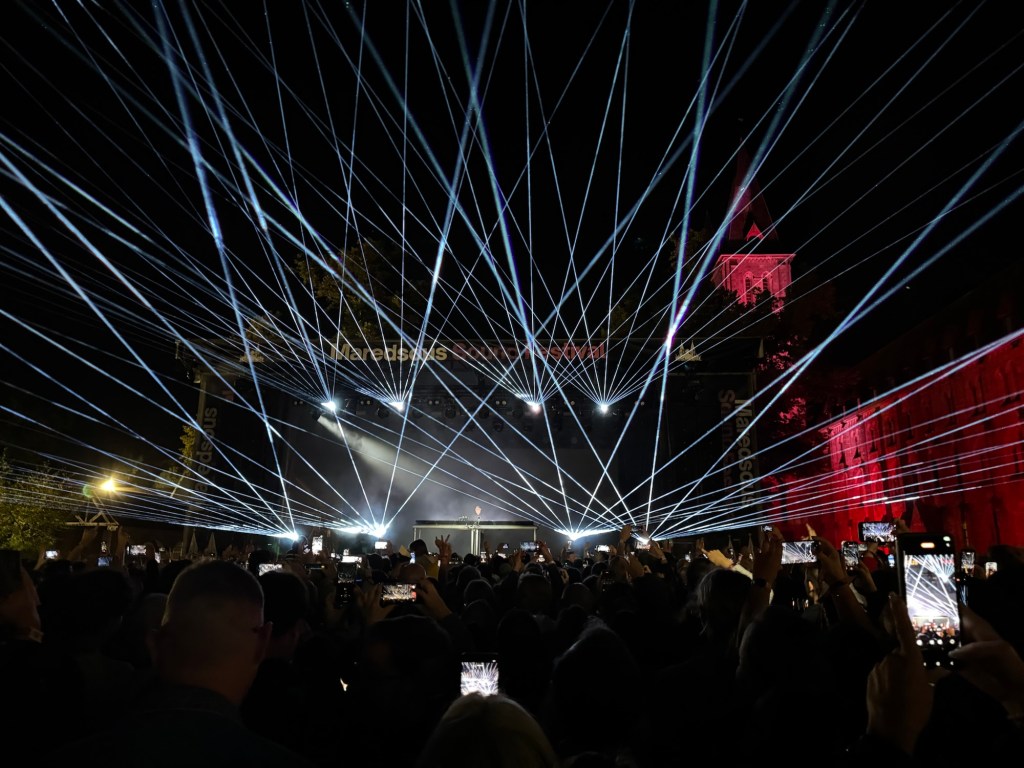
Once the sun had disappeared and the walls of the abbey were illuminated in a constantly changing glow of purple, silver or blue, the stage in front of the building virtually exploded in a barrage of laser light, sound and artificial smoke. A huge, generator powered sound system provided a visceral sensation with every beat. Even a deaf person would have enjoyed it.
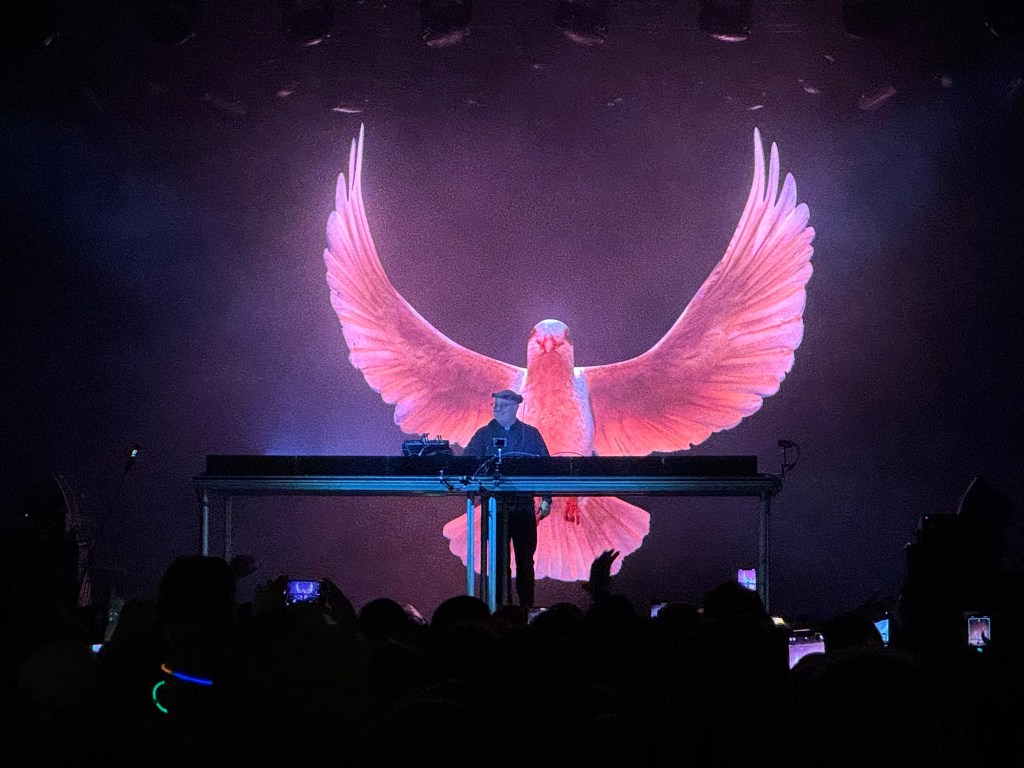
Then, the most unlikely of Techno music creators entered the stage: short, bald, bespectacled, middle-aged and dressed in black with a clerical collar, and fitted with just a set of expensive Sennheiser HD 25 headphones giving him the credibility to start, rather than to shut down the event, Padre Guilherme stepped on to the stage and into the middle between two tables holding the mixer and the sound decks – the obligatory tools for his kind of sermon.
Following a few words of welcome, pointing out that the night belonged to the enjoyment of the moment, rather than to cell-phone screens, while being recorded by thousands of devices, the humble padre started to burn off wave after wave of techno beats, combined with constantly changing images that included a giant dove, scenes from colourful church windows coming to life and only the occasional video clip and soundbite from a previous or the present pontiff. A subtle way of indoctrination, that was unlikely to raise an eyebrow of the techno fans of different faiths, of which there were many in attendance, or of the sizeable number of fake nuns and priests that had joined the party.
The congregation at the event was as uncharacteristic as the man himself. Instead of a gathering of chemically fuelled, mydriatic millennials and Gen-Zs, revellers included everything from children well past their usual bed time, groups of students that were unlikely to be regular church goers, stereotypical music festival travellers, dressed in their weatherbeaten, once colourful outfits or wearing souvenir T-shirts of previous concerts sometime in the last century, to grey haired retirees, that had finally found an excuse to join their children or even their grand children at a techno gig, without running the risk of being turned away by the bouncer at the entrance door. All of them enjoying the light show and the music, while being sustained by the monastery’s signature beer and cheese.
Towards the end, the padre was joined by a quartet of singing monks, and by the abbot, who appeared clearly out of his comfort zone, still puzzling how a humble priest from a Portuguese back water had managed to gather so many people at his monastery in the middle of the forest.
The rhythm of the amplified basslines and the drumbeats were still pounding through the trees and the laser beams created a green and white pattern in the leaves against the night sky, when I left the scene, buoyant with the clear certainty, that this would not be my last encounter with the Pope’s DJ.
 The Blue Vet Diary