COVID 19 and the associated restrictions including the social distancing rules have not been very helpful for the activities of the Blue Vet, at least when it comes to this diary. The last few weeks have shown how lucky we are to be able to travel and to socialize physically with other human beings and that this is one of the key pre-conditions for this account.
Unlike many of my fellow veterinary colleagues I had been lucky though and shortly after writing my last article, I had a call from the team in Abingdon, asking me to help out with their emergency work over the following few weeks. That meant that rather than spending long mornings in bed, I had – at times – to work much harder than in my own clinic in Virginia Water (or at least it felt like it….).
It also meant that I had many opportunities to explore the beautiful villages and the countryside of Wallingford and of the Thames near Abingdon on long evening runs, obviously helped by the absolutely outstanding weather in April and May.
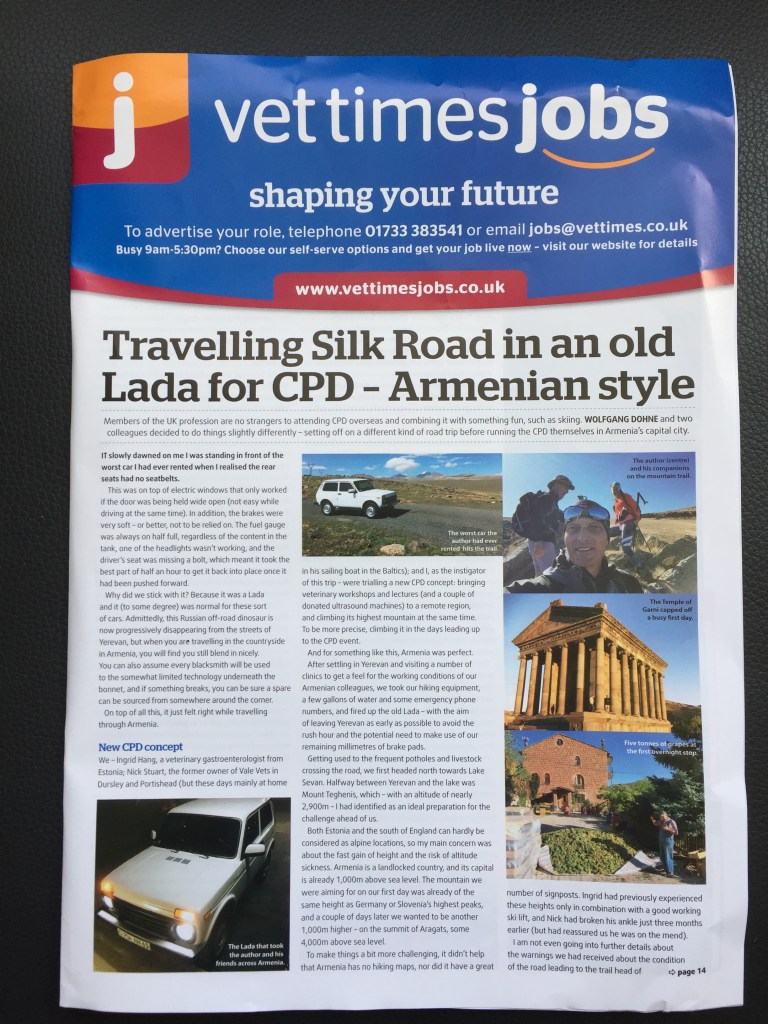
It was also nice to see the account of our CPD expedition to Armenia covered in a well circulated veterinary newspaper – hard to believe that this was soon a year ago…..Looking at the images didn’t help to settle the travel bug though……
Making the most of the good weather, patient 58 in Oxford got a long overdue roof repair, which should finally make all rooms in the building fully habitable (without the occasional indoor use of an umbrella…).
Working once again with the great team of nurses and vets in Abingdon brought included a lot of memorable and satisfying cases. Practicing while socially distancing was at times a challenge, but it also had its comical moments……
The new safety screens are great – if they have the right size and if they are properly secured on the ceiling….
The long hours at work – not made easier with the additional provision of video consultations as a new service – were not only sweetened by the occasional lunch break in the sun, but also by some excellent chocolates, courtesy of some grateful owners.
All in all, the last two months didn’t turn out as inactive as I thought they would be.
However, with the days still getting longer and with life slowly normalizing again, it is also getting time for the Blue Vet to move on and to start travelling again……
This truly is one of the most extraordinary times not only I, but probably most of my readers and actually most people on the globe musty be going through….
….but to be quite honest, there are some aspects of this involuntary period of self confinement, which I am in fact enjoying …..
Yes, first and foremost it has – unexpectedly – brought together the whole family (plus my son’s exiled girl friend) under one roof, resulting in daily family meals, frequent and possibly more meaningful conversations and even in the odd joint online or board game, usually only reserved for Christmas. As the house is thankfully large enough to leave everyone their own space if needed, it is a nice state to find myself in, especially after periods of solitude in Sweden.
The other great advantage the lock down brings is : Time!……
It was for the last 10 or 15 years the commodity I was missing the most, which – to a large degree – was self-inflicted…
I had at times just taken on too much or I just wanted to do too many things at the same time. Admittedly a lot of these things were really good fun (traveling, sport, FECAVA and BSAVA activities etc) but they left me in a constant state of restlessness and with the feeling that I was always in a desperate race with all my commitments. Although I find that I am definitely more productive under these circumstances, I think that there is a fine line between “eu” – stress (when you think that you can cope) and “dys” – stress (when you think that you can not)…..
It is now 10 days since I finished my last emergency shift in Oxfordshire and to be honest, I haven’t really tried to get another placement at the moment. Without the pandemic and its consequences, I had expected to have met this week with some Czech colleagues in Prague to start organizing another congress and I had been due to attend the annual BSAVA Congress – this year for the last time in Birmingham (happy memories….).
All this and additionally a planed trip to the far East is now not happening and instead of certain unfamiliarity, I am finding myself surrounded by familiarity but in a state of complete uncertainty.
So how is the “Blue Vet” organizing his day during the lock down?…..
The biggest daily task is to finally get organized : in my study, there are still boxes of stuff from my latest travels, that need to be emptied and there are the mountains of seemingly never ending paperwork that can now be dealt with. For once even my accountant is impressed with me…..
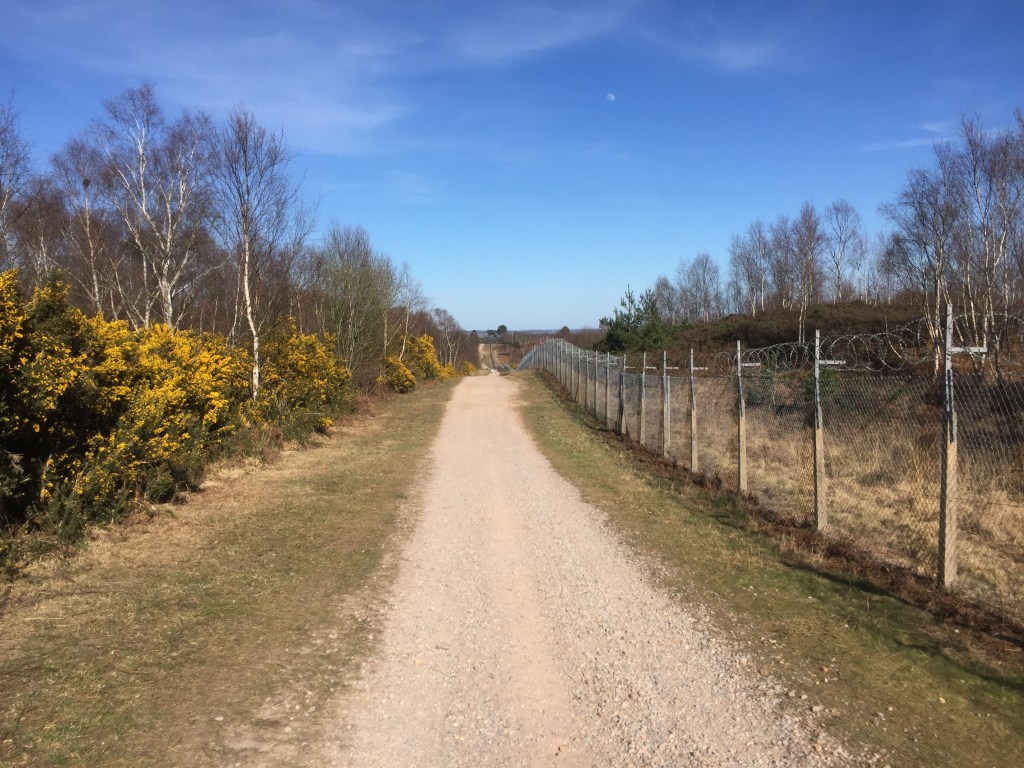
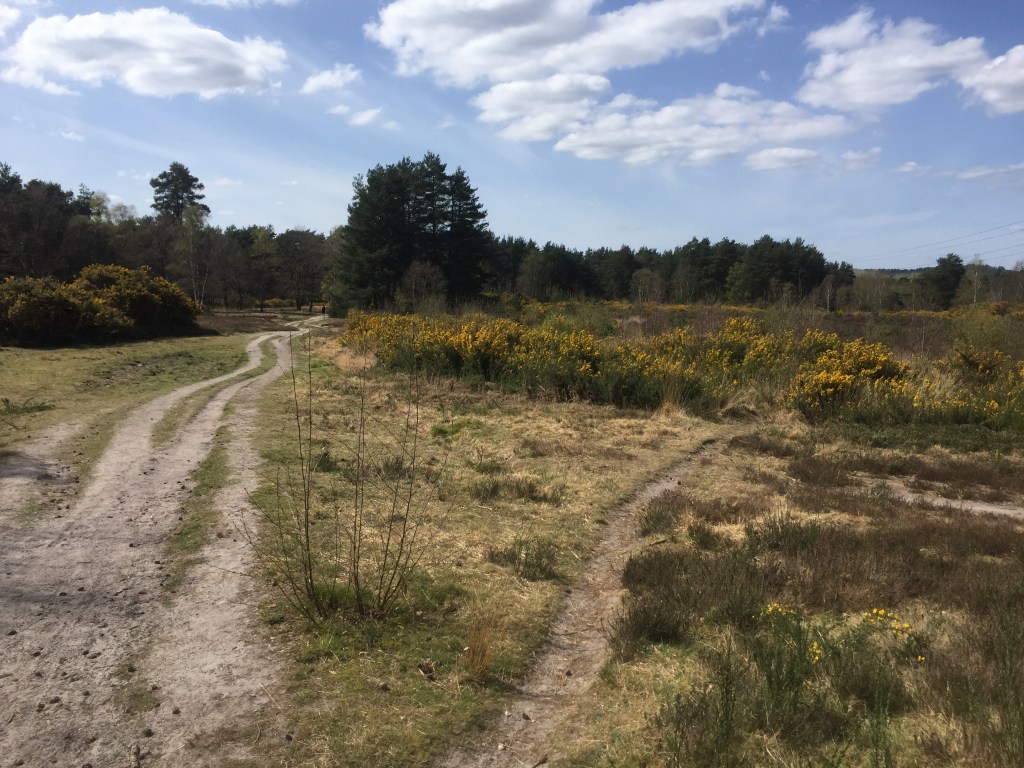
As already mentioned above, thankfully our house has a few features which make it an ideal place to keep me busy. A decently sized garden and in addition to that a couple of weeks with excellent weather certainly helps. I also appreciate that the government has had the good sense to grant its citizens a single exercise session per day – this means that the military road next to the army training next to our house receives a daily visit.
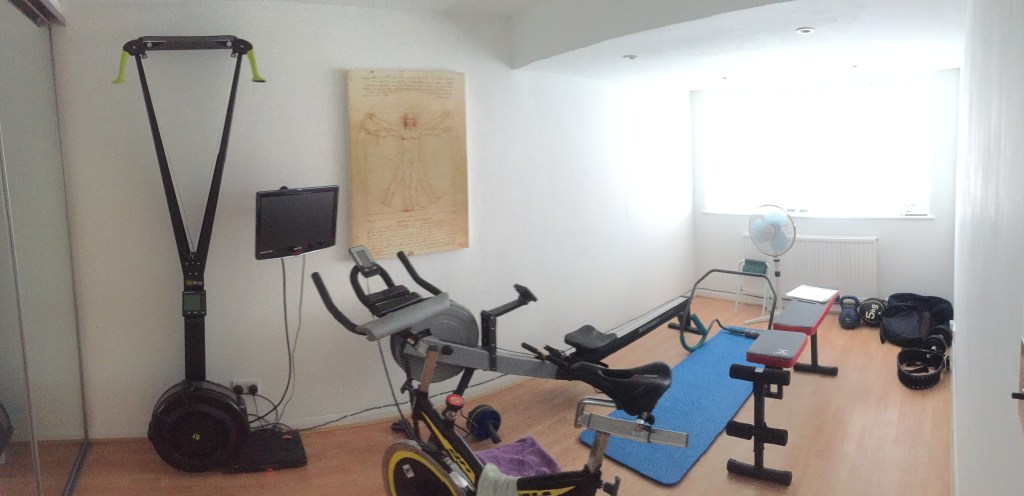
And even if that would no longer be allowed, there is still a gym waiting for me just two doors away from my study, which I had set up years ago to curb the impact of too many hours at the clinic or in front of the computer combined with a sugar rich diet.
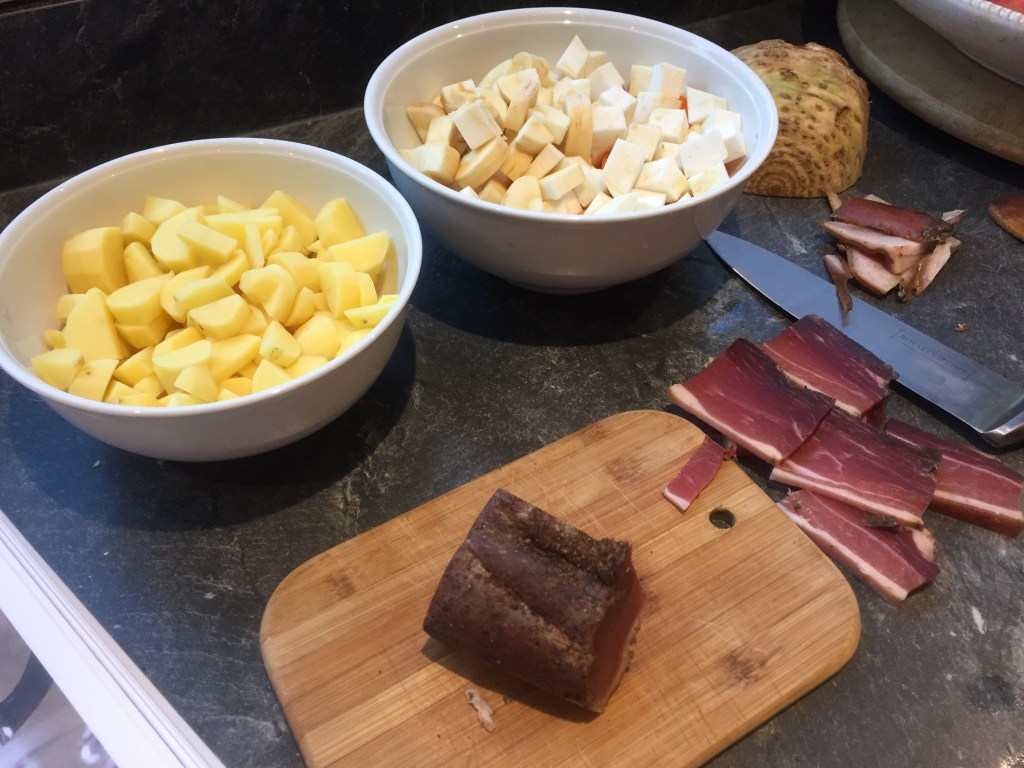
While we are on the subject – I have also declared war on the seemingly never ending quantities of tins and dried food stuff which have been stored away in draws and in our garage. Finally I am finding time to cook and I have five (if I am counting in our three legged cat….)
victims, who have to endure my creations….
An yes, there is also time for a good read….
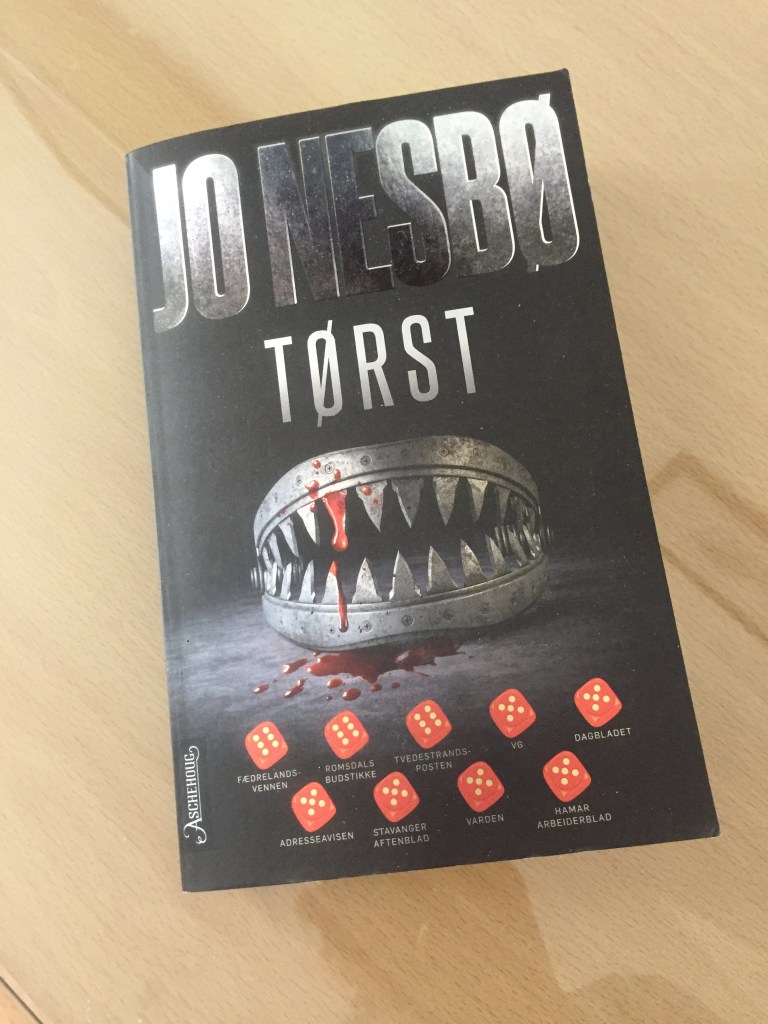
Both, to keep up with the language, as well as satisfying my cravings for excellent “Nordic Noire” literature, I am working my way – surprisingly fast – through a more recent Jo Nesbø novel in its Norwegian original. Highly recommendable – no just during a “Lock Down”.
A further “life line” is also the network of friends (vets and non-vets) and colleagues abroad and elsewhere in the UK. Lets admit it – the internet is a brilliant invention (if you have a decent connection). Seeing how colleagues all over the globe are arranging themselves to continue to provide help and support not only for their patients, but often also to their neighbors and loved ones, is both inspiring and humbling and reinforces my expectation that we might progress from the current situation (which will be a matter of the past in a few weeks time) possibly even as better human beings…..
It wasn’t clear if I would be allowed to return back to my temporary placement in Abingdon and Wallingford when I returned to the UK, as in the meantime the UK management of the group I was working for, had given out the instructions, that all travellers to both Germany or France should self isolate for 2 weeks. After spending an extra day at home, this decision was thankfully revoked and I was once again on my way to Oxfordshire.
In the following days though, as the number of SARS-CoV-2 infected and unfortunately the dead was starting to rise exponentially, both internal and national rules and restrictions were changing rapidly.
On my first day back at work I was still “physically” seeing both pet owners and patients in the consulting room, where “social distancing” rules couldn’t really be adhered to. These consultations included routine health checks and vaccinations, which – despite wearing face masks and gloves – we became progressively uneasy with.
Our concerns were not helped by the now very frequent news we received not only from other UK colleagues, but also through my network of colleagues from other parts of Europe and from the rest of the world.
Towards the end of the week, also here only emergencies were admitted and I could use some of my spare time to distribute COVID19 infographics for both vets and for clients, which had been put together by the FECAVA marketing team, to both my British and to my Swedish colleagues. These guidelines are now in use in veterinary clinics all over (and beyond) Europe.
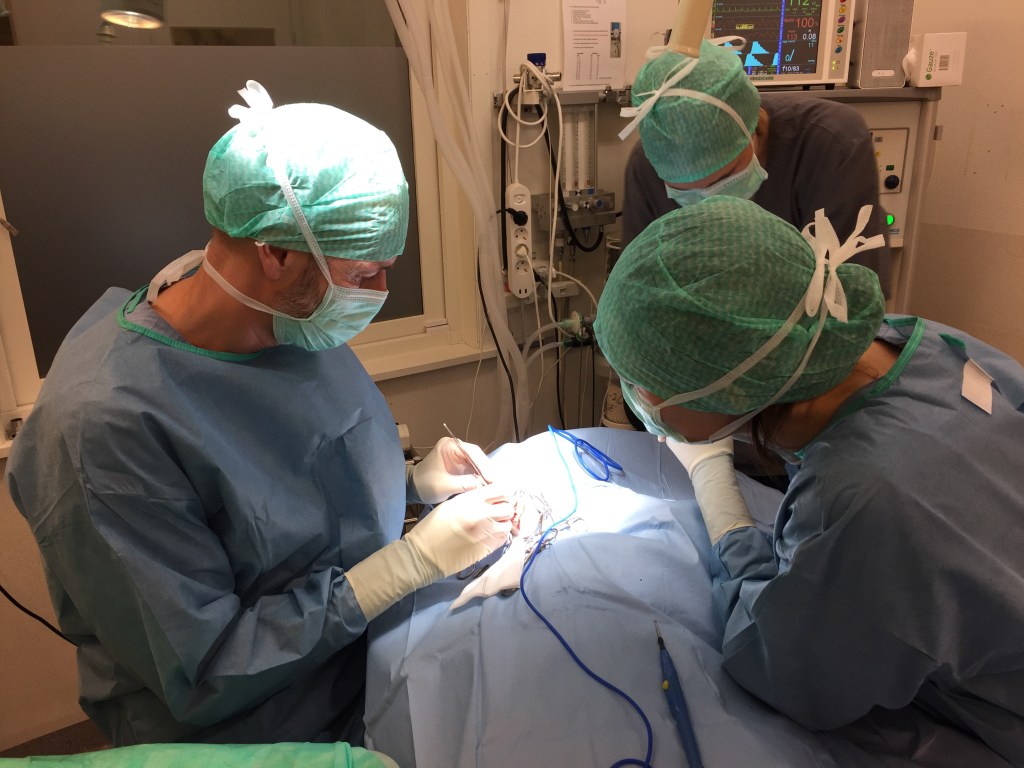
Clinical work had to continue though and just before the UK went into a complete lock down, we decided to operate on a young French Bulldog who was recovering from an aspiration pneumonia and who had severely obstructed upper airways. Unfortunately this is still a very common feature in these very popular dogs and his pre-surgical X-Ray showed not only the complete absence of a nose, but also a virtually complete obstruction of his throat.
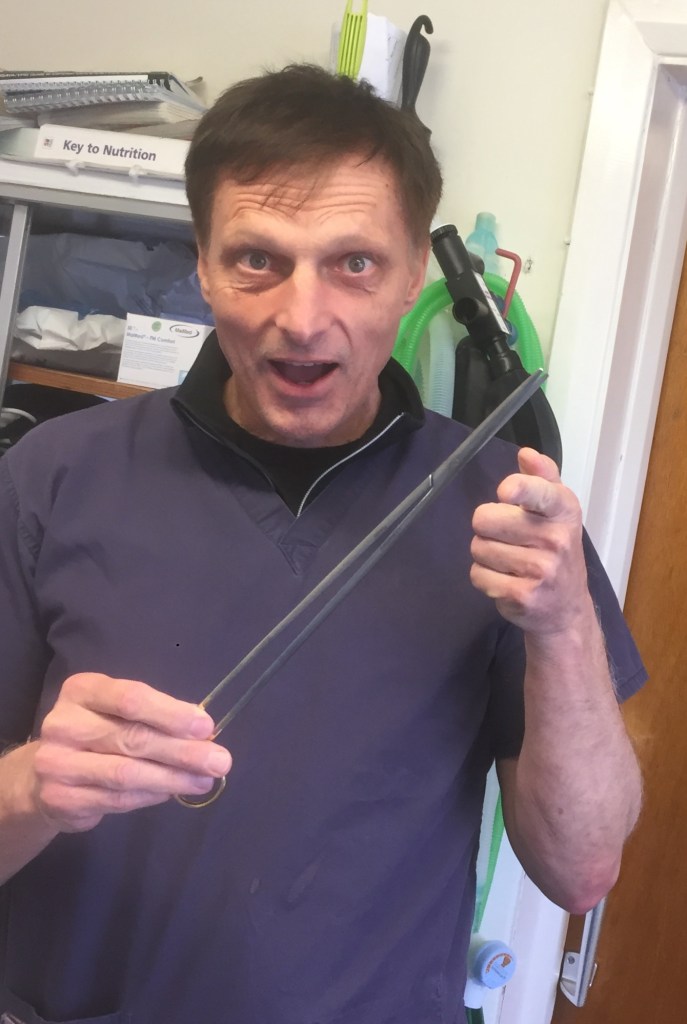
Before starting with the operation, I checked all the instruments needed. This included a pair of long curved Metzenbaum scissors which I had asked one of the excellent nurses to order. She duly did so, but I had not paid proper attention when she had pointed out that the longest pair was 30 cm (!) long…….
Although being of an excellent quality, this piece of equipment, more designed for bovine surgery, was sadly of no use for me, but thankfully a smaller pair could be found in one of the other surgery kits.
The Frenchie’s throat was so narrow that it was impossible to intubate him under visual control (which is very rare with dogs) and rather than thinning and folding his soft palate forward (which in fact made matters worse…..) I had to completely resect it. Scary stuff, but there was surprisingly little bleeding and for the first time in his life, this little man could breath like a “normal” dog…..
Over the following few days, pandemic related matters worsened and clients were no longer allowed inside the building, not only to protect the team, but even more so to protect them from anything they might pick up in the waiting room. Somewhat bizarre consultations were now conducted on the car park, which reminded me to scenes out of spaghetti westerns or spy movies with prisoner exchanges :
Both parties are on opposite sides of a car park, with at least one of the characters masked, instructing the other (the client) what to do and what not to do before being told to retreat into his or her car.
Completely unreal, but all the clients I have seen so far have been extremely understanding and appreciated in fact these precautions. Regardless of this, I always felt that I had to apologise at the end of an emergency consultation conducted like this to my clients.
Another development is the emergence of the telephone and especially of the video consultation. This is a service that has been offered by some providers for a while, but with limited acceptance. However, now these consultations cover most of my diary.
The clients are loving it and I have to admit that with some experience a lot can be done and can be seen during this form of interaction with pet owners. I think that it is foreseeable that video communication on many levels will see a boost following the COVID 19 pandemic.
This weekend will be the end of my recent locum placement in Abingdon and with plans drawn up between all the larger veterinary groups in the country to work together by providing a strictly emergencies only service for the next few weeks, it is a fair assumption that not only will a large number of veterinary employees been furloughed, but there will probably not be much use for veterinary locums for a while.
Well – at least for me – that is not a problem and although it can’t involve much travelling at the moment, I have other plans…….
It is not easy starting to write the second installment as – although the events I wanted to write about happened just a week ago – some and possibly most of it feels already completely obsolete, with the whole world around us changing so dramatically.
I feel a bit like the producers of “The Archers” – a farming radio soap which is now running for over 50 years and which is a national institution in the UK. The authors have always tried to keep the material as contemporary as possible, including next day responses to election results and outcomes of great sporting competitions in the script, but this time they were completely blindsided by the COVID 19 pandemic and its impact. In the programme – every weekday plus Sunday evenings for 13 minutes – the characters are at the moment completely oblivious to the recent developments and restrictions. They are carrying on meeting at their local pub and visiting each other at home and it all feels like a faint memory of a way of life a long time ago…..
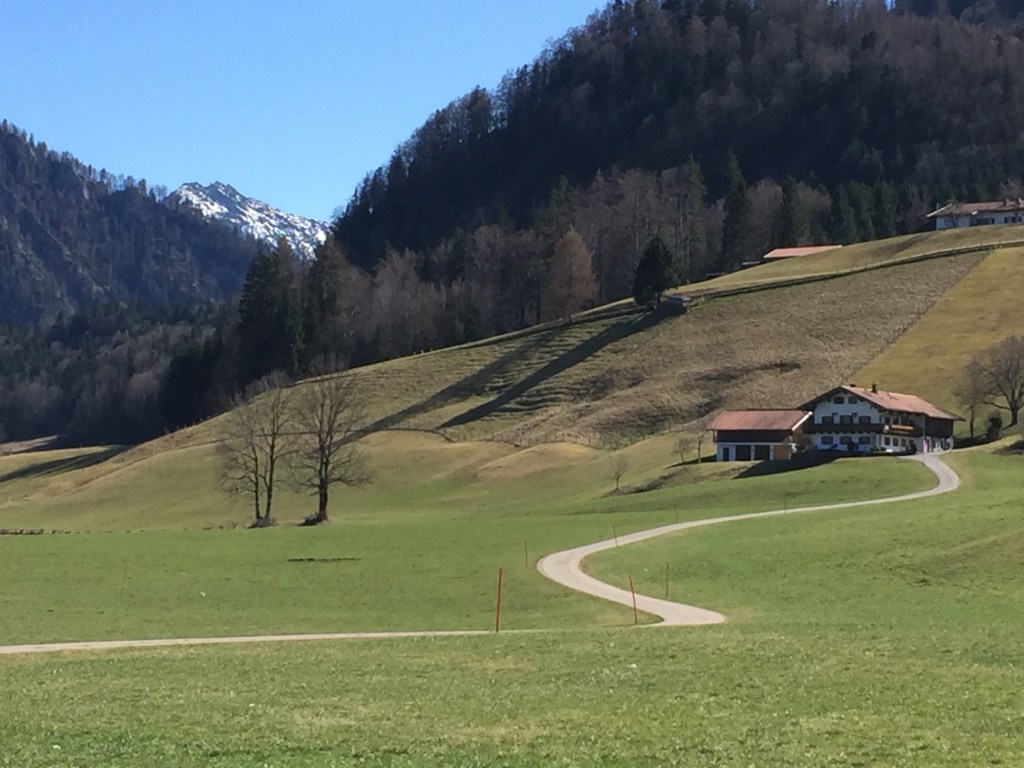
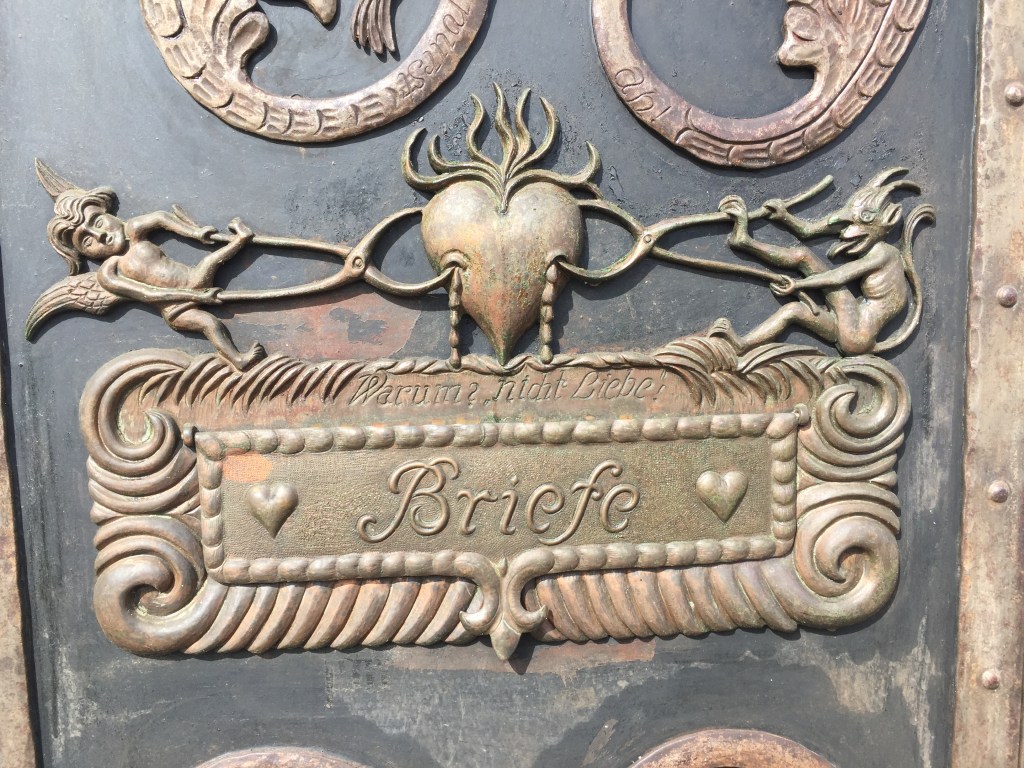
The visit to Bavaria I wanted to write about and the things I noticed there wouldn’t get the right recognition at the moment and yet they were just too good not to be mentioned, so that I will talk another time about them, bearing in mind that some of them have already stood the test of time for several hundred years and for more than a couple of world wars…..
The reason why we went to Germany was – in the first place – because Silke thinks that following Brexit, this would be a better base for us, but after a quarter of a century in the UK and also after the last few months in Sweden, I still need to be convinced……
The other reason was, that it was Silke’s birthday and it turned out to be the best present, treating her to a long weekend (with excellent weather) in this beautiful part of the world.
Applying “social distancing” (this truly will be the “it” word for 2020….) whenever possible, we enjoyed the alpine scenery and the alfresco hospitality, but witnessed at first hand how the whole community and their institutions around us went into complete melt down within a matter of days.
More and more shops and businesses were closing, access to neighboring Austria was no longer allowed, our flights were frequently cancelled and moved to different times and our hotel first had to reduce and then had to shut its restaurant and following our stay, there were no further hotel bookings taken. Speaking to both the hotel owner and to several members of staff, who were faced with total uncertainty regarding their future jobs, it gave us a stark impressions of the things to come….
Despite all the doom and gloom, we still managed to finish our trip on a real “high” when it turned out that the purser on our flight back to the UK was one of our British friends. Jayne Raby – like me – loves to run and travels the world with her running shoes always in her suitcase. She – not very successfully – tried to introduce me to “Tough Mudder” events and loves the odd pint of Guinness (which she easily runs off again….). Things are very different though when she is at work – she immediately remembered that it was Silke’s birthday and both she and the whole crew made it an absolutely unforgettable return trip for us.
A final joint photo in the cockpit (thankfully not during the flight…..) rounded this little excursion off nicely…..
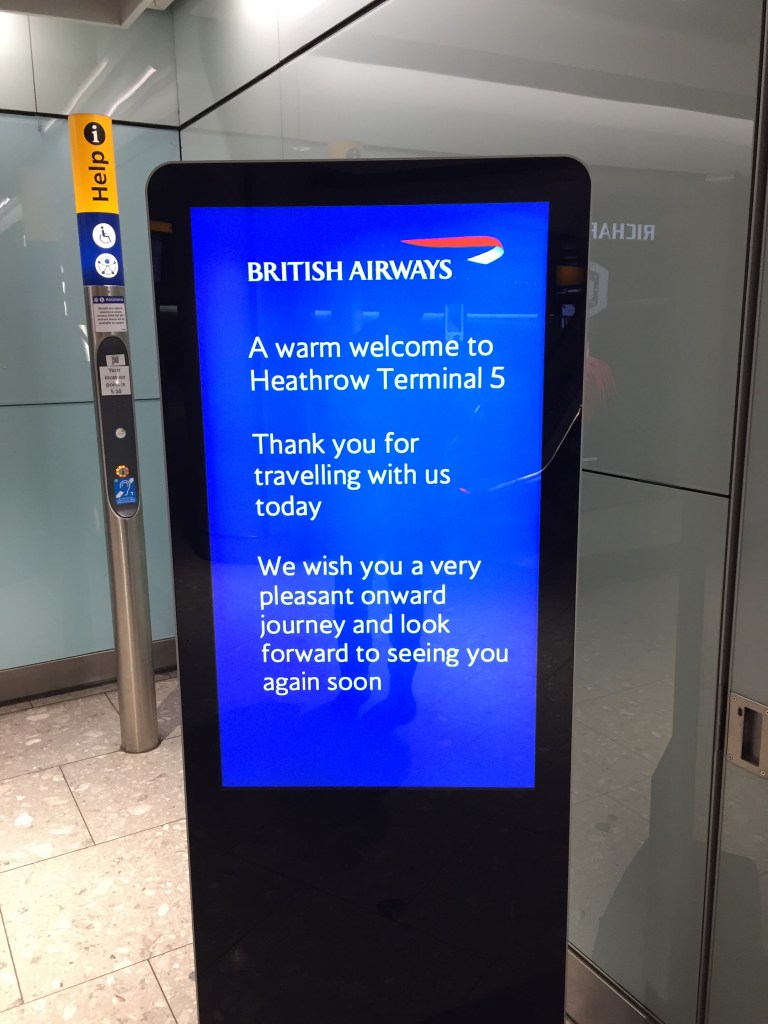
When passing through customs at Heathrow, I very much appreciated the following statement :
but I was wondering when a similar journey might be possible again…..
Looking back at the events of the last 2 weeks is leaving me stunned, when I see how much not only the life around me, but the world in general has changed and this will in many ways also affect the future content of this diary……but with this I will probably find myself in good company with my readers, where ever you are on the globe.
Driving further South while returning to the UK, I once again changed the operating theatre with the conference room for more Board and committee meetings with my other European Small Animal Veterinary colleagues. The meetings were hosted under a range of hygiene precautions (which appear inadequate, applying today’s requirements) in a huge cinema complex in Antwerp and coincided with the Belgian Small Animal Veterinary Congress.
Some of our colleagues had already declined the invitation, as they considered the journey as too much of a risk for their personal circumstances and indeed would a similar gathering not have been possible a week later. I am actually wondering how long it will now take, before we will be able to safely gather again in a similar setting…..
Following Antwerp and after having travelled nearly 13 000 km since the beginning of December, I finally arrived back home in the South of England.
Most of the next day was spend just with extracting all my stuff – which included not less than five sets of – unfortunately mostly unused – pairs of skis and a similar number of ski boots and running shoes – from my trusted carriage. I then even went so far as to afford a decent car wash, an expense which I had considered absolutely pointless while driving every day along untarmacked roads in Sweden. With a bit of soap and a lot of TLC the old BMW looked – nearly – like new again…..
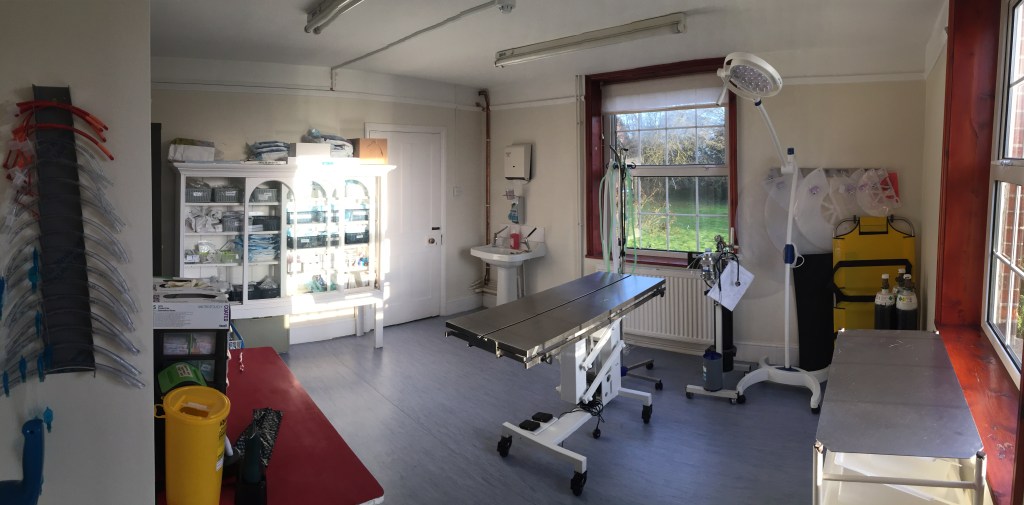
Another country, another consulting room……
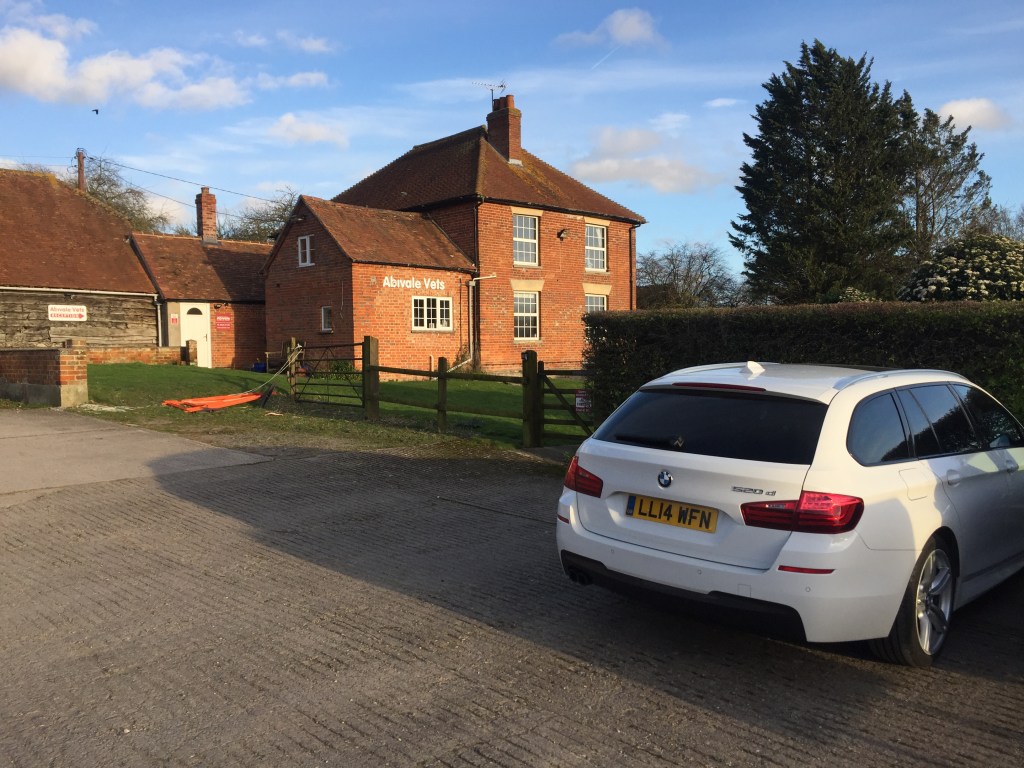
The friendly team in Abingdon, where I had worked already last November had requested my return and this time I was able to work out of their beautiful Didcot branch. Returning to exclusively English consultations, it took me a couple of days to catch up with all the things that had changed in my absence, getting to know new drugs and re-learning the names of familiar and not so familiar faces.
COVID 19 related health warnings were now a common feature and each client was vetted as a potential health risk before being allowed to enter the surgery. Appointments were more spaced out and hand disinfectants were used liberally.
Once I had got adjusted to my new/old working environment, the weekend arrived and Silke and I – following a detailed risk-benefit analysis (including a bottle of antipodean Sauvignon Blanc) – agreed to go on a pre-arranged trip to Bavaria, where a few nice and not so nice surprises awaited us…….
Driving South through Sweden and then – after travelling across the famous Öresund Bridge – passing Copenhagen and taking the long route over Sealand, Funen and then Jutland, I eventually entered home soil – Schleswig Holstein, the most Northern of the Federal States of Germany and the area where I grew up, where I went to school and where I saw veterinary practice for the first time in my life (and in fact didn’t particularly enjoy it….).
Arriving late at night in Kiel, the regional capital and also my home town, I found dinner and a bottle of wine prepared and some shelter for the night at the home of my childhood friends Andy and Stephan.
Sure enough there was a lot of catching up to do, but despite the fact that we all did not get much sleep that night, we were up early the next morning: my hosts to go to work and myself heading for one of my favourite places when at home – one of weekly markets, some selected shops and of course a couple places with excellent coffee.
The first of these came in form of a mini-van, right at the market and it gave both the customers as well as the market traders a quiet corner to relax and to have a chat in the morning sunlight.
Their coffee (or in my case latte) was in fact so good, that it had found recognition in a national gourmet magazine – what an excellent start of the day…..
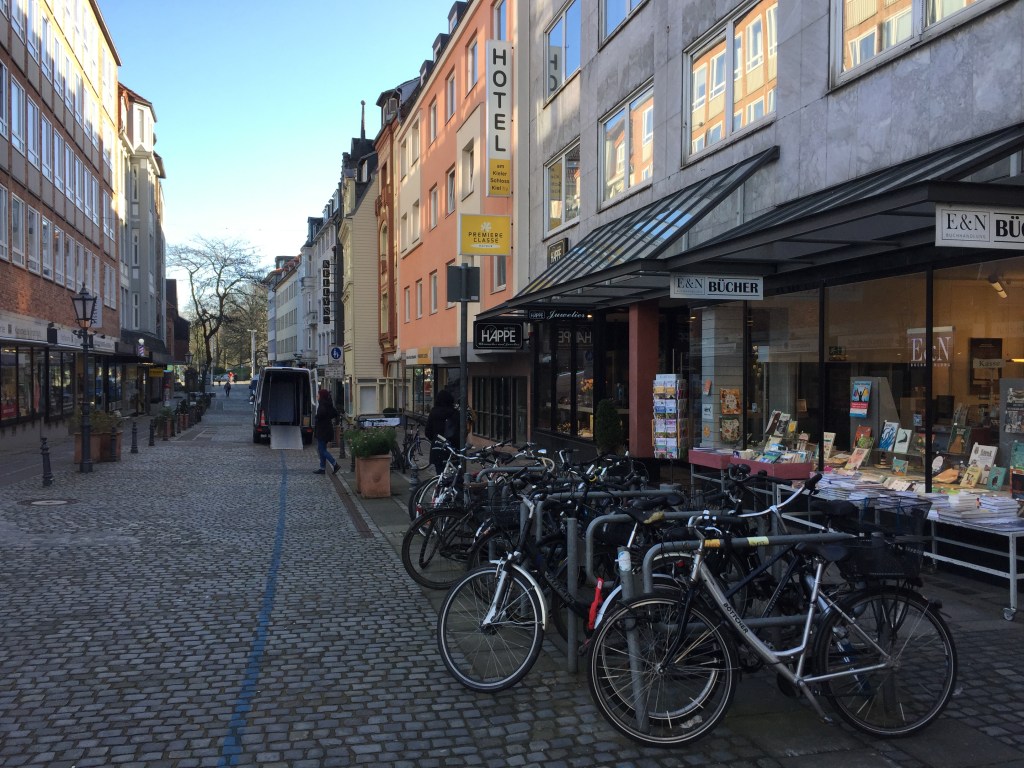
Having stocked up on local honey and bread (we Germans are very particular about this….) I went to the old part of the town, where I visited three shops that are always on my list when passing by:
The first is an “old fashioned” music shop, which still sells CDs, but which just stocks quality sounds. This might include everything including and as diverse as the classics, Amy Winehouse, Maria Callas, the Buena Vista Social Club or the Choir of Young Believers.
Whenever I visit, I leave money there and I am introduced to new artists.
The next one is an antiquariat, which is still hanging in there selling historic volumes and maps. This time I took with me a couple of books which I had already seen on their shelves a few years ago and I knew that they were mine, but I had always refrained from buying them….. I visited them several times and found them well protected in a glass display cabinet, but no-one dared to touch (or better to buy) them – these books them to have known that I would return one day, to take them with me……
And finally I ended once again at Heyck, a bespoke tea and coffee retailer with a long tradition in Kiel – you can enjoy a freshly filtered cup, while they are grinding your coffee beans, pack your tea or wrap up the chocolate you just couldn’t resist to take with you on your journey. Basically a small piece of Heaven on Earth…….
Walking back to my car I couldn’t avoid taking a closer look at this street sign though…..
Even for someone not familiar with the German language, I think the message was clear, but what concerned me were the rules that would apply between 6 am and 9pm…….
As my time at a second vet clinic in Sweden is now coming to an end and I am leaving all my new friends in Kumla with a heavy heart, it is time to look back at a couple of months of – at times – hard work and long hours, treating my Nordic patients, but also at some other great things, I was able to do and which I have so far not shared with you.
One was in Grönklitt North of Mora after one of the few days of skiing I had, when I passed a musher and his sledge dog team. Turning my car around, I got out and ask for permission to take a few photos.
And as it often happens, when you talk to animal owners and it turns out that you are a vet, you might get on like a “house on fire”. No difference with Frasse and his dogs – he had just been at one of my local colleagues with his leading bitch after she had knocked out several teeth on her cage door. Although I couldn’t help him- or better – her a lot, I sympathized with him about the expected vet bill and agreed to contribute towards it by hiring his sledging team for a spin.
Good choice ! This experience was truly worth every penny – or better Kronor (no-one bothers about Öre any longer in Sweden….)! Seven huskies, that were rearing to run, took us through the woods and I had to admit, that although I came for cross country skiing, this was much better !!
My advice: If you ever get the opportunity to travel on a canine drawn sledge, take it – you won’t believe how much fun it is, especially if the dogs in front of you listen and are doing what they have been told to do……
Another highlight was to see in person the cross country skiing elite at the World Cup Races in Falun.
Although it might be for most of you a niche sport, I have been following these athletes on television for many years at night after work or on weekends, in my gym at home on the spinning bike, the in-door rowing machine or on other torture machines and in some way joined them during their races. Seeing them for real and witnessing their real speed and endurance added to my respect for these top athletes, in a similar way as you might respect and admire a world renowned artist, musician or scientist. Seeing the human body and/or mind at it’s peak is and always will be inspirational.
No-where much more so when seeing and admiring the endurance and raw determination of Therse Johaug, the by far best female cross country skier of our times (here unusually in the last position of a sprint semi-final, which is not really her event….)
Finally an experience I didn’t have……. – and to be honest, I am very glad about it.
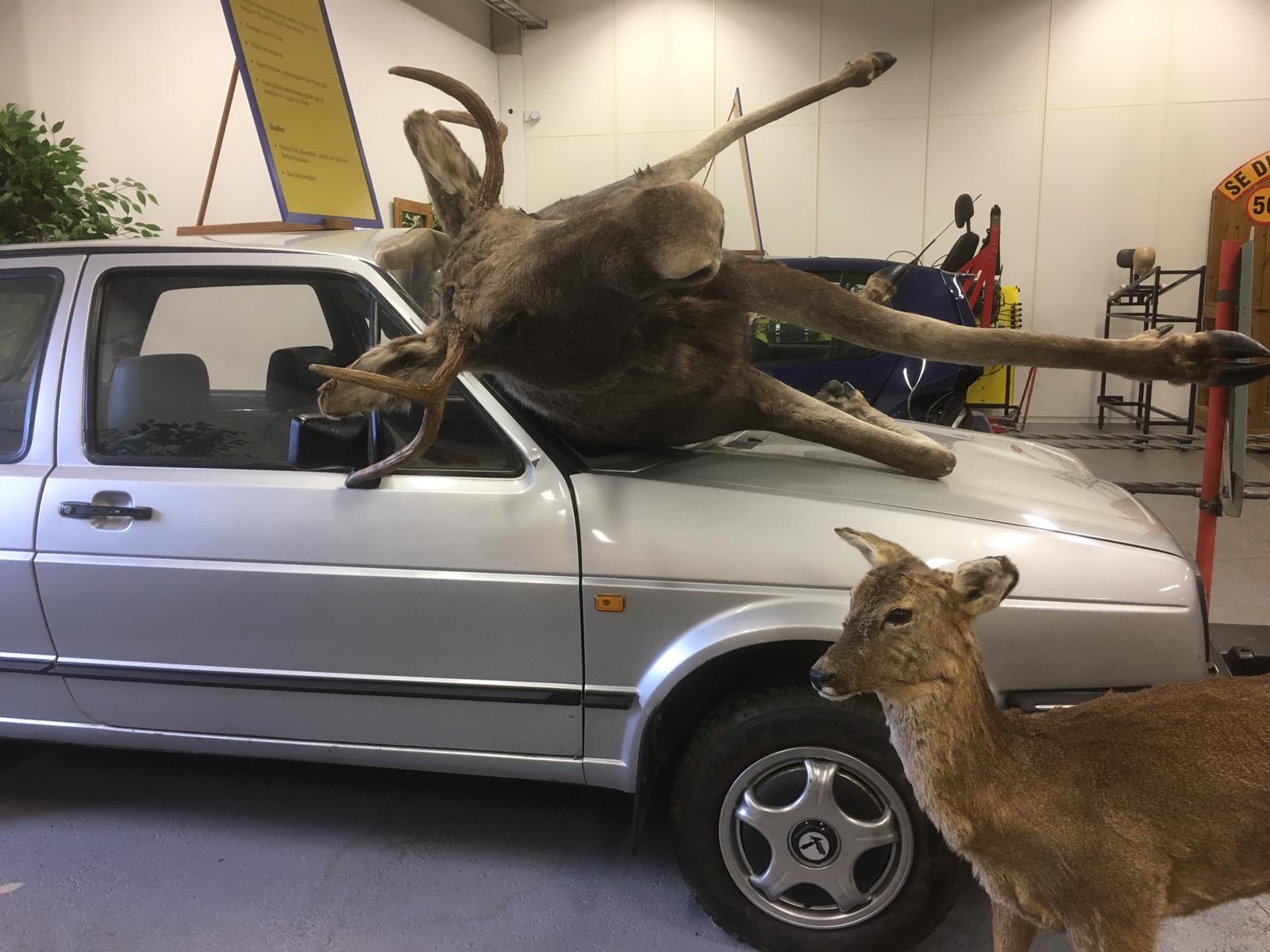
Although I was doing my utmost to see an elk (running and driving at night, hiking through the forest and taking on purpose the “scentic routes”), sharing the front seats of my car with one, was clearly not on my wish list.
The image above was taken by my colleague, who had been offered a visit to the local driving school and an afternoon course on driving on ice, which is mandatory in the Scandinavian countries. The exhibits at the driving school were a stark reminder how dangerous it can be driving on Swedish roads.
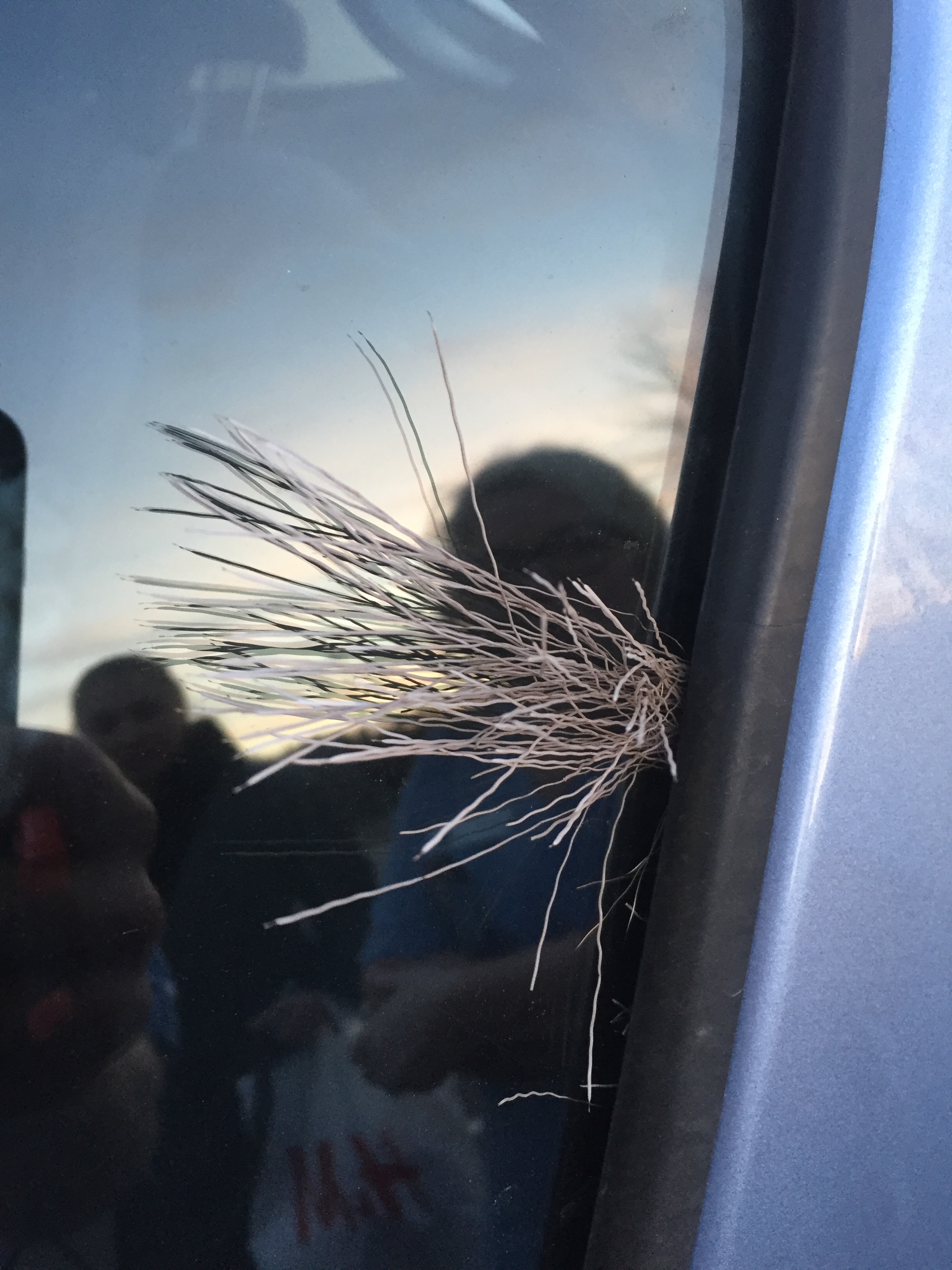
And sure enough, how considerable the risk was, was demonstrated when one of the next mornings Ewa, one of our receptionists, arrived late for work after an female elk had virtually jumped on to her car. According to her, the car came out “second winner”….and the elk left a few souvenirs on the car windows before disappearing again into the forest.
So, while heading South and leaving Scandinavia – at least for now – the only encounter I had with an elk, is in form of a deep frozen filet, which was given to me by Leif, one of my Swedish colleagues, linked with the promise “to return back soon”…….
Ok, that doesn’t sound very sexy, but it was one of the reasons why I was so looking forward to working for a while in Scandinavia – I wanted to see at first hand how a far more reduced use of antibiotics in clinical practice can be achieved and how cases, where I normally would have used this form of medication are responding without them. Seeing is believing !…..
Let’s make one point clear though right from the onset: There is no doubt that we have been extremely lucky to live at a time where we can defend ourselves against bacterial infections which would with some certainty have killed us a hundred years ago. The availability of antibiotics has revolutionized both human medicine and veterinary medicine and even here in the Nordic countries no-one wants to imagine working once again without them.
However, in order to prevent resistances against antimicrobials, we have to use them more prudently. We need to choose the right kind of antibiotics for the right infections and we need to ask us constantly, if the use is necessary at all. This again goes hand in hand with excellent hygiene in all aspects of the treatment process.
There is no place in the world where this more strictly applied than in the Nordic countries and the results are striking:
Most small animal vets in the North are using less than 1/4 of the antibiotics than their counterparts in the South of Europe or in other parts of the world and the results at the clinics I have worked at, are even better.
So, how are they doing it ?
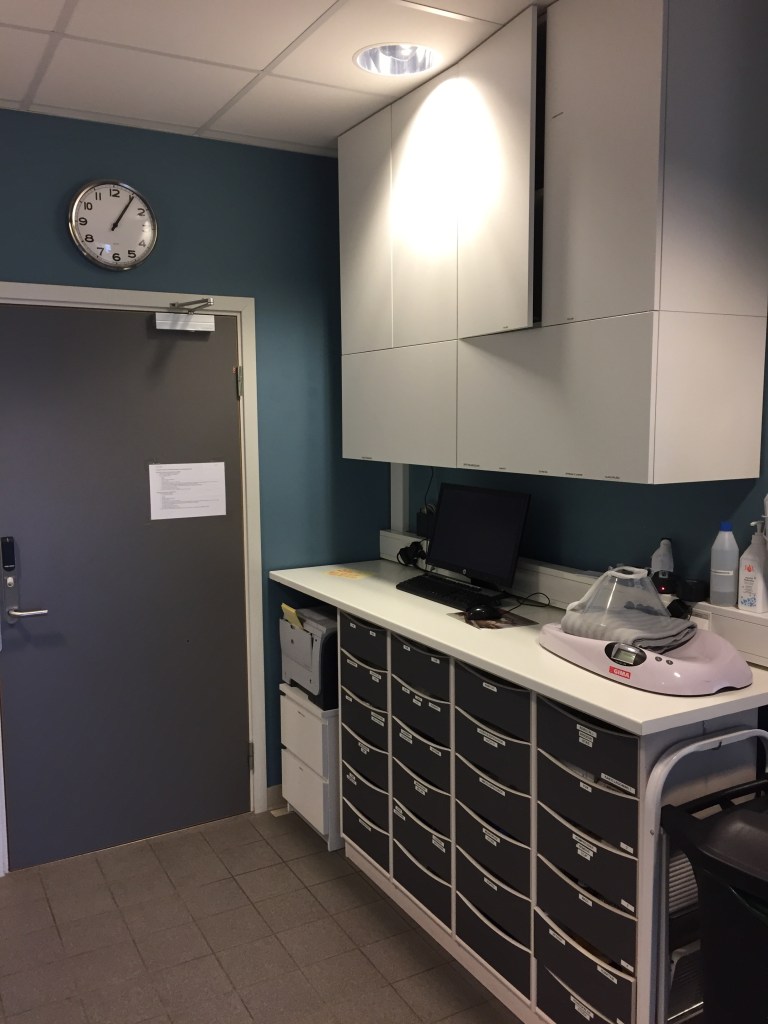
As mentioned above, it starts with good hygiene and this again begins with the right building and interior design. Most of the clinics here are purpose build and so designed that there are very few surfaces where dust and bacteria can accumulate.
This is then followed by clever storage solutions so that there is very little clutter.
Regular deep cleaning and alcohol bottles (which are used all the time) on every corner are also important features. In addition to this, all clinical employees are changing into scrubs when they enter the building and street shoes are left at the entrance. There has even been a call for mandatory showers before the change of clothes (something that is for many years the routine in large poultry and pig farms).
The next step is a change in the general mindset: in Scandinavia you nearly feel guilty if you dare to reach for the antibiotic bottle and if you do so, you are never using one of the critical antimicrobials which are reserved only for resistant infections or after confirming with an antibiogram that they are indeed the right choice.
Detaching the right to dispense antibiotics (and all other medication) from the right to use them and at the same time turning a profit from it, has also been discussed many times and personally I think that this is probably the right thing to do. Whenever follow on medication has to be given here in Sweden, I have to issue a prescription and the client has to collect the medication from a pharmacy. The downside of this system is that the clinical work becomes more expensive and a normal consult to see a vet is in the region of 80 Euros.
Compared with individual clinics like my previous one in Virginia Water, the large corporate organisations – like Anicura, who I am at the moment working for – have the advantage, that they can afford a clinical board that can work on the most up to date advice and they can employ someone to implement and to monitor the policy and they can produce the necessary data to back up the results.
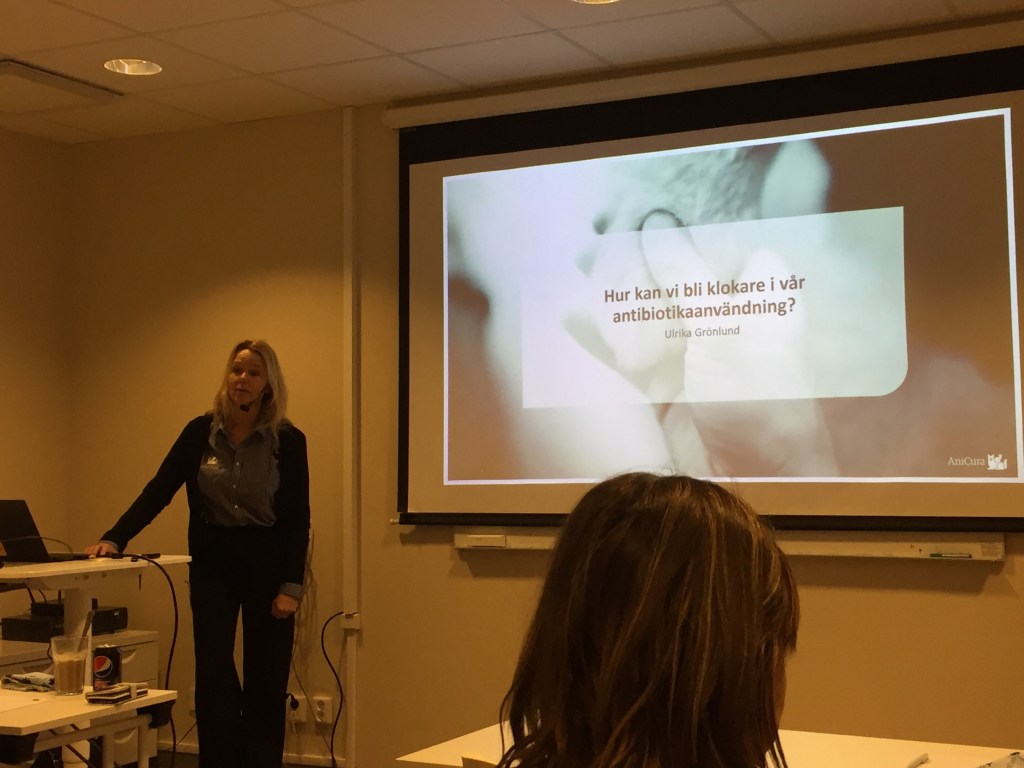
While in Kumla I finally had the opportunity to meet one of these people: Ulrika Grönlund, the group’s Medical Quality Manager.
I have been in touch with Ulrika for many years in connection with the production of a set hygiene posters, which were written by a dedicated group of colleagues for FECAVA and which – in a range of different translations – are now hanging in veterinary clinics all over Europe and even in China. The working group , led by another Swedish colleague: Alex Vilen, had benefited from Ulrika’s advice especially when the posters were recently reviewed.
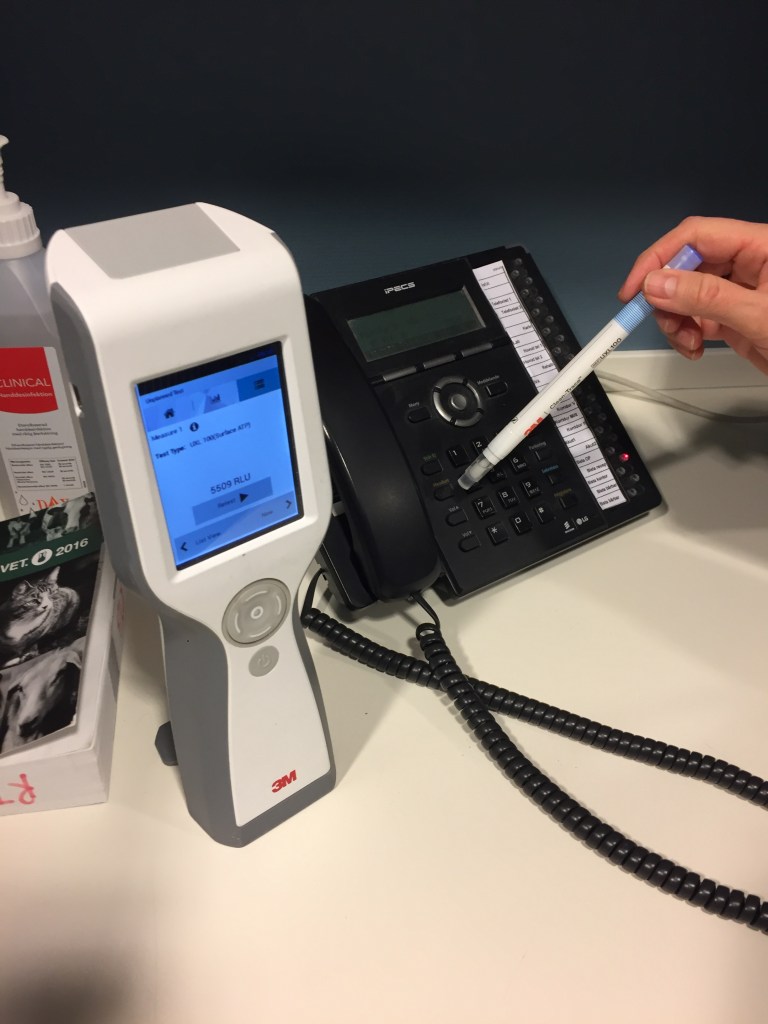
Although exchanging e-mails from time to time, I had never met Ulrika in person. In my first week in Kumla she happened to not only make one of her routine visits, checking on common hygiene problem areas using equipment from the food processing industry, where stands are even higher,
she also gave an evening presentation to the whole team, which – despite the fact that it was in Swedish – left me captivated (admittedly the power point slides helped considerably to understand what she was talking about….).
And indeed – over the last few weeks it has been a revelation for me to see, how many cases do well only with painkillers and often only with locally applied antibiotics and I will certainly take this knowledge back to my patients in the UK (and where ever else I am going to work).
Admittedly – to not appear too blue eyed about this issue – there are a few other reasons why vets in the North have it a bit easier to use less antibiotics: due to the colder climate and due to the interior design of Scandinavian houses (usually wooden floors with only a few soft furnishing elements) ectoparasits play a far smaller role. Another factor is the lower population density which also helps to reduce the infection risk. So moving up on a mountain and starting to shop at IKEA might not be such a bad idea after all!…….
Working night shifts for vets is a bit like Marmite – some colleagues love it, some loathe it…….
Working through the night (or part of it) is messing up one’s internal clock and it can be very disruptive for a “normal” family life. A busy night with a lot of emergencies or critical patients can be very draining and as night work is more likely to involve seeing very ill patients, the mental strain on the veterinary team can be considerable.
In the last few years of running my own clinic, I had progressively back away from additional night work as I could rely on the services of a dedicated night clinic fairly close by. Admittedly this was a godsend, as the double commitment with both the daily running of the clinic and of my involvement with FECAVA would have made it virtually impossible to provide also a decent night cover. I can re-call weeks when I got by with no more than 4 hours of sleep in a single night. Thankfully vets are always on their feet, so falling asleep while working was difficult……
Luckily though I am both a bit of a night-owl and I can function pretty well with very little sleep and then there is still the wonderful effect of a freshly brewed coffee…..
Working night shifts here in the North during the winter month is absolutely perfect for me: with work starting at 4 pm, I have enough time to stay long enough in bed in the morning, have time for a long run (ok – skiing would have been much better) and I still have time to see some of the towns and especially the beautiful countryside during day light. When the light is fading the work is starting.
When entering the clinic, most of the routine clients have been seen and you help with everything that is still to be treated and you familiarize yourself with the patients that will stay for the night. All the patients that are seen from now on are emergencies and you basically have to be prepared for everything….
At the same time the team is now reduced to just a handful of staff and in a larger place like Kumla, you never know who will be joining you this night. There is however always a strong camaraderie in the team – we are all in the same boat trying to steer it safely through the night and while sitting with a patient that is recovering from an operation or a patient having his seizures controlled, there is always some time to talk and to learn more about the people living in this part of the world, their background, their views of the place and their hopes and expectations. There is also usually the time to take a break, sitting together in a small group over a coffee and surely someone had brought along some food to be shared.
The consultations too I find more rewarding – the clients are understandably very worried about their pets and you can usually spend more time with them explaining why you do what. Some of my most memorable conversations with pet owners that I had in Virginia Water took place in the middle of the night while their dogs were recovering from cesarean sections, from gastric torsions or spleen ectomies.
Thankfully all my patients from last night are now back home with their owners, I had the pleasure making the acquaintance of a new canine member of the team and I even got a few hours of sleep……..the next night shift can come……..
Finally it was time to leave my little cottage in the woods and the three attention seeking feline tenants.
When signing up for the locum placement well before Christmas, I didn’t want to commit myself for more than a month to start with, just in case that the Nordic experience might not have turned out to be as great as it has been. This was not a problem, but the clinic in Falun had to make alternative arrangements for February and another colleague from the UK was on her way and she was looking forward to take over the responsibility for the cats and of course for the cottage as well…..
All my belongings had to be squeezed into the (no longer) white BMW and I realised that despite me living of porcini risotto with truffle oil from Italy, containers of apple juice from the Black Forest, sausages from the Alsace and wine from Austria and the Franken region in Bavaria, this had failed to free up any storage capacity. The fact that I had bought another set of skis and boots and had acquired a couple of new veterinary text books might have had to do with this……
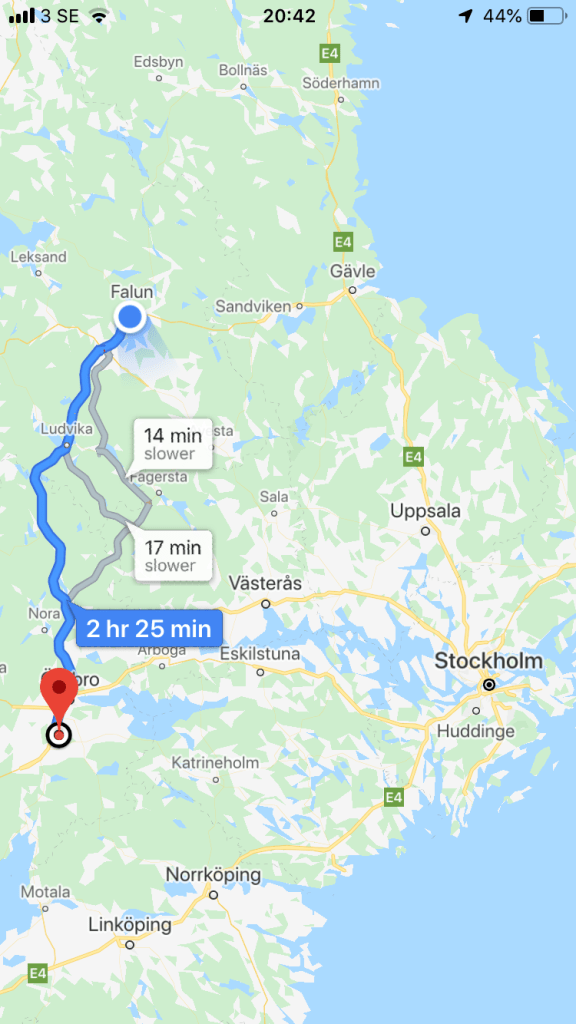
Kumla is circa 200 km to the South of Falun, right in the middle between Stockholm in the East and Oslo in the West. The countryside here is less hilly and my chance for getting snow are reduced further.
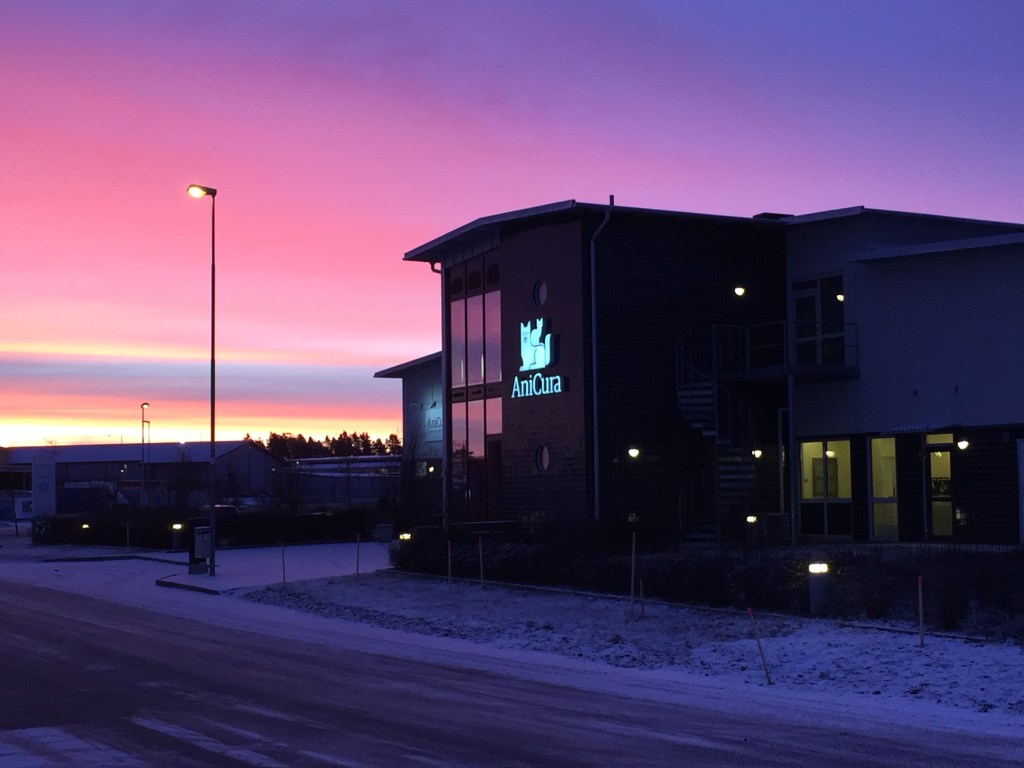
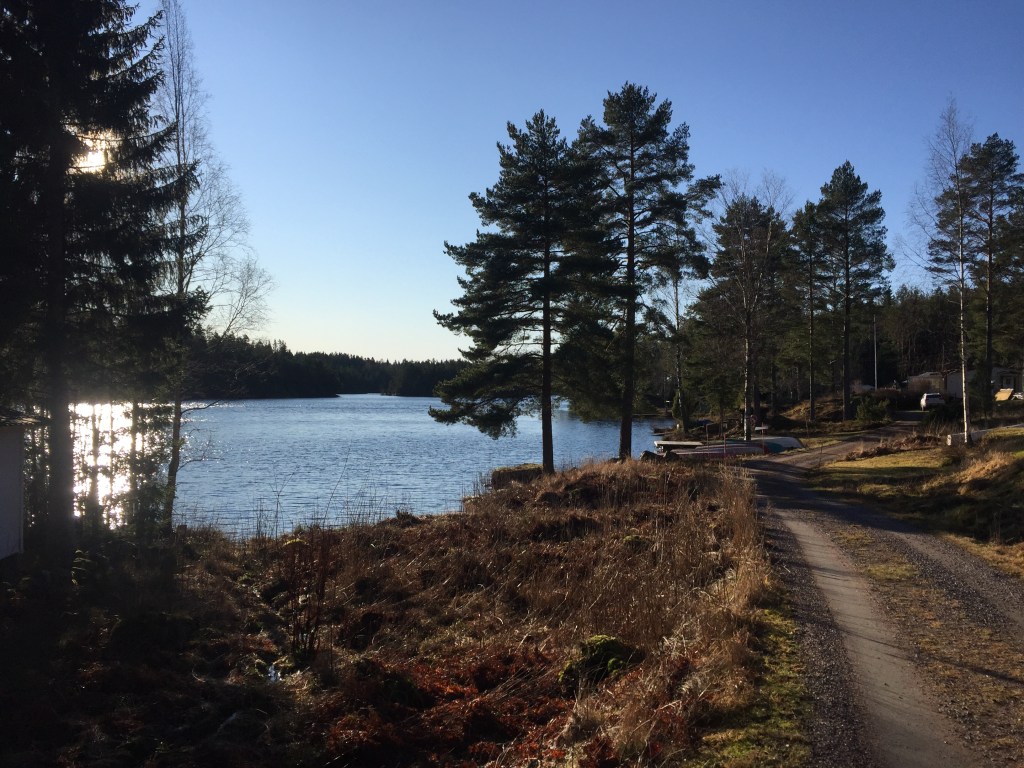
However, here a busy veterinary hospital with circa 65 members of staff (2/3rds of the size of Falun) was waiting for me and instead of my little cottage, I now have a modern house on a lake which I am sharing with two other colleagues.
My new neighbor Peter is a petrol head being busy fitting tuned Volkswagen Beetle engines with 200+ BHP into beach buggies and he is the proud owner of an 8 kg + giant of a cat which understandably is ruling the neighborhood.
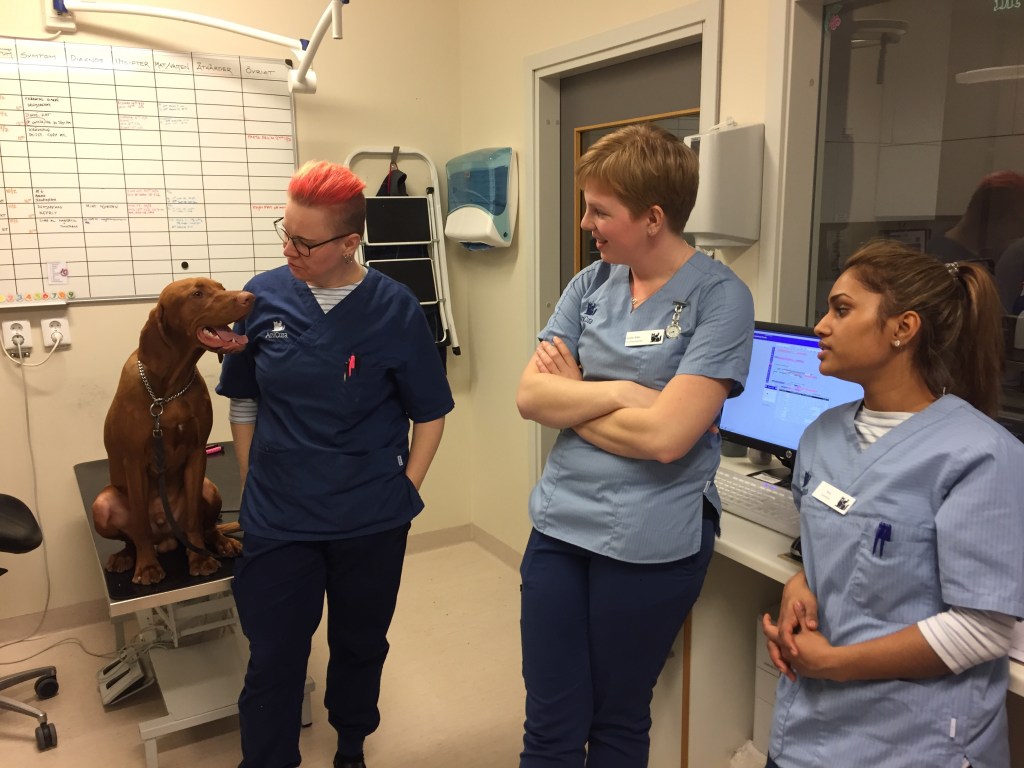
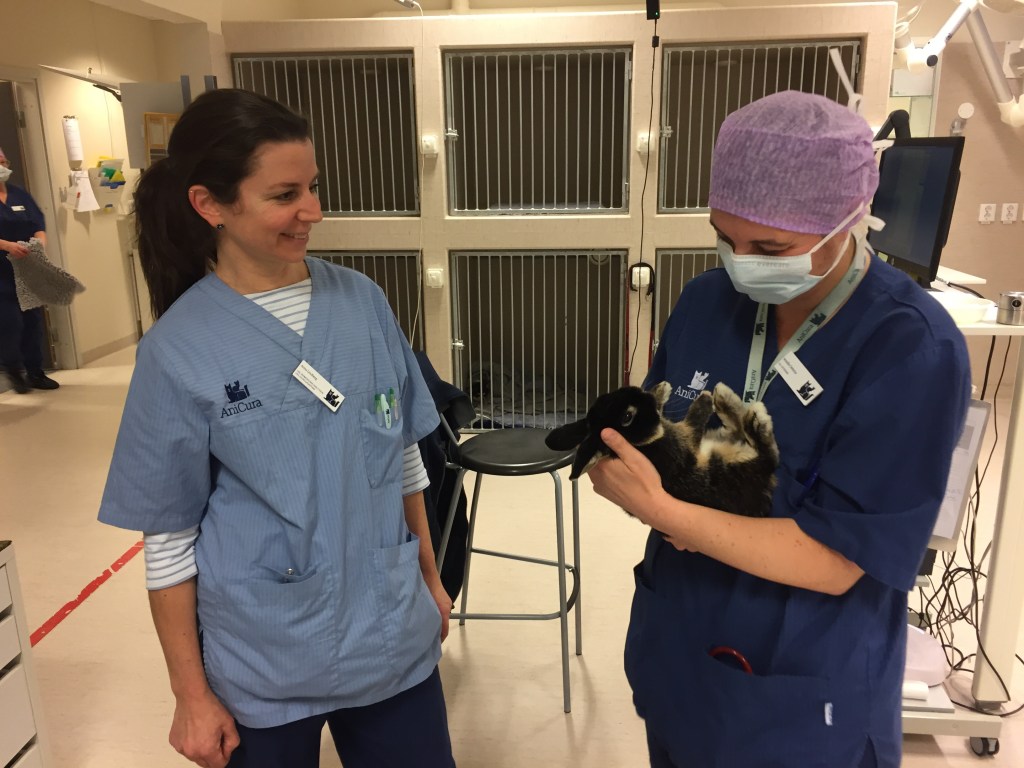
The team at the clinic in Kumla is more international than in Falun, with vets from France, Belgium, Romania, Australia and myself working alongside our Swedish colleagues. Once again I am blessed with a brilliant nursing team that is a delight to working together with.
Although I once again had to get used to a new computer system, it felt easier this time and I noticed that I have started to conduct more and more of my consultations in a mix of my resurfaced Norwegian and the native language. It just shows that the brain is very much like a muscle that can be trained, although it might be uncomfortable to begin with.
My work here is predominant emergency medicine, which includes presentations I have been less familiar with, like poly traumas due to wild boar attacks or lung oedemas in gun dogs.
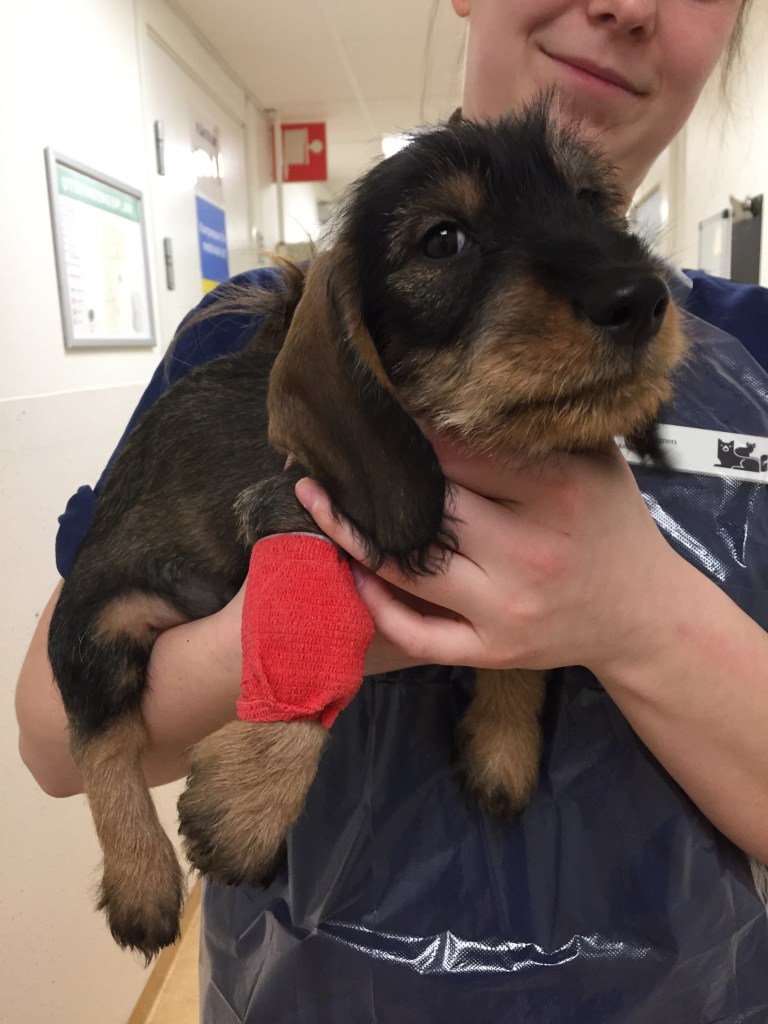
Thankfully most patients have been luckier and are happy to stand for a photo.
Well, let’s see what the next three weeks will bring……























 The Blue Vet Diary