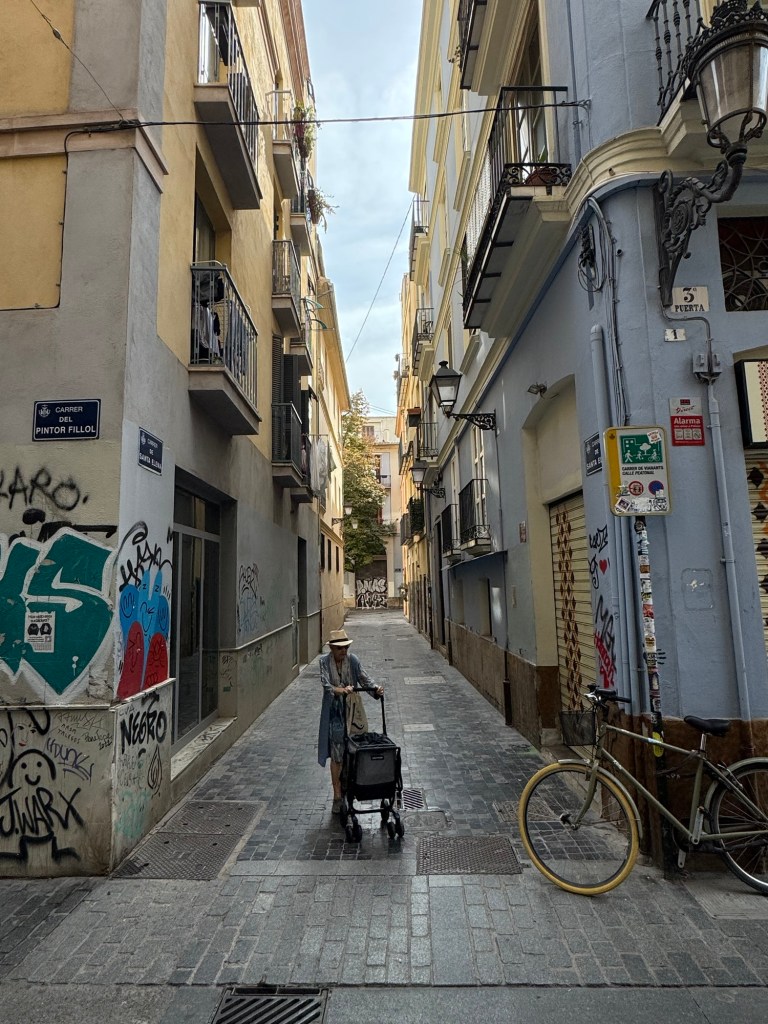
And so, I carried on with my two-wheeled, muscle powered excursion of Spain’s third most populous city.
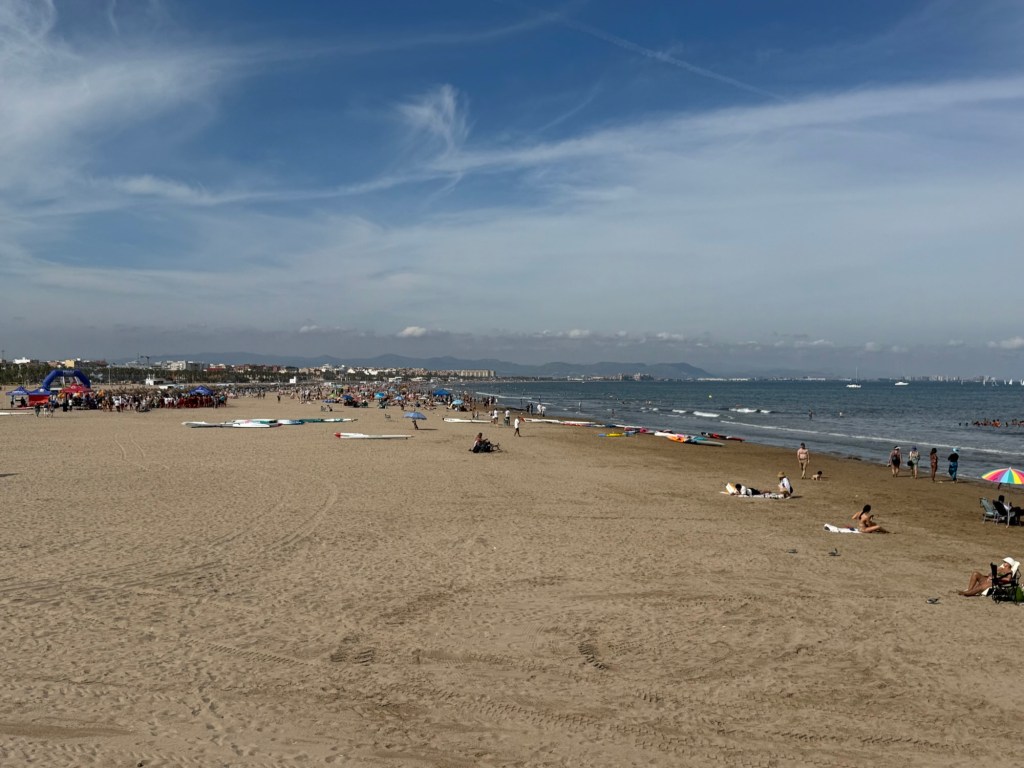
It did not take me long to reach the marina and the nearby beach. Here the water was still warm enough – at least for a northern European – to go for a swim.
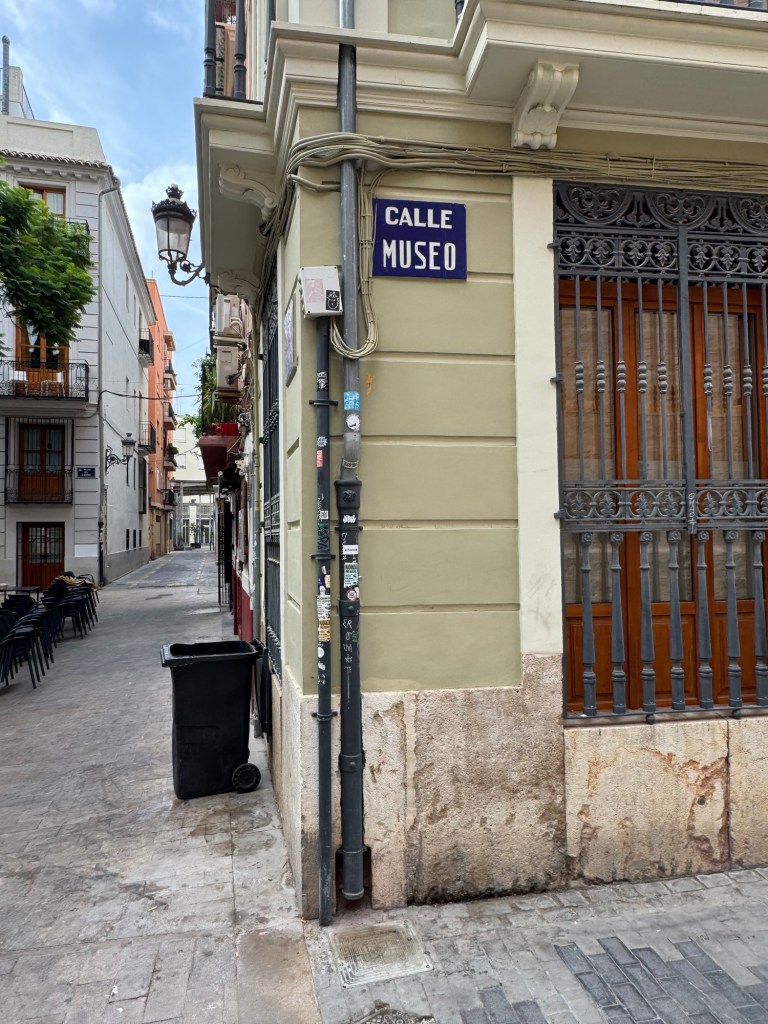
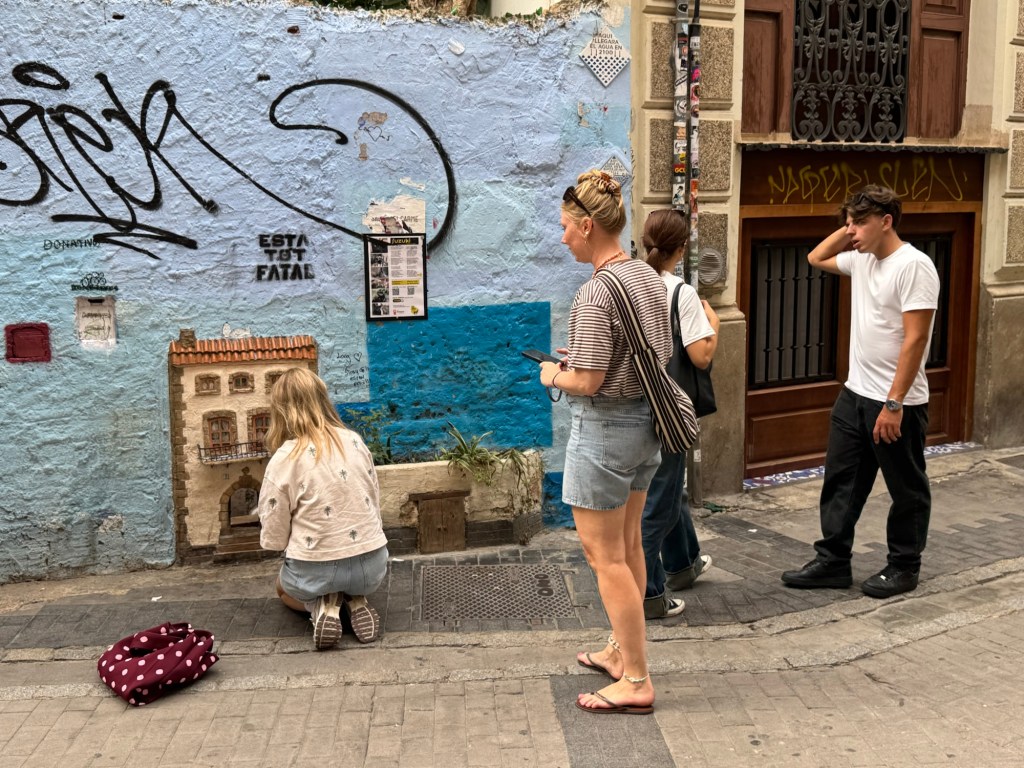
On my journey back to Plaça Espanya, I was passing through Calle Museo, where I noticed a gathering of people, mostly visitors to the city like me.
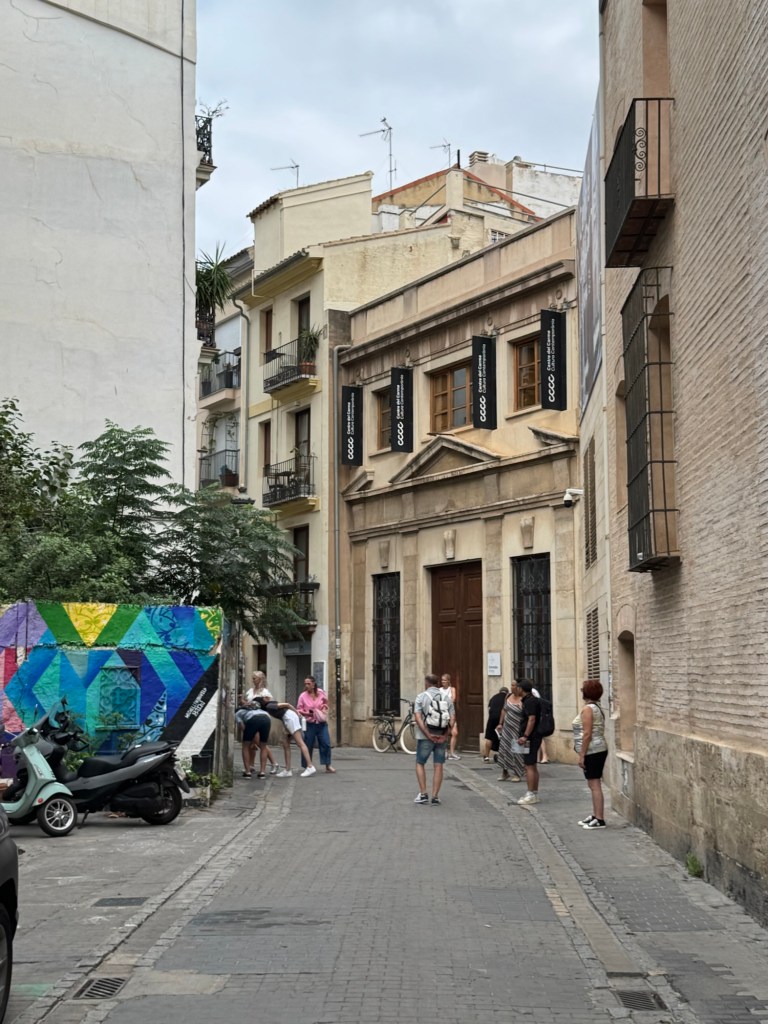
The object of their attention was nothing special – just a hole in a dilapidated old wall. Admittedly a somewhat unusual one – a hole with a whole house around it, including a small water fountain and occupied by a gang of freeloading residents….
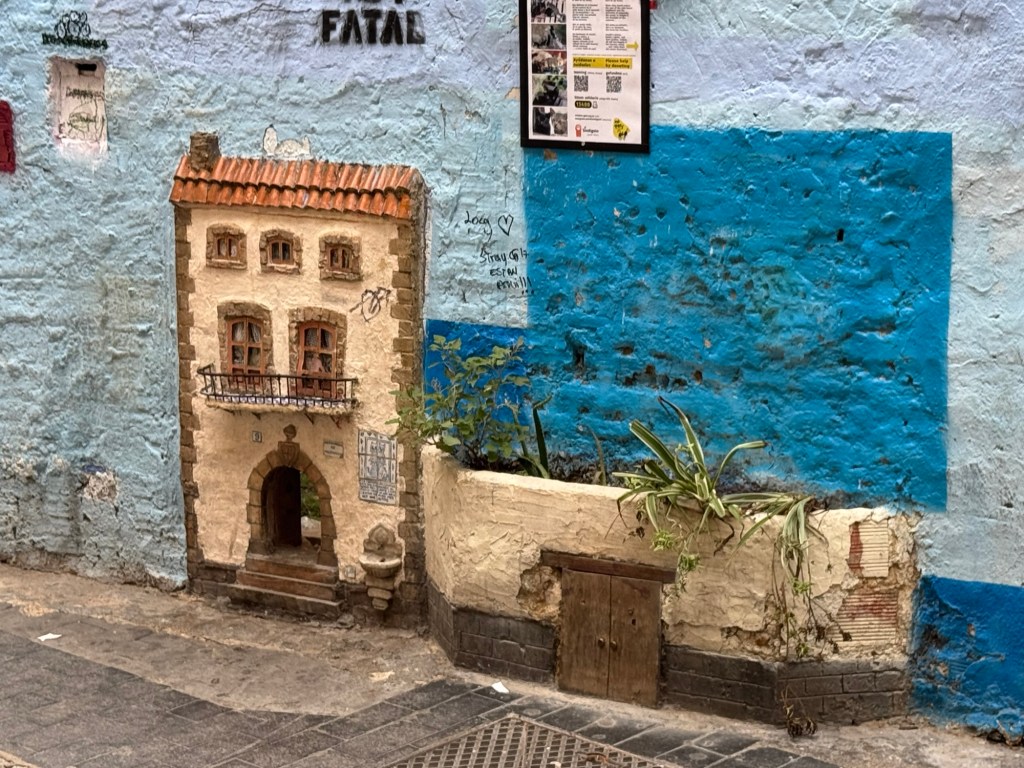
What I had come across was one of Valencia’s less spectacular, but most endearing tourist attractions, the ‘Casa dels Gats’.
Like the subtle pavement flacking installations of French street artist Ememem, here local resident Alfonso Yuste Navarro had transformed a humble hole in a wall with the help of a few lumps of discarded building material and parts of an unlucky shopping trolley into a popular institution that has attracted visitors for the last 20 years.
This small, easily missable feature became an online hit as soon as – or better – because cats were involved.
One of the city’s main attraction was a prime example of the never ceasing human-feline bond, of the irresistible appeal that cats have exerted on humankind for millennia, and even more so on the socially isolated and lonely urban dwellers of our time.
Despite its feline residents having retreated to safety and rest behind the wall and vehemently refusing to be coaxed out on the street again, a constant stream of new visitors continued to arrive.
A closer inspection of the unusual property revealed a few clever details. A set of minute tiles next to the entrance featured four cats, as a reference to the four lucky felines that had remained in El Carmen, while all other cats had been killed or banished from the city after been conquered by El Cid in 1094. Another minutia easily missed was an image of Charlie Chaplin in one of the top floor windows or the love-making couple behind the curtains on the French balcony (which in its former life had featured as a vital part of the shopping trolley….).
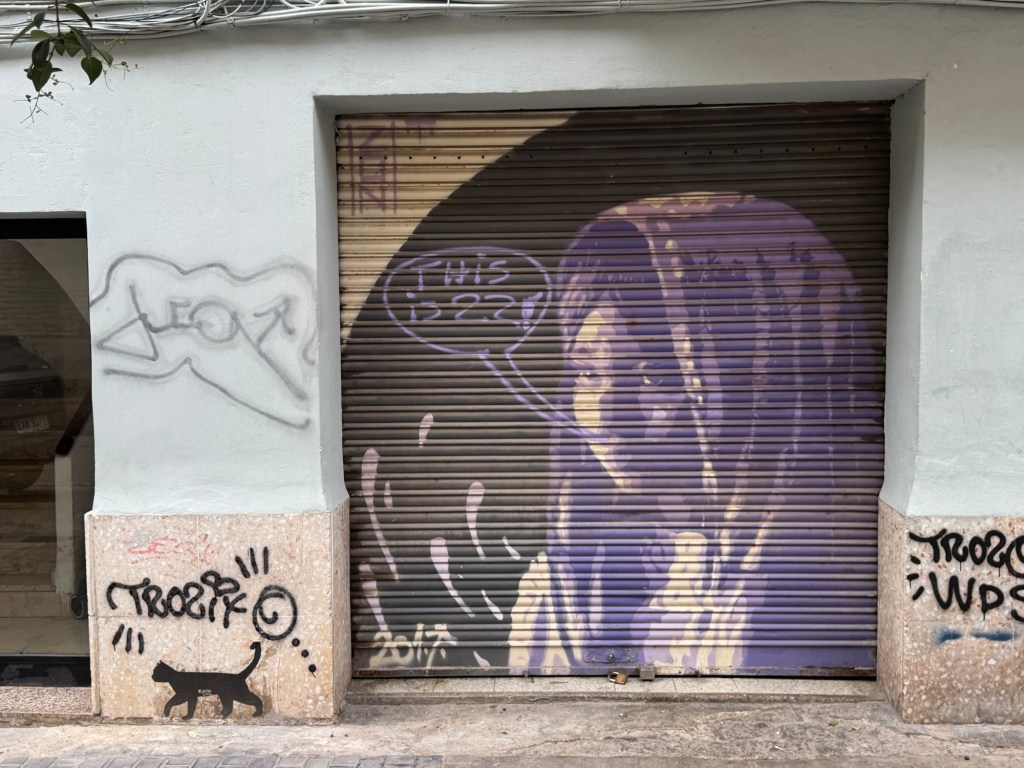
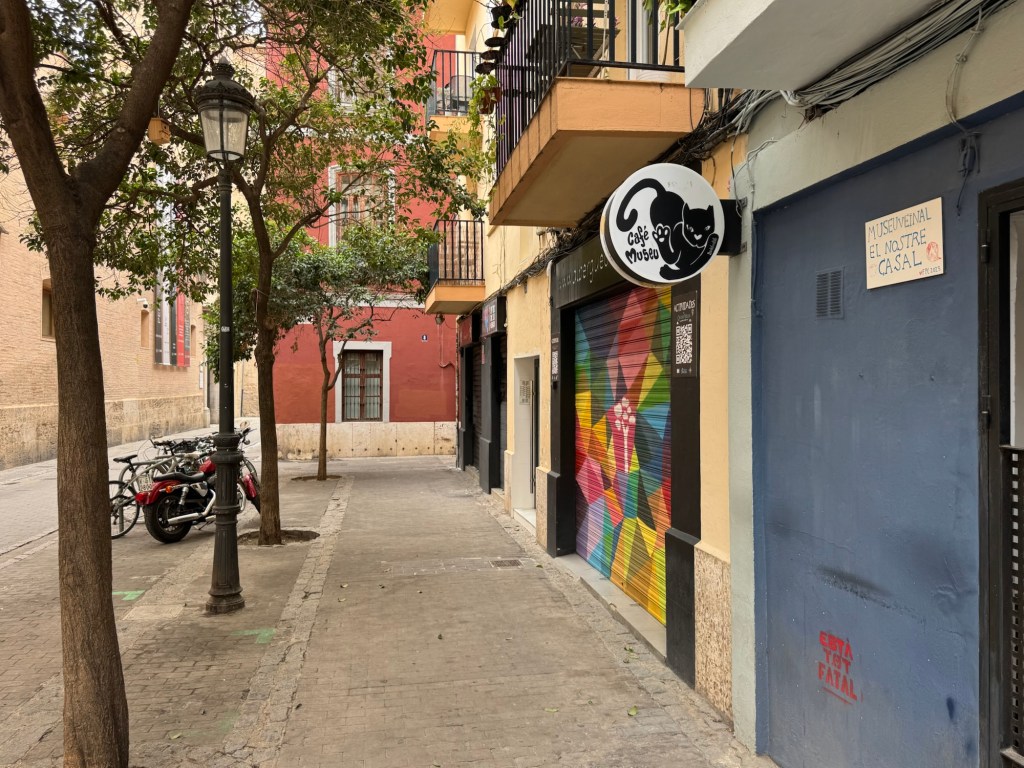
Looking around me, I noticed that cats appeared in many other locations along the street. Calle Museo was in fact completely dedicated to the feline species, with a rather poor sculpture of a goat on top of the wall as the only exception.
Eventually, I carried on with my excursion, but the small dwelling at No 9, Calle de Museo stayed in my mind, together with the famous quote: “The greatness of a nation and its moral progress can be judged by the way its animals are treated.”

