One small profession – one large family

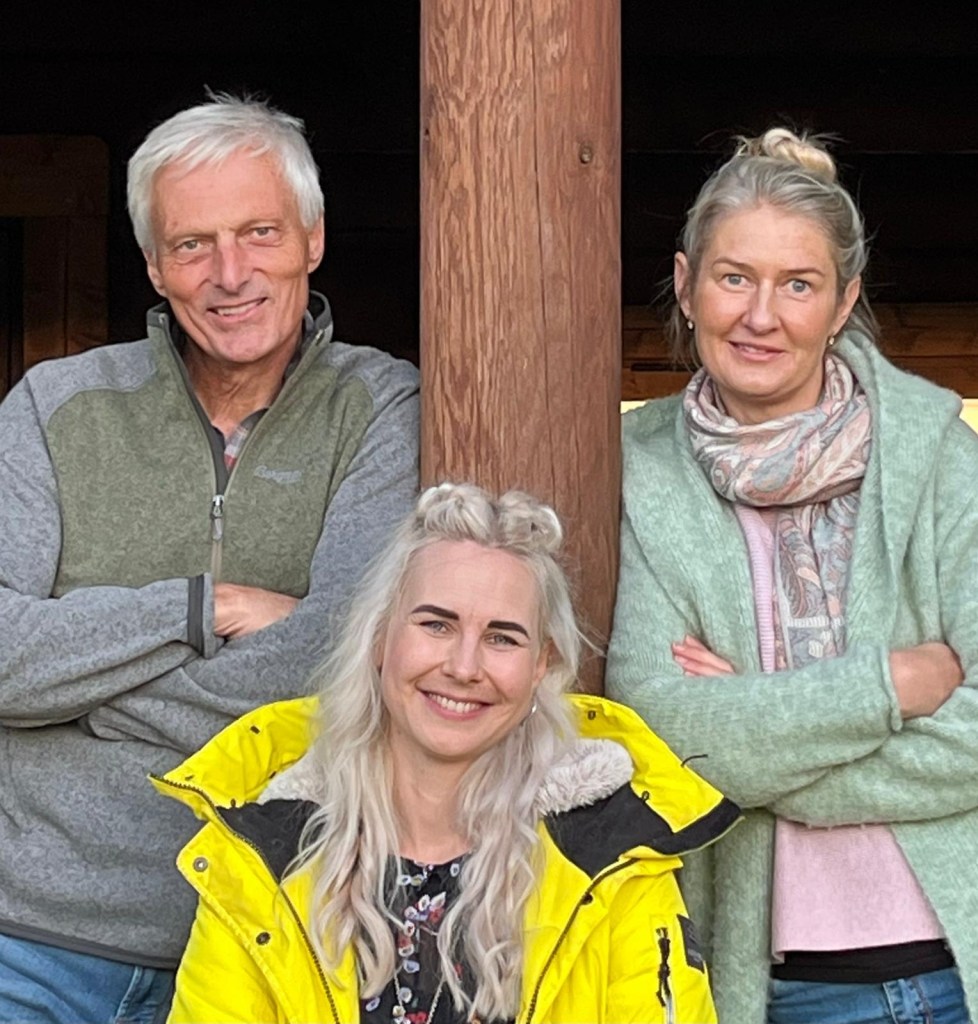
With Ingrid Hang and Julija Abram in Estonia

One of the great advantages of being a veterinary surgeon is that compared with many other forms of employment, people usually have an idea of what our job might be and in most cultures the work we are doing is looked upon favourably, especially when it turns out that we are treating companion animals and possibly the odd exotic patient as well….
This is useful when travelling, because dogs and cats have – with the help of their human companions – now conquered every corner of the globe. As dogs and cats are getting ill as well, having a vet in the house is never a bad idea.

Moreover – that our line of work continues to enjoy a lot of public interest remains undisputed – one only needs to look at the multitude of veterinary television programs and their viewing figures regardless of the country you are in.

A lesser known advantage of this job is, that because there are just a few of us (in the US – as a typical example – vets are outnumbered by human doctors by 8:1) we are a much closer knit community, very much like members of a large family, especially if we are working in a more defined field like companion animal or zoo medicine.

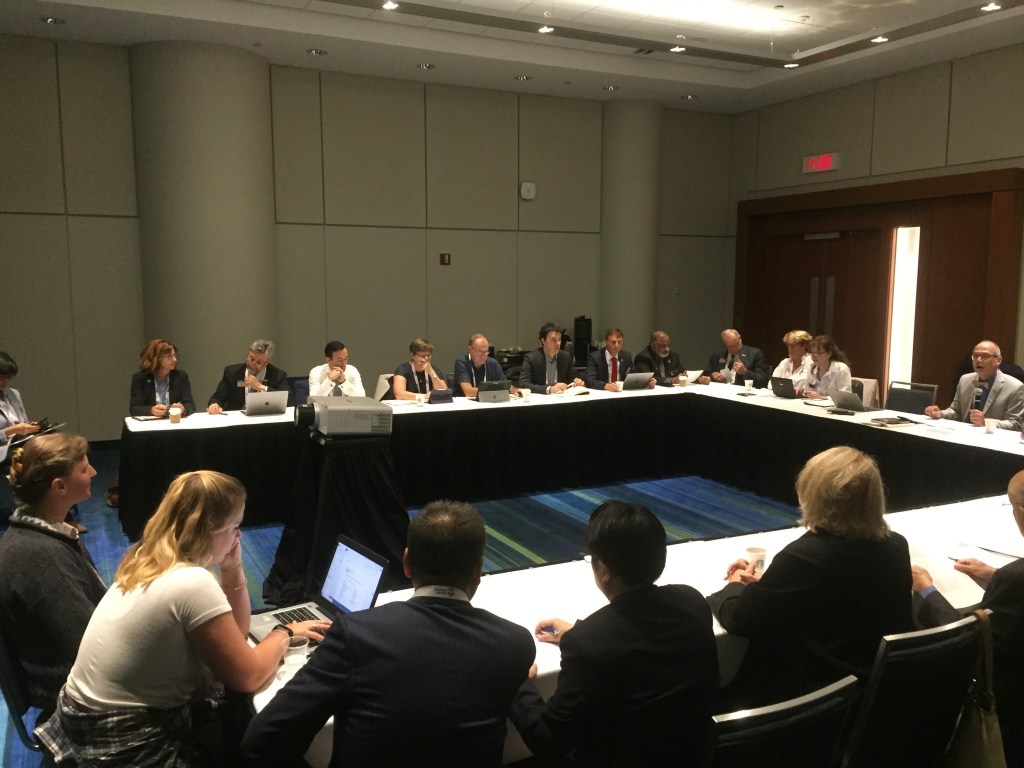
WSAVA VIP Summit Toronto 2019

Although we might not know each other personally, we might have heard from one another through colleagues, might have enjoyed the same lectures at conferences or might have worked online together on similar projects. We often face the same daily challenges and share the same moments of happiness and dispair. If all humans are not more than six handshakes away from one another, then with companion animal vets this figure can be safely reduced to two (ok – possibly to three if you include North Korea….).

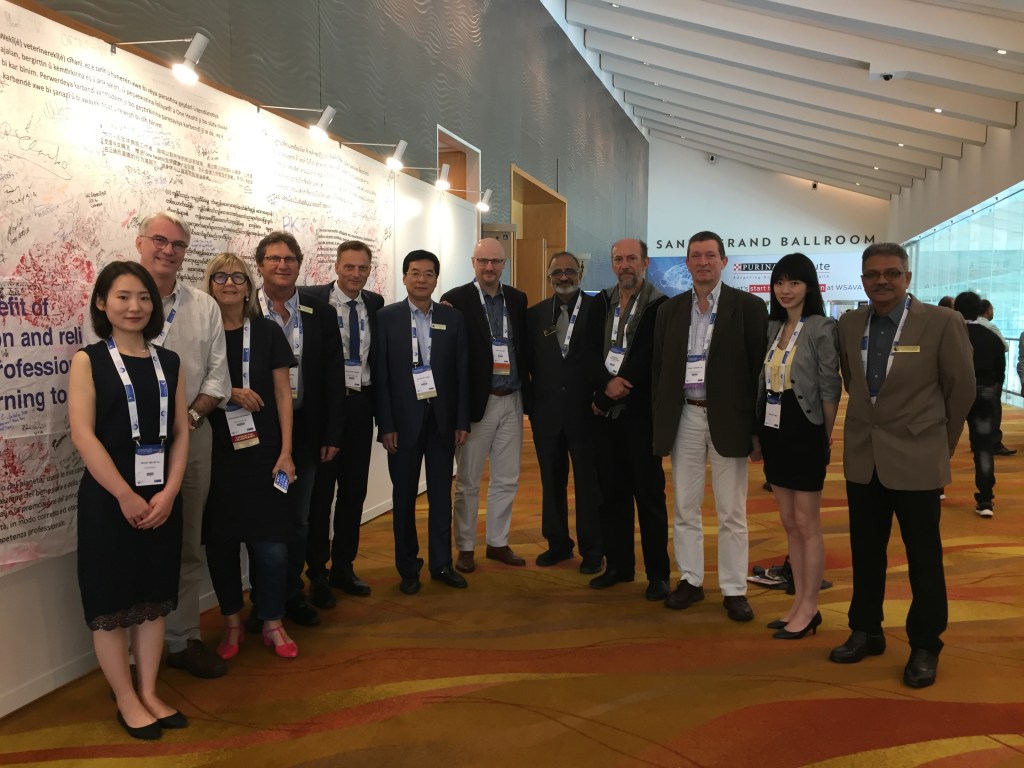
Meeting of European and Asian companion animal veterinarian leaders at the
WSAVA Congress in Singapore 2018

Unlike our “human” colleagues I found that vets more readily like to communicate when meeting another member of the profession and we certainly like to “talk shop”, not seldom to the annoyance of our “no-vet” partners.

This unique feeling of community has been one of the most enjoyable aspect of my journey through Northern Europe this summer.

On a road trip covering over 11 000 km that took me through 13 different countries I met, shared breakfast, coffee or dinner and sometimes even the same roof with not less than twenty of these wonderful colleagues and often their whole families.

I was treated to excellent hand crafted cappuccinos in Lübeck in the North of Germany and enjoyed personally hunted wild boar in the South of Sweden. I finally managed to catch up with one of Poland’s best veterinary cardiologists West of Stockholm, got attacked by a lawnmower in the garden of an Austrian colleague at the Gulf of Bothnia, got invited to a Italian restaurant by a Croatian colleague in Sundsvall and had coffee following a couple of consults in a large kitchen near the border between Sweden and Norway being surrounded by a dozen very chilled huskies.

Catching up with Dorota Morawska in Kumla

I was invited to their log cabins and went hiking with my Norwegian colleagues not far from the Northkapp, ate Mexican food in Finnish Lapland and was introduced over a Pizza to Finland’s National drink in Helsinki.

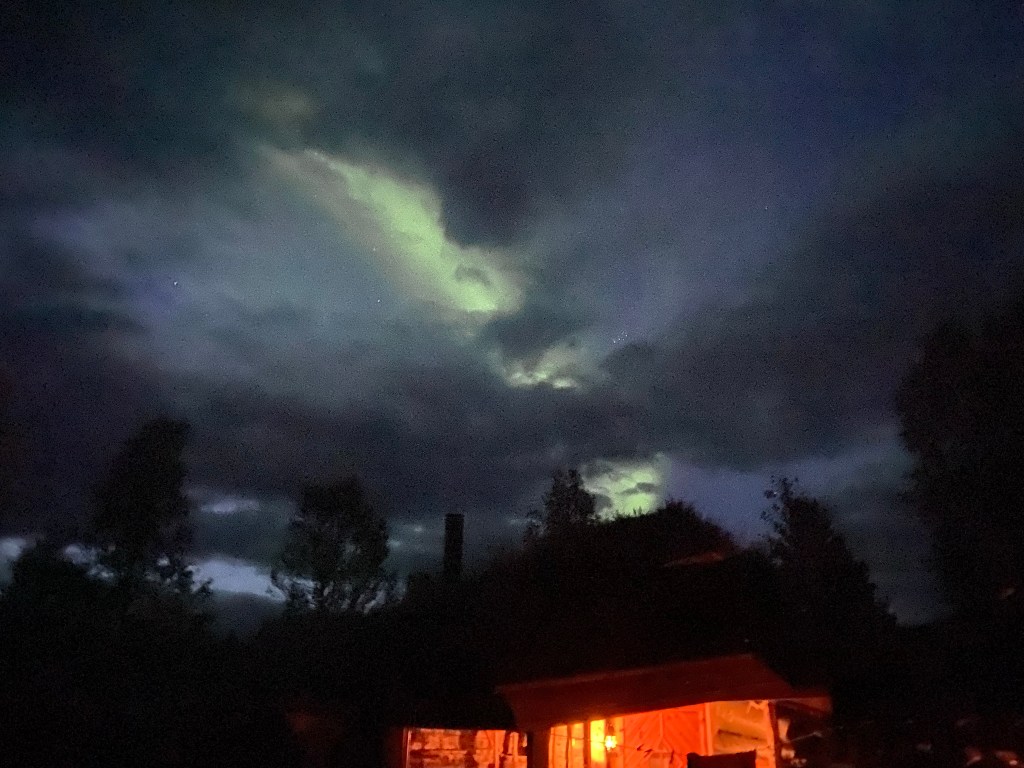
The first of this season’s northern lights above the log cabin of Vigdis Børset Raedergård at the end of August

In Estonia I endured the wiping with birch branches in a sauna near Tartu, was invited to a family weekend on a knightly estate near Tallinn and challenged my vertigo on the top of a lighthouse on the Baltic coast.

At the Kohato Manor

I received a warm welcome and enjoyed the kind hospitality of colleagues on the tip of the Curonian Spit in Lithuania and even more so in the heart of Warsaw before being finally reunited with a whole group of colleagues on the German Baltic coast.

With Linas Varanauskas in Klaipeda
Meeting Magdalena Krainska in Warsaw

As this unforgetable journey drew to a close, I once more was grateful to be a member of this unique profession and part of this large family.

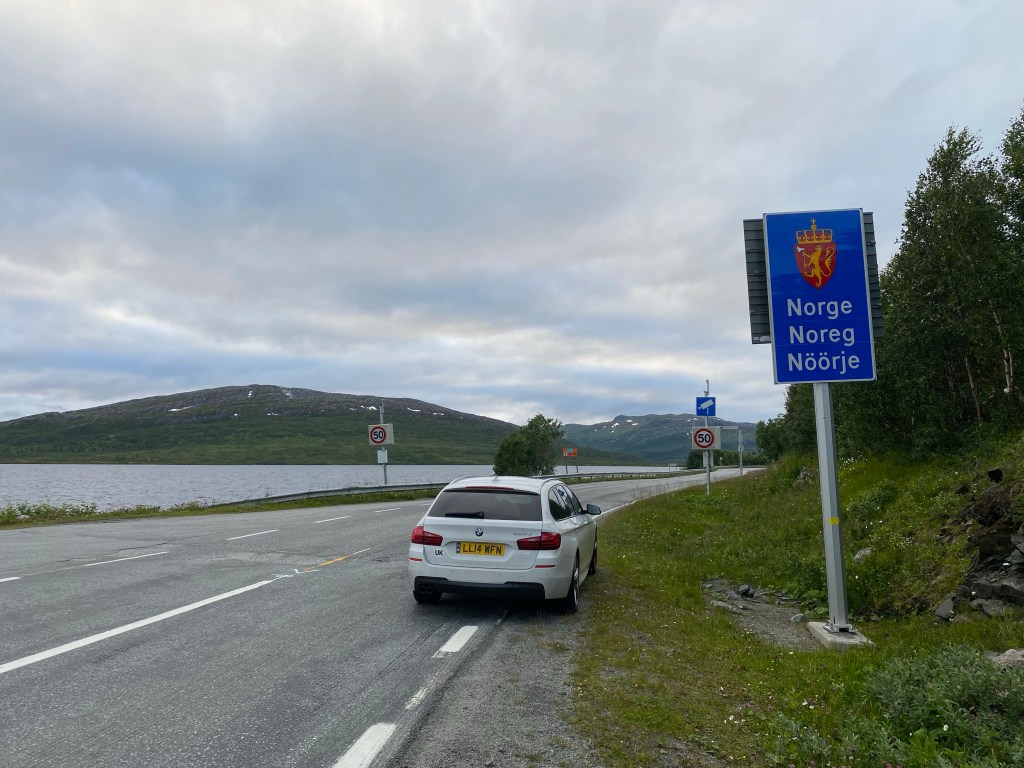
However, just before driving out of Kautokeino in the North of Norway, I had a premonition that a further part of this story – in a very different setting – will follow soon……

(At this point a HUGE thank you to Hartmut Wagner-Rietschel, Karin Frisk, Dorota Morawska, Gunnar Schöbel, Jurana Jelacic Vitaljic, Frauke Sappert, Maria Karlsson, Björn Sturnegk, Annette Kriller, Vigdis Børset Raedergård and the whole team at Tromsø Dyresykehuset, Kjell and Vigdis Korbi, Markus Killi, Sanna Hellström, Ingrid Hang (and Eva and Säde of course), Tiina Toomet (and the whole large Toomet family), Julija Abram, Linas Varanauskas, Magdalena Krainska (and the prefect host Robert), Sandra Lekschas and Luz (and of course Nanny) Burdinski for feeding and watering me, for giving me a roof over my head (or a space under an apple tree in their garden) or just for their company and for welcoming me. I hope that I haven’t been too much of a nuisance……)

Travels with Mia: In Search of Northern Europe

1960 John Steinbeck took his standard poodle Charley on a road trip through America to learn more about the land and about the people he was writing about. His “Travels with Charley in Search of America”turned out to be not only one of the greatest travel narratives ever written, but it is also one of the greatest examples of literature depicting the relationsship between a man and his canine companion.

Traveling together with a dog makes a considerable difference to the dynamics of your journey, to the places where you might stay, to the activities you can and you can’t do and to the people you are going to meet.

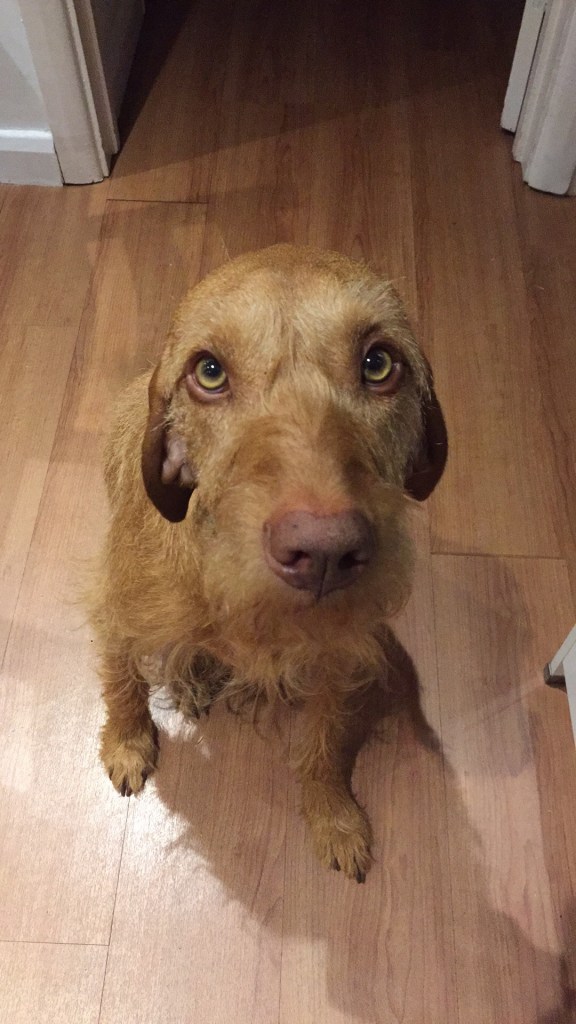
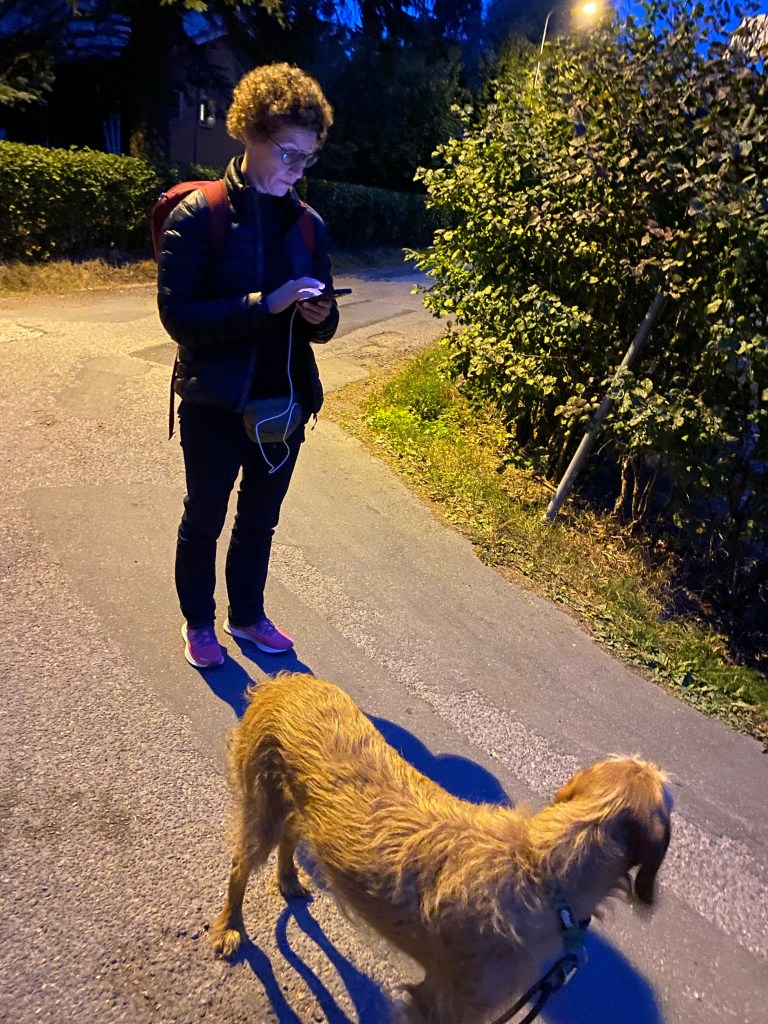
On my own round trip through Northern Europe I took with me Mia, my 7 year old Hungarian Vizsla and probably the best travel companion you can ask for: very quiet but extremely social and reliably friendly, sizeable and fit enough to be able to joining me on my runs and when hiking, with no real health issues and without any dietary limitations.

In a nut shell – the dog a lot of people would love to have and I am lucky enough to call my own.

While stating this I should probably add that I am in fact not a real dog, but actually more a cat person (among other things I love and appreciate their independence). However – dogs like Mia are making it difficult to be too certain on this point.

As much as this journey included long hikes through the mountains in Norway, runs through forests and along deserted beaches and meeting many dog lovers who at times were more interested in the dog than in her owner, it also meant very long car journeys, days spend in a dog kennel at the clinic while I was working and it meant having to interact and to arrange herself virtually every day with other dogs and at times having to share a house or even a sofa with them.

This point can not be underestimated – although I knew most of the people I was visiting, that didn’t apply to Mia and the dogs of my hosts (mostly veterinarians themselves) and that their idea of hospitality might have differed considerably from that of their owners…..

But as different as these dogs were in size or in personality, my travel companion got on with all of them, which was to no small degree helped by the fact that she is a physically fit, but in no way dominant or threatening female with a fair amount of life experience, clever and fast enough to assess an encounter with another dog in time to pre-empt and if necessary to avoid any confrontations already before they are happening. Very much in line with Steinbeck’s description of his dog Charley, I would say that Mia is as well a born diplomat.

Having grown up in the UK with a lot of opportunities to socialise with other dogs (and humans) both on, but – more importantly – off the lead was vital for this.

It is something where I often felt things were going wrong with dogs in the German speaking countries: too rigidly applied rules to keep dogs on the lead are making it impossible for dogs to interact normally with each other and this in many cases is adding to behavioural problems.

A pre-condition to ease these rules is – of course – good training and an excellent re-call (which Mia has), but when this is in place and dogs are allowed the freedom they need, it will result in more relaxed individuals, in better behaved patients during veterinary consultations and it will also increase the enjoyment one will get from keeping a dog.

Another interesting difference in national attitudes towards dogs I observed, was when it came to visiting restaurants and hotels.

Whereas dogs are usually allowed in most restraurants and cafes in Germany, this is usually only the case in pubs in the UK and in Scandinavia it is absolutely out of the question (unless you are sitting outside).

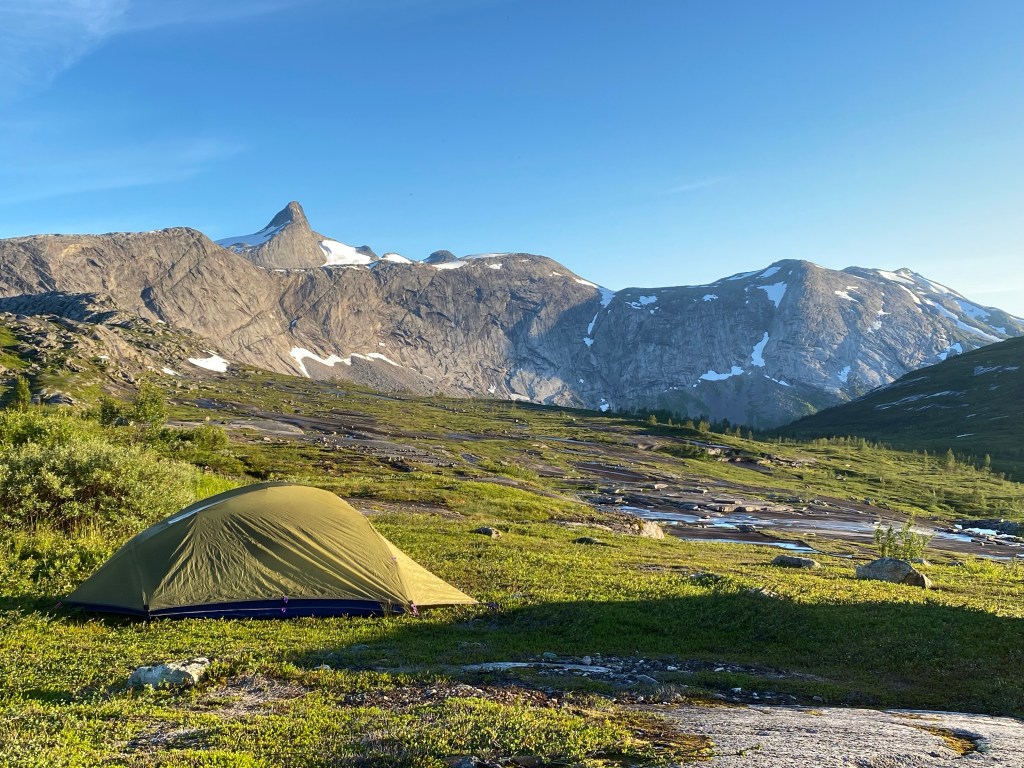
A lot of hotels and also a fair number of mountain huts in the Nordic countries were not an option for me to stay at, as my dog wouldn’t have been allowed in. This problem was mitigated by me spending a few nights in my tent, which in turn extended my options of potential places to sleep. This was possible because of the public right of everyone being allowed to pitch a tent pretty much anywhere in these countries (something I can not do in Germany though….). Waking up in some of the most spectacular mountain settings was a result of this.

Being accompanied by a dog – especially one with a friendly face – will make you as a male stranger less threatening and it often gets you into friendly converations with both the locals and with other travellers regardless where you are. This effect is probably only surpassed by travelling with small children.

Thankfully neither Mia nor I experienced any health issue during our travels, but considering the very high fees for veterinary care in the Nordic countries – despite me being a veterinary surgeon myself – I would not have dared to take Mia along without comprehensive health insurance cover.

Crossing borders with my canine friend was never an issue, with her pet passport only been checked when leaving and when returning to the UK and with otherwise only Norway insisting on tapeworm prophylaxis (which was never policed).

Looking back at my travels with Mia, I think that she – being more a creature of habits like most dogs are – would probably have preferred to stay at home, but I can now understand better why Steinbeck chosed to take along Charley.

And one thing it certainly did – it helped me in my search of Northern Europe…..

One night in Warsaw

“Yes, you will be fine – just leave it here !….”

(Source Google Maps)


I just couldn’t believe it – having driven over 400 miles from the Baltic Sea around the Russian exclave of Kaliningrad and through the rolling countryside in the East of Poland , I had found a free parking space right in the centre of Warsaw.

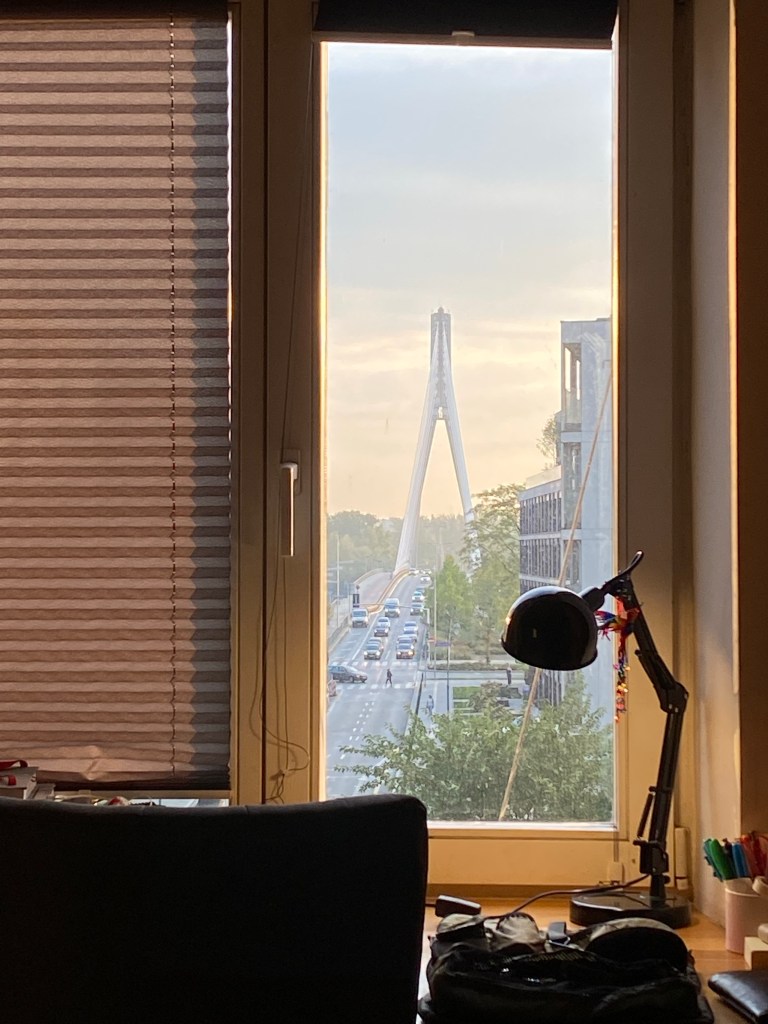
Robert, my host for tonight couldn’t have been more accommodating – I nearly had to fight him to be allowed to carry my own luggage upstairs to his beautiful flat in one of the city’s historical buildings, which featured high ceilings, no lift but a spacious staircase with wrought iron banisters and a great view directly on to the famous Swietokrzyski Bridge.


Magdalena Krainska – Robert’s partner – is one of Europe’s finest veterinary nephrologists and I had only met her a couple of times – for all together not more than 15 minutes – at the annual Polish Veterinary Congress in Lodz.

However, it turned out that both Magdalena and I are enjoying to work from time to time in Sweden and a regular dialogue ensued, which also included the occasional emergency call from me whenever one of my kidney failure patients required some external specialist input.

Despite the paucity of a long mutual history, Magdalena had invited me and both she and Robert looked after me as you would after an old friend.

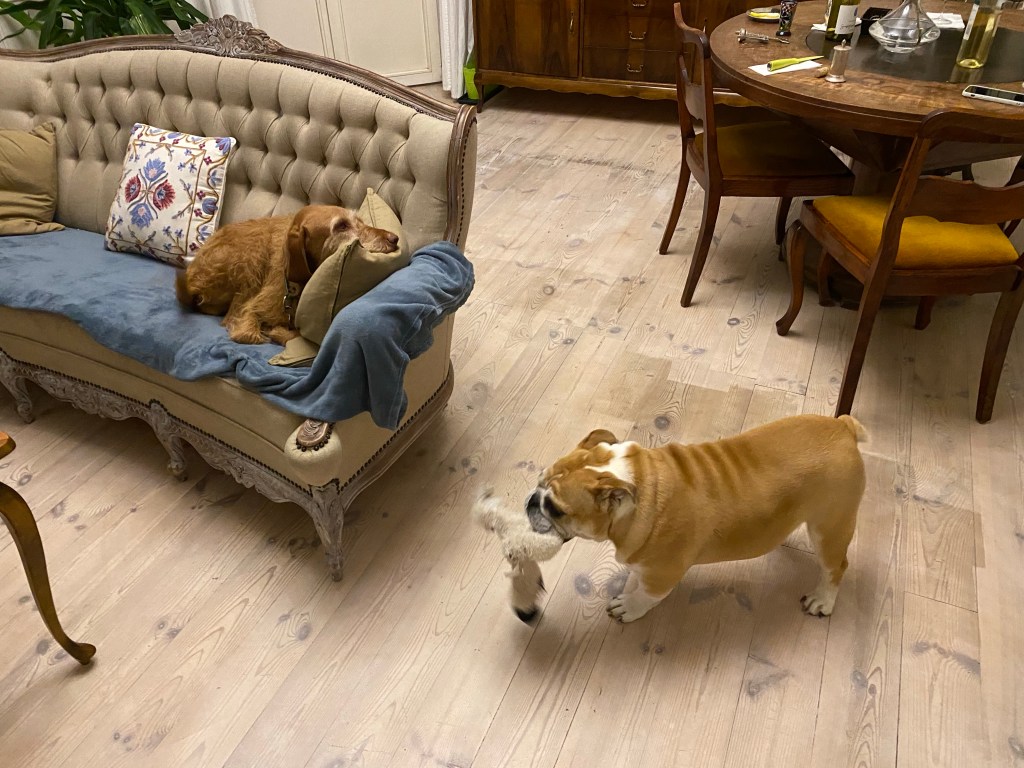
Within minutes – while Magdalena was still working – I was installed in my own bedroom, Mia had made her acquaintance with Ella, the equally hospitable residential English Bulldog, my dirty clothes enjoyed the undeniable advantages of a well functioning washing machine and tumble dryer (something that is highly appreciated by all long distance travellers….) and Robert and I were sitting in the kitchen while a warm pasta dish was already on the oven.

After a short while Magdalena arrived and the evening was spend with stories about working in the North, about traveling in Central America and about our life as vets in the 21st century.

With other words – there was a lot to talk about and while Mia had agreed with Ella that her longer legs made it much easier for her to get on to (and to stay on) the canine sofa,

we enjoyed an unforgettable evening with good food and a few bottles of wine……

When I woke the next morning, my head was still spinning and I realised that for the first time on this trip I had a hangover !…..

With a bit of an effort I remembered a bottle of Tequila Robert had produced while we were getting lost in our memories of beautiful sites in Mexico and Guatemala.

The rather large shot mugs they had brought home from their travels hadn’t helped either…….


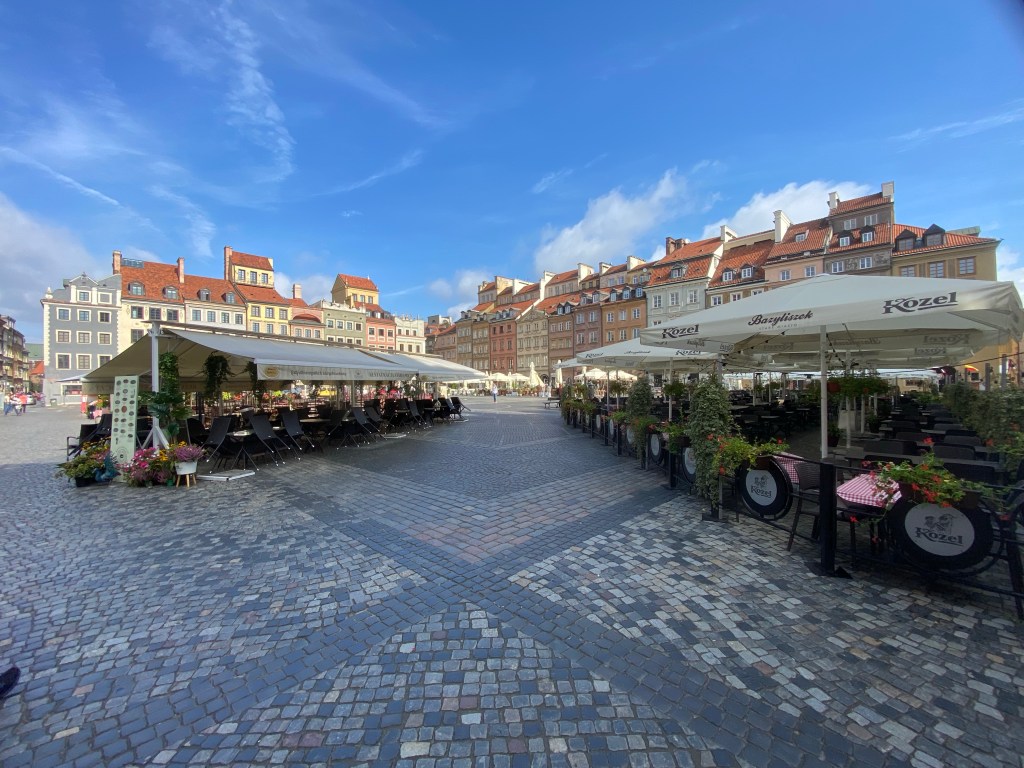
The best way to wear it off was a long walk through the vibrant and beautifully restored city center of Warsaw where the eye catching architecture of the city’s central library is competing with the traditional buildings of the Old Town Market Place

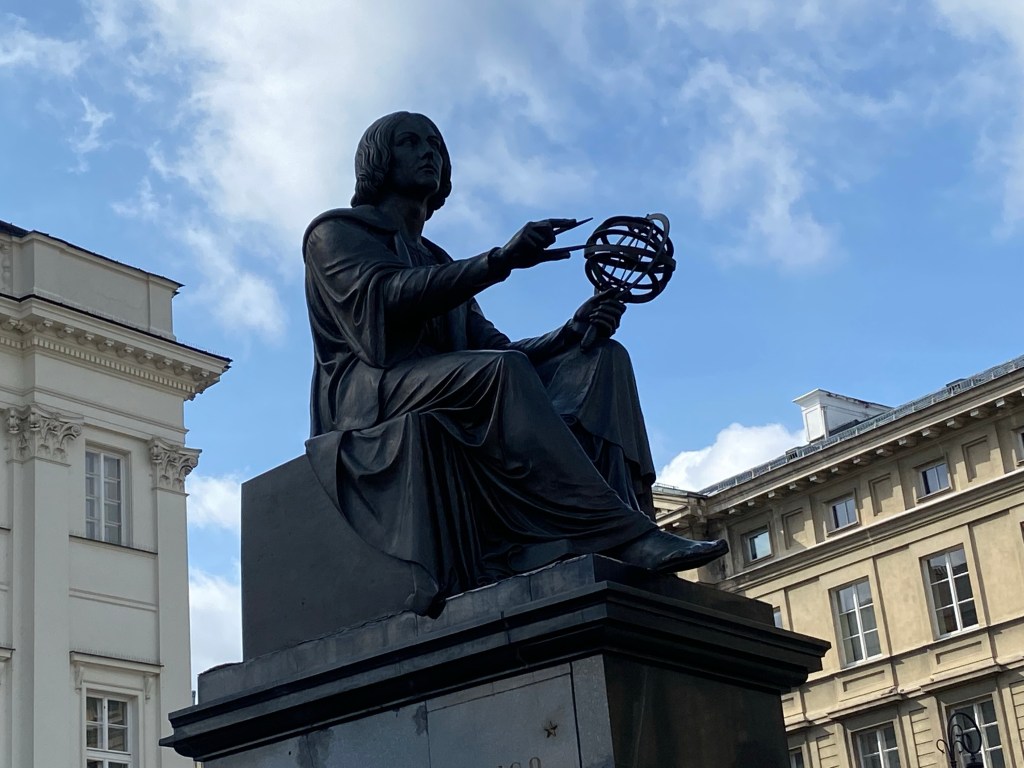
and where famous church leaders are remembered just a stone throw away from one of history’s most famous scientists.


It was not easy to say goodbye to my friends and to this city, but the time had arrived to finally close the circle and to return home from another great veterinary adventure…..

Chilli con Carne in Lapland

Deep in the forest of Finnish Lapland I am arriving in front of the impressive timber cottage of Markus Killi which is guarded by a number of thickly fured dogs.

“Do you like Chilli con Carne?” Markus, a man build like a tree himself, asks as I am getting out of the car.

Of course I do…….

Markus, a veterinary entrepreneur, used to own some large veterinary clinics in the South of Finland, before selling them all and moving up North, pursuing one of his other great passions in life : high end photography.

His depictions of the Aurora Borealis and of Finnish wildlife have featured in National Geographics and some images that he took in Lapland are decorating living rooms all over the world.

While admiring his house, Markus tells me that the purchase was one of the best deals of his life. Not only because he loves living here, but also because he later found out that the timber that was used to build the house is no longer obtainable in this size in the whole of Finland. Just the cost of the trunks exceeded double the purchase price of the whole real estate.

It turns out that Markus is not only a great vet and businessmen, but also an excellent cook and while sitting in his kitchen enjoying the warm dish, we are philosophing about the benefits of a life at the Northern fringe of Europe.

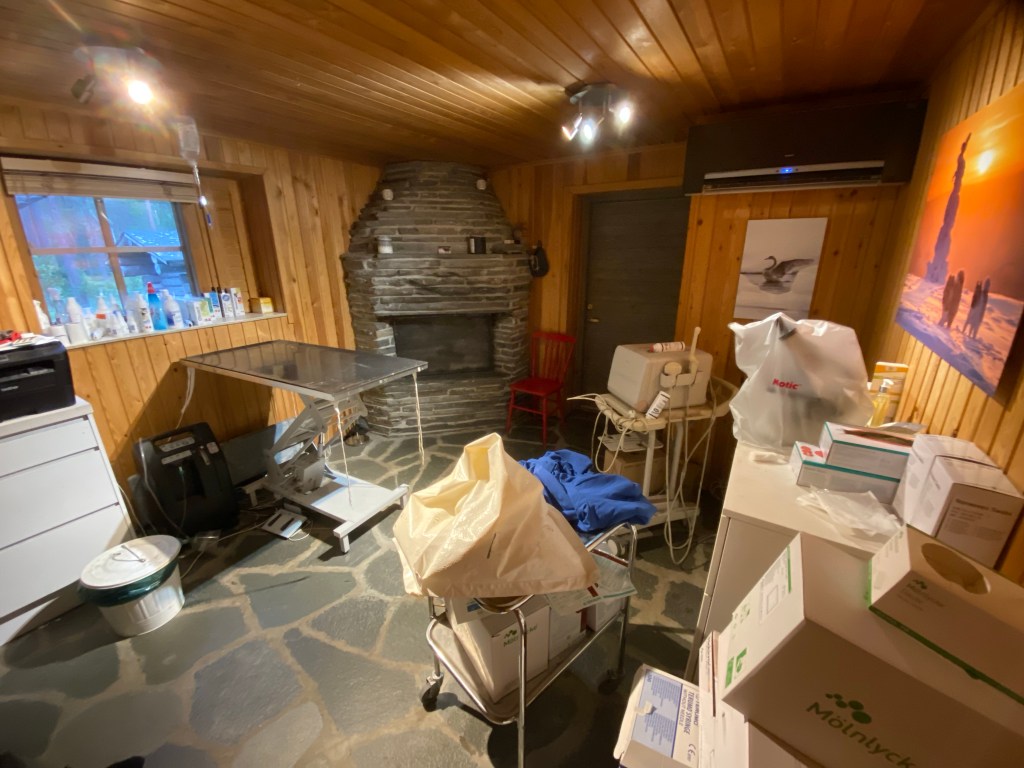
After the meal Markus shows me a small treatment room in the basement of his house. It is far removed from the space and from the facilities his clinics in the South used to offer, but even with his limited means Markus is providing up here a very vital service to the local community and many pet lifes were saved in this room when an hour long transport to larger clinics wouldn’t have been an option.

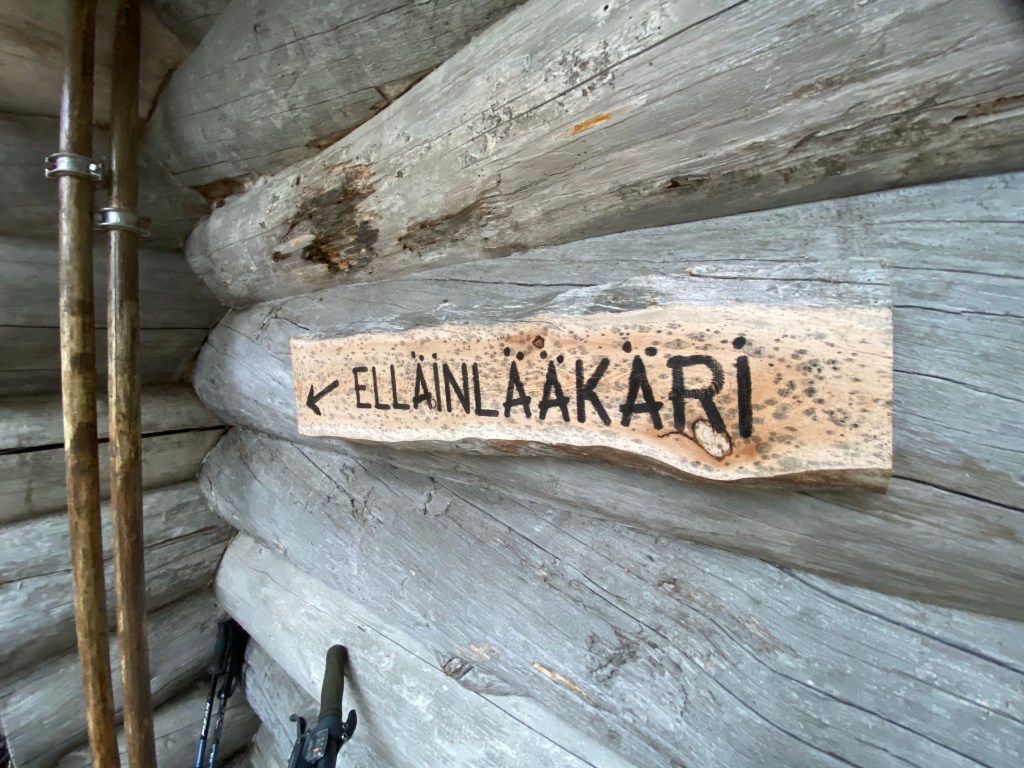
When the time has come to say goodbye to Markus and his dogs, I am once again confronted with the complexity of the Finnish language and I am wondering how long it might take to type the Finnish word for “veterinary practice” on an English keyboard….

Veterinary Medicine at the tip of the Curonian Spit

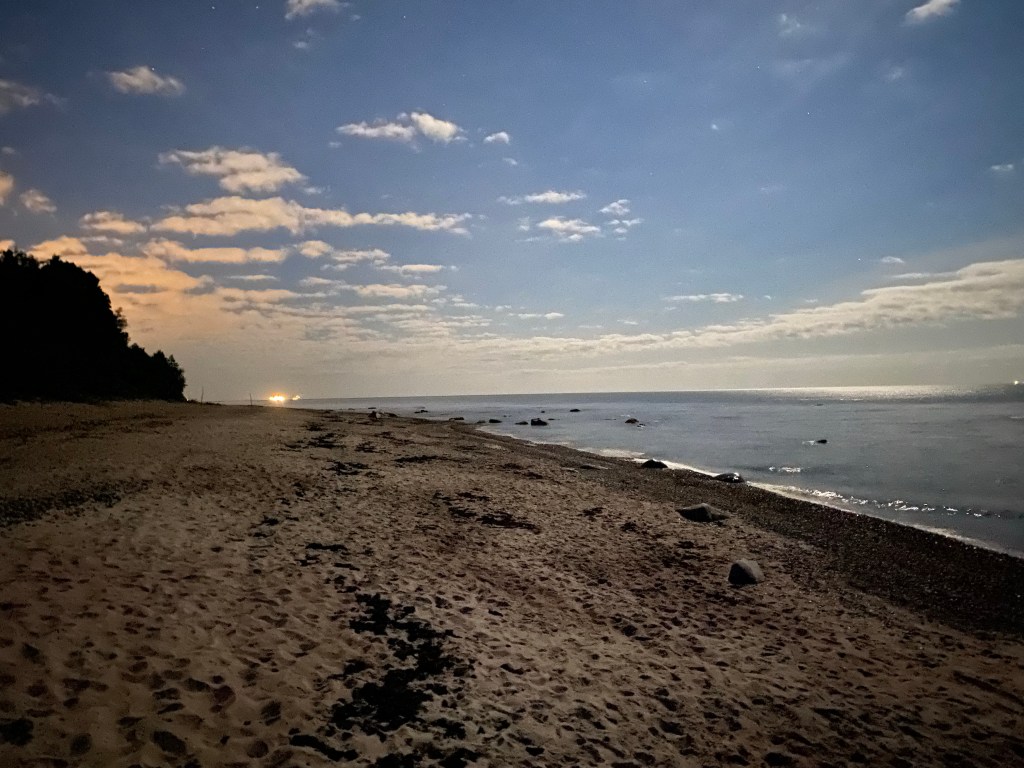
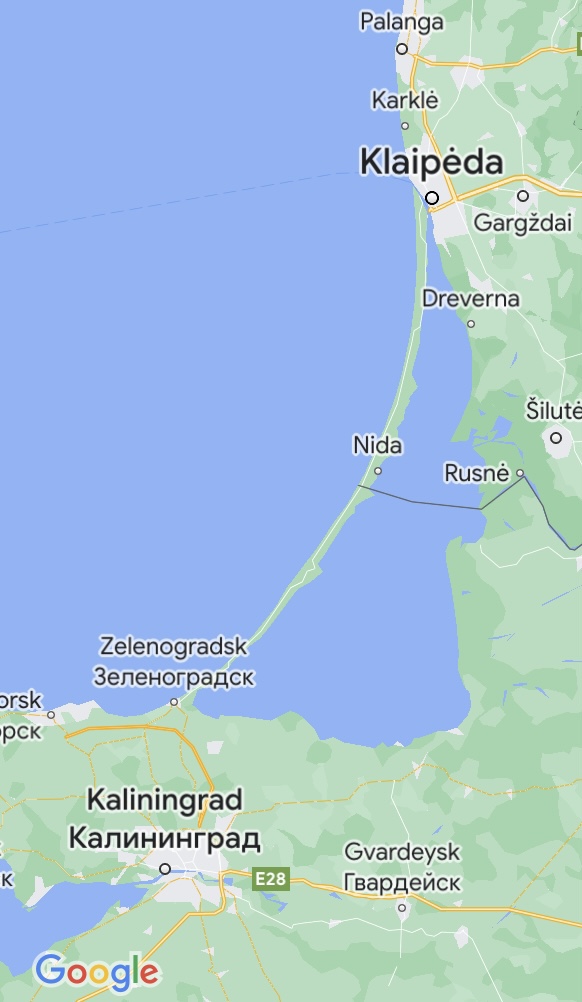
A thin slither of sand, in places not more than a few hundred meters wide and crowned with thick pin forest and undoubtedly one of the most striking features of the Baltic Sea is the Curonian Spit. This giant sand dune is nearly 100 kms long and connects Lithuania in the North and the Russian owned exclave of Kaliningrad Oblast in the South.

(Source: Google Maps)

This UNESCO World heritage site is the home of a lot of well adapted wildlife including a few beach walking moose and the large fresh water Lagoon behind it is an important habitat for marine wildlife including a lot of seabirds.

At the Northern tip of the Curonian Spit lies Klaipeda, Lithuania’s only harbour and a popular seaside resort.

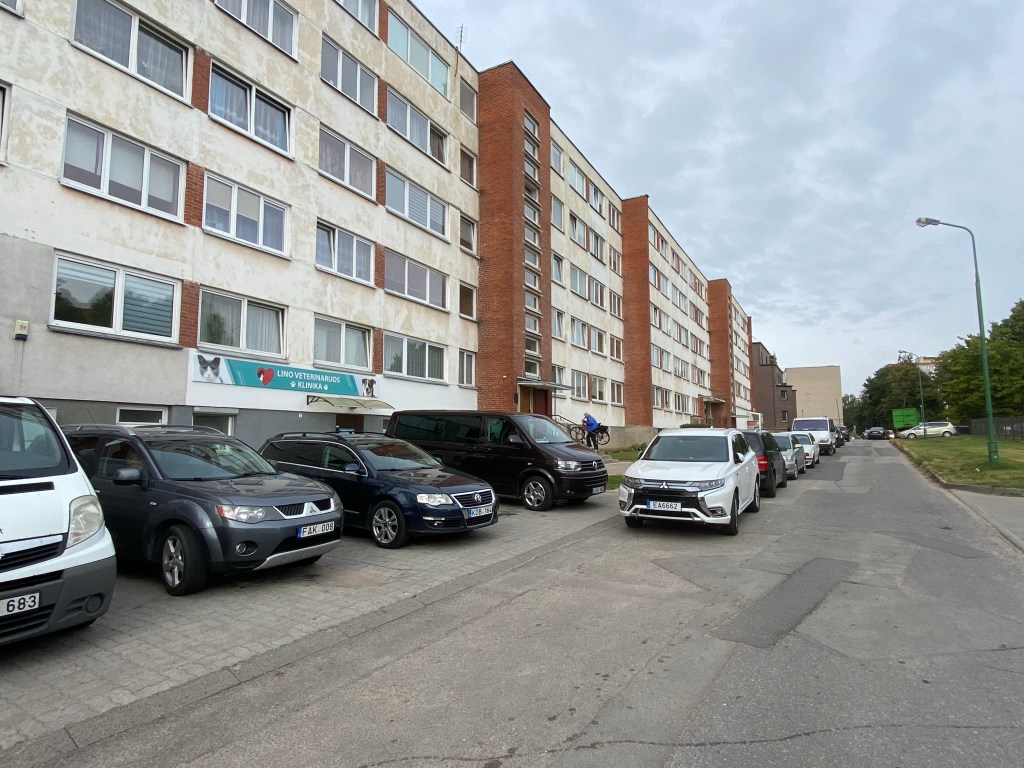
In the basement of a Soviet style apartment block I find one of Lithuania’s most renouned veterinary clinics, run by Linas Varanauskas.

This time I am arriving unanounced, but Linas – having just finished an operation – gives me a warm welcome and invites me to see his clinic and to meet his team.

What doesn’t look very impressive from the outside turns out to be a very tidy and uncluttered space with an impressive array of services provided by Linas and his very dediced team of veterinary professionals.

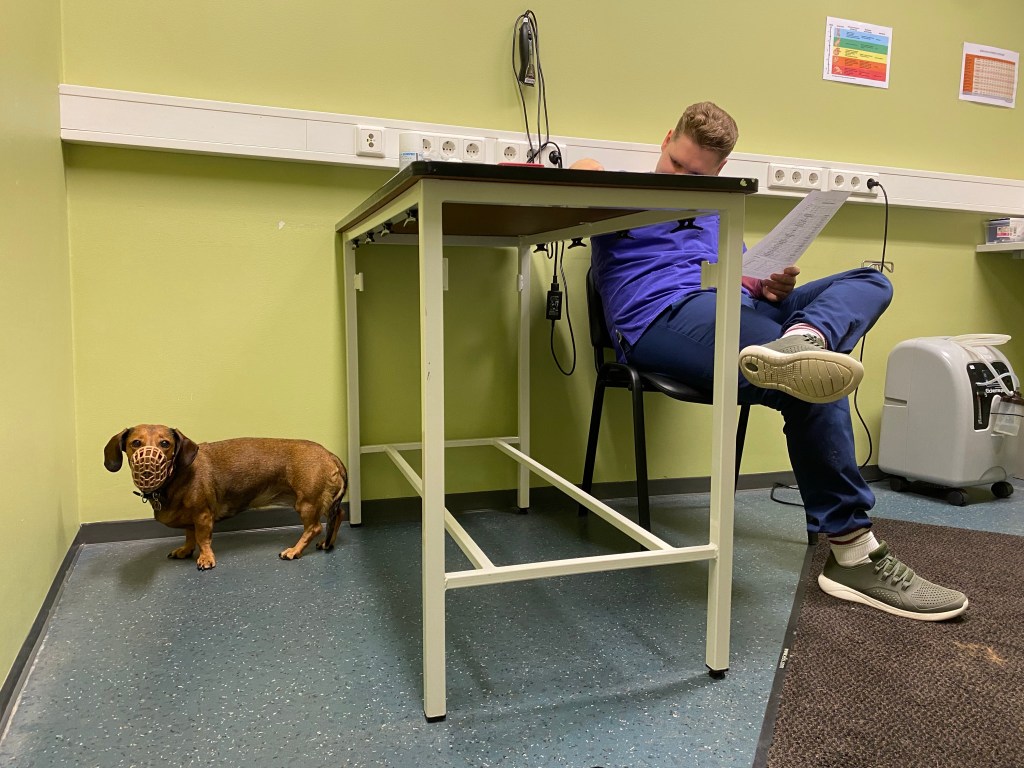
Consulting rooms are held small and functional but with low sit down desks, which continues to be the norm in many practices in Central Europe. Both abdominal as well as cardiac ultrasonography is been offered at the clinic.

While a feline patient is slowly recovering from her fracture repair …

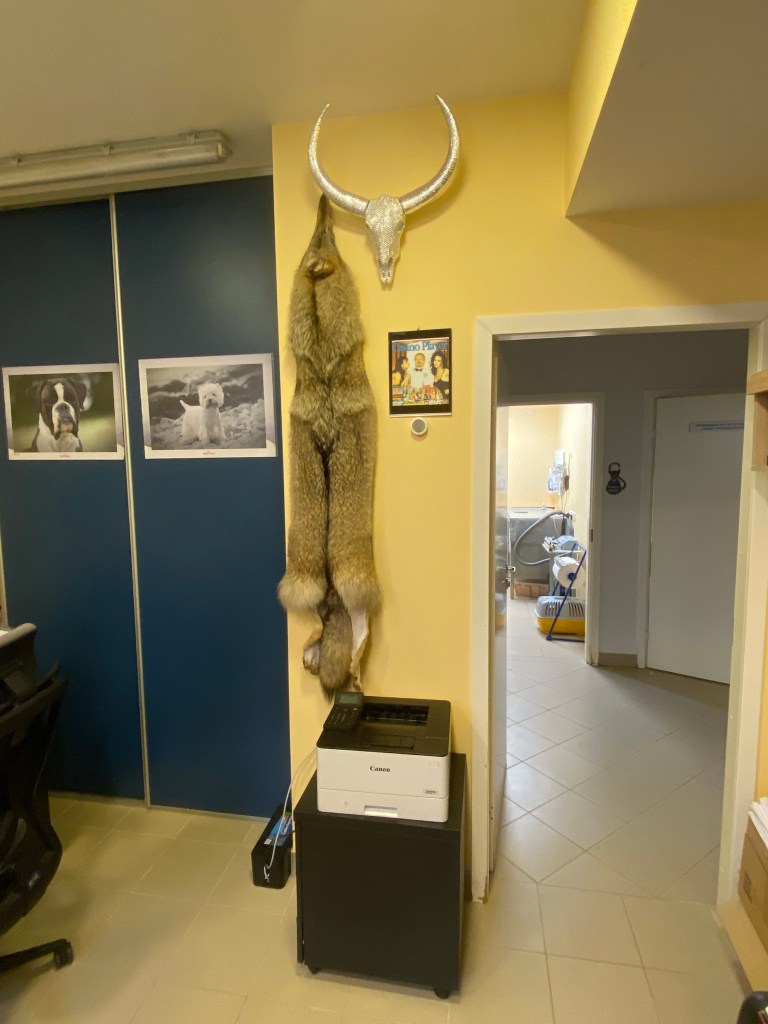
I notice on the clinic wall the remains of a canine species that had not been so lucky….

Wolfs are surprisingly common again in this part of the world and hunting licenses have been issued to limit their impact on local lifestock.

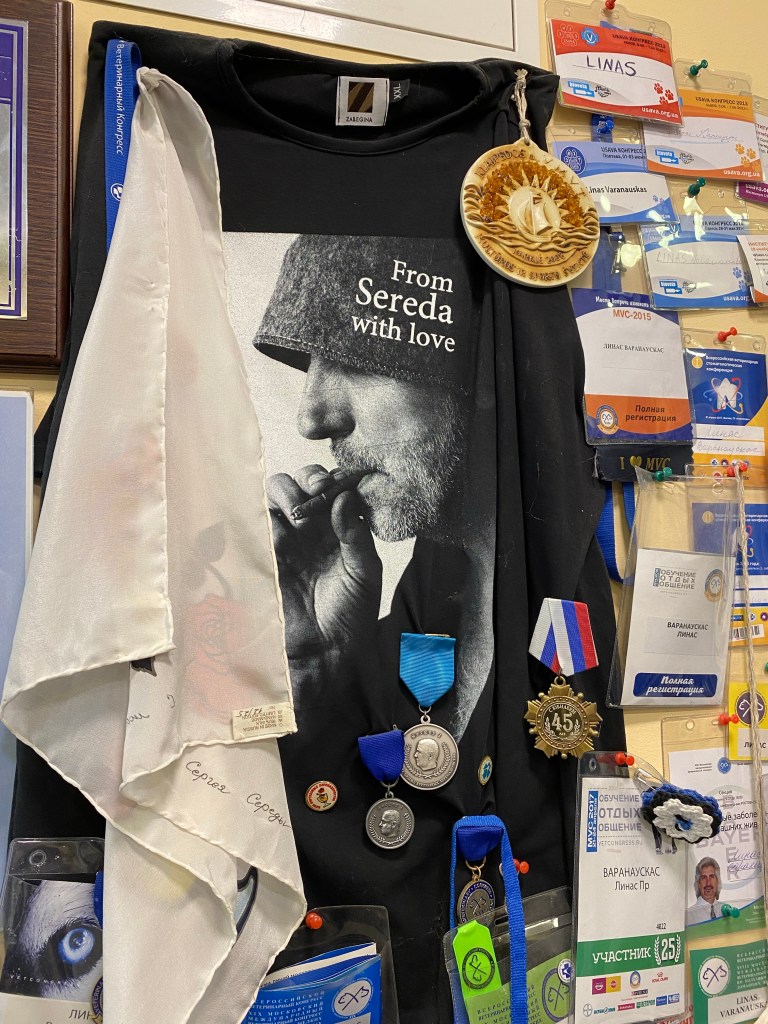
And another reminder not only of the geographical location but also of the complexity of the current political situation can be found on the opposite wall in the form of a few souvenirs of one of our very famous Russian colleagues….

An evening of fine dining, staying at an igloo and going to jail in Tallinn

Never ignore an invitation for an evening stroll along the seaside in one of Europe’s fastest changing cities – Tallinn.

This applies even more so if your tour guide is no one less than the grande dame of companion animal veterinary medicine in Estonia – Tiina Toomet, my perennial host and occasional saviour whenever I am staying in the Estonian capital.

In the Baltic states Tiina is a household name because of her frequent television and radio appearances and because of her very popular books, describing her journey into veterinary medicine and her personal connection and experiences with her own pets and with memorable patients.

For me though the most impressive aspect of Tiina is her vast knowledge of her own city and her own country, of the dramatic transformation Estonia has gone through and her positive take on everything that is new and exciting, regardless if it is an innovation in veterinary medicine, a restaurant or a musical or cultural event. All of these are enjoyed and compared with history in mind and with a strong desire to live and enjoy life in the now.

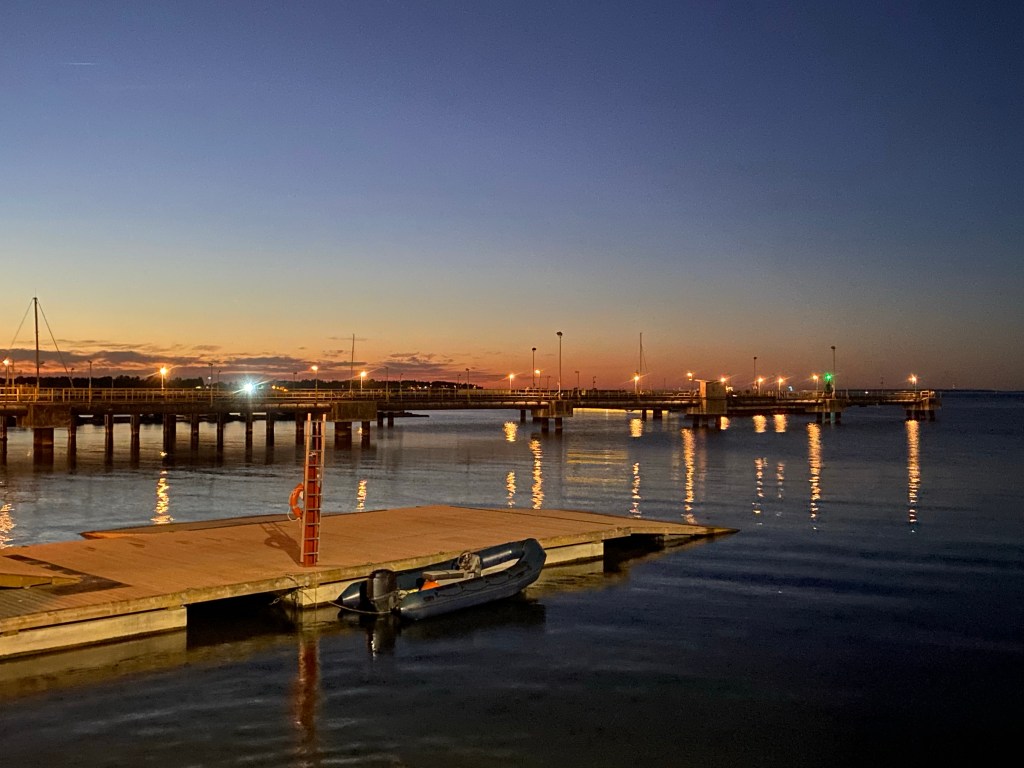
Our evening stroll started at the stylishly re-developed marina of Port Noblessner. The place is featuring a lot of individually crafted appartments that look like an urban design competition where all the final entries have been build next to each other. Eye watering pricetags can safely be assumed I would think……

The old industrial units opposite of these appartments host offices for new start ups and some great examples of the fine dining revolution that is in full swing to challenge Copenhagen and Stockholm for their dominance in the Baltic region.

And this for a good reason – you might eat here cheaper and possibly better than in these Scandinavian capitals, even if you price in your flight and a night’s hotel accommodation.

A good example is Lore Bistroo where we found not only high end cooking but also a warm and very welcoming ambience, with even the dog being made comfortable.

Before now even trying to explain our food in detail, I suggest watching this great video of the Tallinn Travel Series (if you don’t have enough time for the whole video, just move forward to Dinner 5…..)

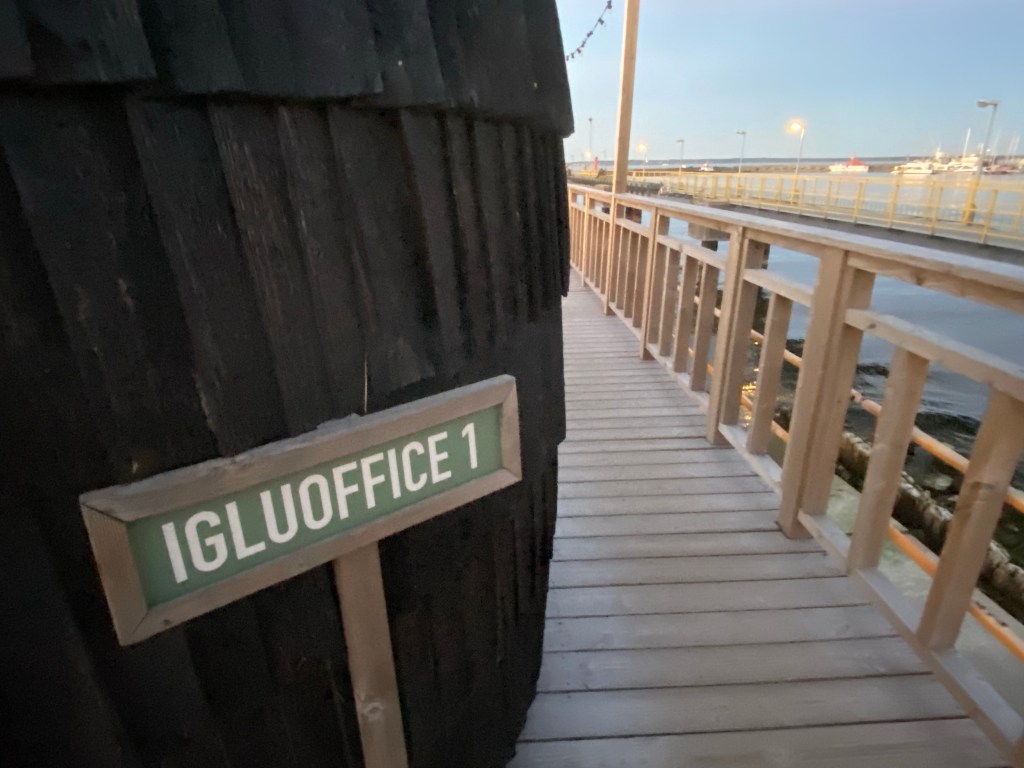
After tickling our taste buds and with a few glasses of Sauvignon Blanc in our blood streams, we carried on with our evening stroll and after just a few minutes found ourselves surrounded by a cluster of strange round shaped objects – Tallinn’s Iglupark.

Here you can rent just for hours or for days a truly unusual office space, a meeting room or a holiday cabin just by the sea side.

The centre of complex is an open air bar and while we were waiting for our next drinks, I noticed a naked man (ok….he was wearing a towel) twice my size standing next to me ……. so you could also rent the – in Estonia obligatory – sauna here in form of an igloo!…….

As having a sauna after so much food and wine wasn’t really an option for us, we left this polar setting and carried on to the next site, which was more familiar to me: Tallinn’s Sea Plane Harbour.

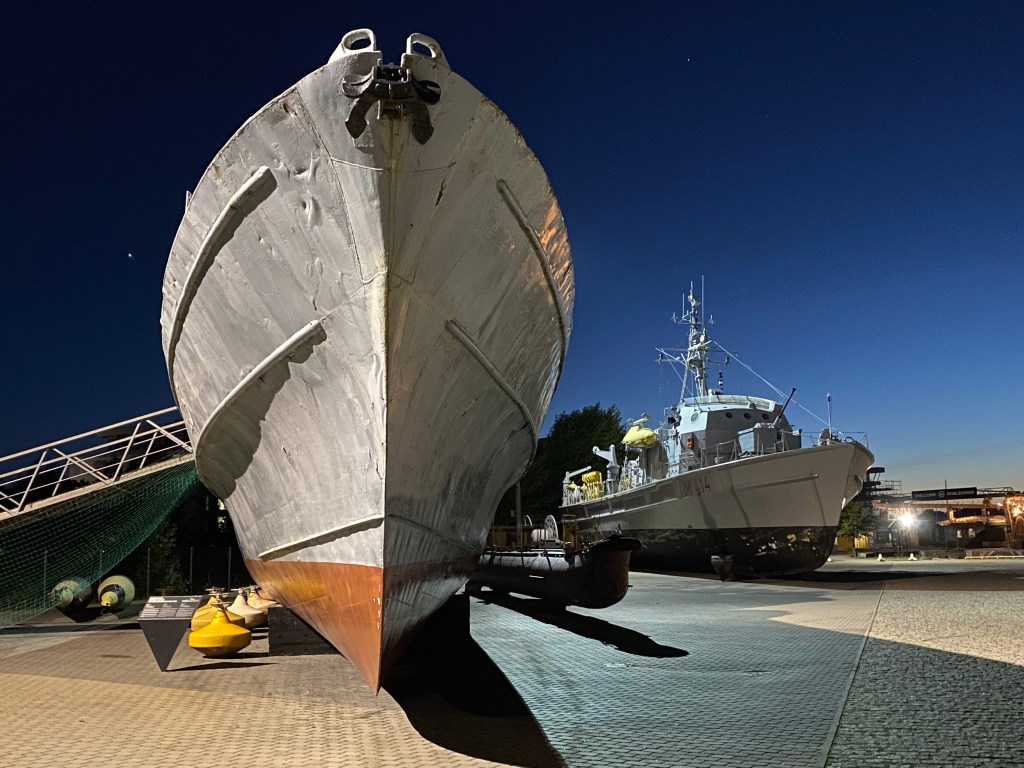
With a number of military and commercial shipping vessels being parked outside,

the place features one of the largest hangars in the world, which is now not only the home of the Estonian Maritime Museum , but it also houses an entire submarine !

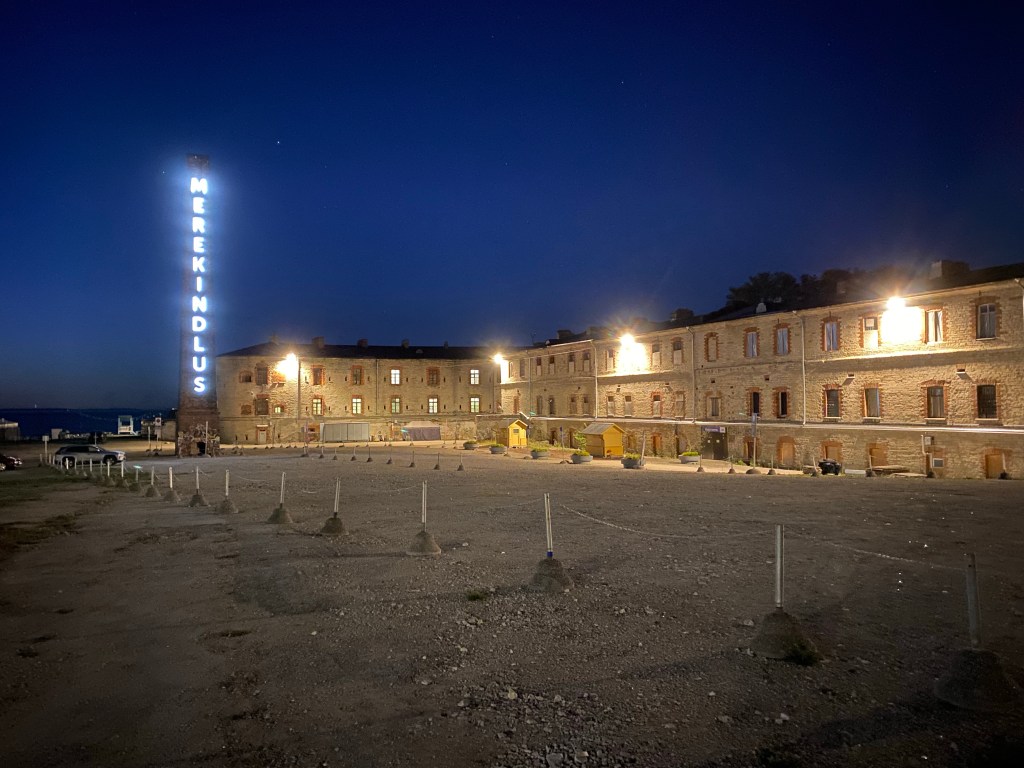
Finally we arrived at the Patarei Sea Fortress – also known as Tallinn’s Central Prison. Having been used as such by the Soviets, during the German occupation and by the Estonian State until 2005, it now houses a spooky prison museum (apparently visitors were asked to go on a self guided tour without a guide or a map….) and I wouldn’t be surprised if this site will become the next historic building that will see a very Estonian transformation.

I can’t wait for another stroll along the sea front in Tallinn…..

Where Estonian vets are made

I have always been a fan of smaller vet schools.

Having studied in Hanover with more than 230 students in the same year, there wasn’t much direct interaction with our lecturers and it was easy to feel just like a small fish in a large pond.

Large institutions like UC Davis or London’s Royal Veterinary College are world renowned for their ground breaking scientific work, but this not necessarily translates into better day one professional competency of the graduates of these universities.

Smaller vet schools can provide a more personalized and bespoke education, which might be more suitable for day to day clinical work. This I could see when I visited Bristol Vet School, which at the time had 80 students per year and even more so at Oslo Vet School which was education only 45 (lucky) students per annum.

One of these smaller vet schools that I had heard of a lot and that was the Alma Mater to a number of my Baltic colleagues, is the veterinary faculty of Estonia, based in the picturesque city of Tartu.

Taking advantage of an invitation of my friend Ingrid Hang who was lecturing there for a few days, I didn’t had to be asked twice to make a little detour to finally visit the place.

Already at the entrance I was reminded that these days more than 90% of veterinary undergraduates are women – a considerable change to my time at university where we had a fairly equal gender distribution. Historically veterinary medicine had been – unsurprisingly – an exclusively male profession.

We were welcomed by Aleksandr Semjonov the Head of the Small Animal Clinic and it was interesting to learn that Tartu was not only running a course for Estonian students, but was offering in addition to this a Finnish stream. This – as already seen in Zagreb – provides the vet school with a not inconsiderable extra income source.

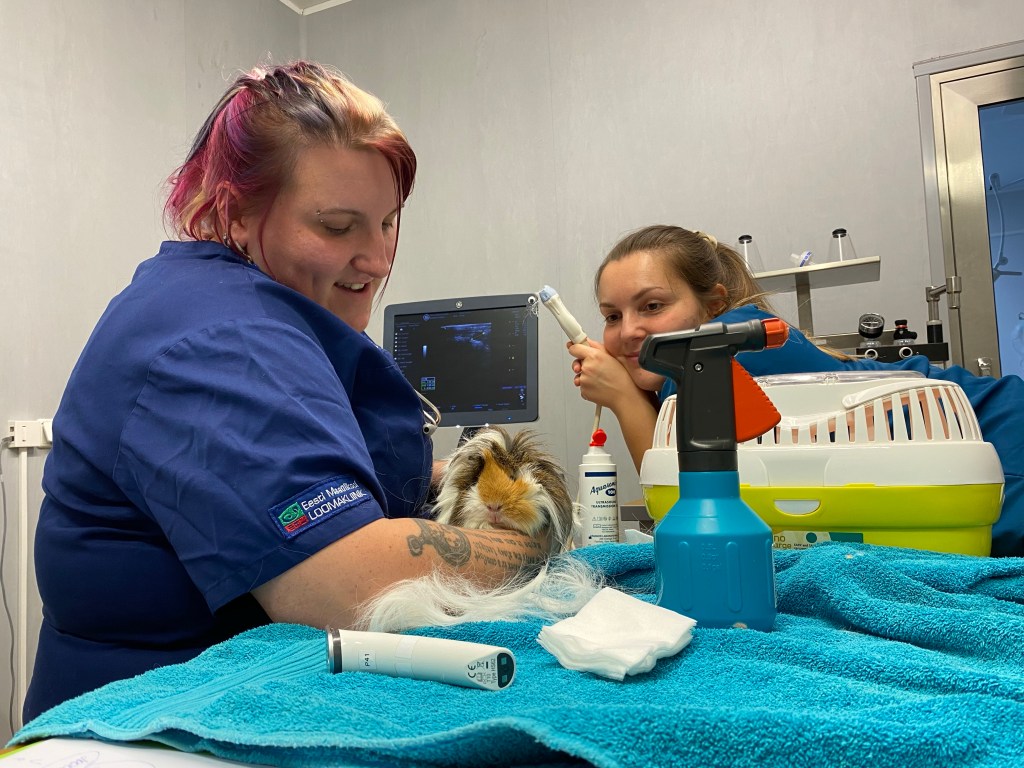
The consulting rooms were spacious and well lid and there was a relaxed atmosphere with no shortage of staff attending to a number of small animal patients – some of them not so impressed to be here….

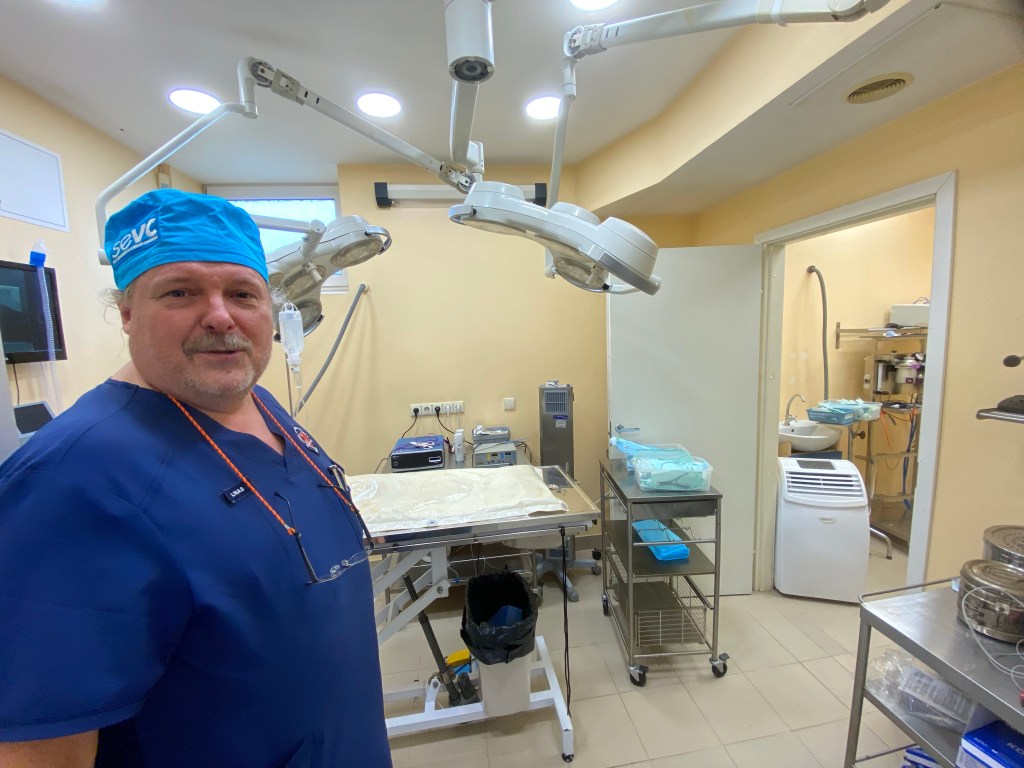
As this is a teaching hospital the operating theatres were probably larger then in a privately owned clinic and Aleksandr, an anaesthesiology specialist, made not only sure that state of the art knowledge in this field was applied, but live feeds of every anaesthesia monitoring machine in the building were accessable at all times in his private office.

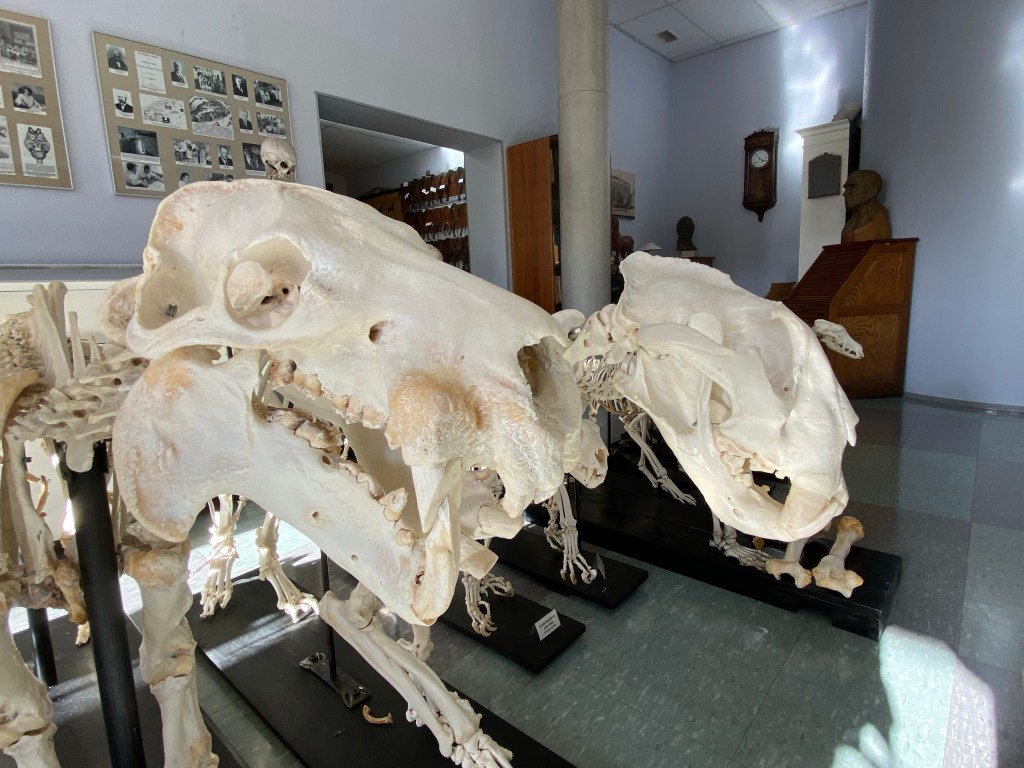
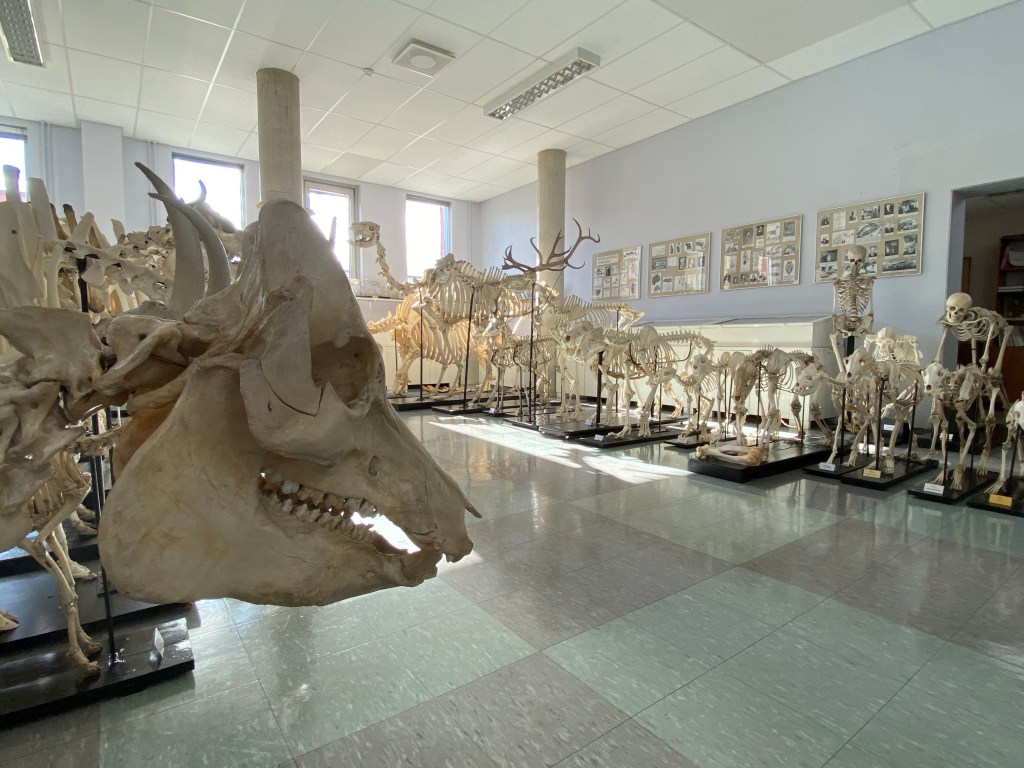
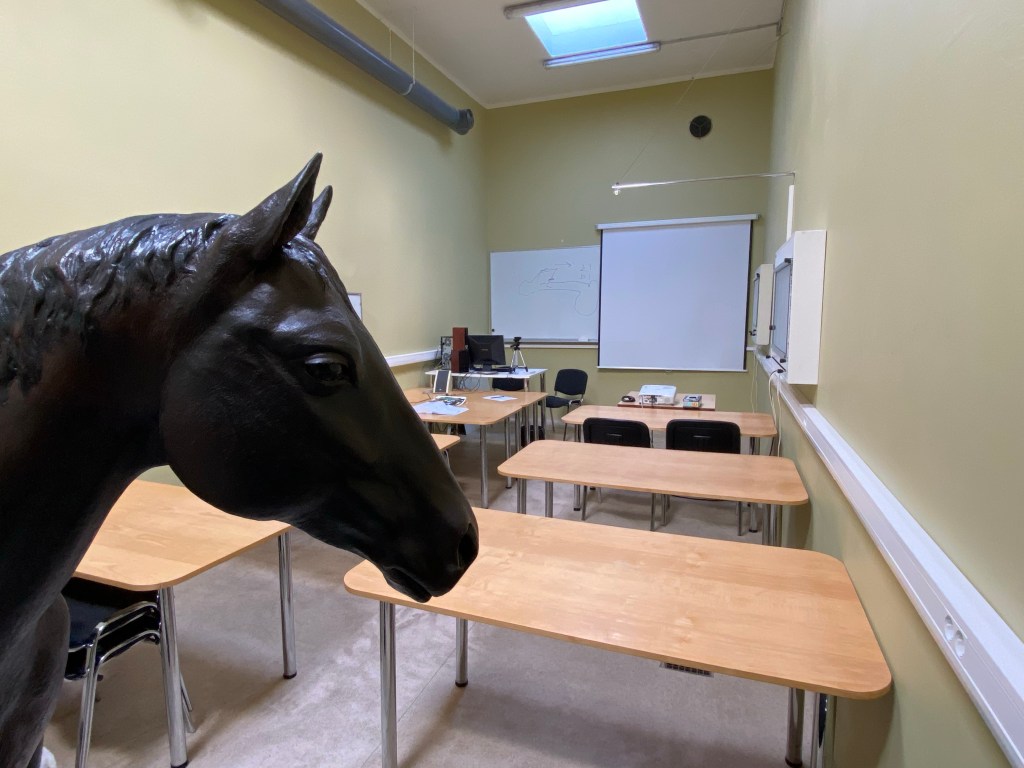
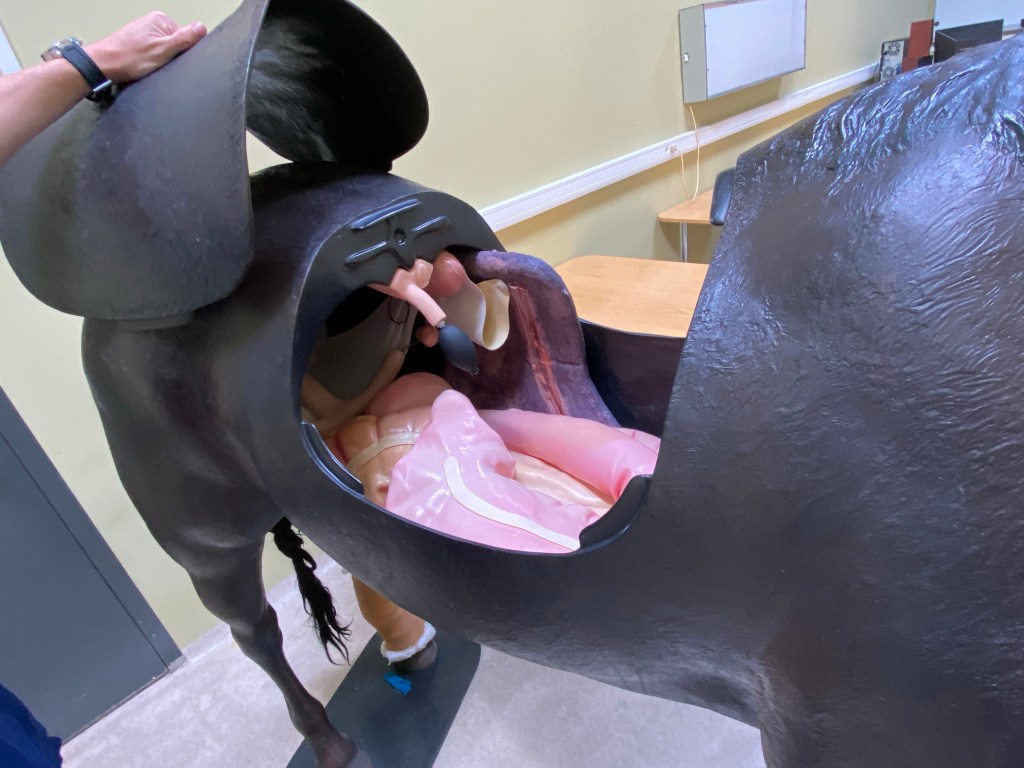
The lecturing rooms including the anatomy collection – a typical feature of all veterinary schools – were well kept and these rooms just showed that certain elements of veterinary education just can not do without the opportunity for hands on experience.

Some of the life sized models were hand made and according to Aleksandr the model of a horse with artificial but anatomically correct internal organs had to be shipped all the way from the US with a five figure Euro/Dollar price tag.

Another example why the veterinary course – not only in Estonia – is the most expensive form of education universities can offer and a reminder to me to be eternally grateful for having had the opportunity to become a member of this profession.

Eye to eye with Amur Tigers in Helsinki

One of the real highlights in the life of every veterinarian is to be able to apply their craft to more unusual animals and we are all looking up the rare species called “Zoo Vets”.

If you – like me – don’t belong to this exclusive club, then at least knowing one is second best.

In my case this applies to Sanna Hellström, an extraordinary women with unusual hobbies including circus acrobatics or collecting the streets of her city by walking them all starting at “A”……

After joining her on this task by ticking off a couple of “J” streets from her list, Sanna invited me to meet her on the next day at the zoo in Helsinki.

Sanna is also the Director of Helsinki Zoo, which is located on a little island outside the city center and – leaving Mia behind – I am meeting Sanna at the end of a bridge which – so far (a new direct tram link is currently being build) – is the only connection to the city.

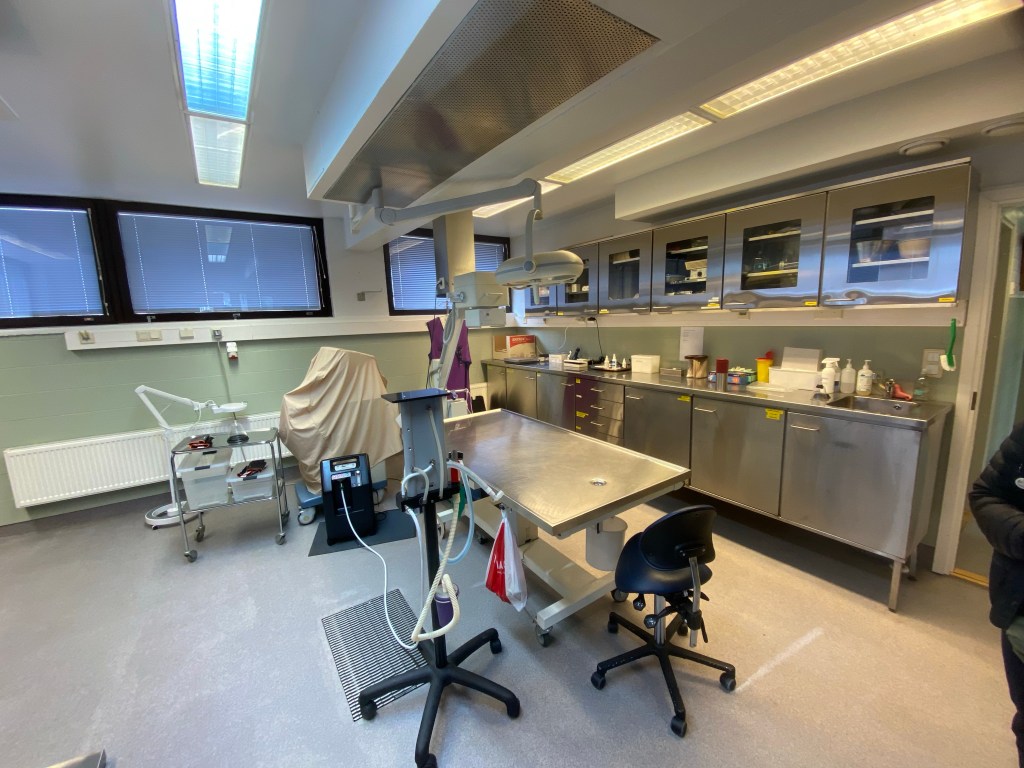
Our first stop is – of course – the veterinary clinic of the zoo. Here I meet a dedicated team of vets and nurses prepared to see pretty much any species of animal that is coming through their door, including a fair amount of native wildlife and all sorts of animals that have been ceased at the international port and airport.

A very typical case is this water bird that was presented with an airgun pellet near its shoulder joint and an old, but reasonably well healed wing fracture.

Although most of the equipment is very similar to that of a normal small animal clinic, some features like the noticably larger examination table or the large variety of different sized transport cages indicate that a much broader variety of animal speczies are treated here. Most of these animals are also not as well behaved and as tolerant as a domestic dog or cat and the clinic needs to hold a wide selection of sedative drugs to safely work on these patients.

Much thought is given and time is spend on meeting both national and international regulations on transporting, handling and treating exotic spezies. It appears to me that here as everywhere in veterinary facilities these days more time is spend with administrative and regulatory tasks than with actual clinical practice.

However, in this case this is important not only to ensure the safety of the team and of the general public, but also to meet the basic welfare requirements of these animals and to avoid any mishaps which might result in the loss of a potentially very rare patient.

With the zoo being part of a number of international conservation projects, a lot of attention is given to reproduction work and at the time of my visit the zoo had just welcomed a new litter of tiger cubs. In return some animals reproduce very fast and measures need to be taken to avoid an overproduction of these animals in zoos.

Sanna no longer works in clinical veterinary medicine as all of her time is now taken just by managing the Zoo, which needs to reinvent itself all the time with new initiatives (like open evenings and late night admissions) and with permanent maintenance and new building work.

Some of the main attractions of the Zoo are the very rare Amur Tigers

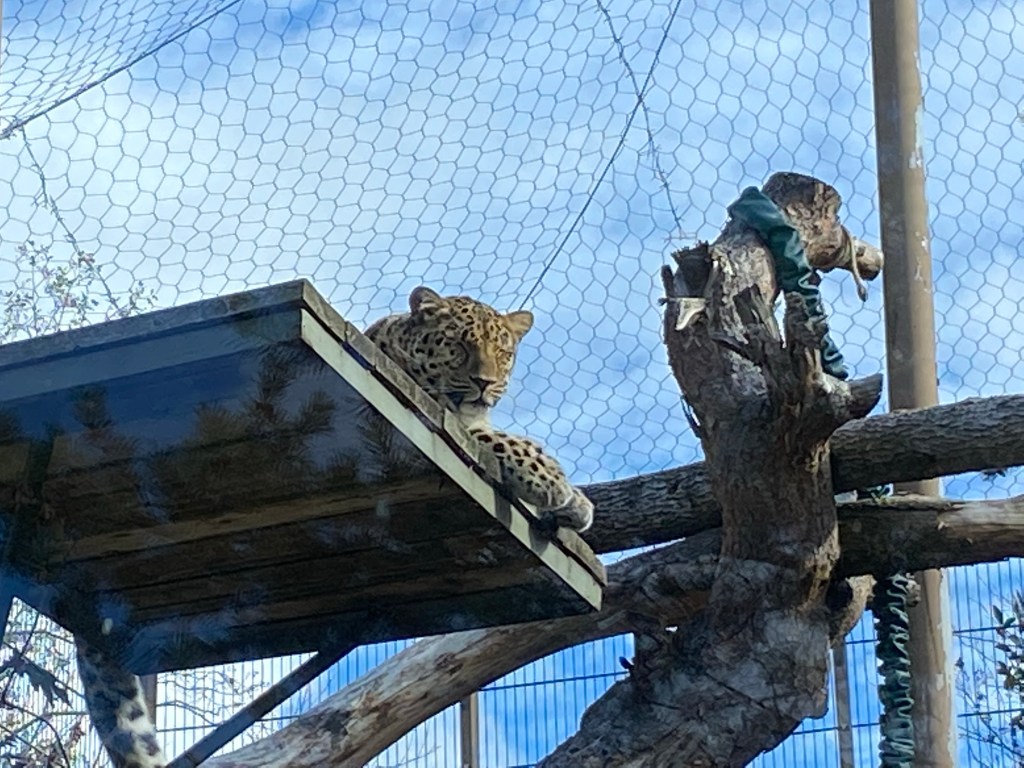
and the probably even rarer Amur Leopards.

Both of these species are well adapted to the cold winter temperatures in Helsinki. This applies in fact to most of the animals kept at the zoo and there are only very few tropical species, which is of huge benefit for the annual heating bill of the zoo.

A fair amount of the natural features of the zoo island have remained unchanged, so that it is still possible – and very normal for a Nordic country – to have a camp fire on a dedicated site among all the animals and there is even a public kindergarden on the island. What more stimulation can you give to small children to encourage them to become future vets ?

Leaving the imprint of your finger on the world

Following the well tarmaced road South (it was just a dirt track the last time I was here…), I am reaching Kautokeino, the final settlement before the Finnish border.

Here I had to re-visit a place that seems so outlandish but that is now such an integral part of the town that both are often mentioned in the same sentence.

The story goes back all the way to 1959 when a young German-Danish artist couple decided that their ideal working environment was not the Cote Azur or a Spanish metropolis, but the harsh climate of the tundra and one of the few remaining normadic communites on the European continent.

Regine and Frank Juhl got inspirated by the pureness of the snow covering the landscape around them for many months every year, by the Northern lights in the winter and by the never ending days in the summer.

They started with very humble beginnings – just a small house with a tiny work shop, but over the years their silver gallery grew and grew and individually designed extentions were added to the initial buildings in regular intervals.

Like Cesar Manrique’s House on Lanzarote, which fuses with the lava that formed the landscape there, the silver workshops and galleries grew like a strange flower among the uniform birch trees which are surounding the building, providing not only a fitting environment to display pieces of art, but working at the same time as a example for the ideal working environment they had imagined for themselves and for their co-workers and as an expression of the creativity of some exceptional human beings.

As individual as each extention looks from the outside, as diverse is the interior design and the display of items inside the buildings: there is a dedicated room for paintings and glass ware, another two for both traditional Sami silver as well as for the team’s own designs. One room shows household items of the Finnmark Vidda whereas another – layed out with carpets and decorated in a more oriental style – tells of the Juhl’s deep admiration for Afghanistan – a country they visited in the 1980th.

The importance of animals in their life is demonstrated in a room that features a large glass window allowing a view into a ordinary stable where sheep are sheltering and chicken are perching at eye level.

The Juhl’s admiration for animals appears to be followed by today’s management team which meant that Mia was not only tolerated but in fact warmly invited by a member of the team to enjoy the tranquil environment of the gallery as well. However, I elected to sideline with my canine companion the areas with the precious glass ware which was displayed on very low tables……

When entering the gallery one immediately notices the beautiful sculpture of a colourful finger with the imprint directed towards the viewer with the object itself surounded by uncleaned paintburshes, open pots of oil paint, by splattered ceramic tiles and various tools, just as if the artists had just left for a cigarette or a coffee – one of Frank’s final works and like the whole gallery his legacy to the world.

Regine and Frank’s silverware is now sold in dedicated galleries in larger Norwegian cities and in jewellery shops all over Scandinavia.

Breakfast in Maze (“Masi”)

While listening to the wind running through the delicate leaves of the birch forest which is showing early autumn colours, I am enjoying a late breakfast with fresh cloud berries at the lonely mountain station near Maze (pronounced “Masi”) at the Northern rim of the Finnmark Vidda.

To reach this place , I have followed the Alta river for 50 kilometers from the North Atlantic Coast as I had done many times years ago when I worked here as a veterinary student.

The Vidda is seemingly endless, with very little features and with a very fragile eco-system (there is a very thin line here between just bare rocks and a vibrant low growing arctic forest with a dense layer of small shrubs and flowers that depend on precious four months of endless light and on unfrozen ground) you will find at this place one of Europe’s harshest climate conditions.

This truly is Sami country – if you are not born here, you will never fully understand or appreciate it. Every piece of the environment was vital for human survival: the trees provided firewood and precious housing and construction material, the berries gave much needed vitamins especially through the long months of winter and darkness, the reindeer was a vital source of food, material for clothes and transport and even the snow and ice made progress so much faster and easier in the winter.

Although modern transport and supply systems have by now eliminated most off these direct needs – the (much larger but less tasty) bluebeeries in the local supermarket are coming today from green houses in the Netherlands …..- a deeper understanding and adaption of the Sami way of life (eg to consider winter with the polar night as the by far best season of the year (the world around you covered in a blanket of pure white, just iluminated by the moon and the stars with very few noises or smells and without any tourists) is vital to enjoy life here.

At the cabin I was greeted by a friendly Samoyed – a dog breed made for these climates.

This small island of shelter has for over 150 years not only been a road side cafe, but in many cases an absolute lifesaver for hikers being taken by surprise by a sudden change of the weather conditions.

The mountain hut offers not only simple accommodation, but now also a pretty good percolated coffee and the surprisingly good cloud berry icecream and the home made waffle are testimony of the progress the culinary offerings have made since my last visit.

But now 80 km (or 8 Norwegian miles….) further South to Kautokeino….